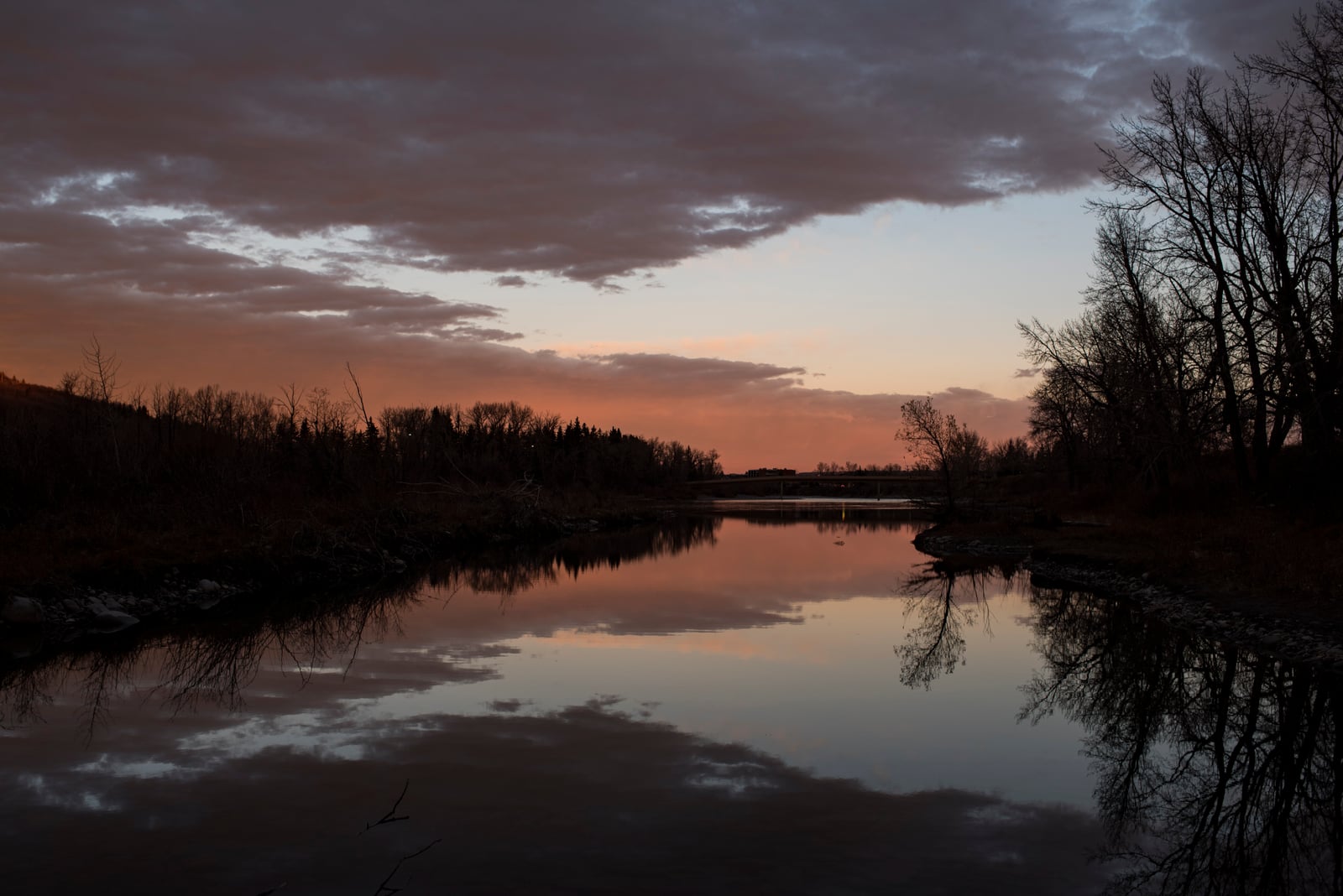
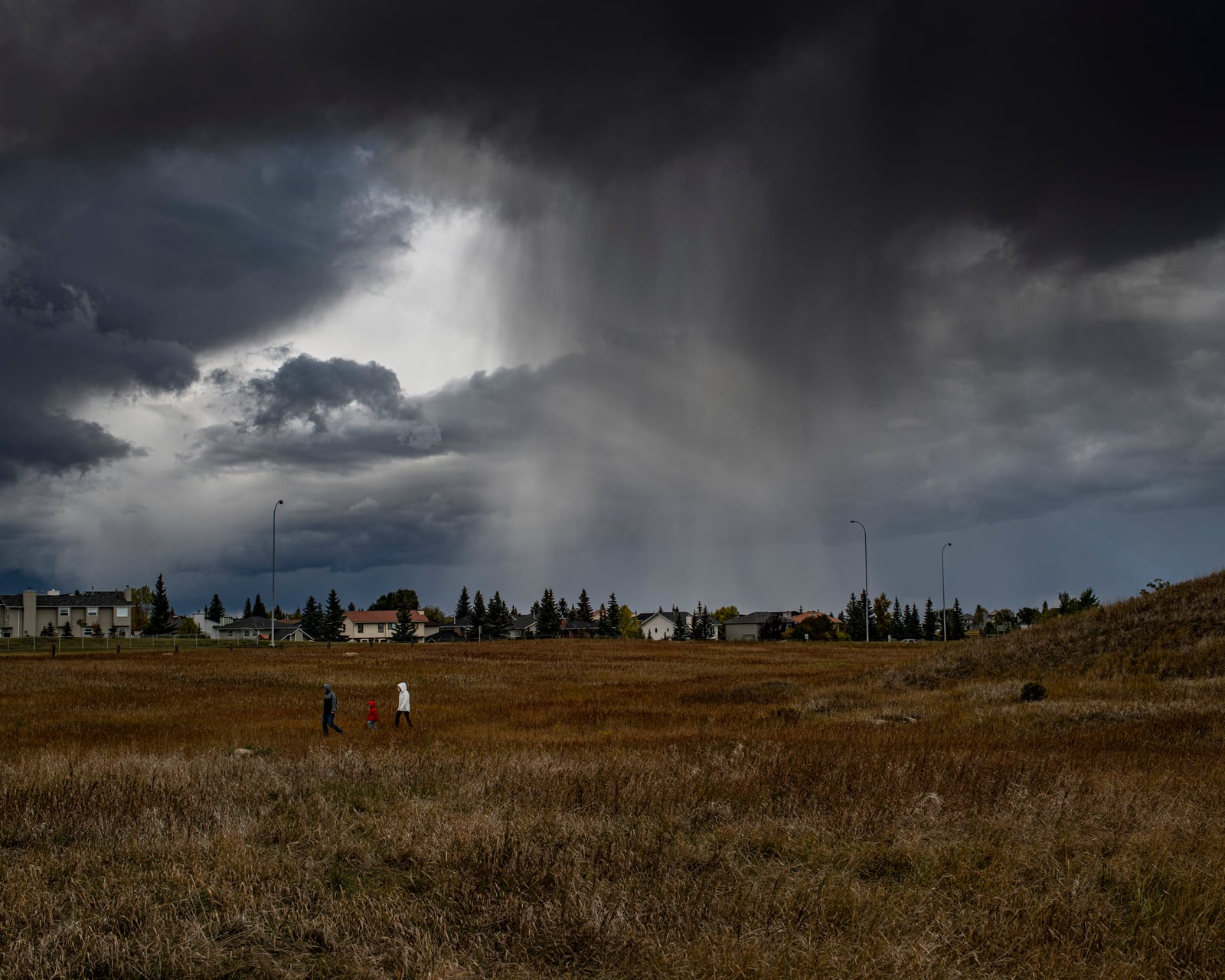
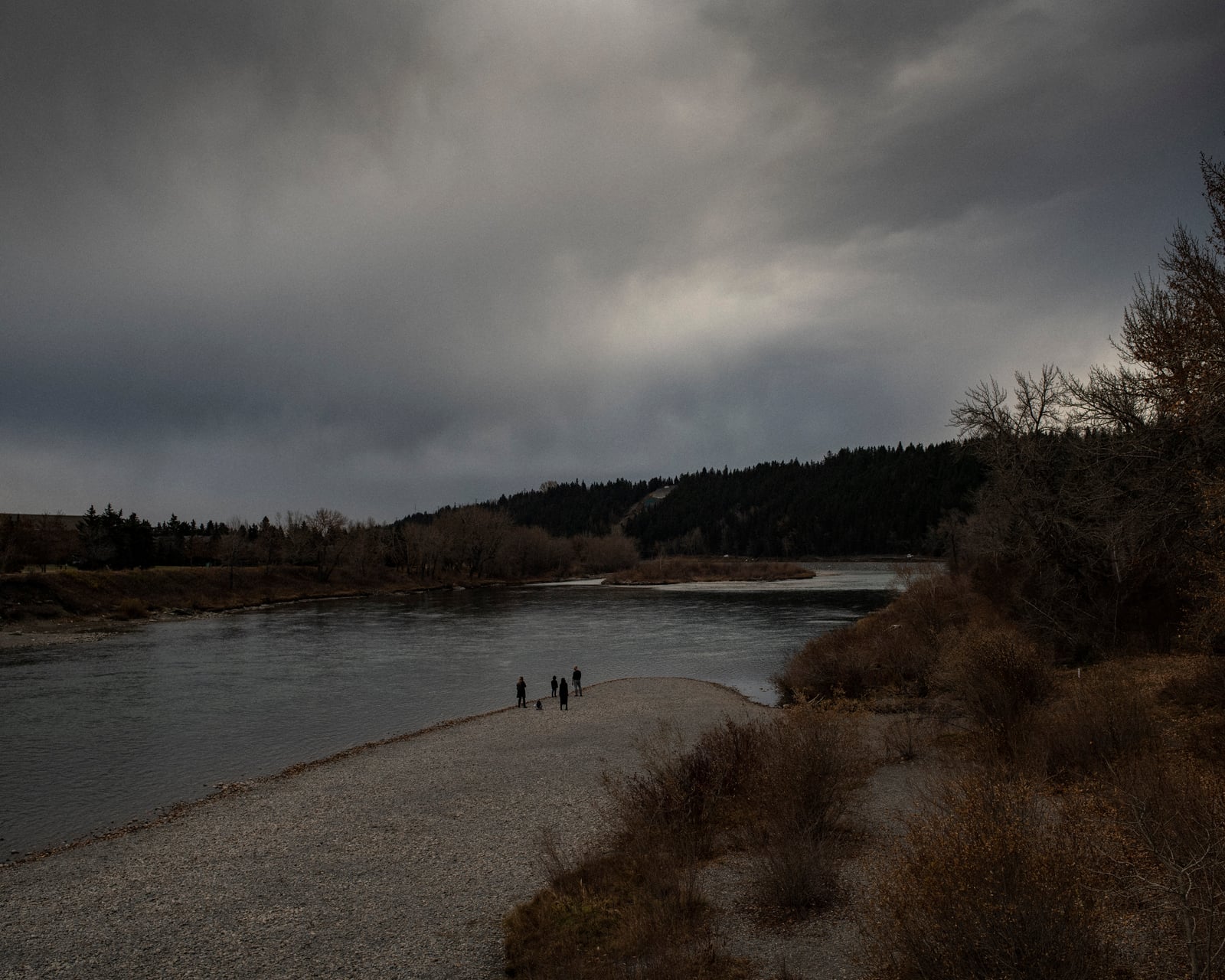
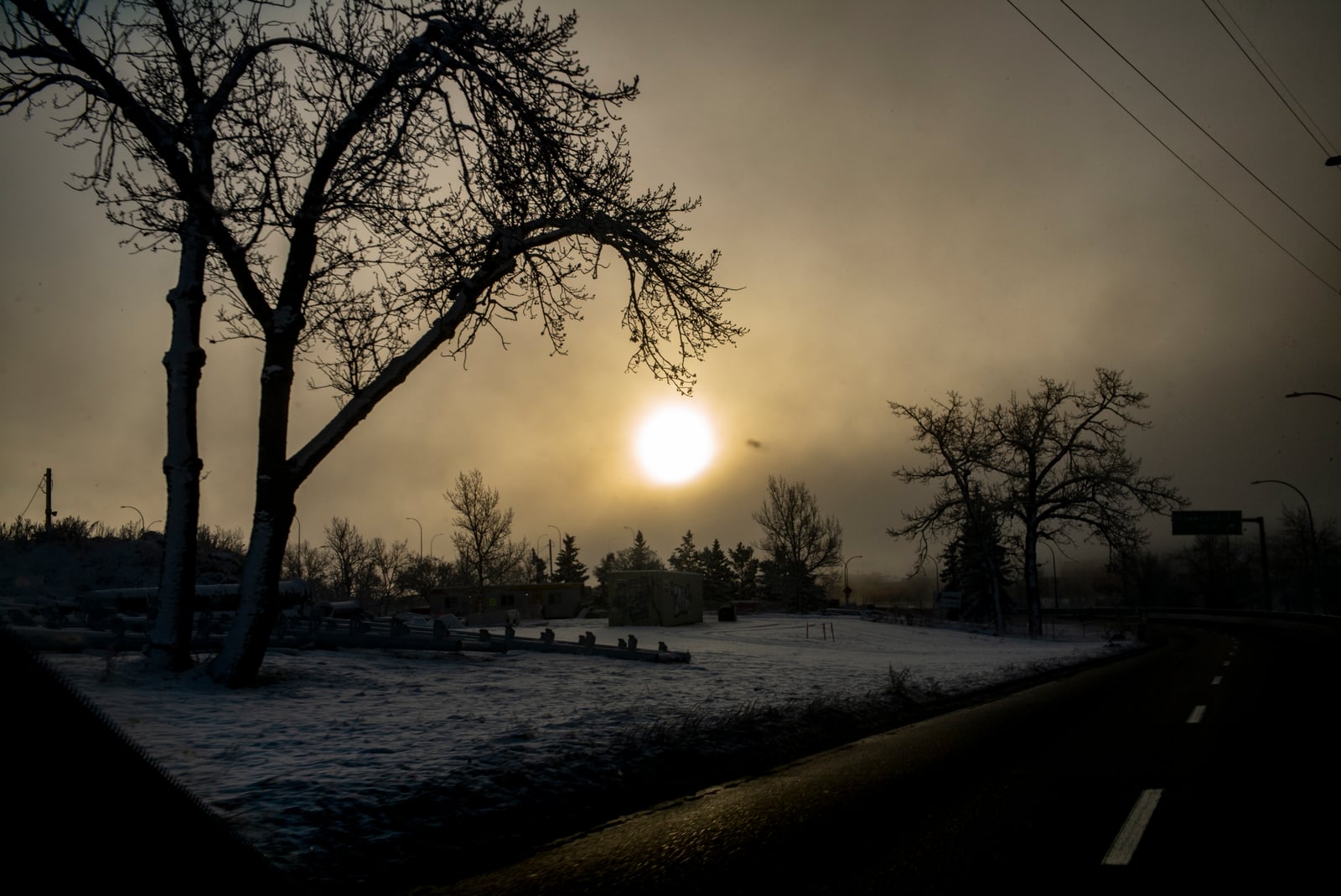
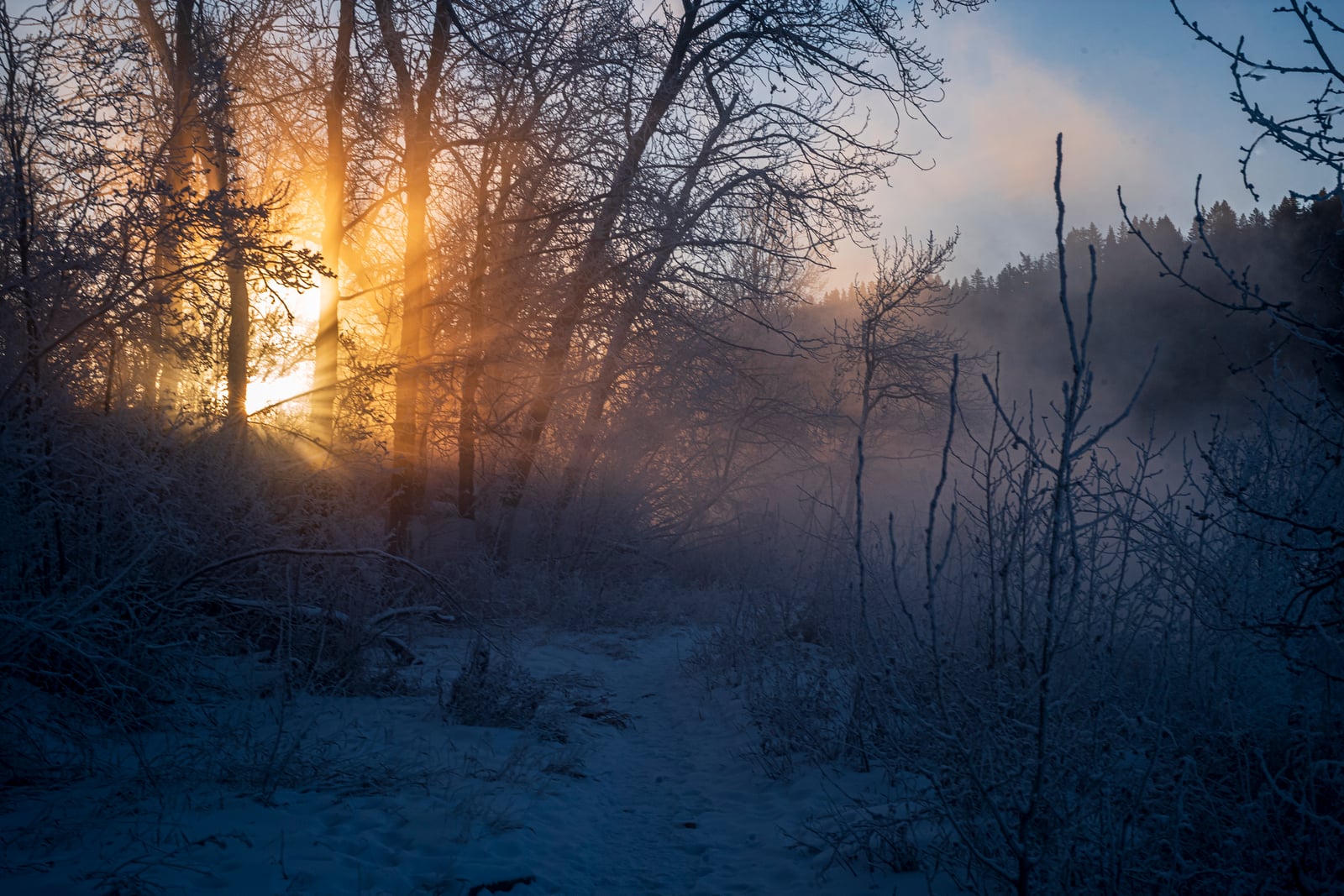
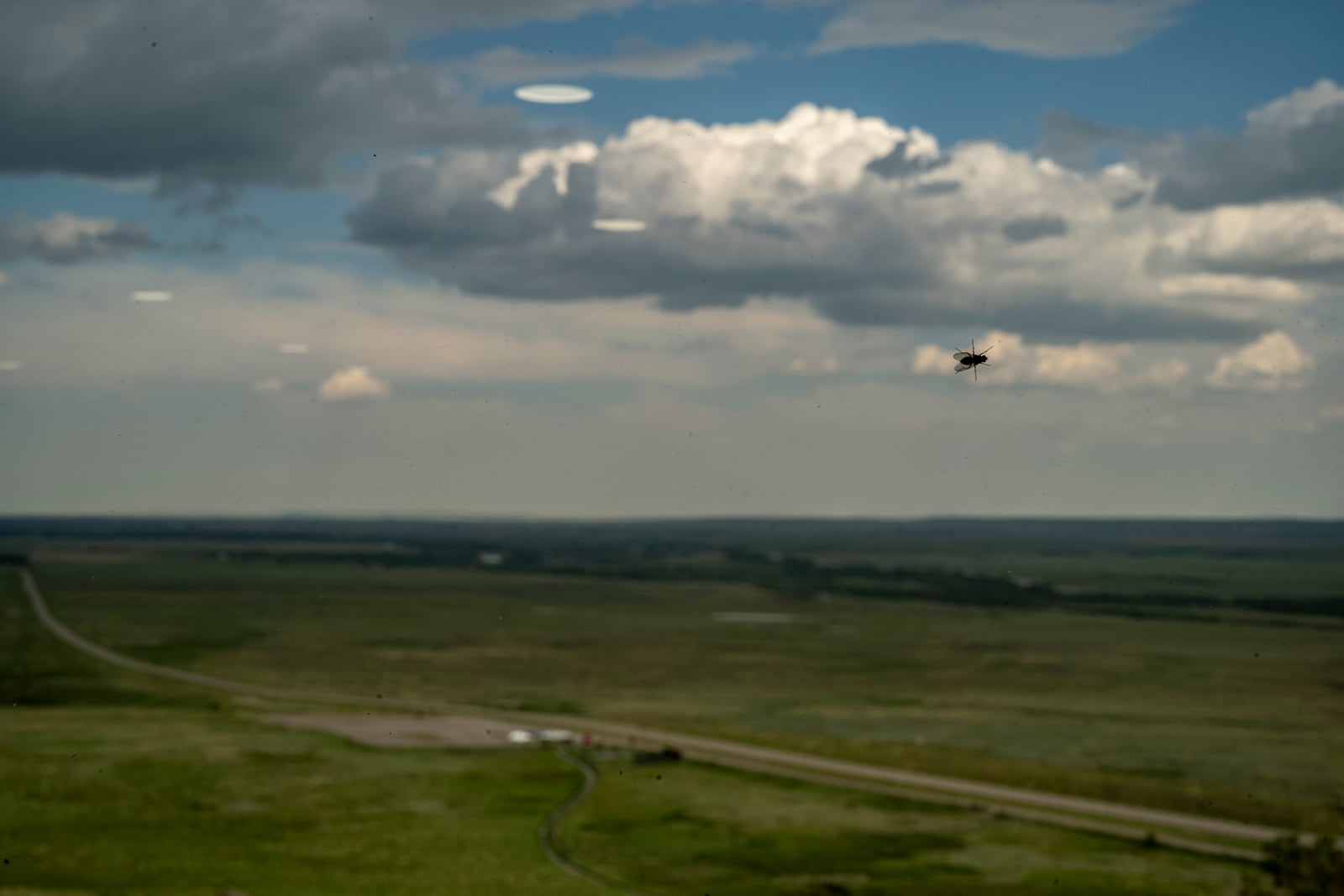
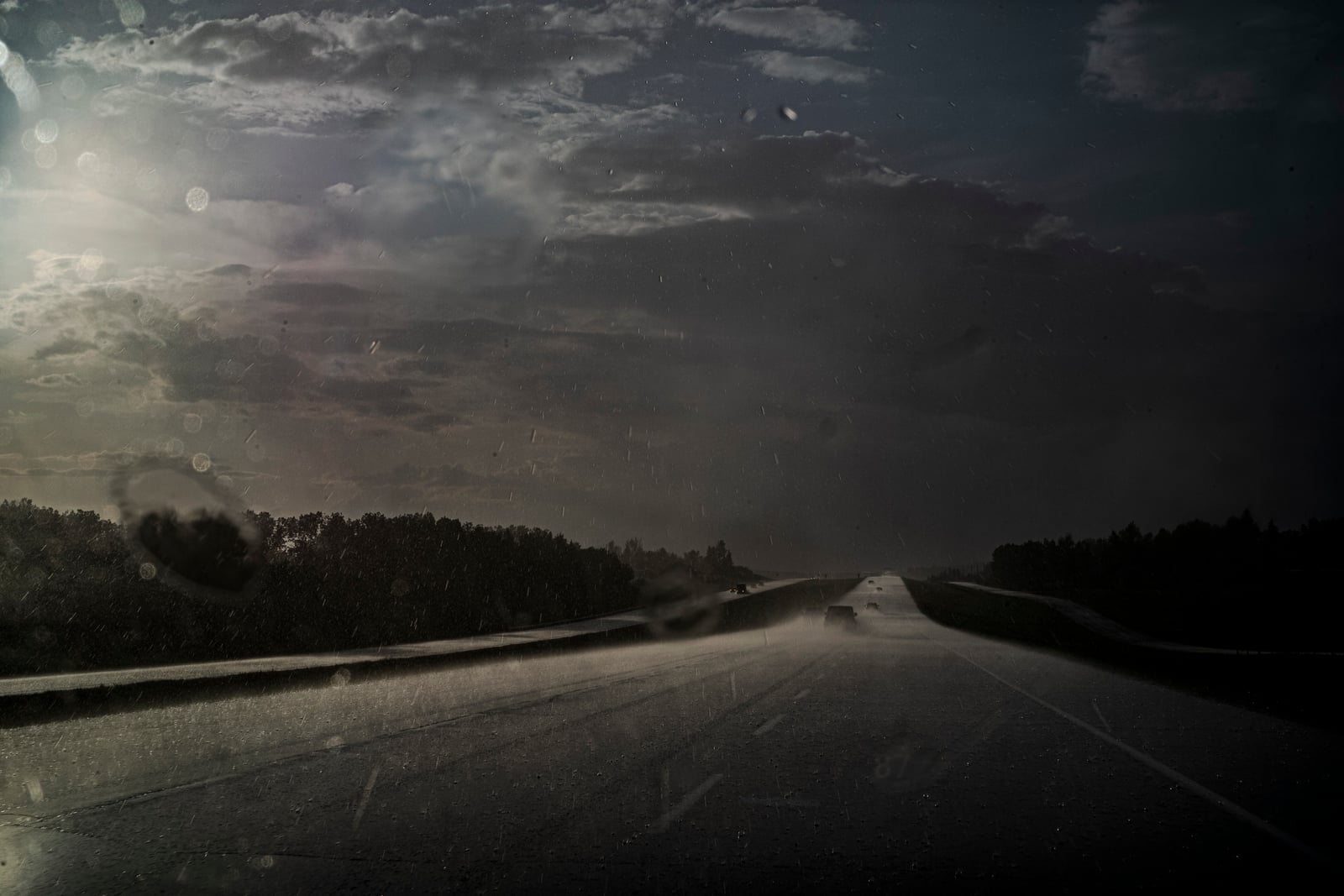
01 · The Oil Sands or Tar Sands region in Alberta, Canada is now one of the largest producers of petroleum in the world. The Athabasca Oil Sands (also known colloquially as the Athabasca Tar Sands although there is no actual tar) are large deposits of bitumen, or extremely heavy crude oil, located in northeastern Alberta, Canada - roughly centered around the boomtown of Fort McMurray. These oil sands, hosted in the McMurray Formation, consist of a mixture of crude bitumen (a semi-solid form of crude oil), silica sand, clay minerals, and water. The Athabasca deposit is the largest reservoir of crude bitumen in the world and the largest of three major oil sands deposits in Alberta, along with the nearby Peace River and Cold Lake deposits. Together, these oil sand deposits lie under 141,000 square kilometres (54,000 sq mi) of sparsely populated boreal forest and muskeg (peat bogs) and contain about 1.7 trillion barrels (270?10^9 m3) of bitumen in-place, comparable in magnitude to the world's total proven reserves of conventional petroleum.
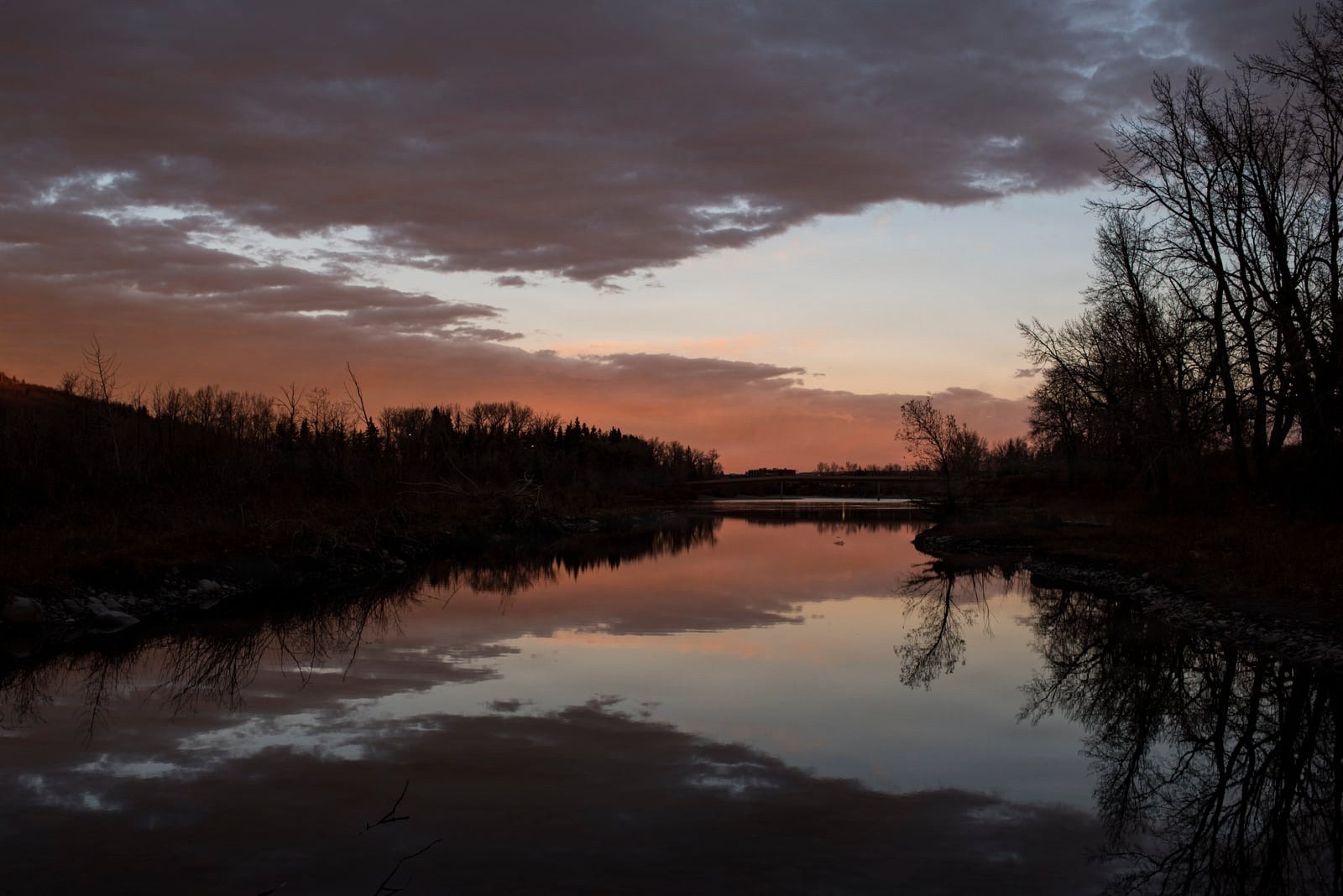
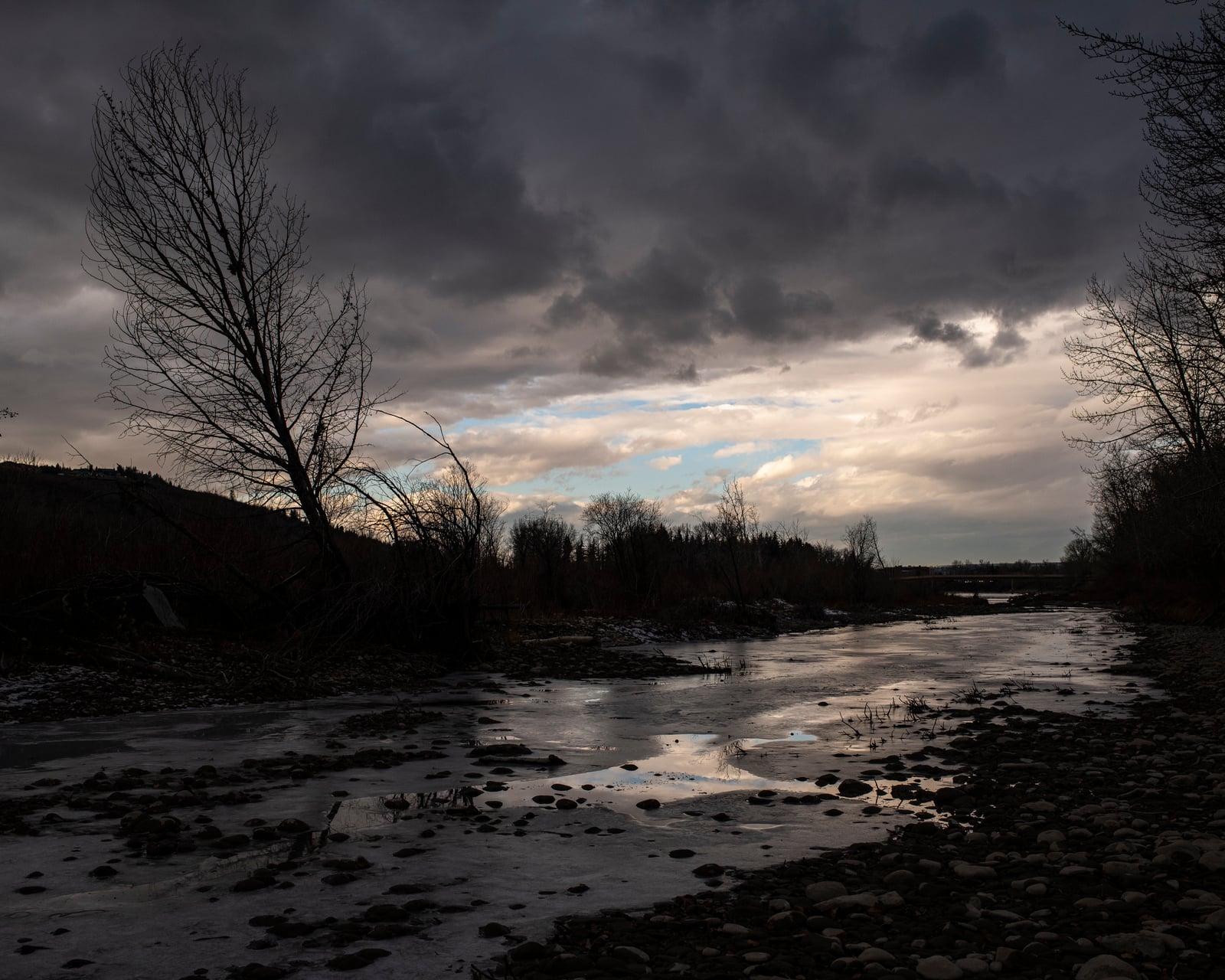
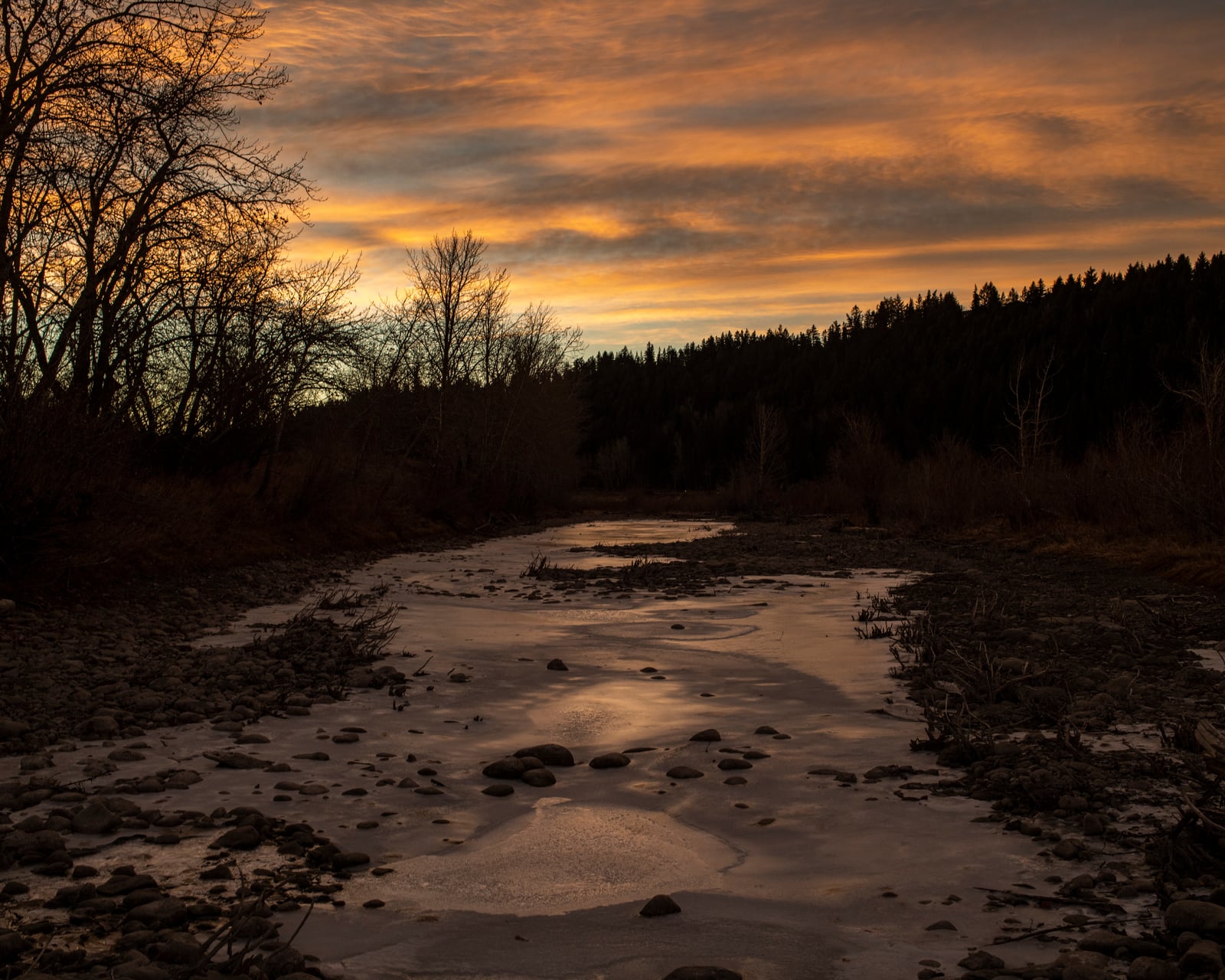
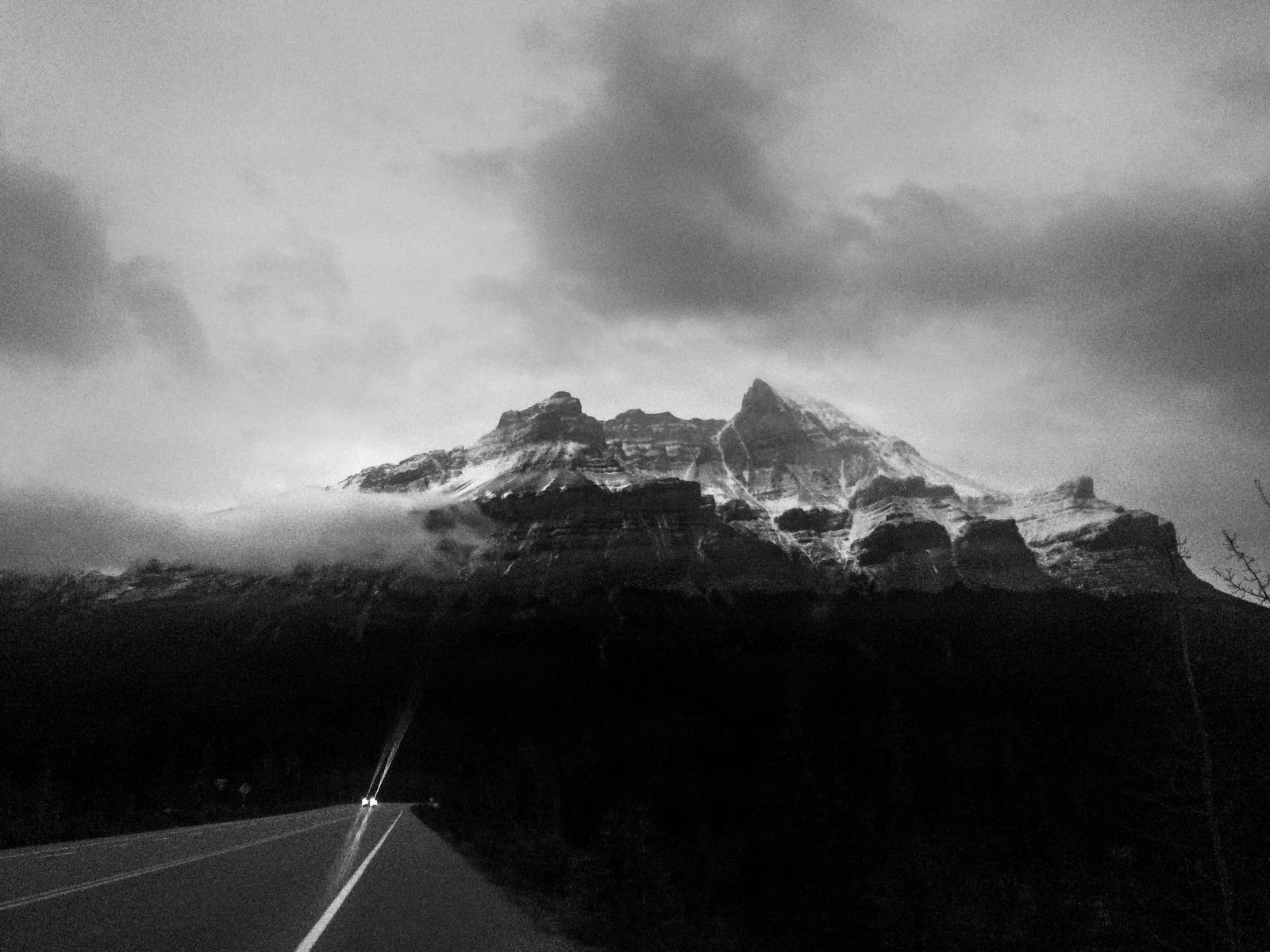
With modern unconventional oil production technology, at least 10% of these deposits, or about 170 billion barrels (27?10^9 m3) were considered to be economically recoverable at 2006 prices, making Canada's total oil reserves the second largest in the world, after Saudi Arabia's. The Athabasca deposit is the only large oil sands reservoir in the world which is suitable for large-scale surface mining, although most of it can only be produced using more recently developed in-situ technology.[02030405 · View of the Bow River near Point McKay06 · The Rocky Mountains in Western Canada are some of the most impressive mountain ranges in the world.07080910111213141516171819202122 · Banff National Park.23242526
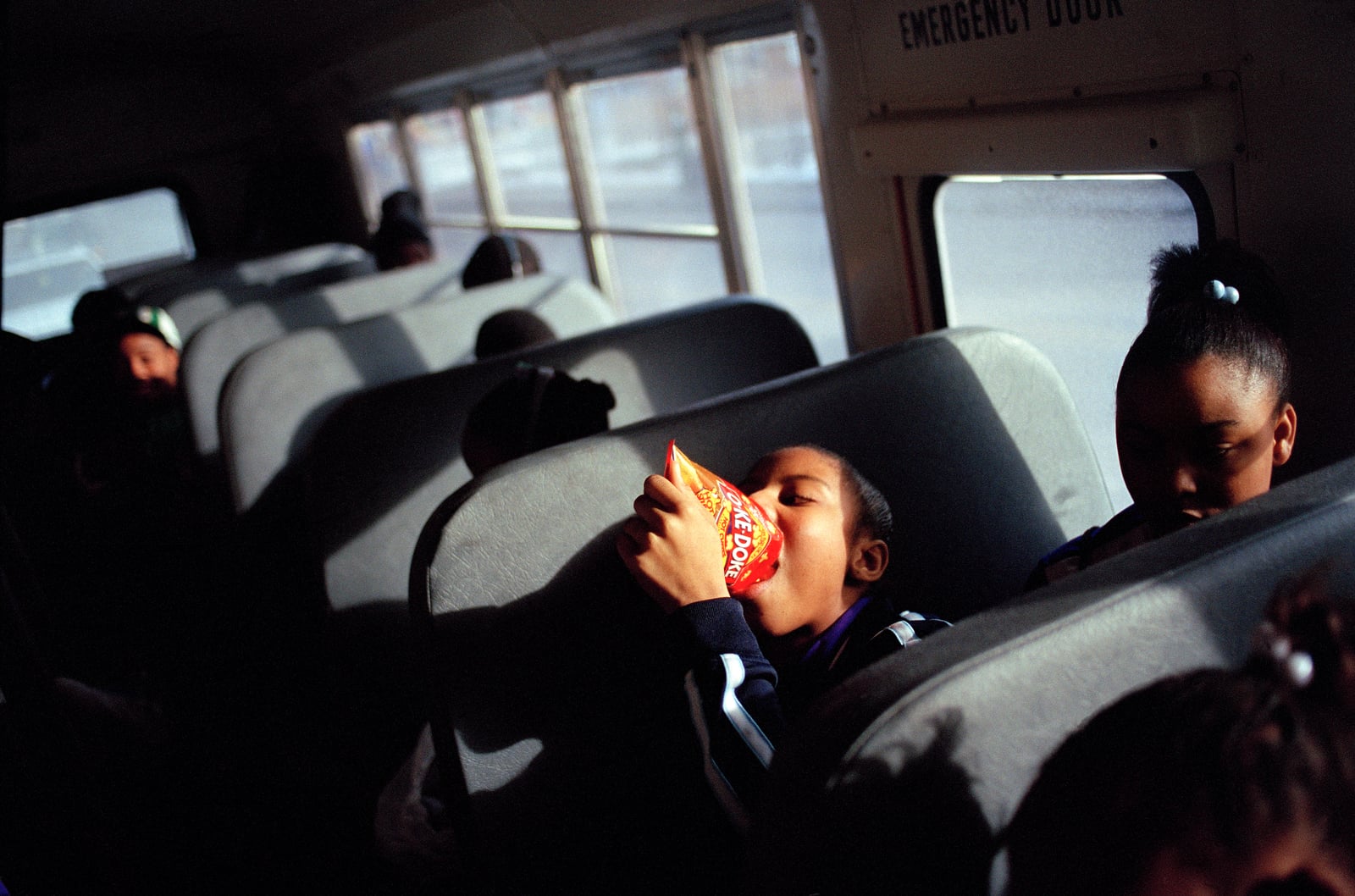
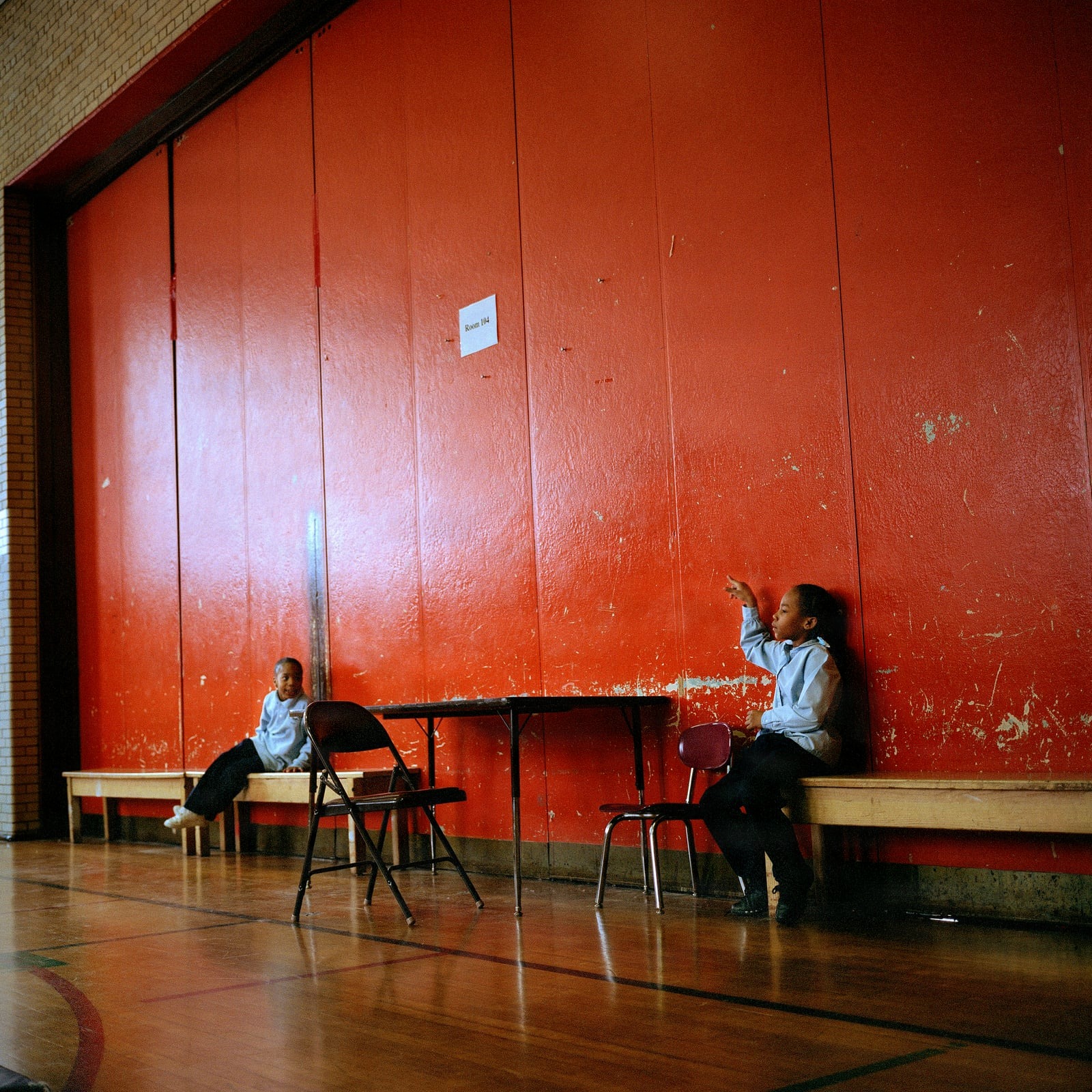
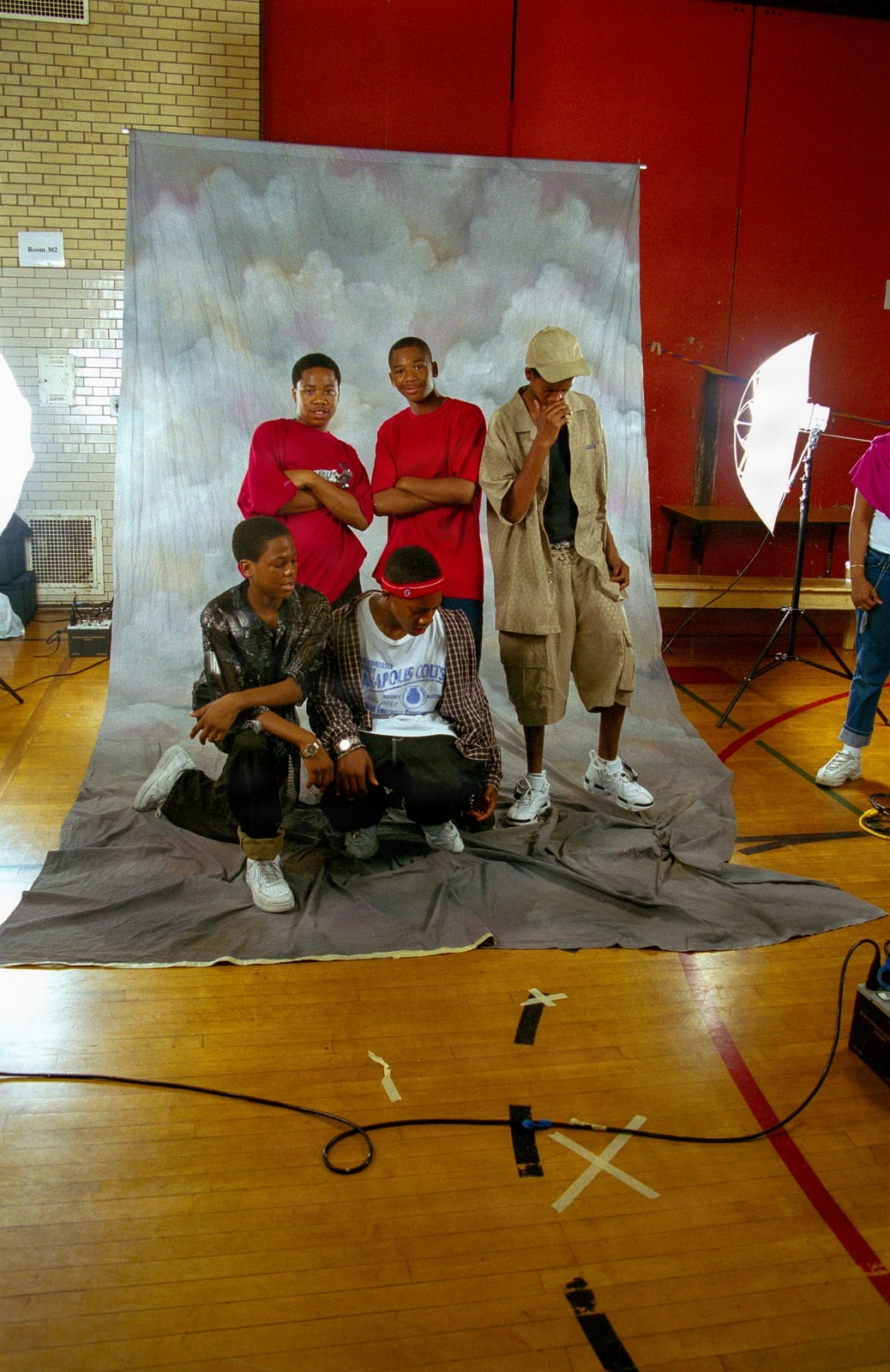
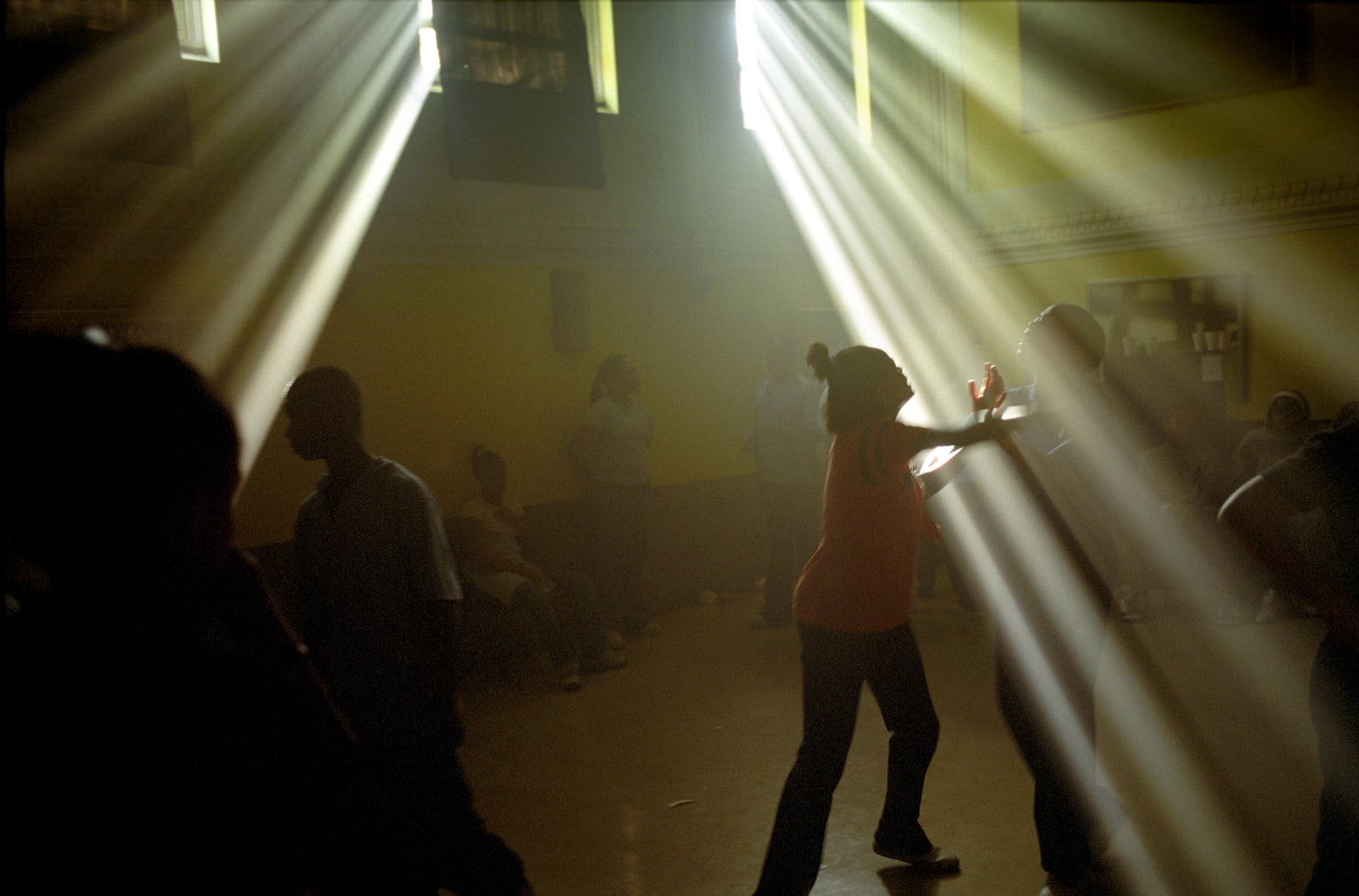
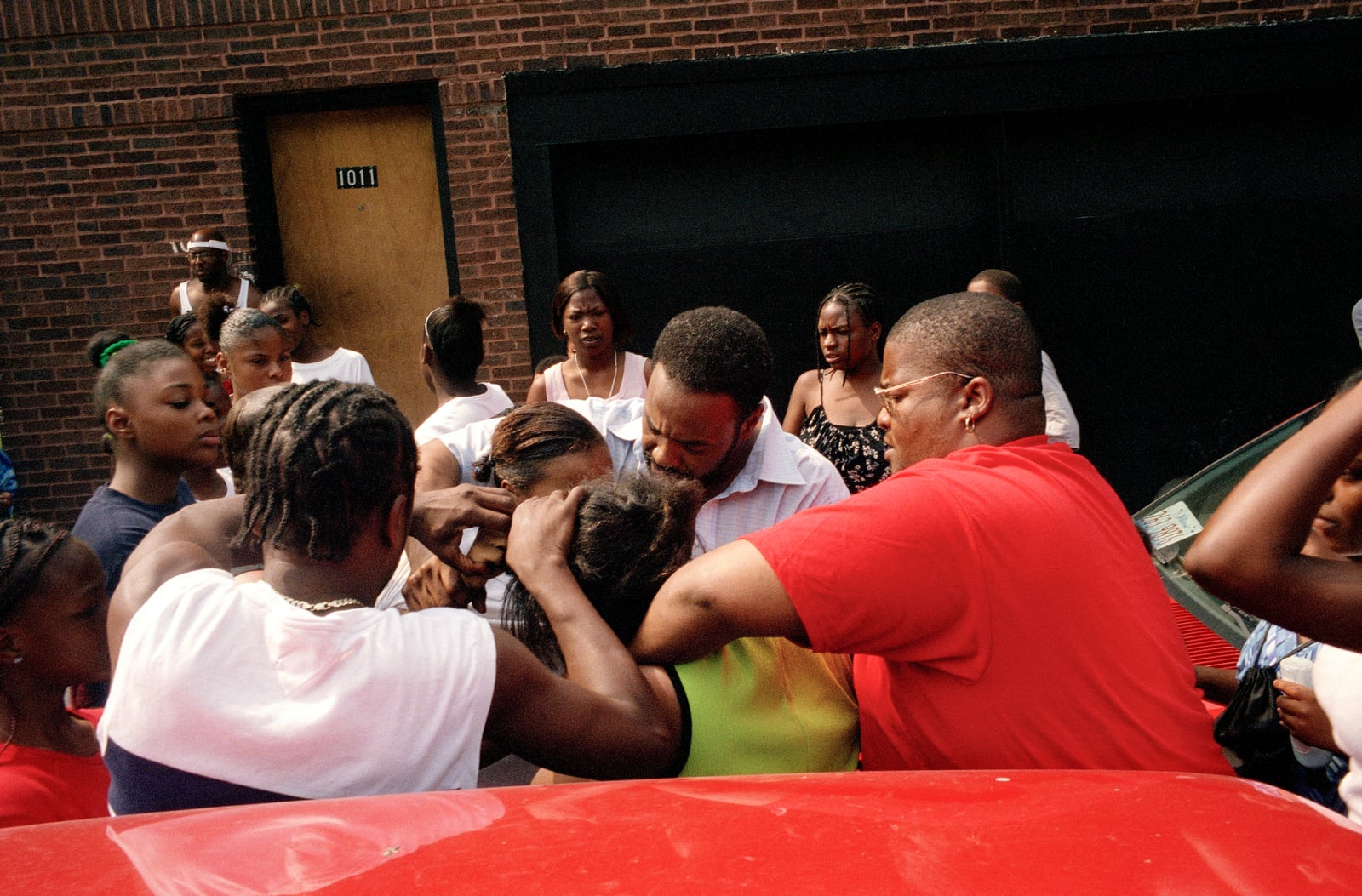
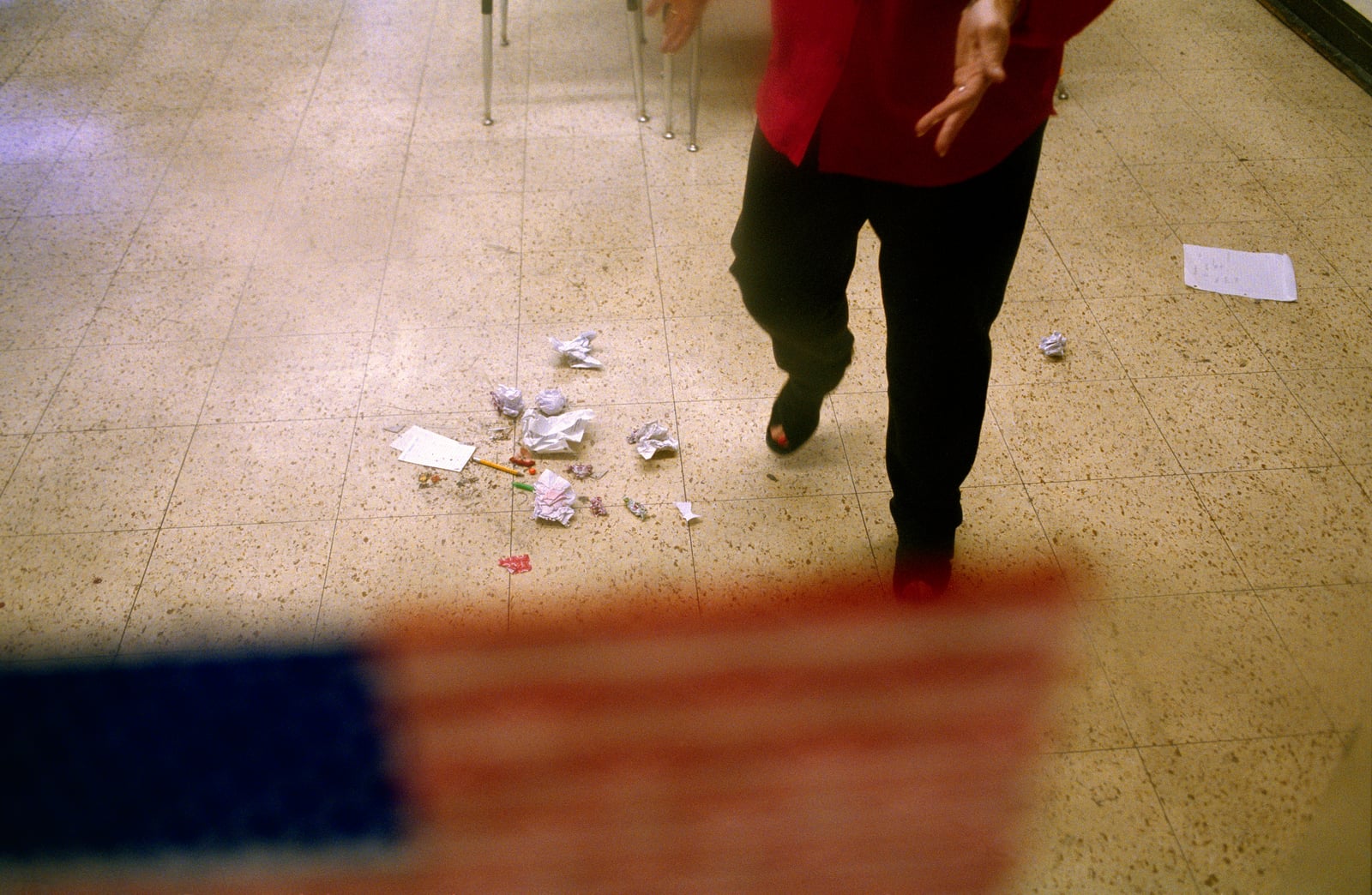
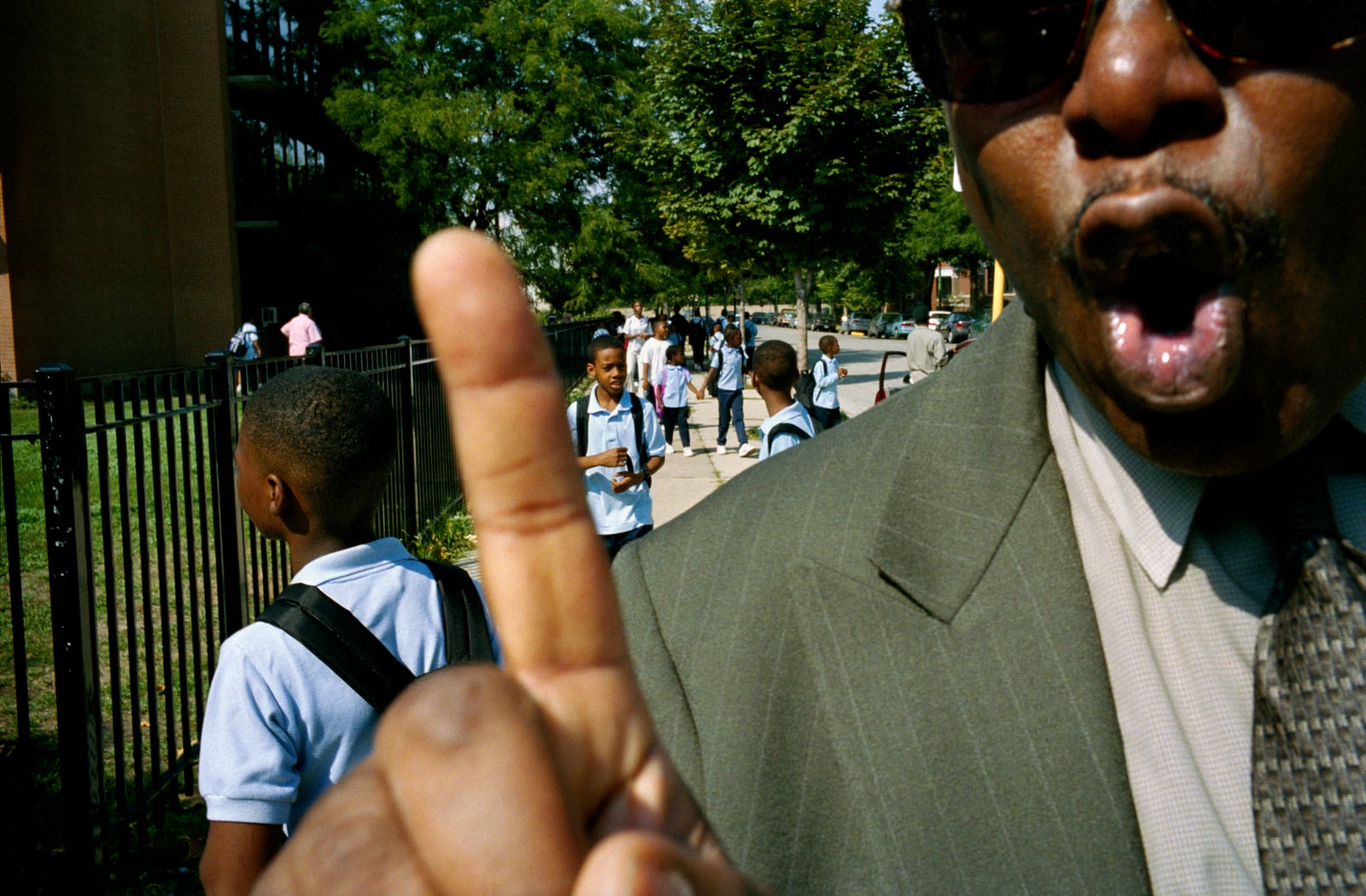
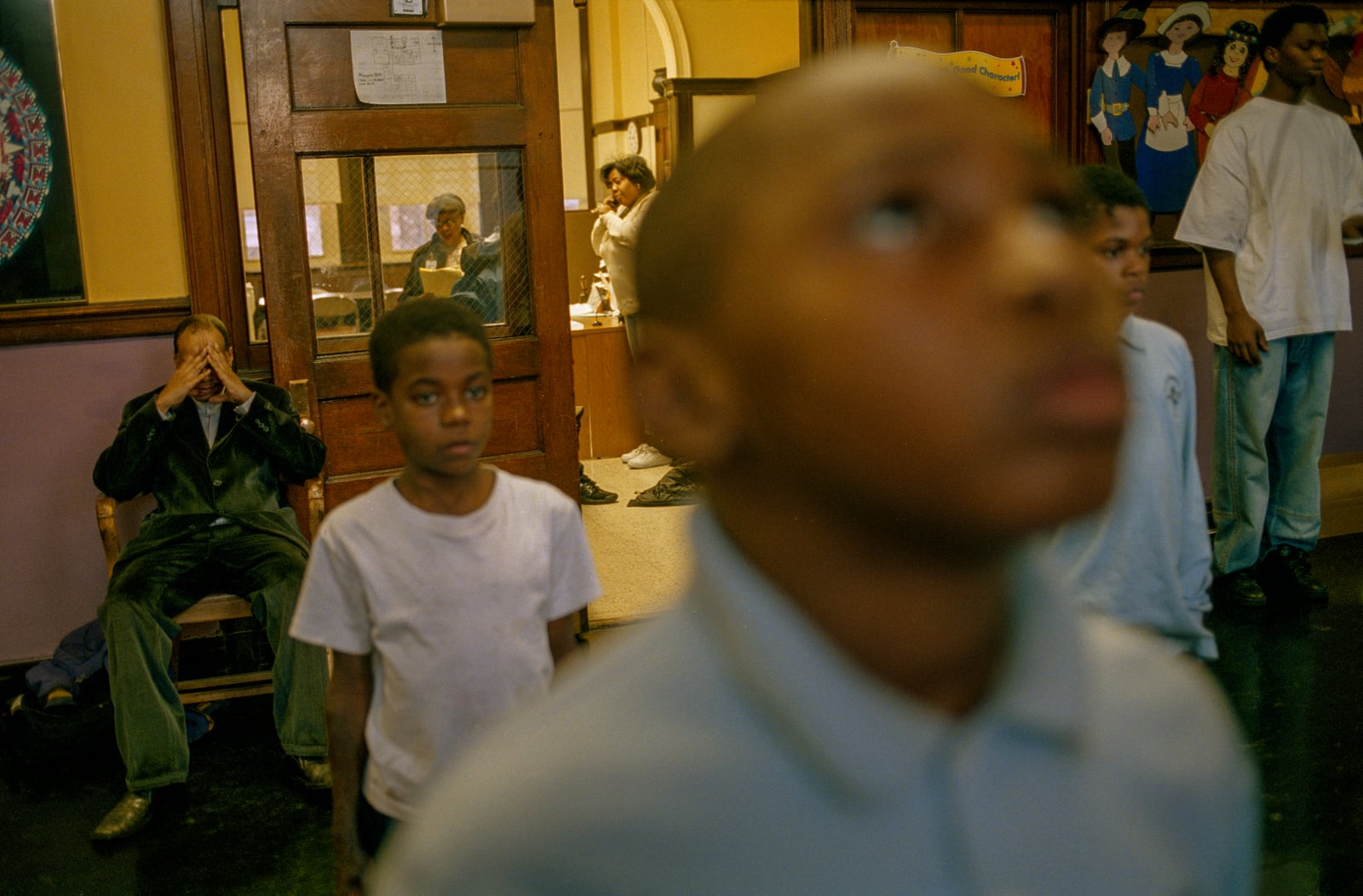
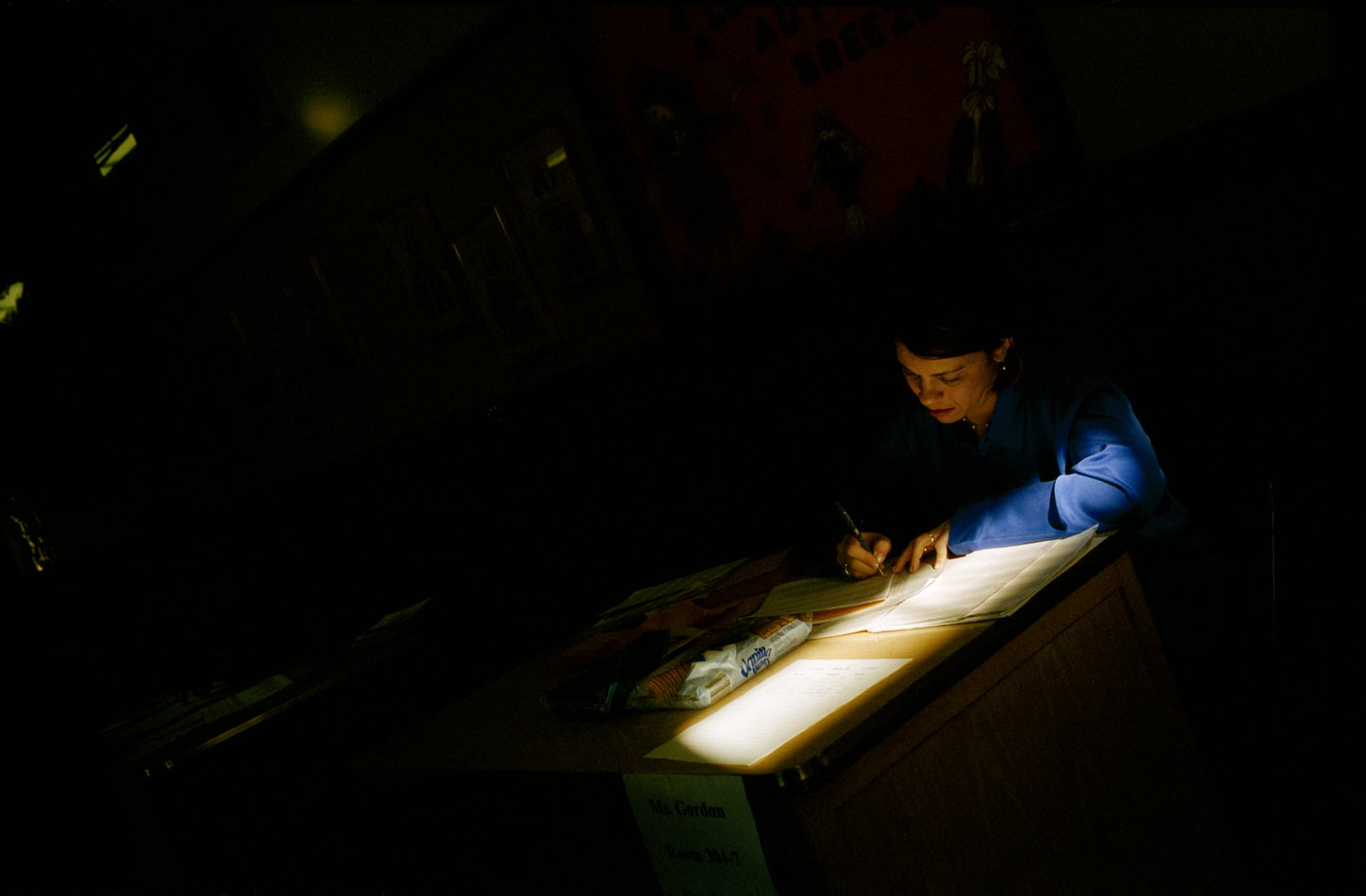
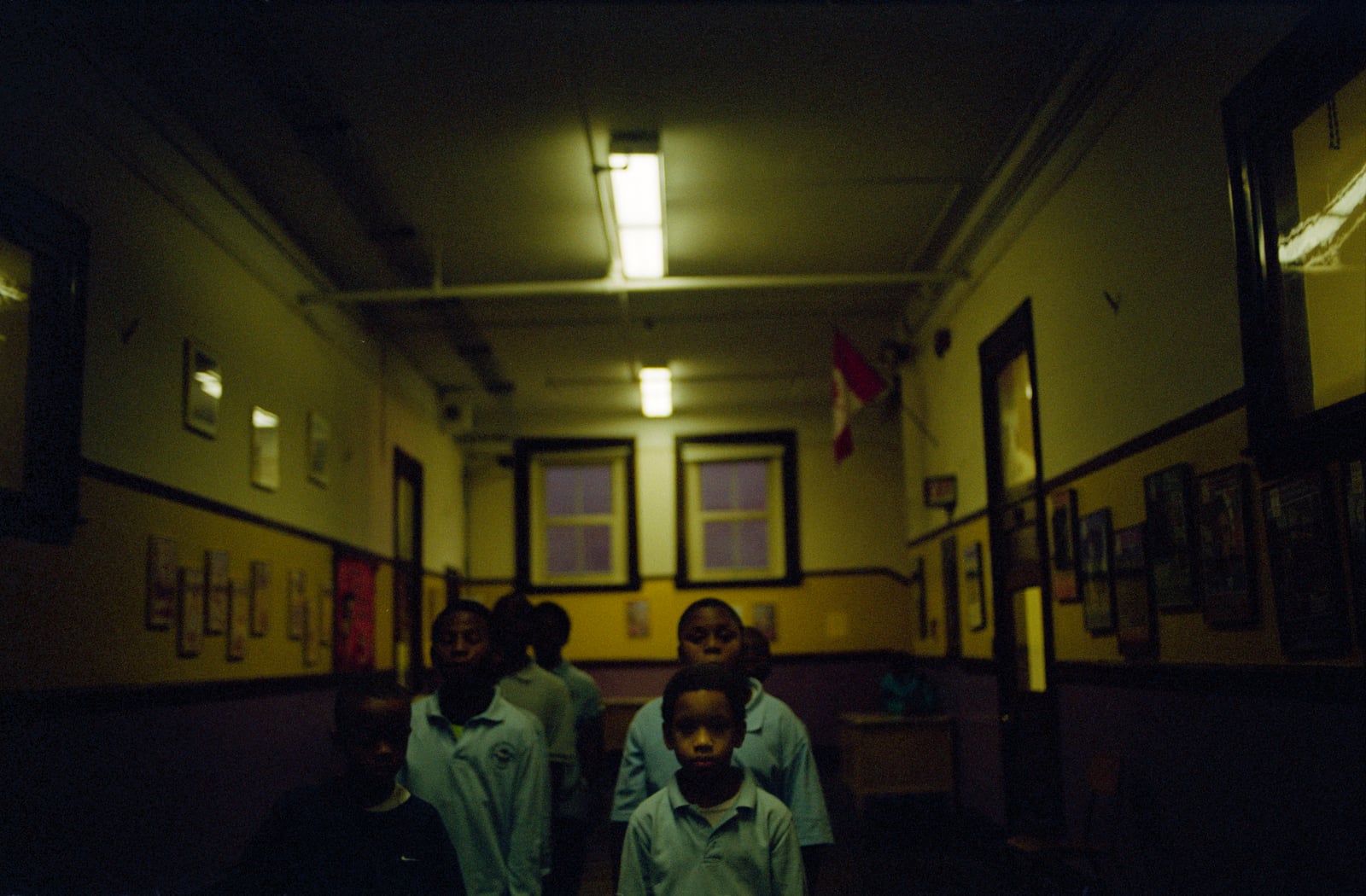
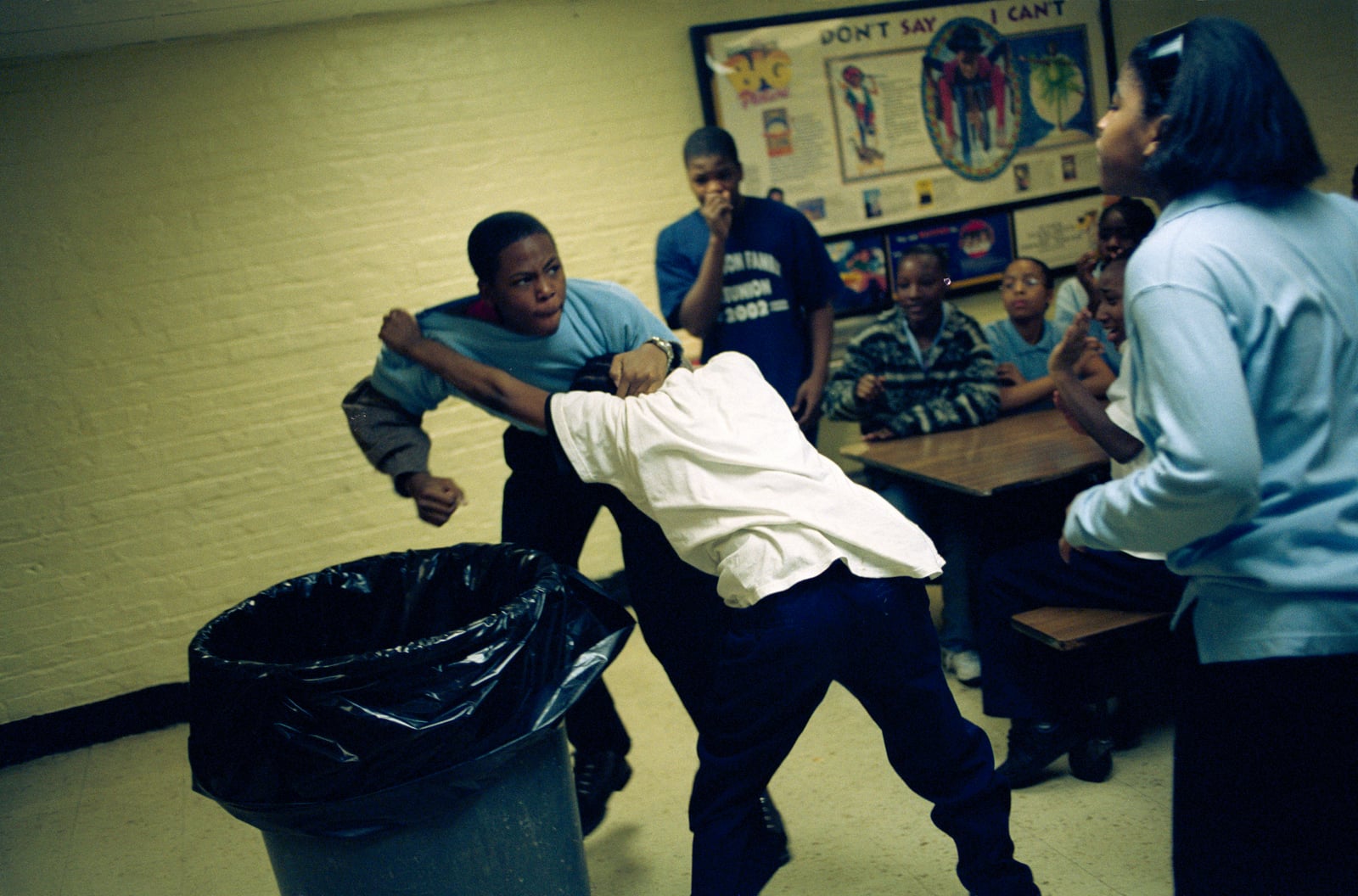
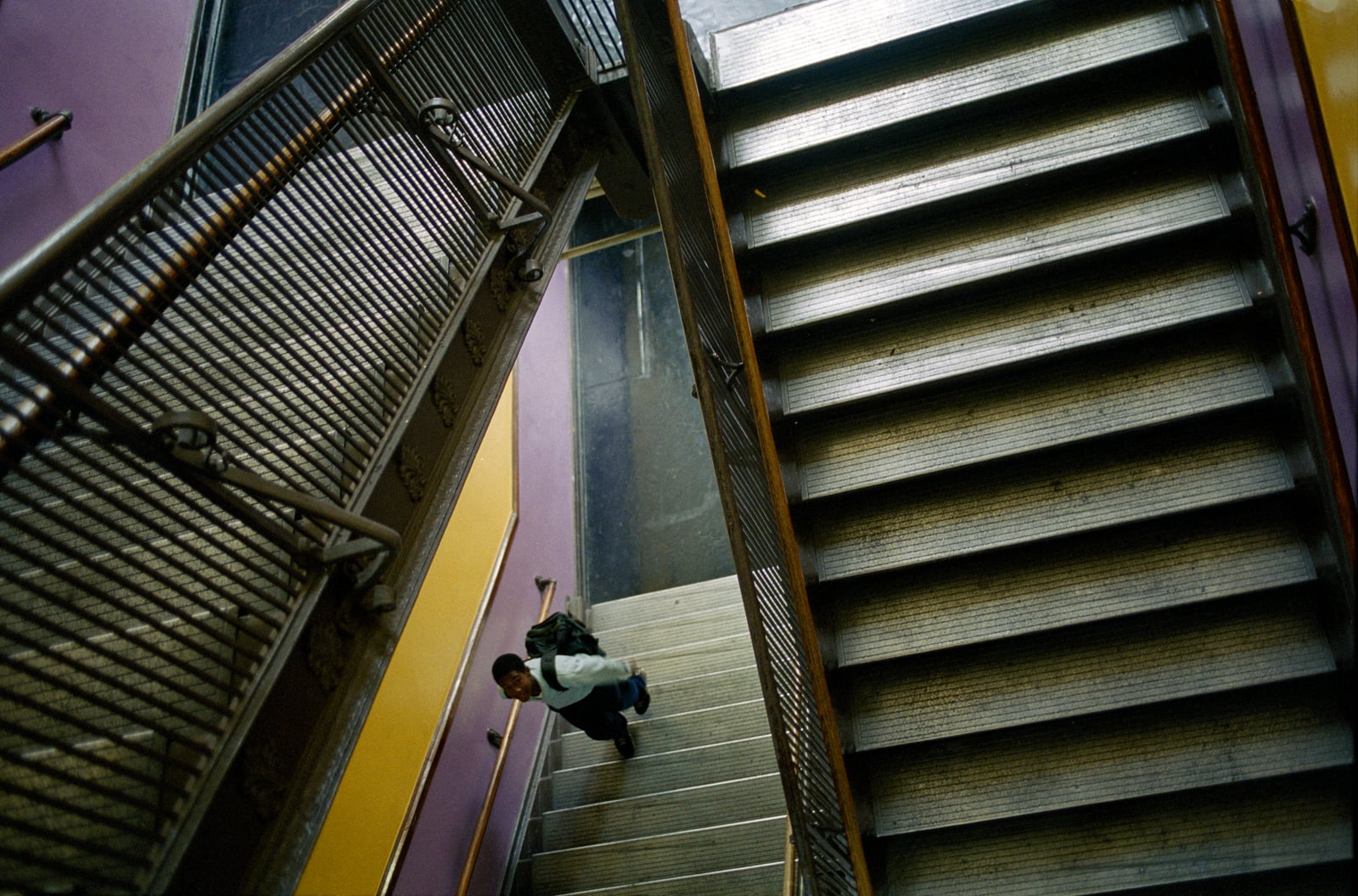
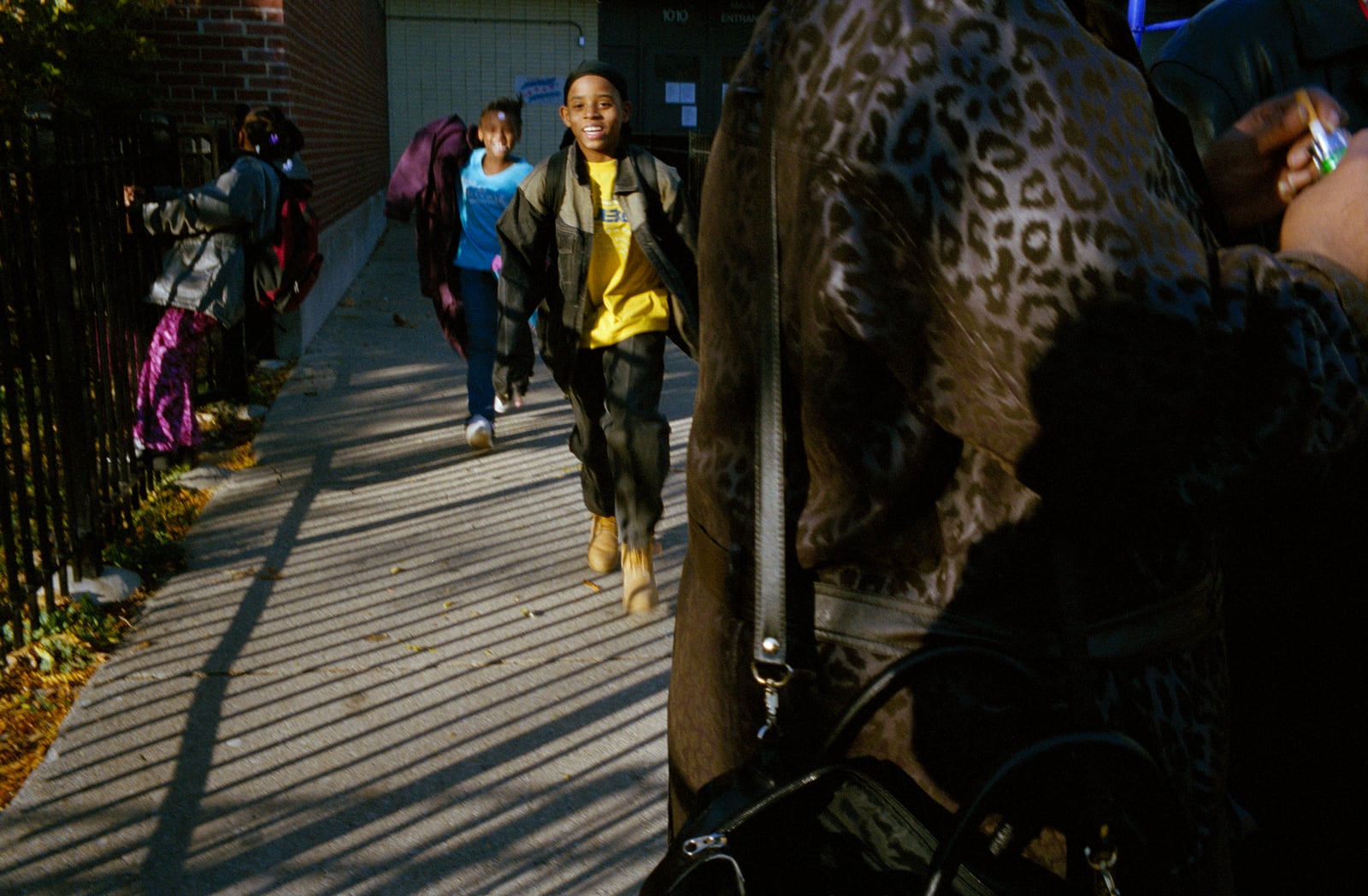
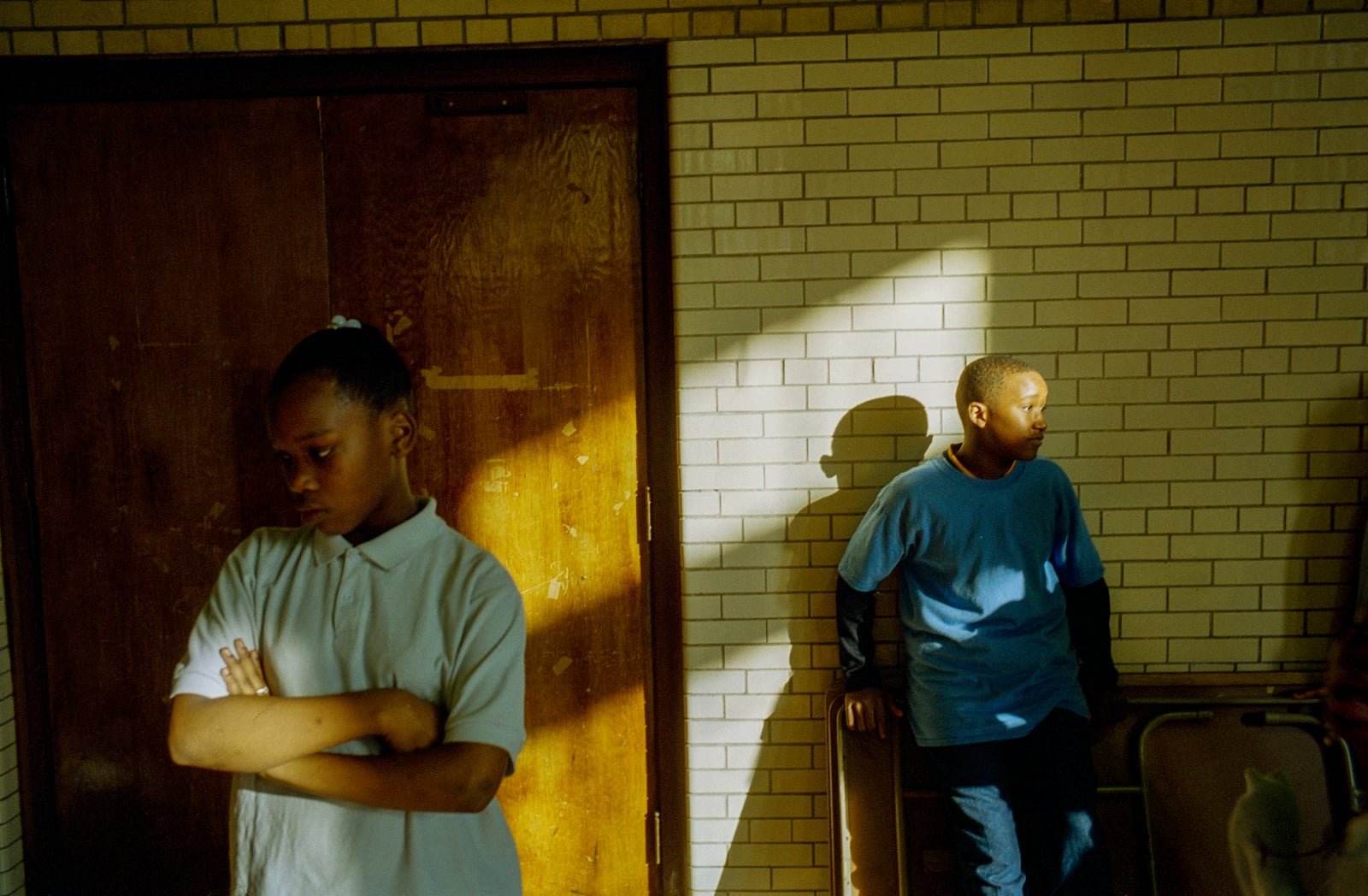
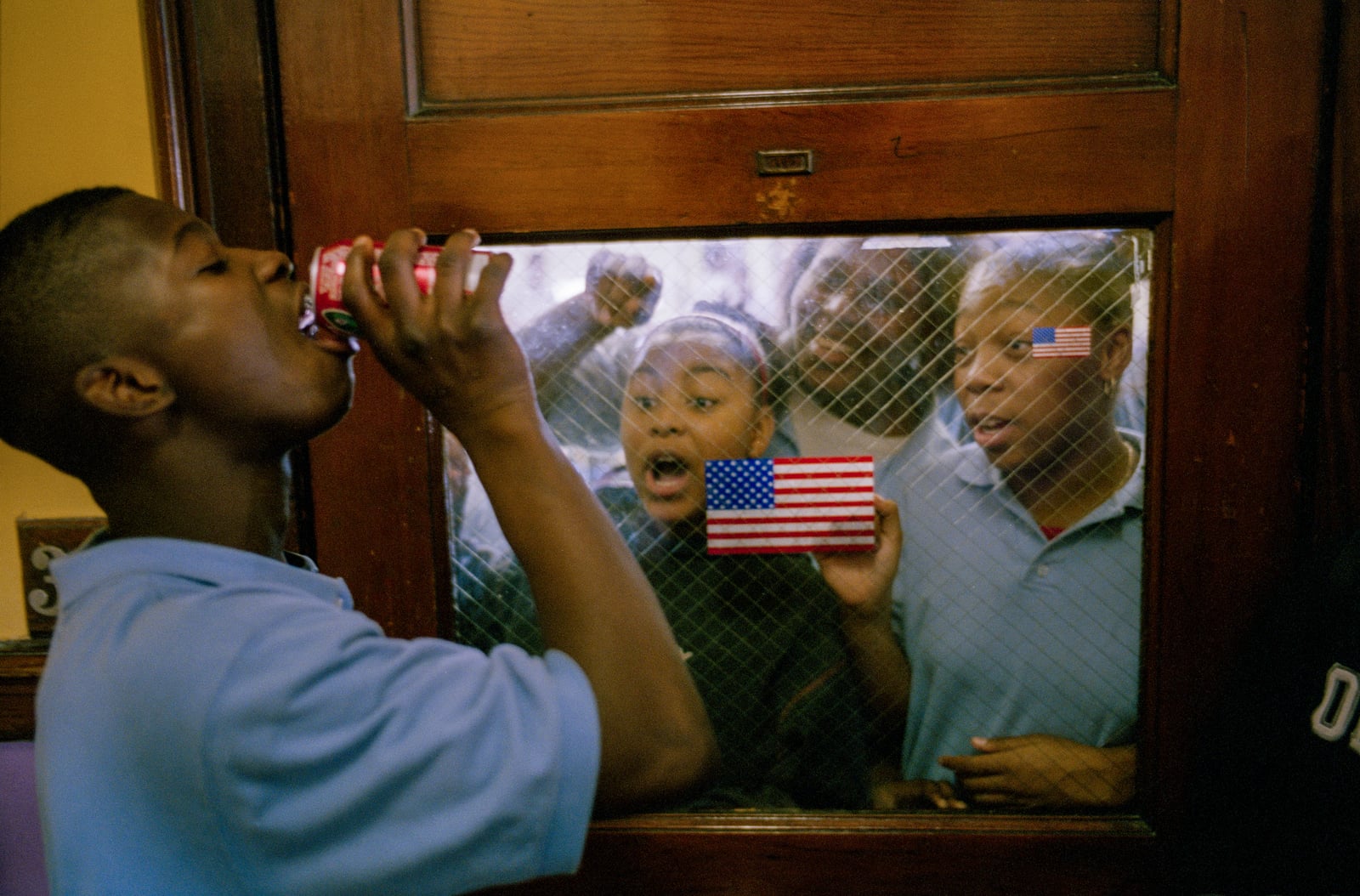
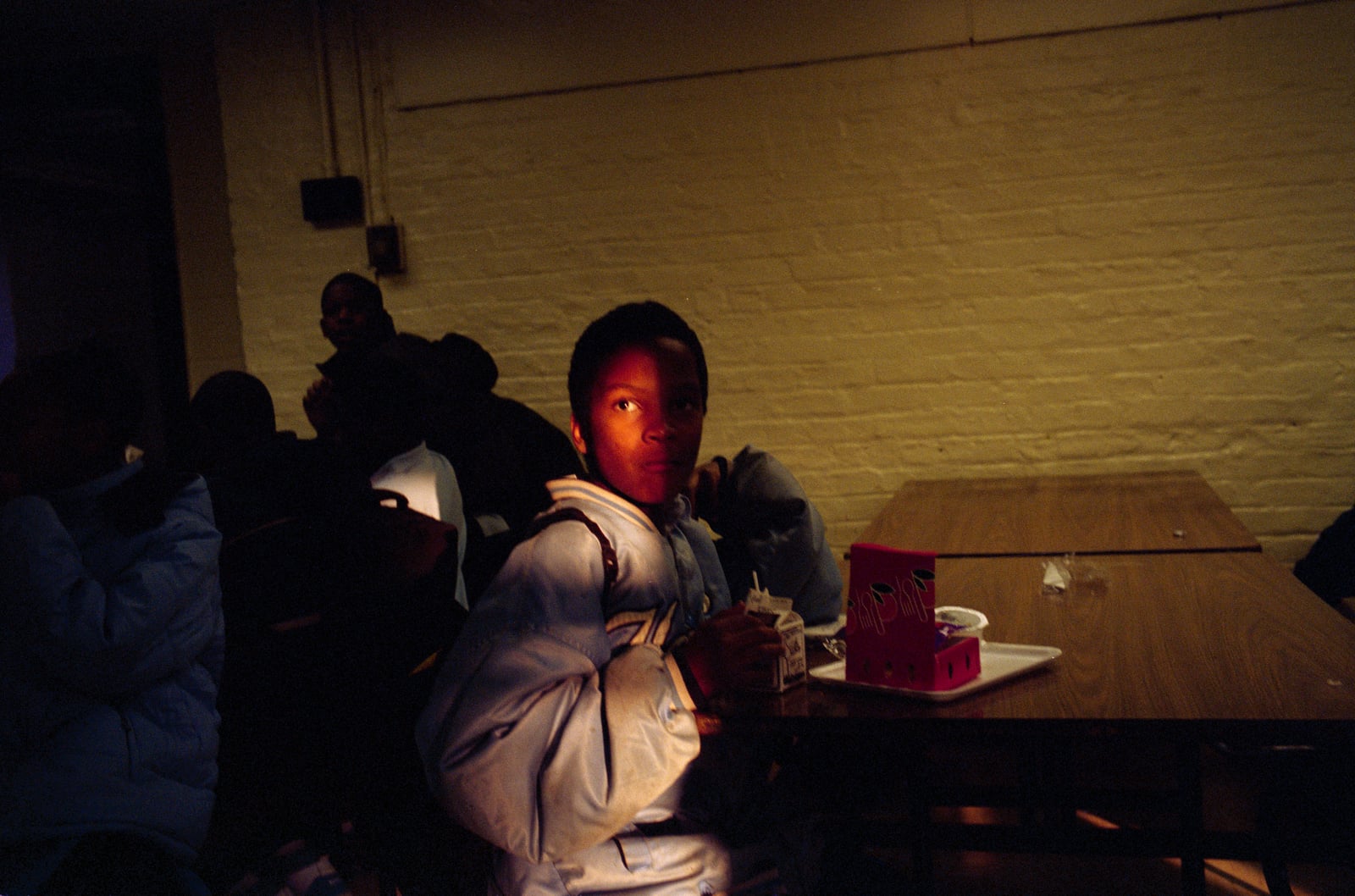
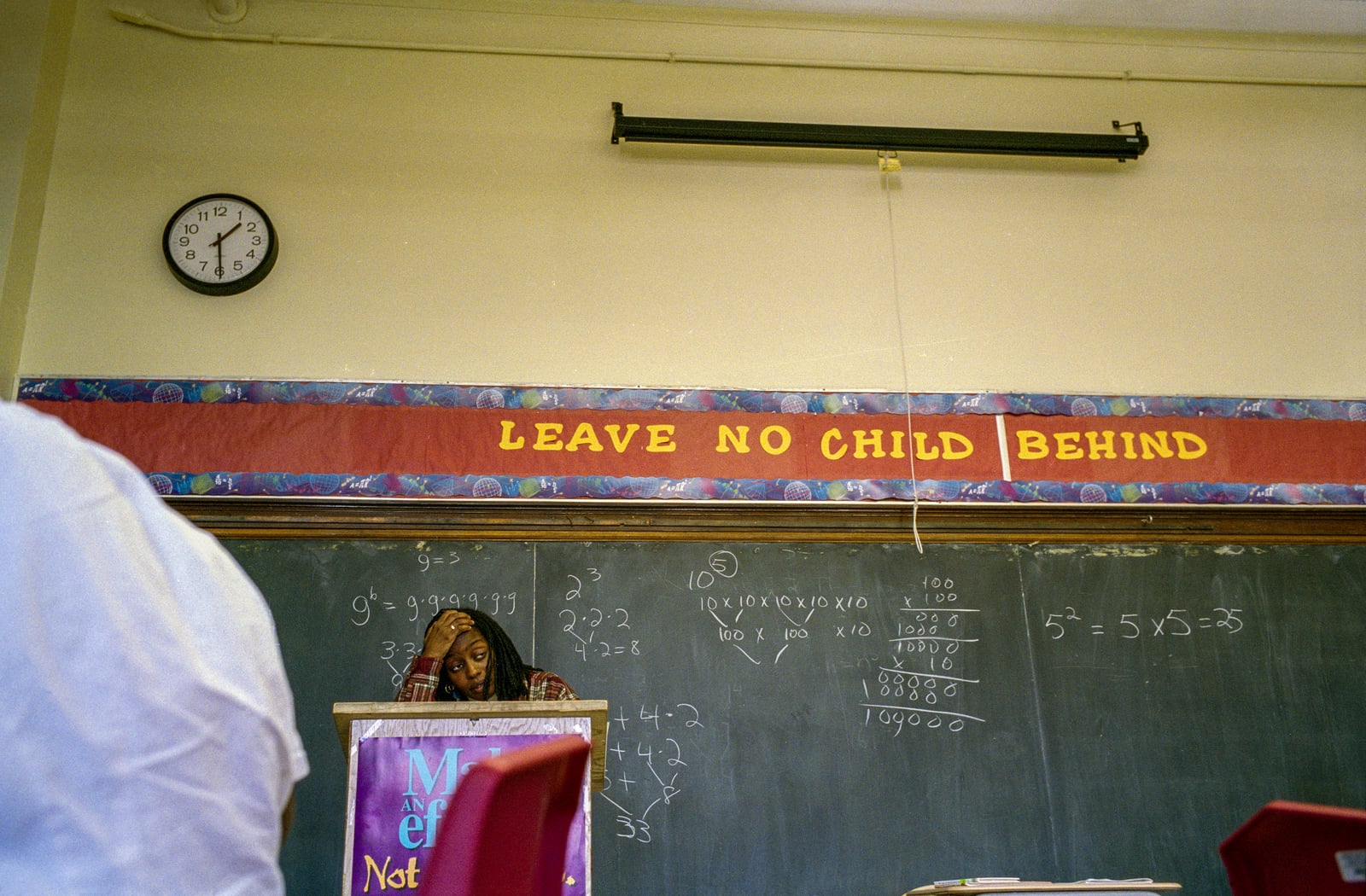
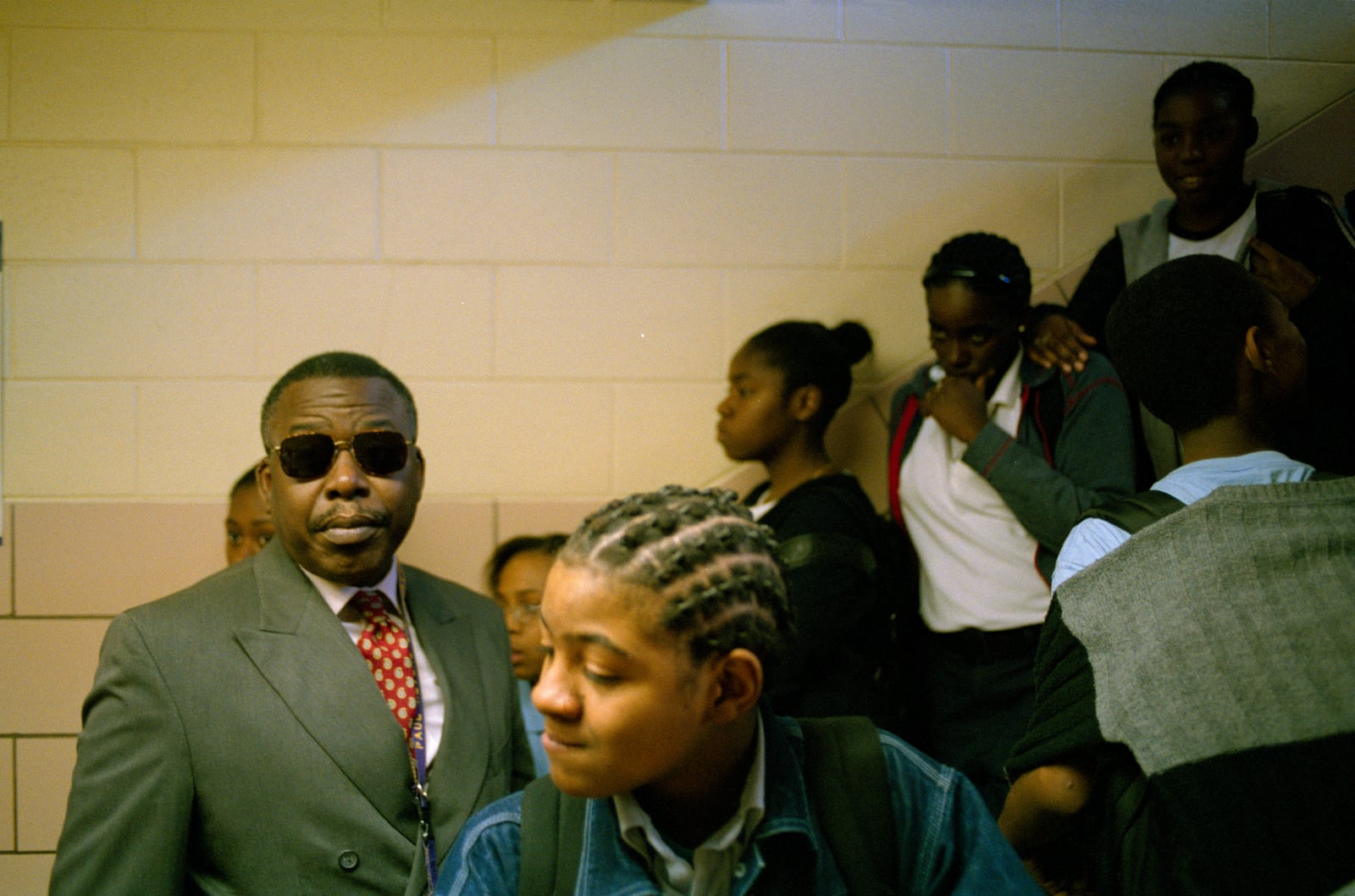
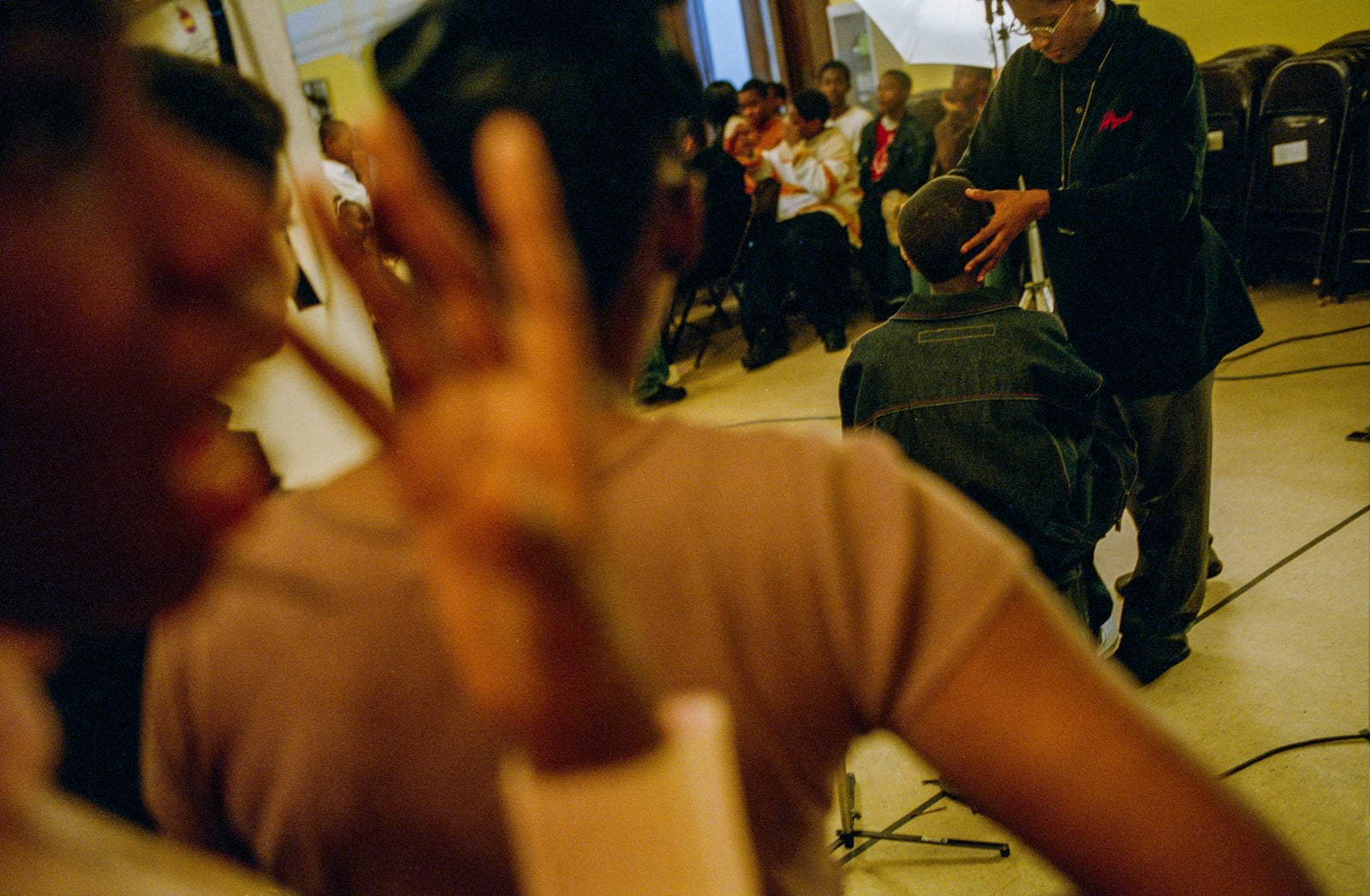
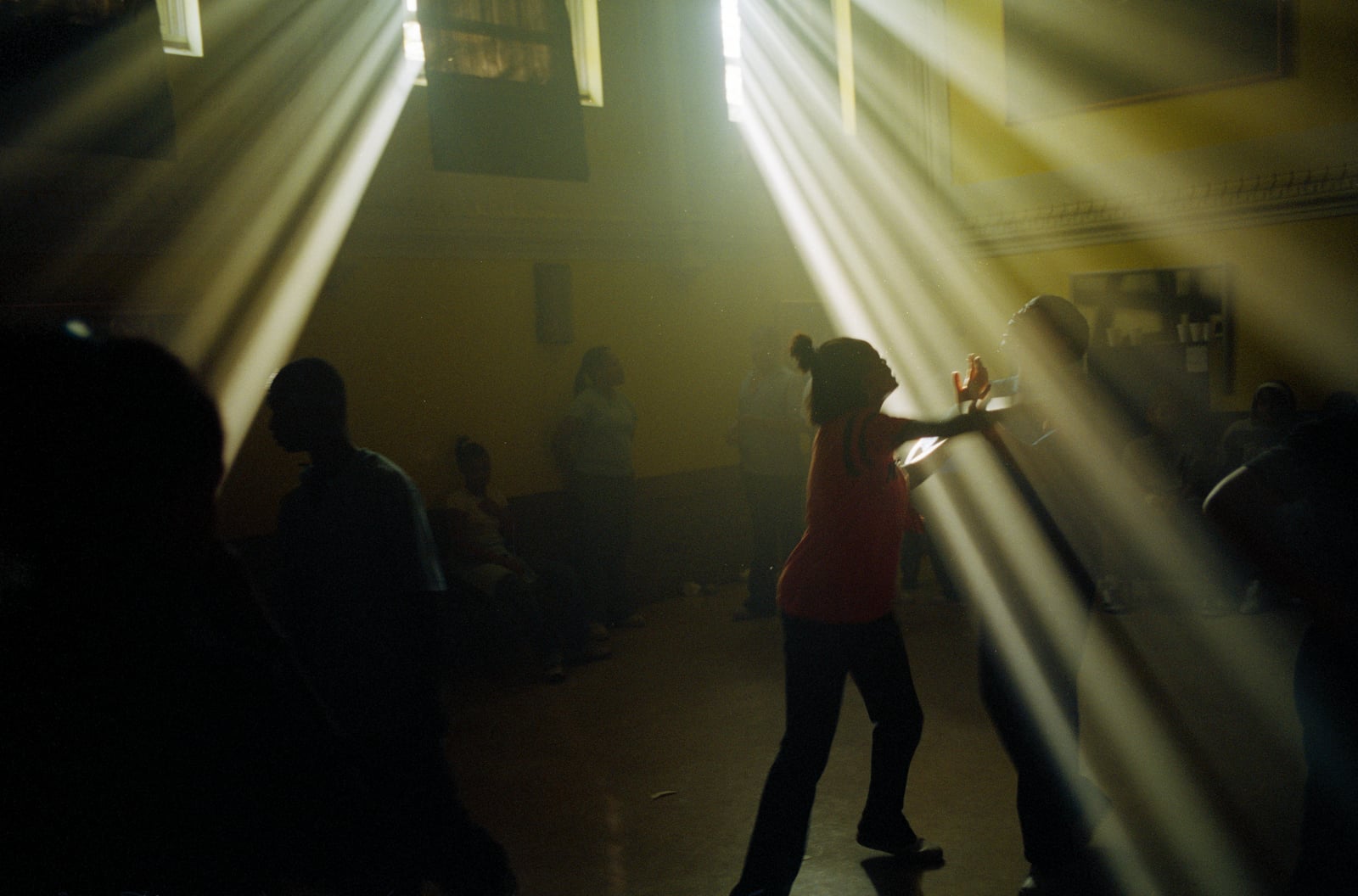
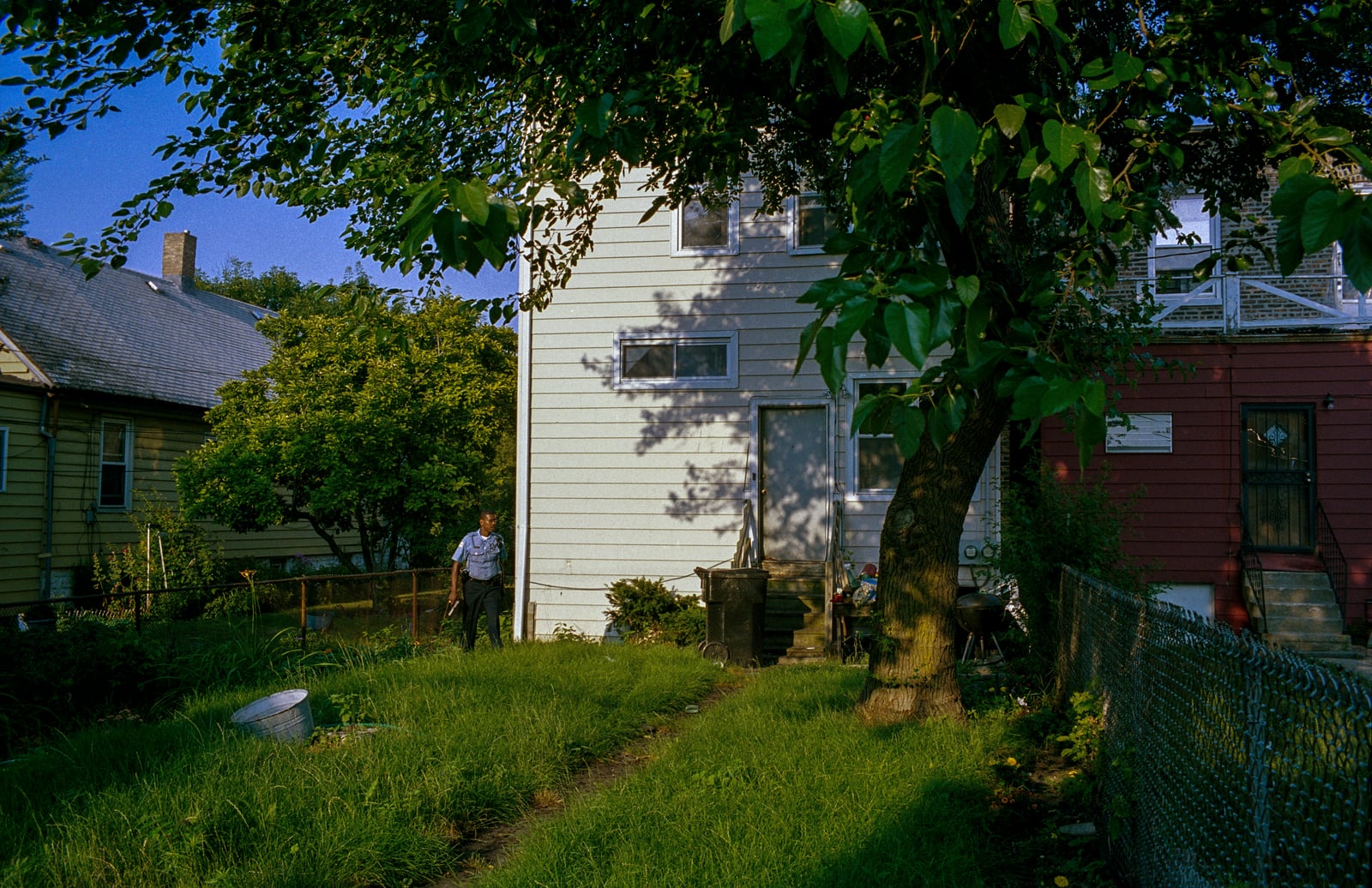
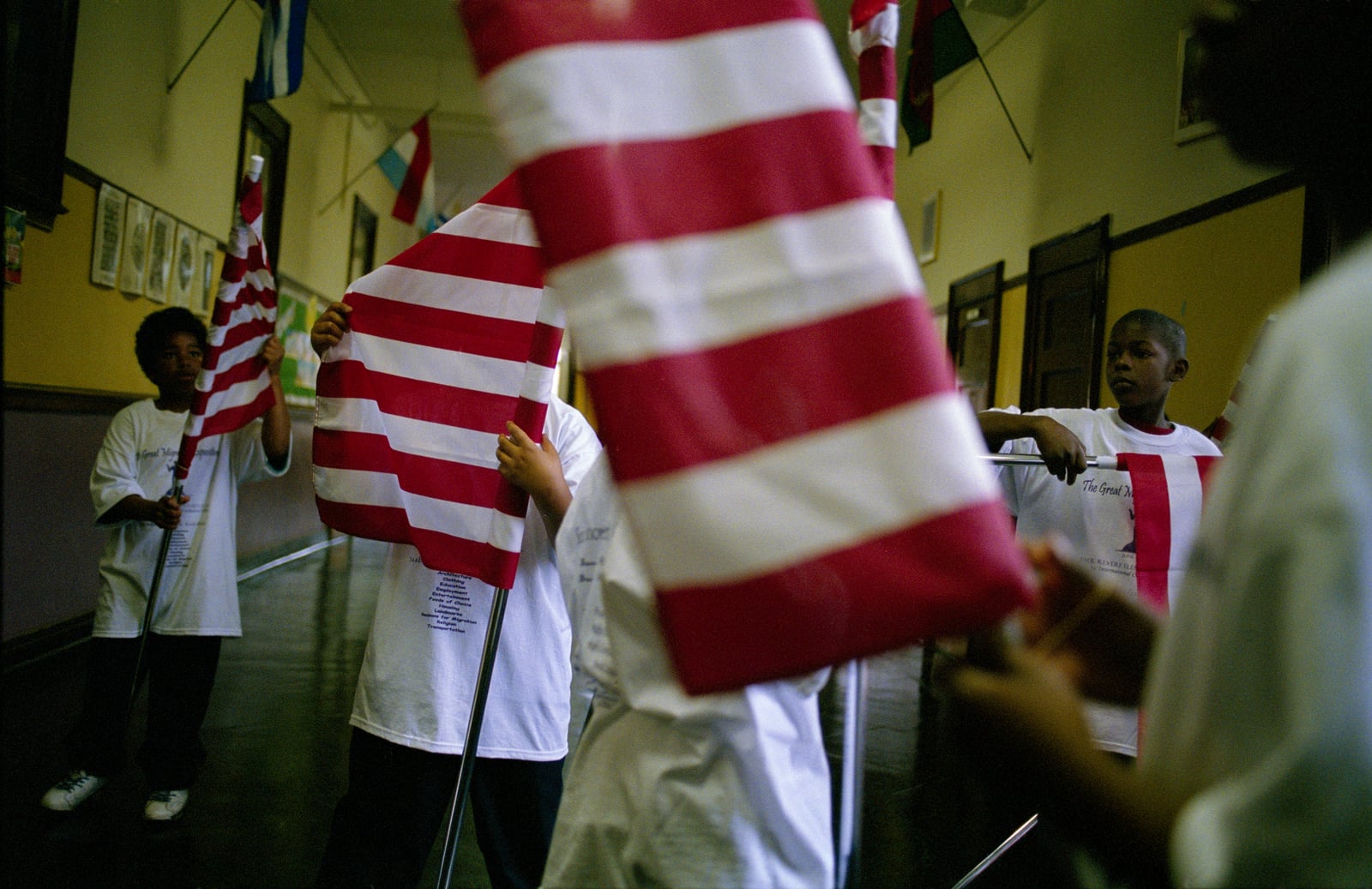
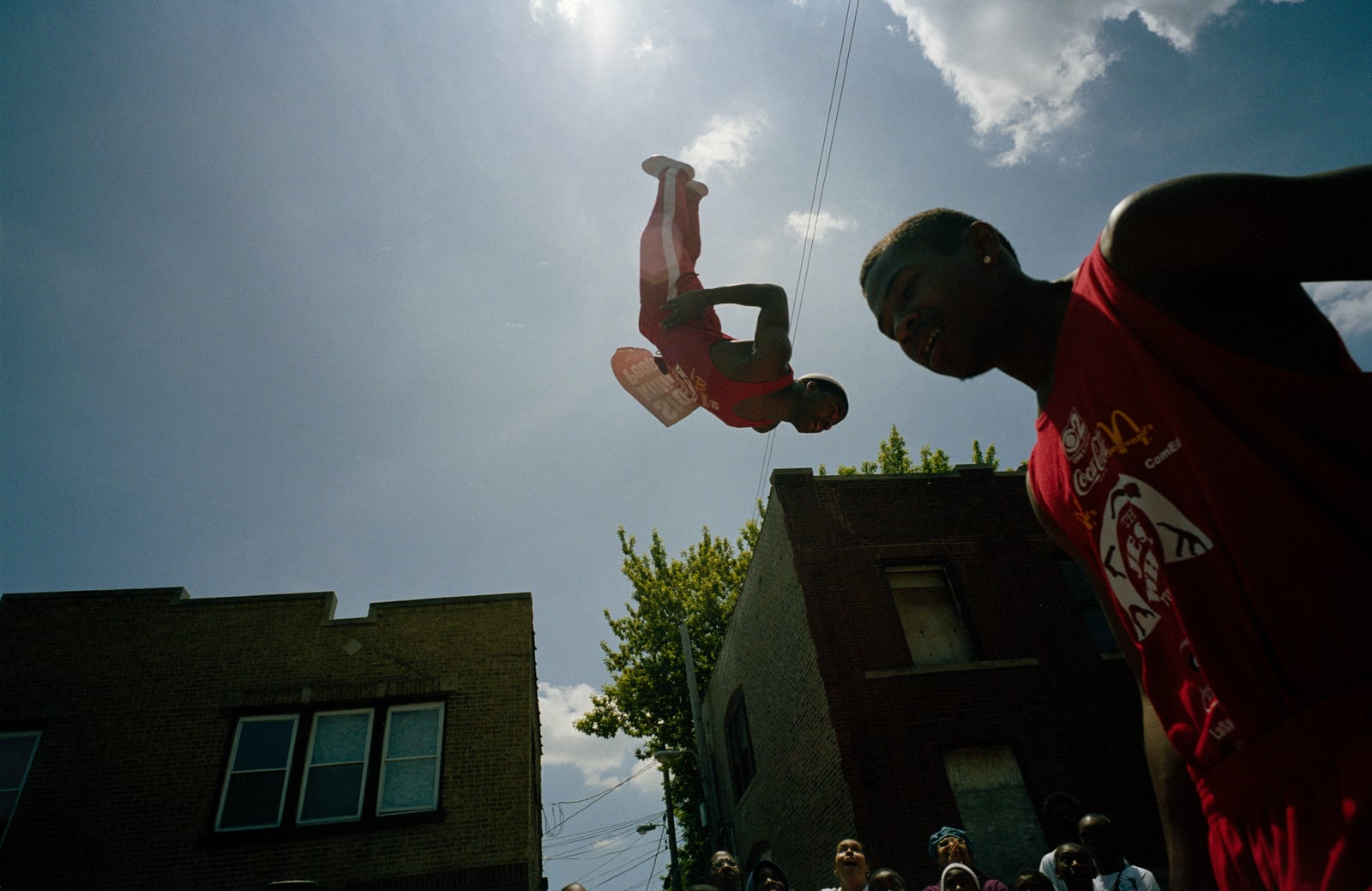
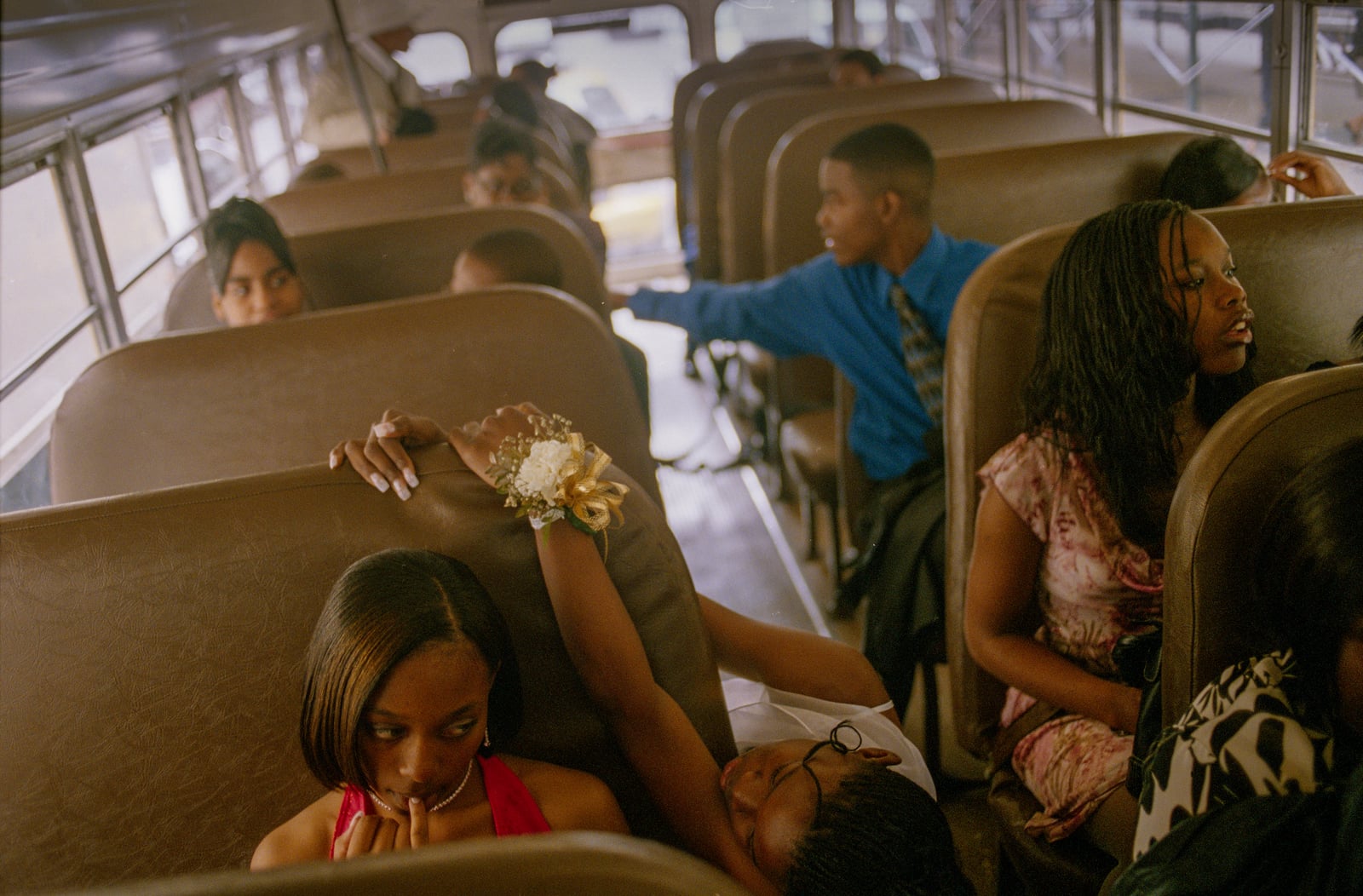
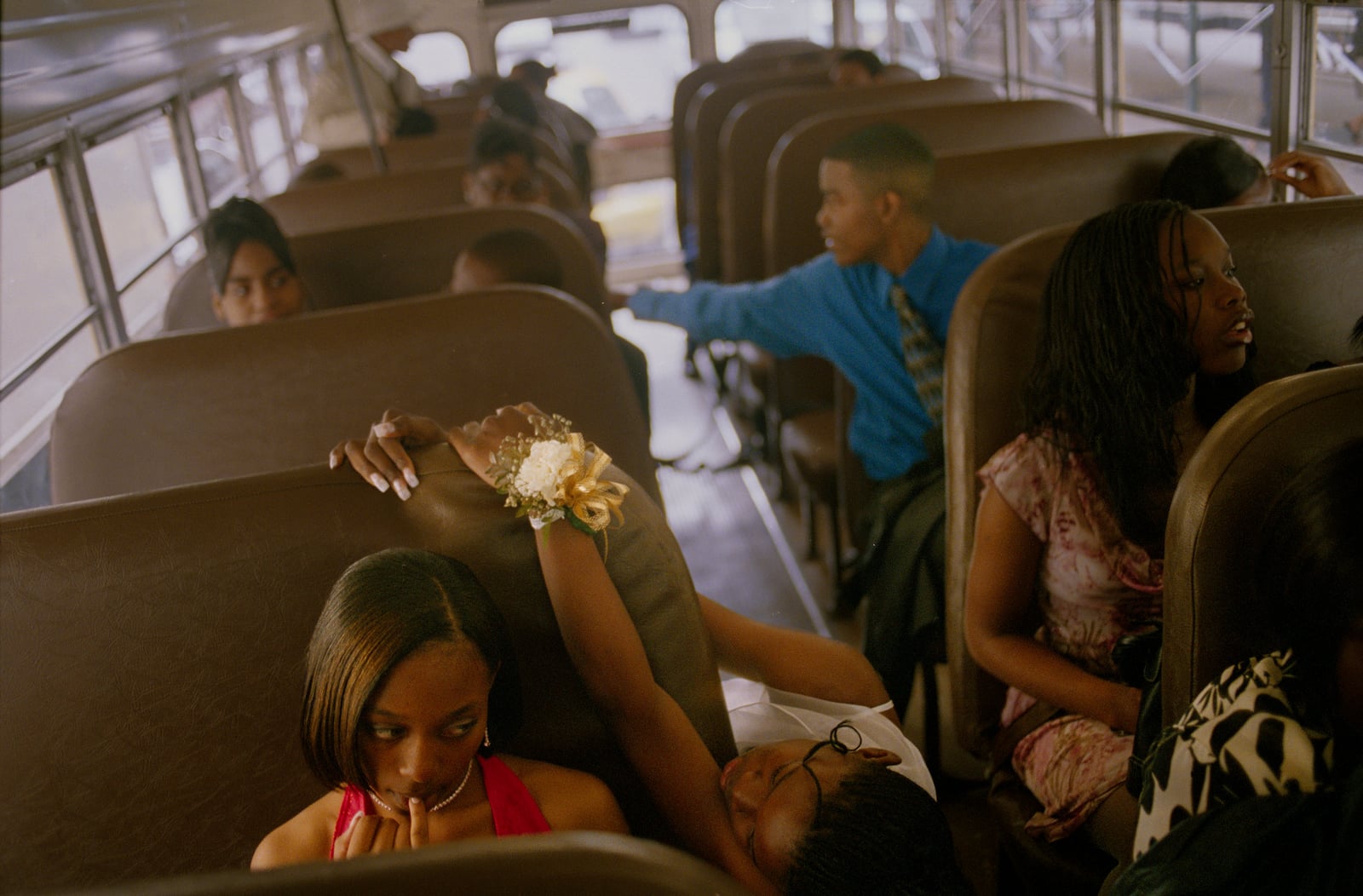
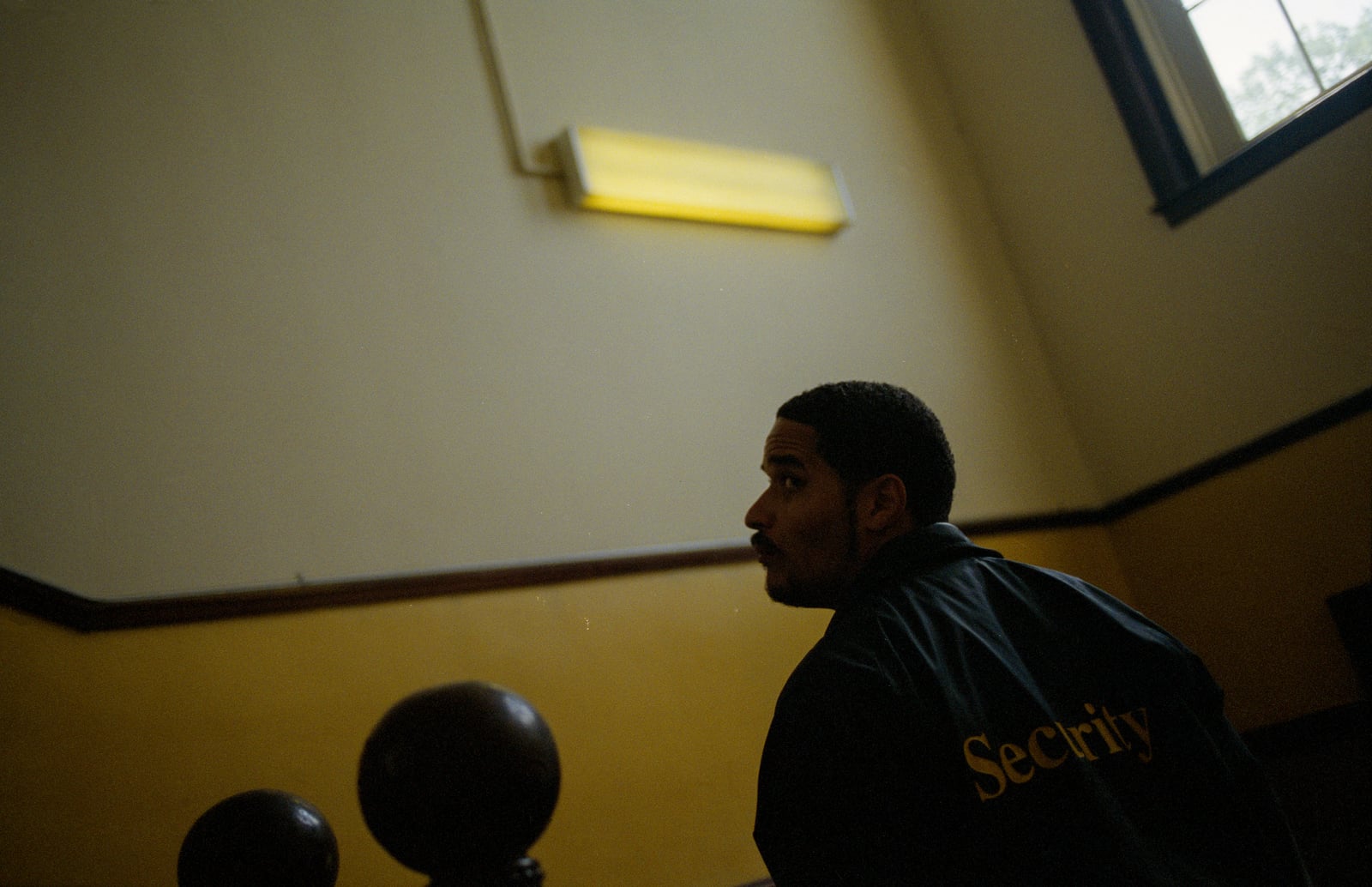
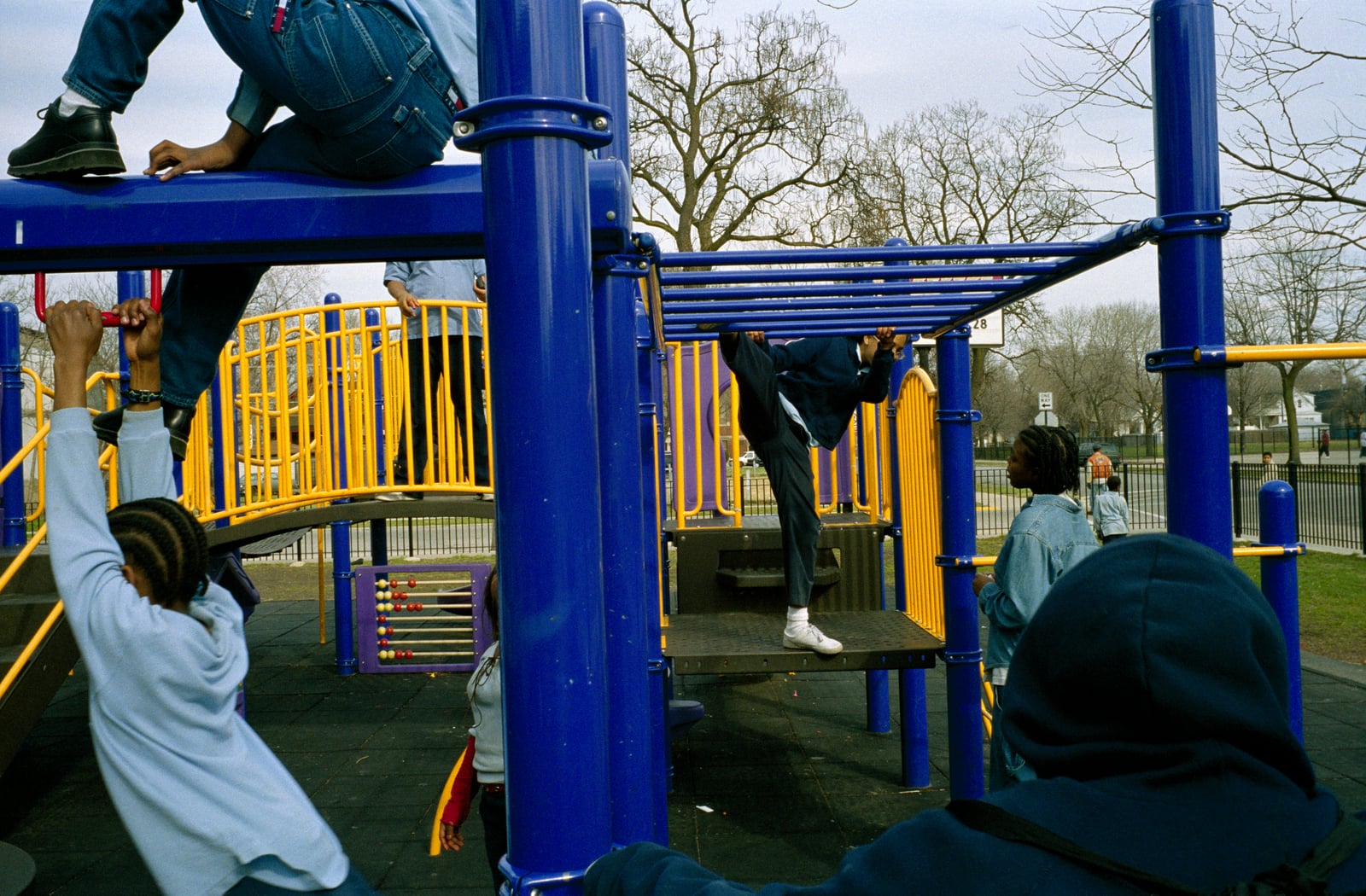
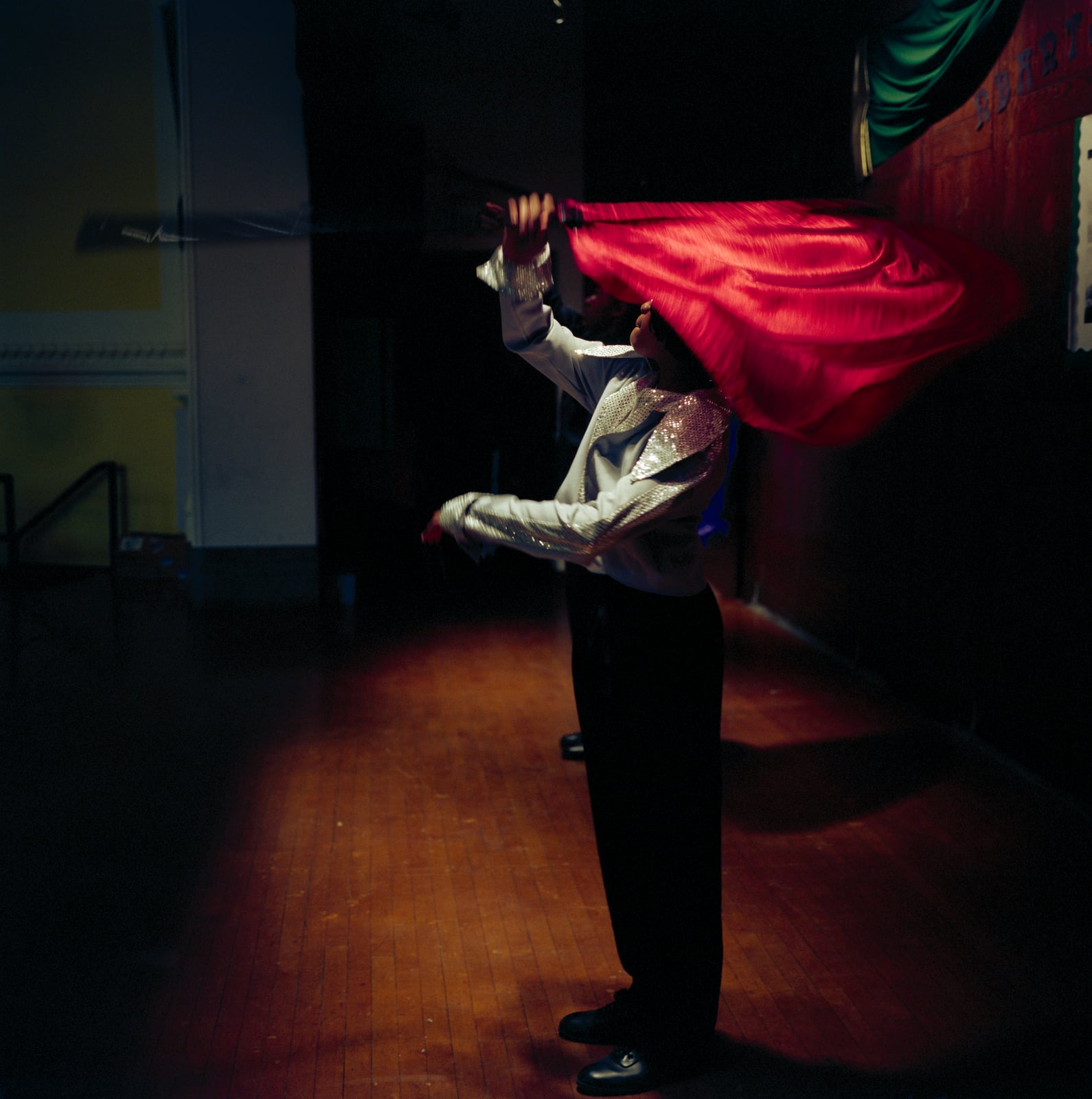
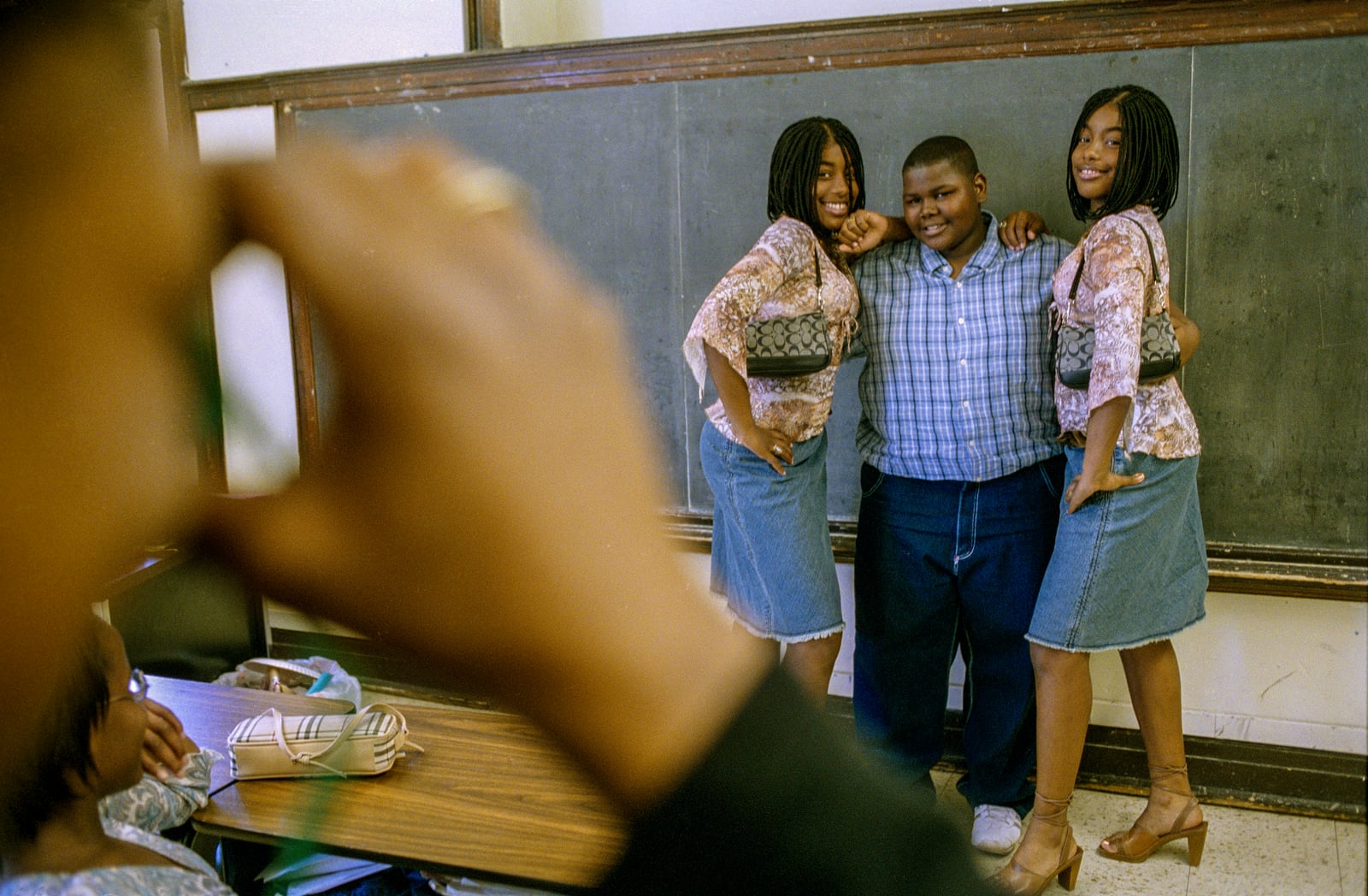
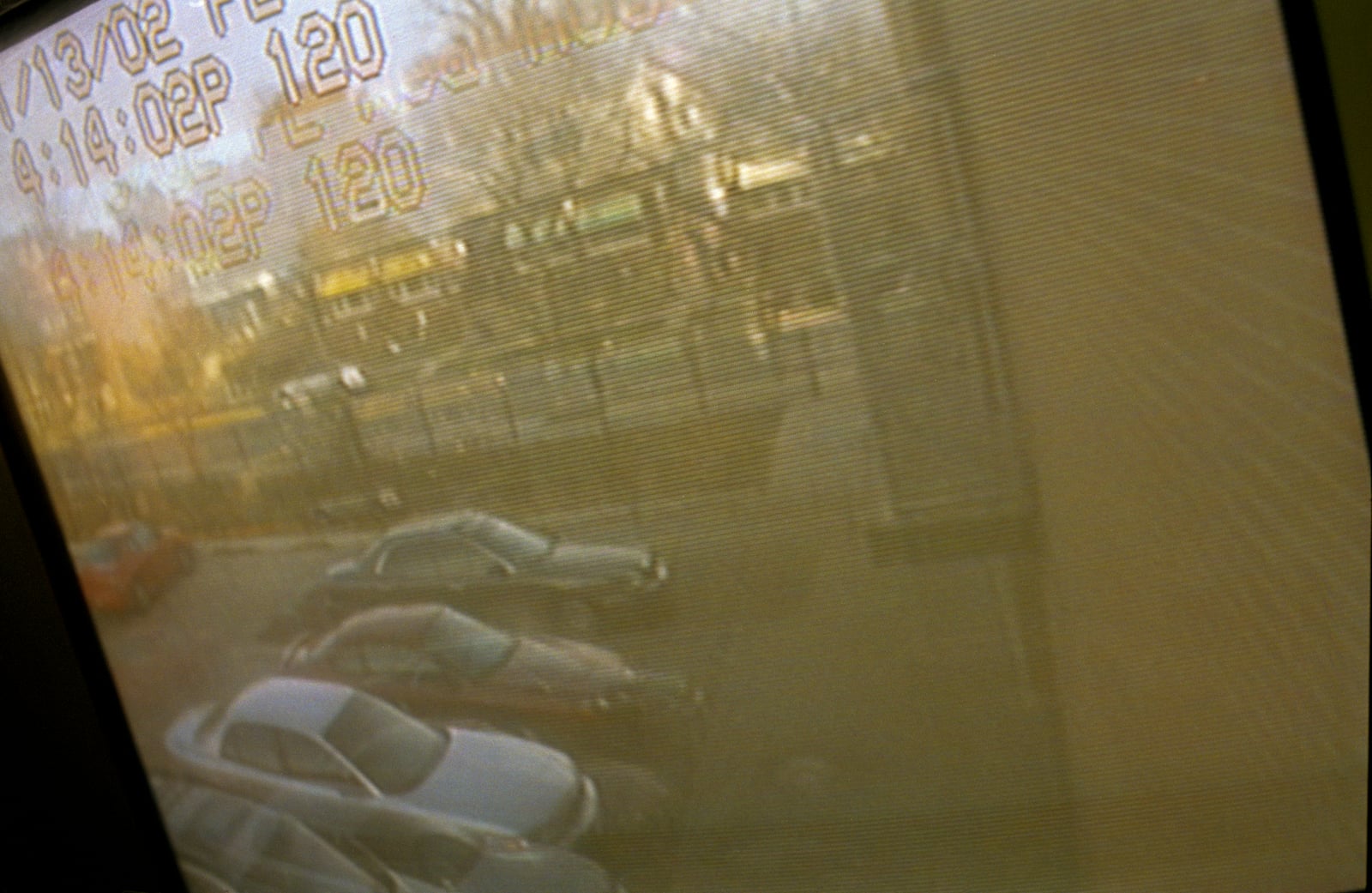
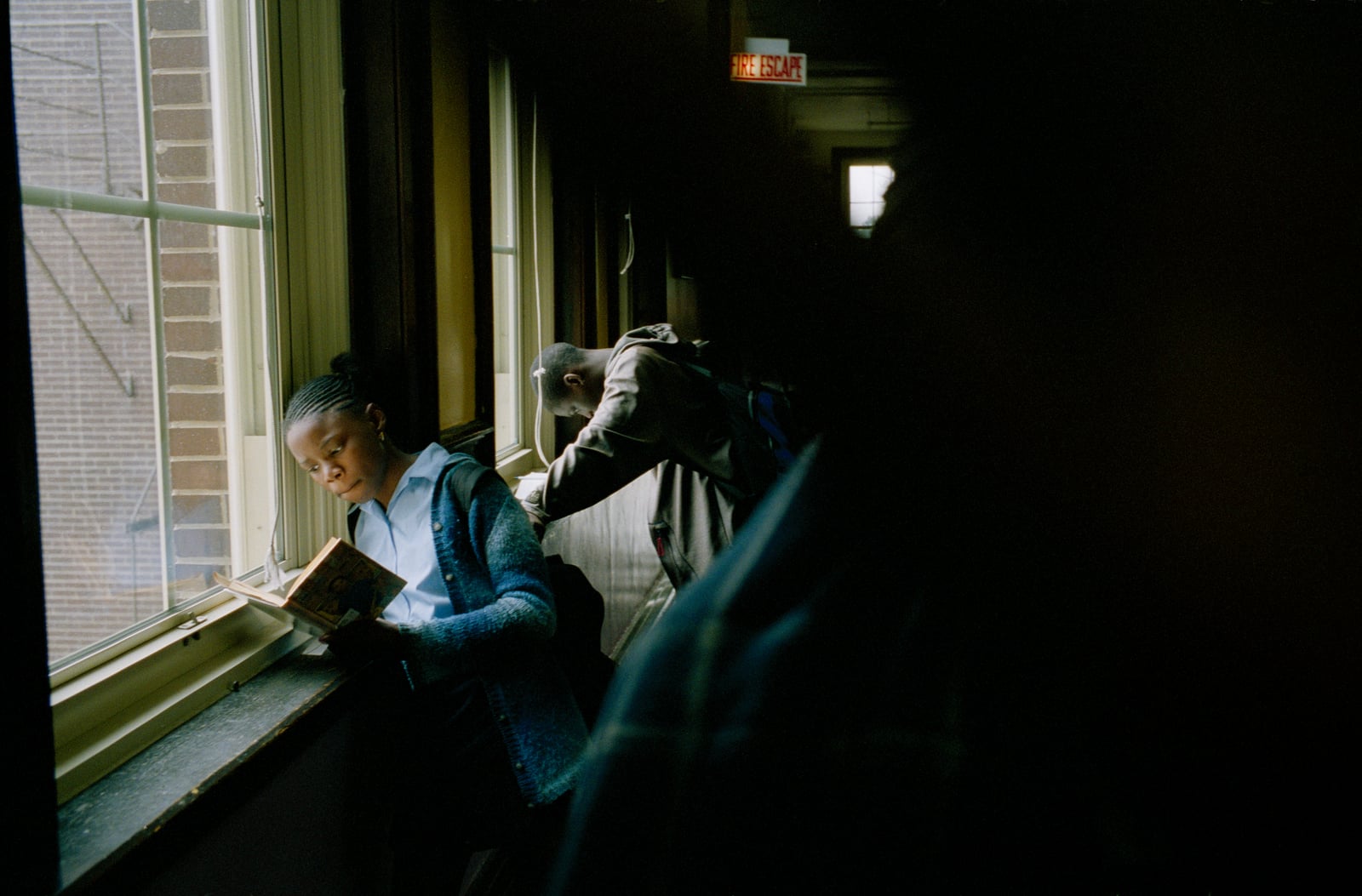
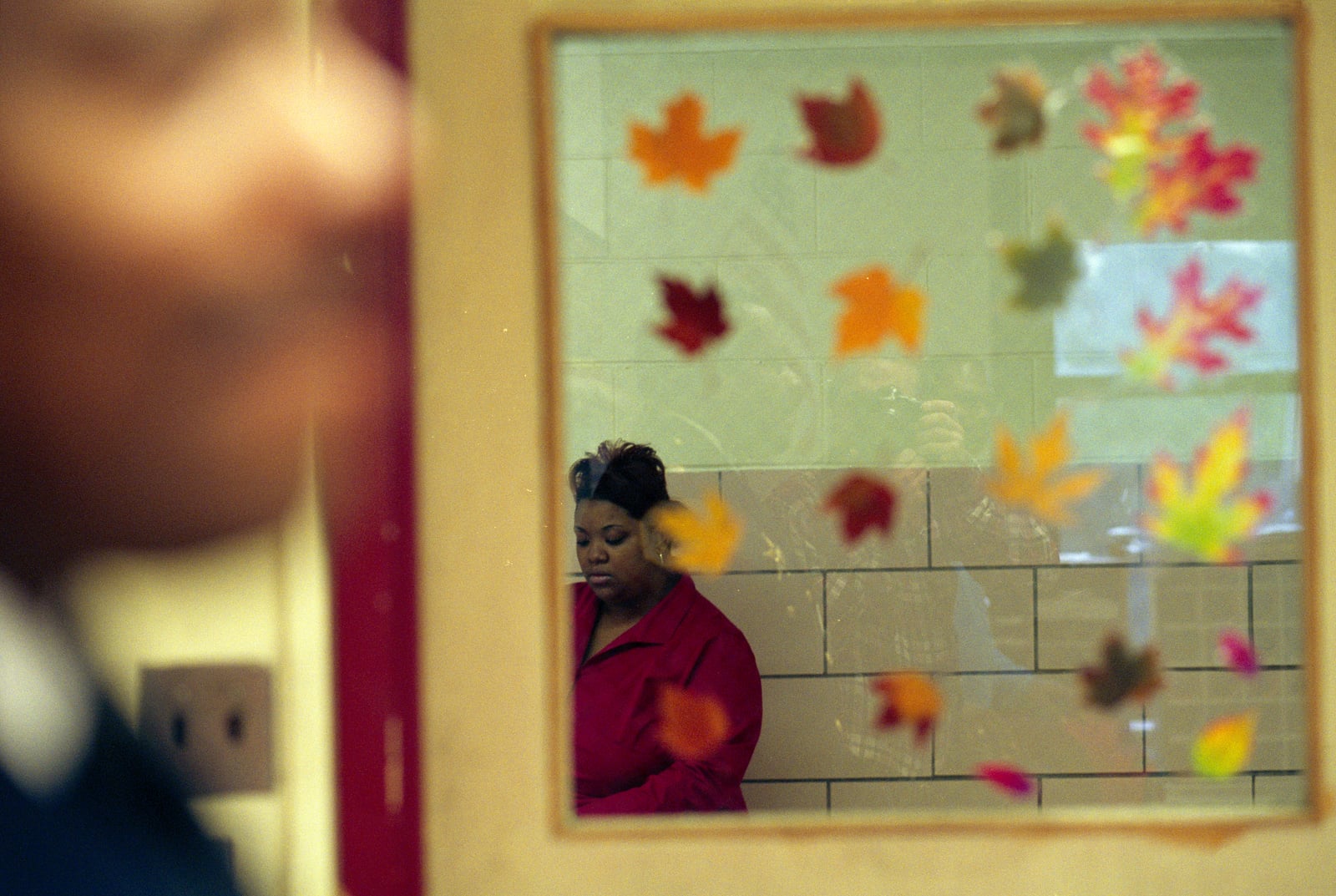
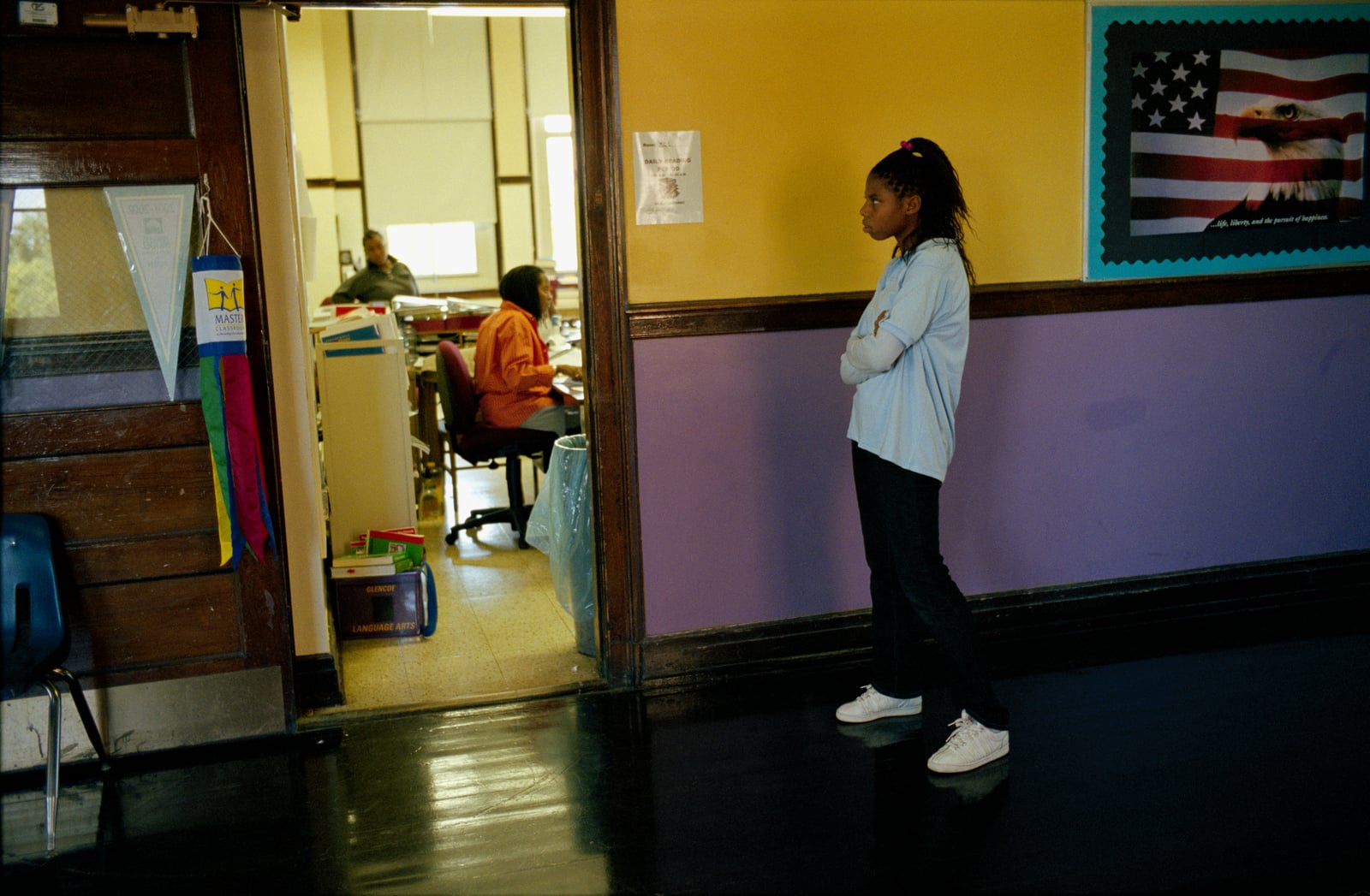
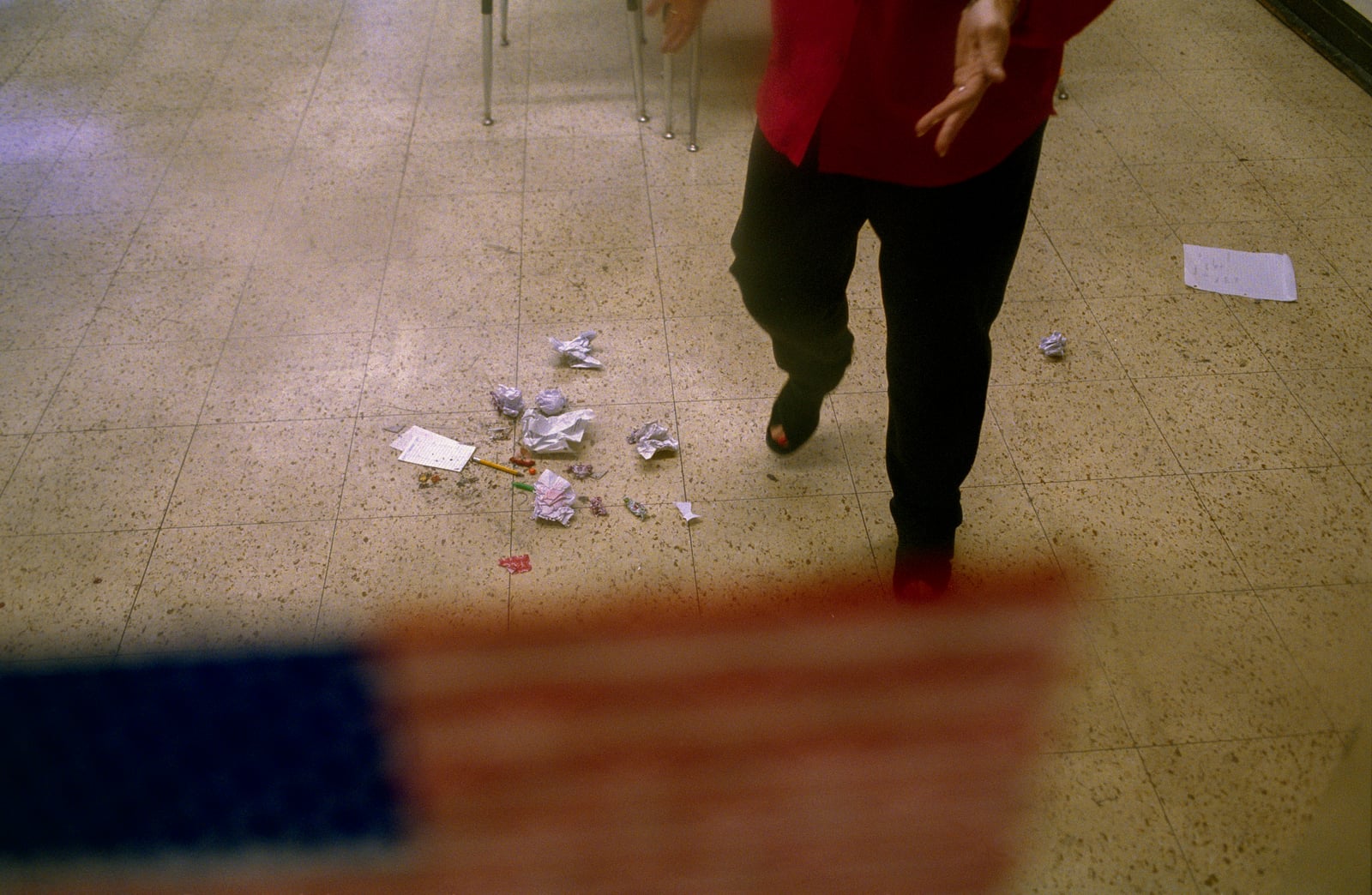
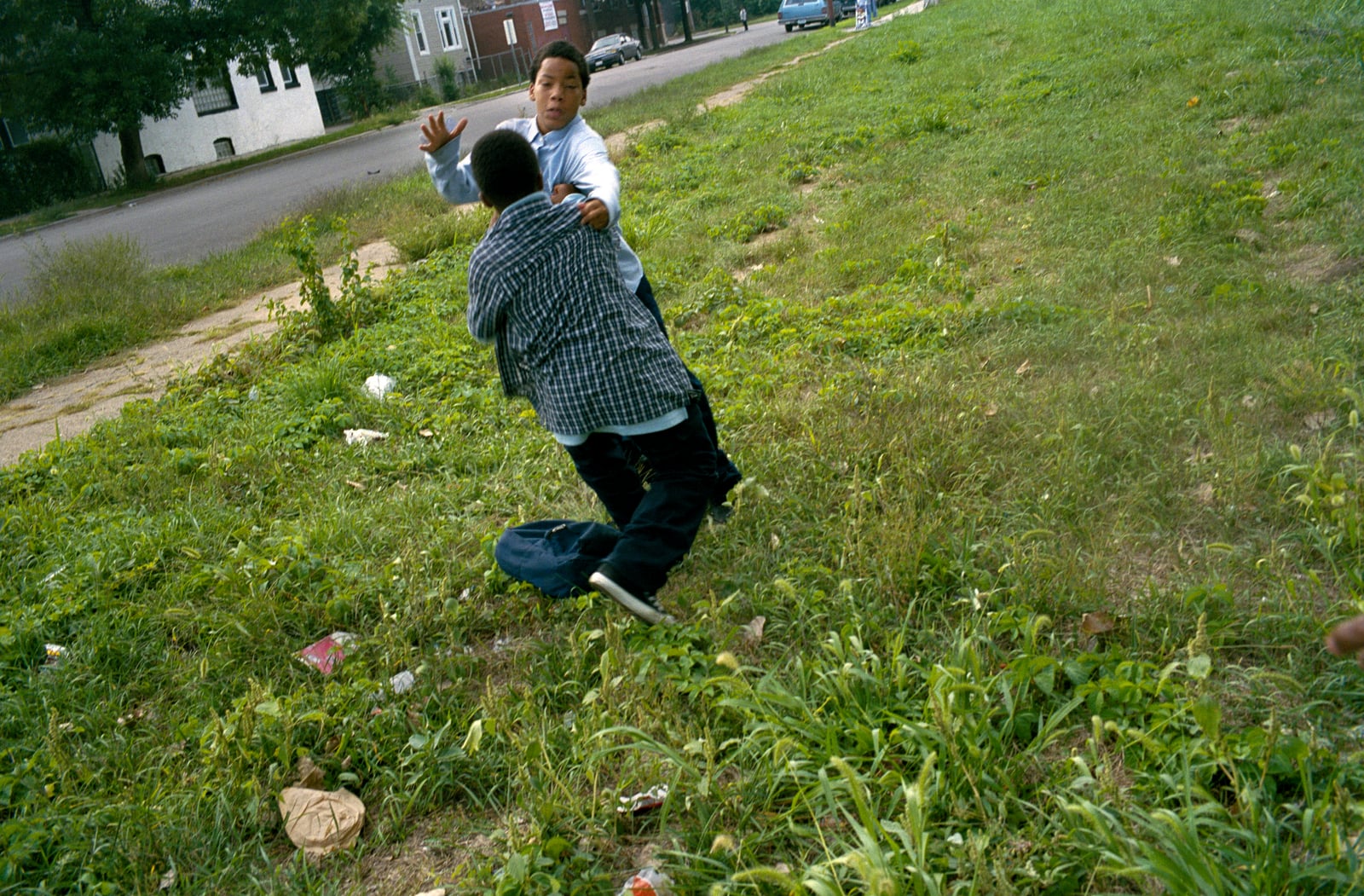
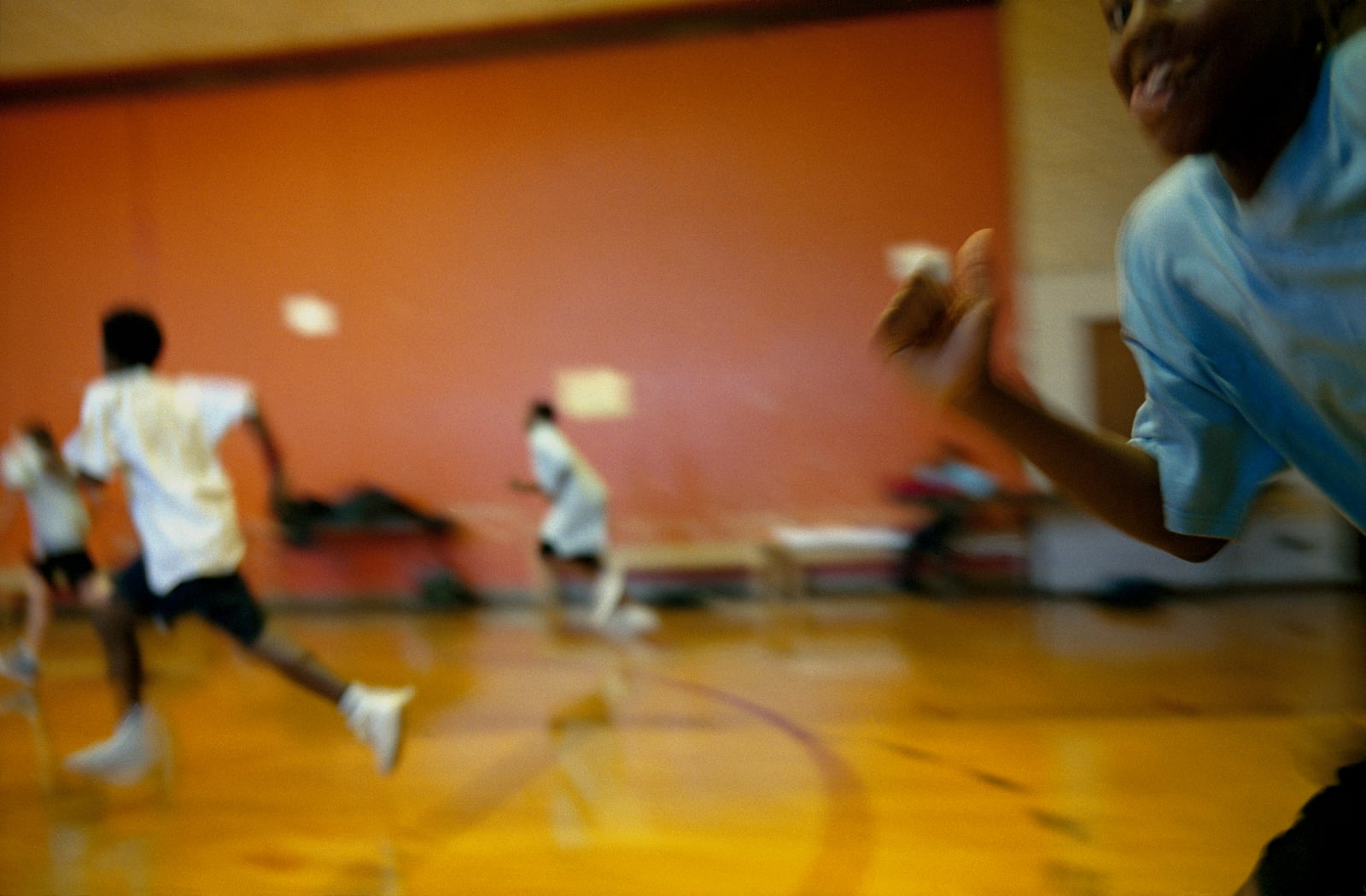
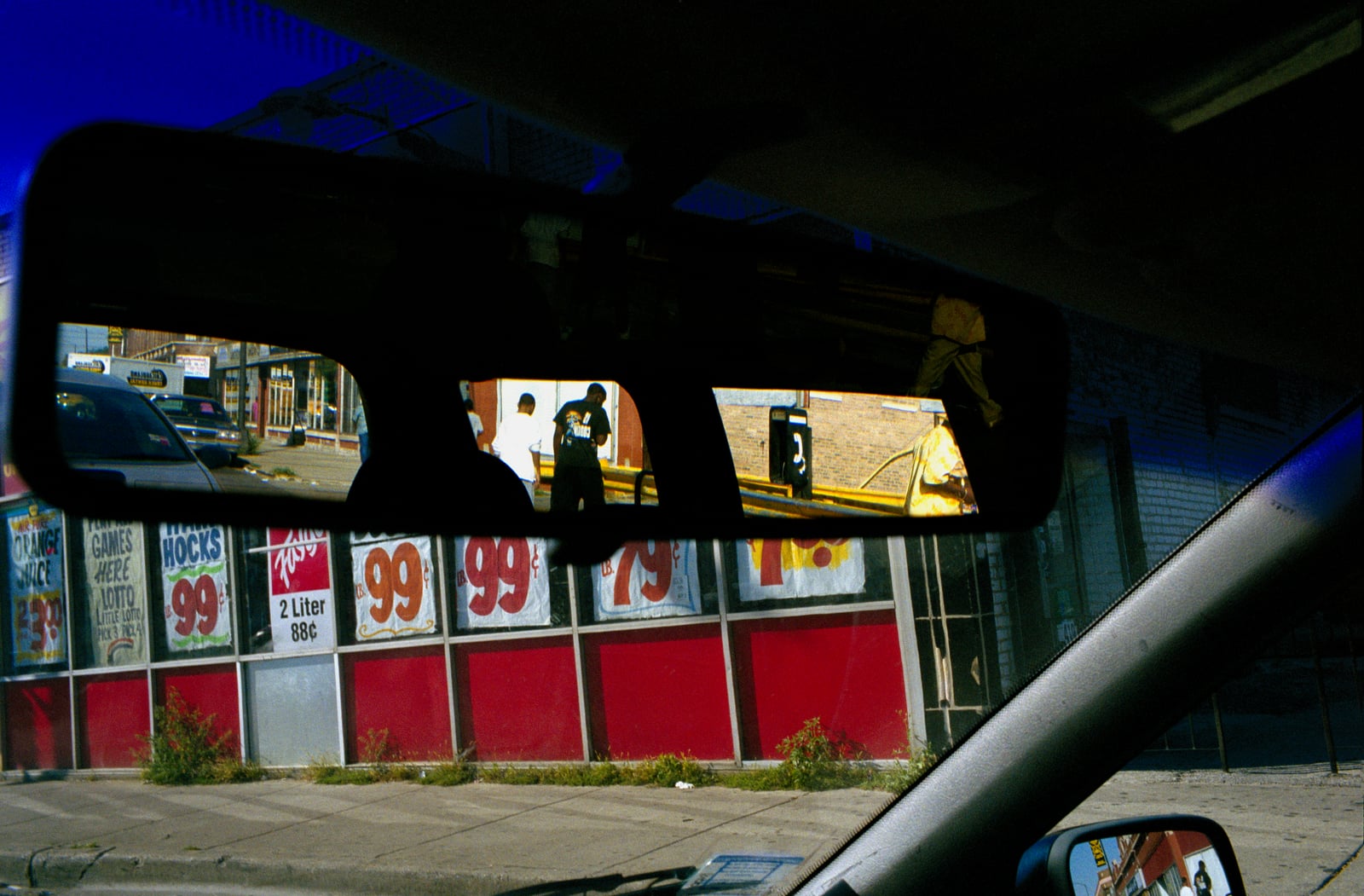
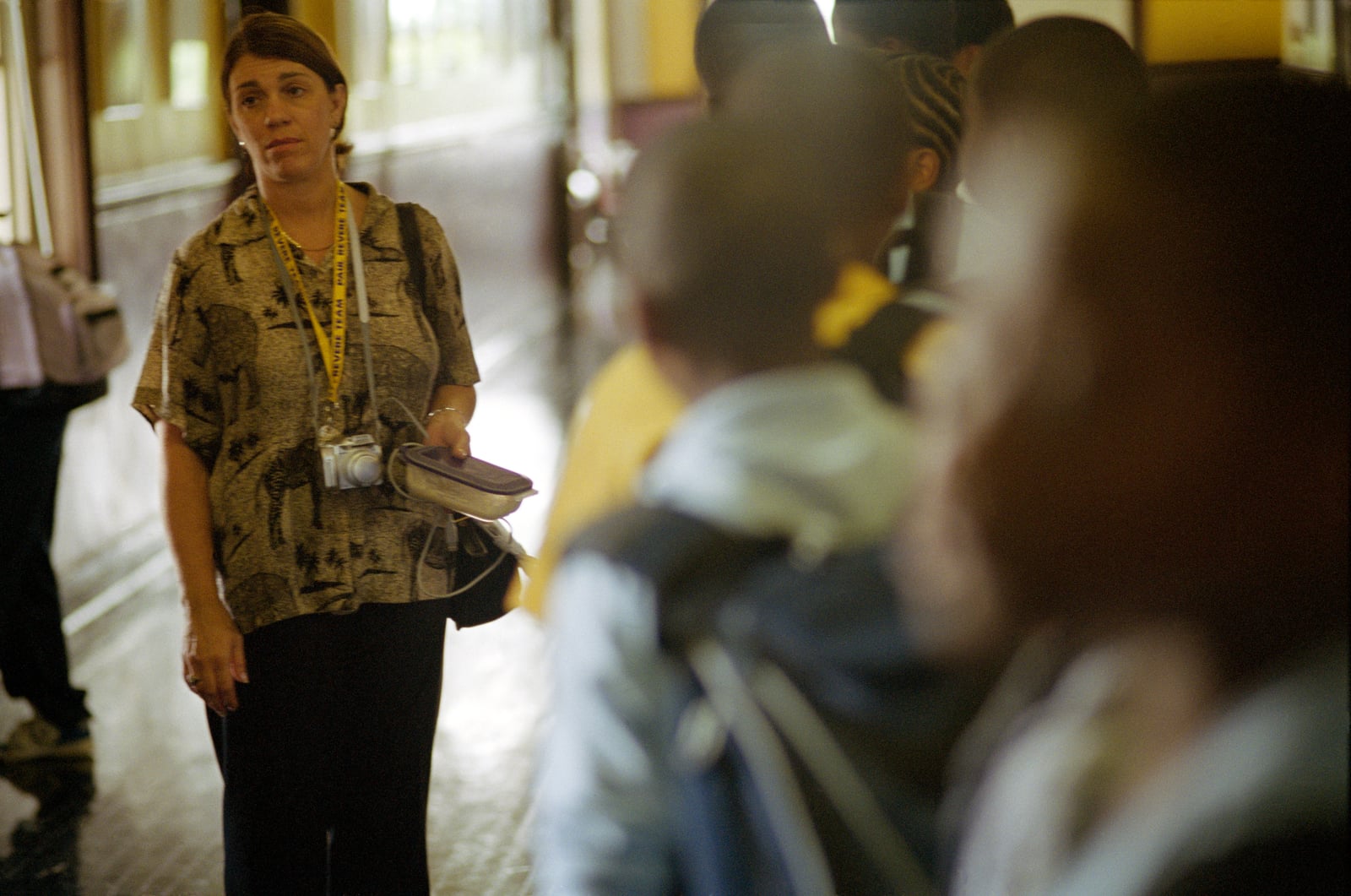
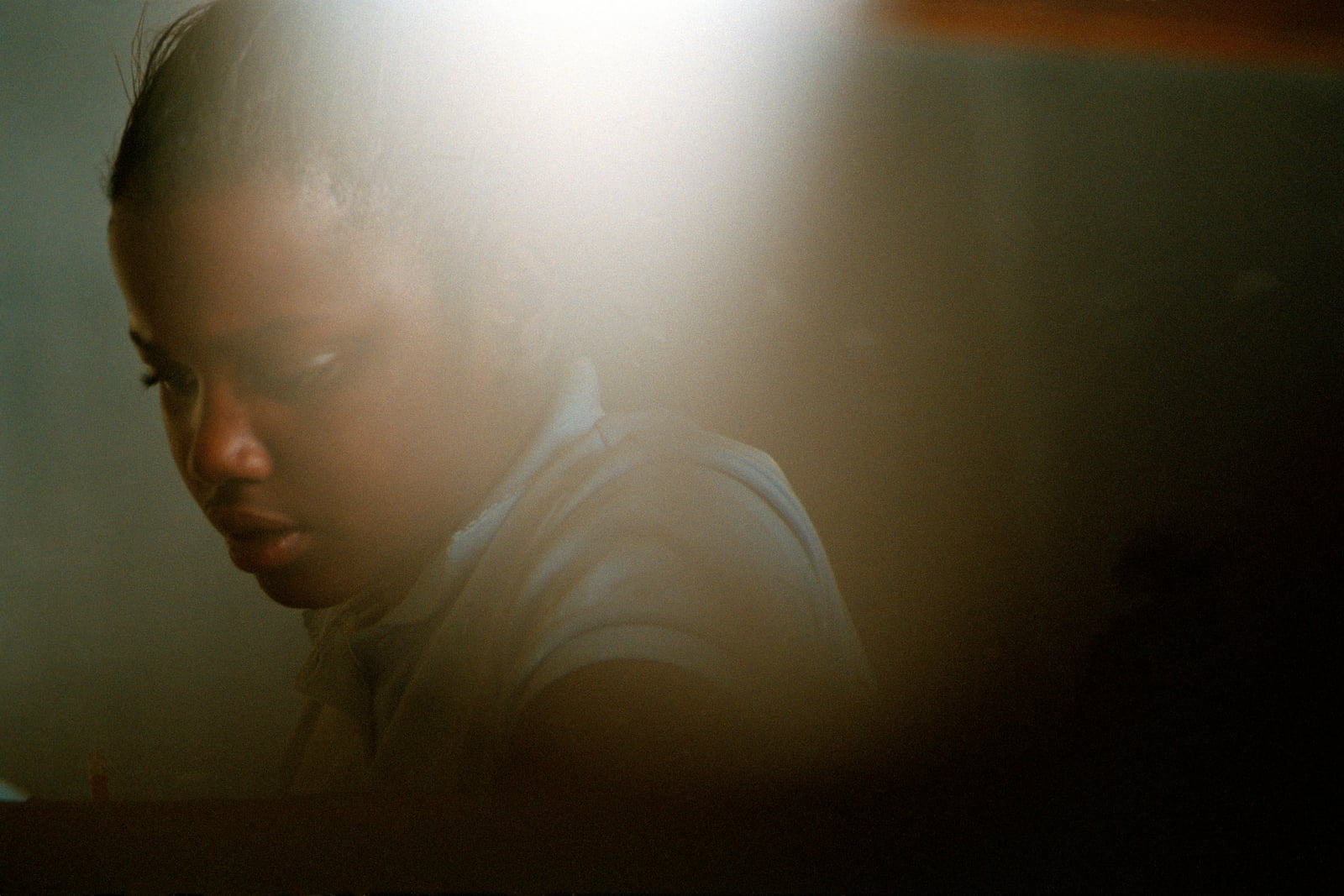
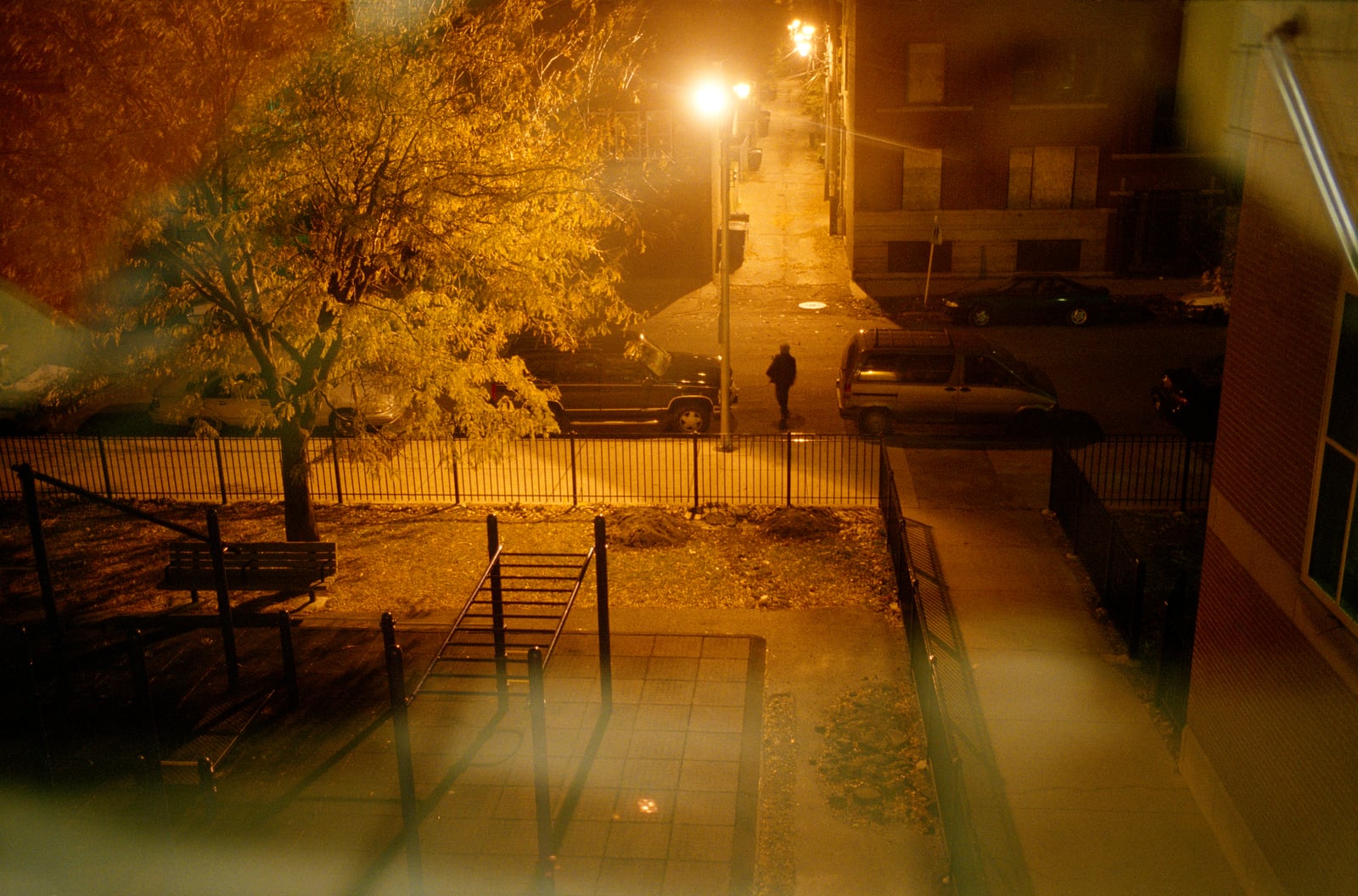
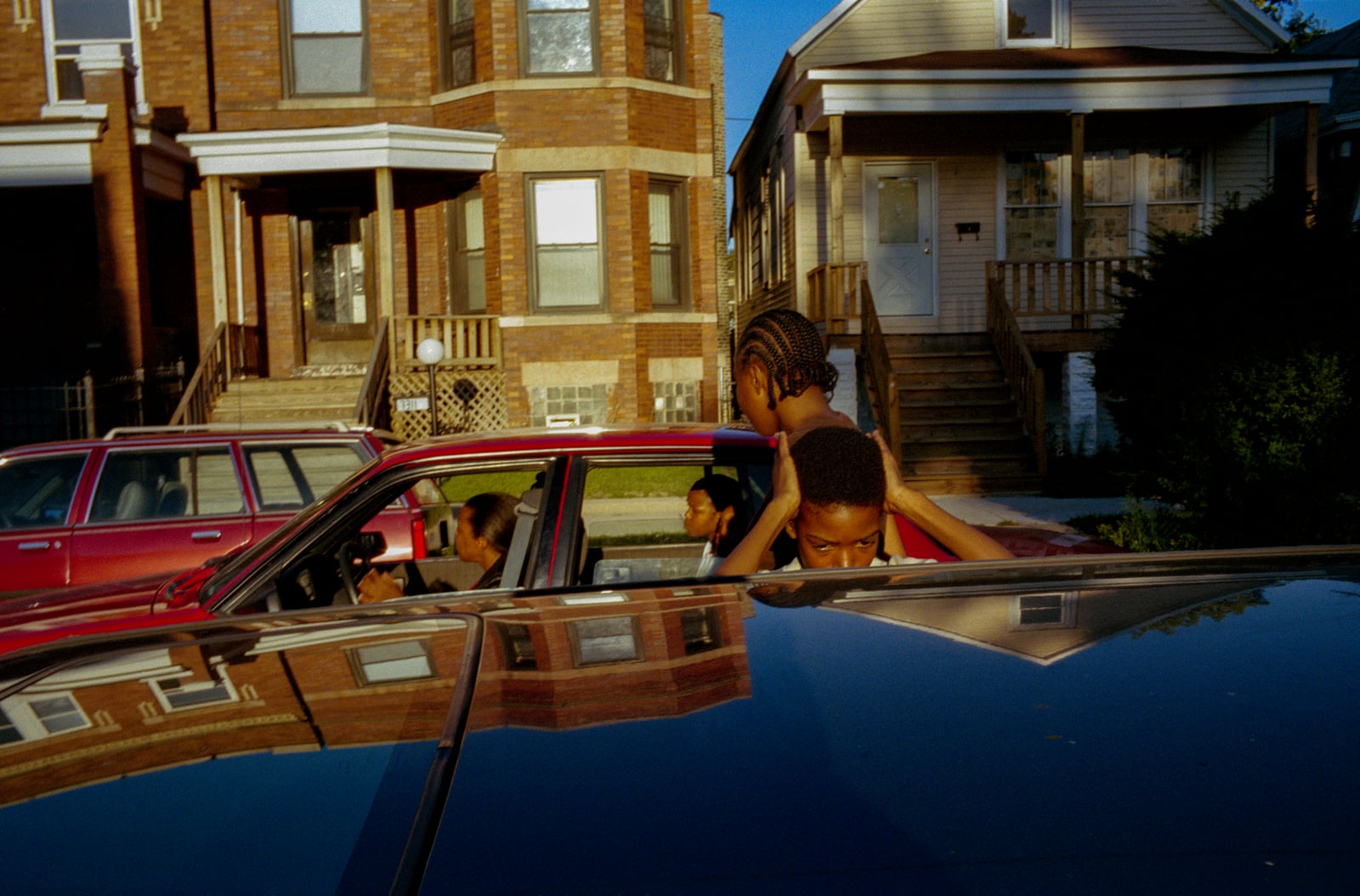
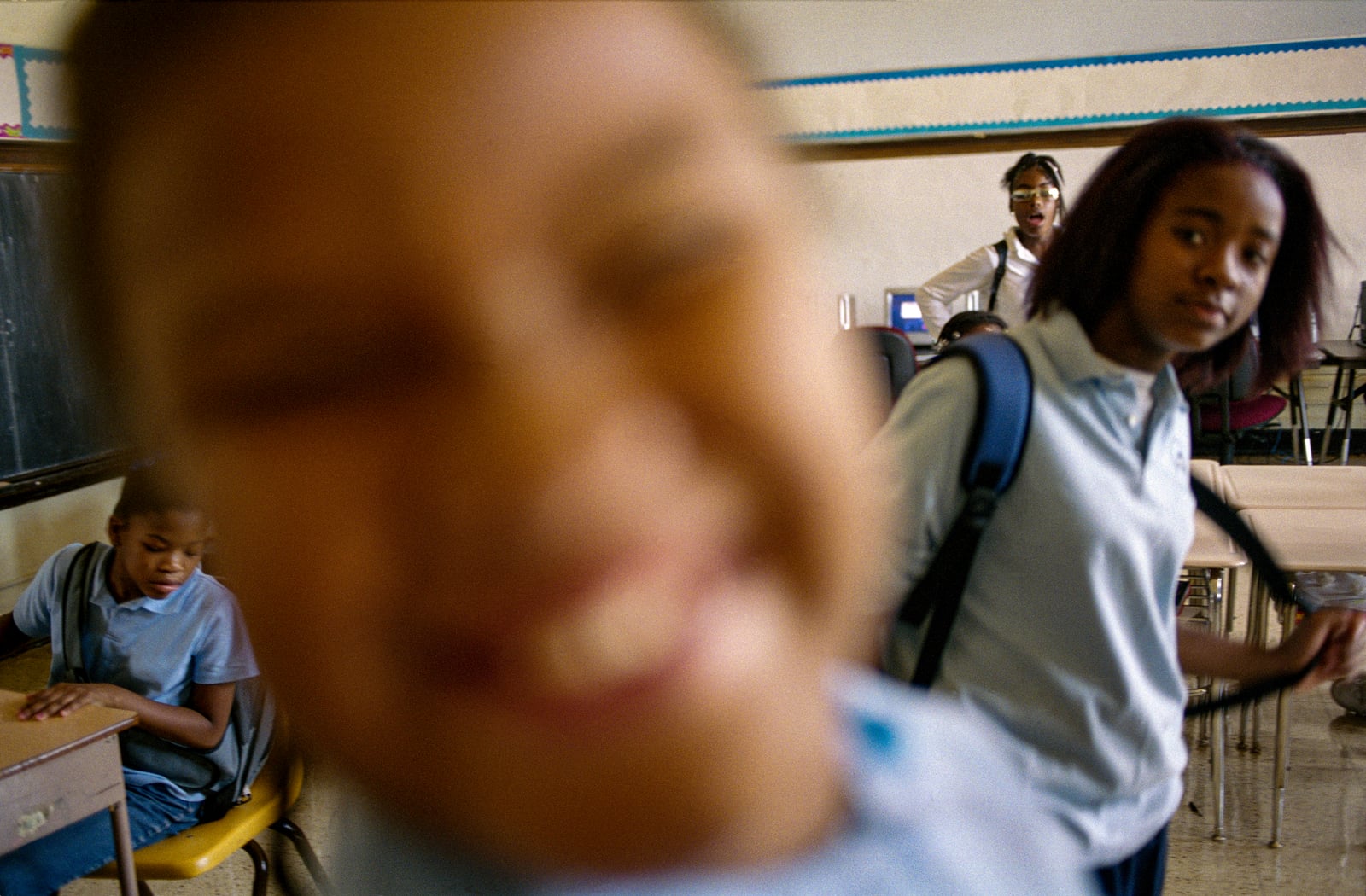
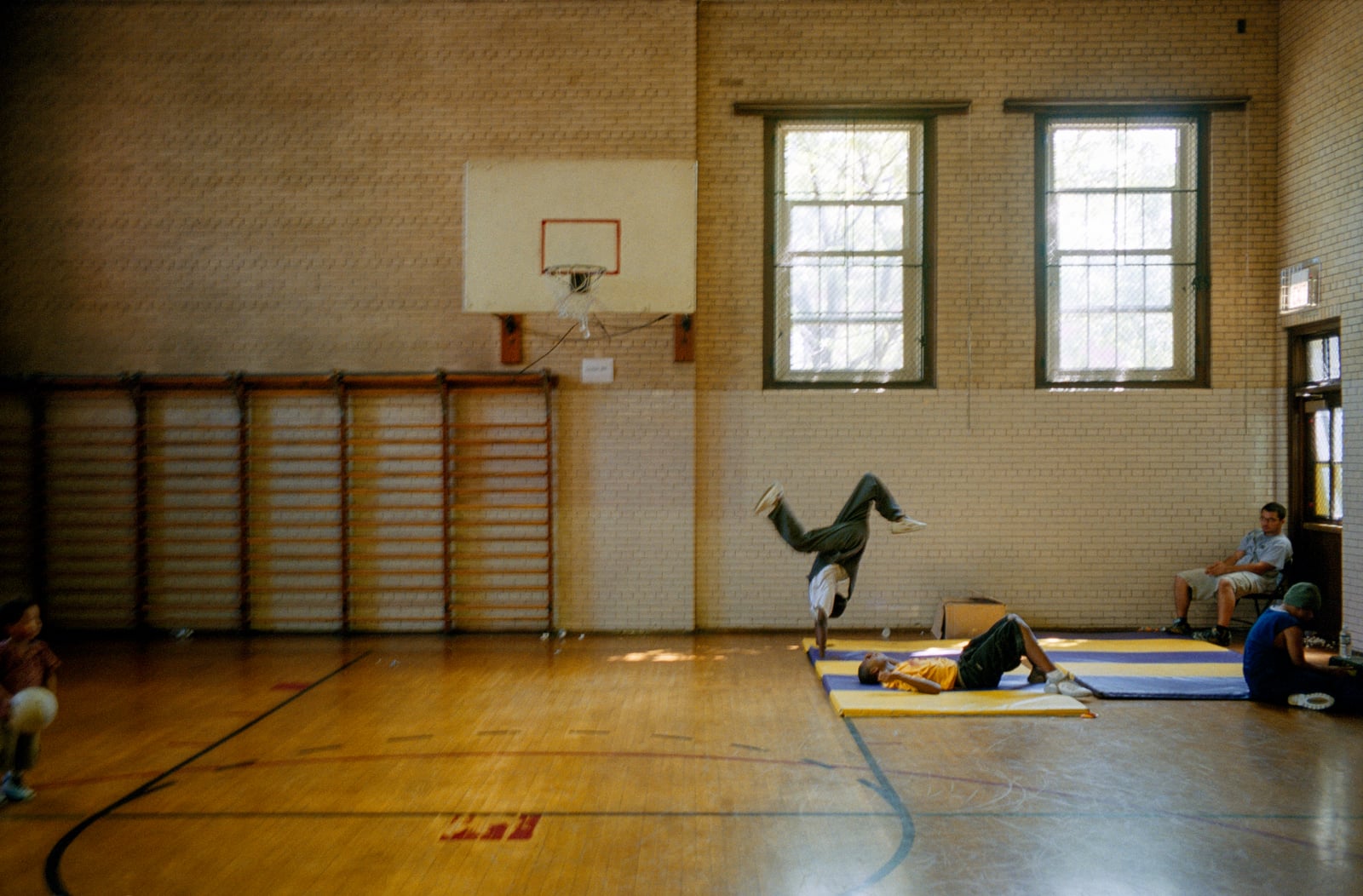
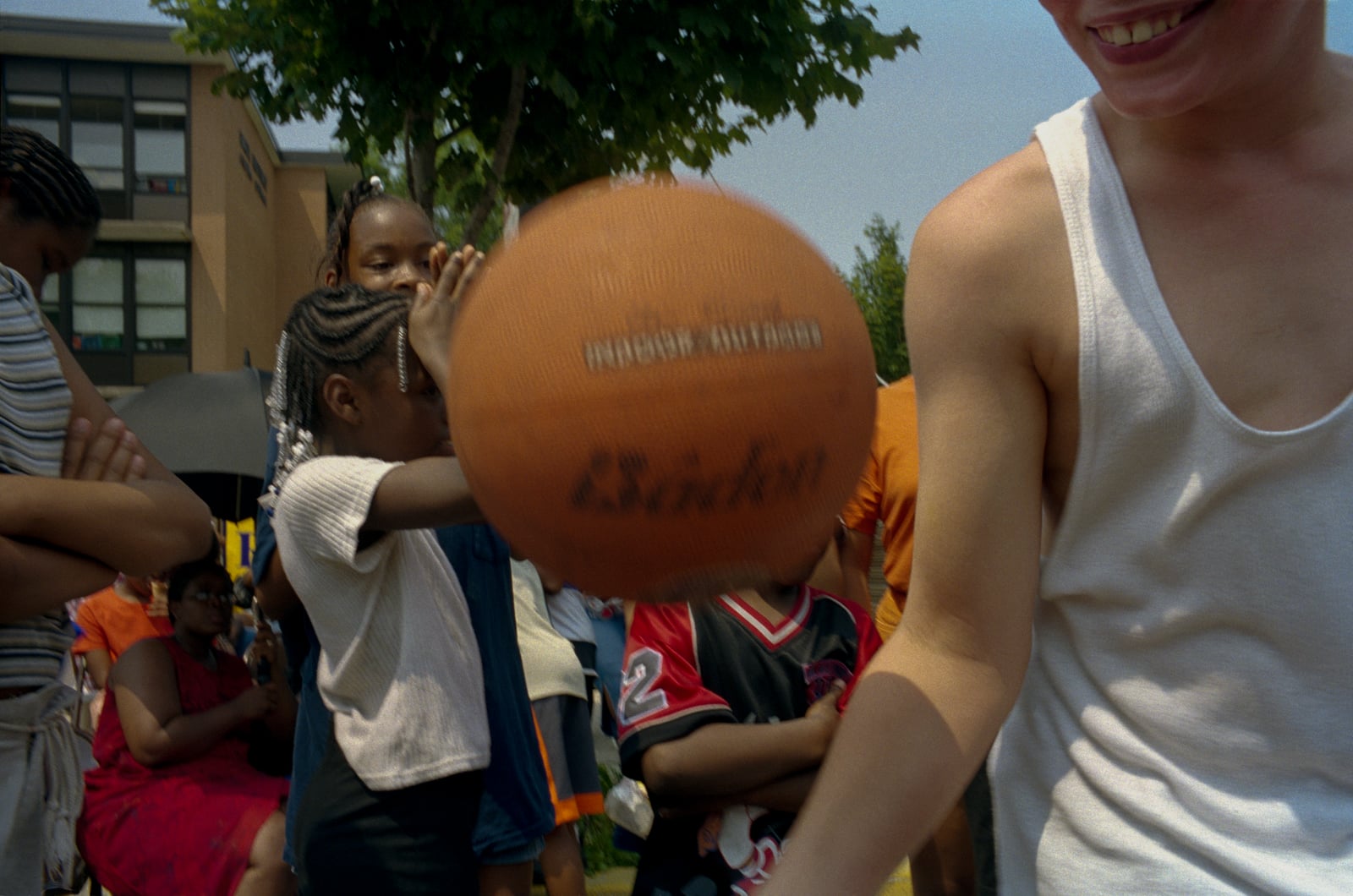
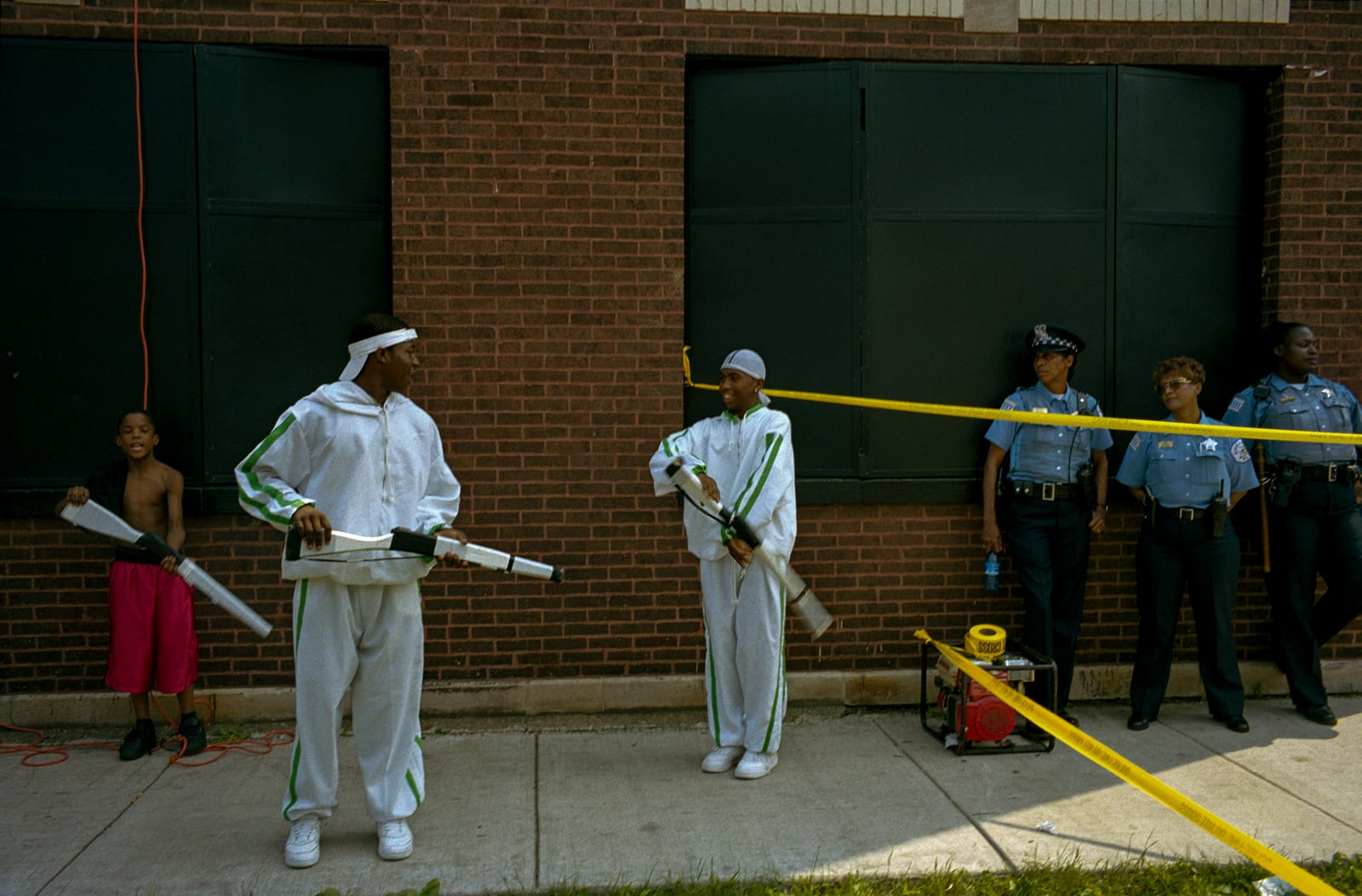
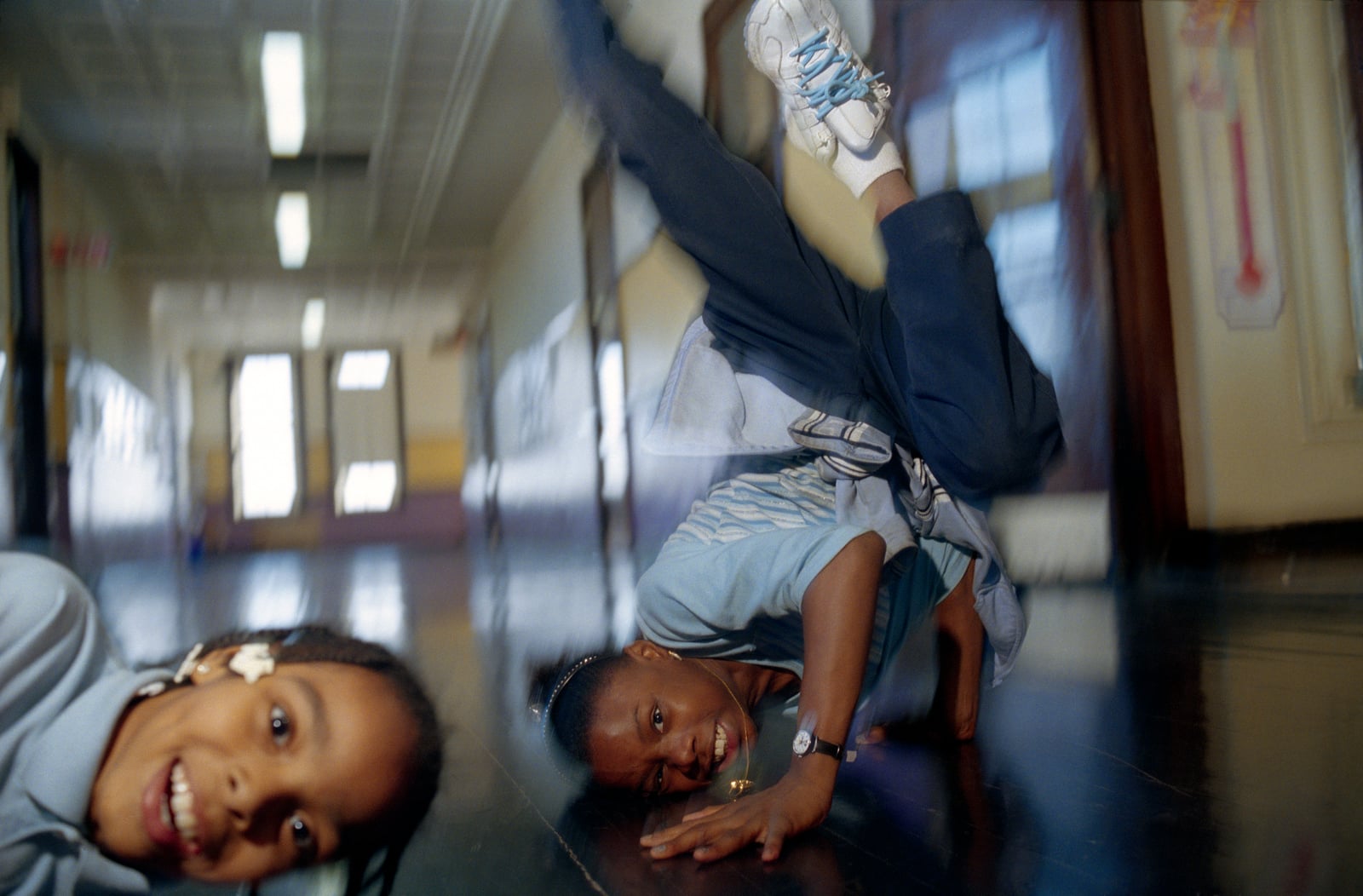
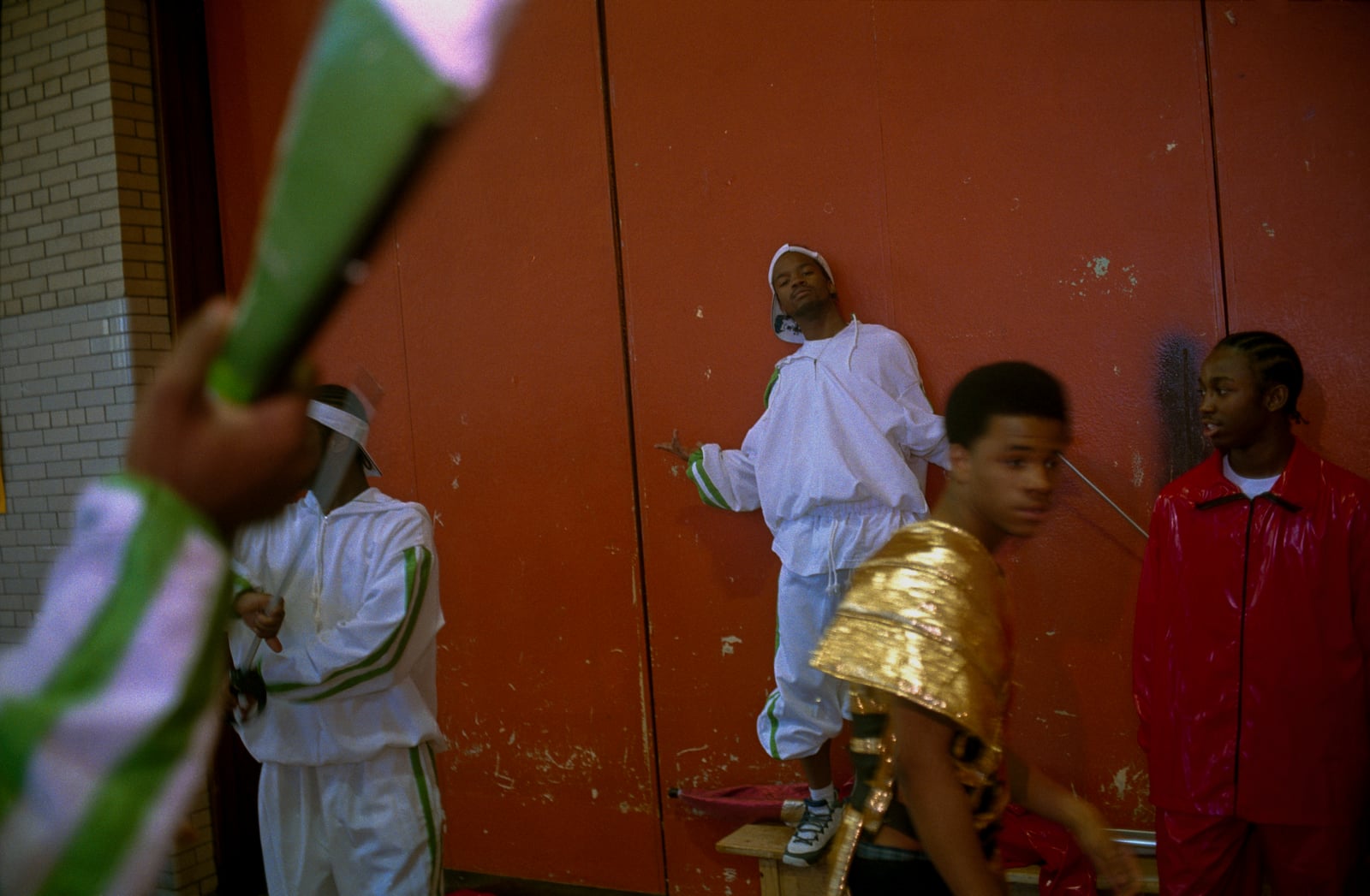
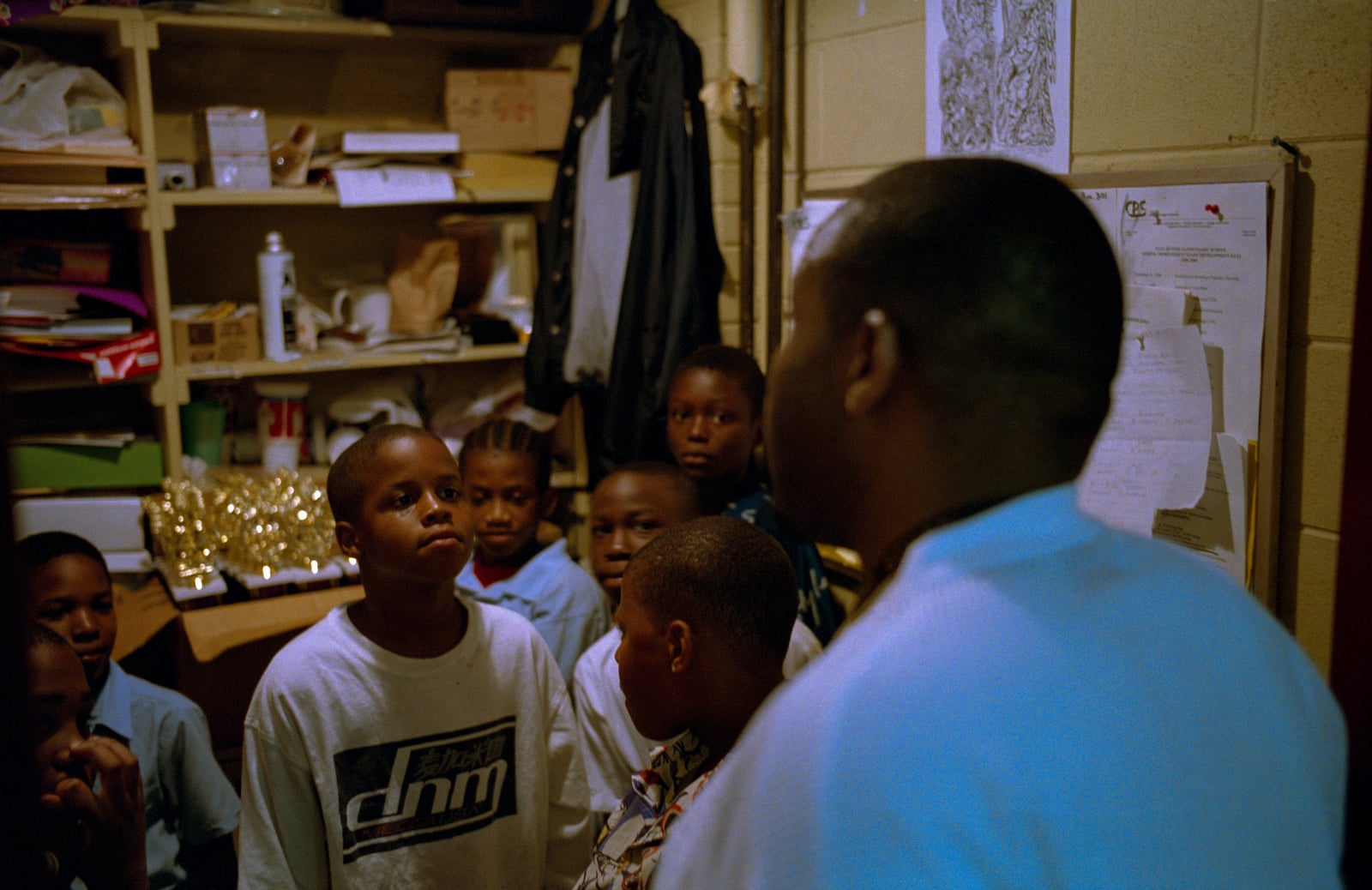
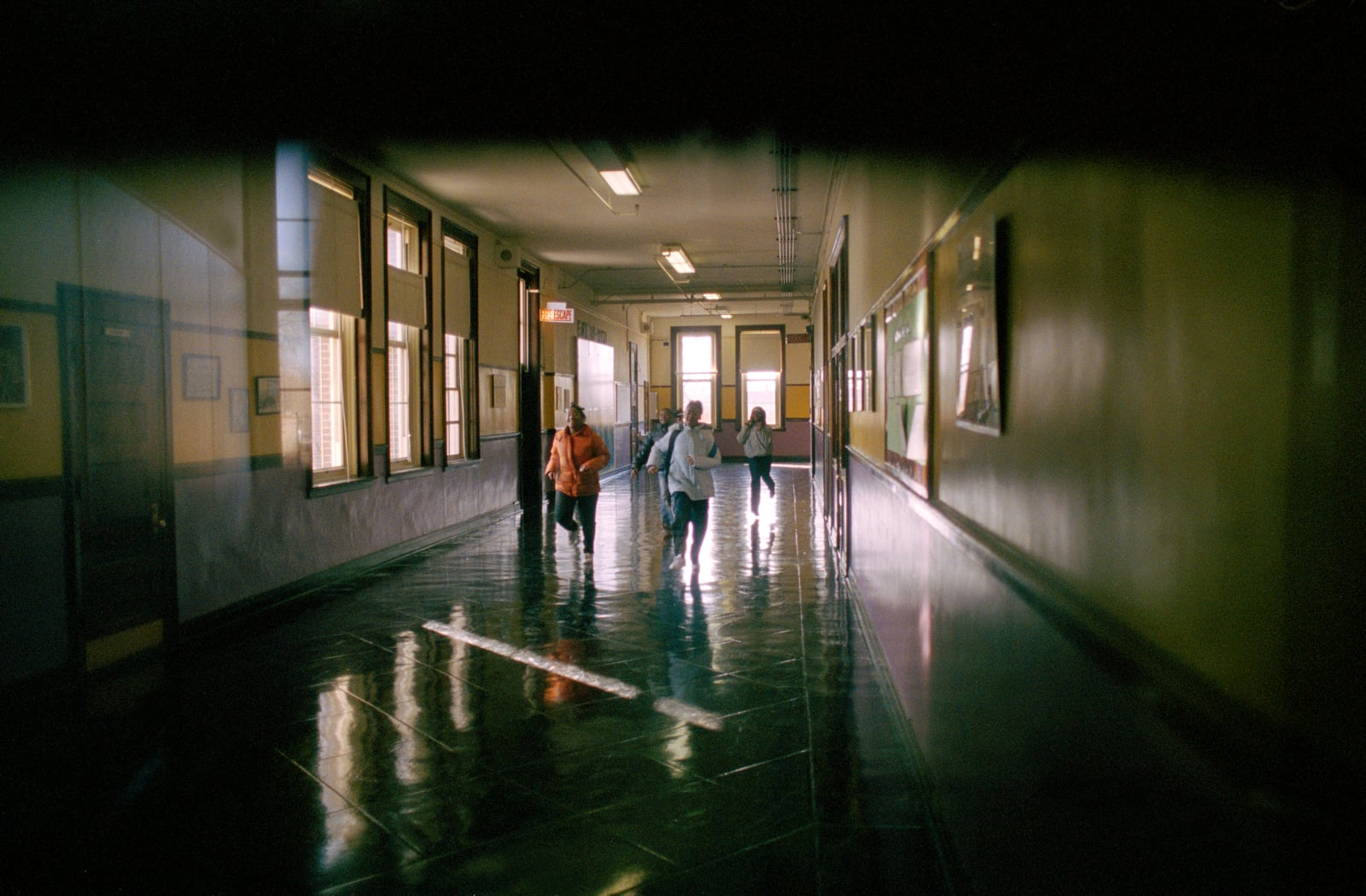
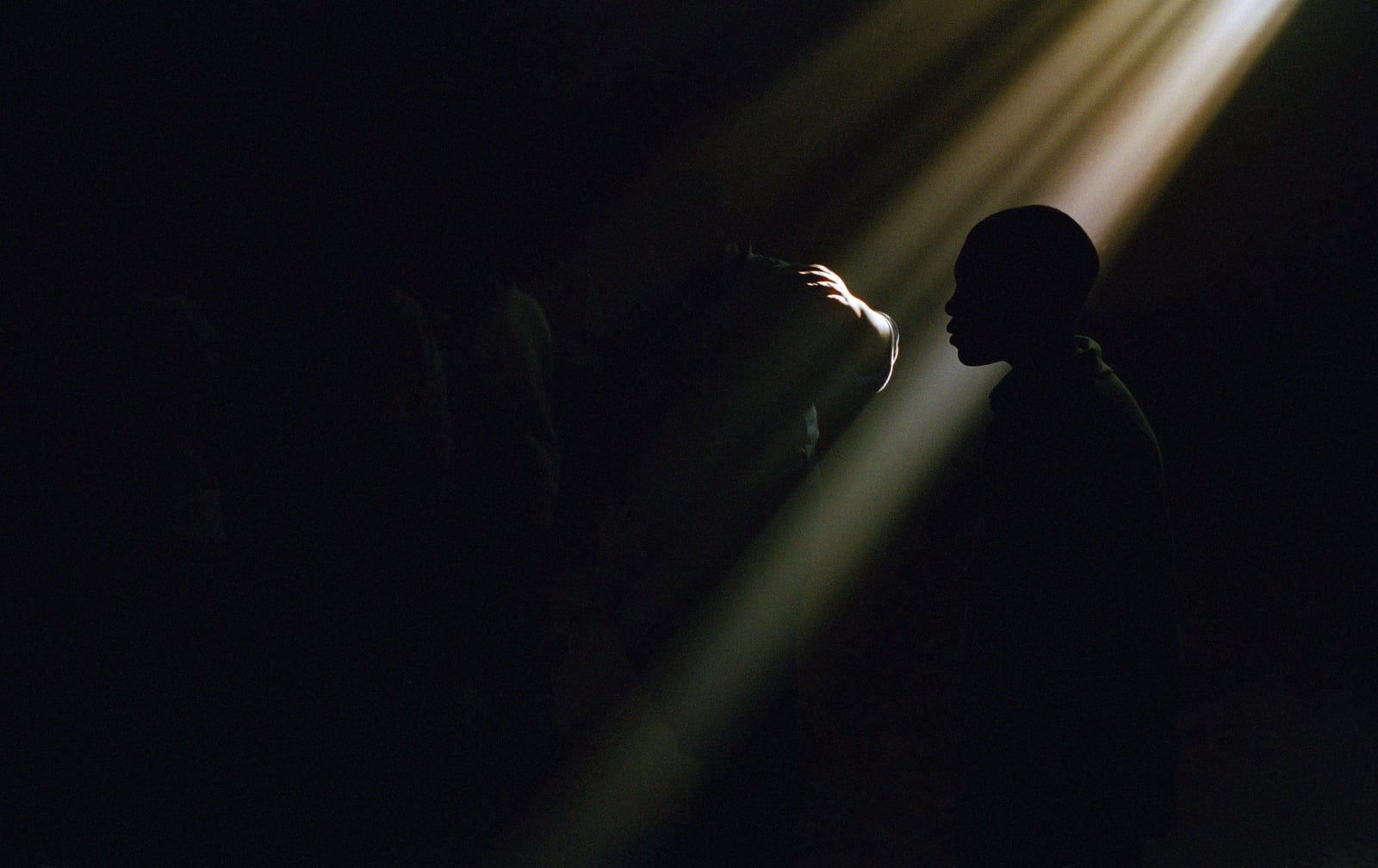
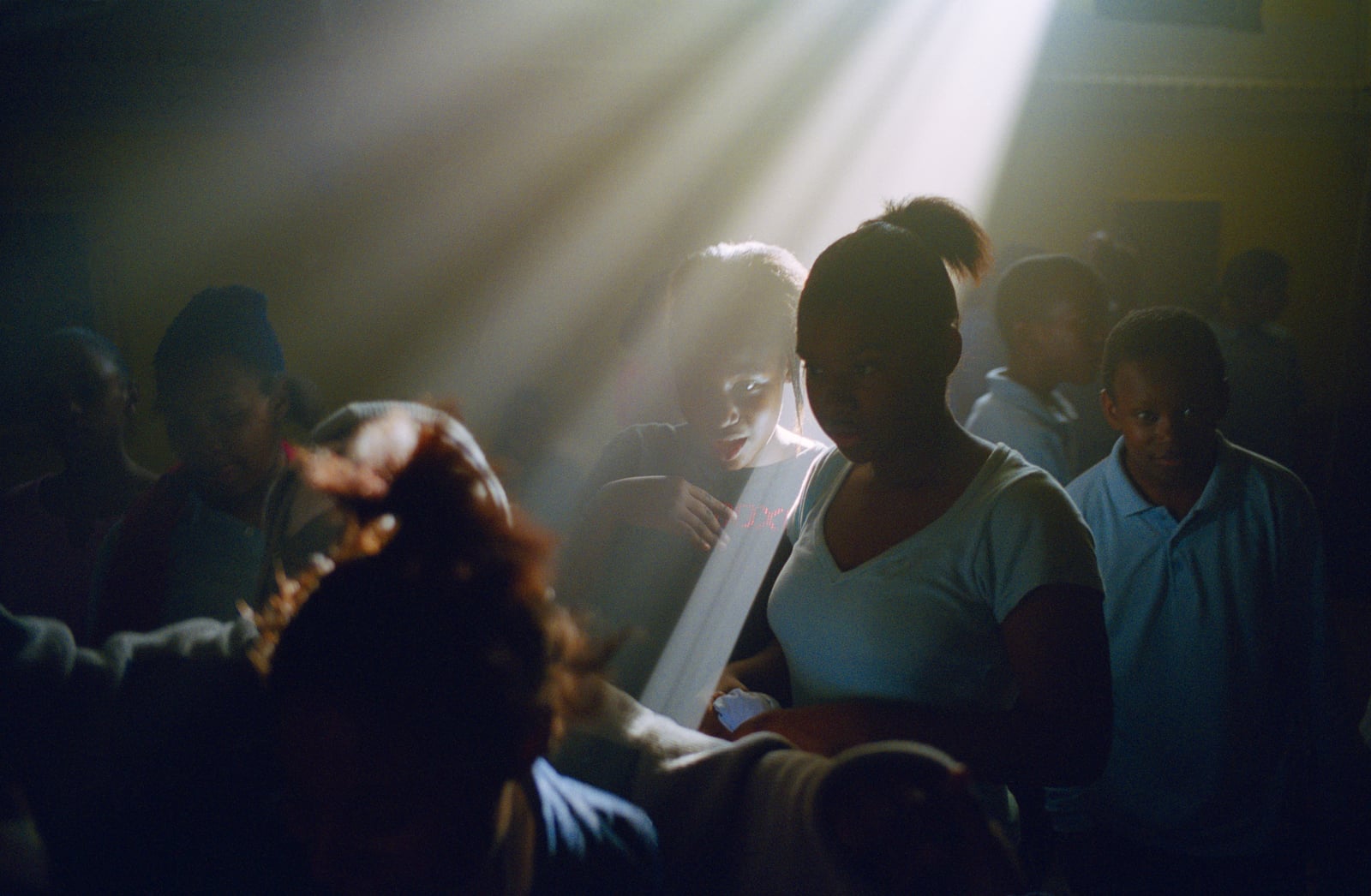
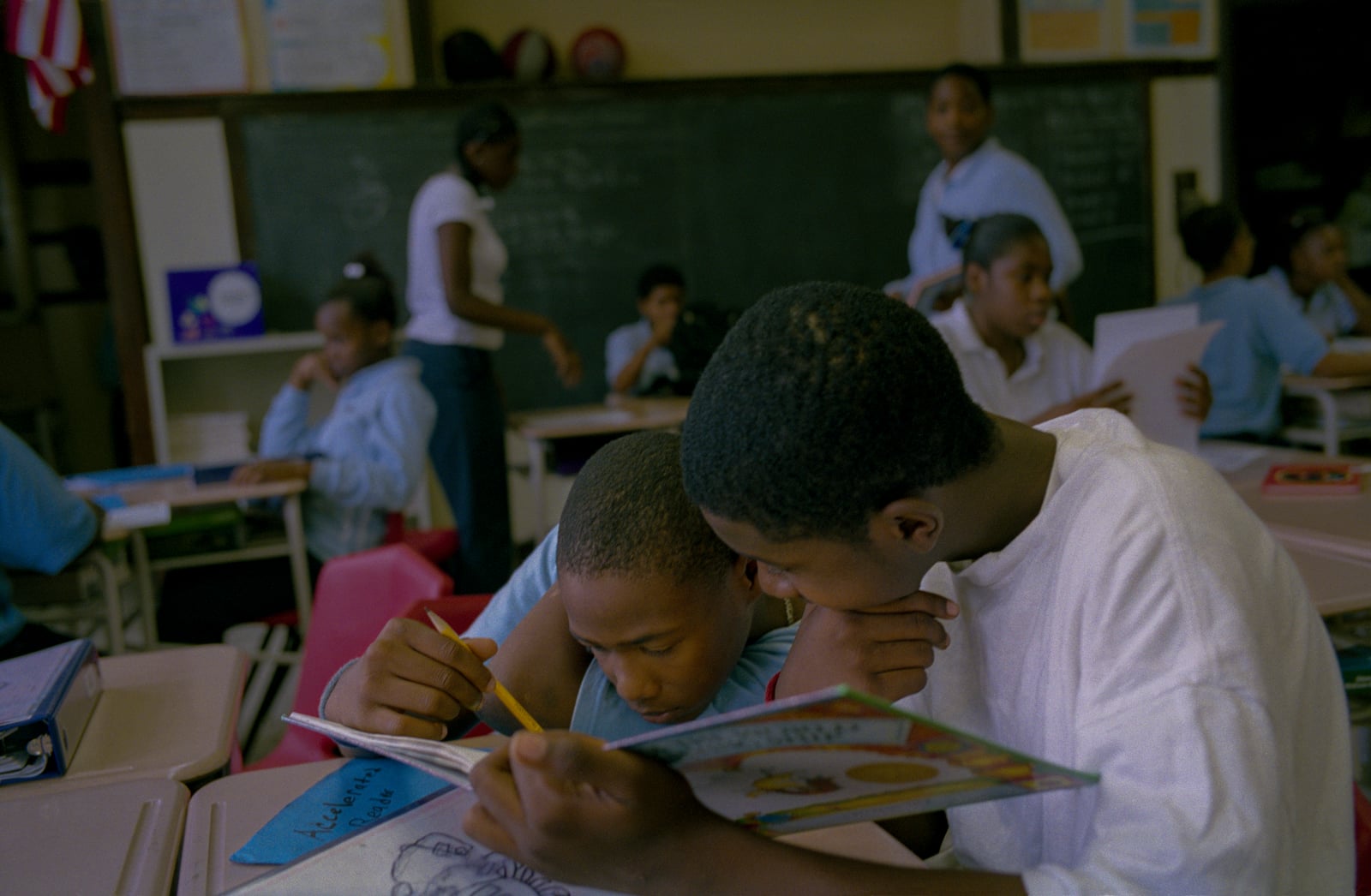
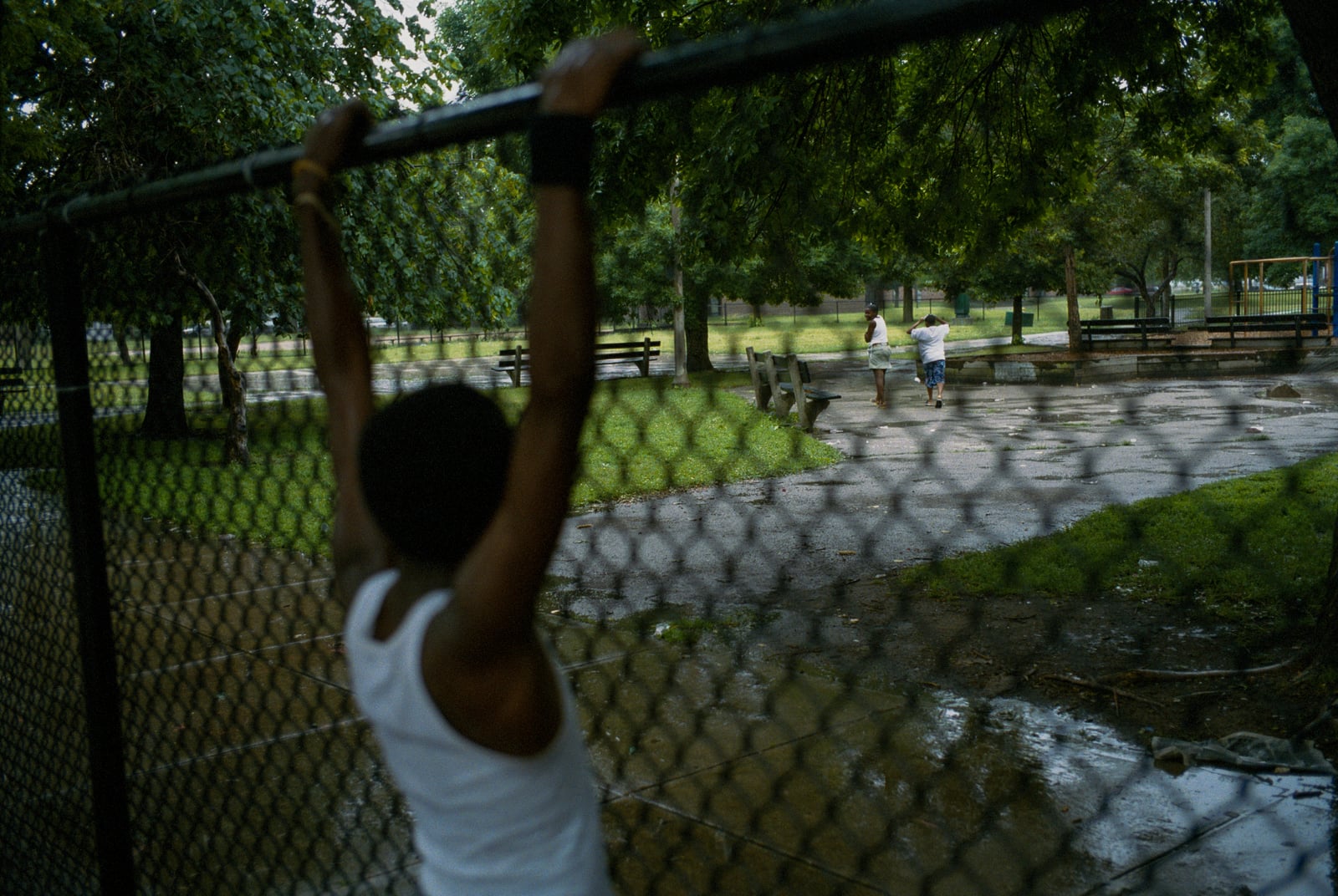
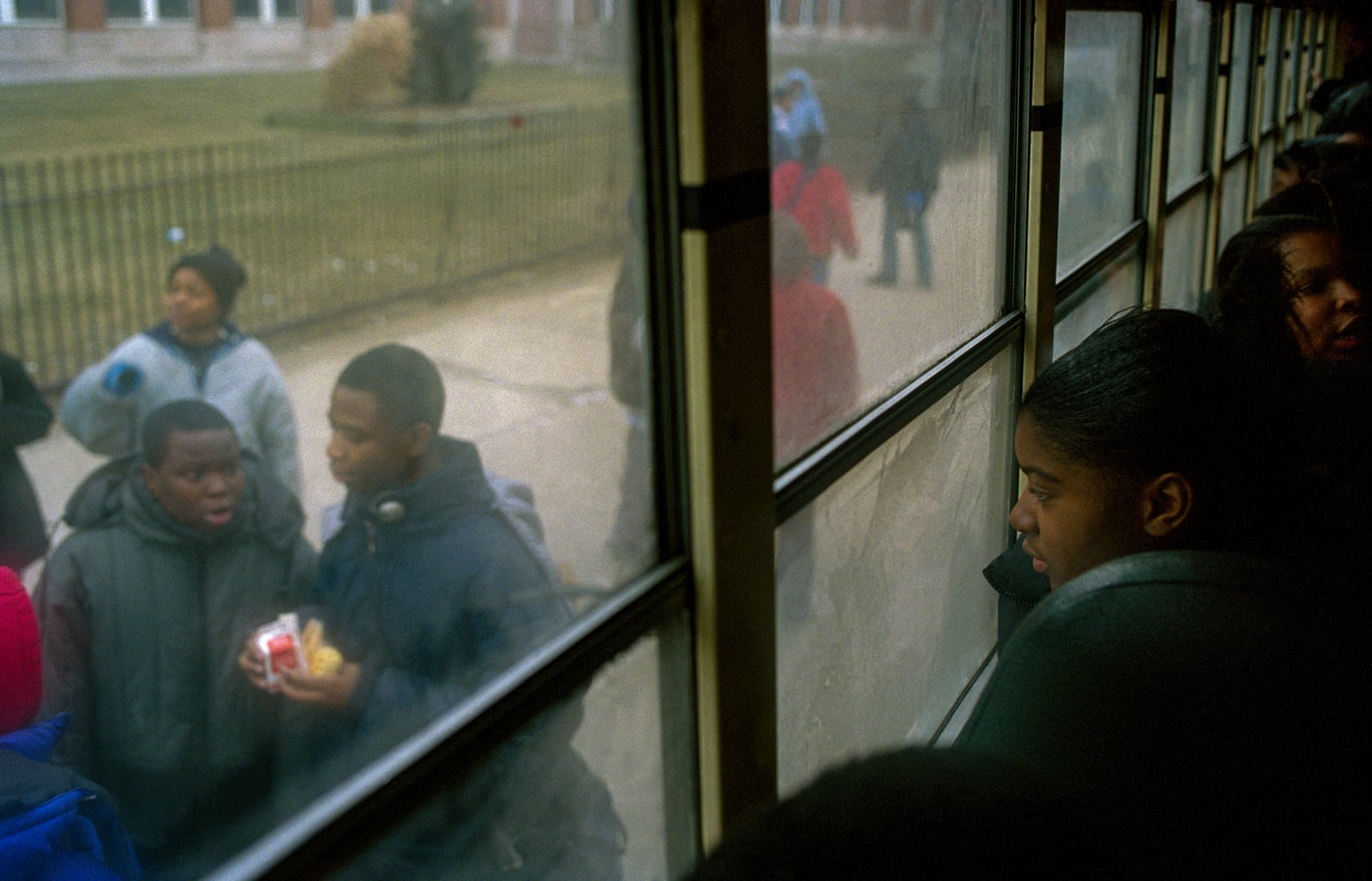
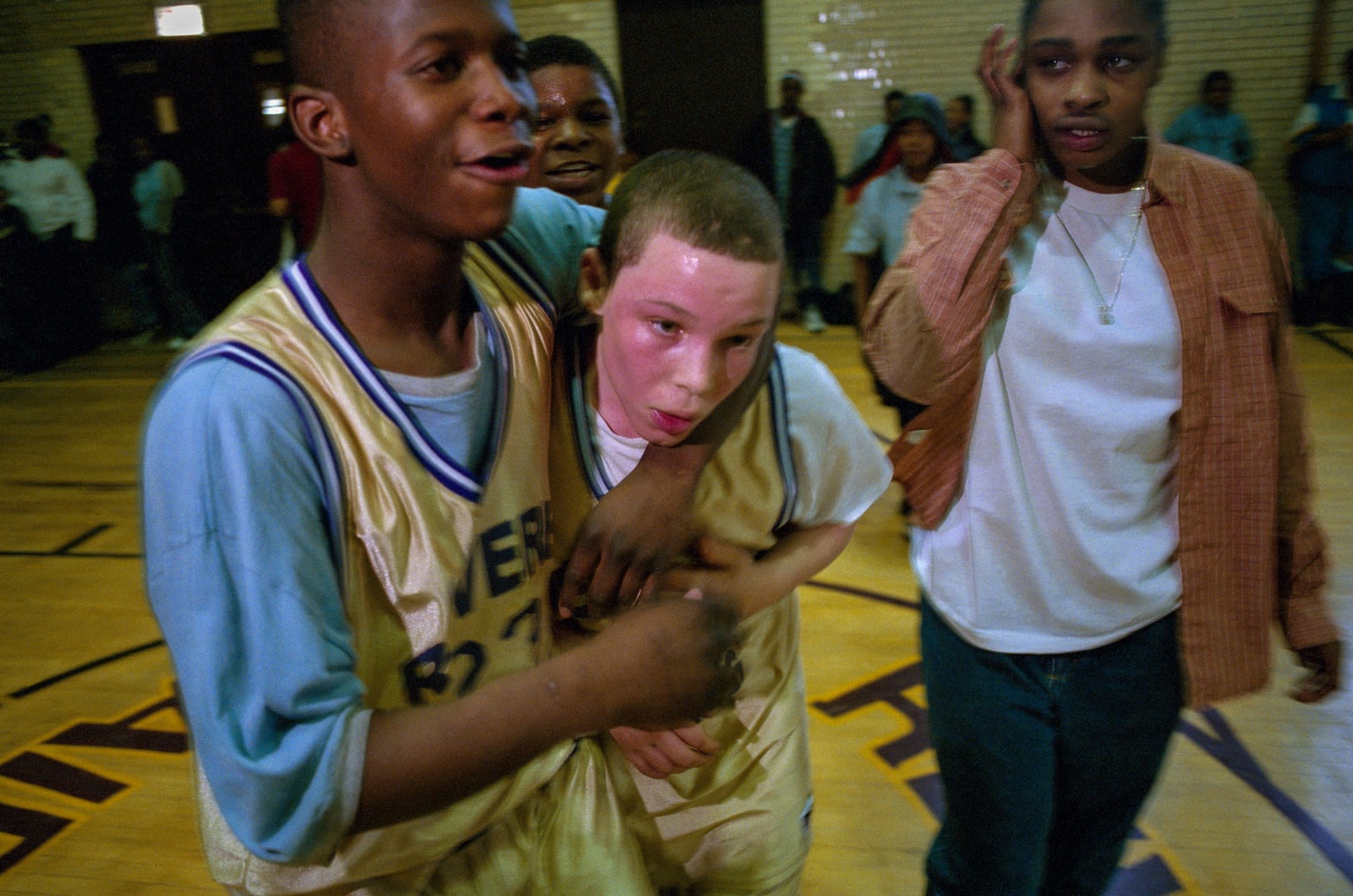
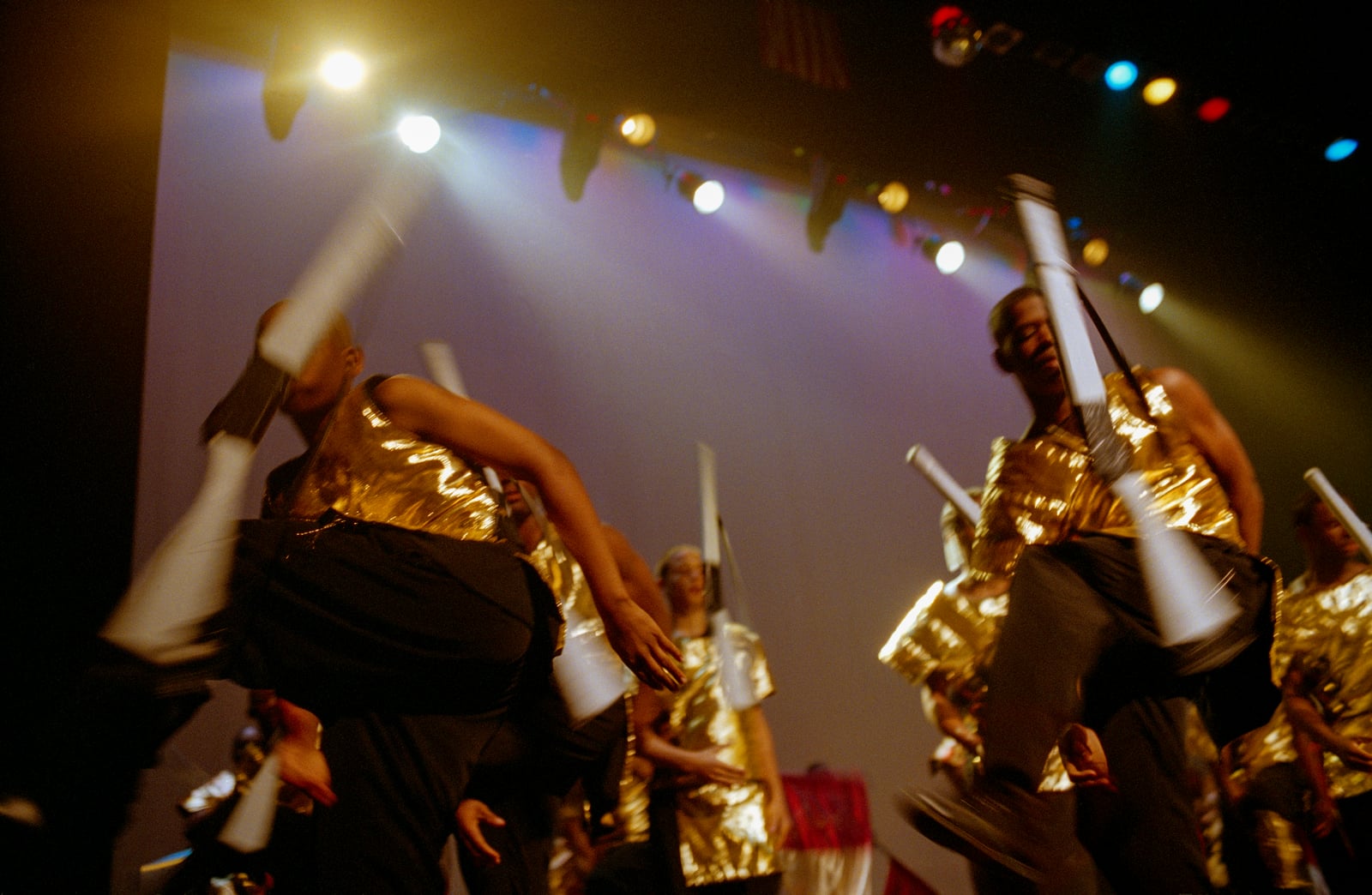
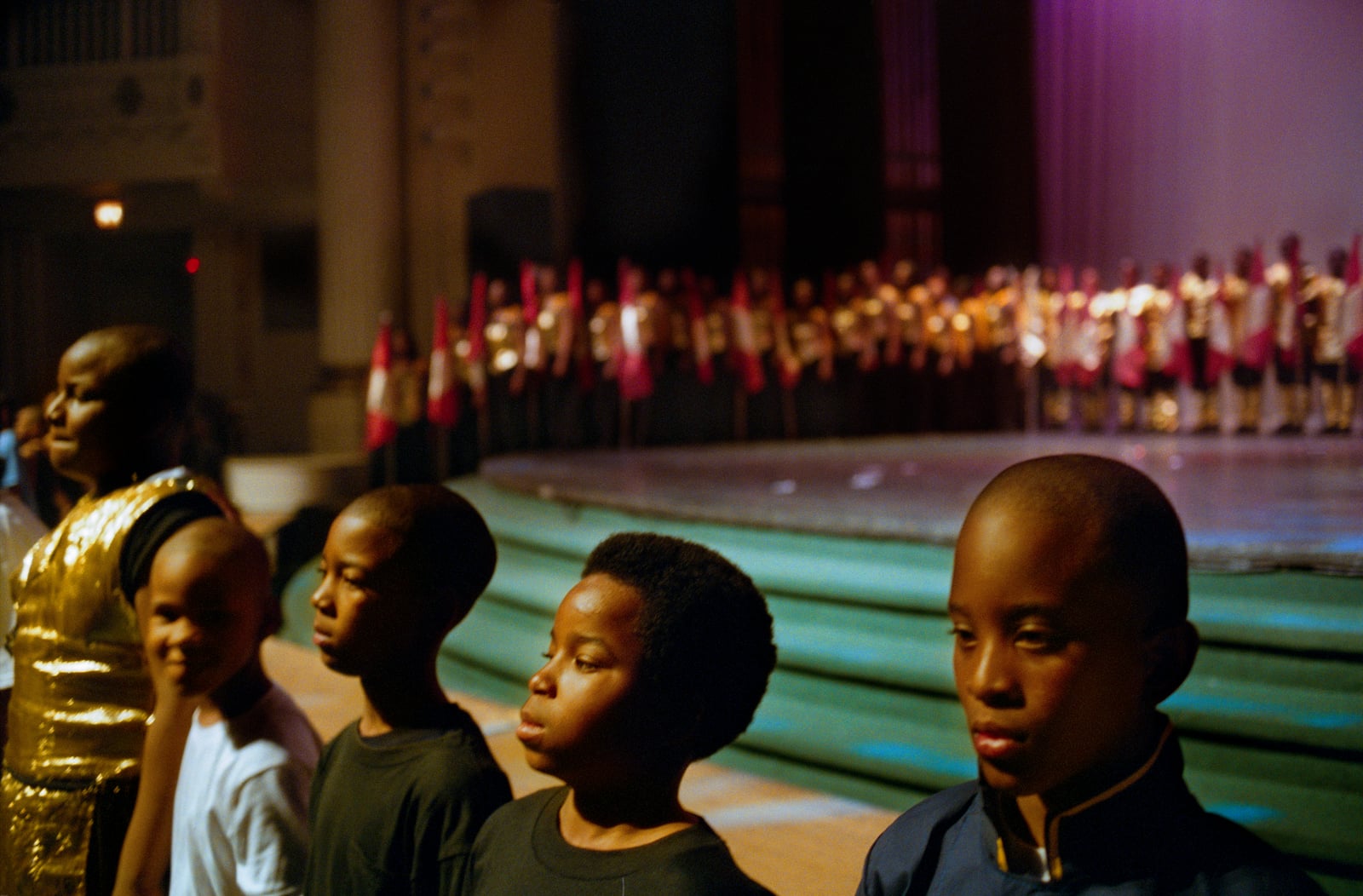
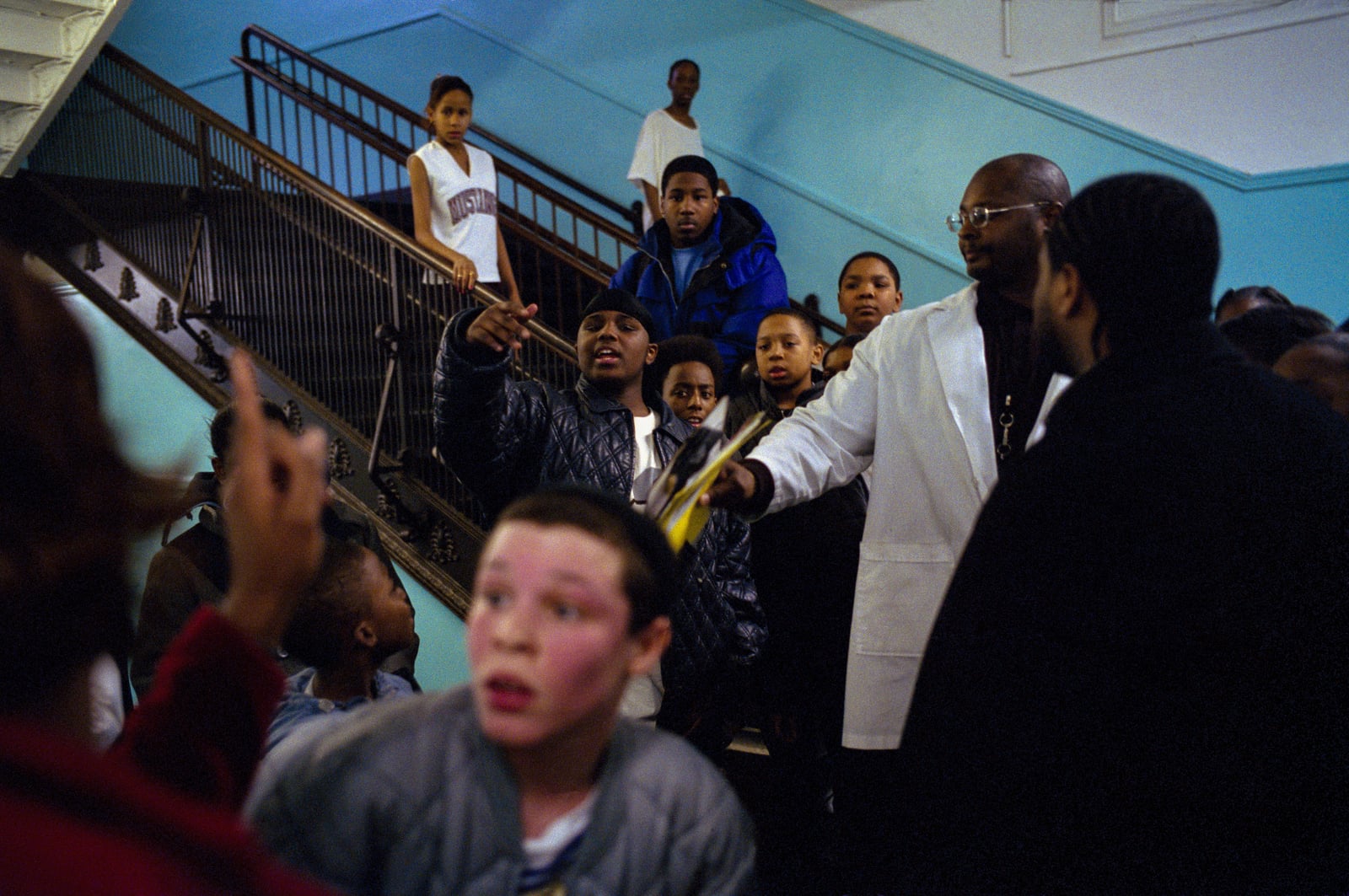
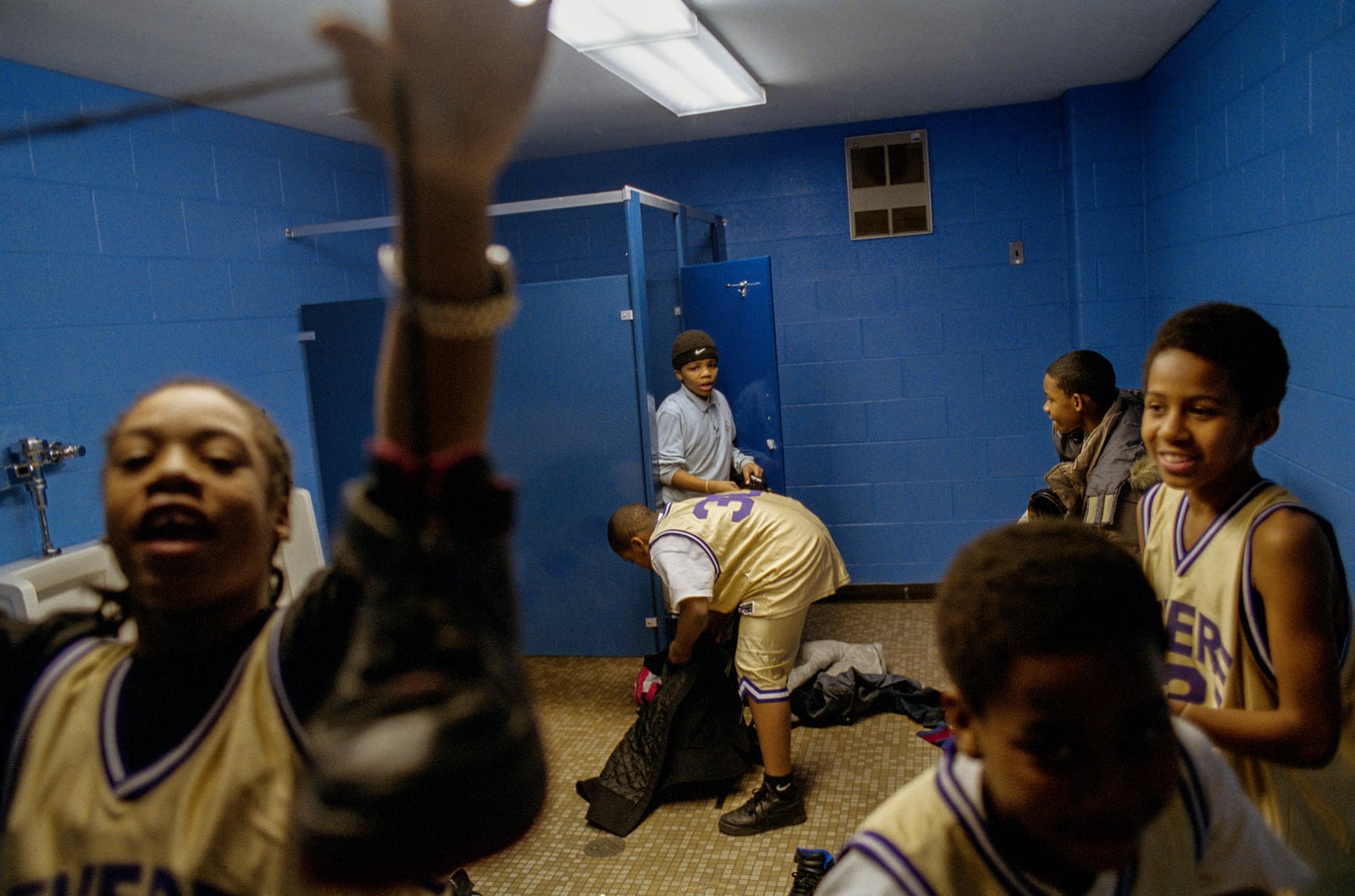
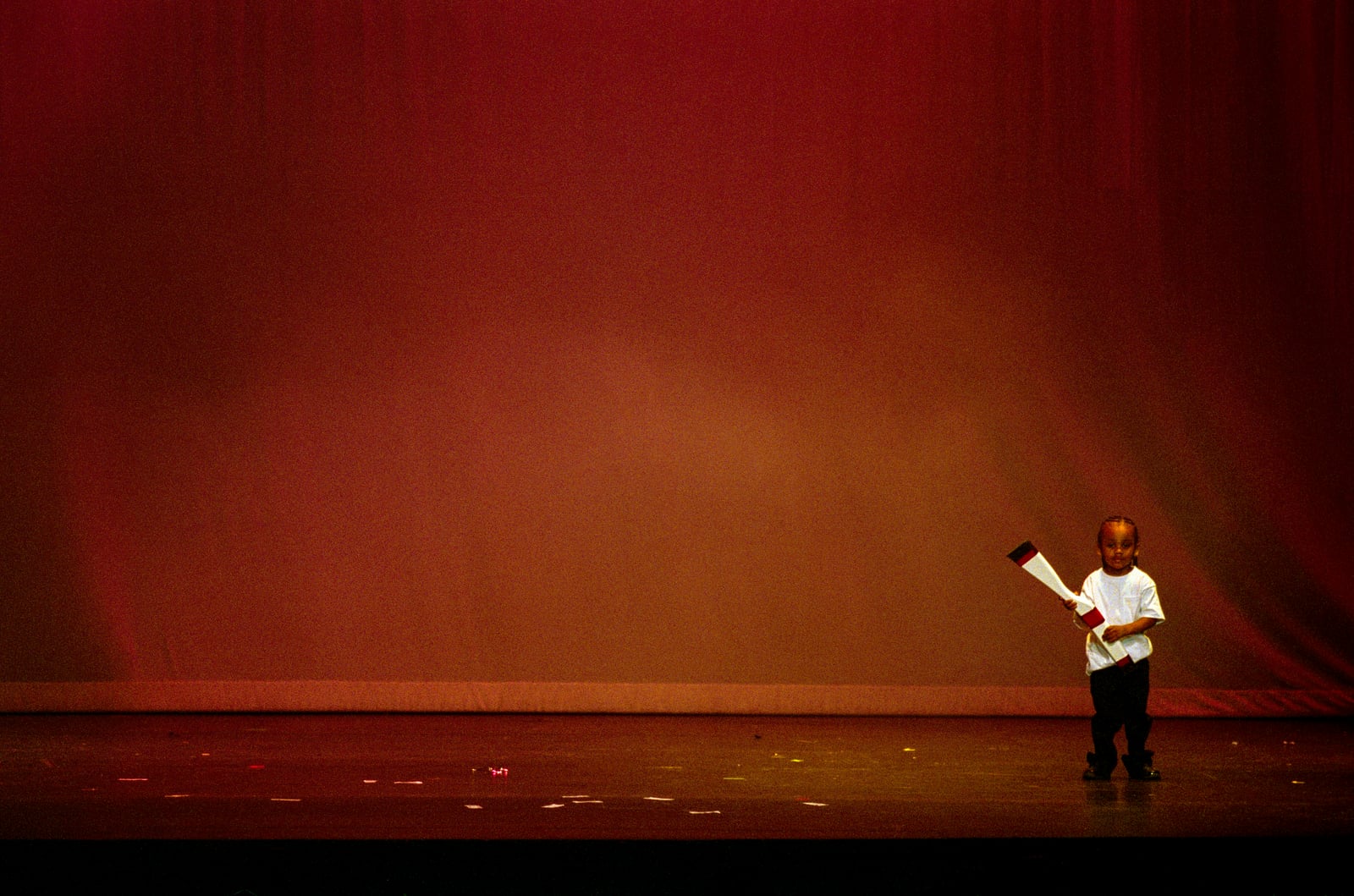
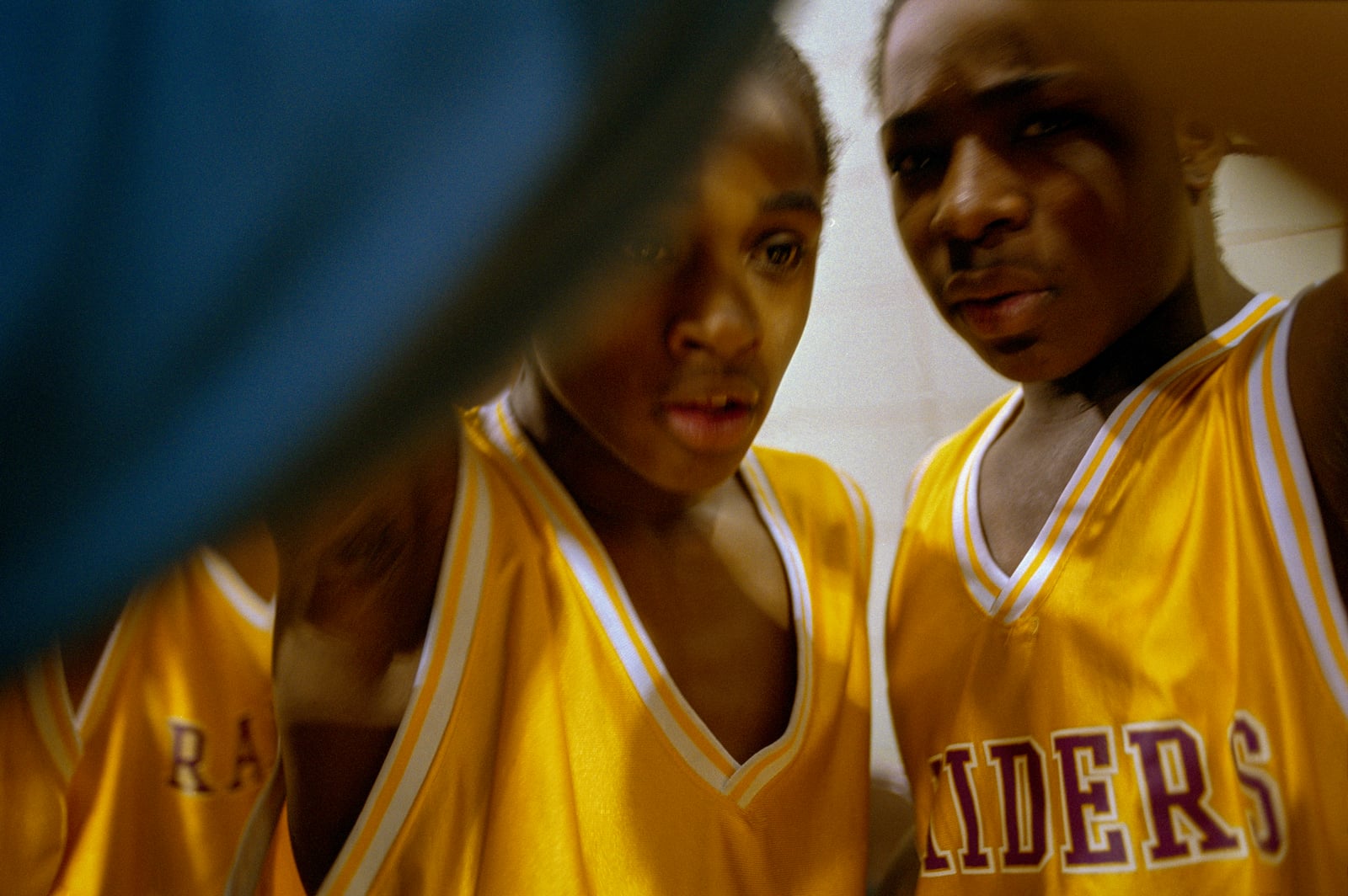
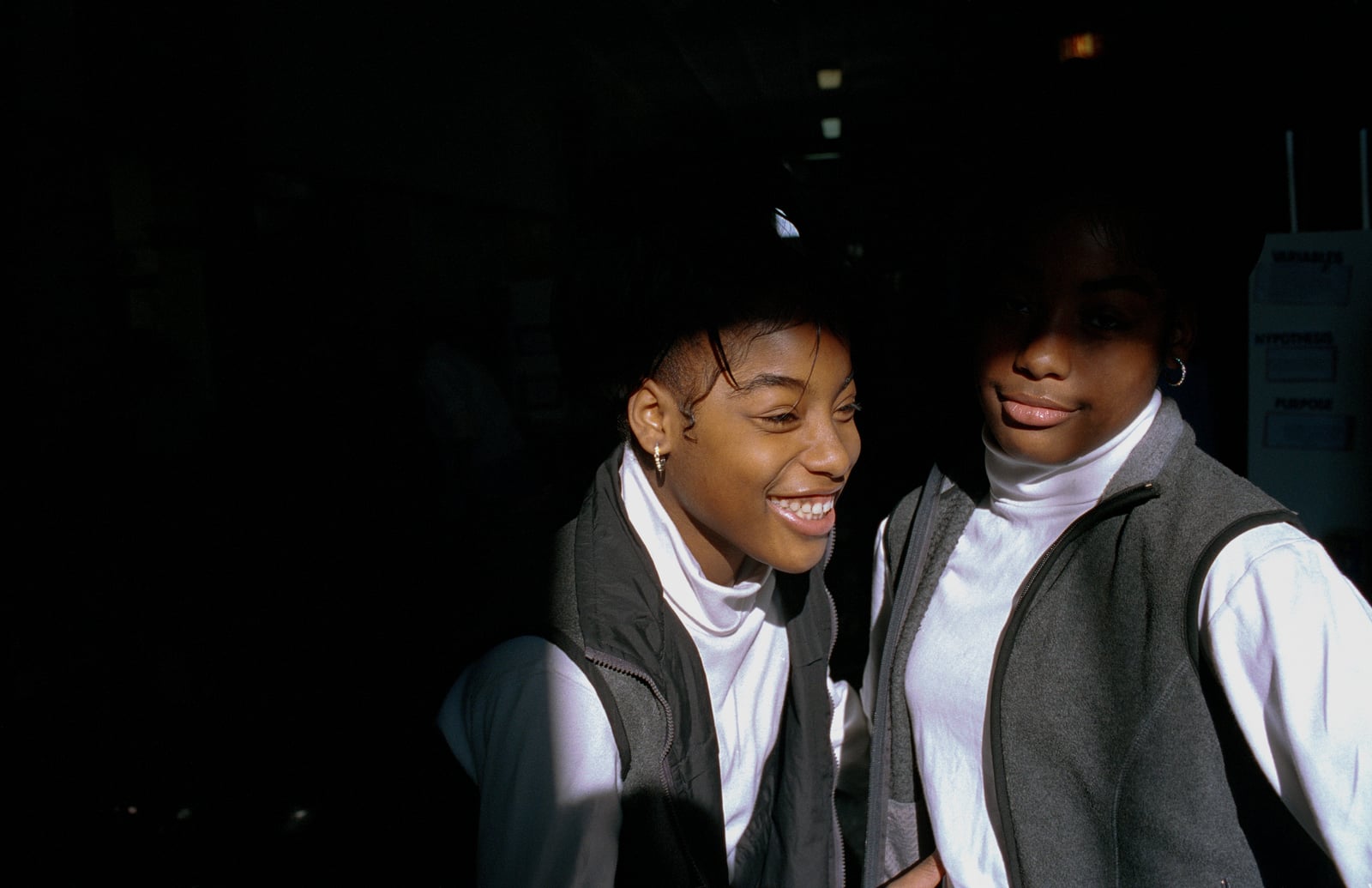
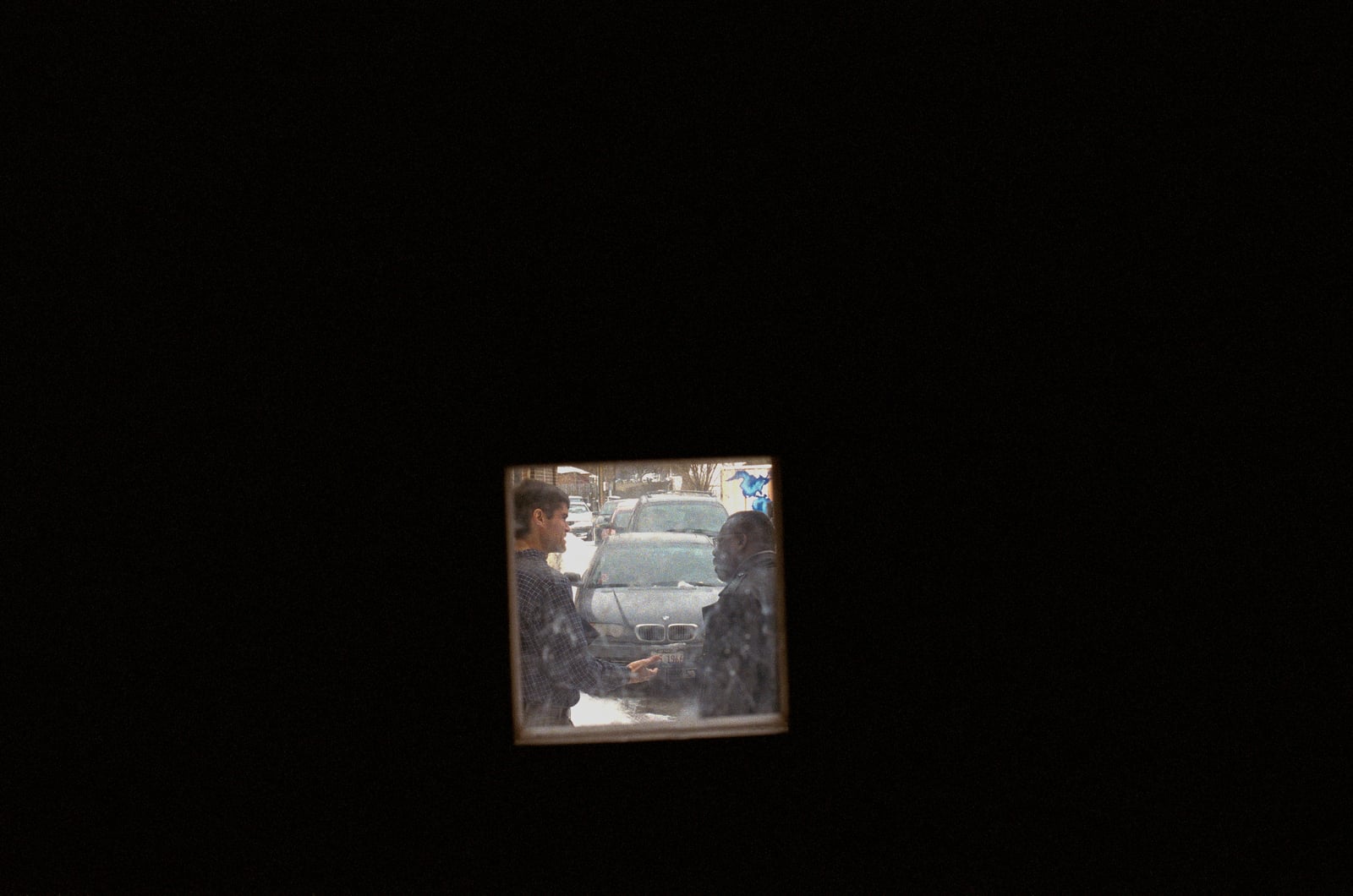
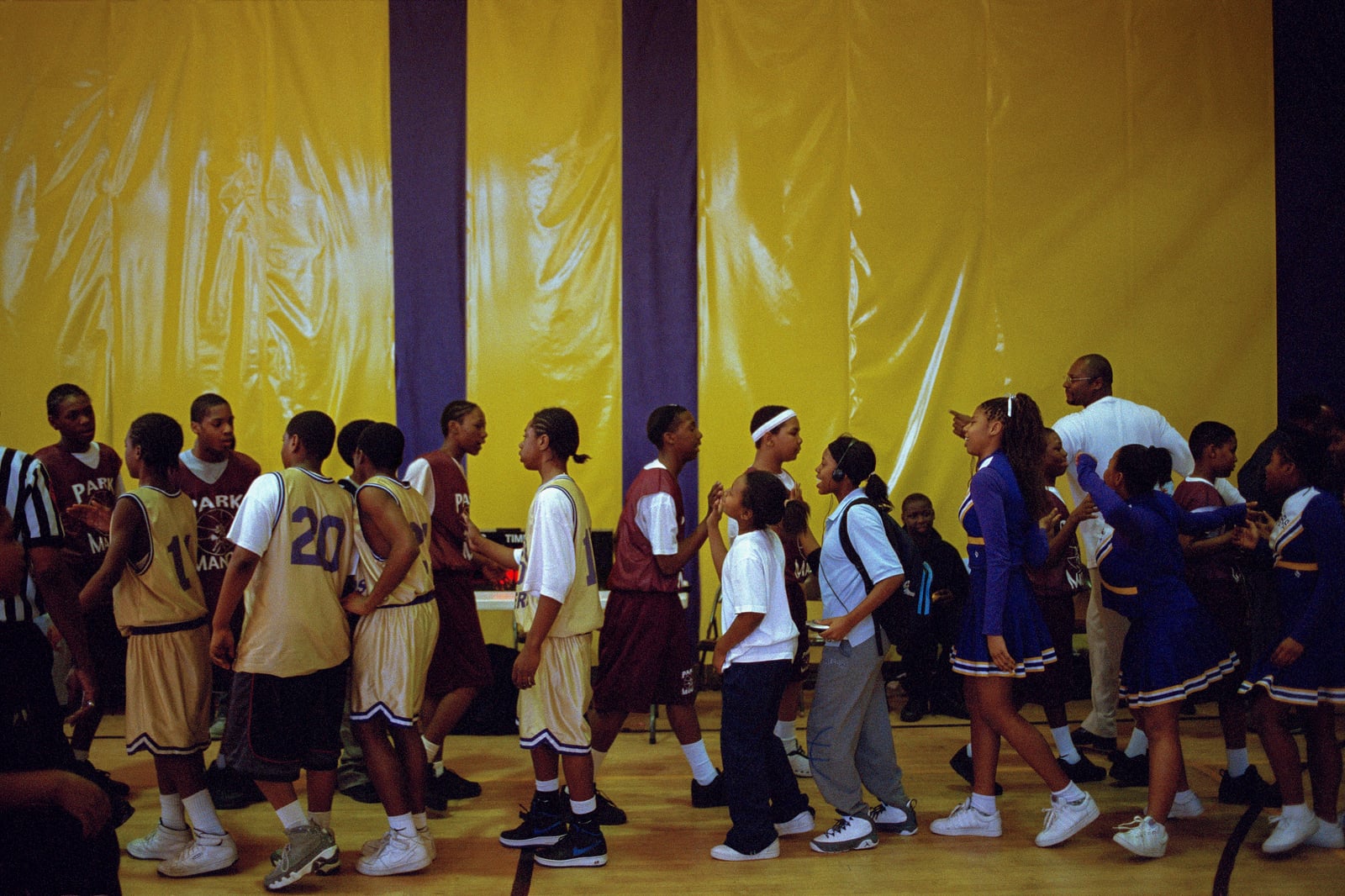
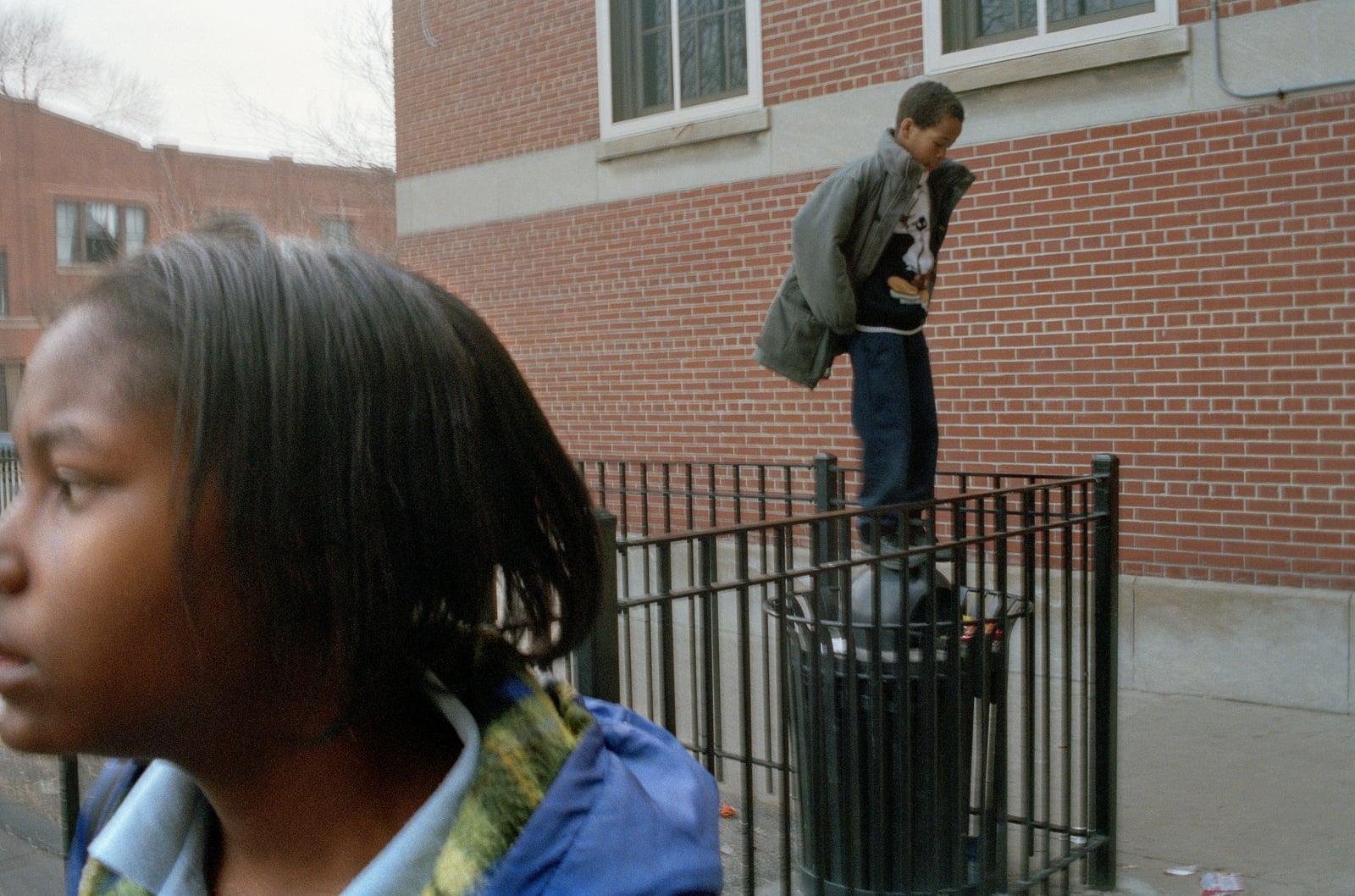
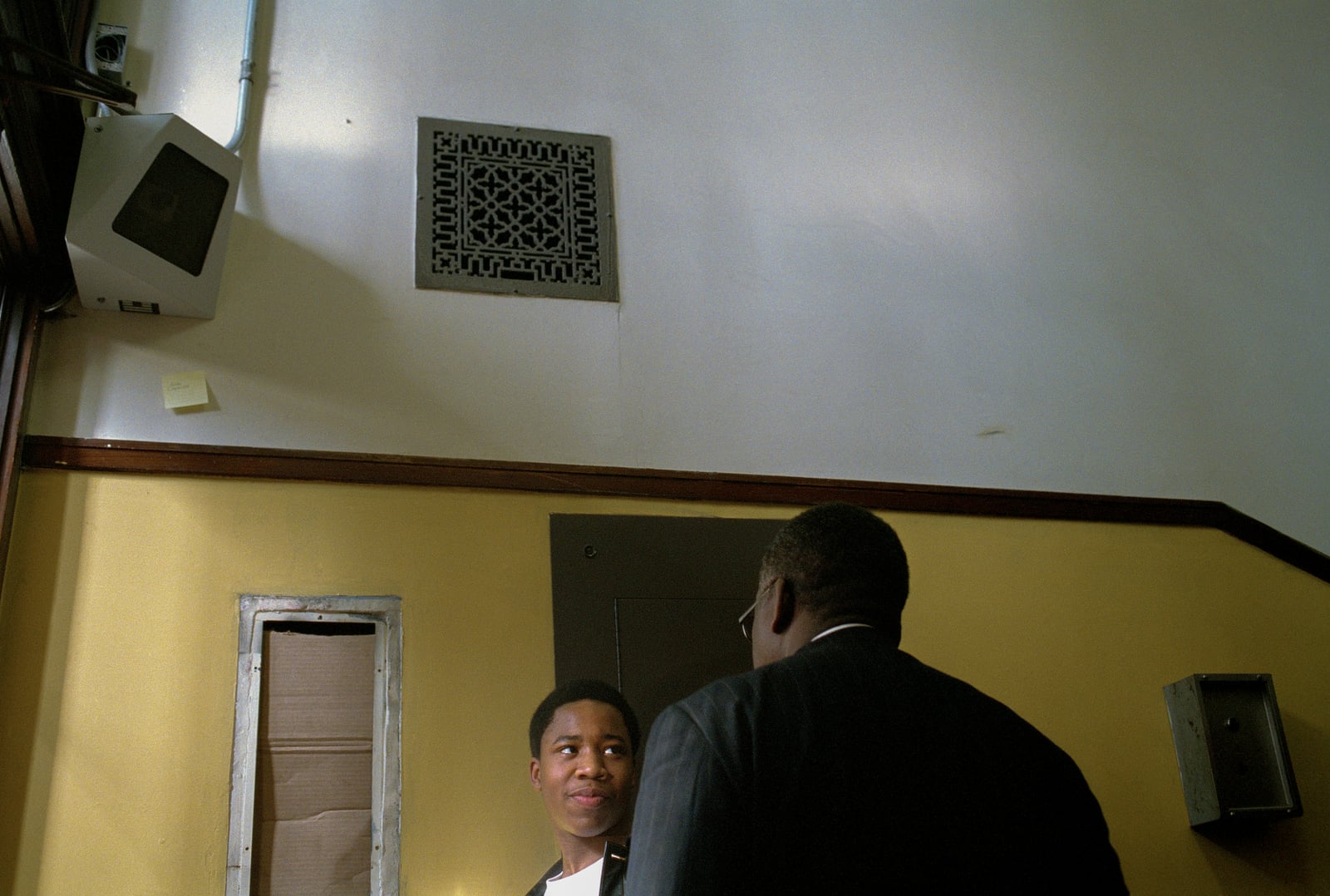
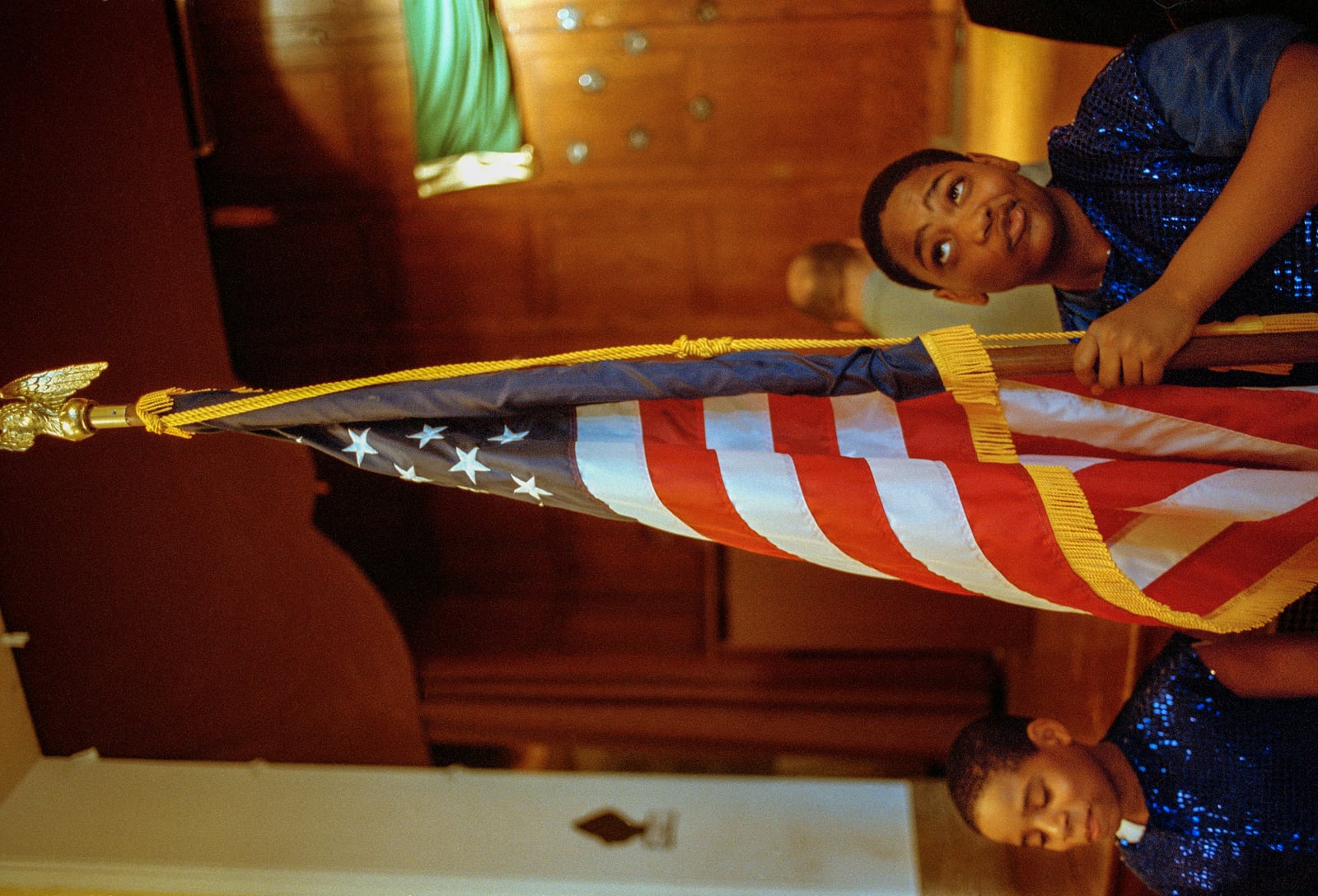
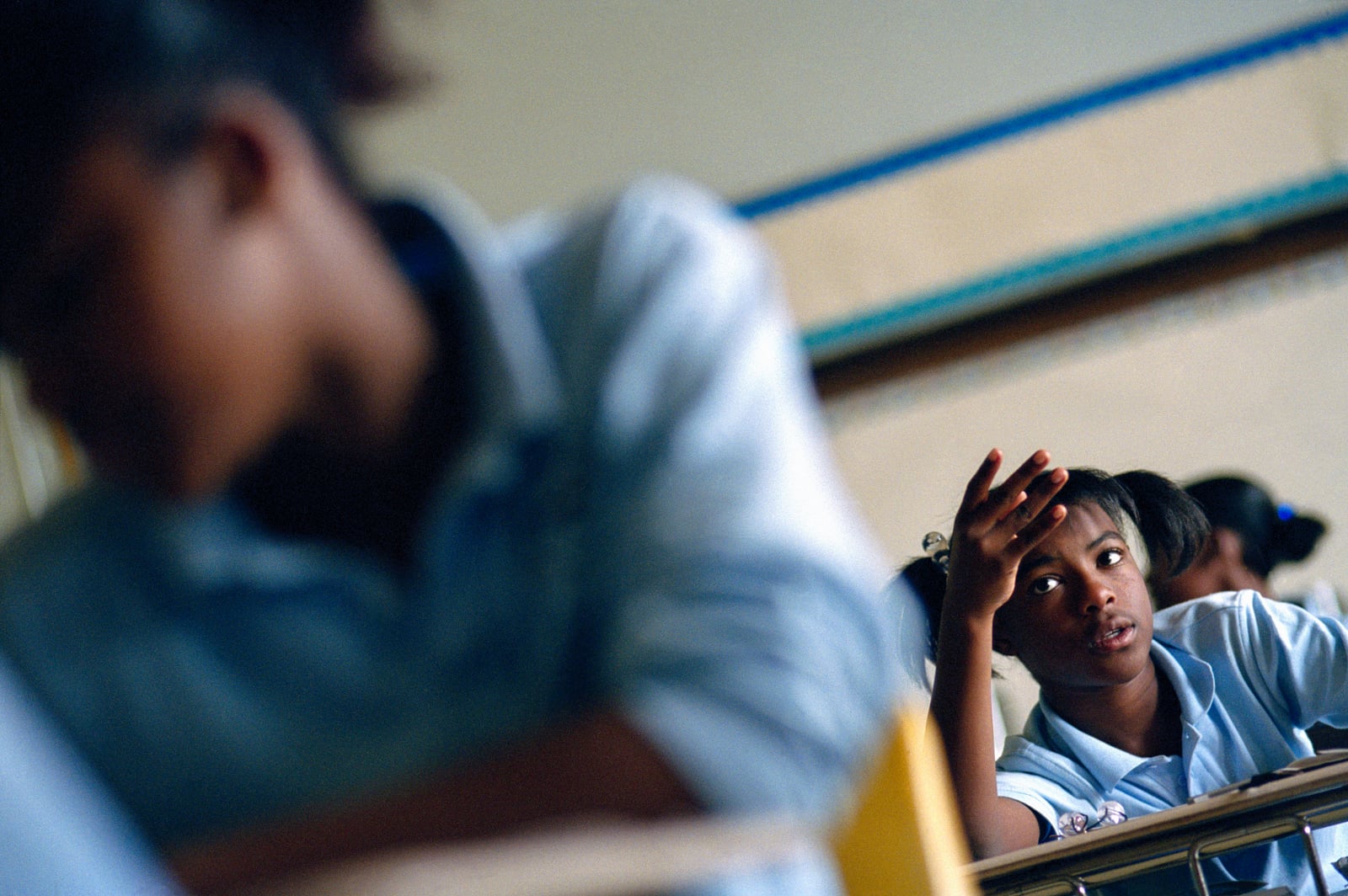
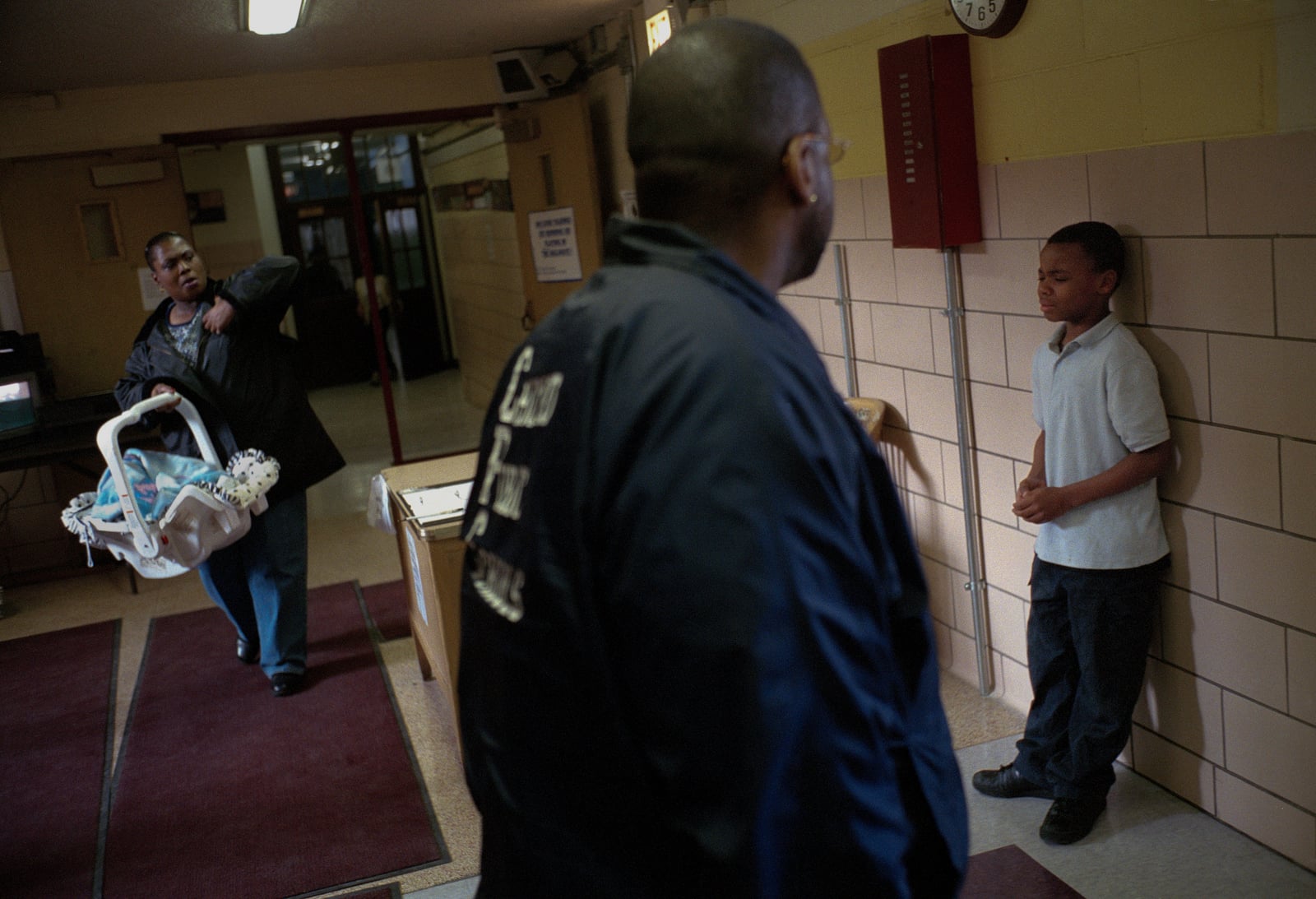
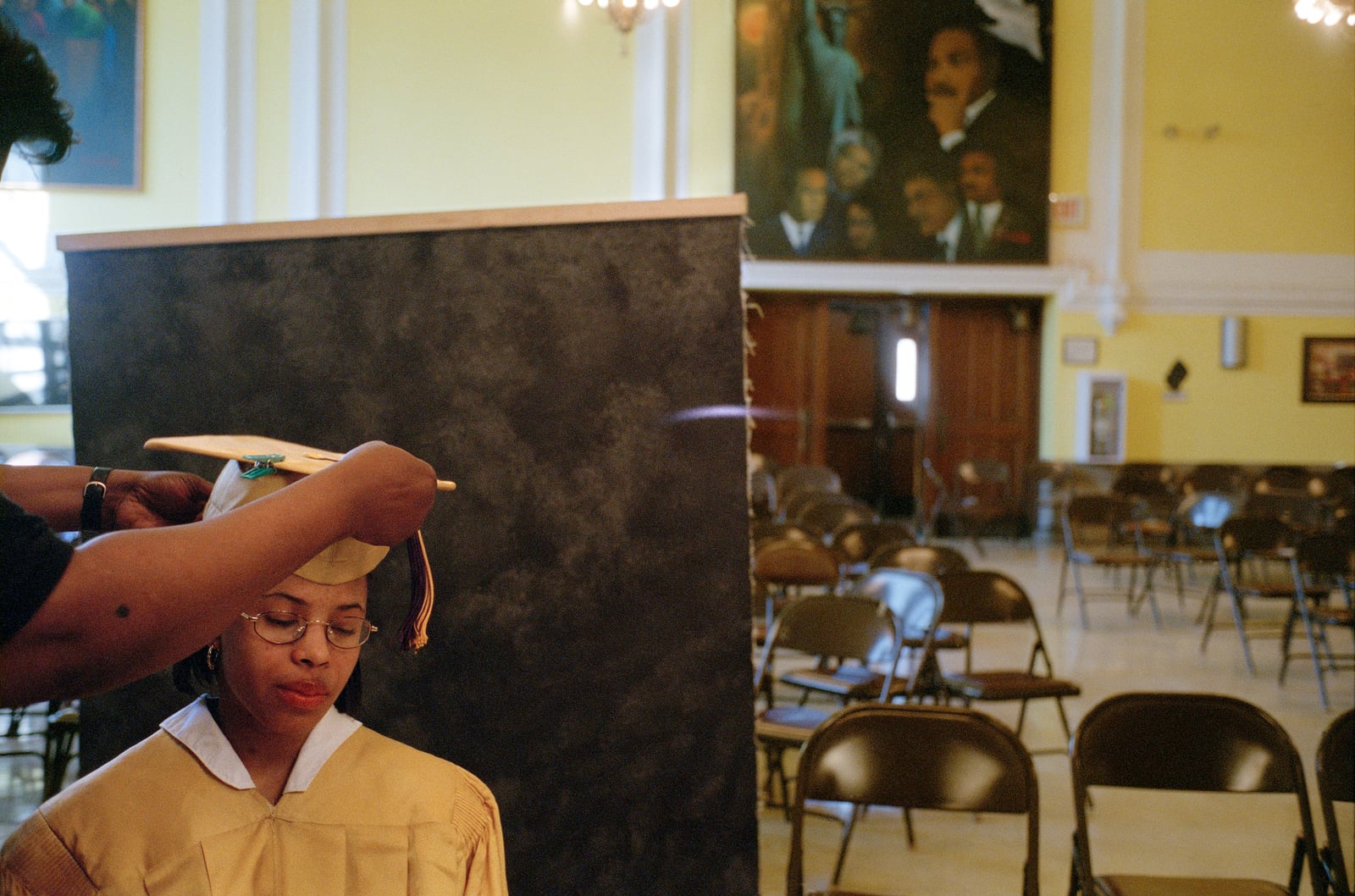
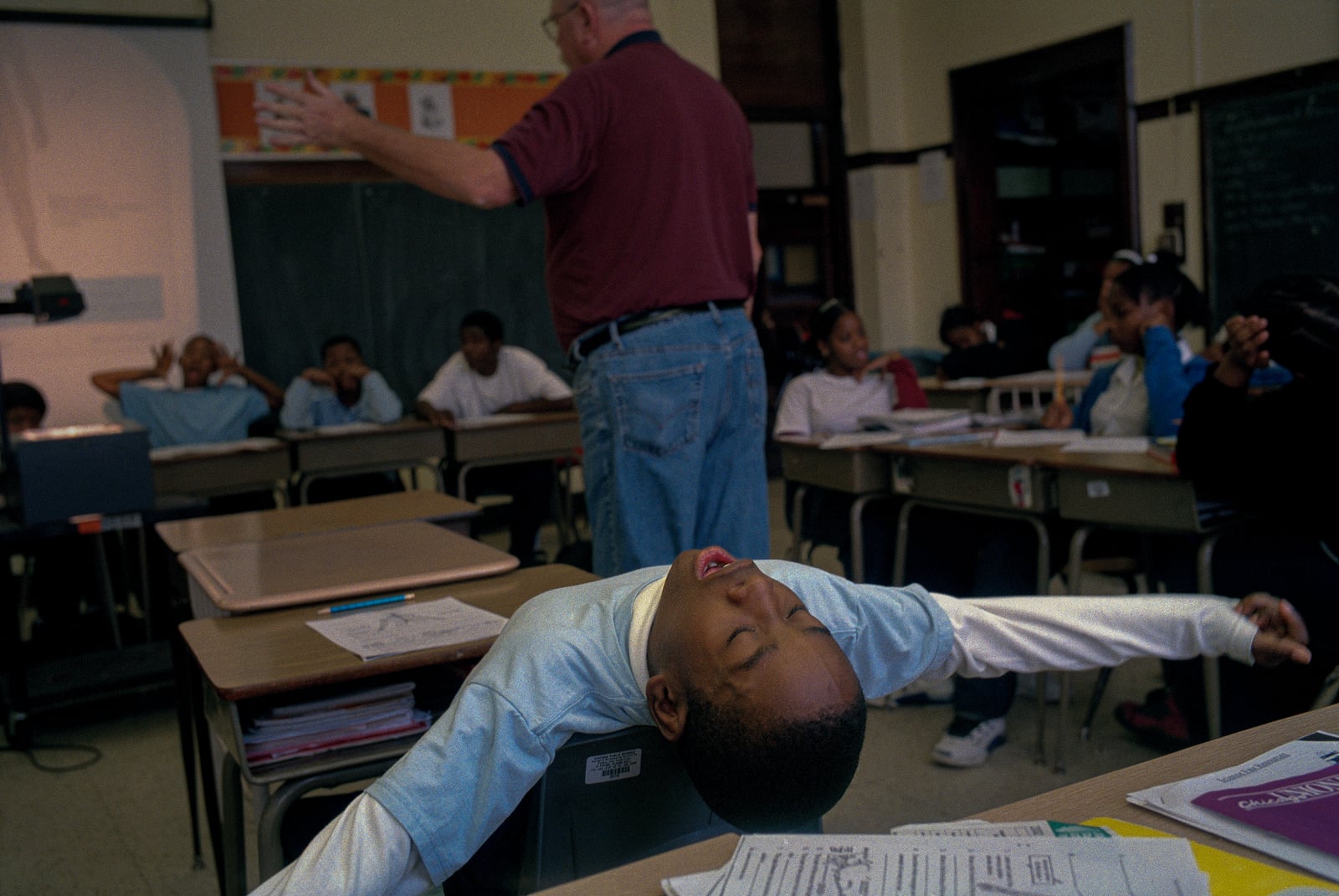
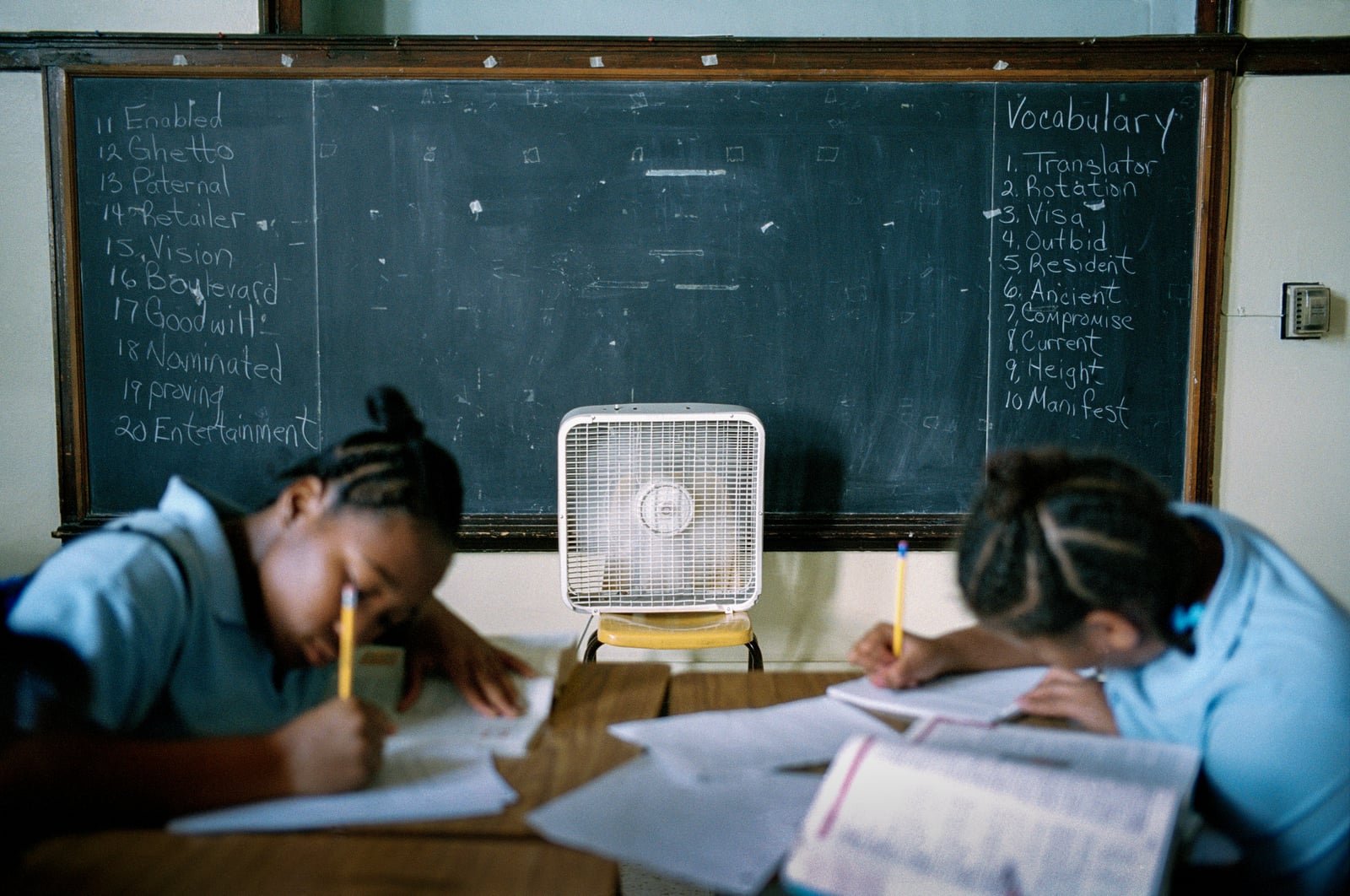
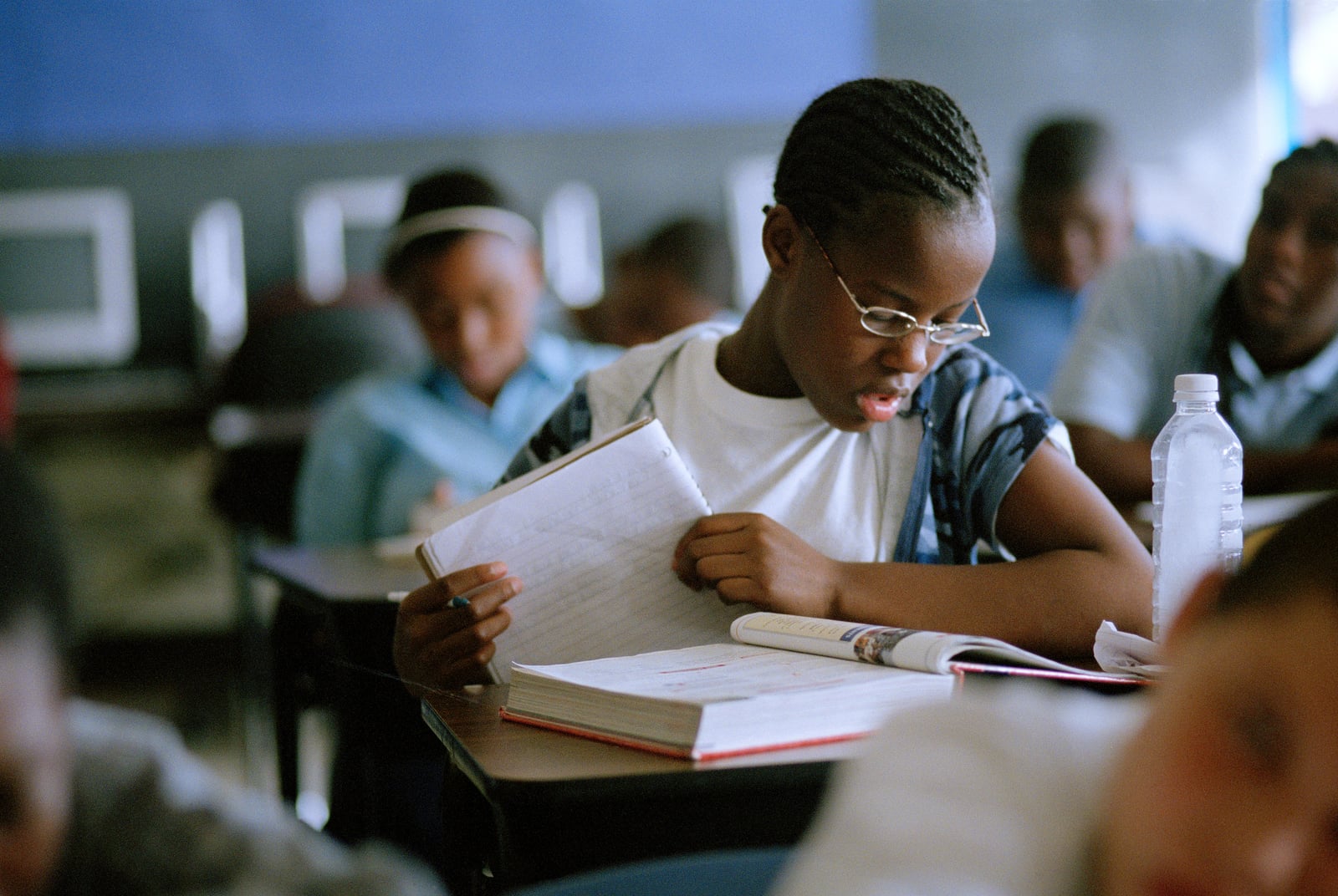
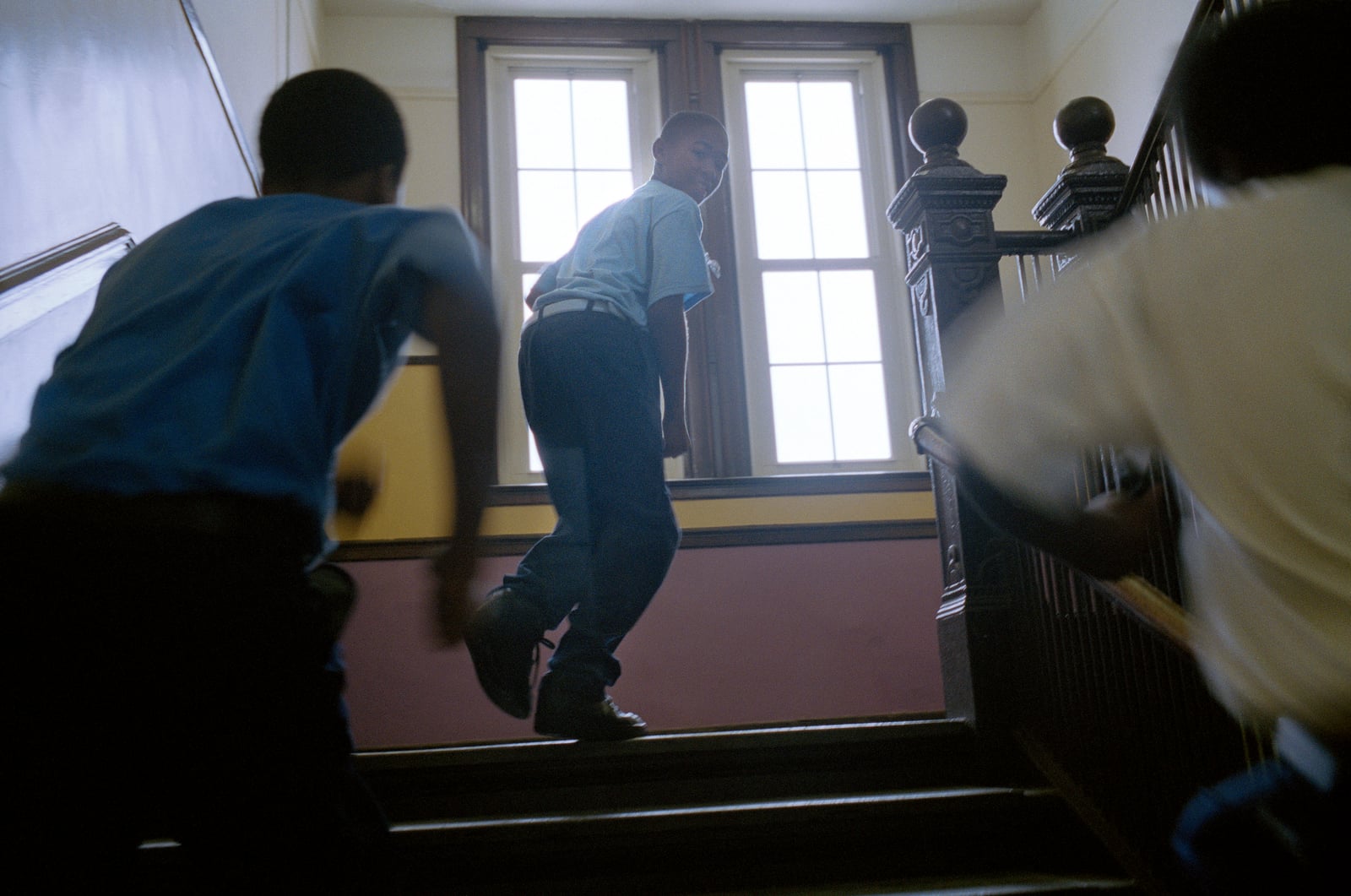
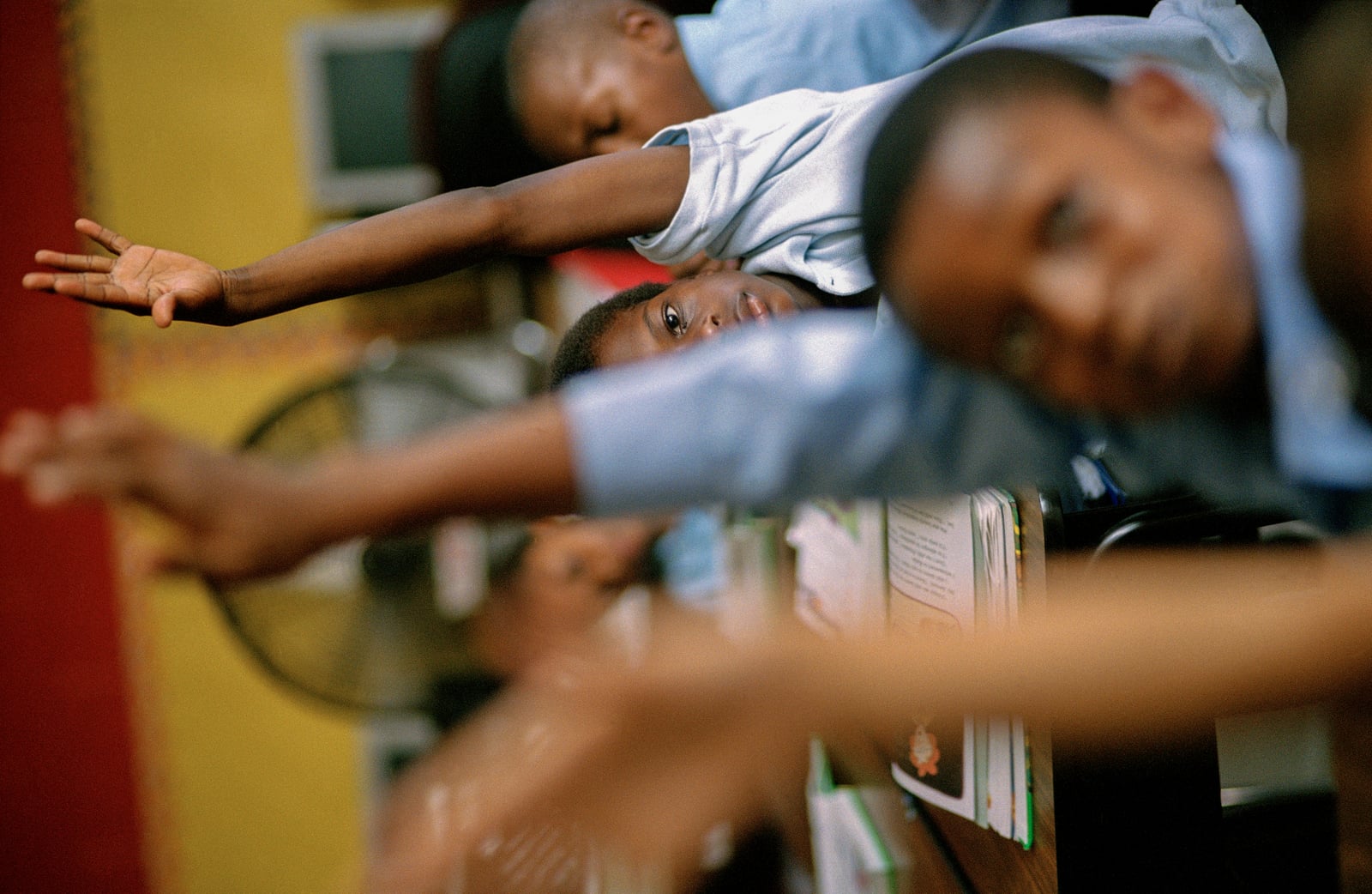
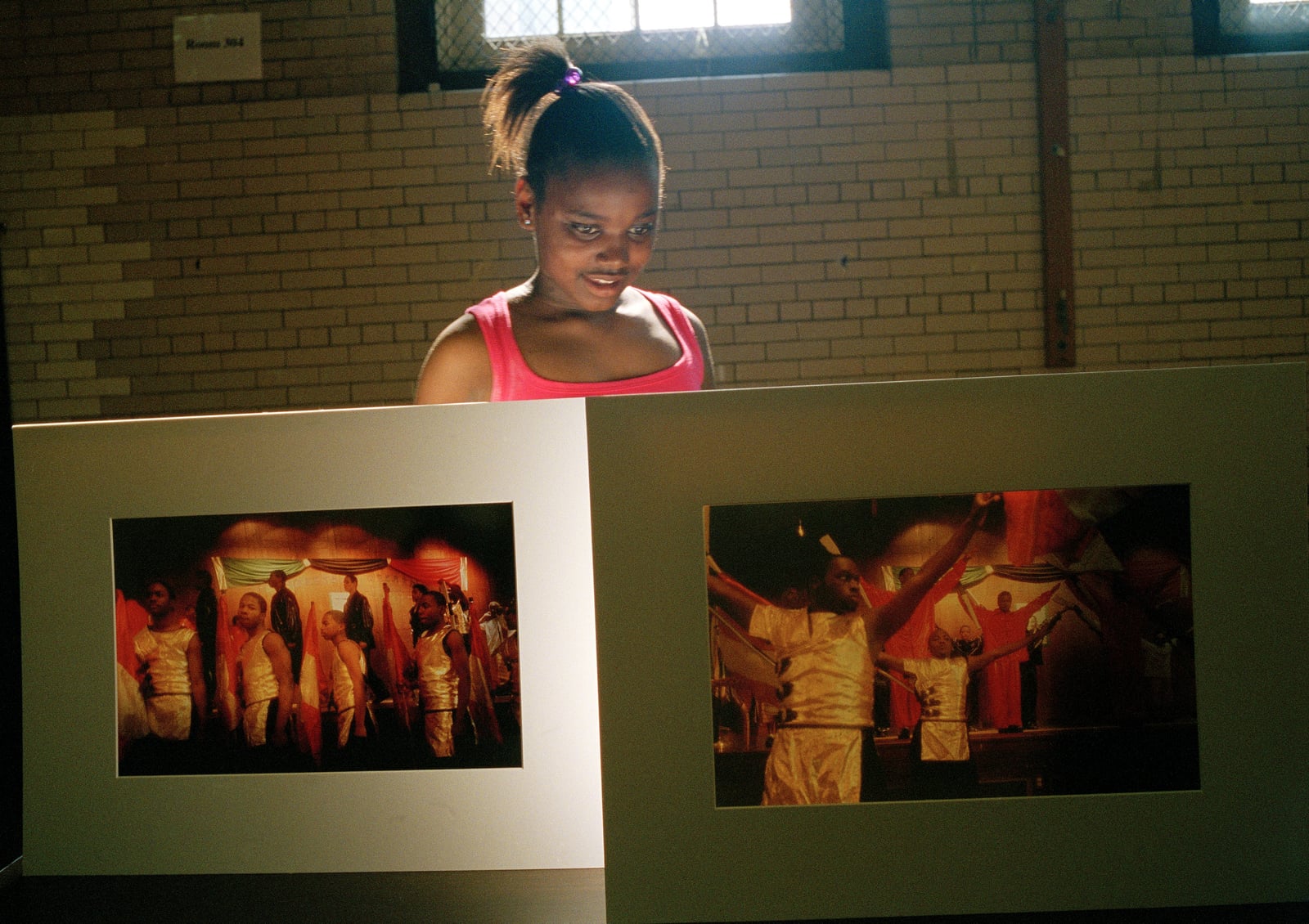
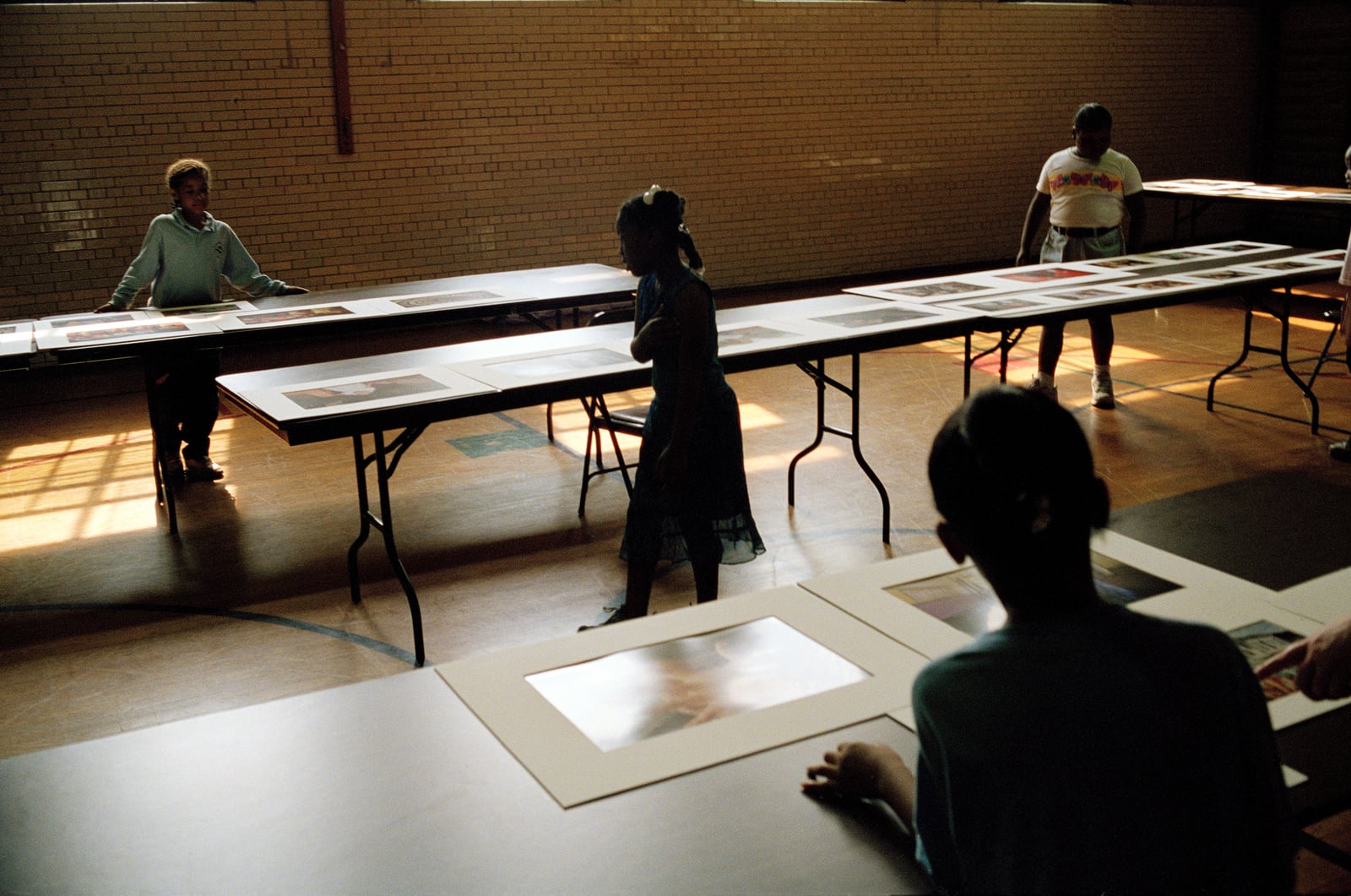
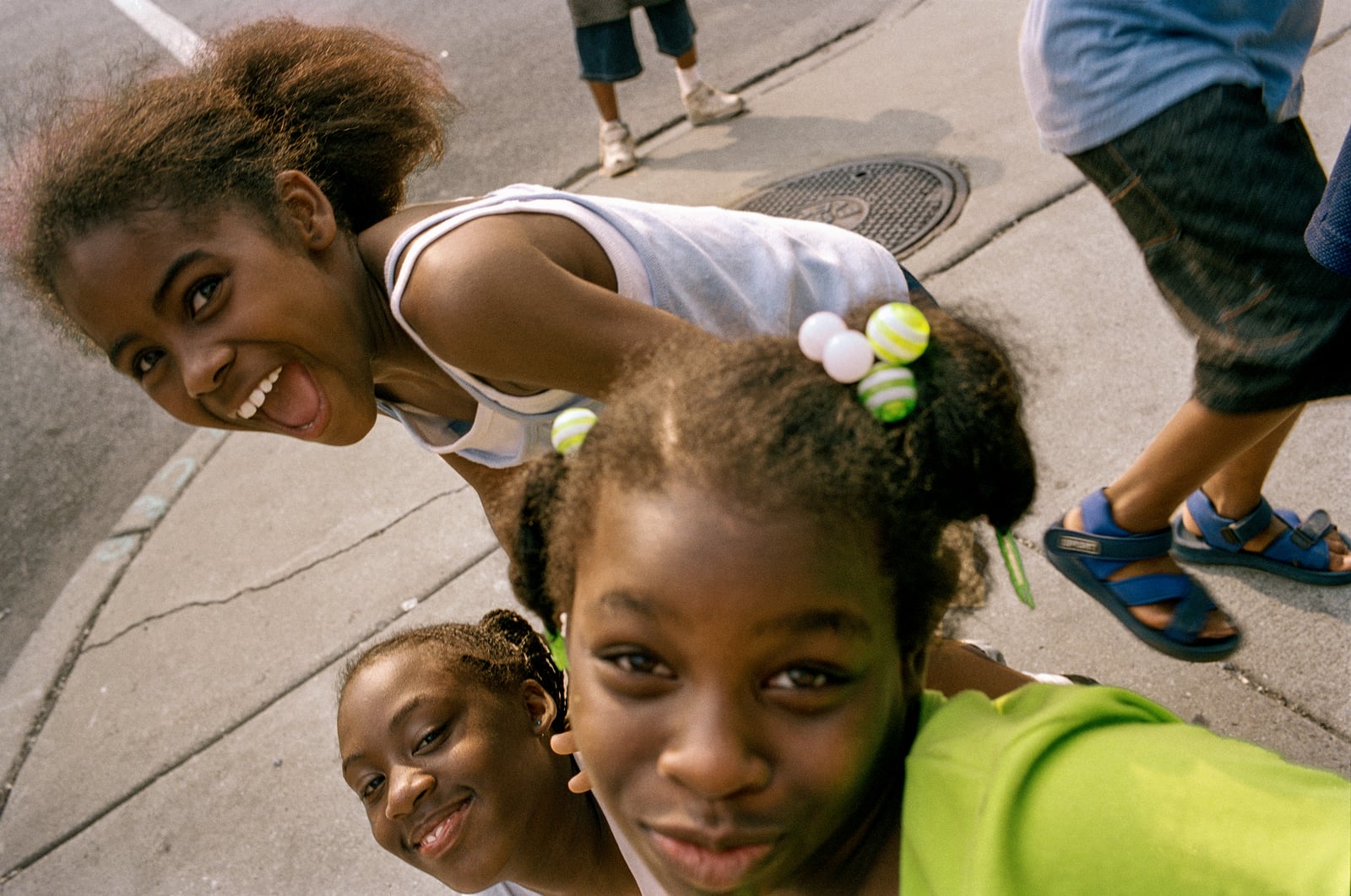
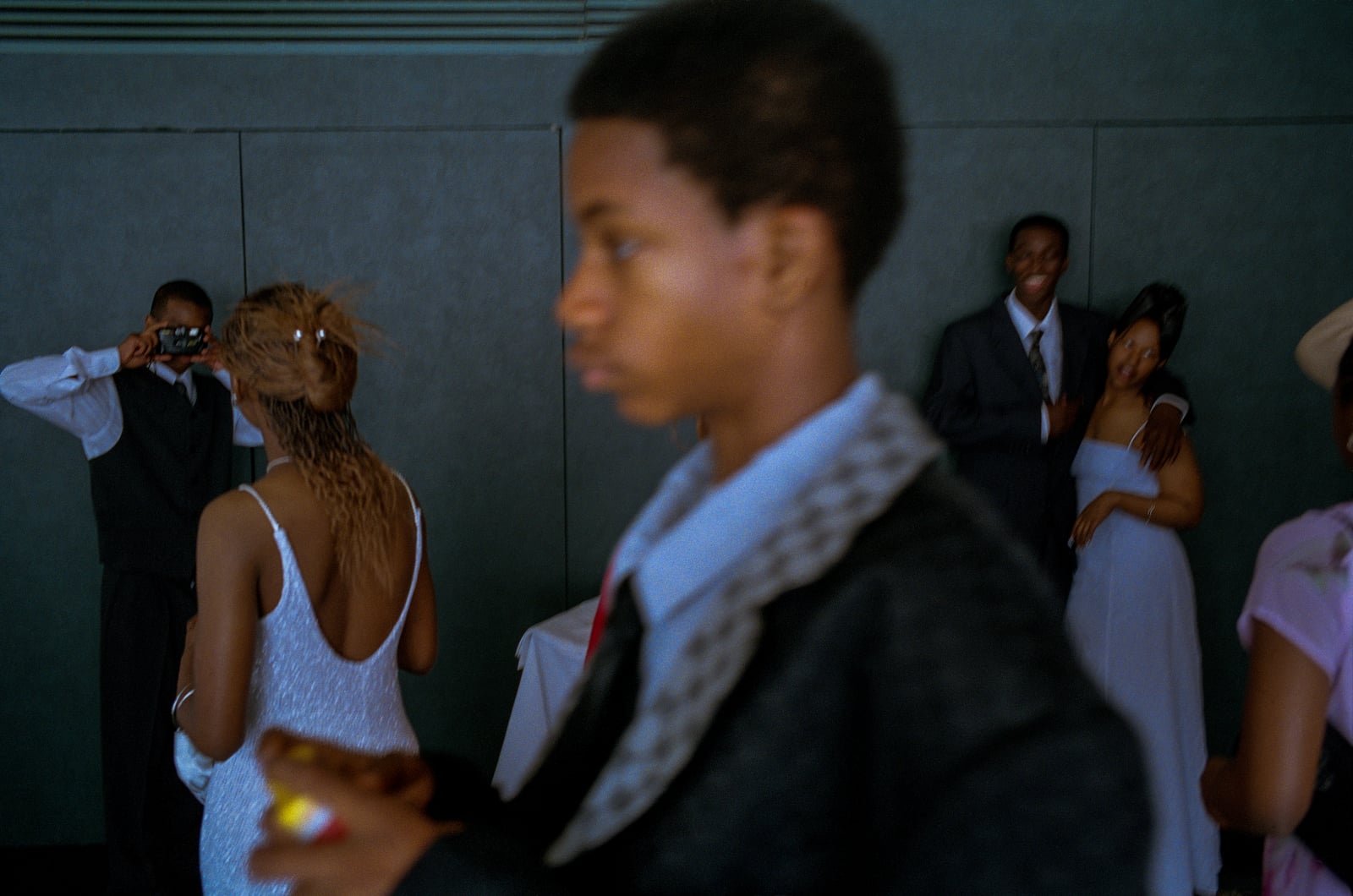
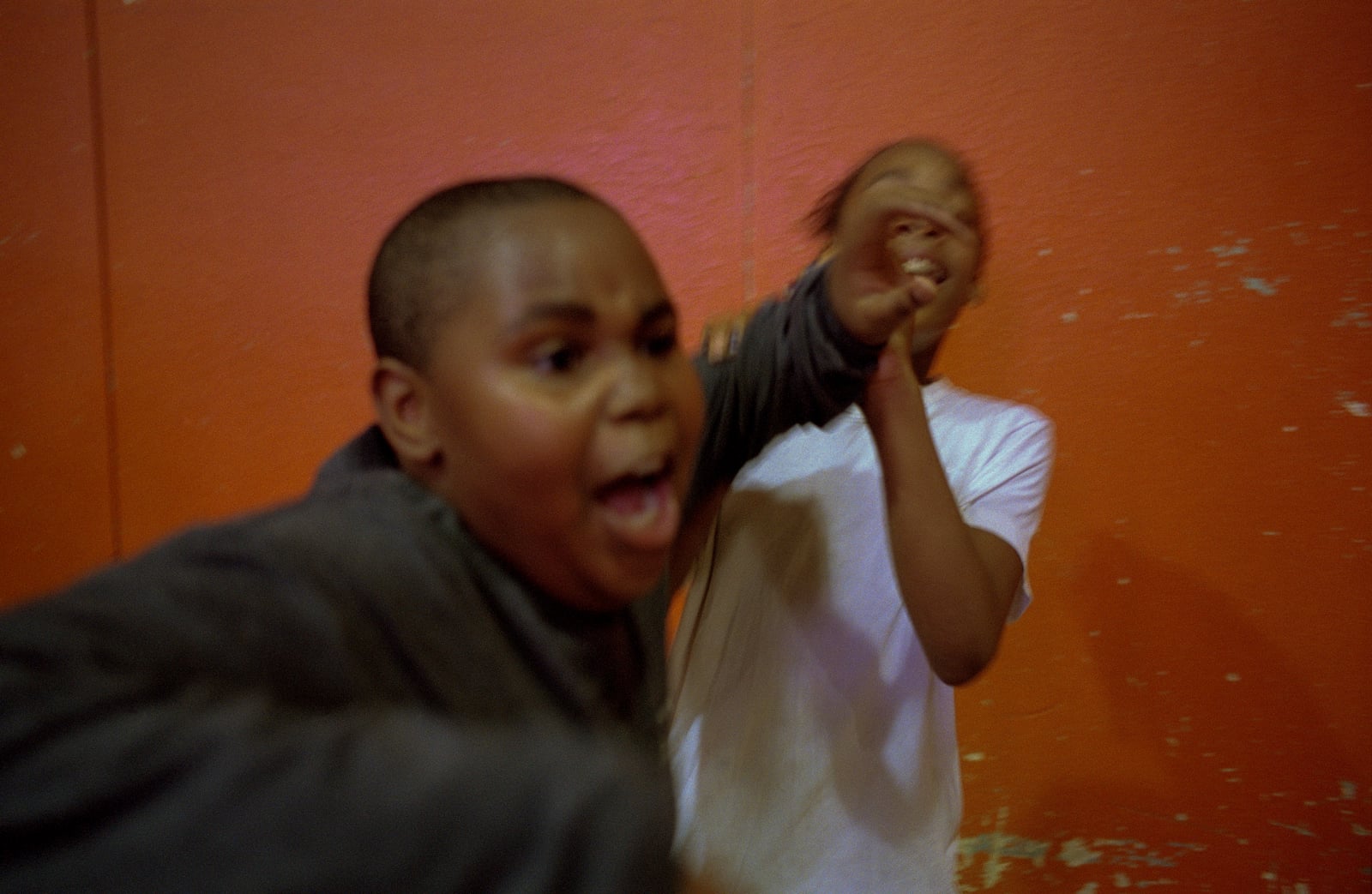
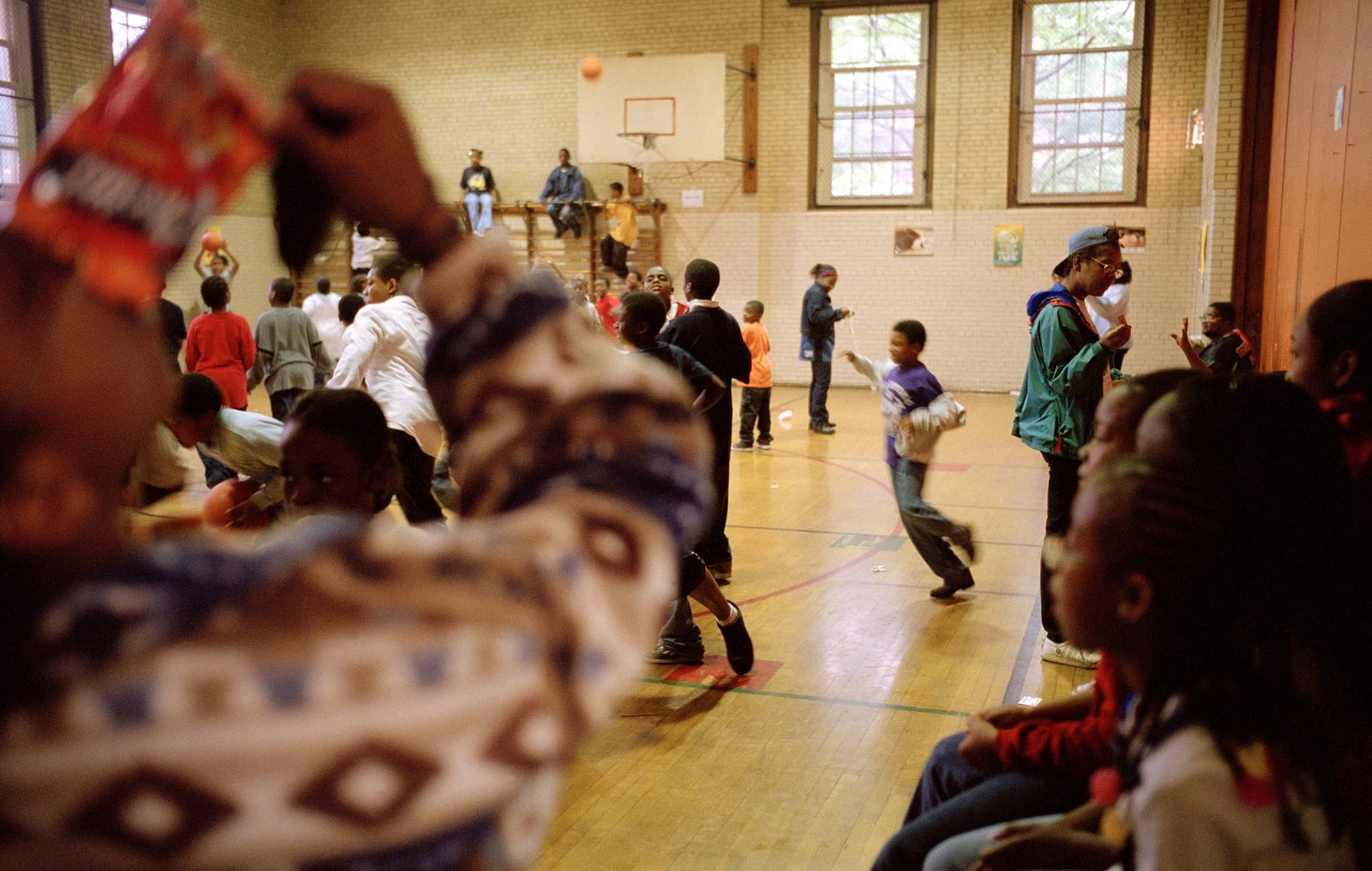
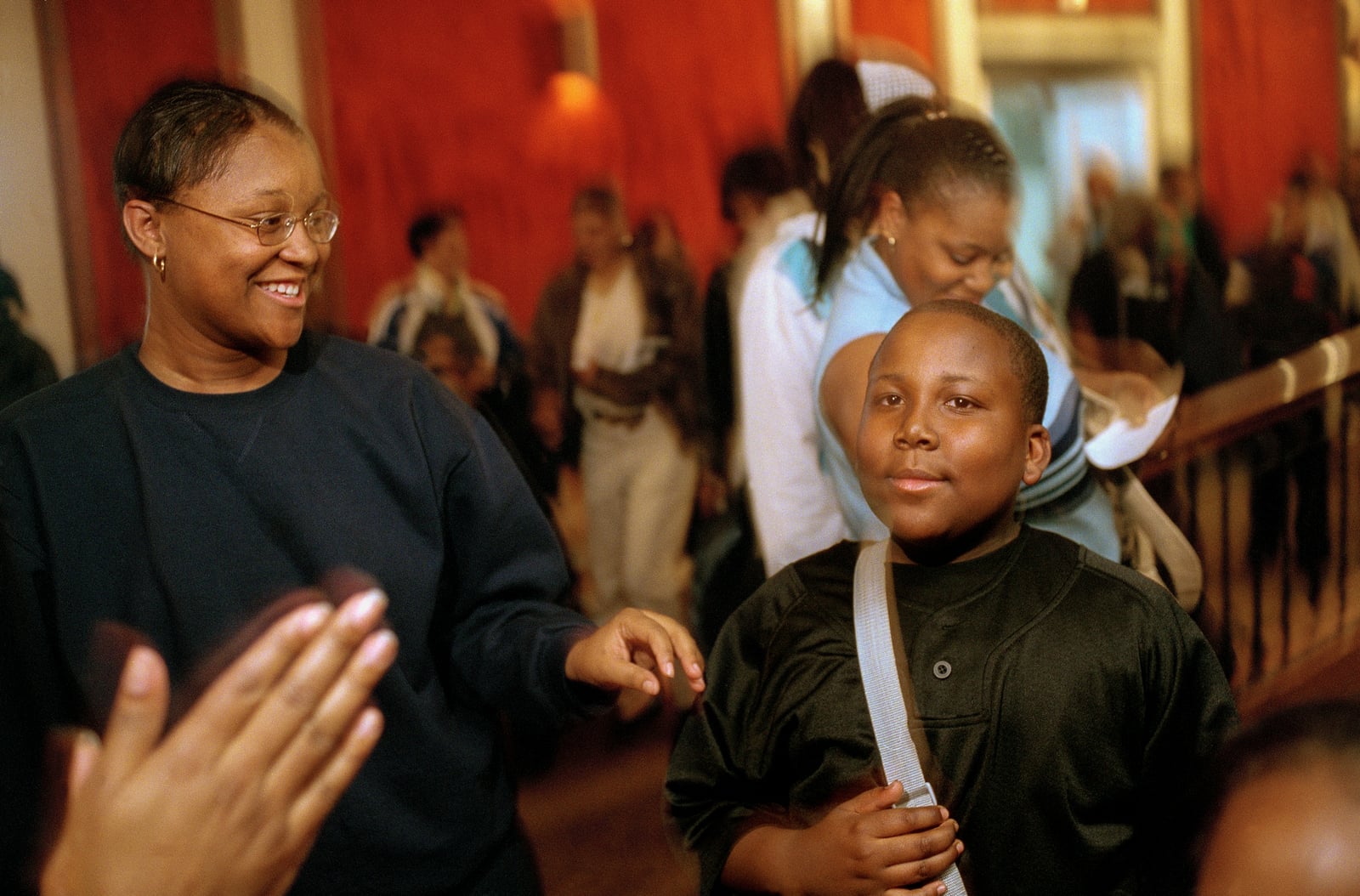
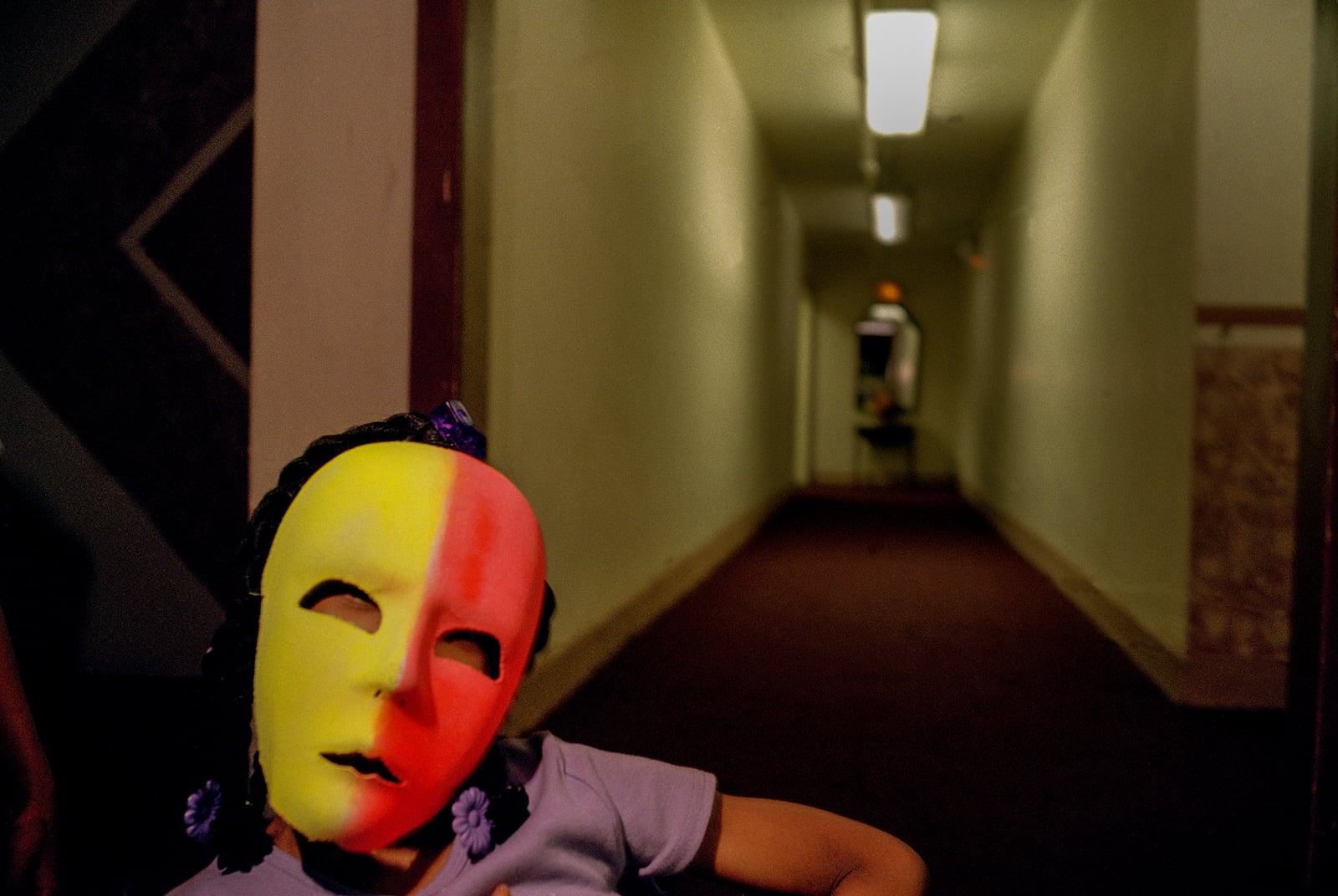
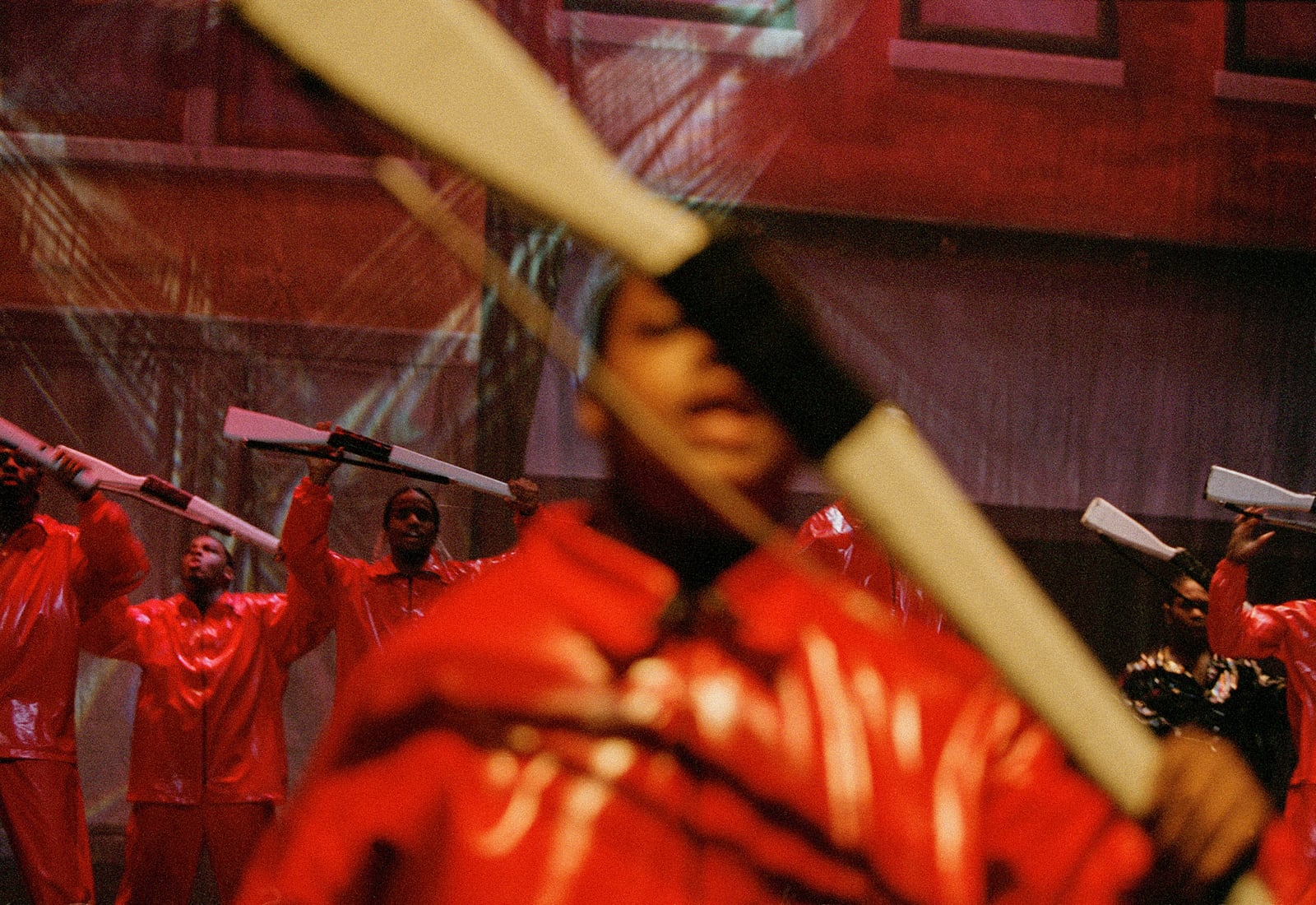
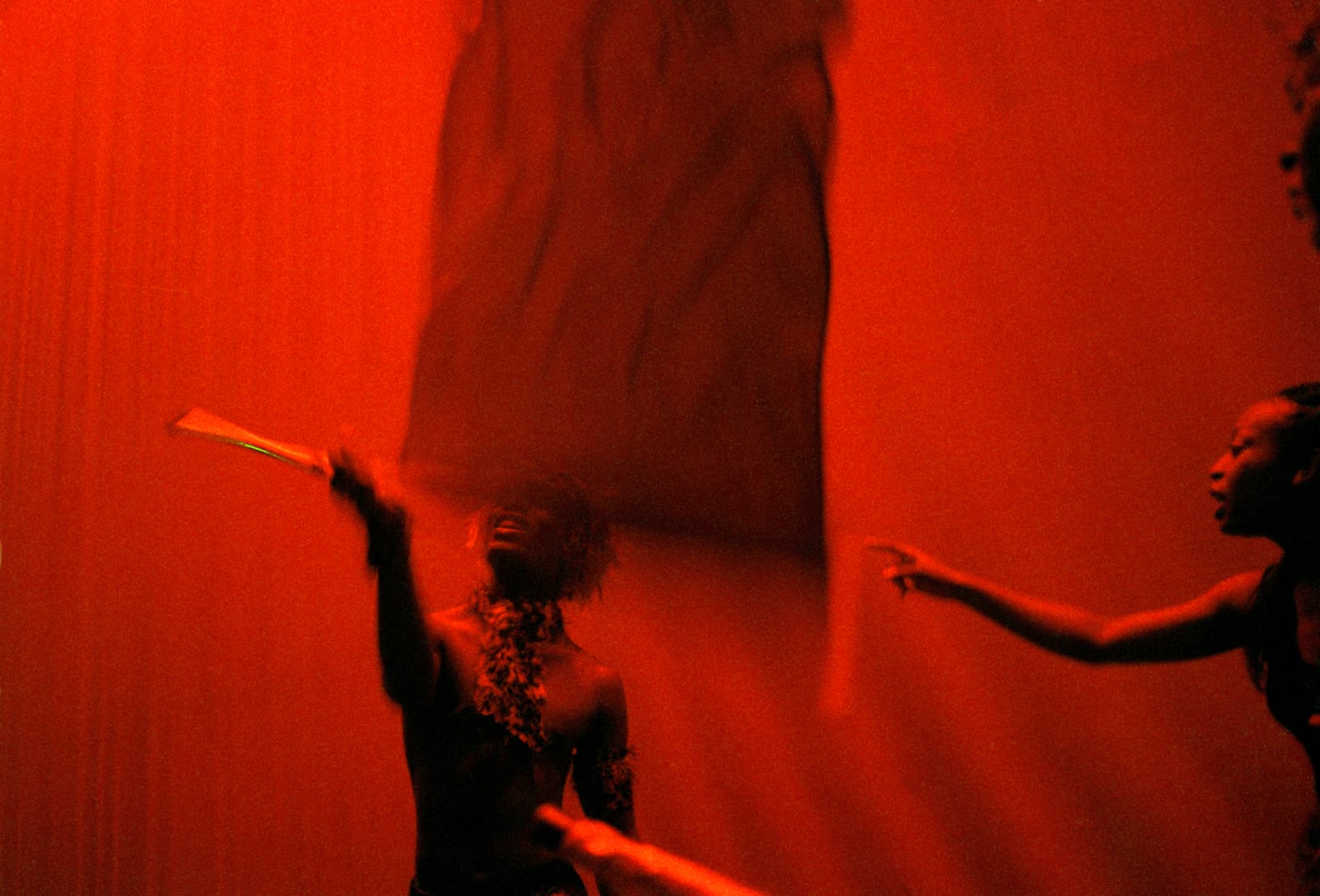
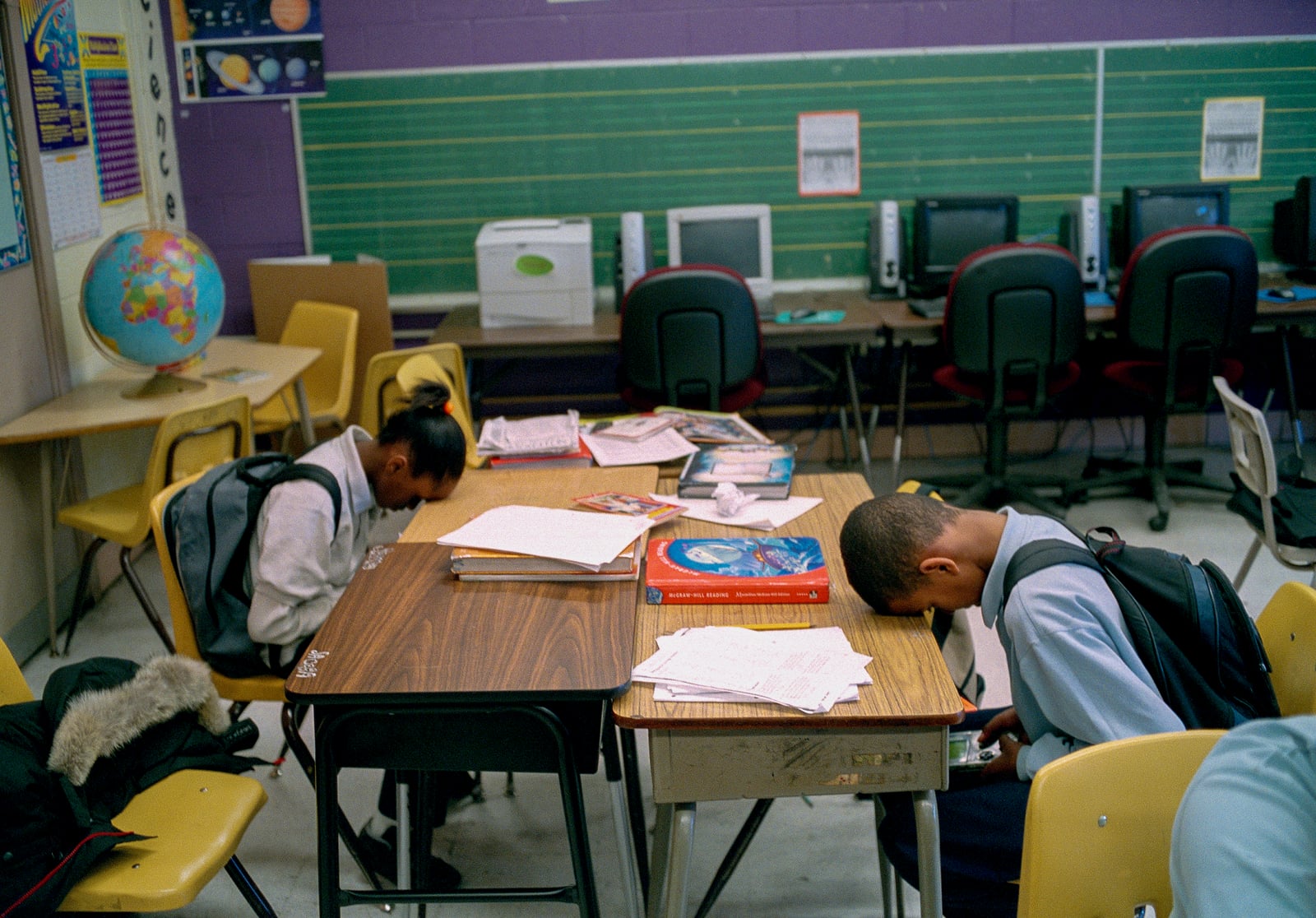
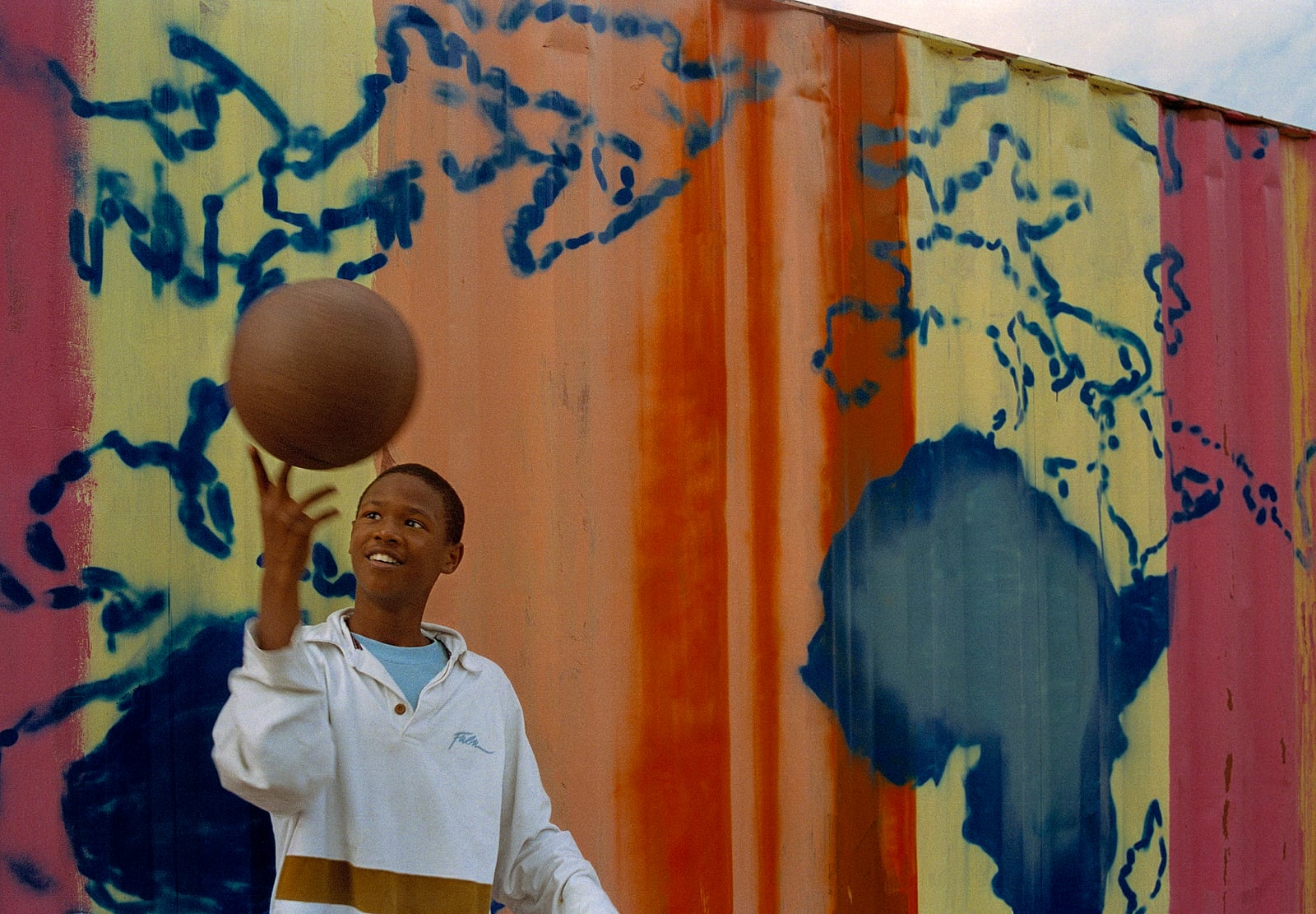
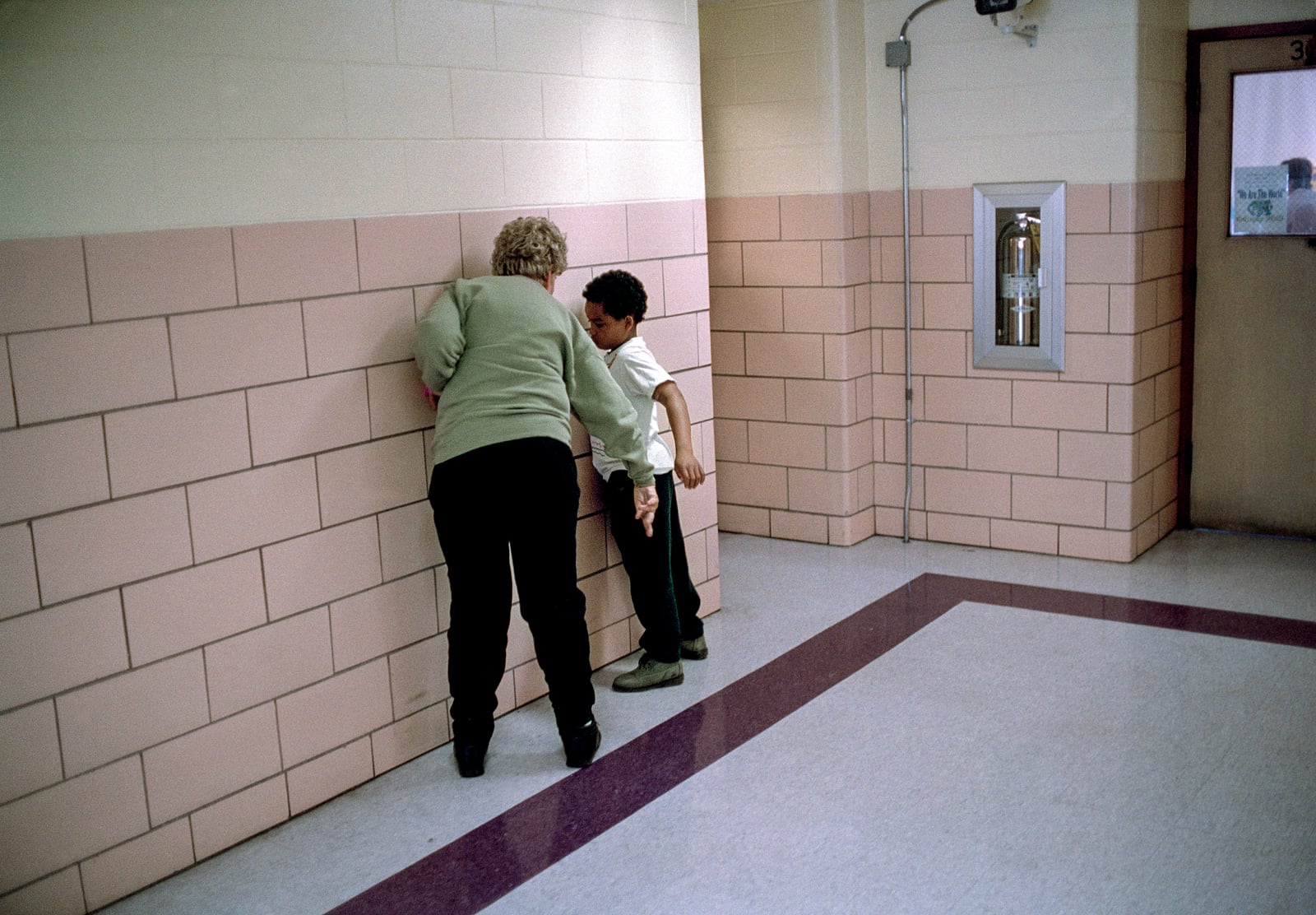
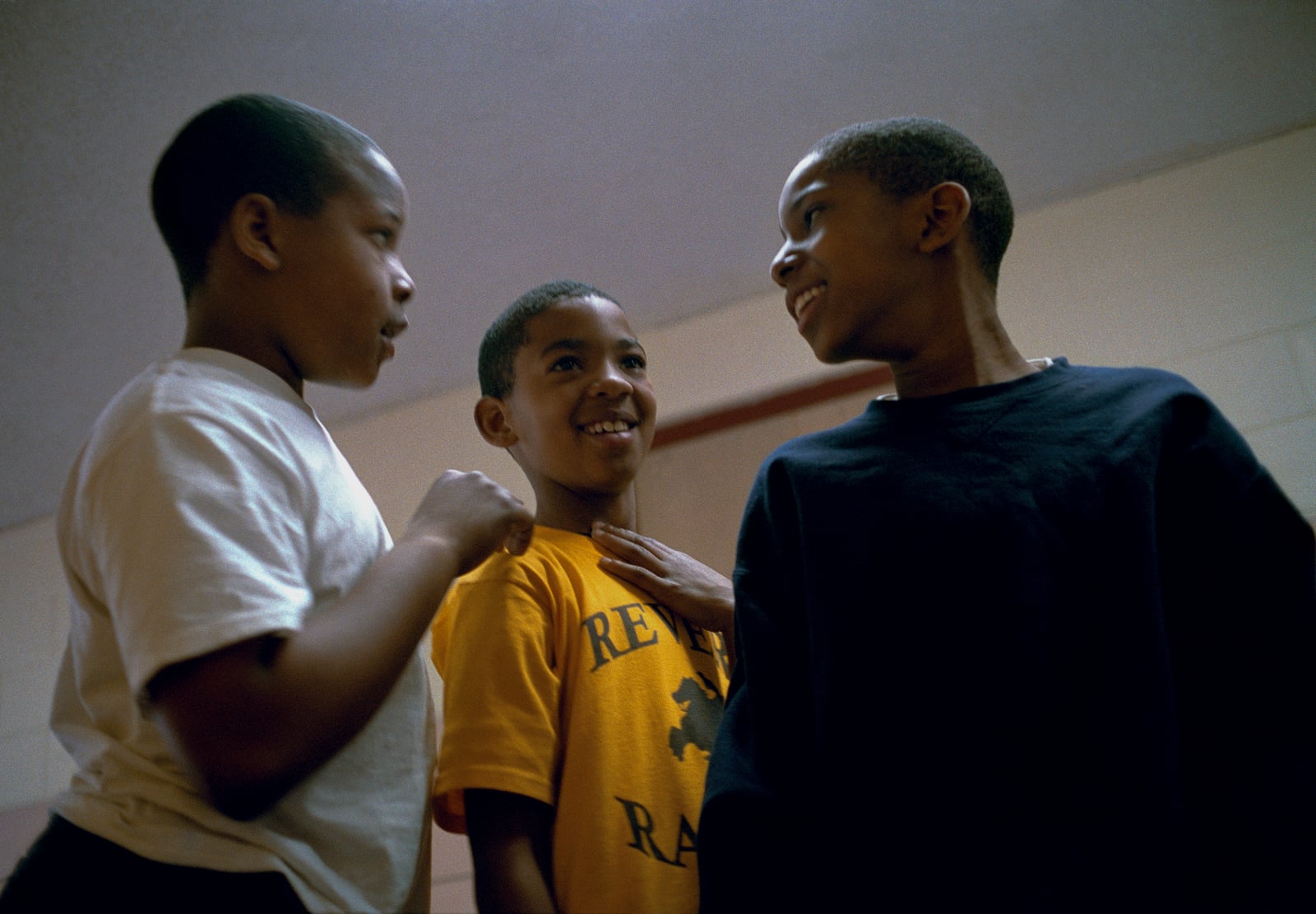
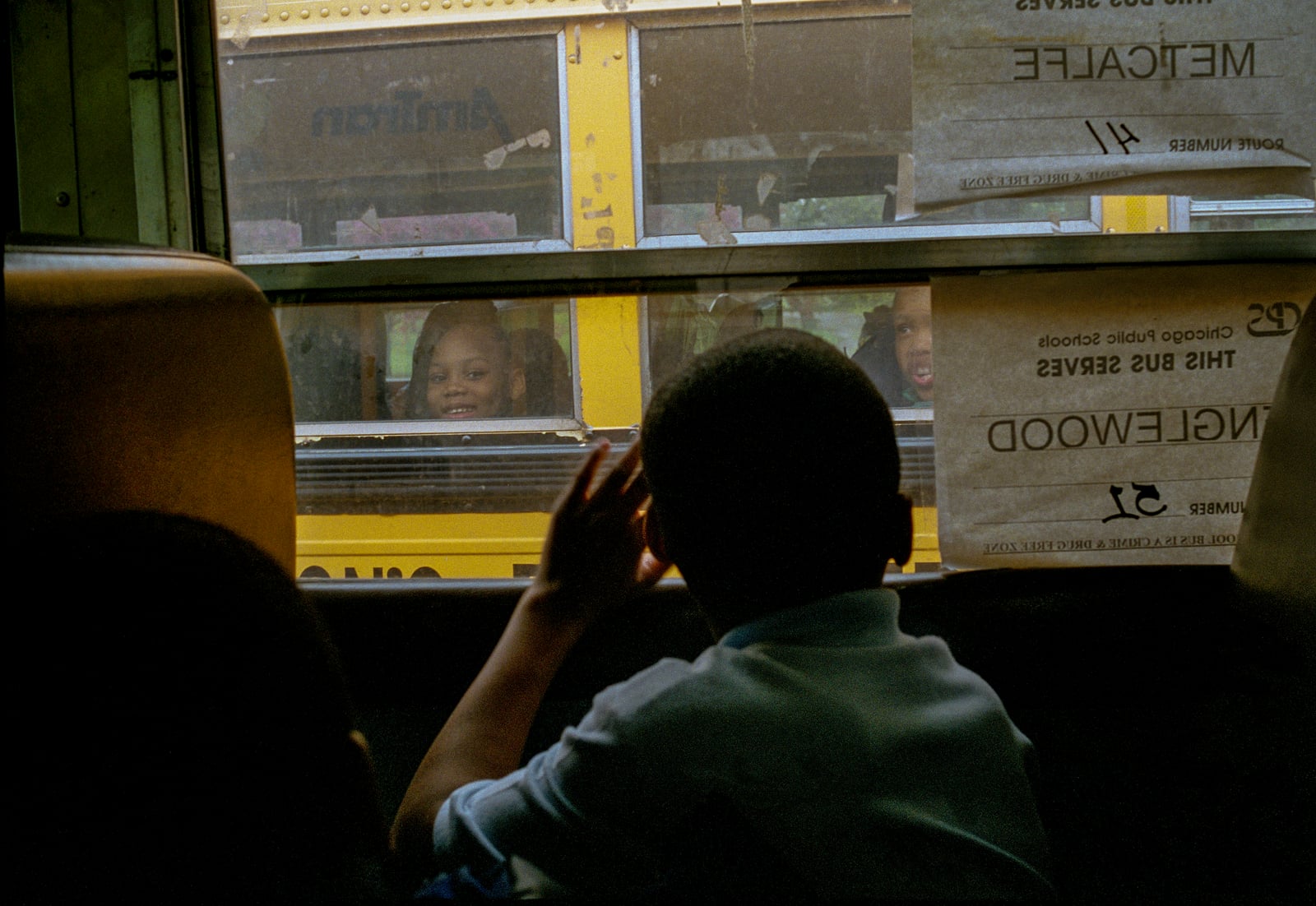
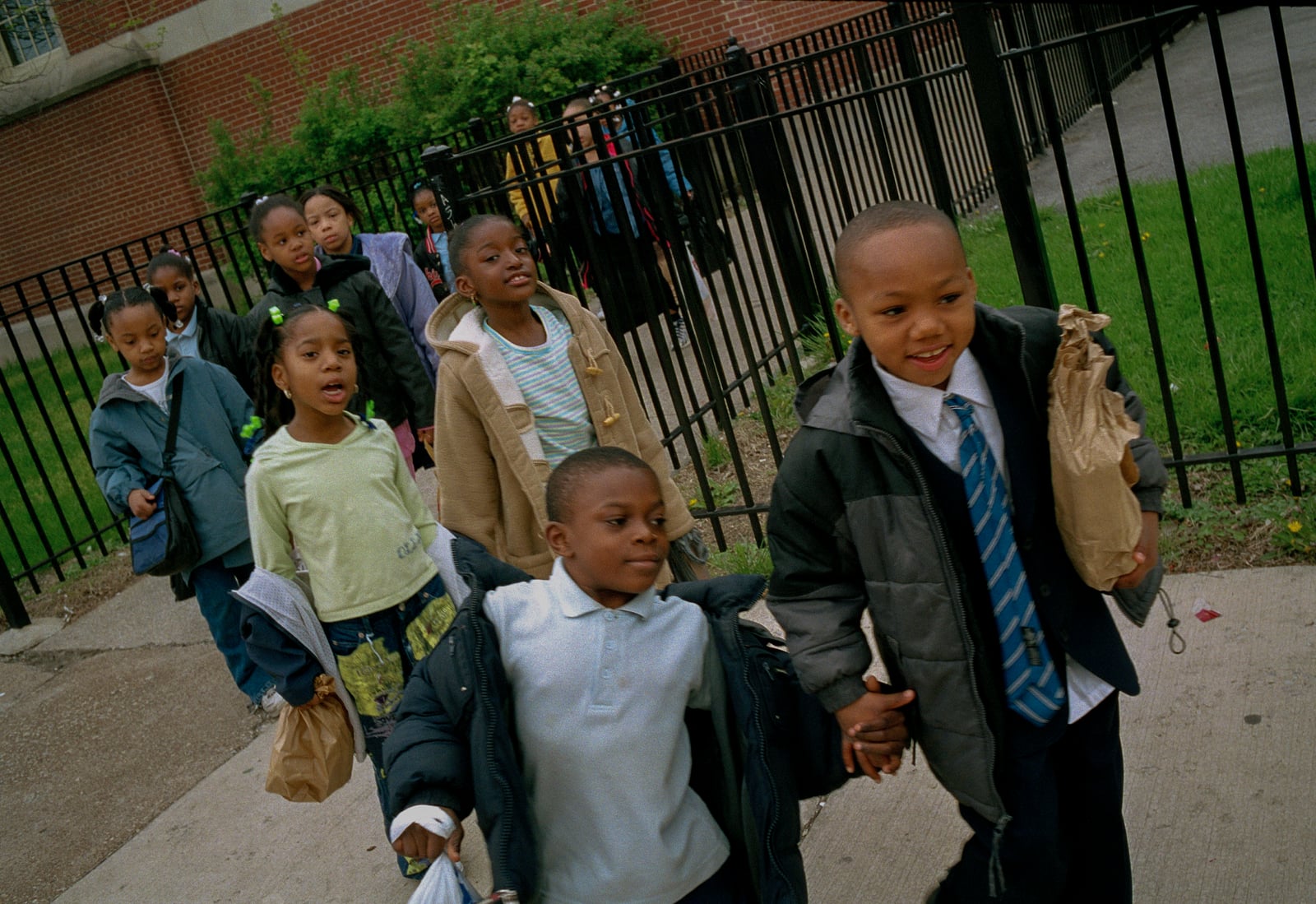
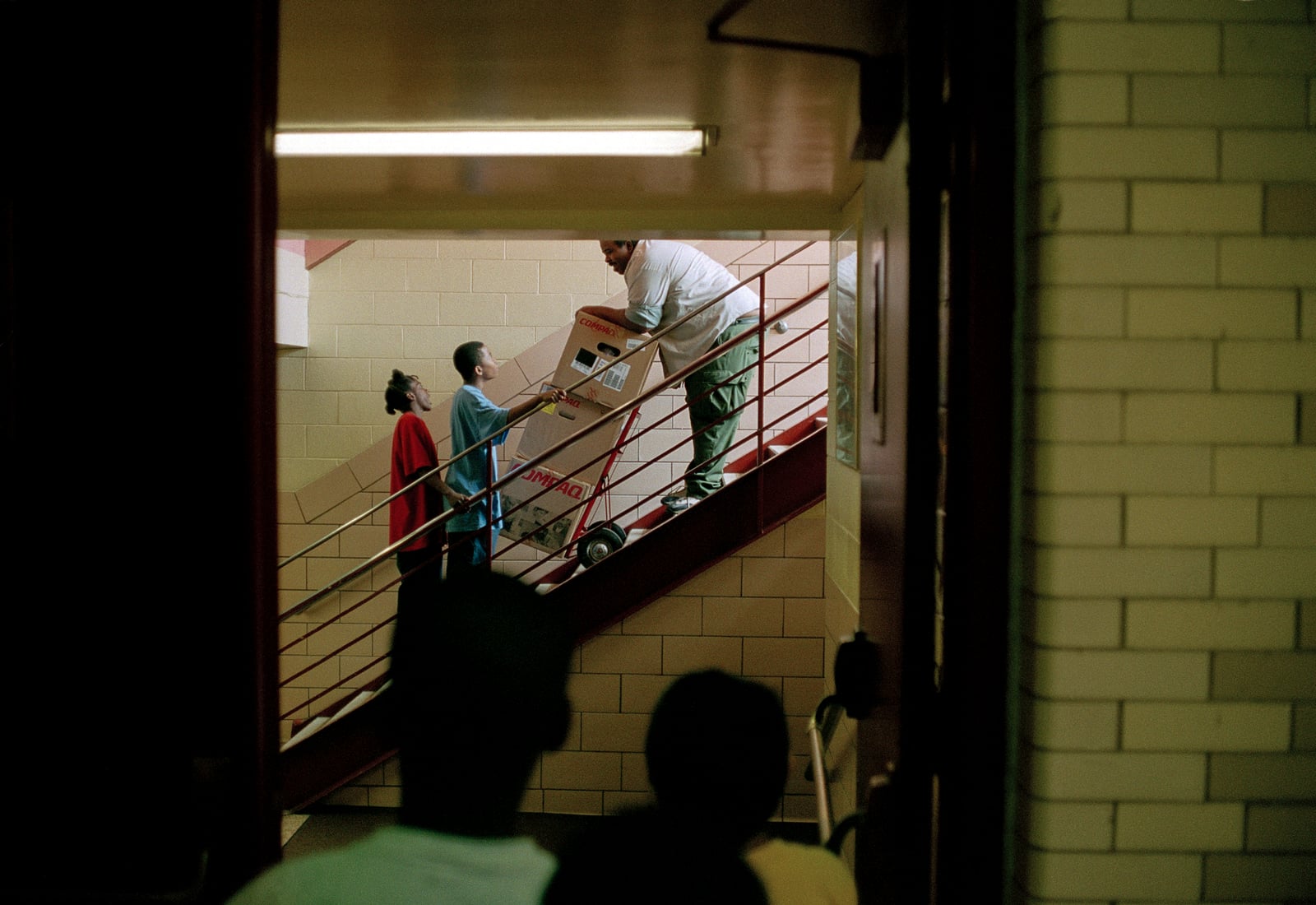
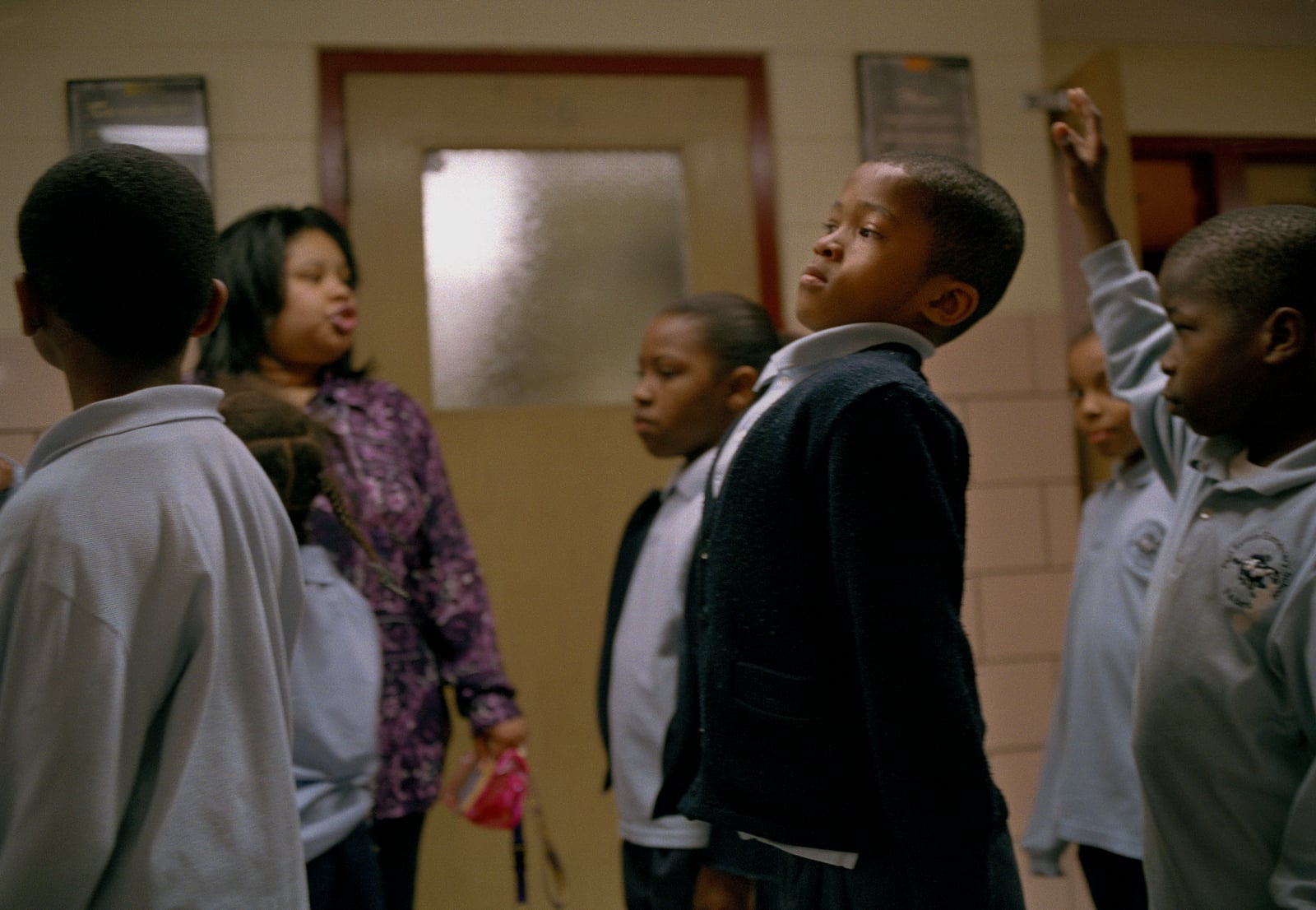
01020304050607080910 · Photographs from Chicago's Paul Revere Elementary School in the Greater Grand Crossing Neighborhood.
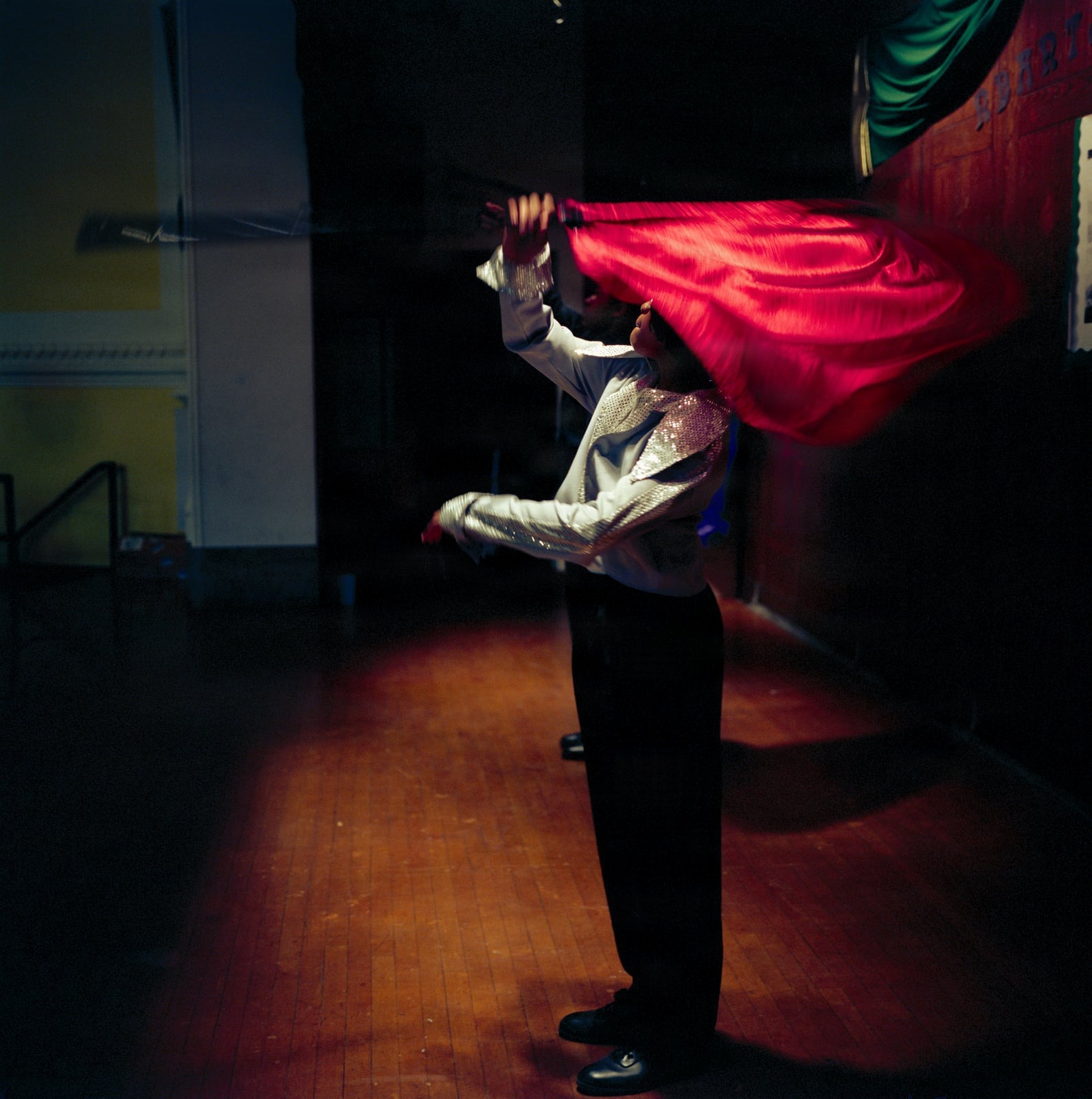
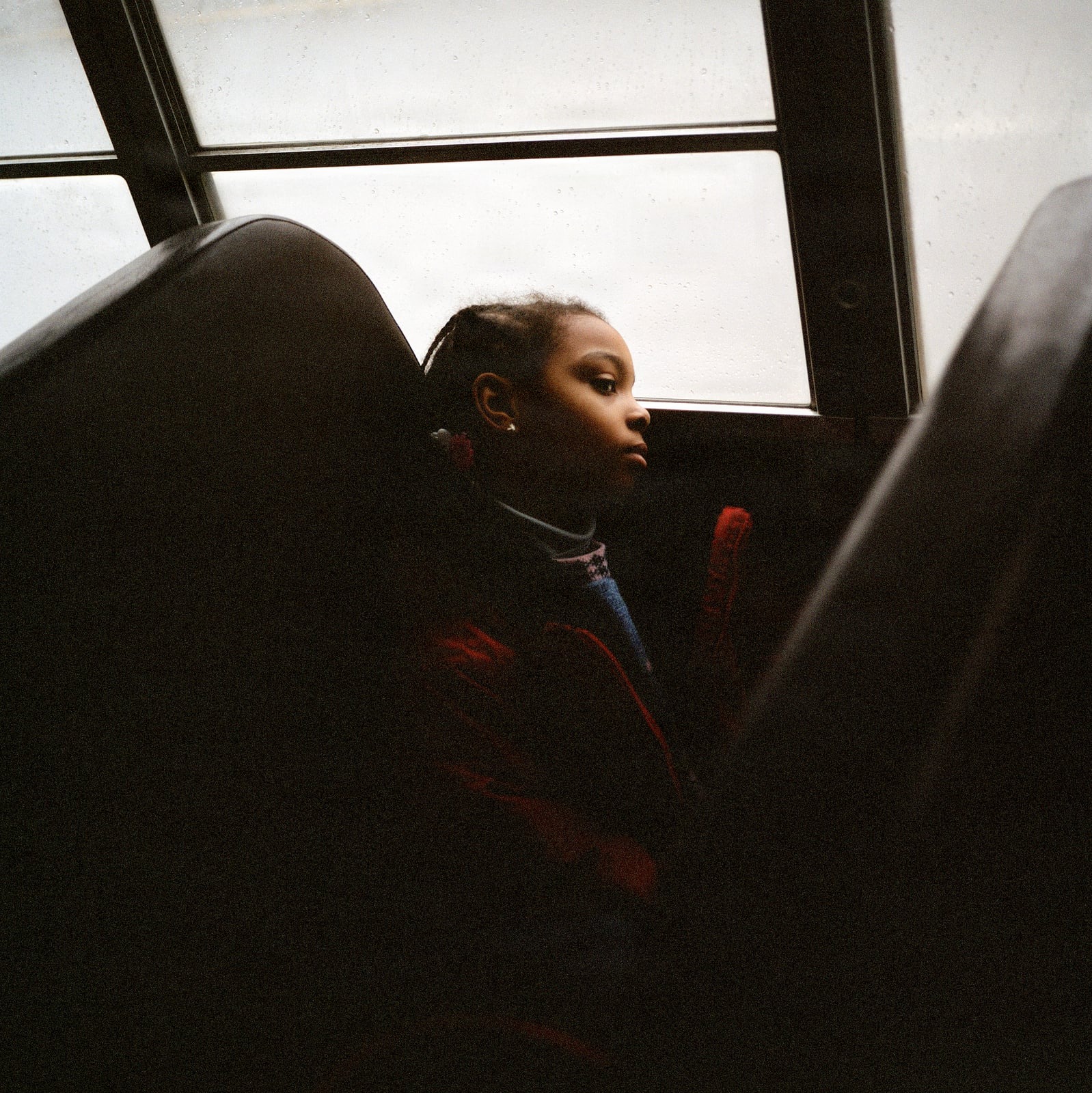
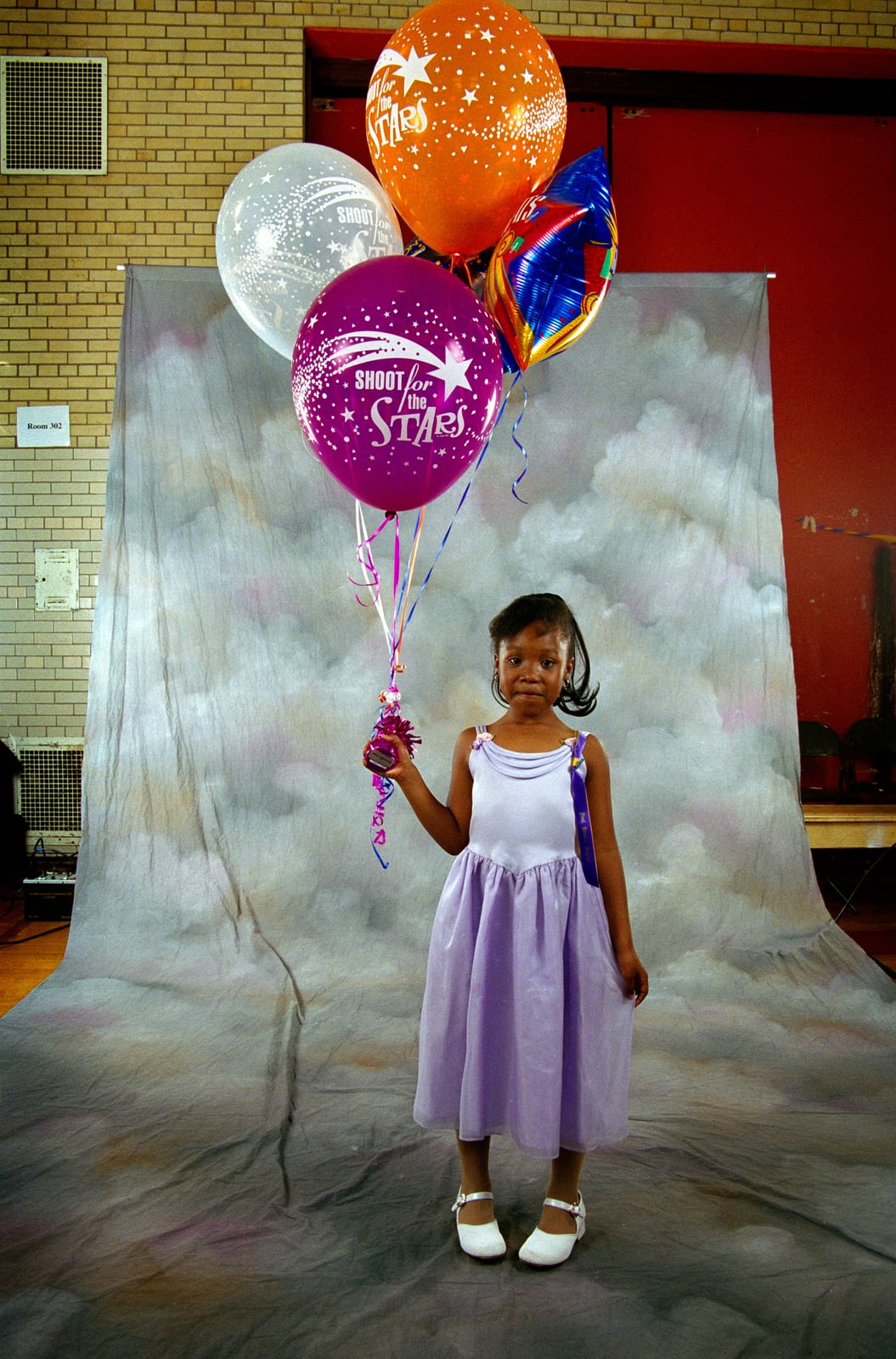
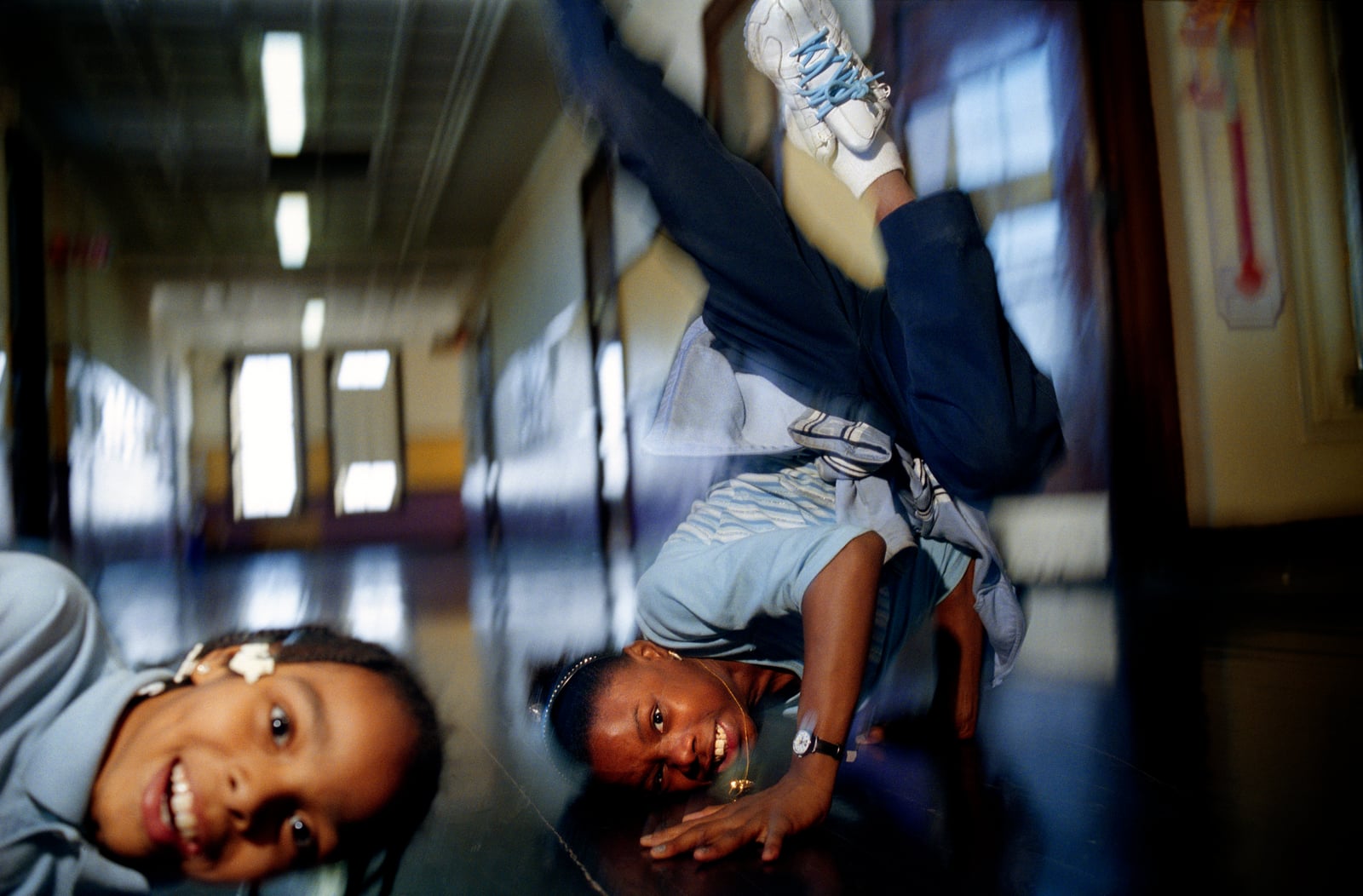
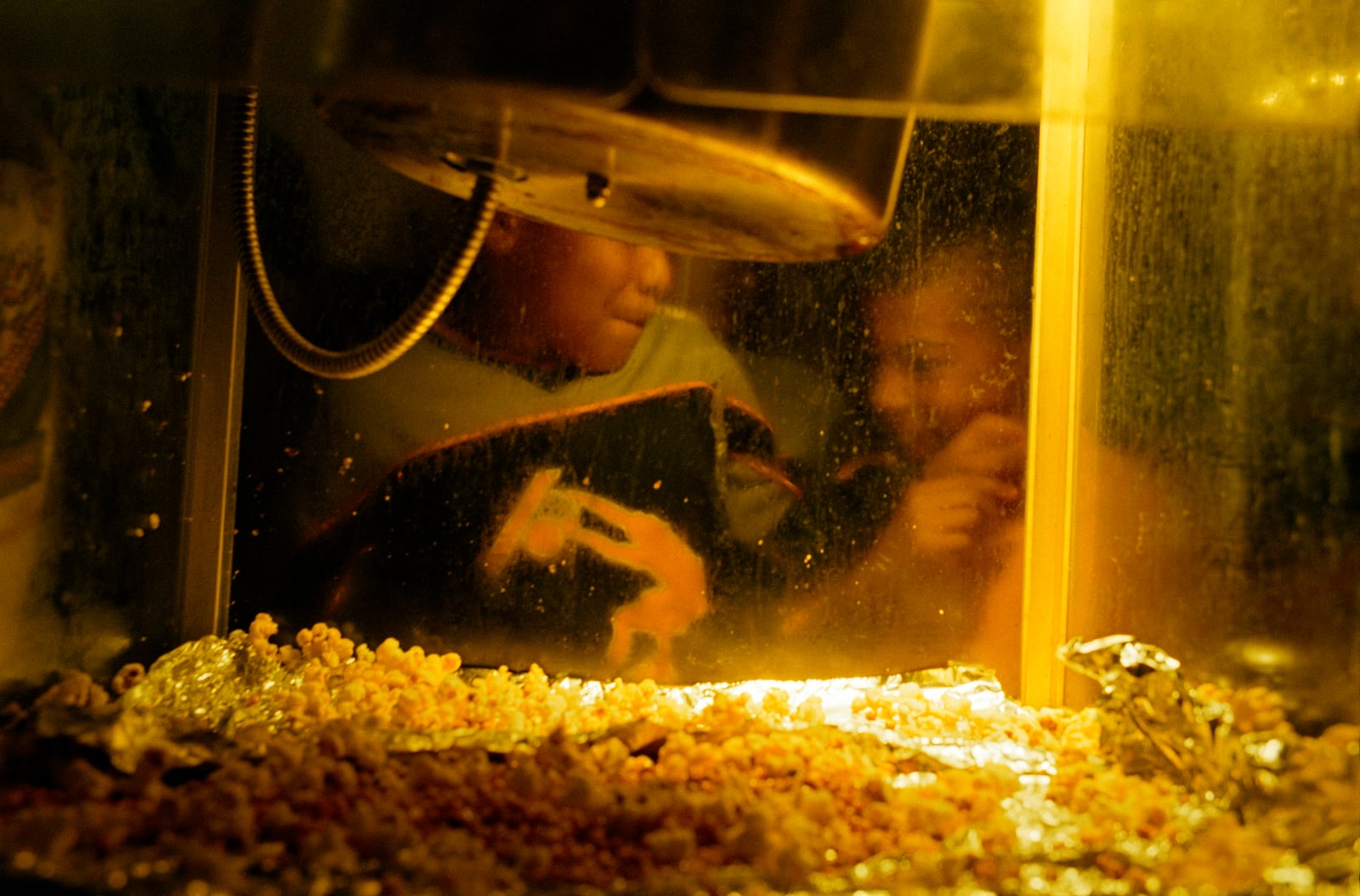
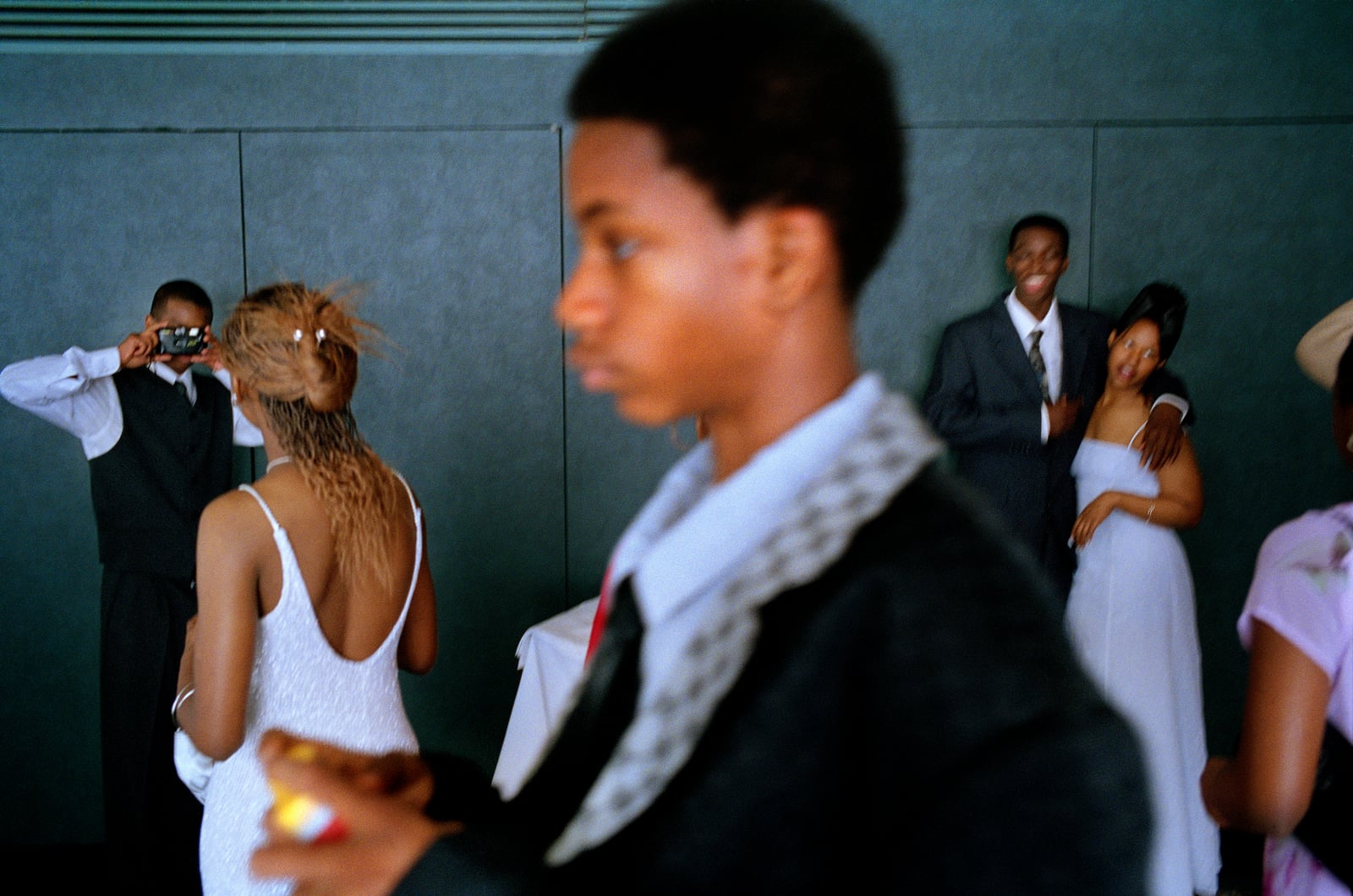
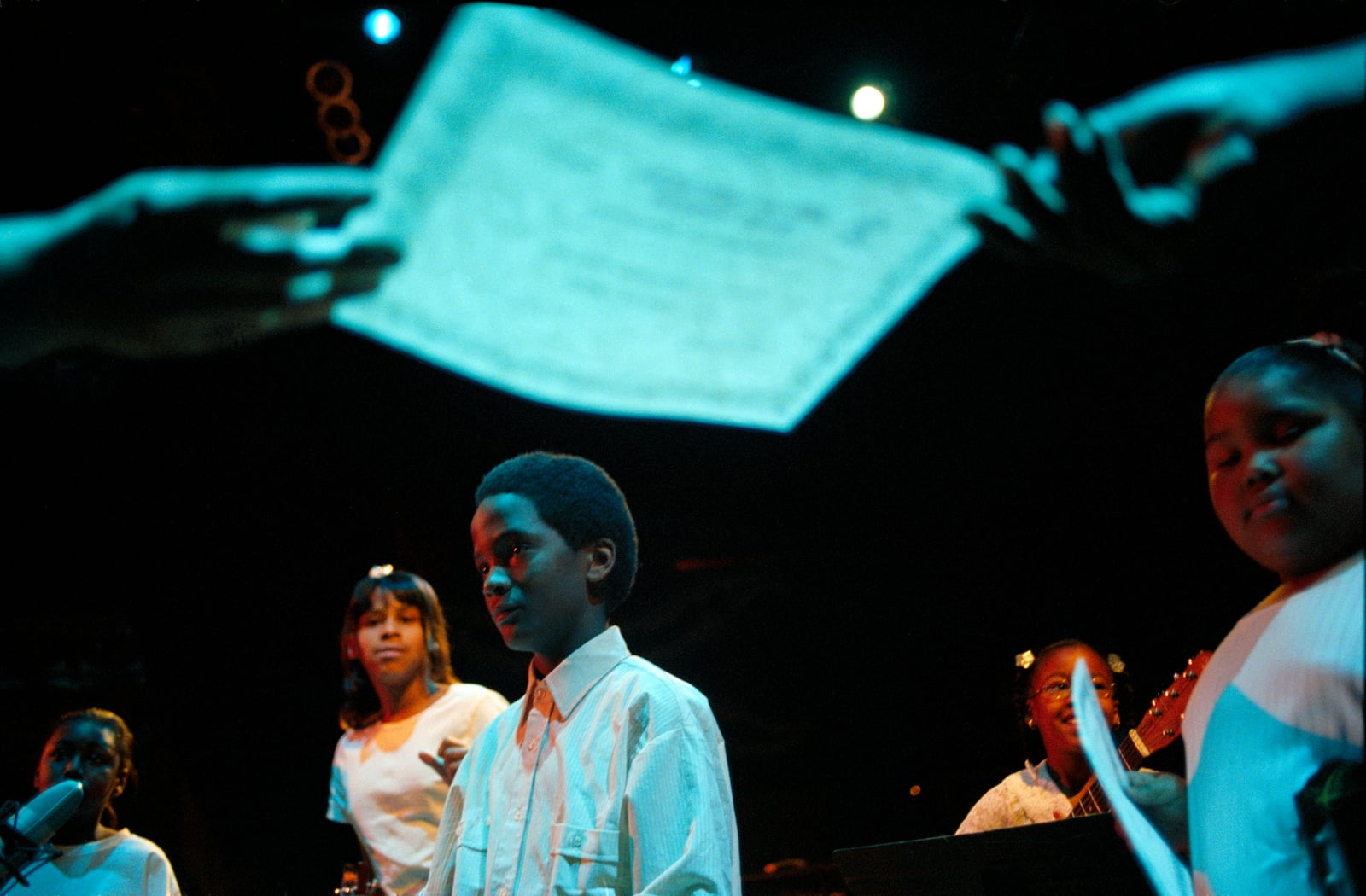
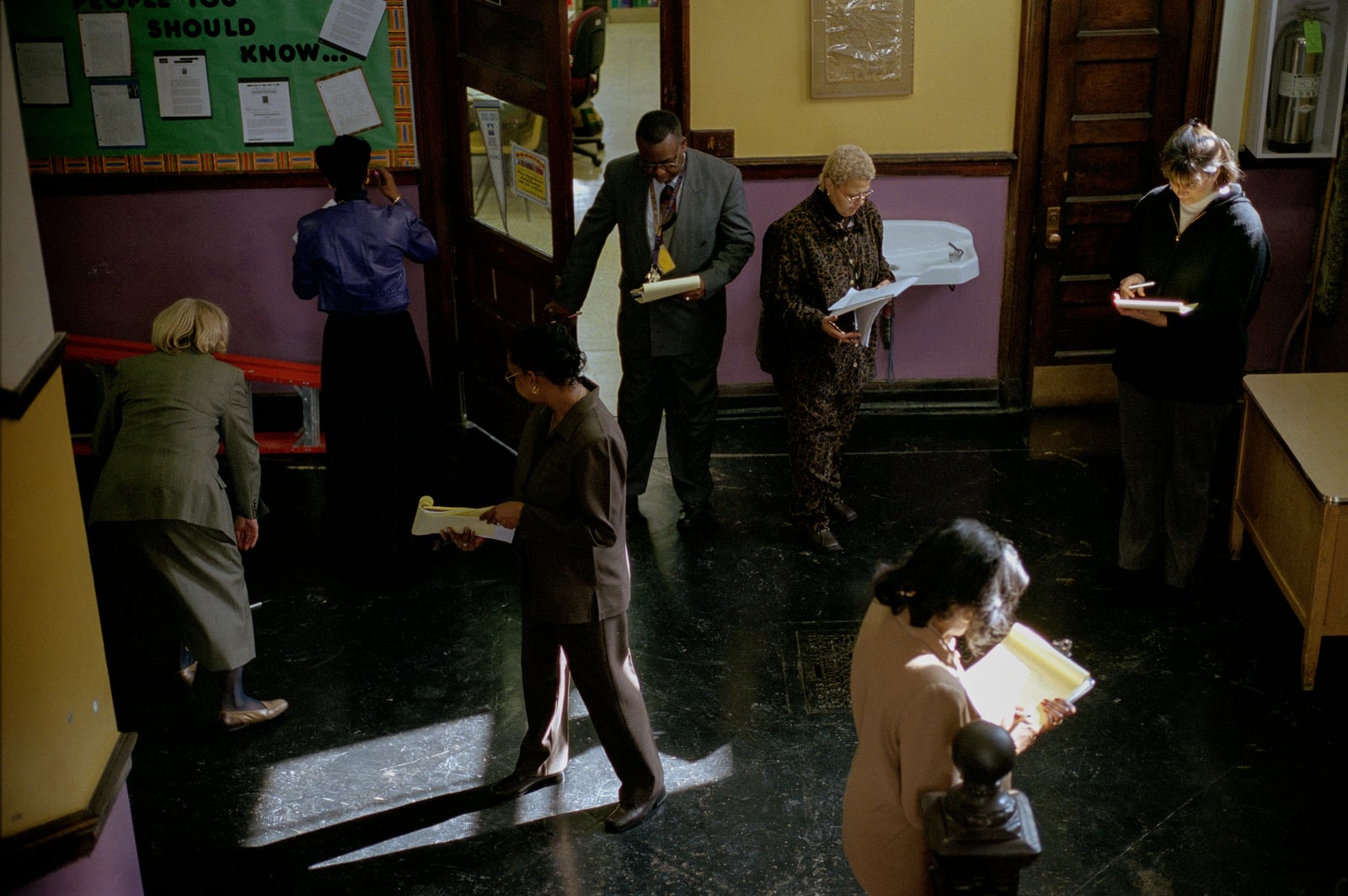
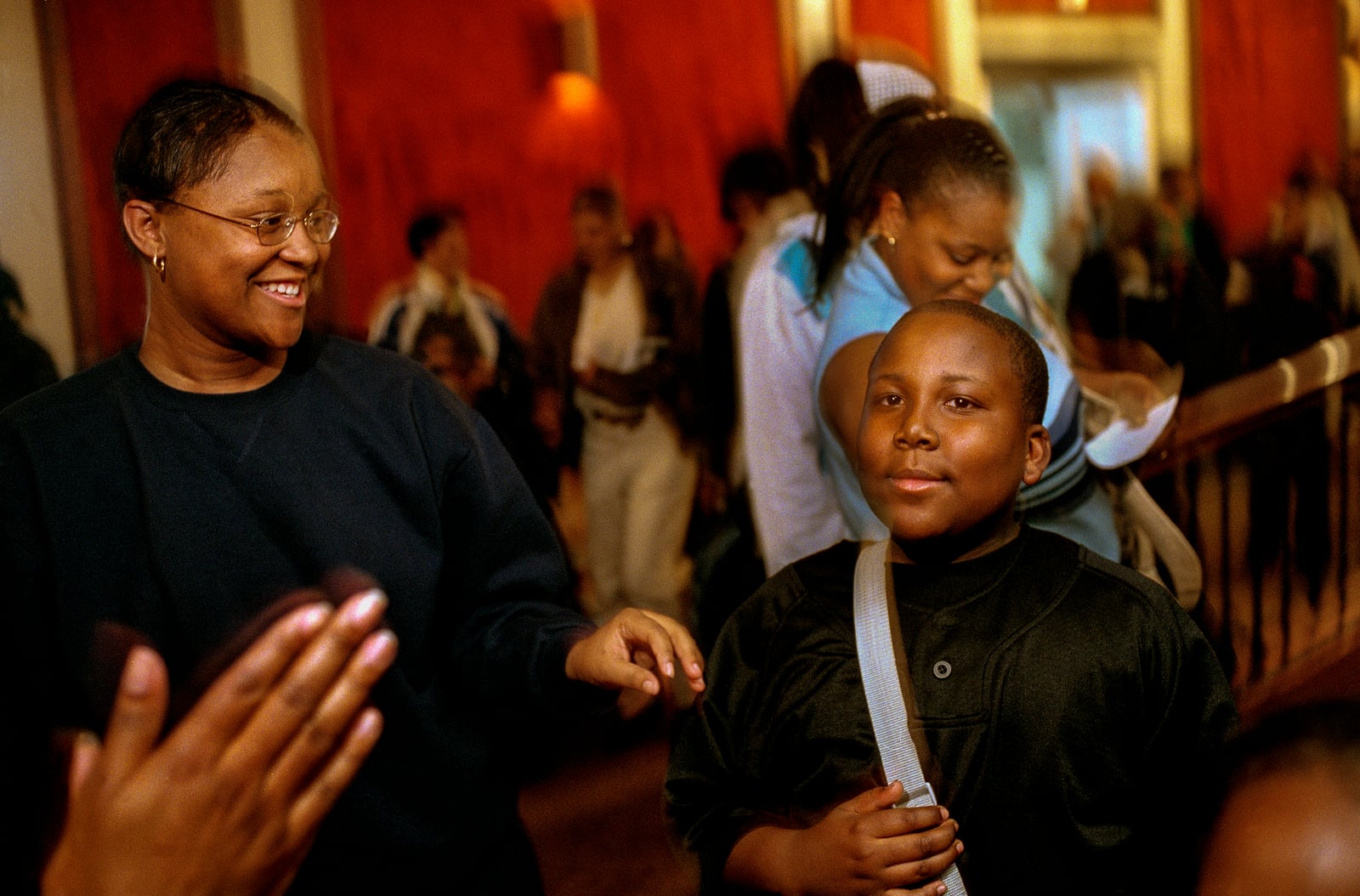
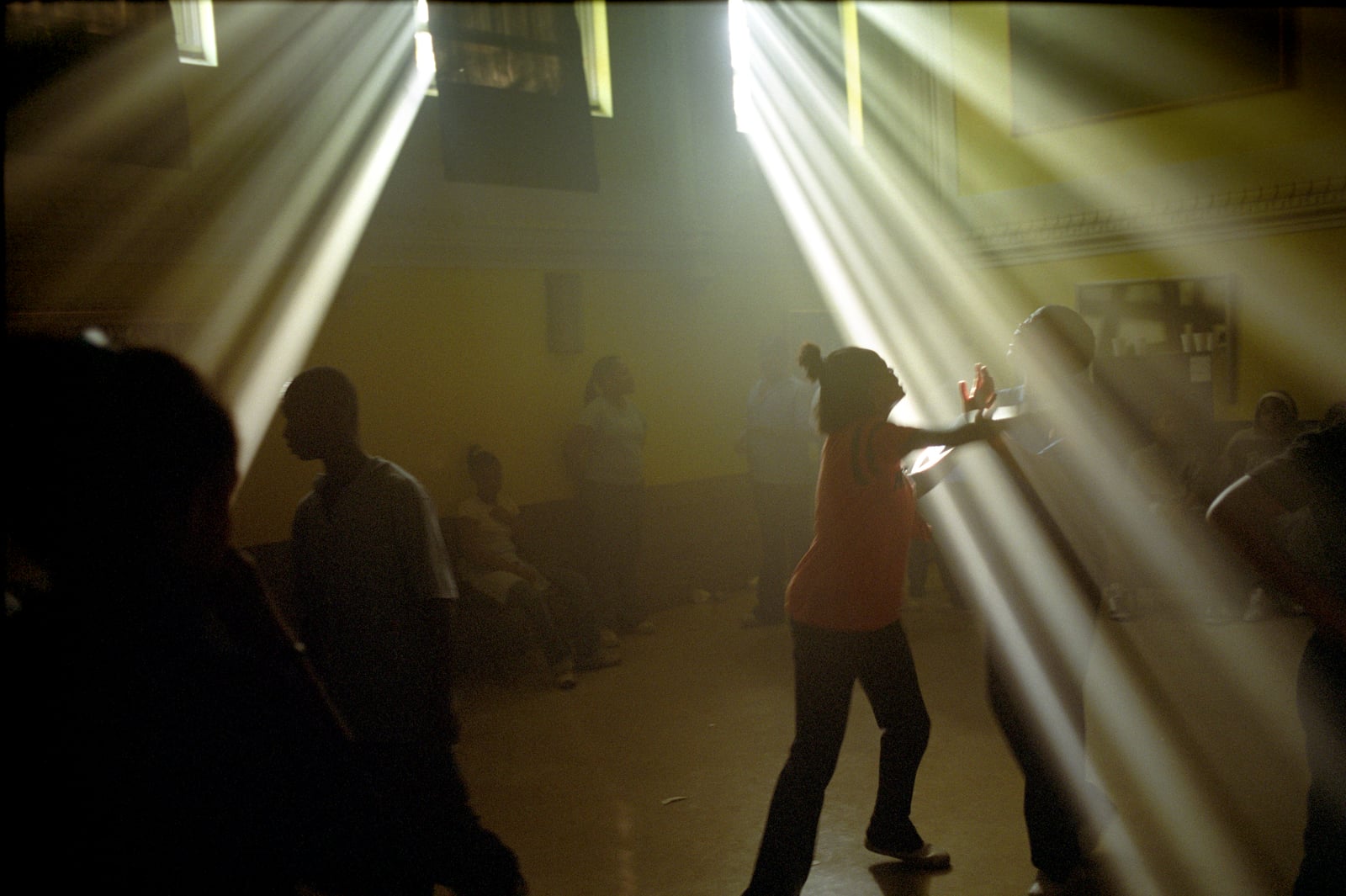
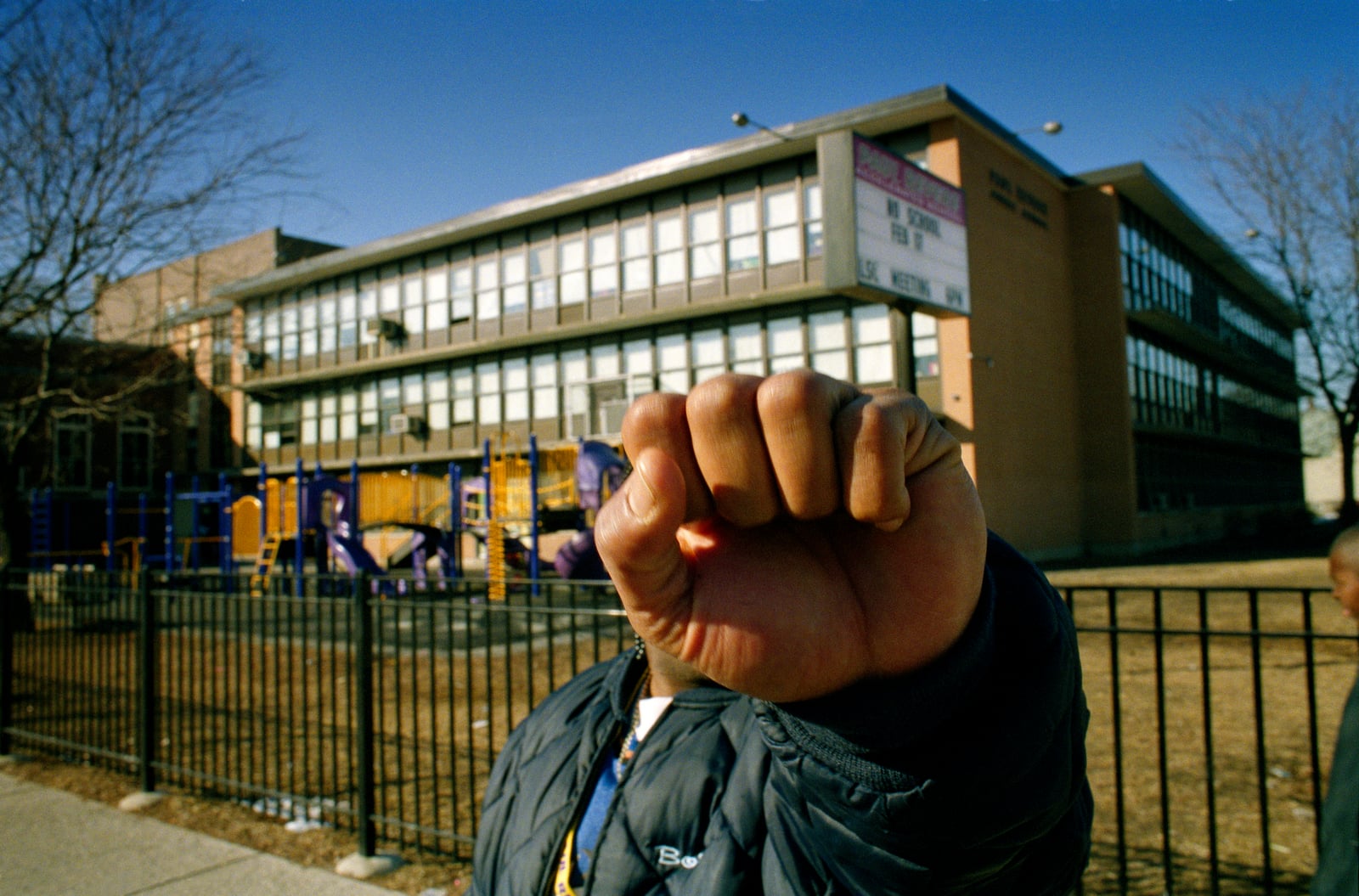
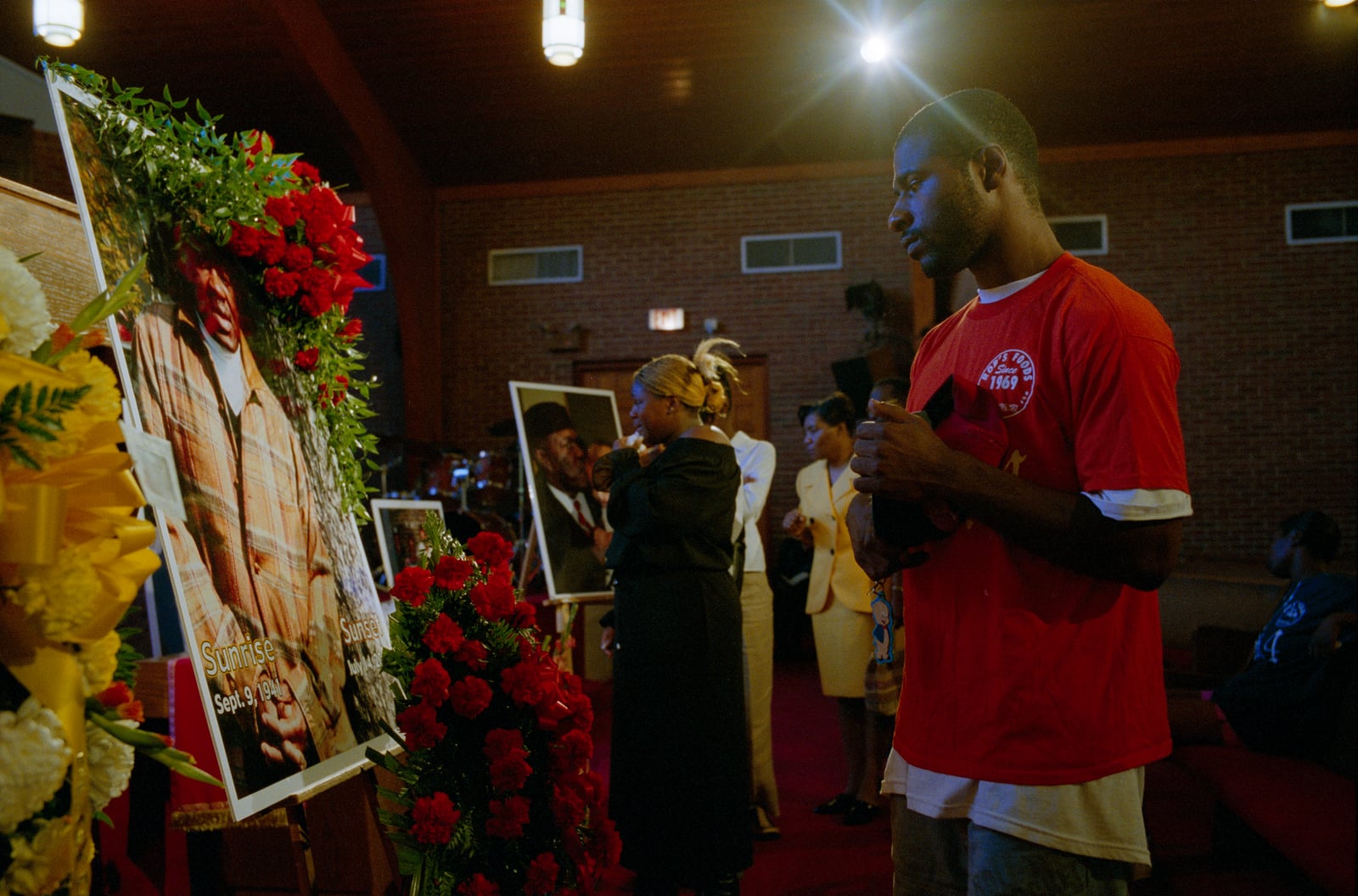
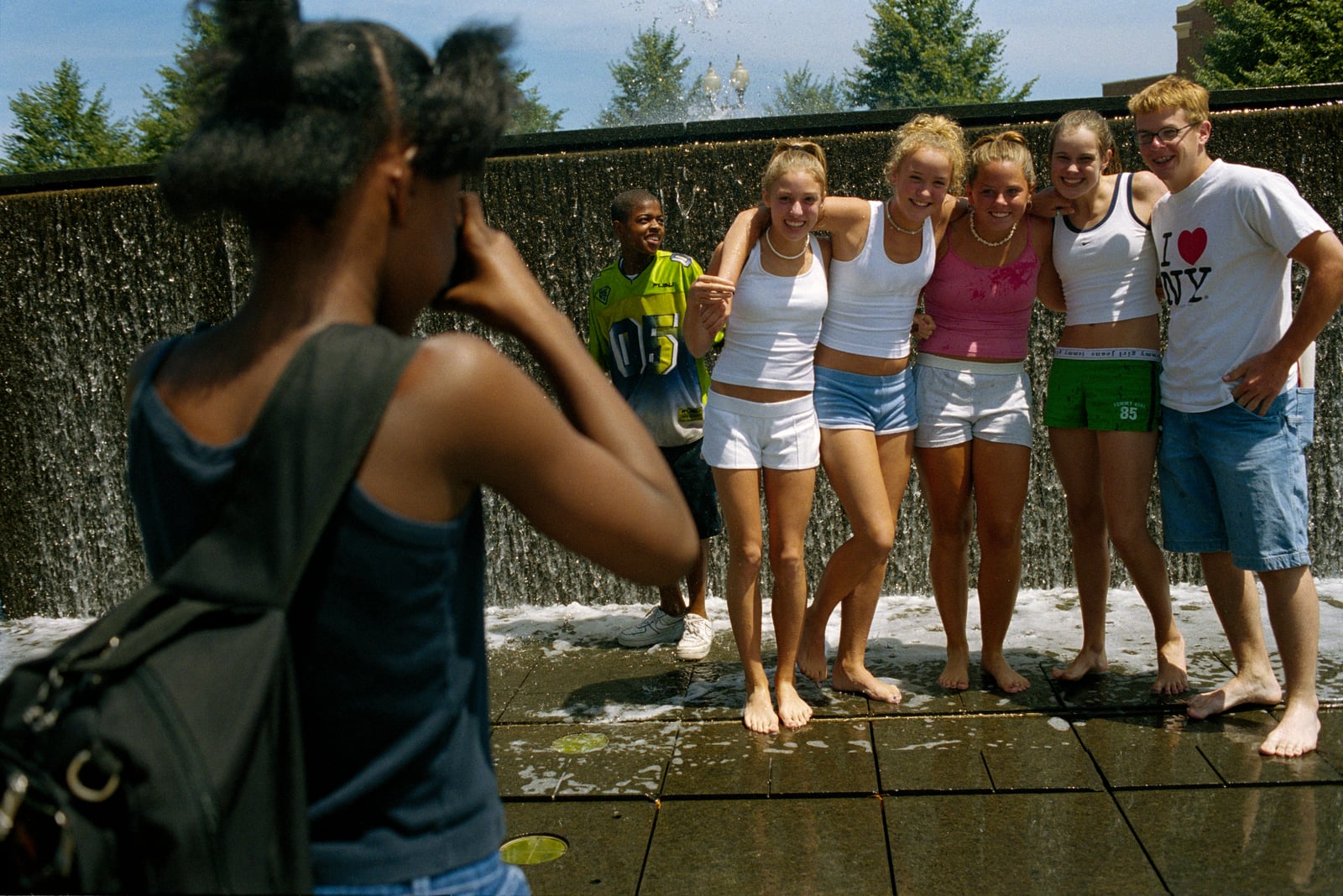
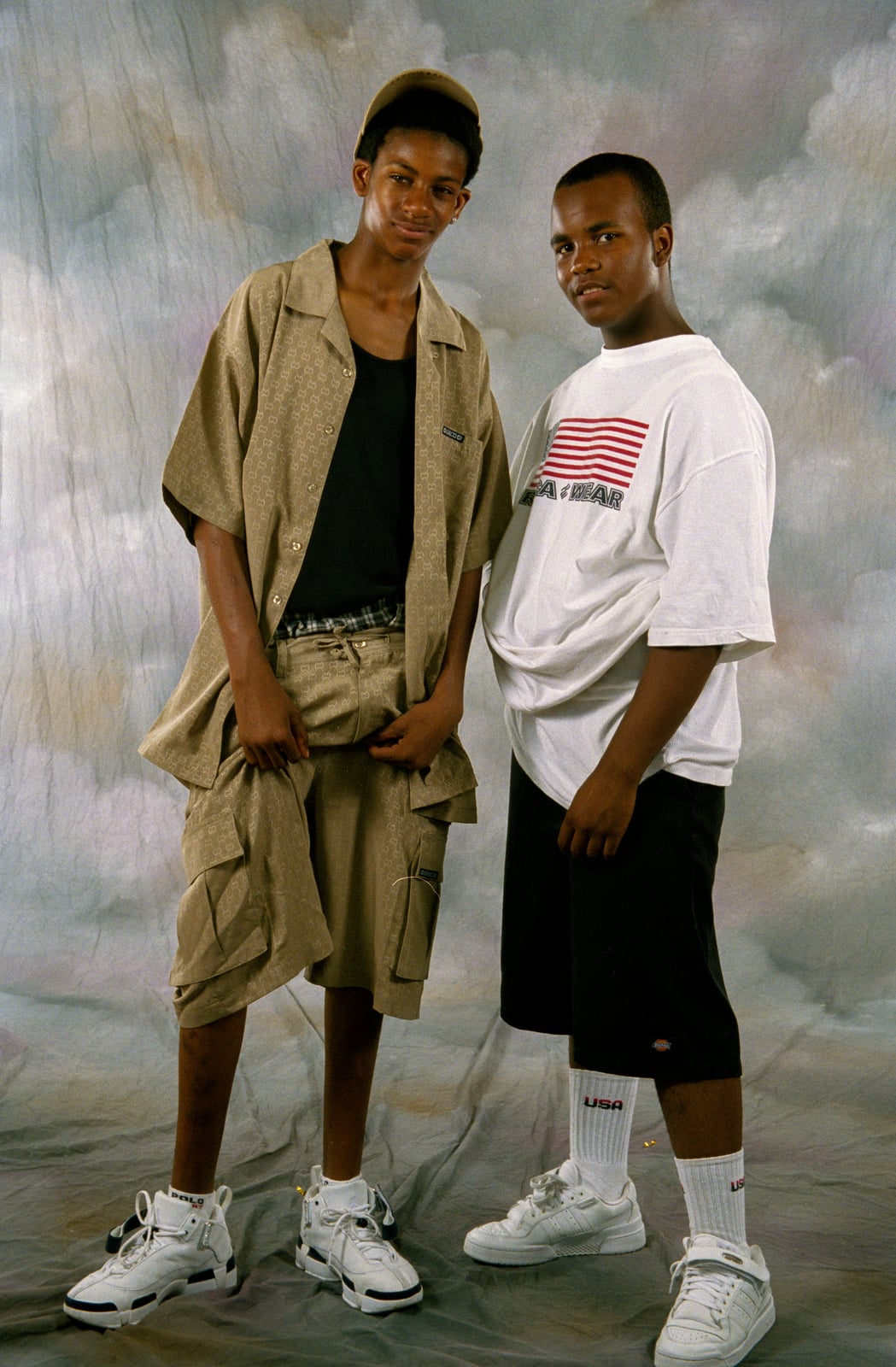
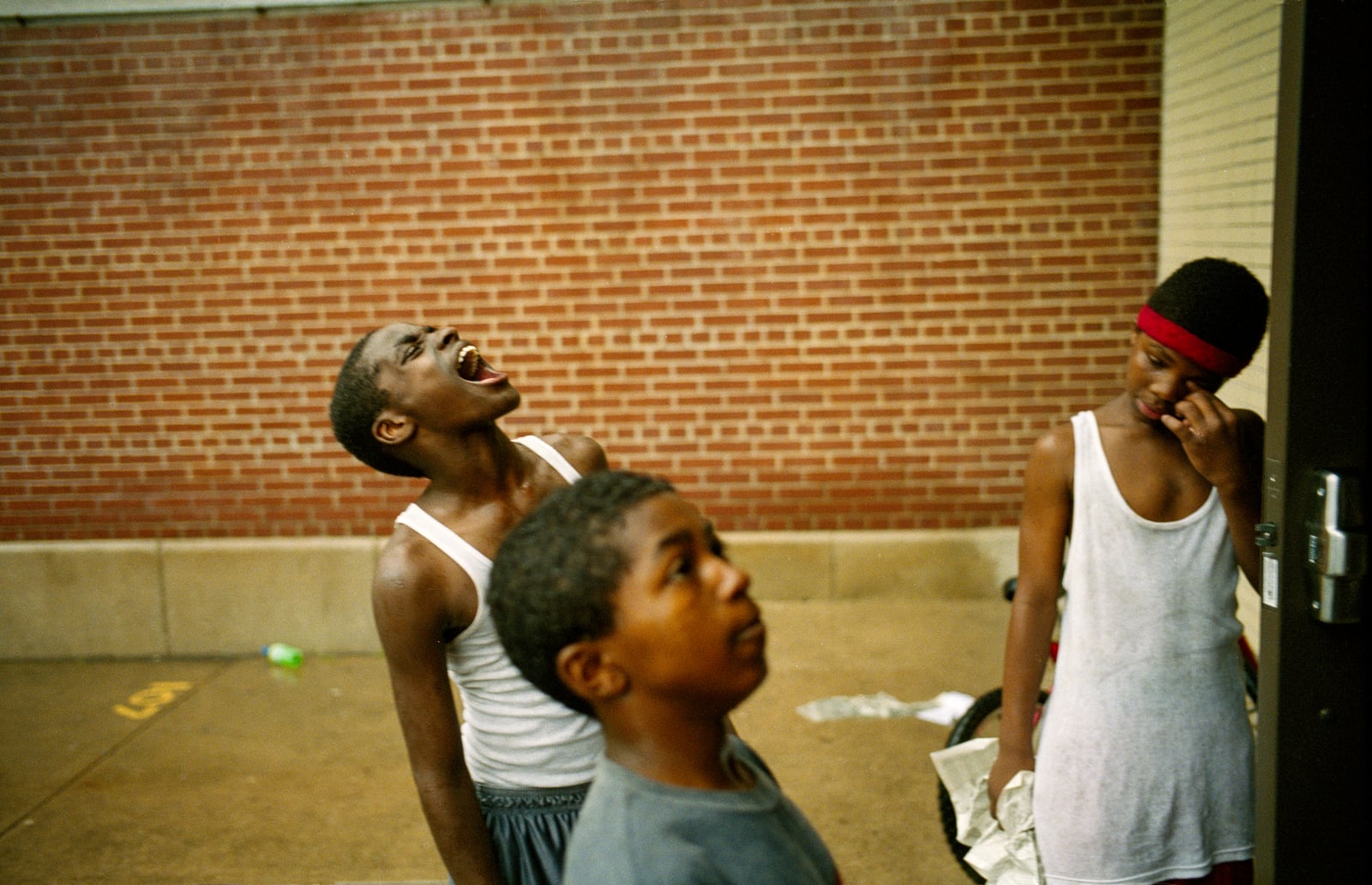
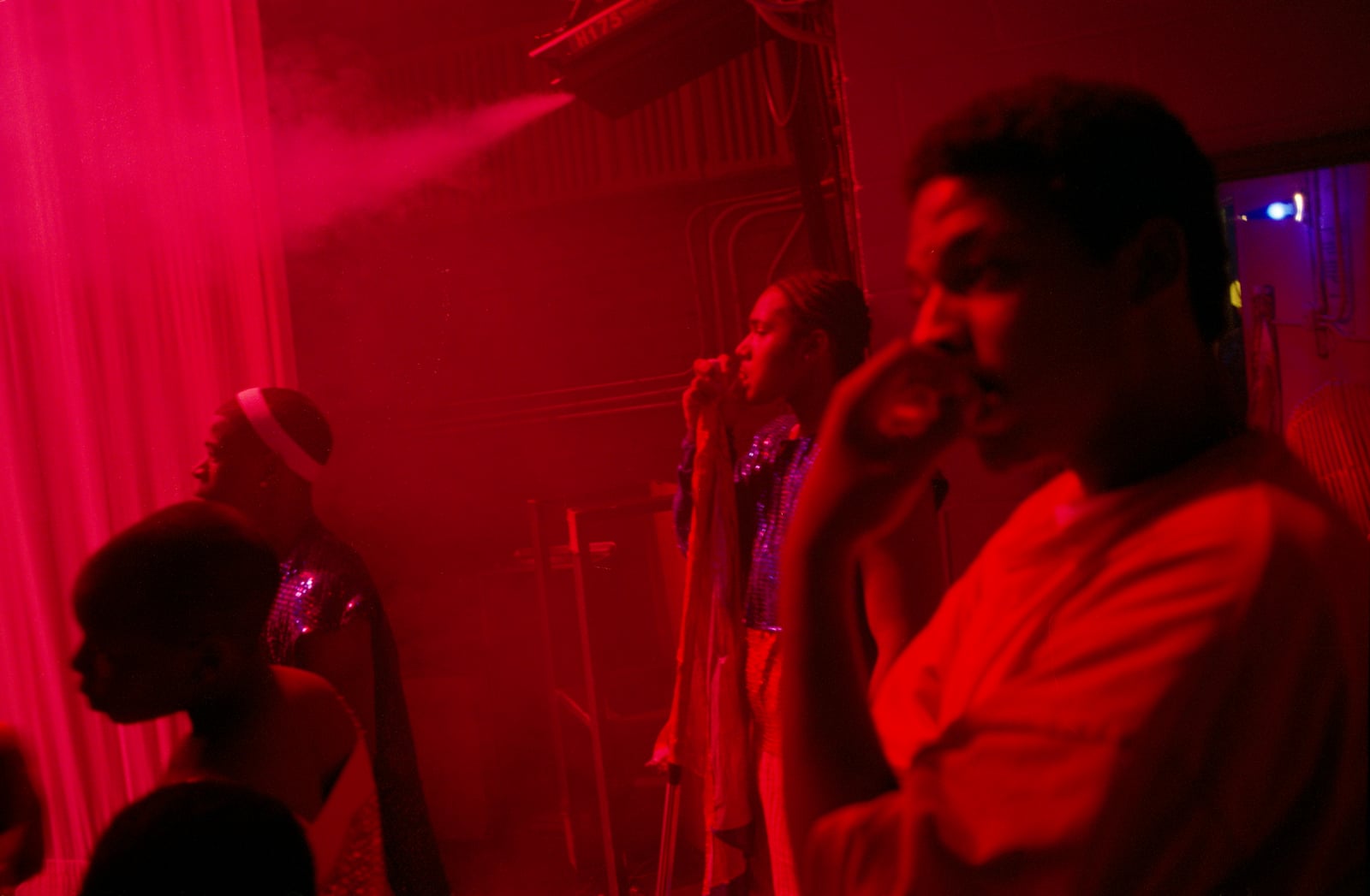
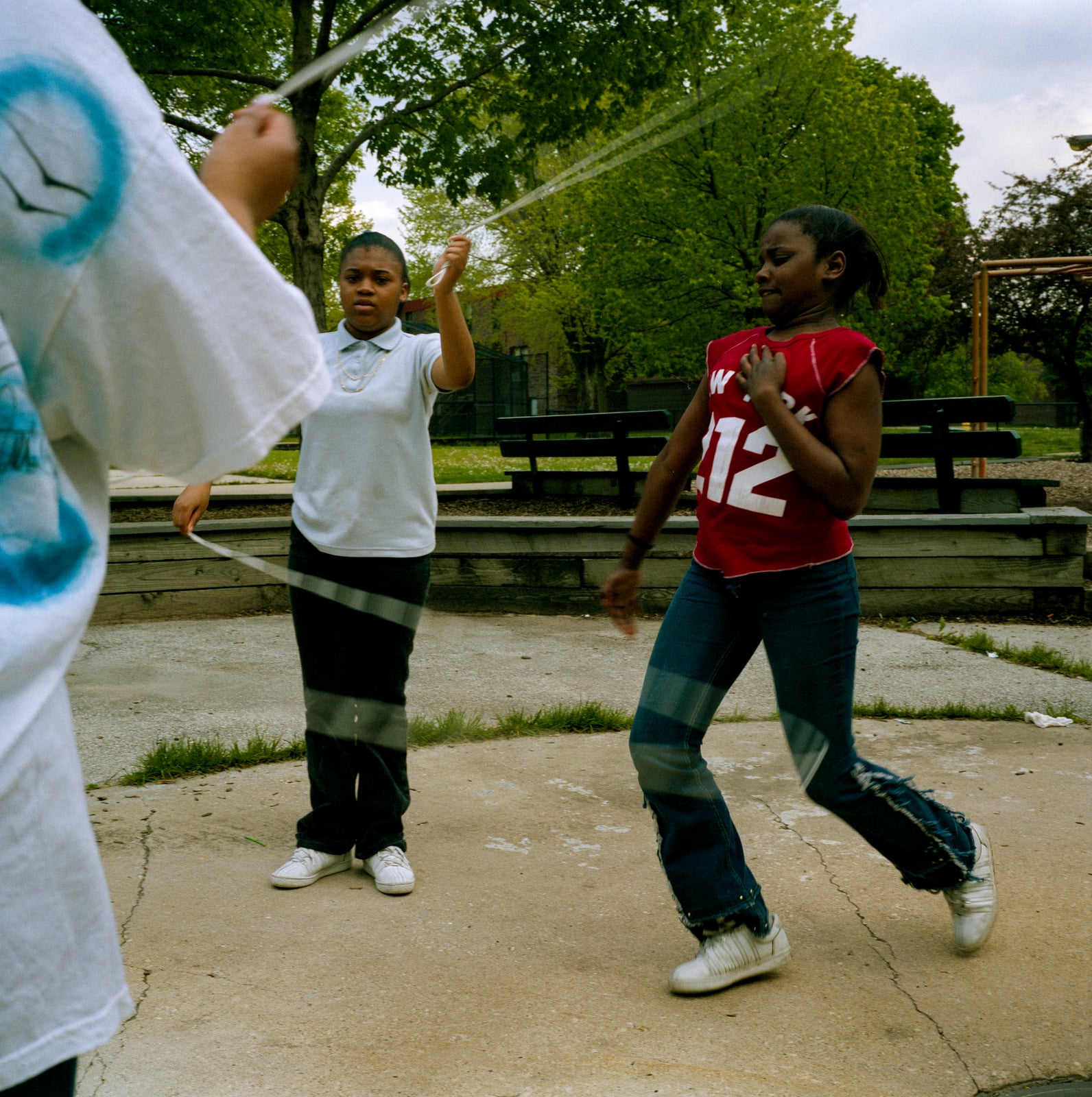
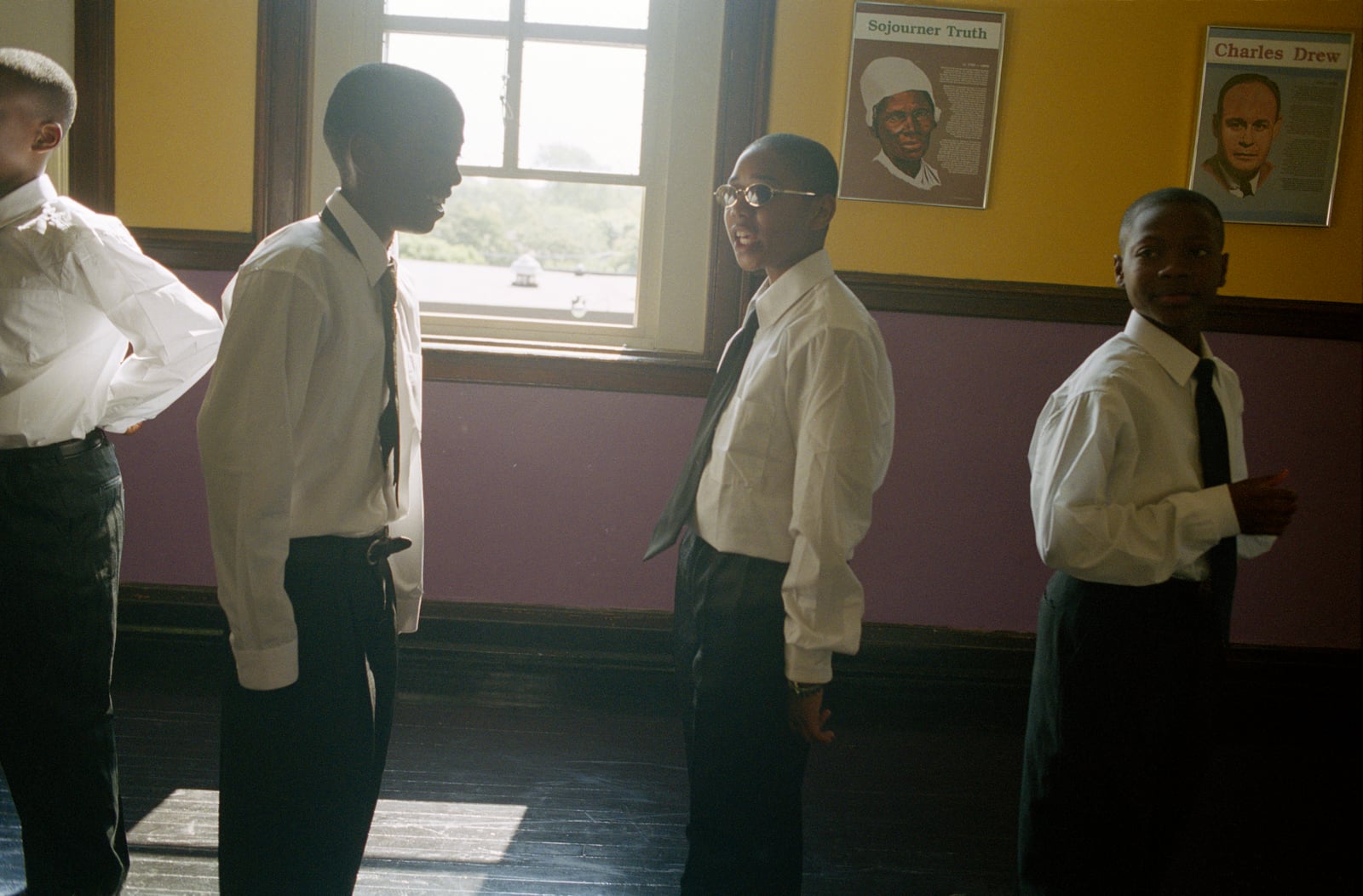
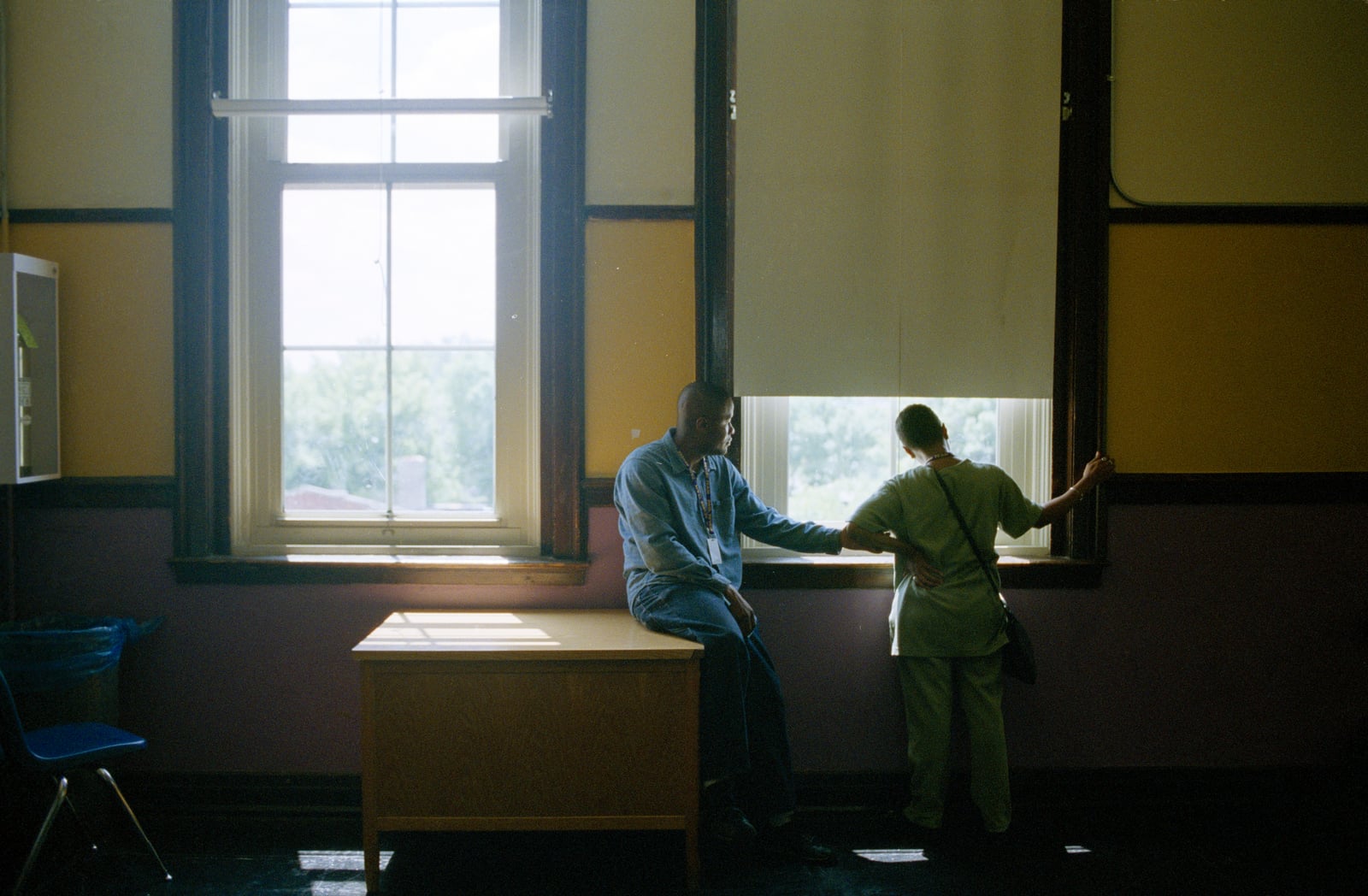
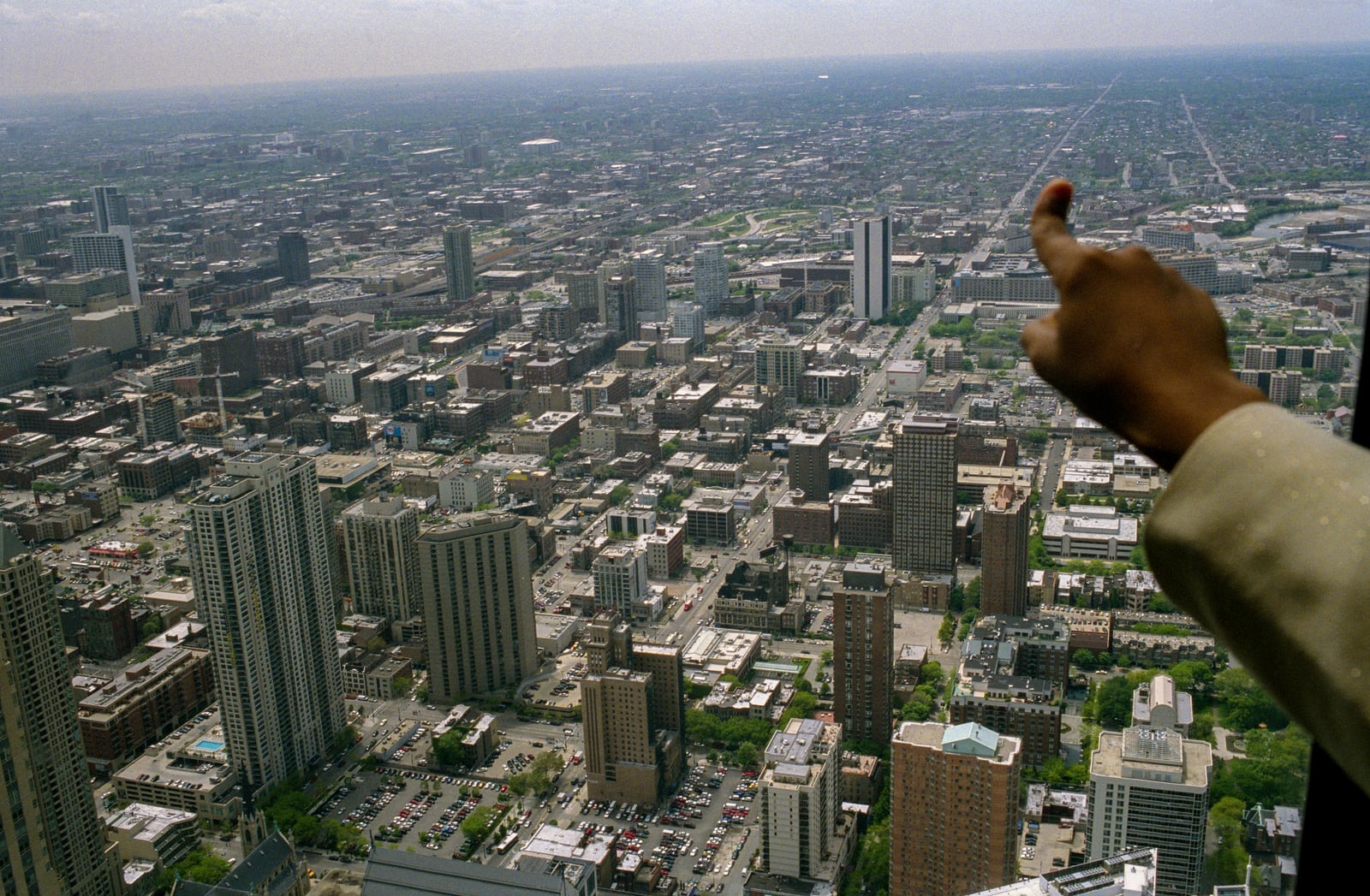
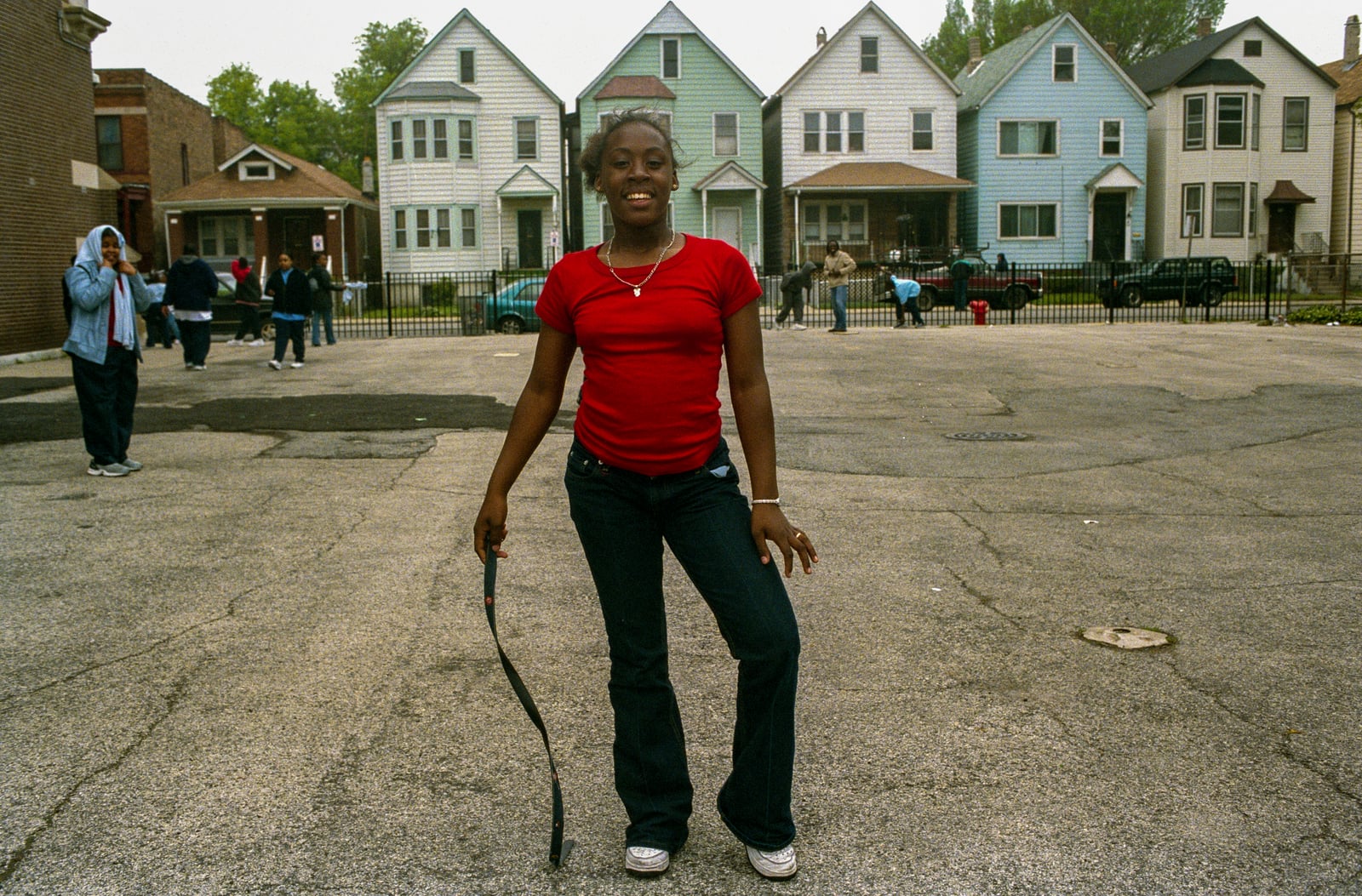
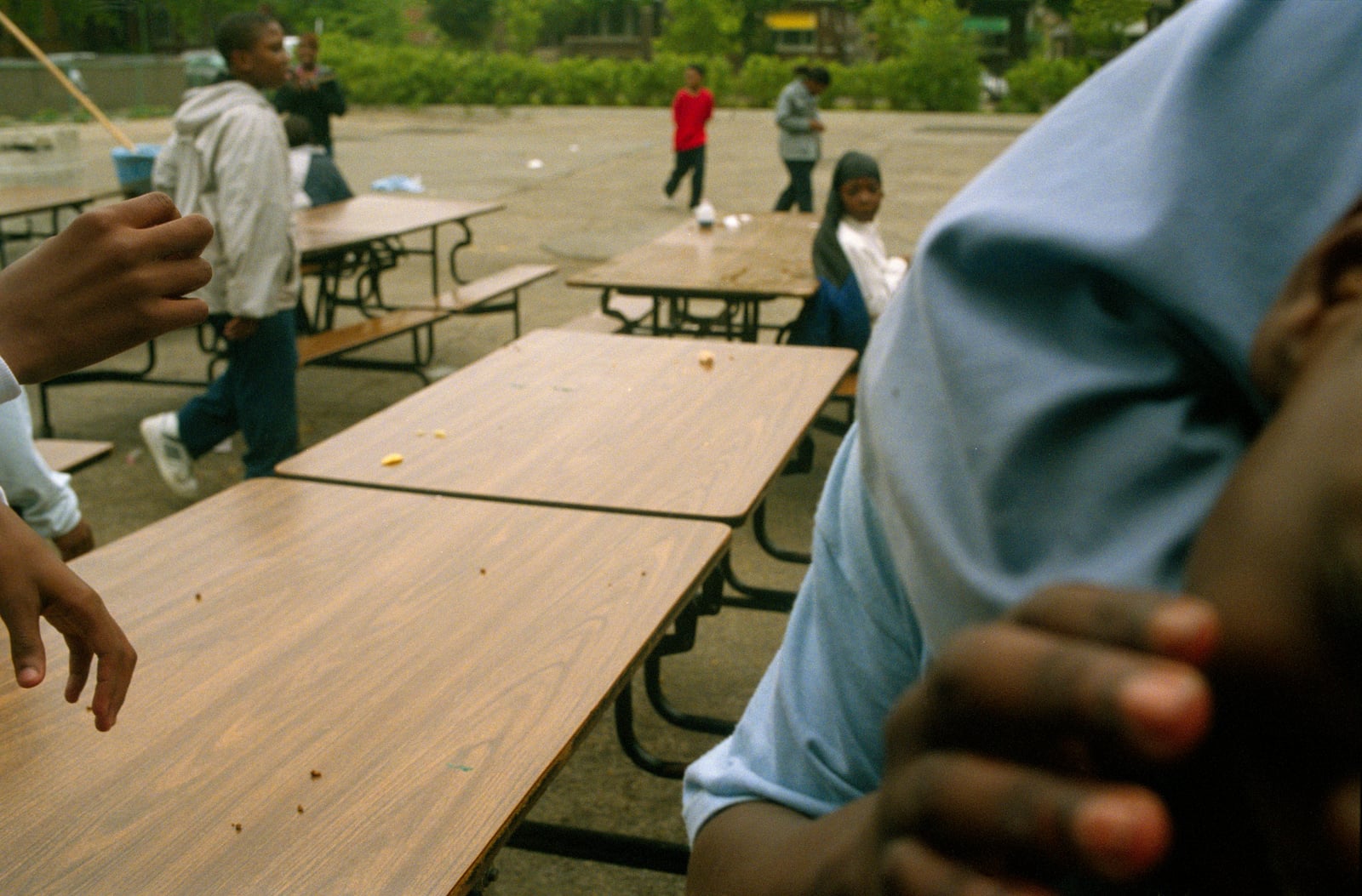
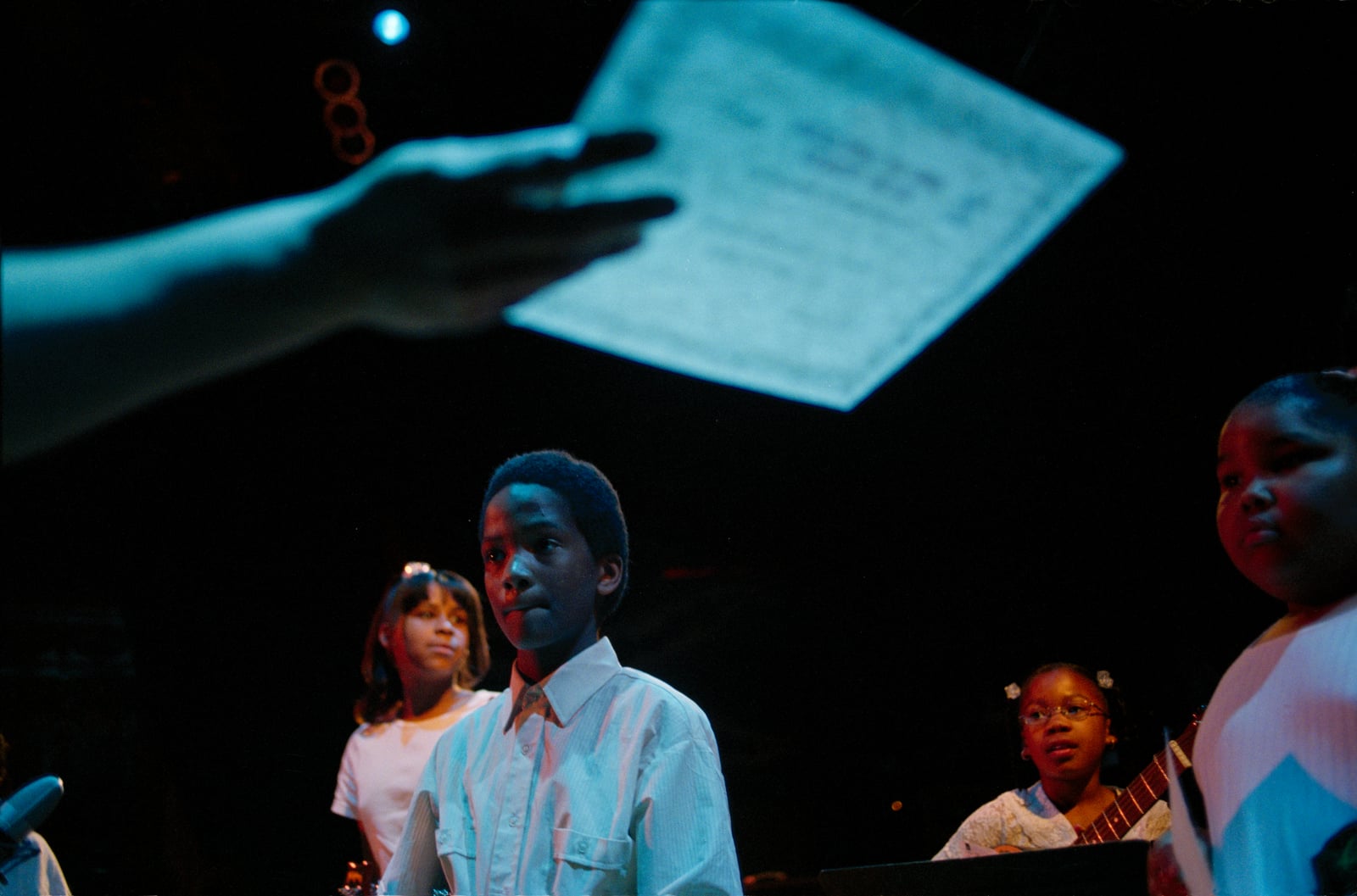
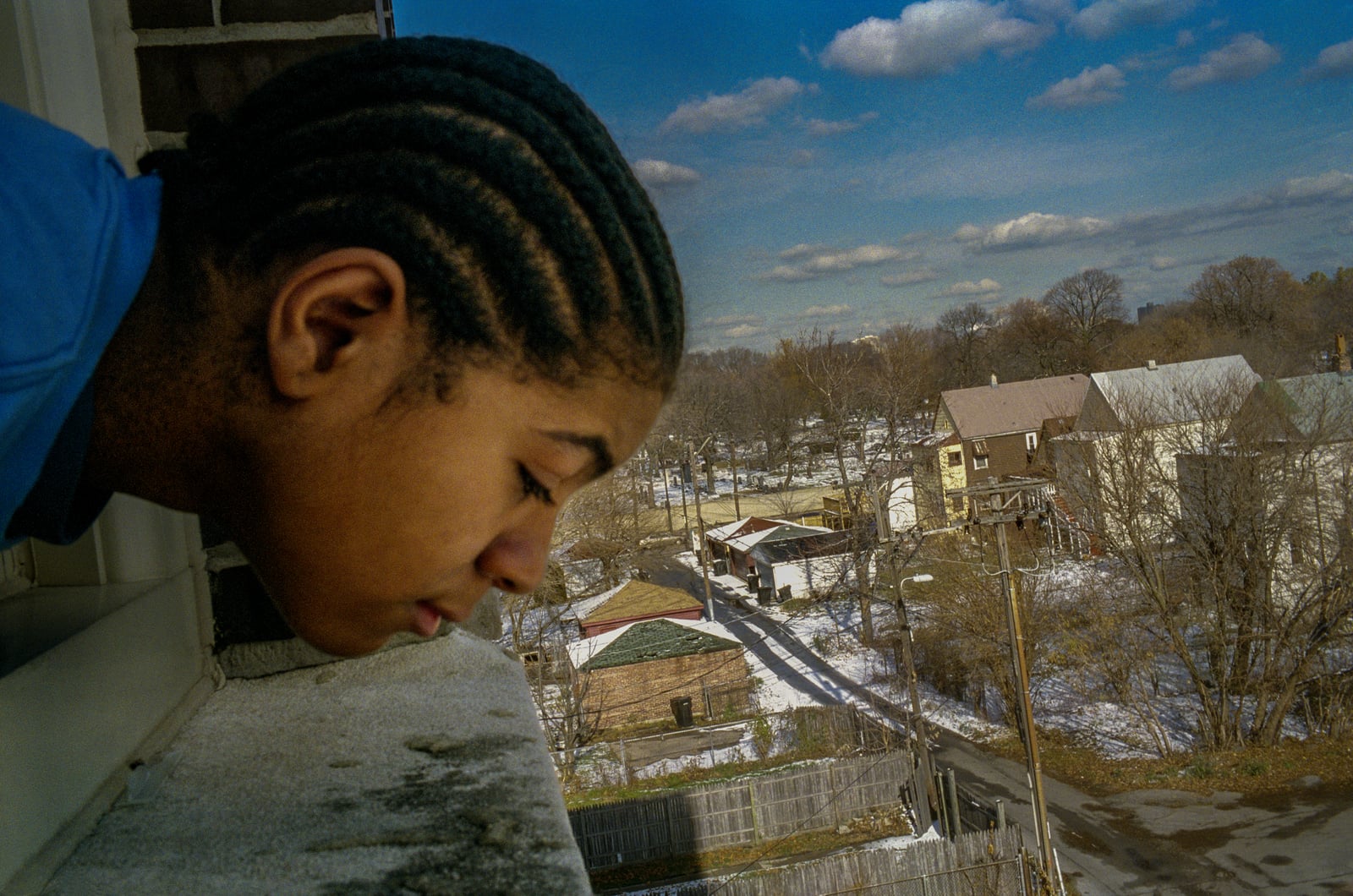
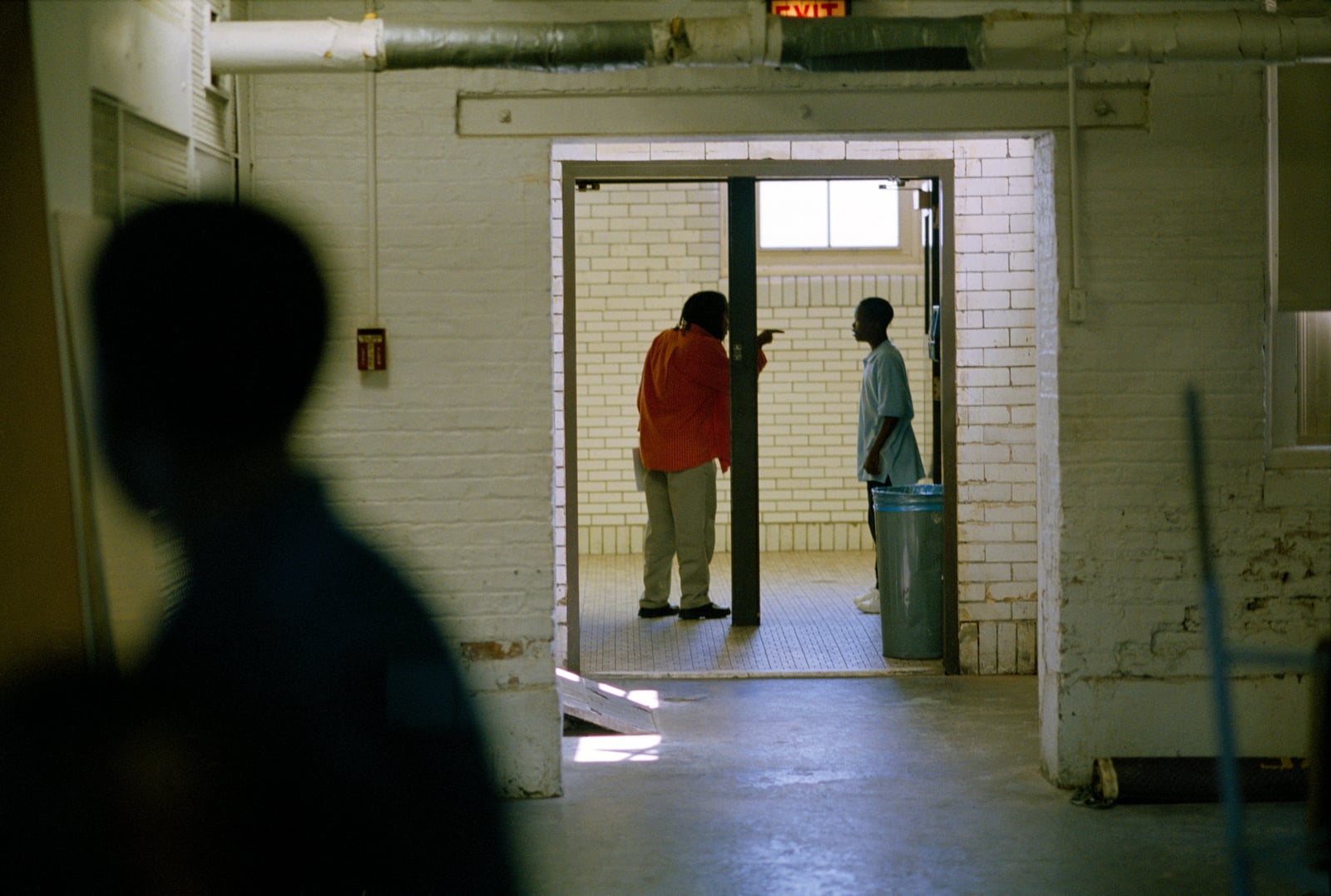
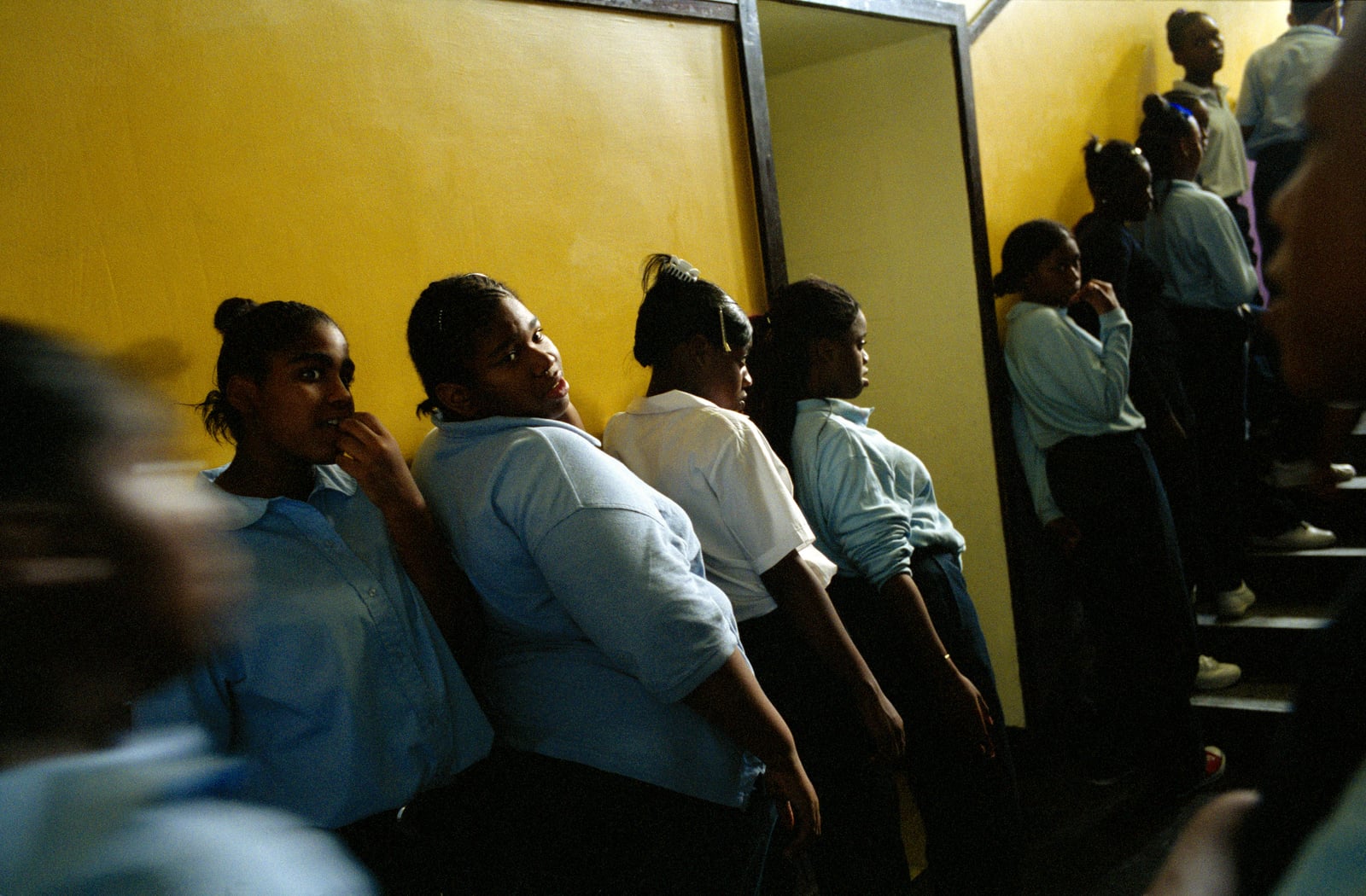
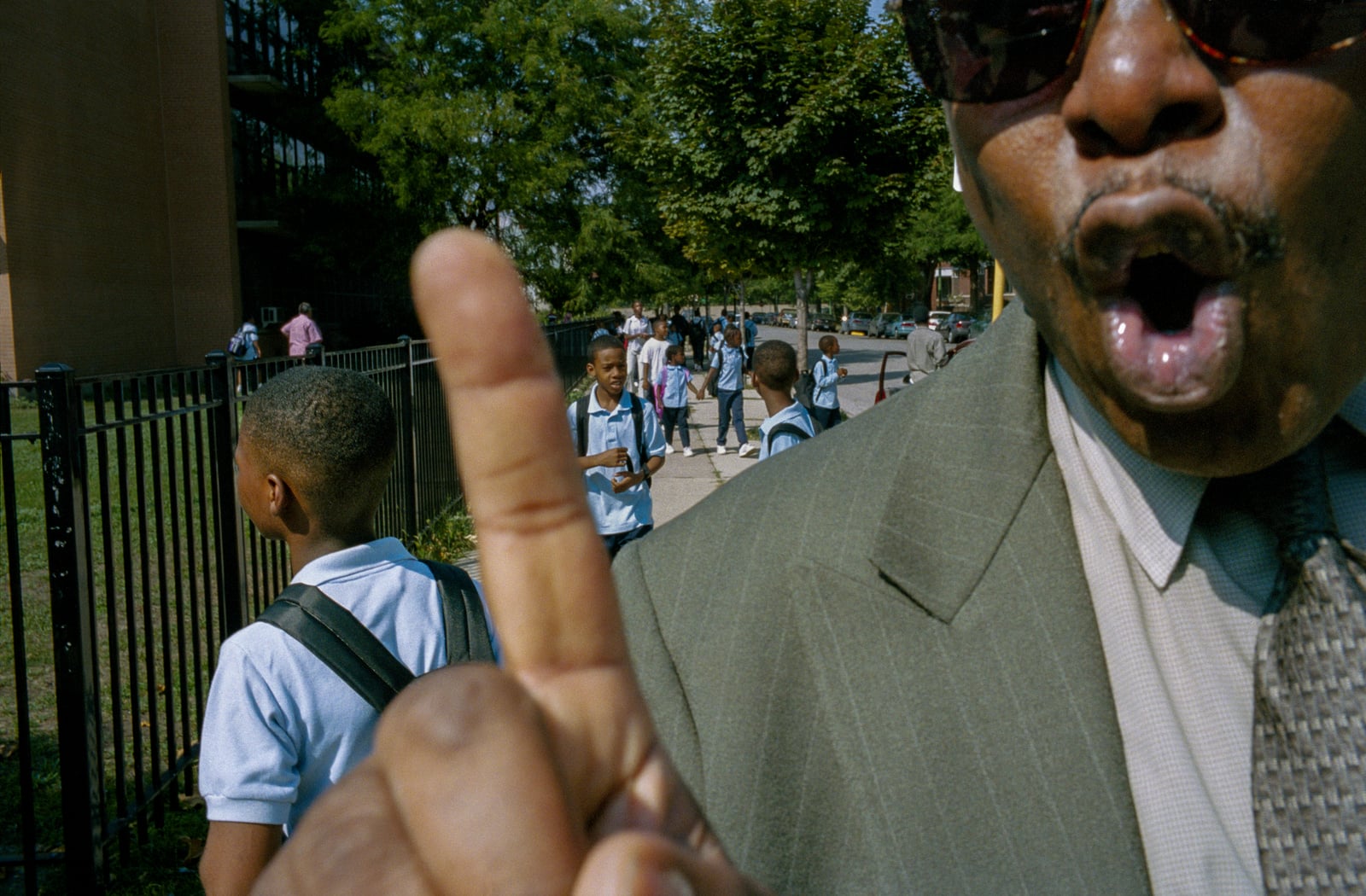
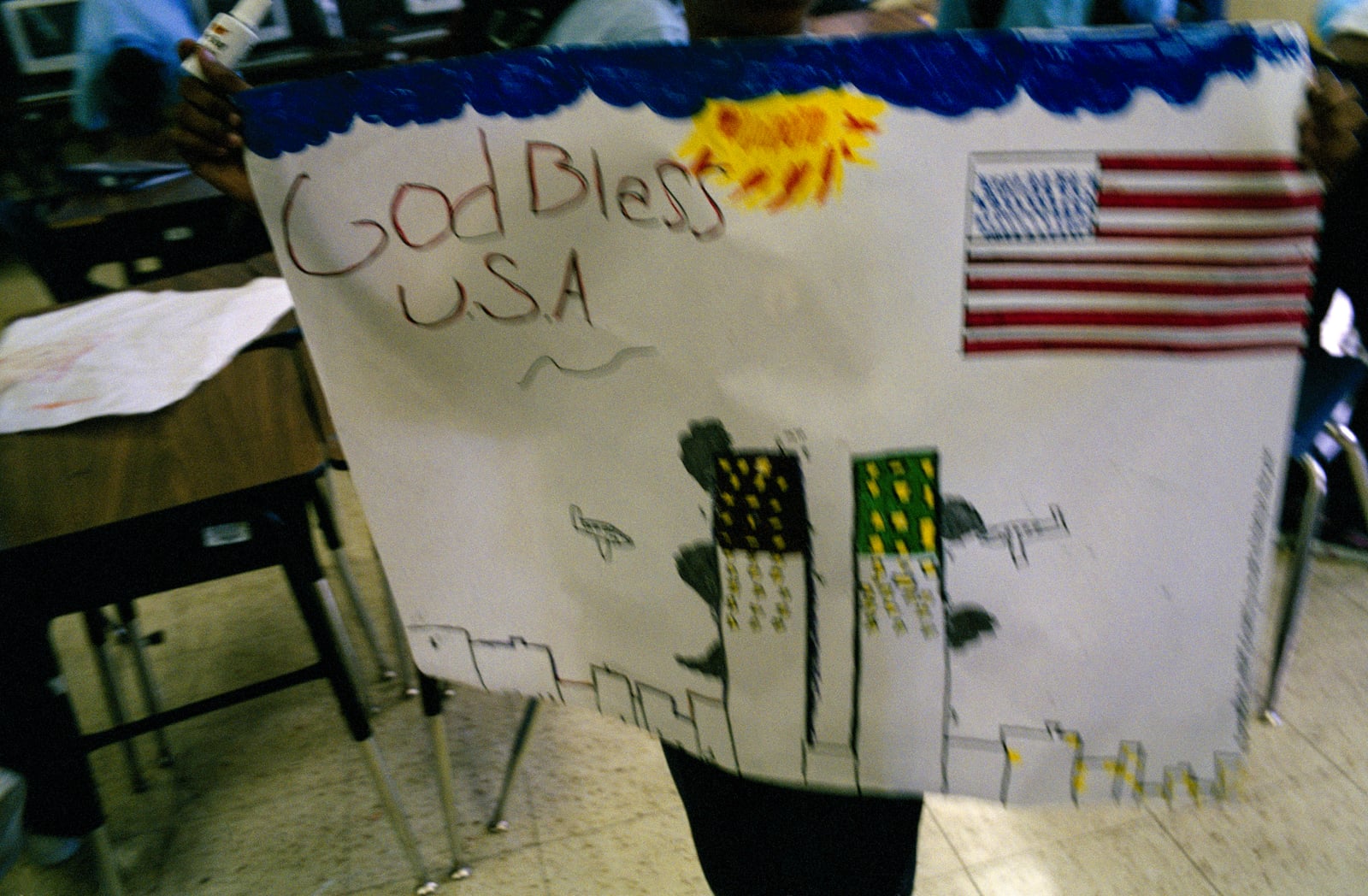
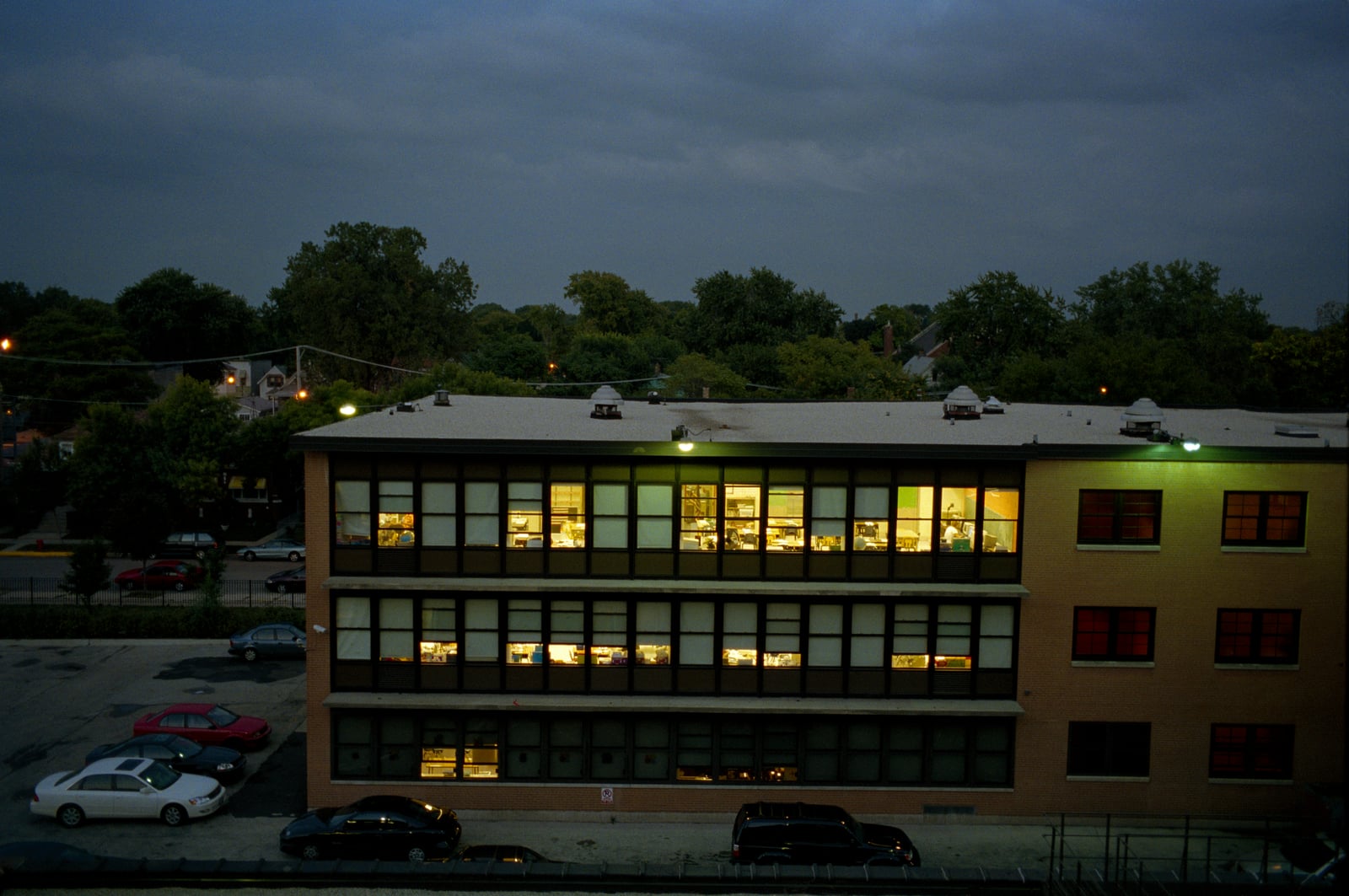
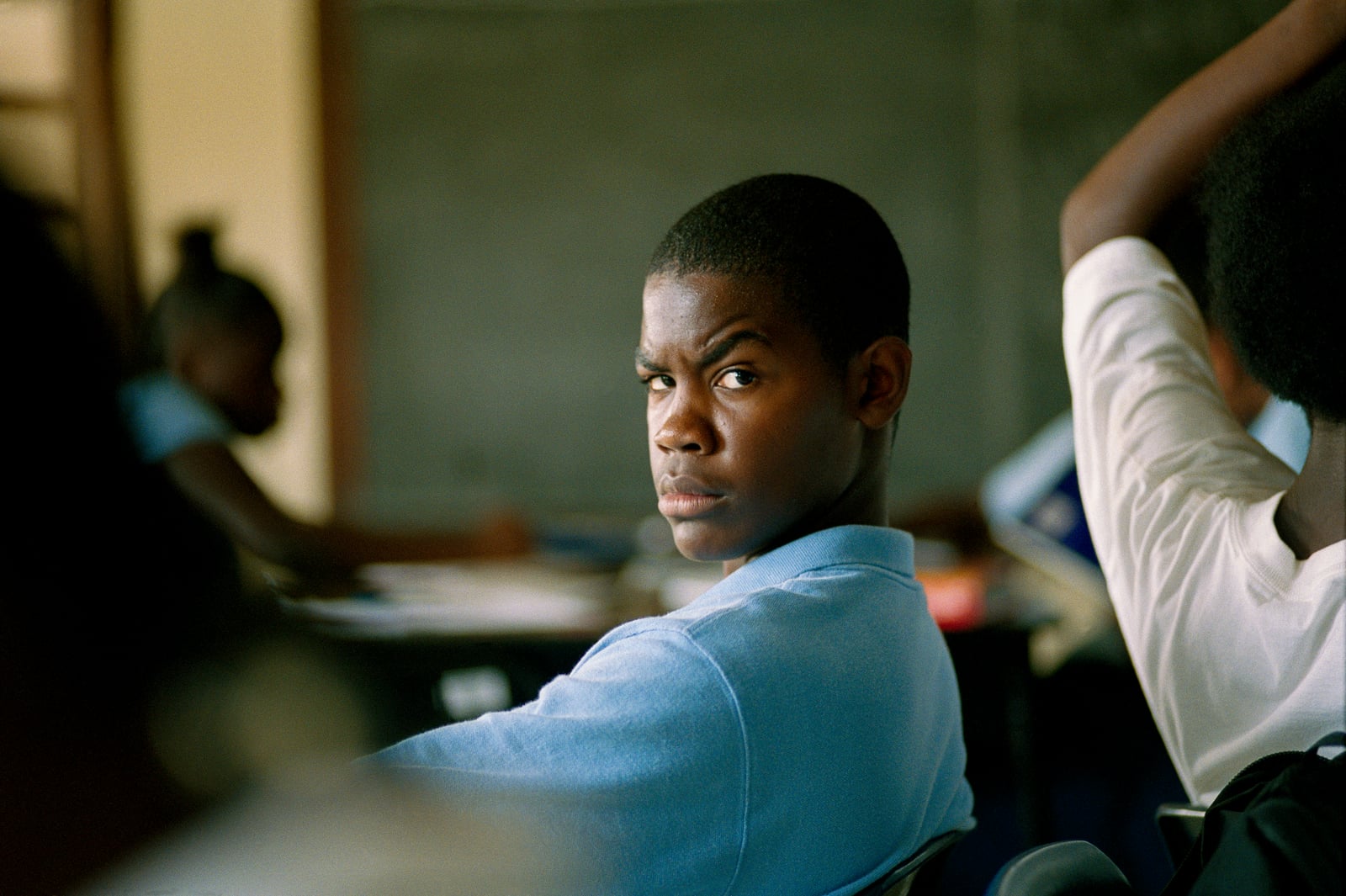
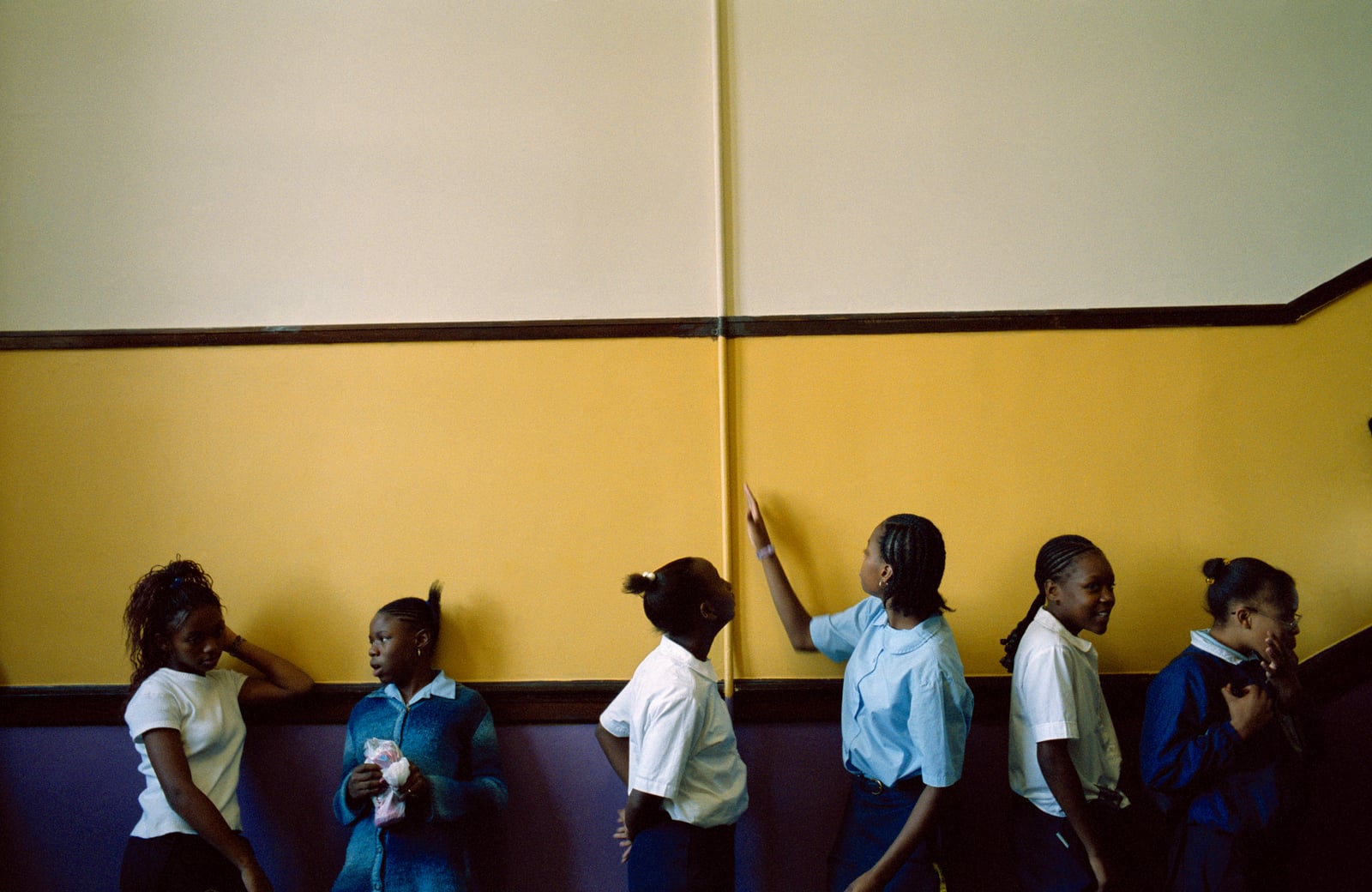
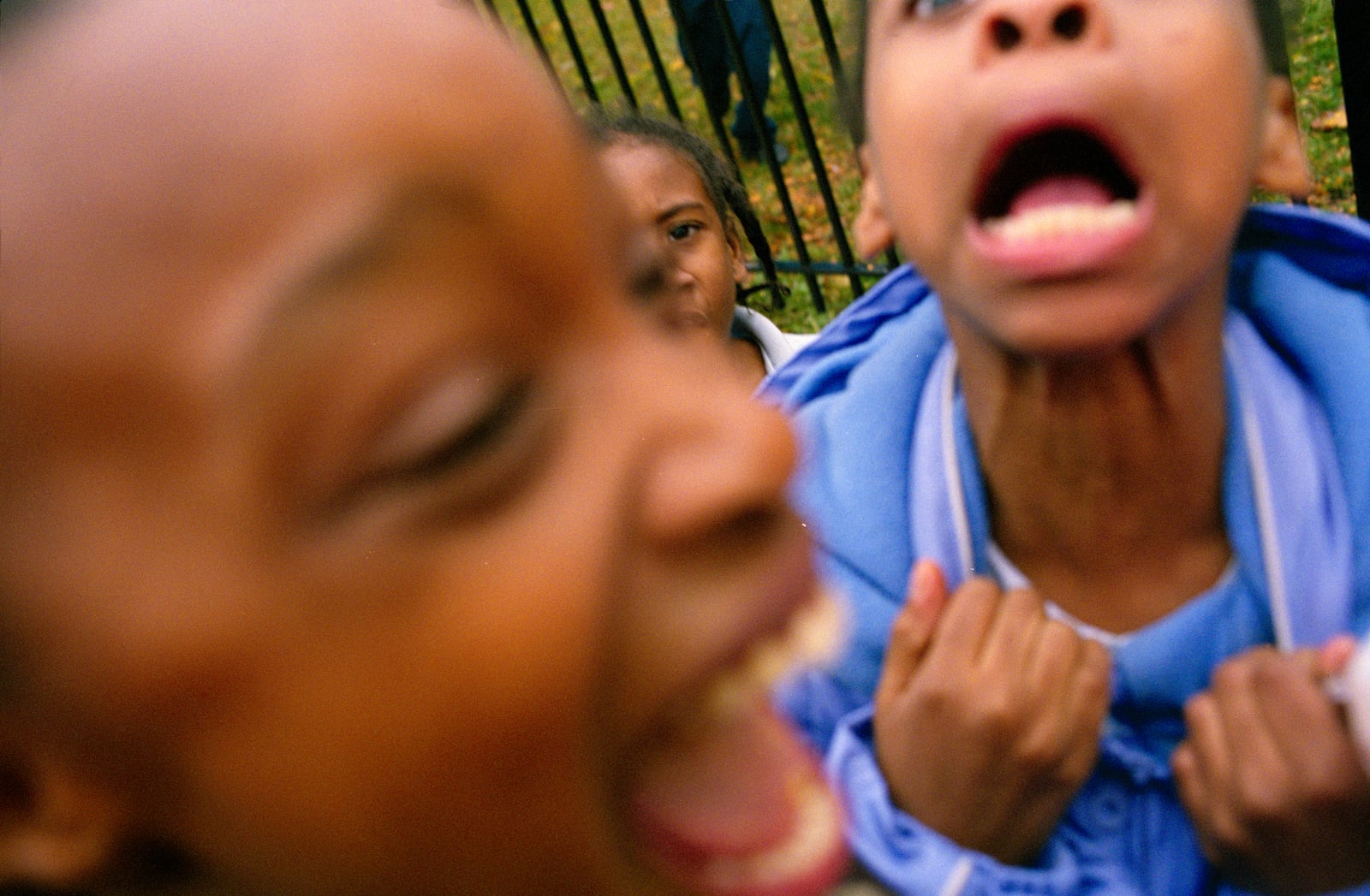
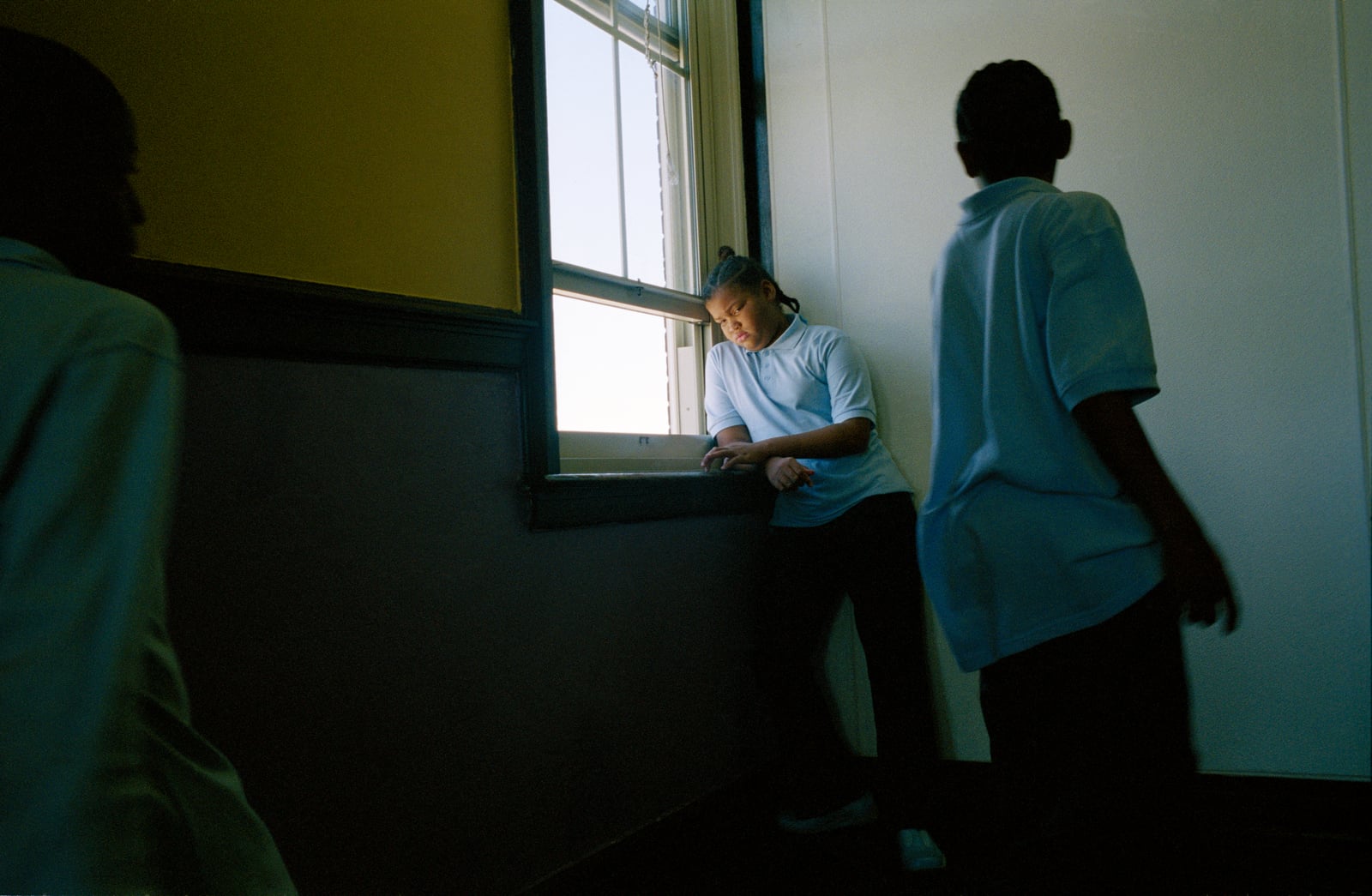
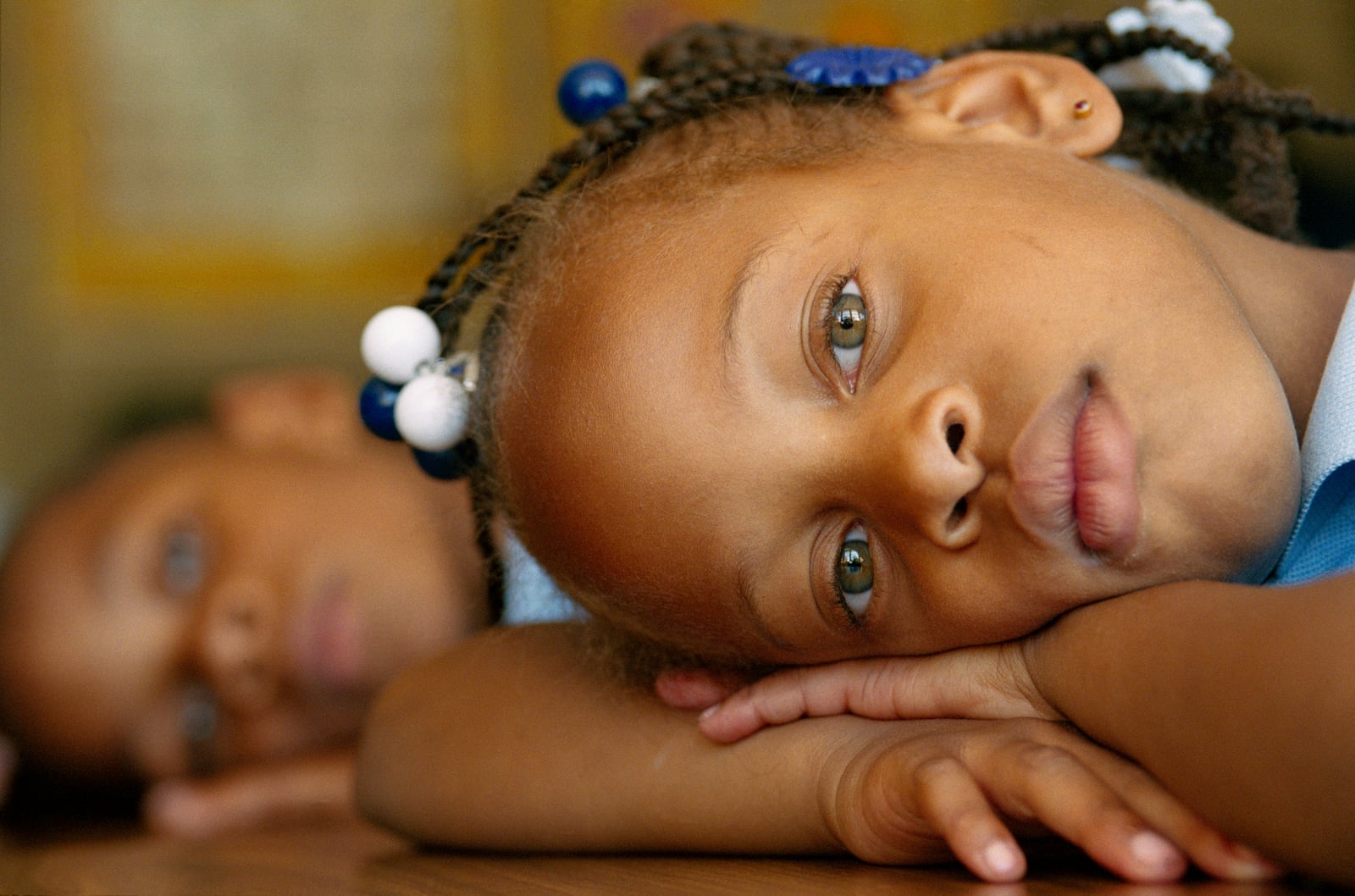
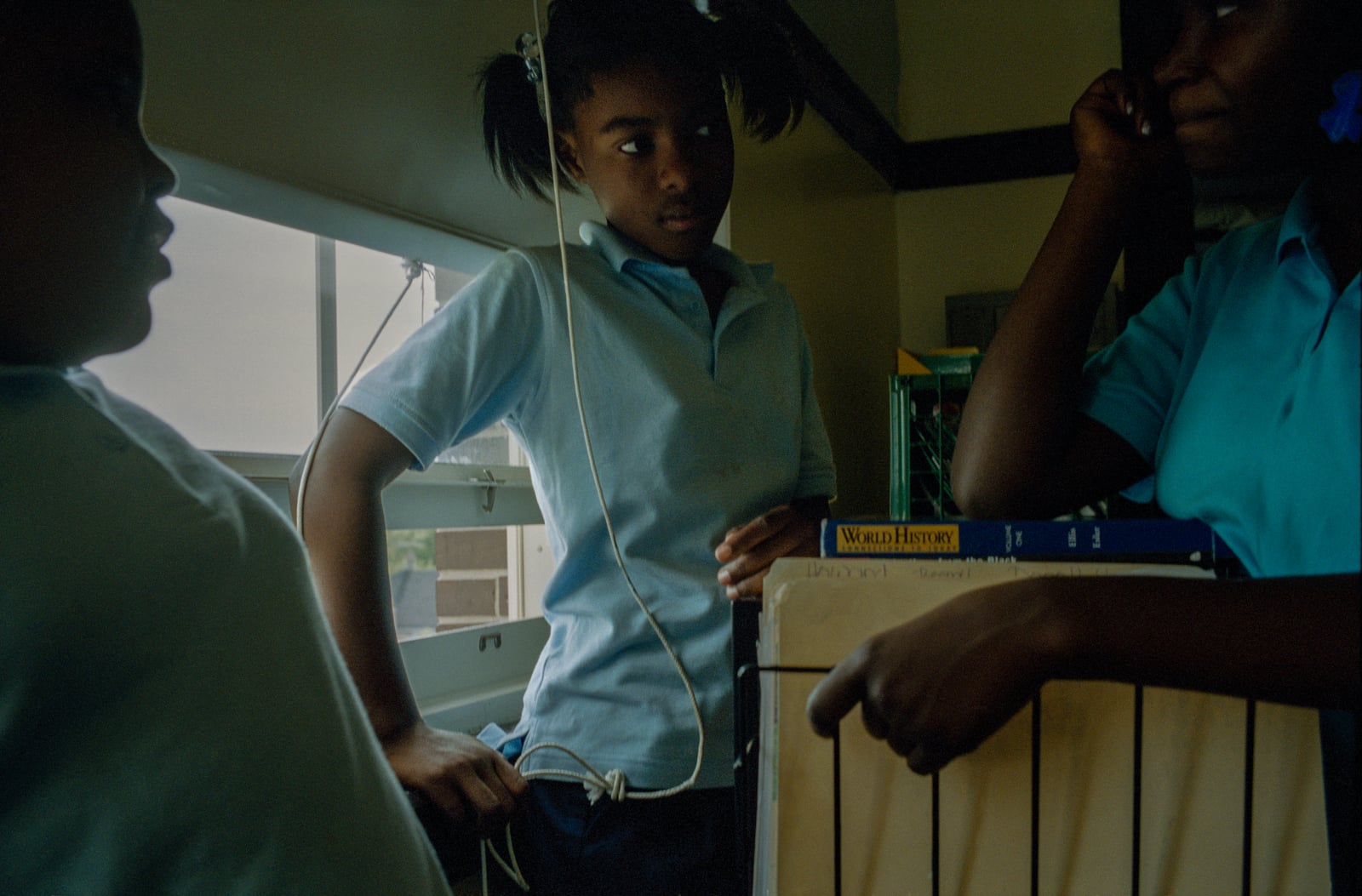
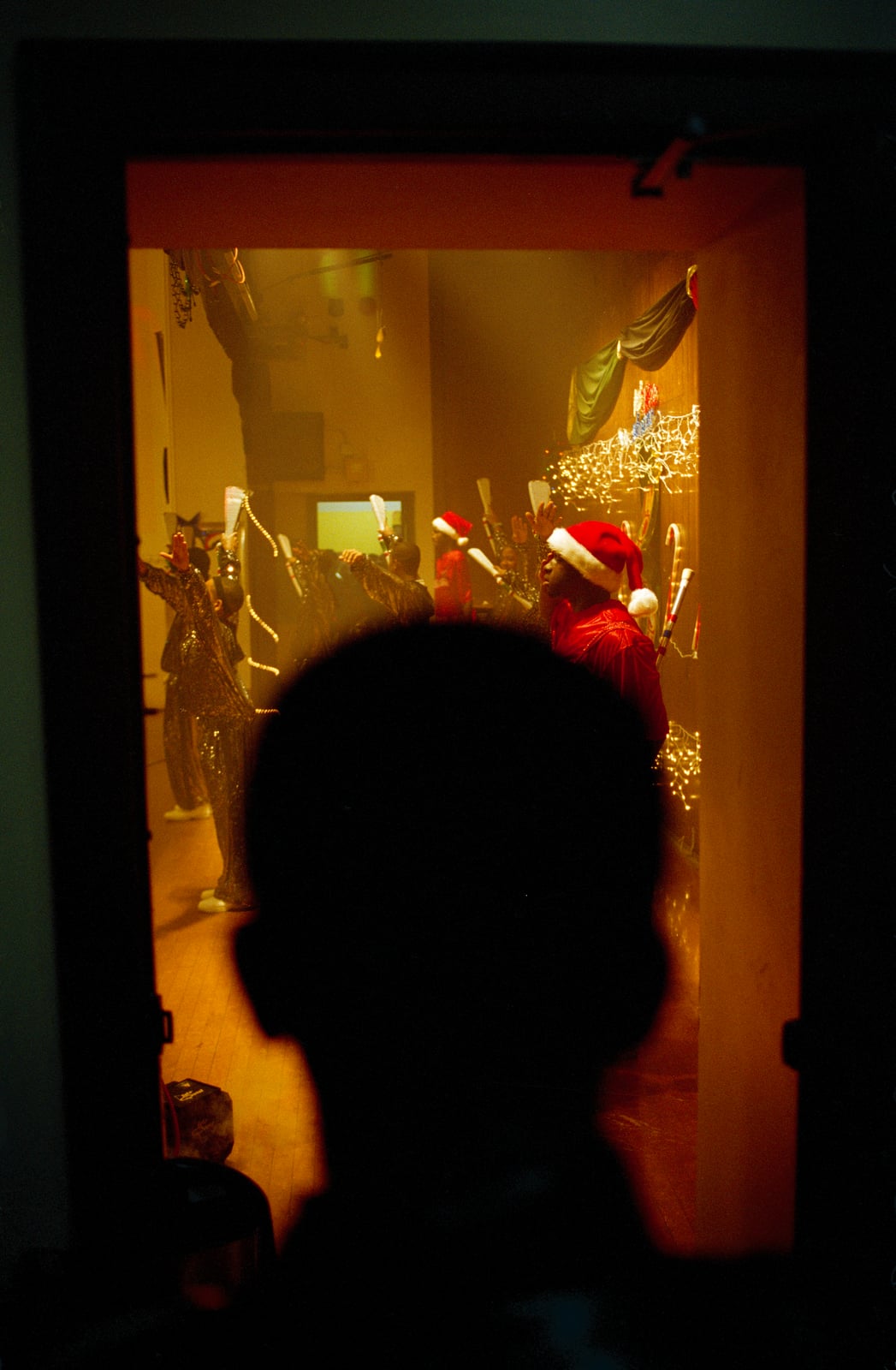
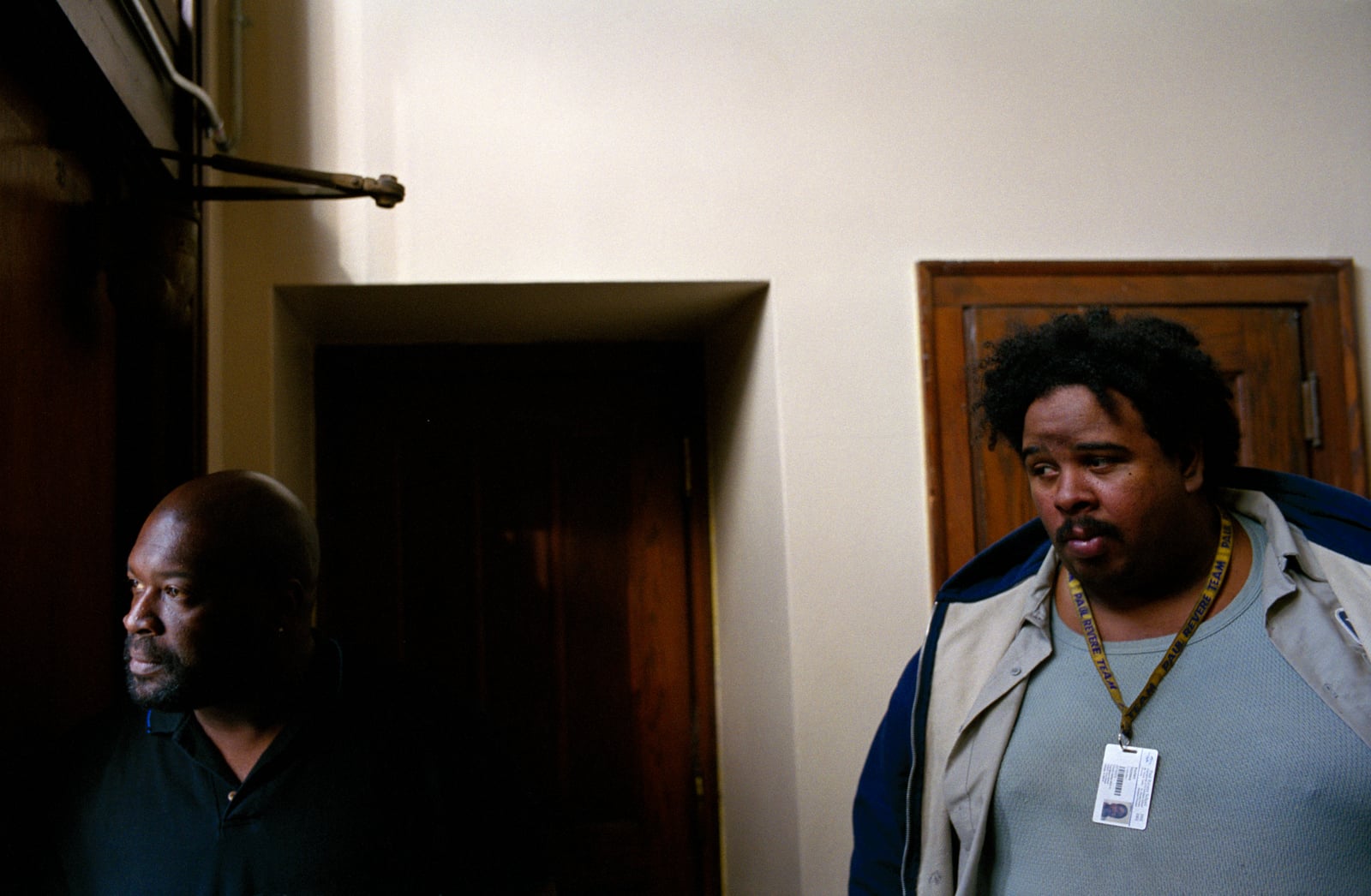
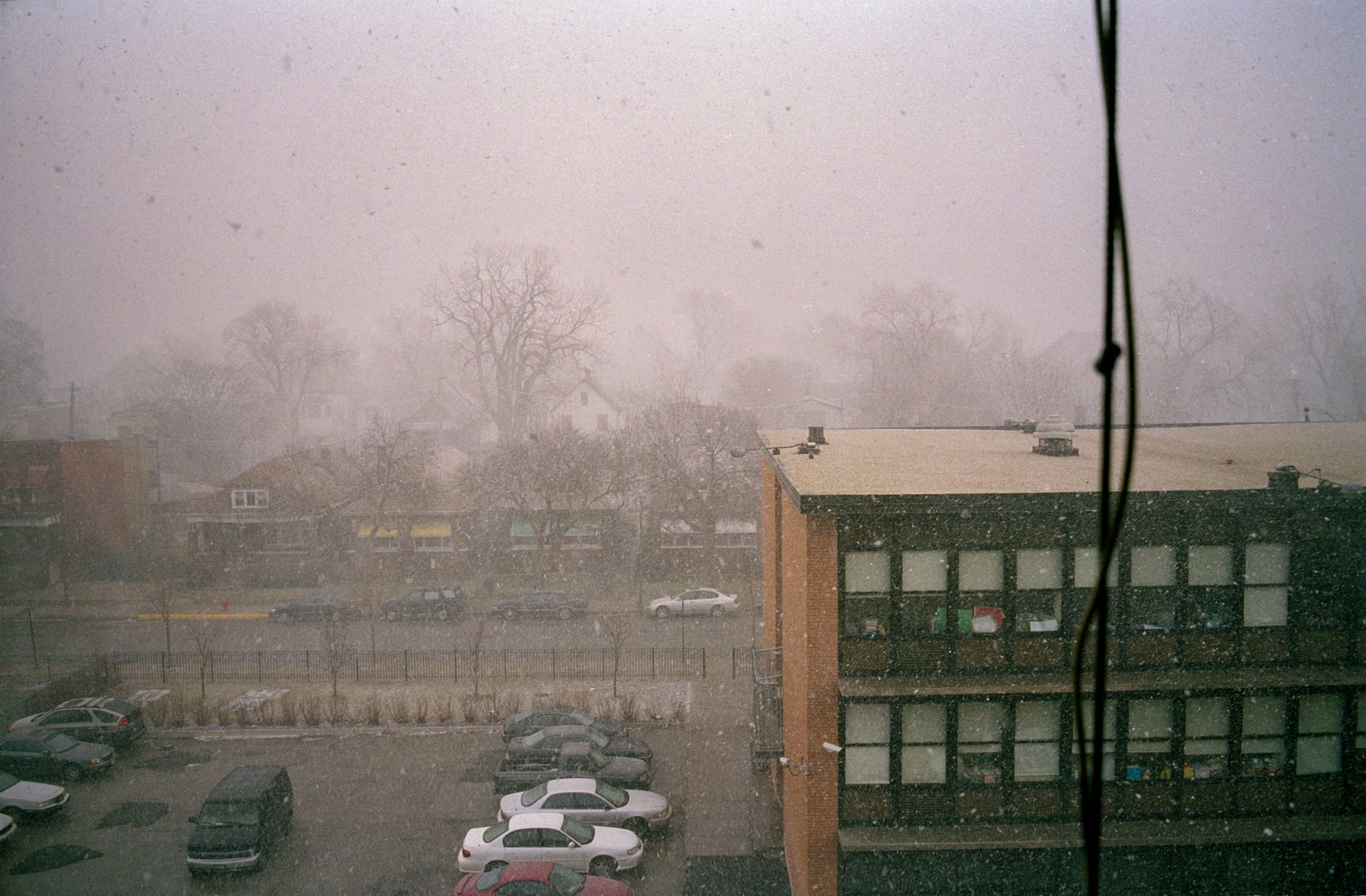
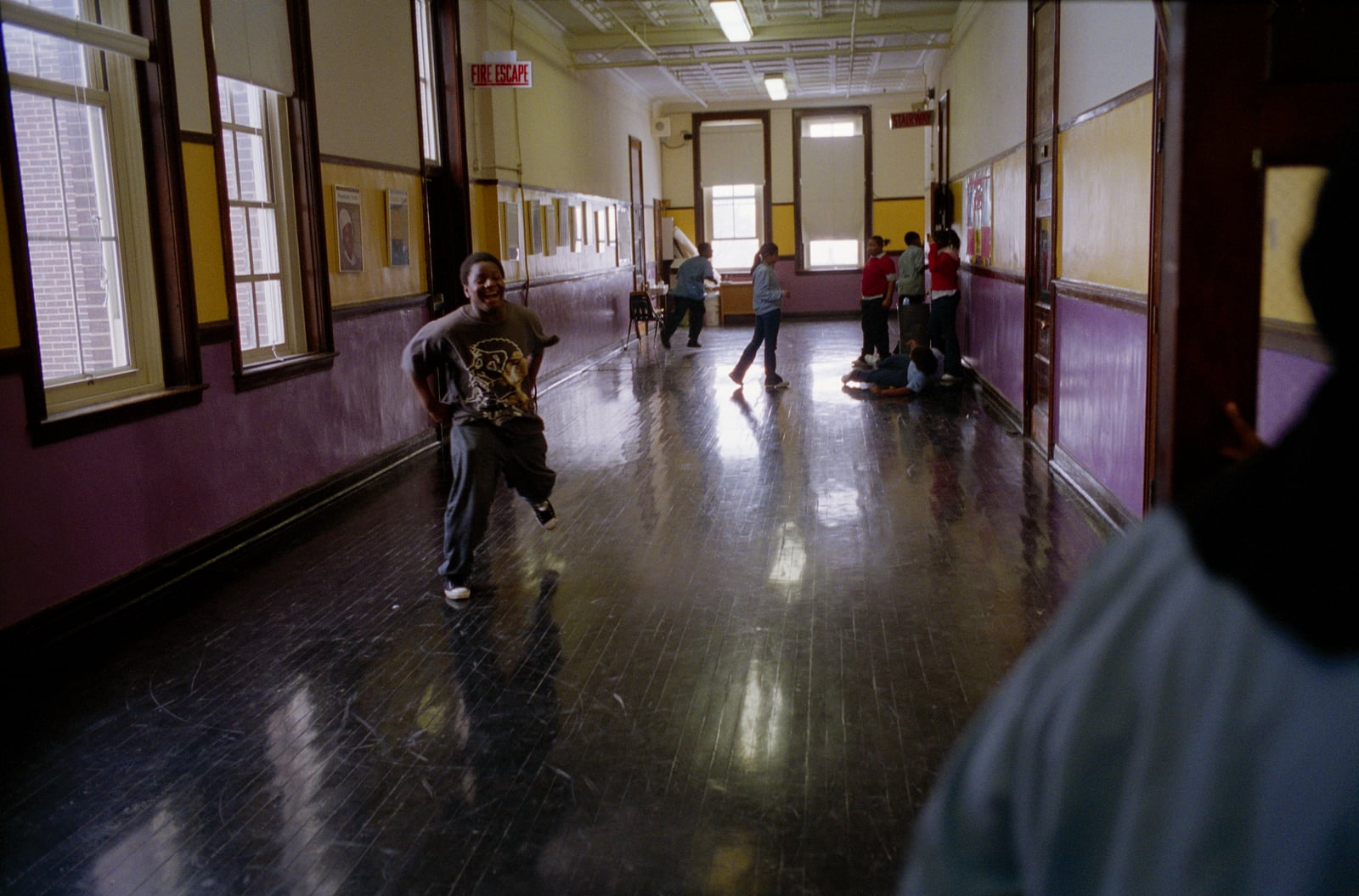
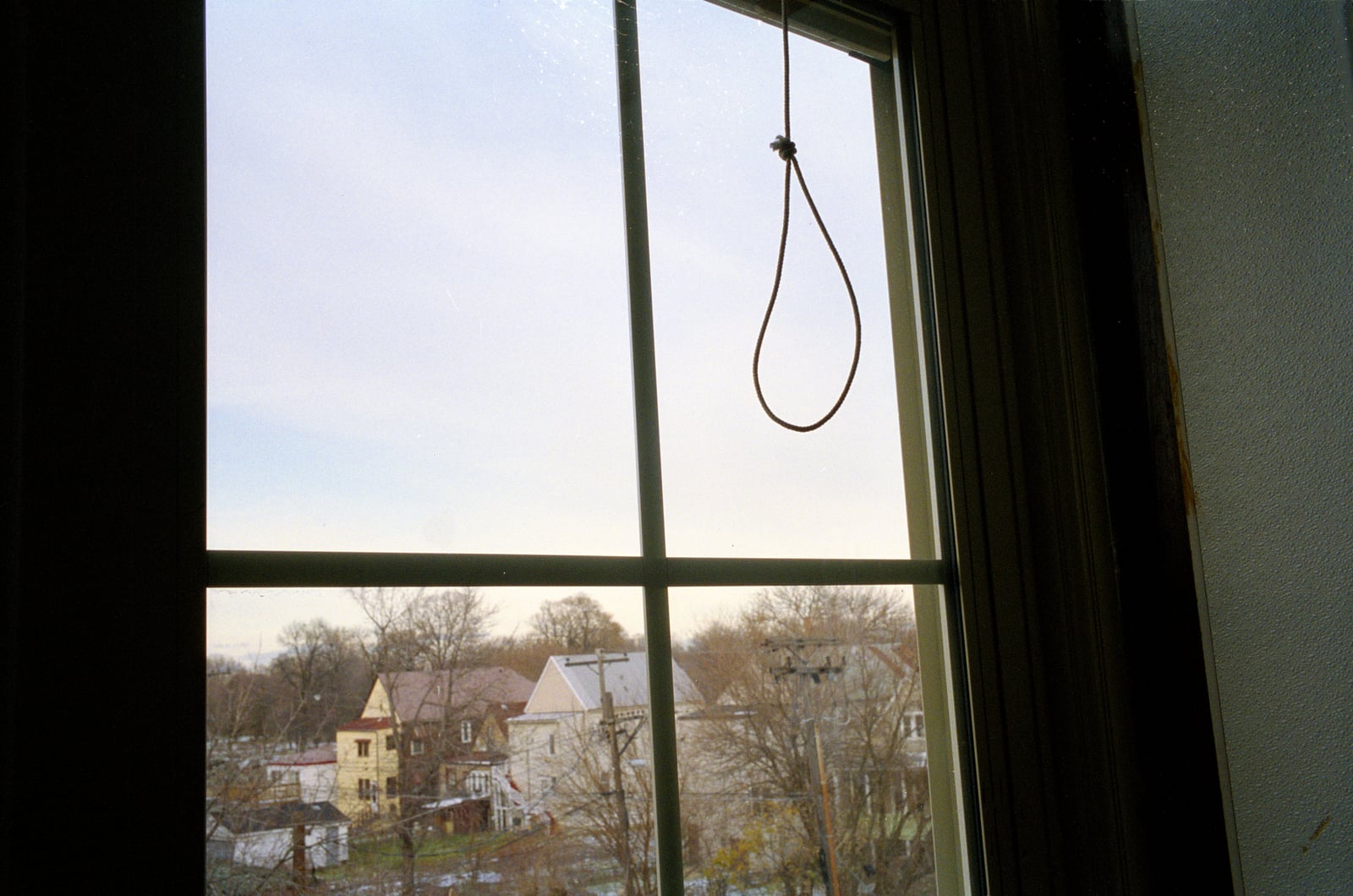
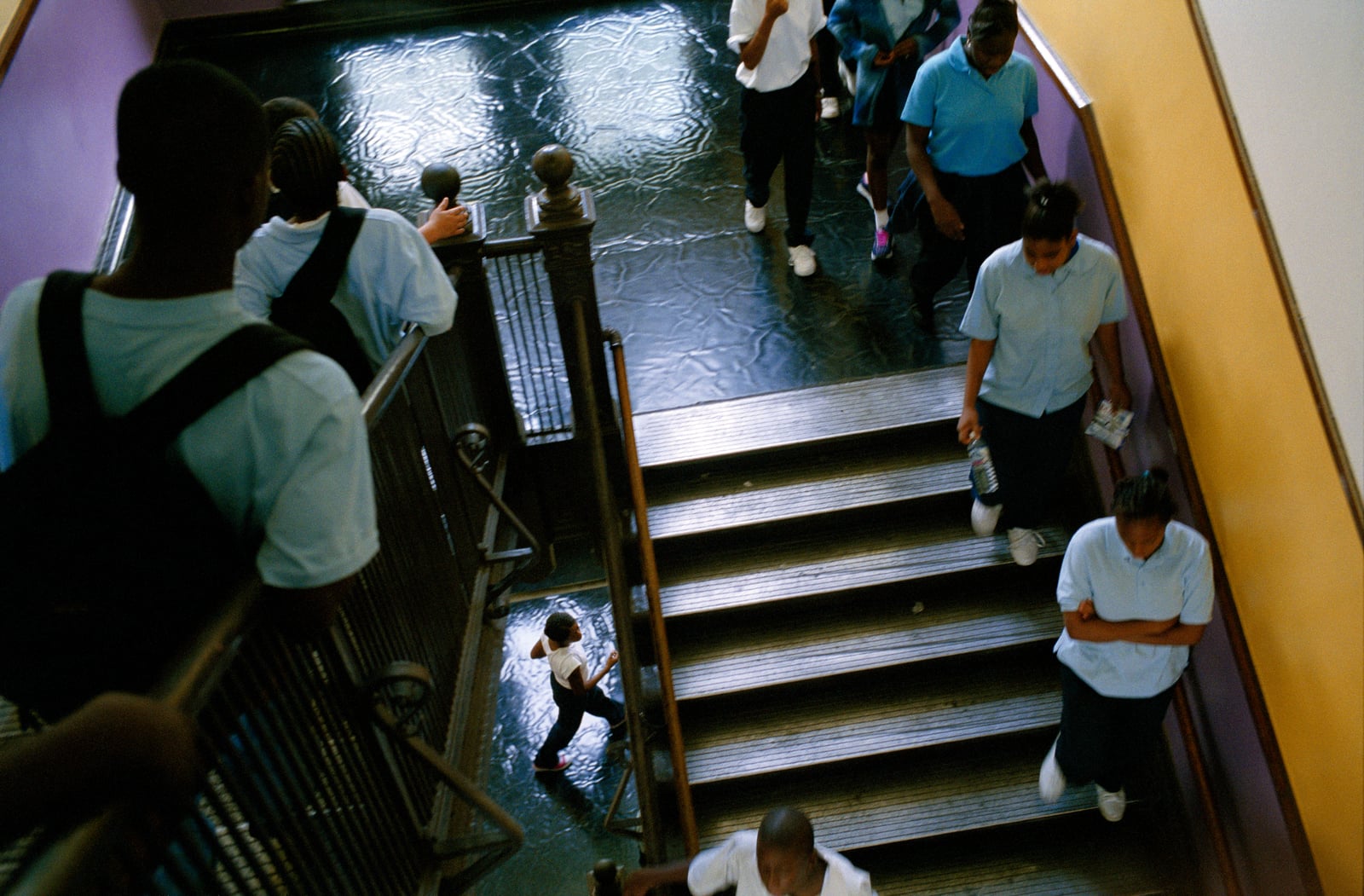
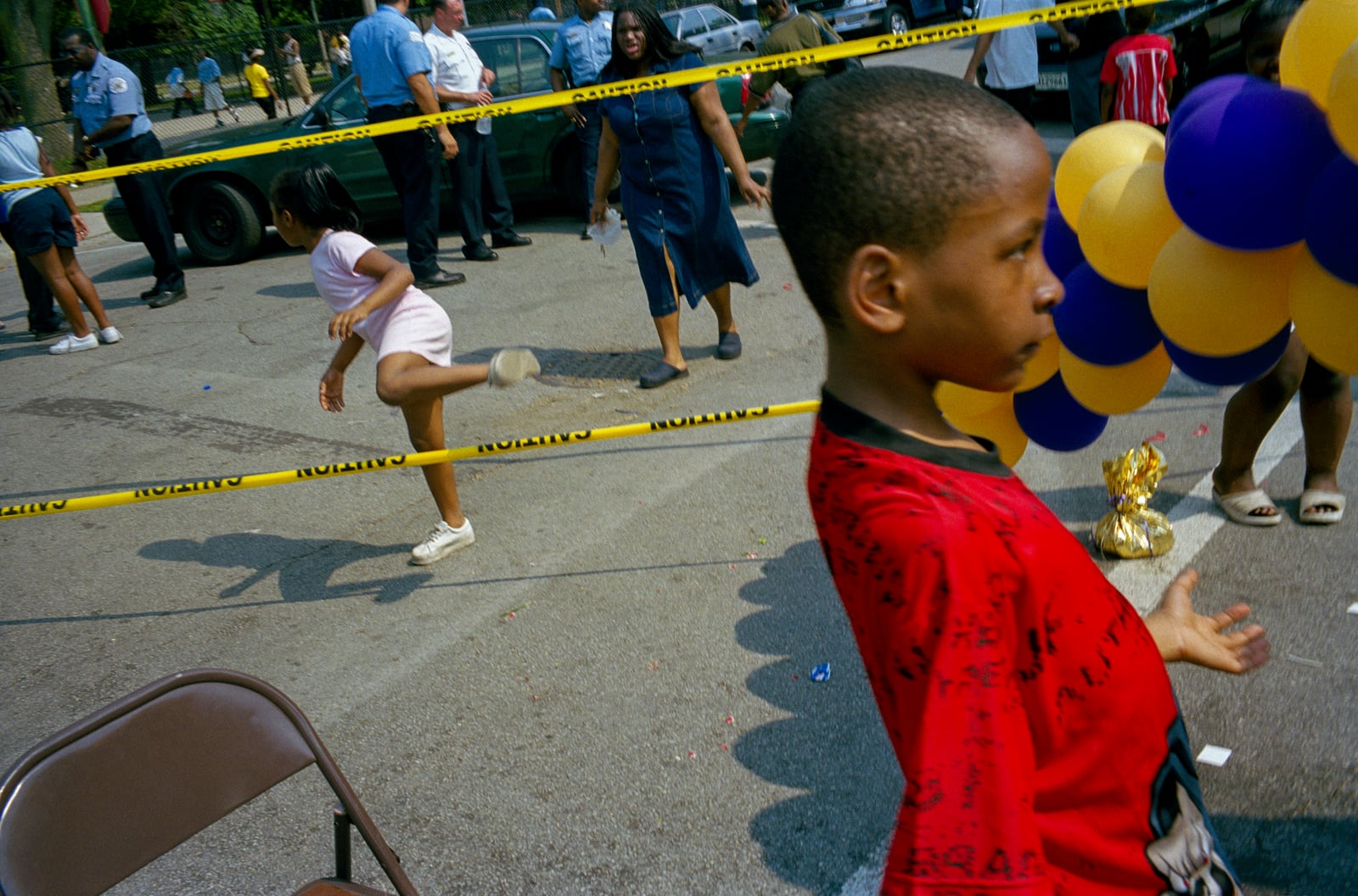
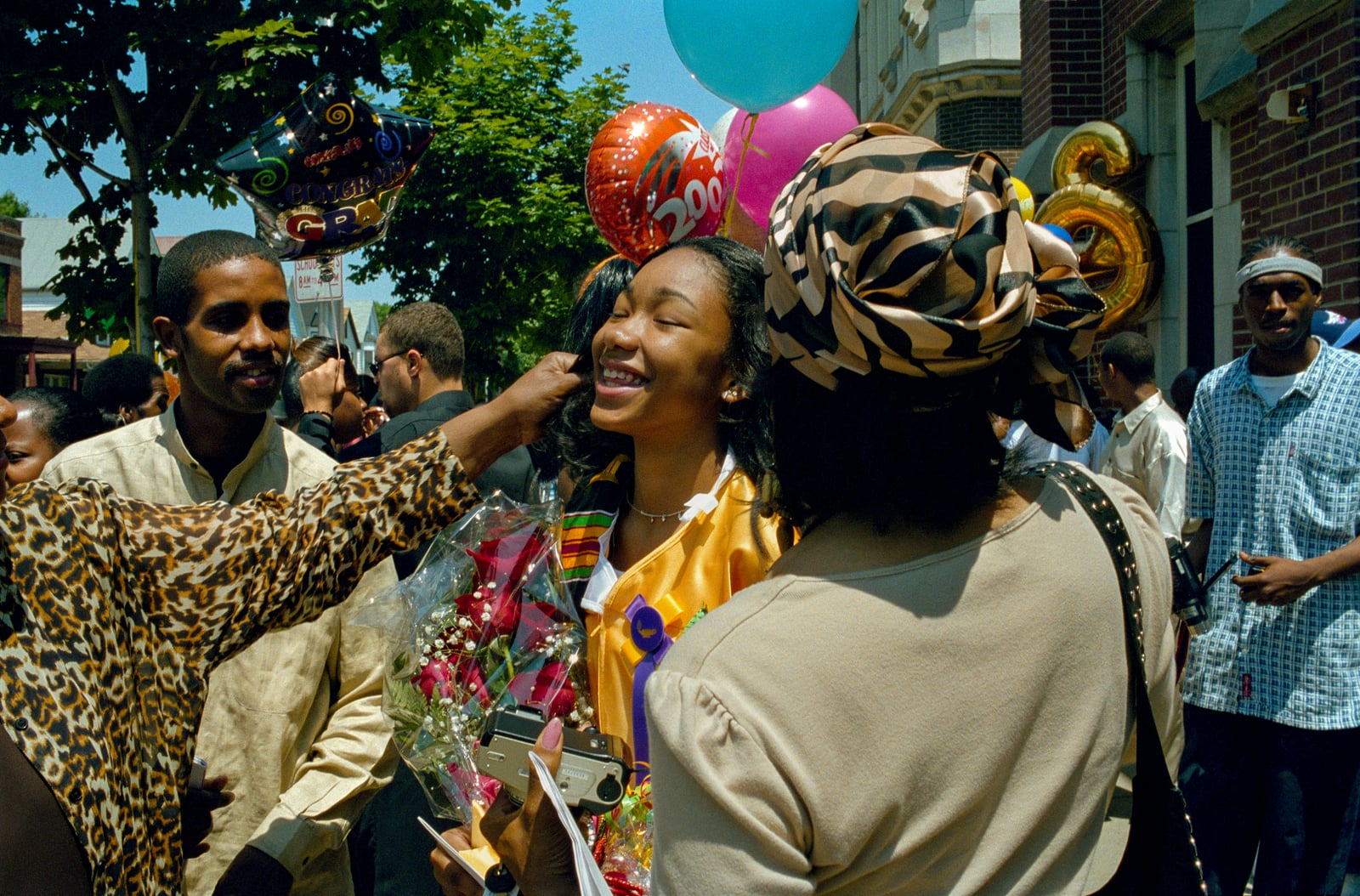
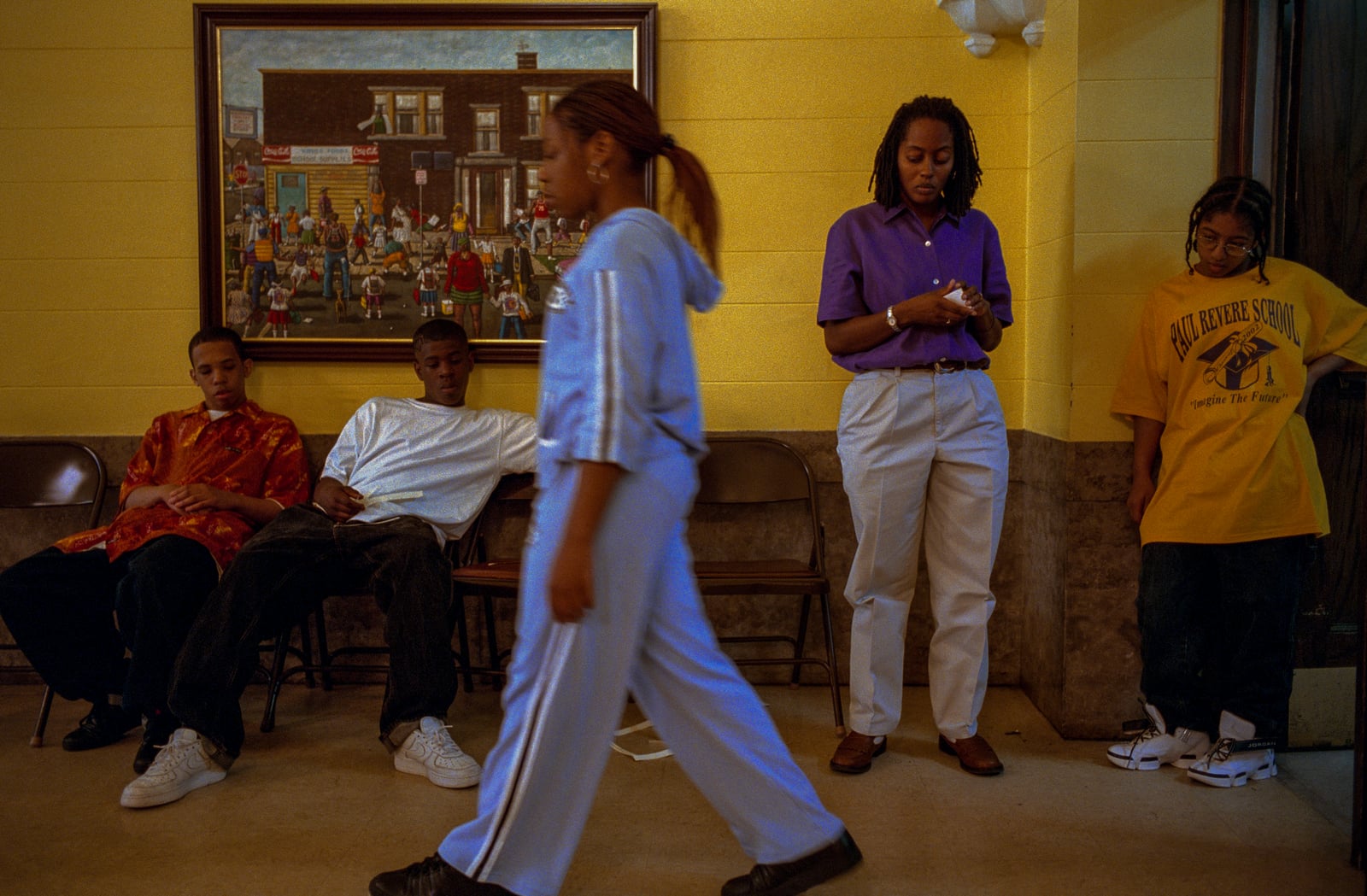
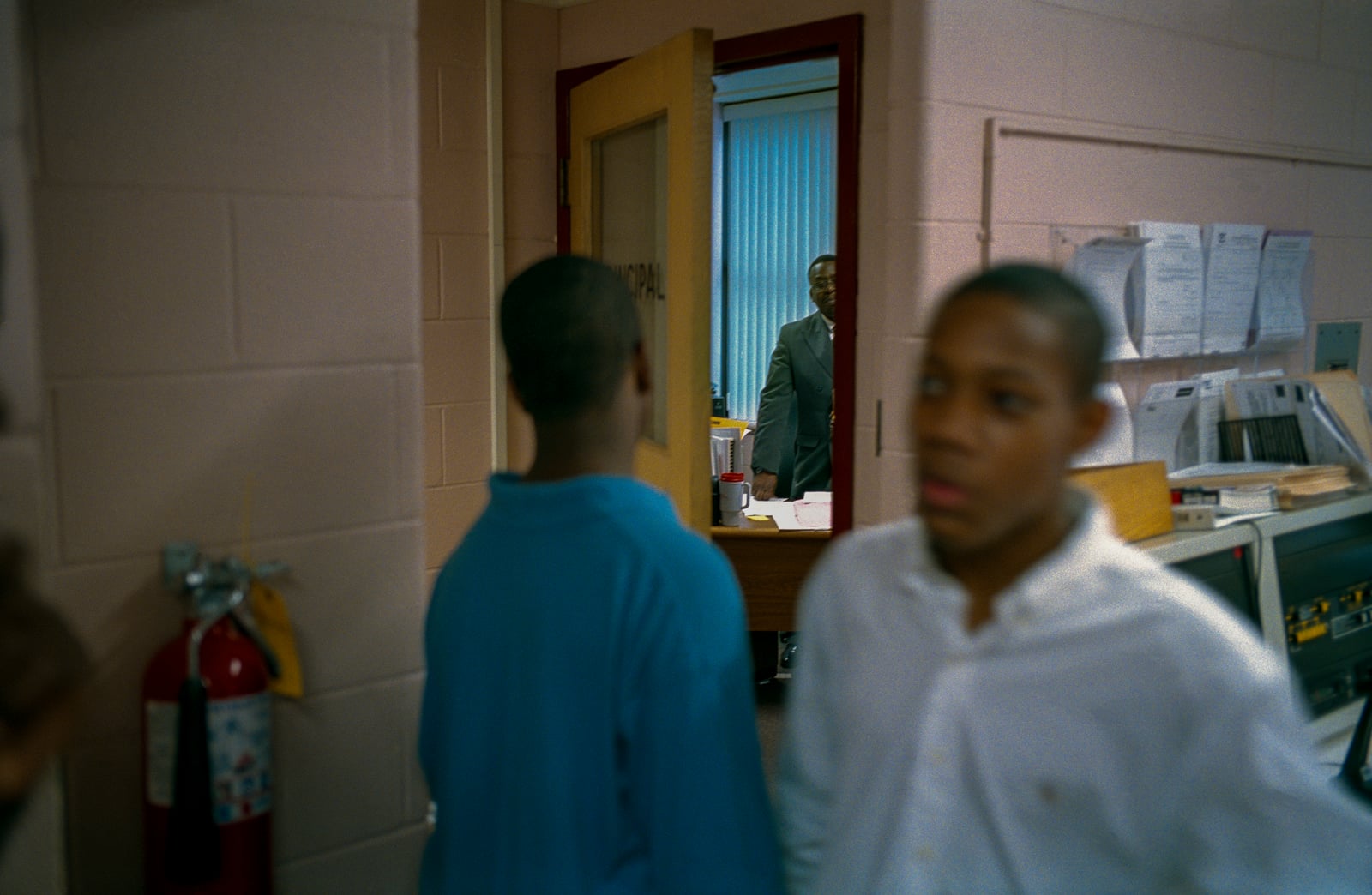
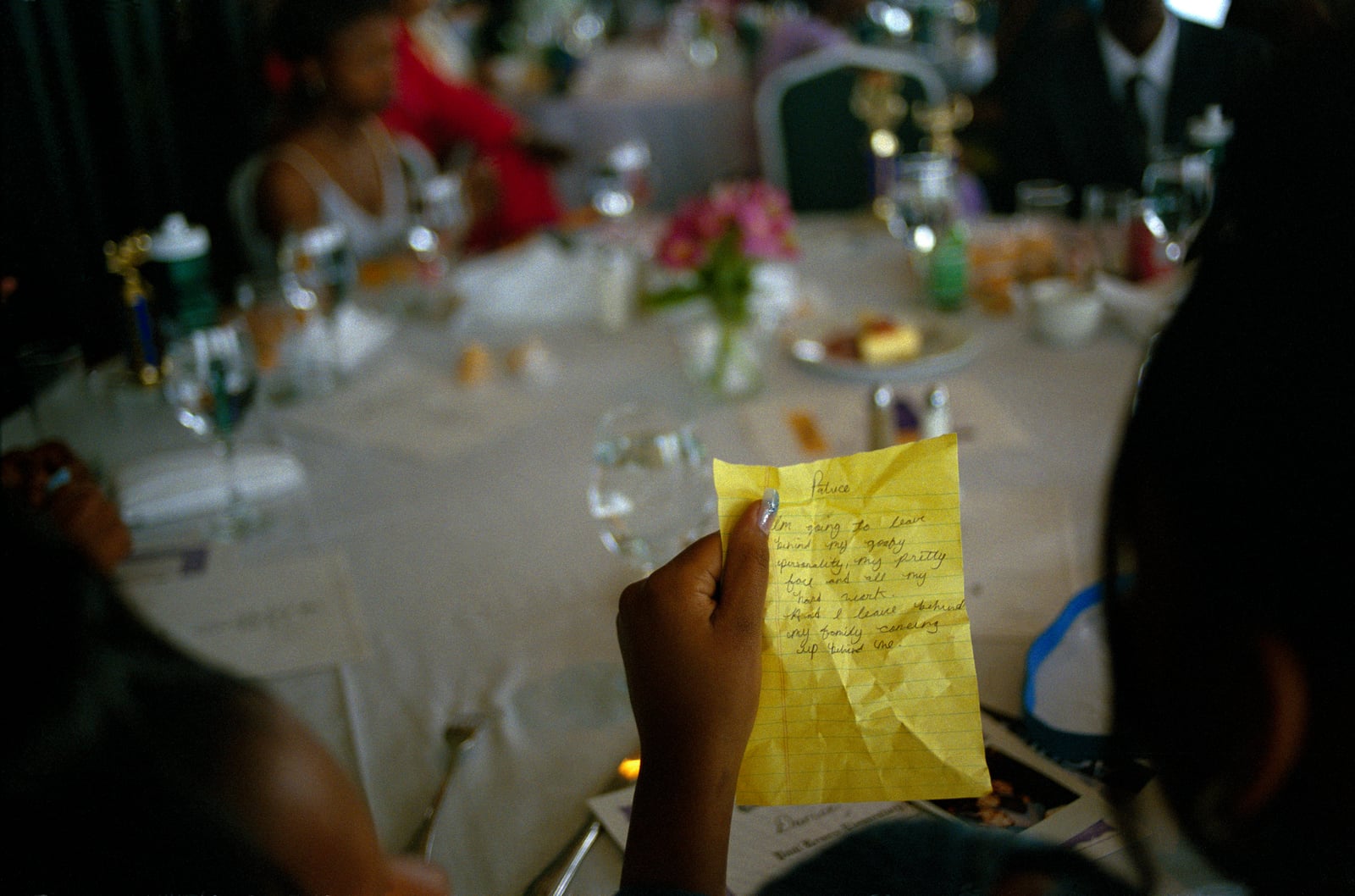
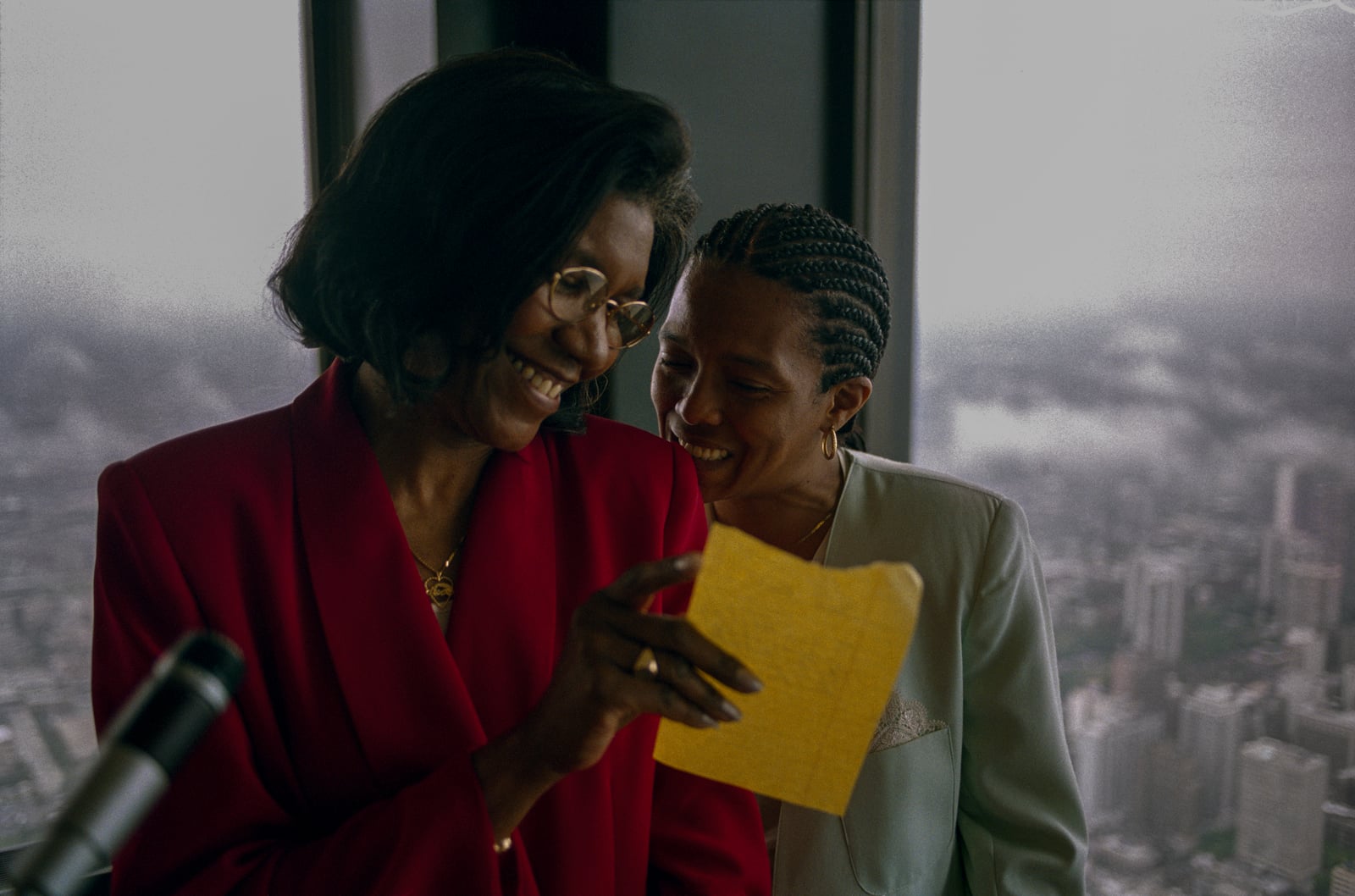
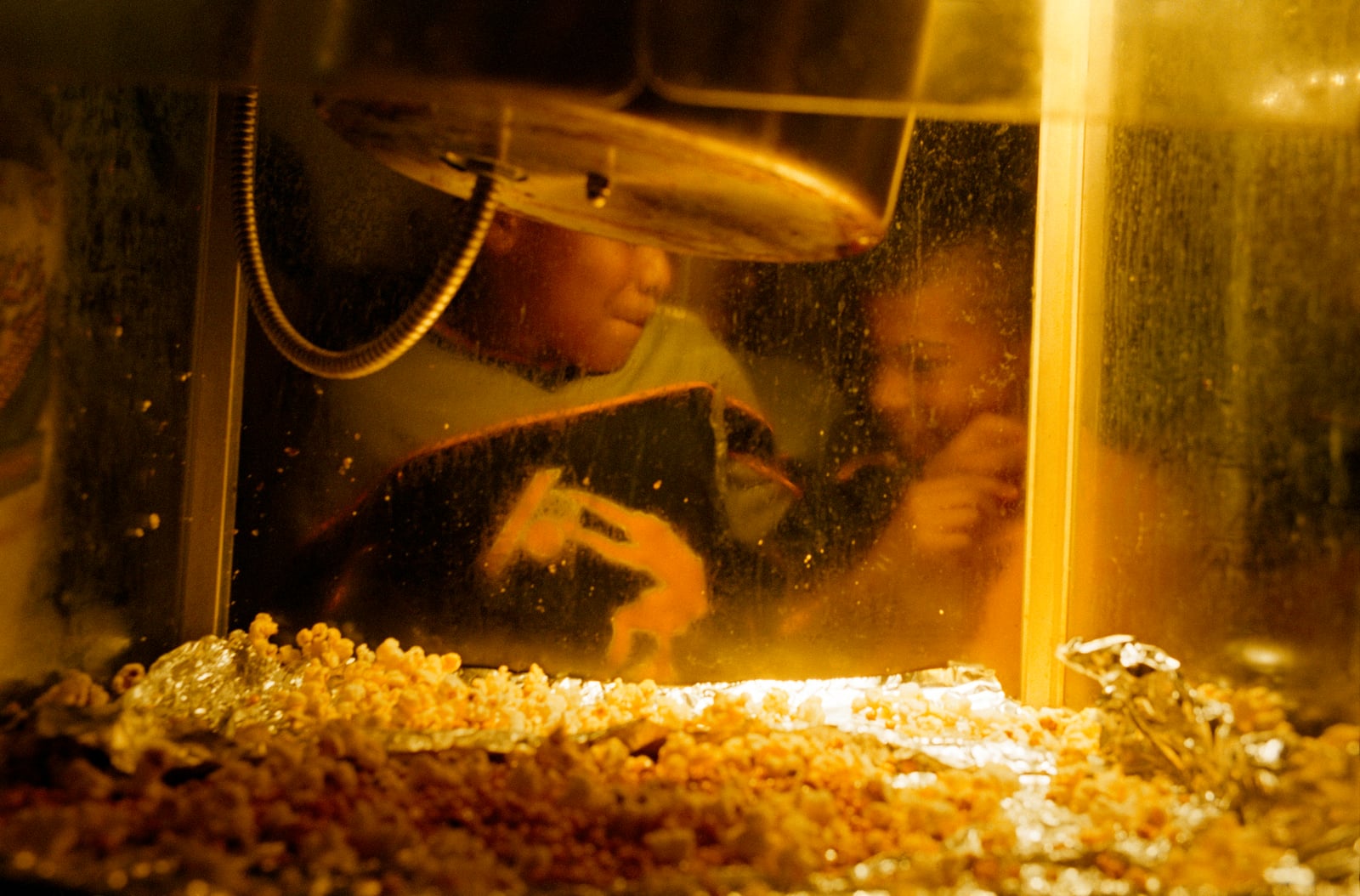
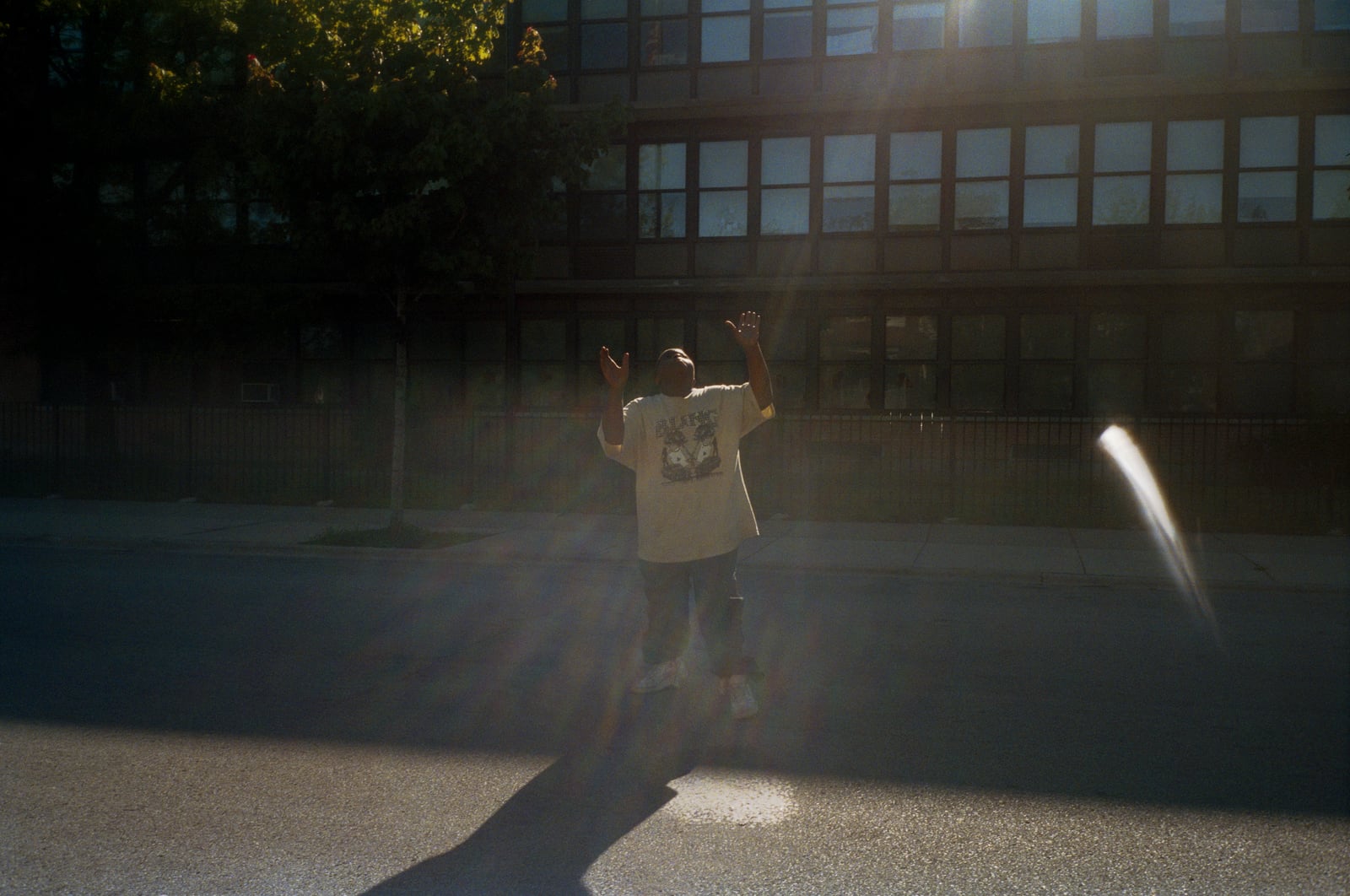
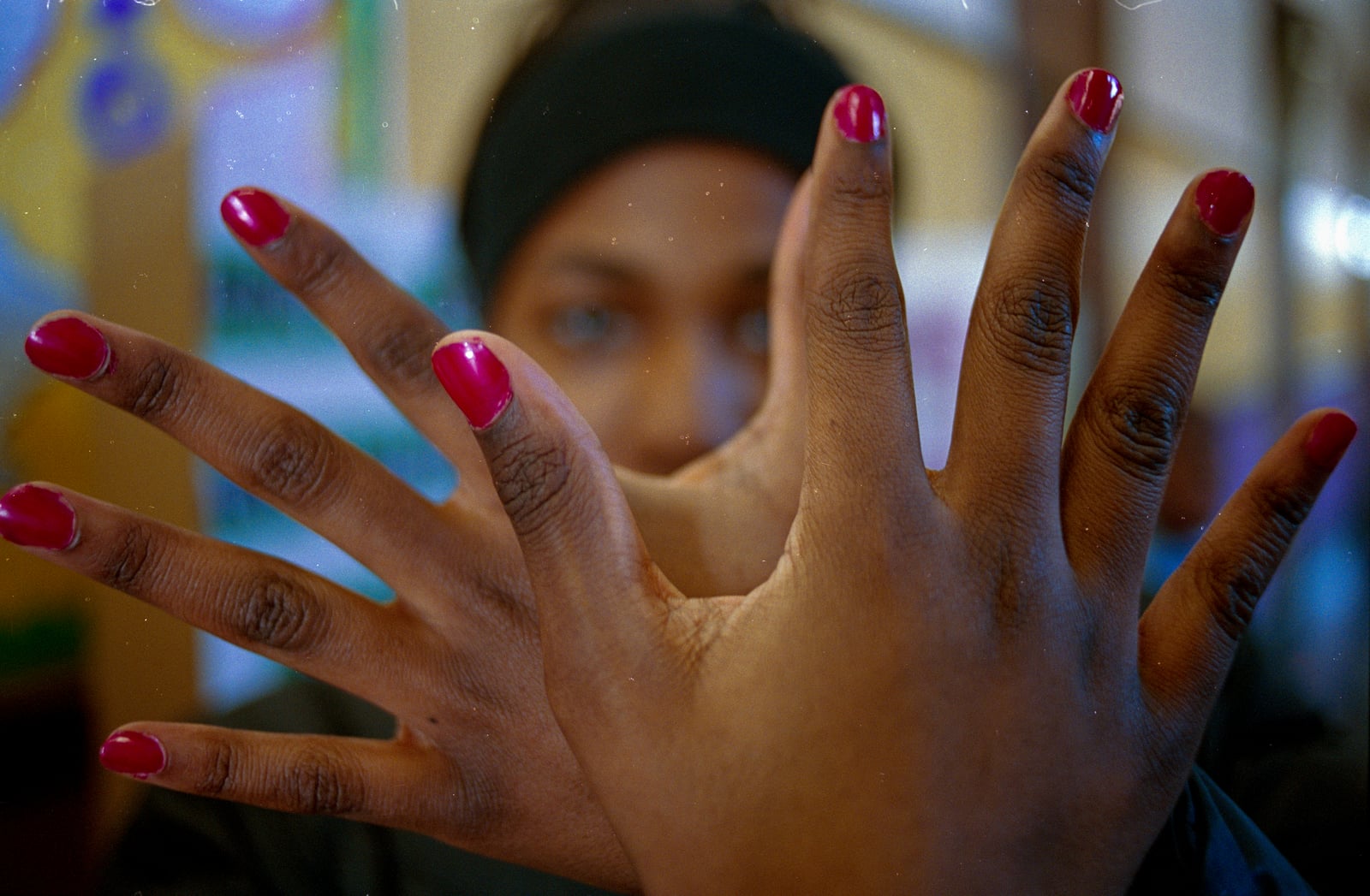
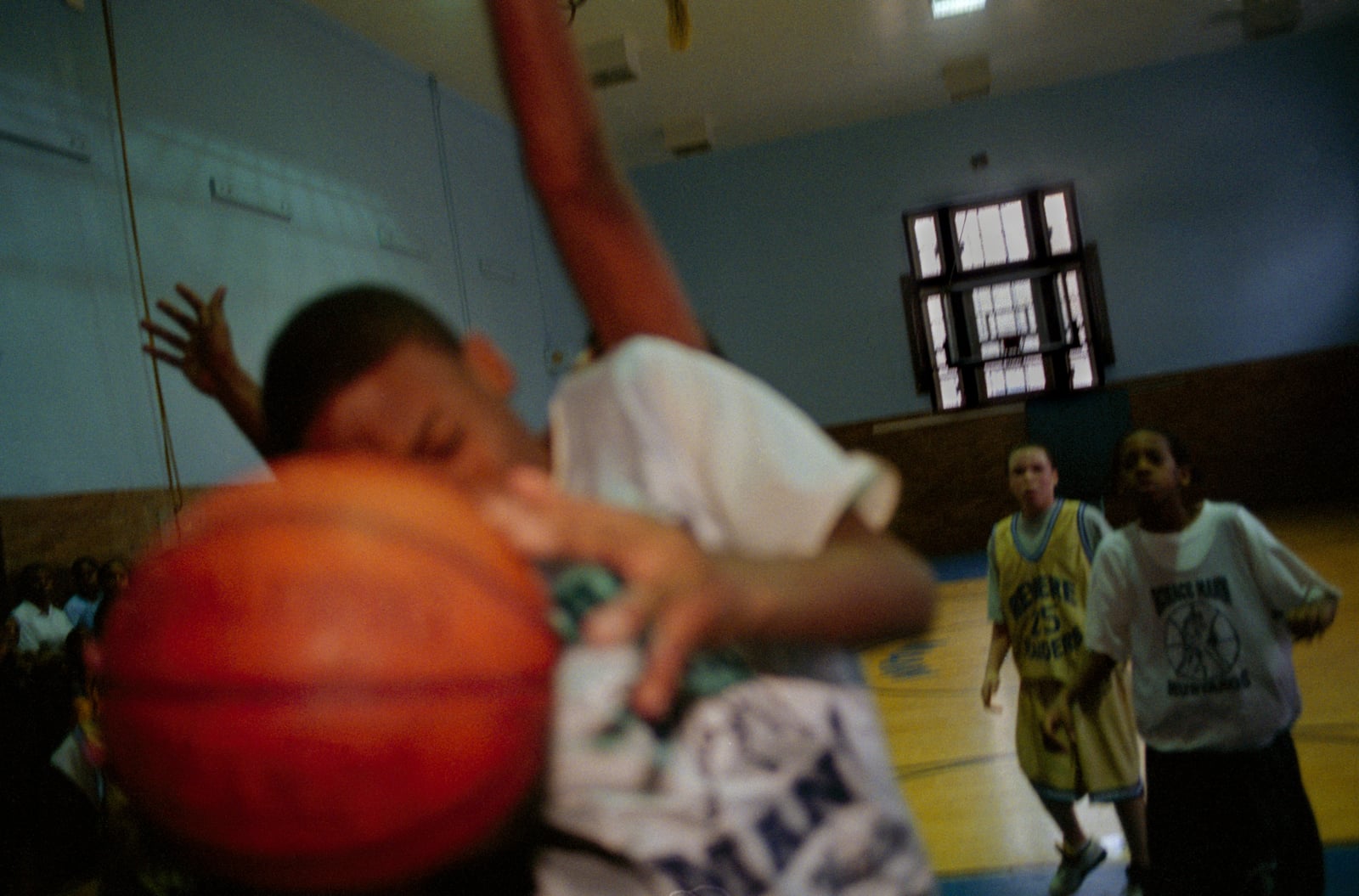
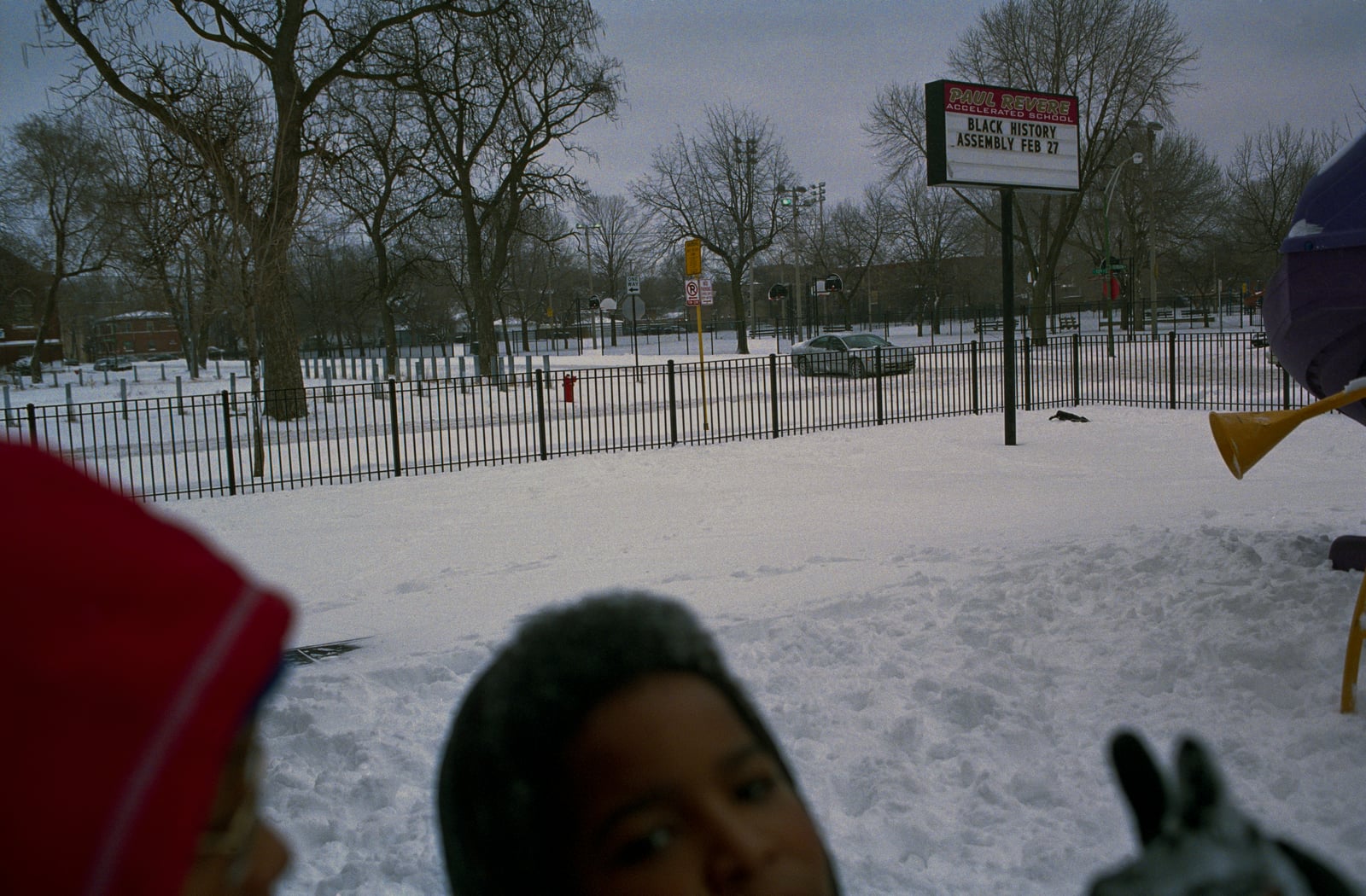
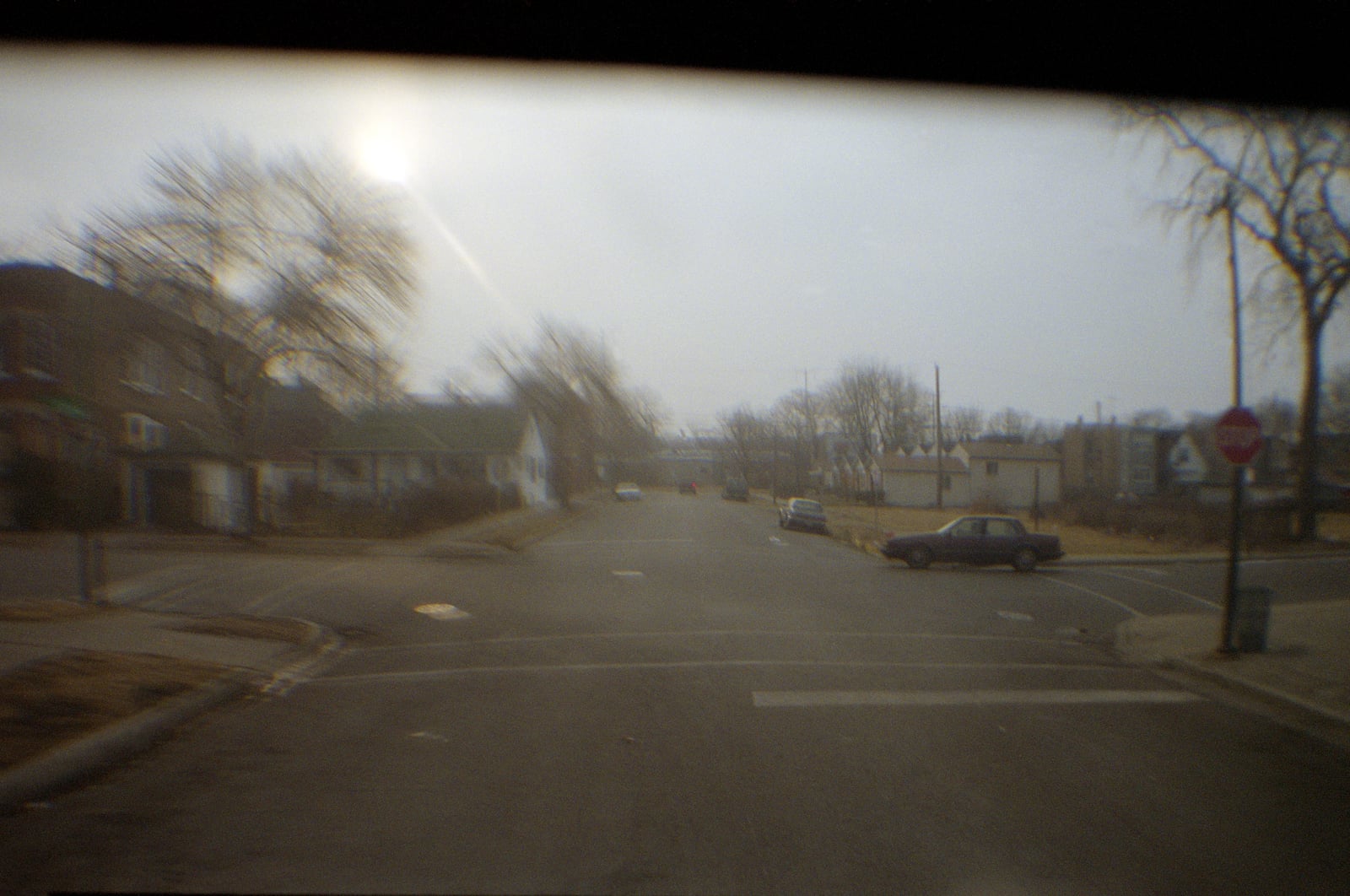
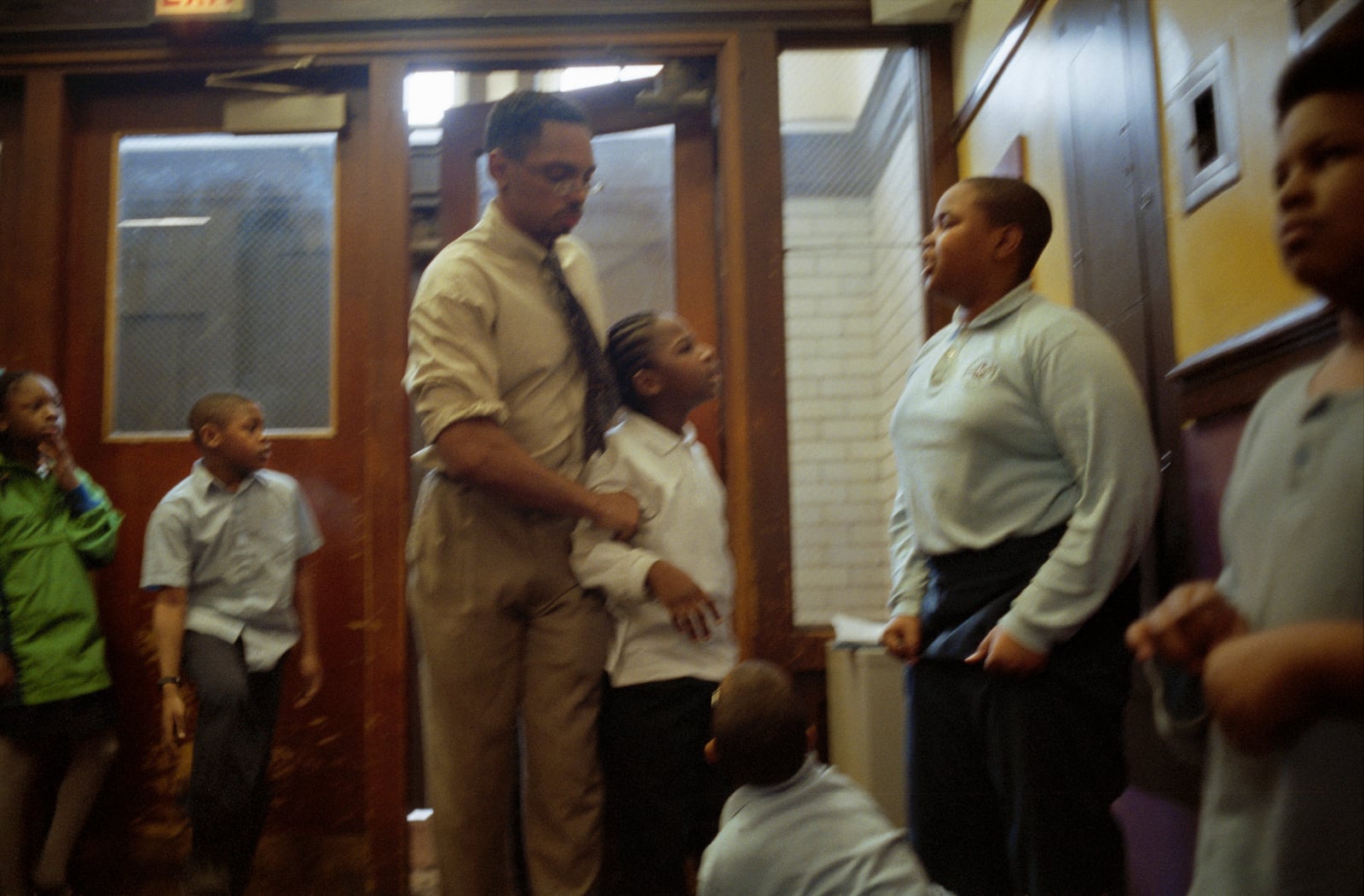
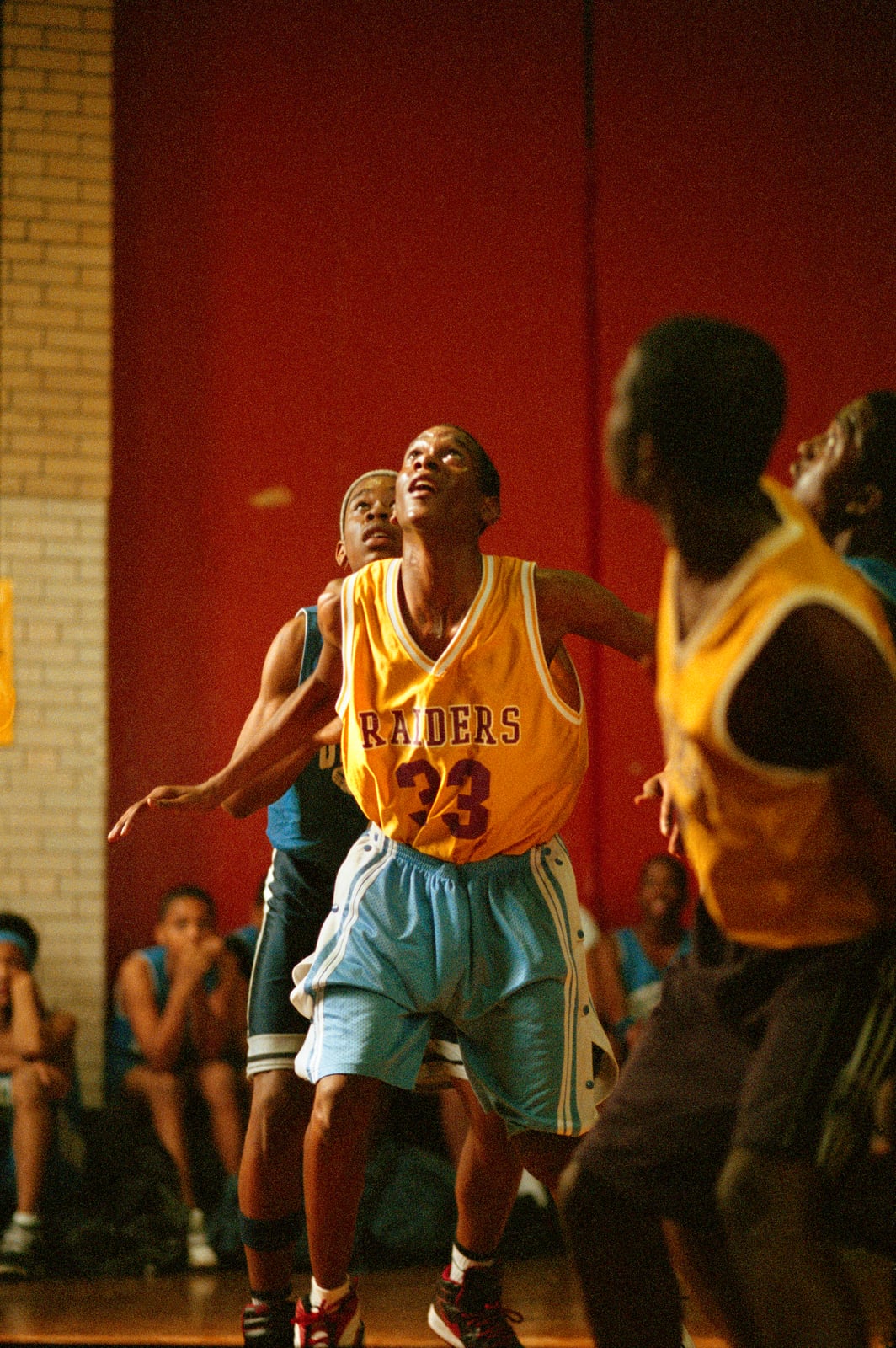
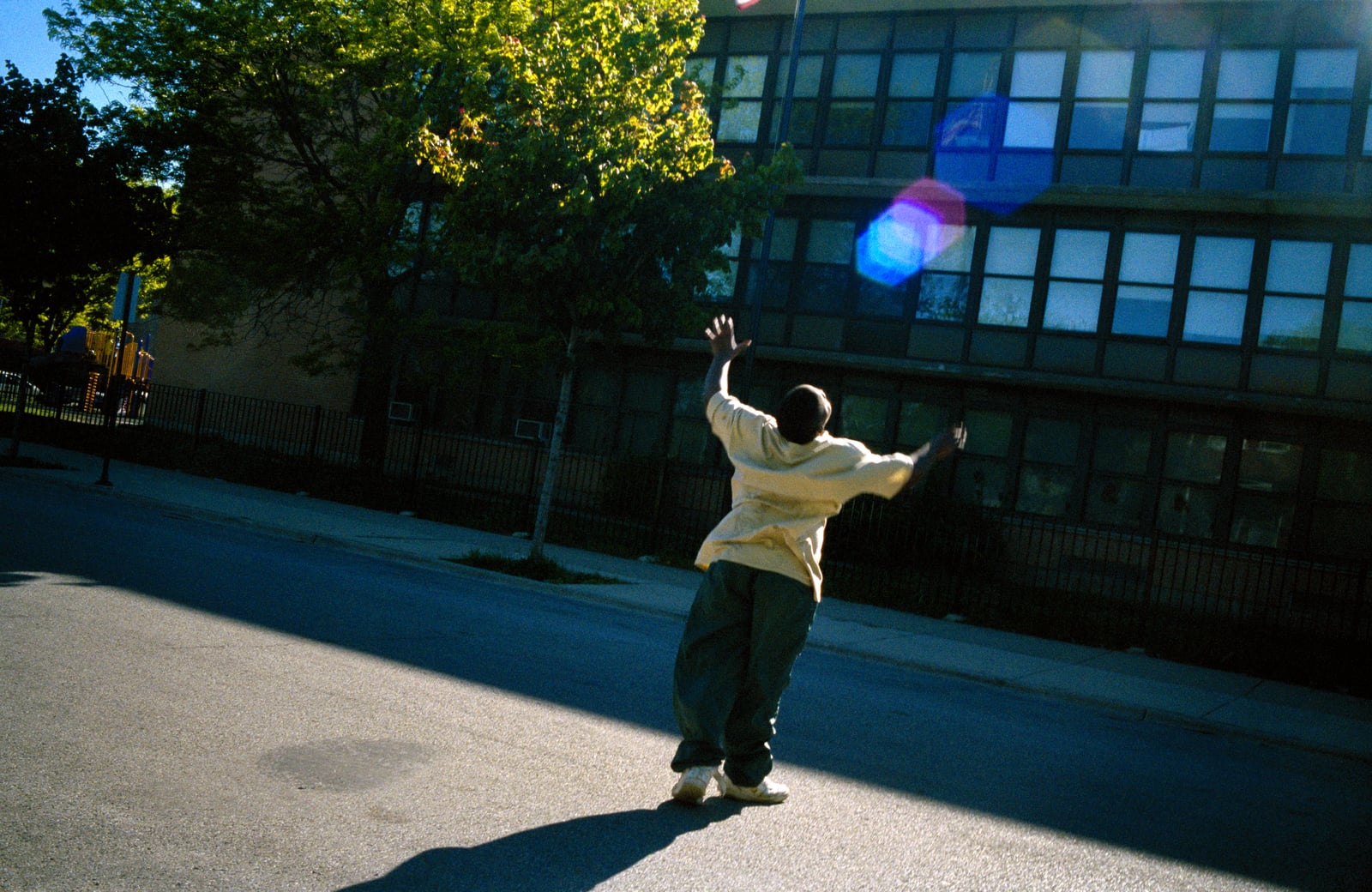
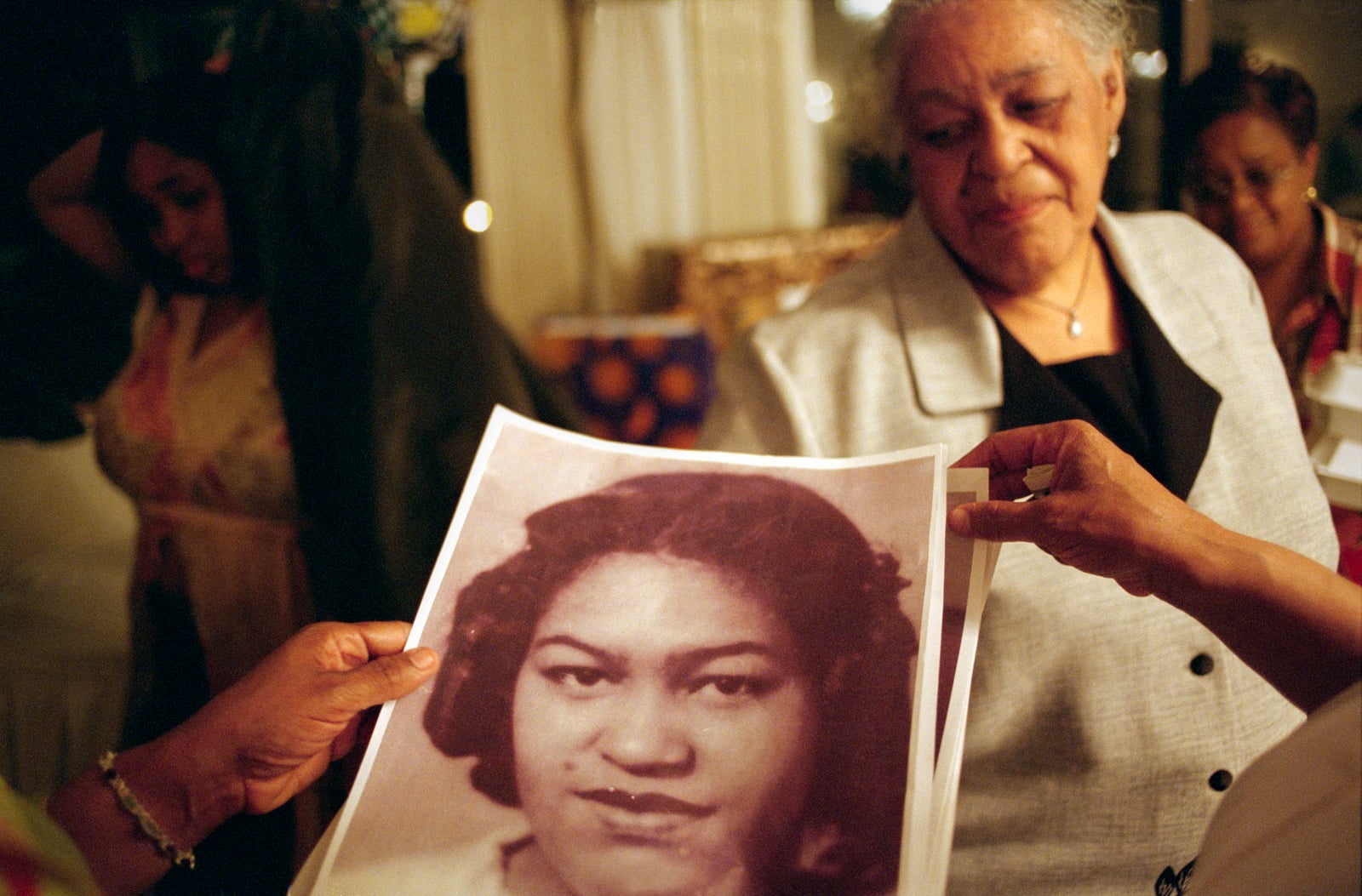
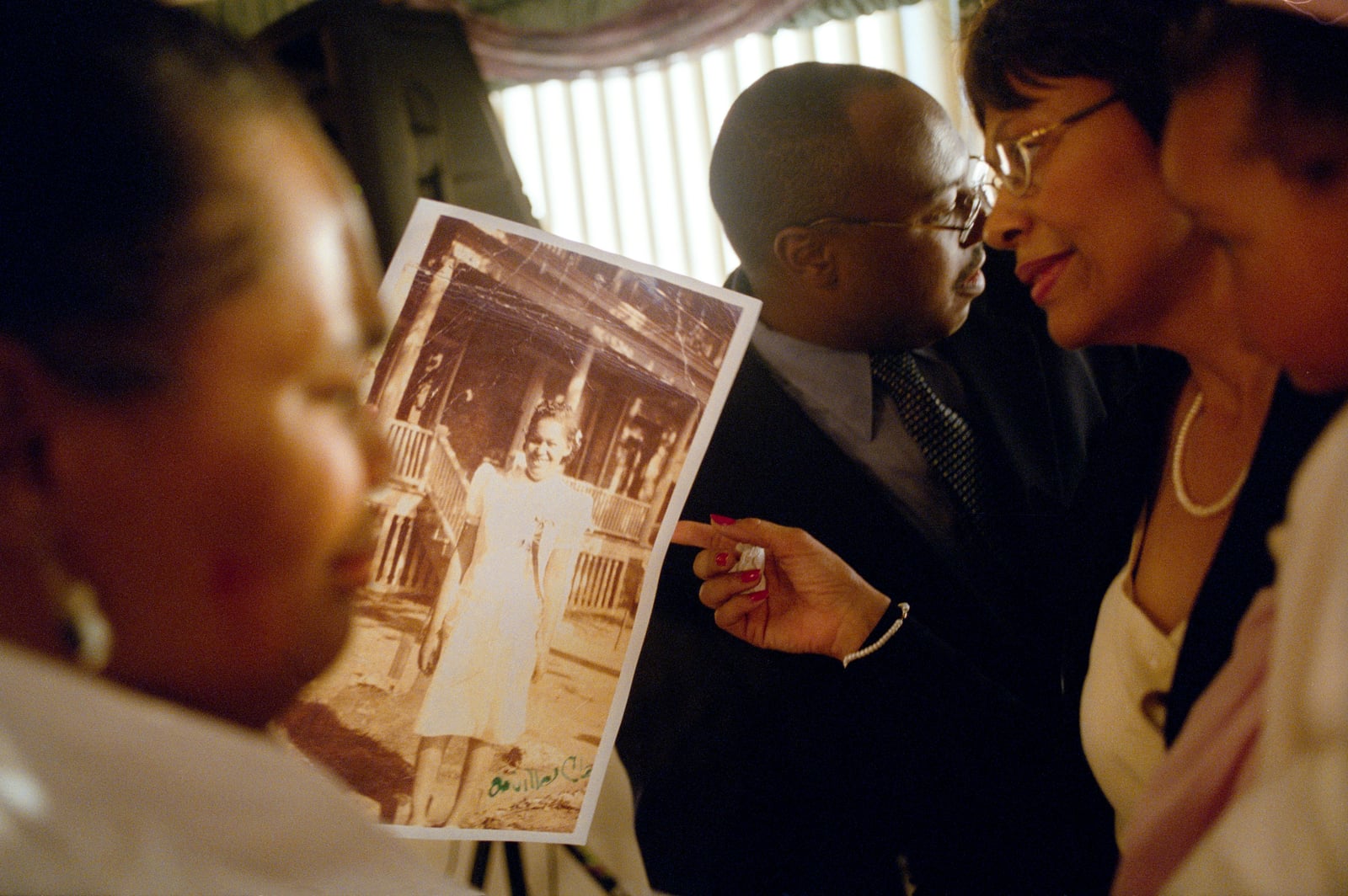
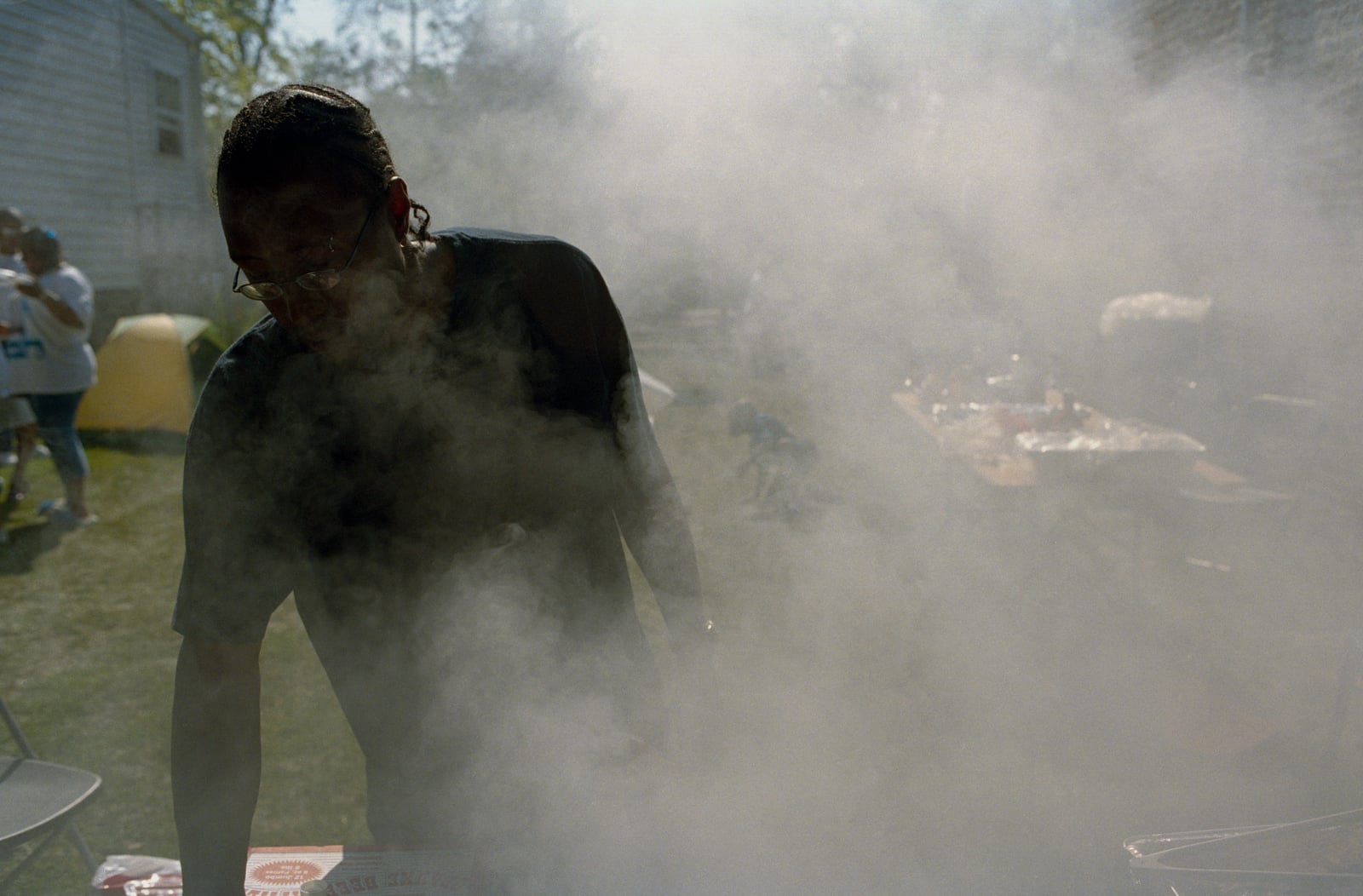
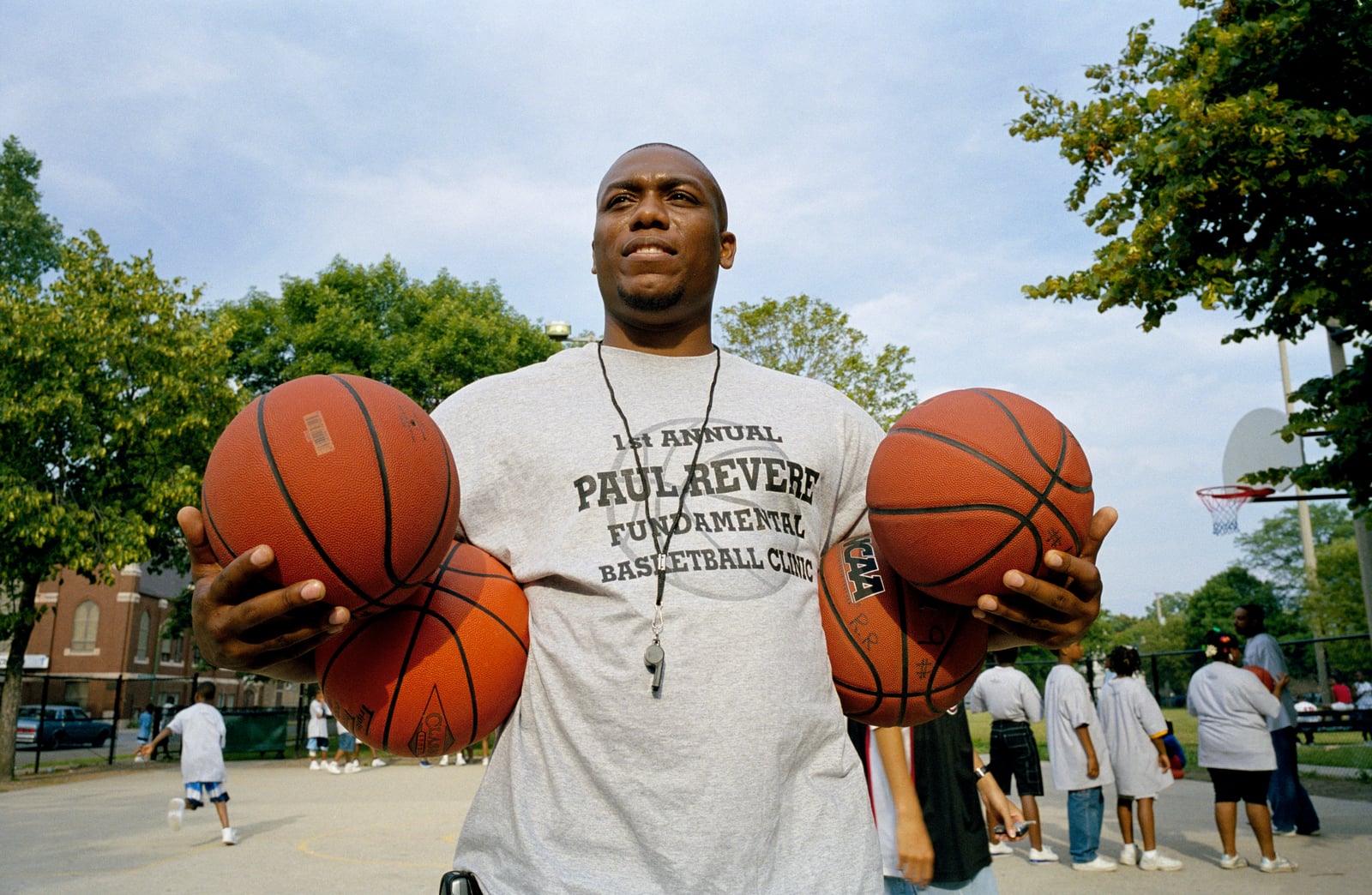
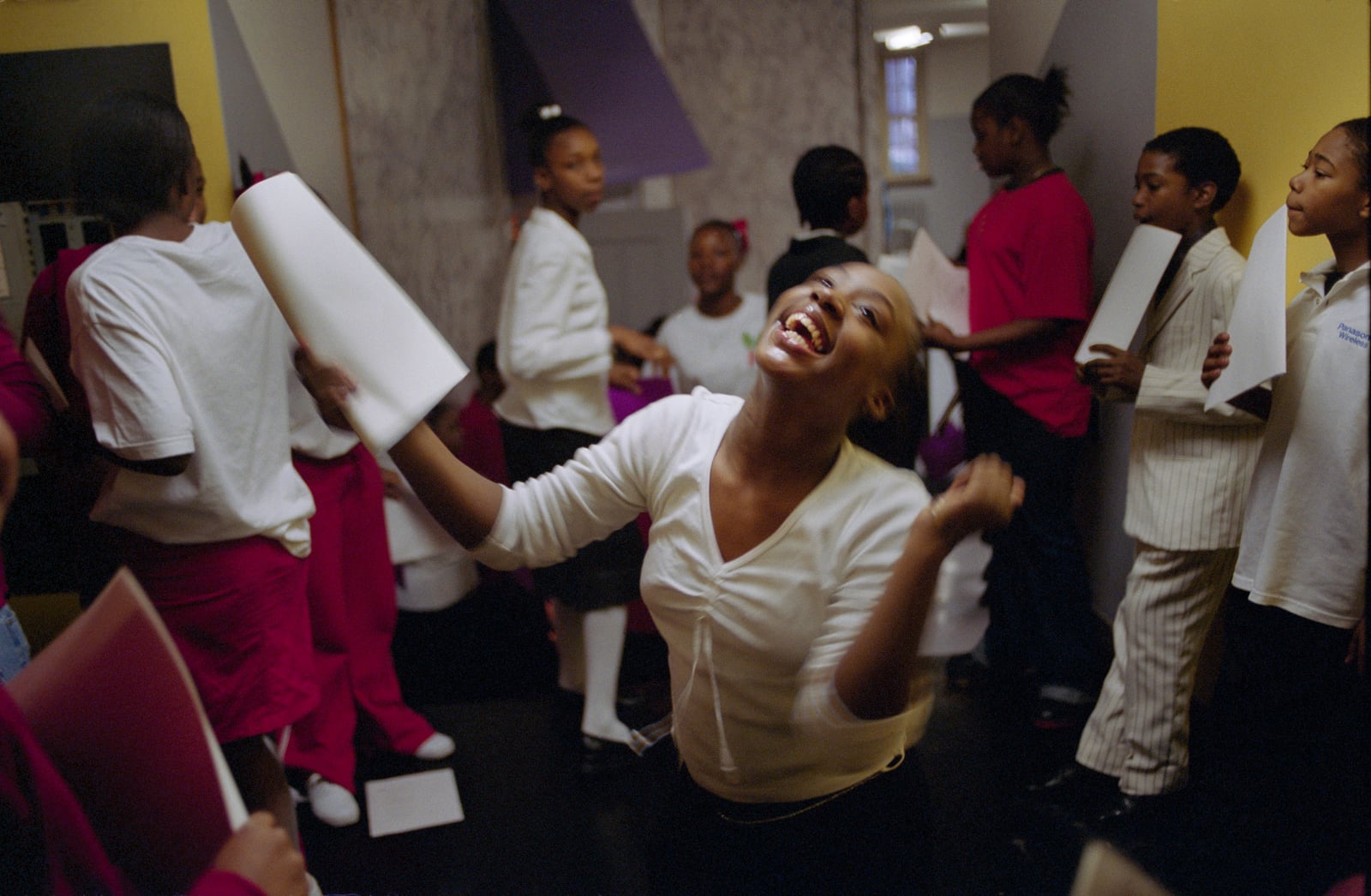
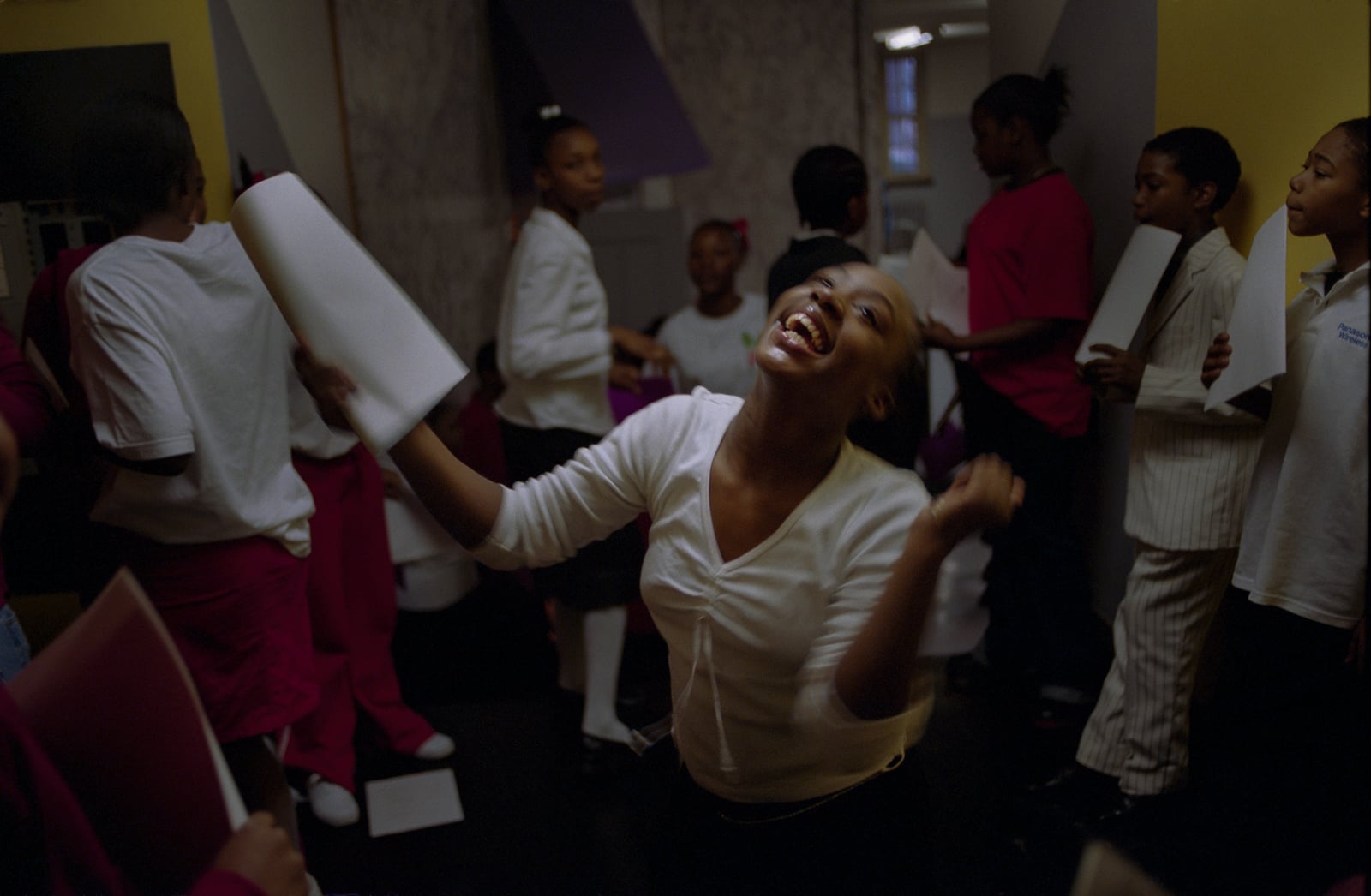
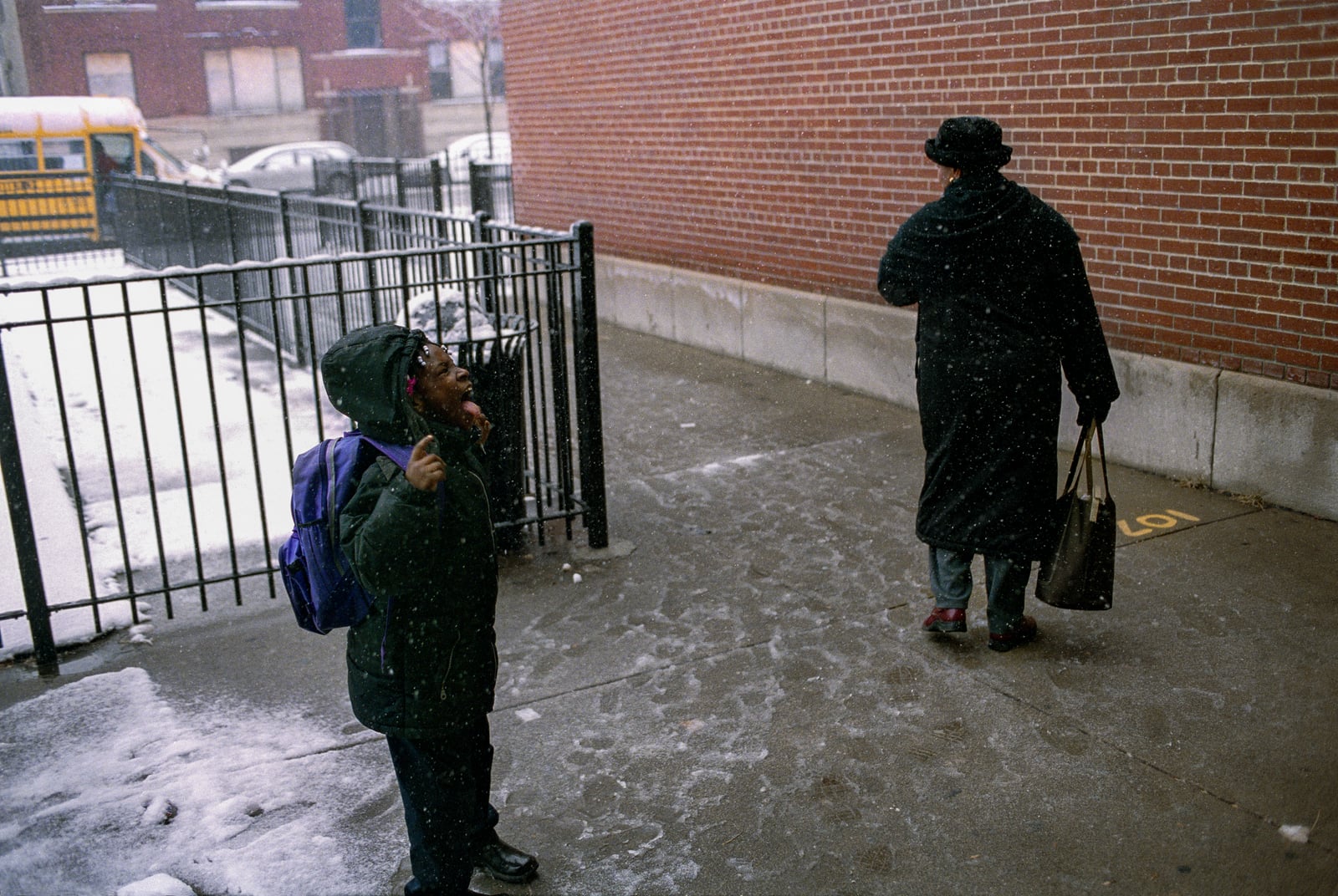
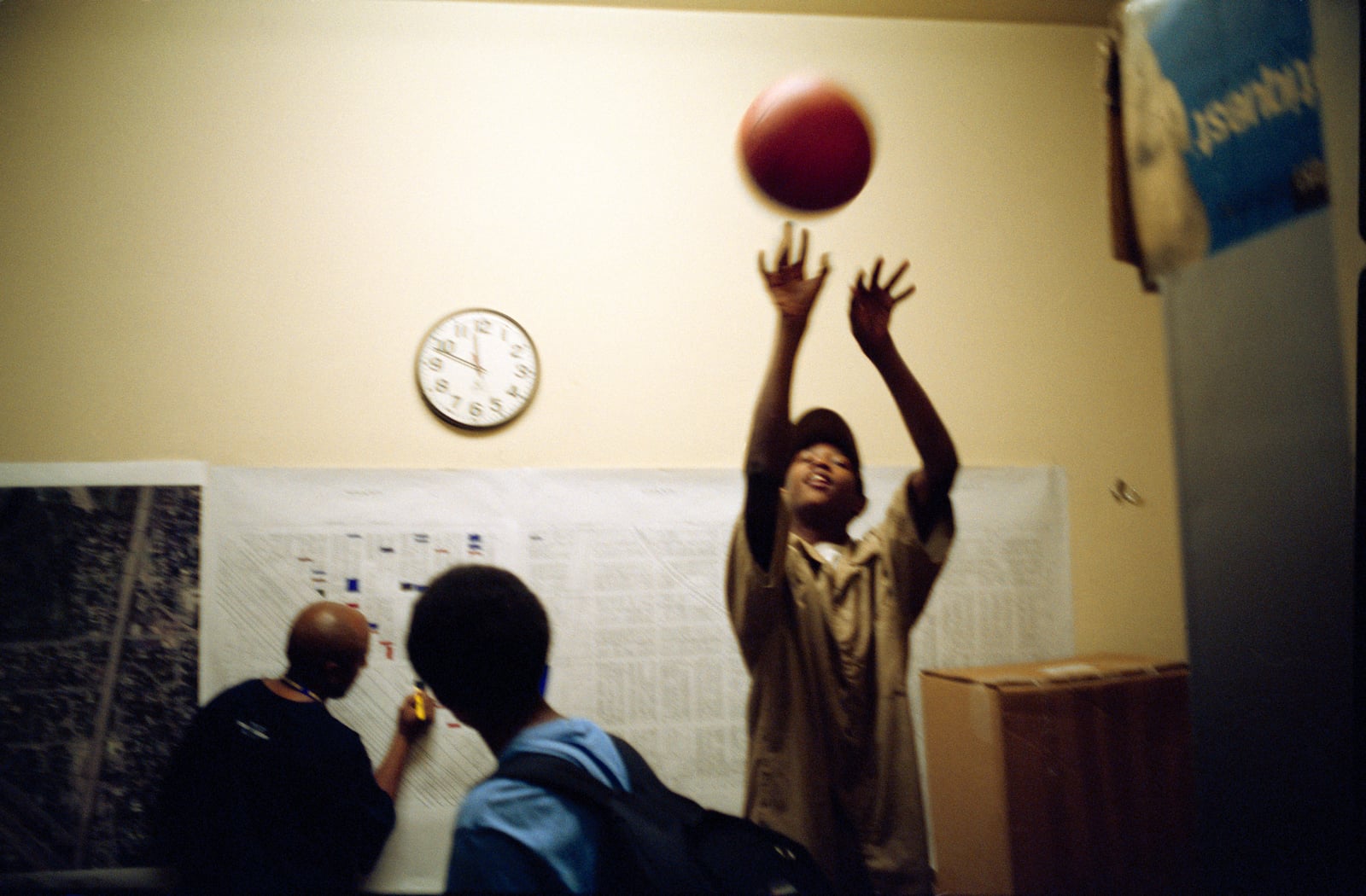
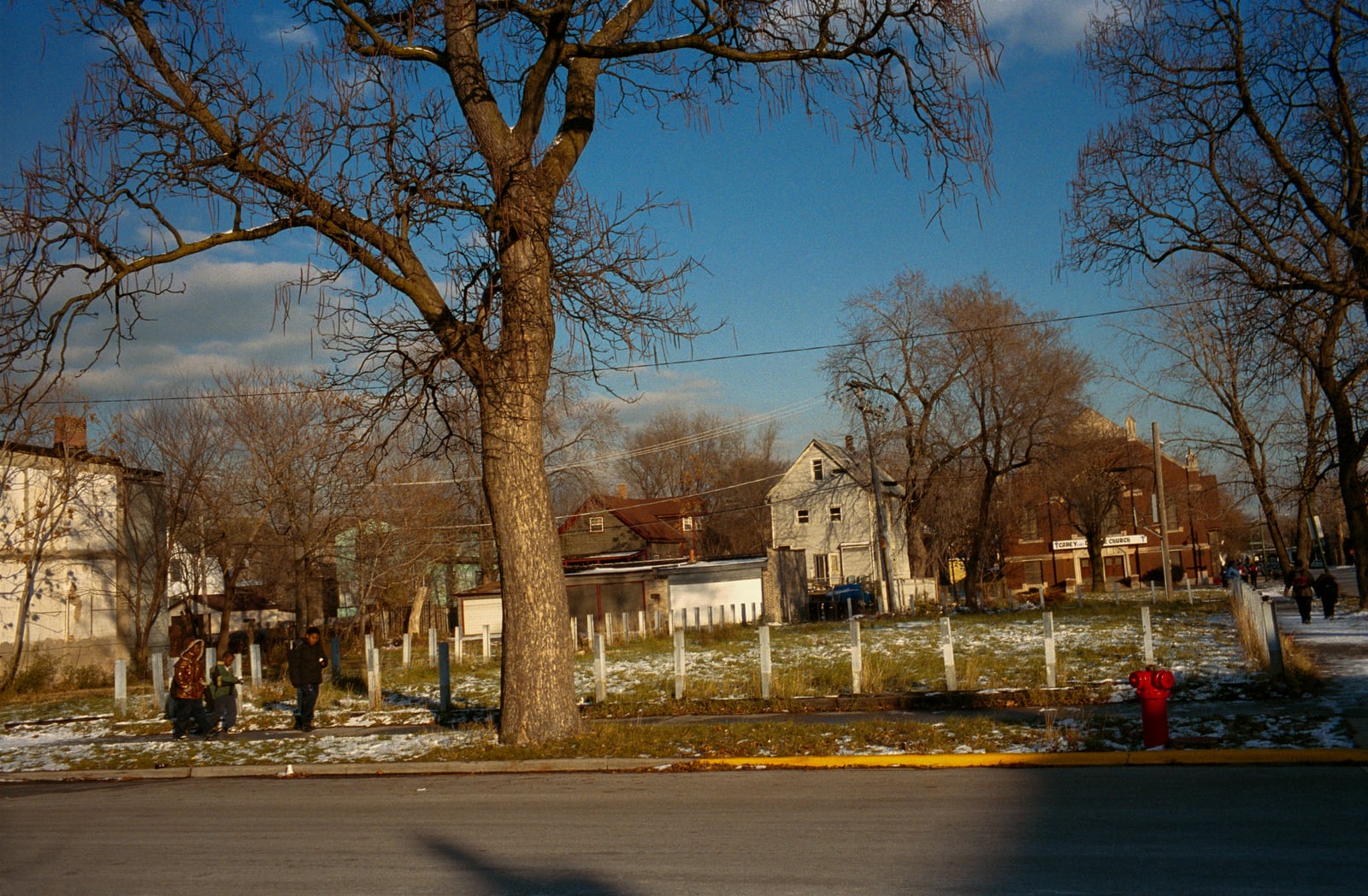
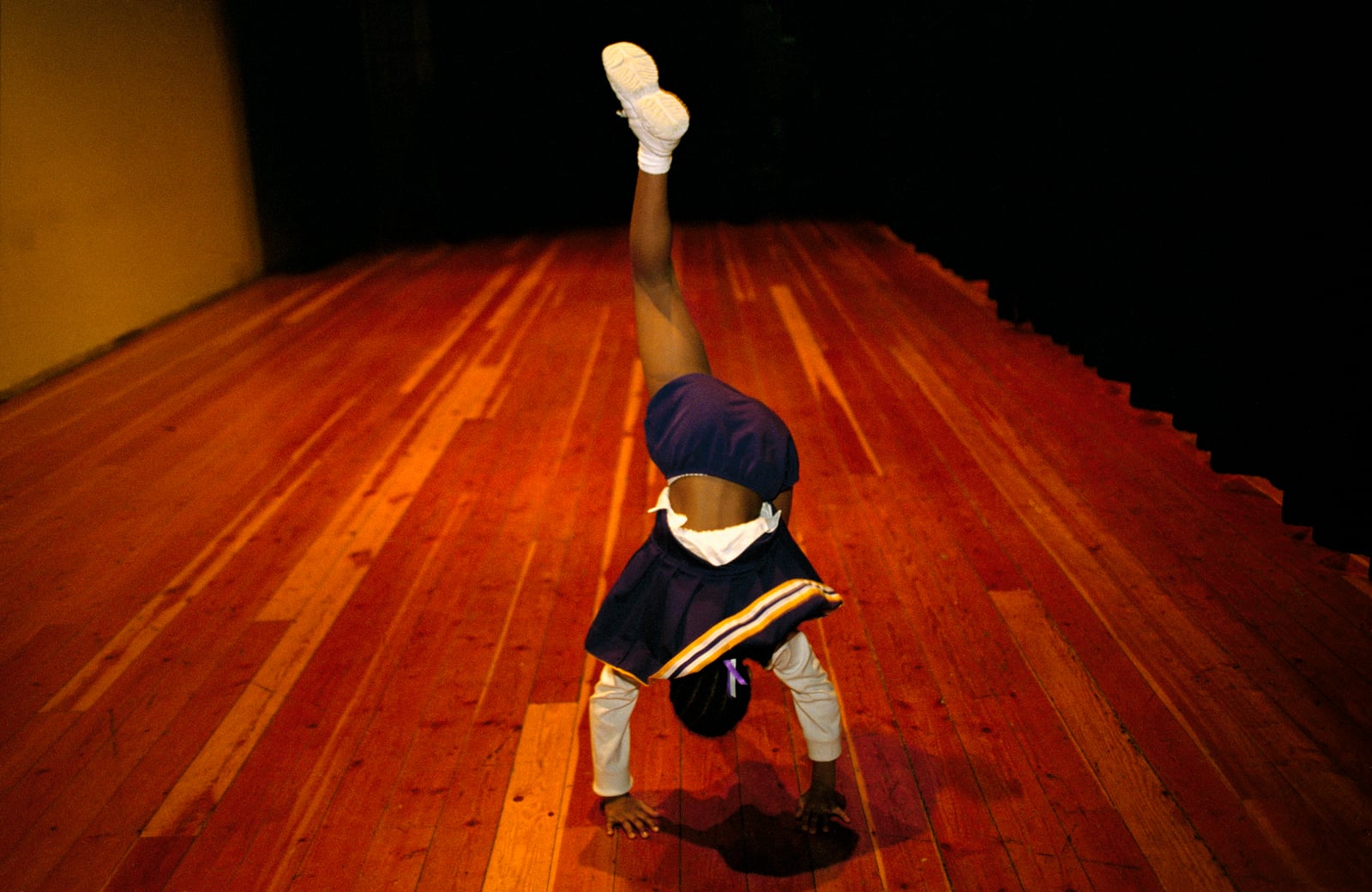
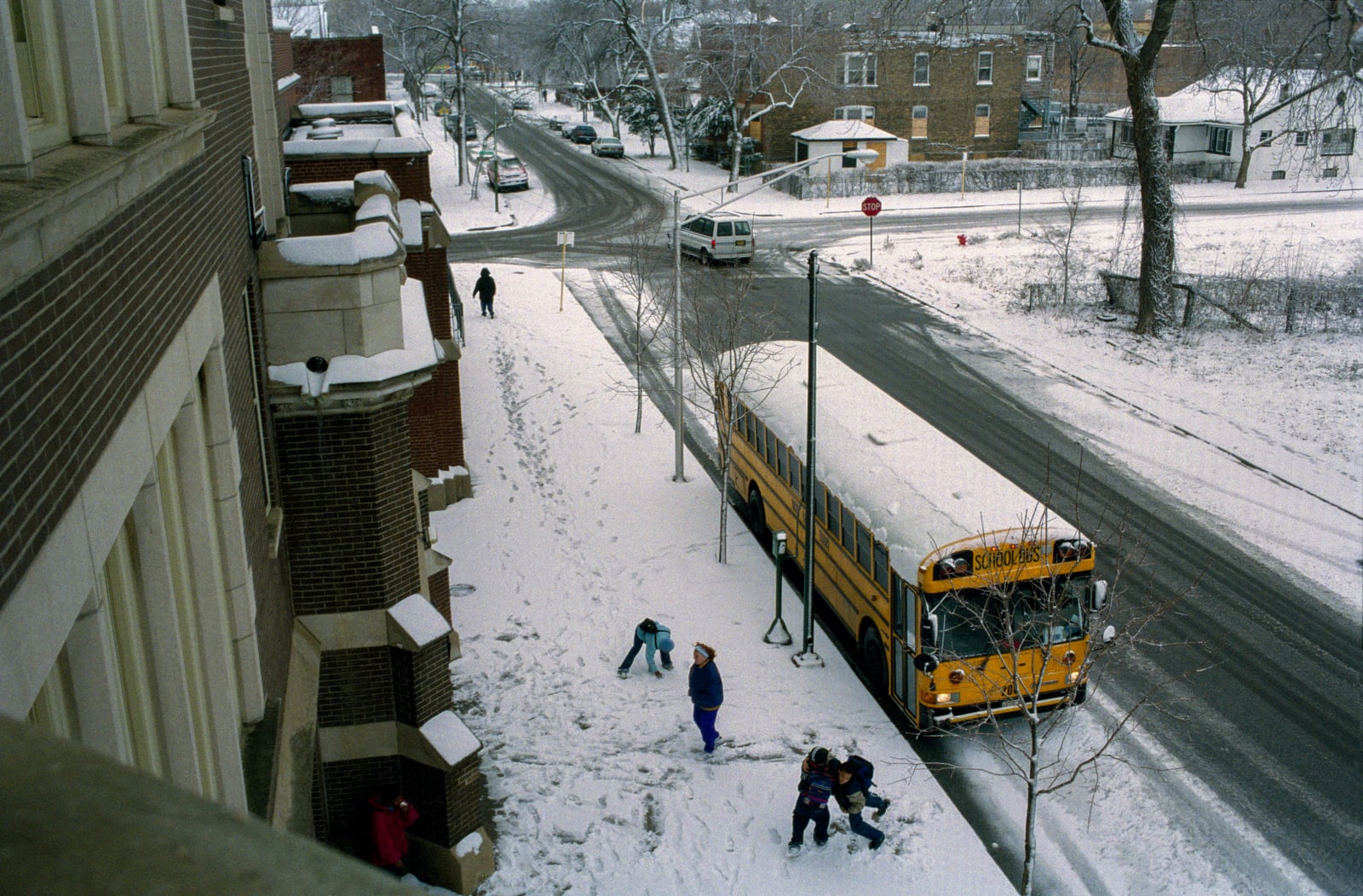
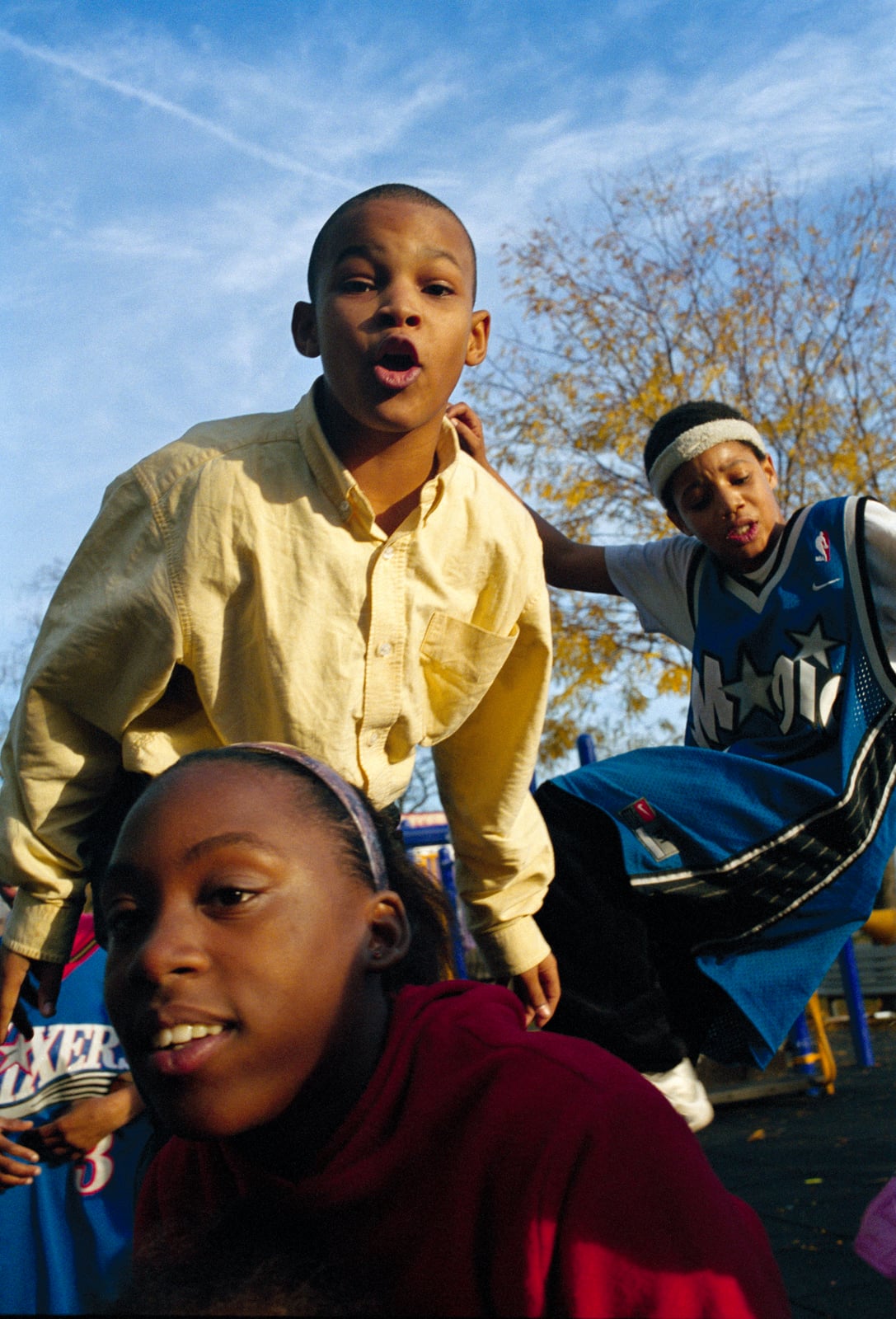
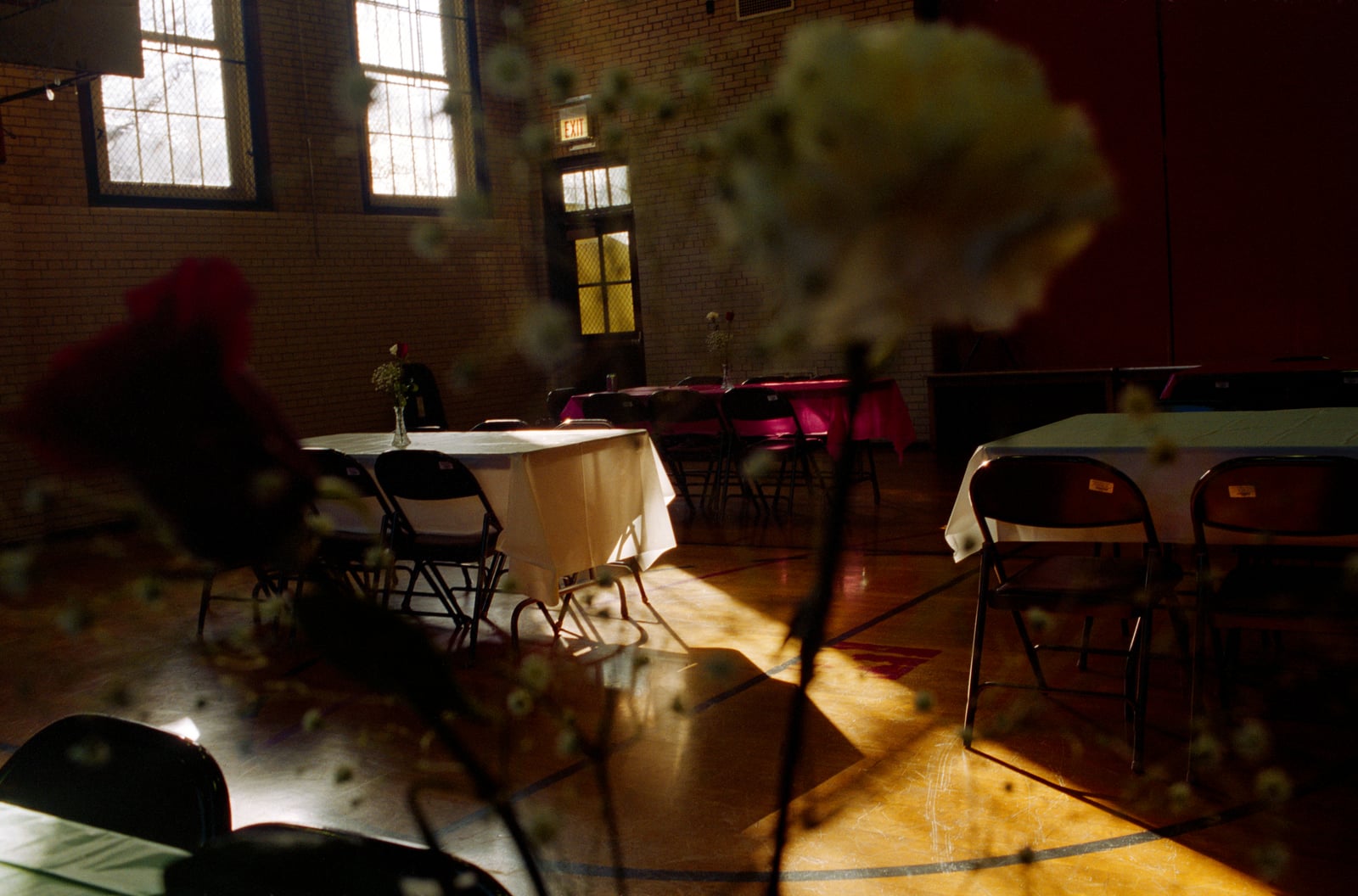
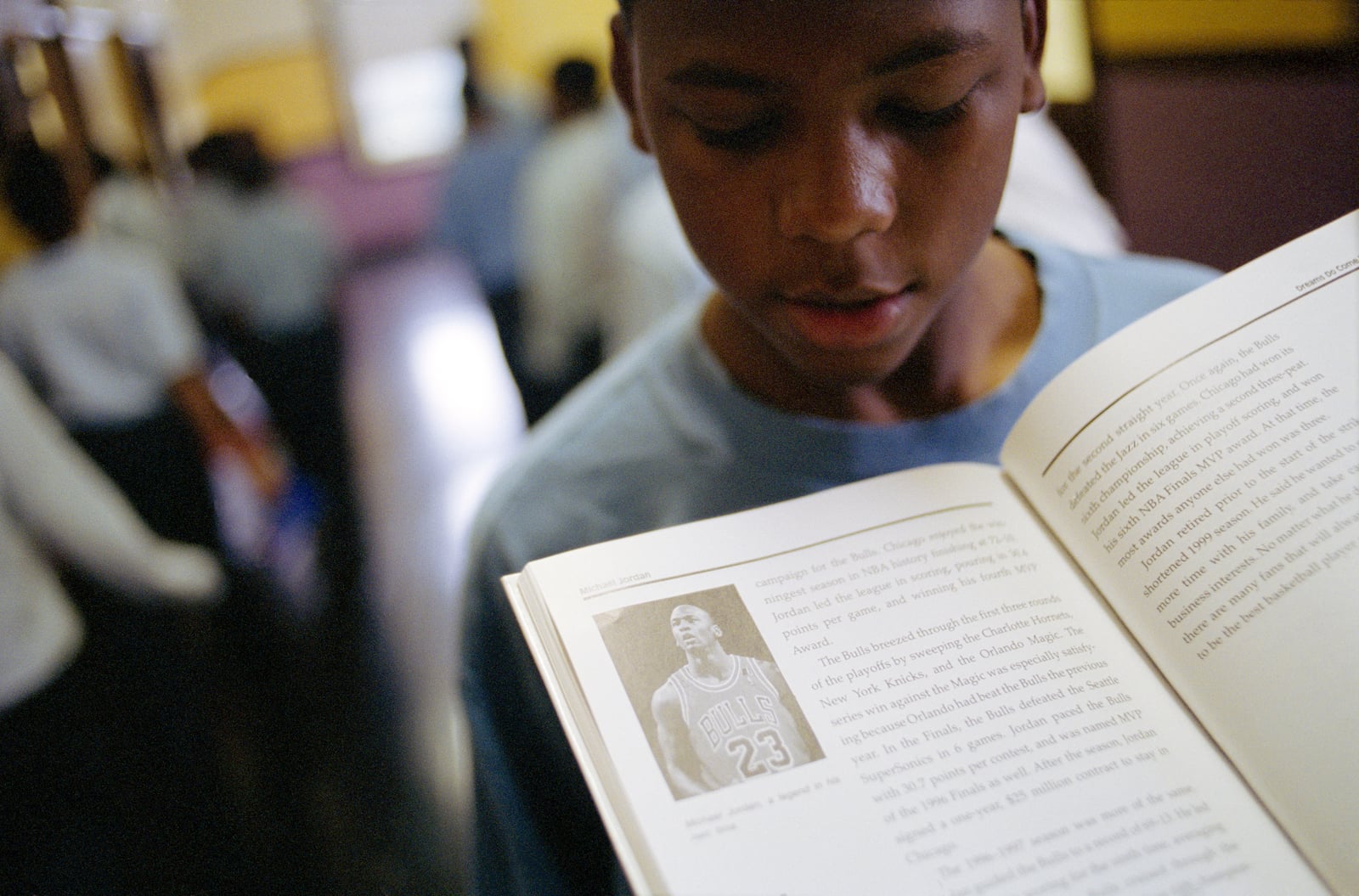
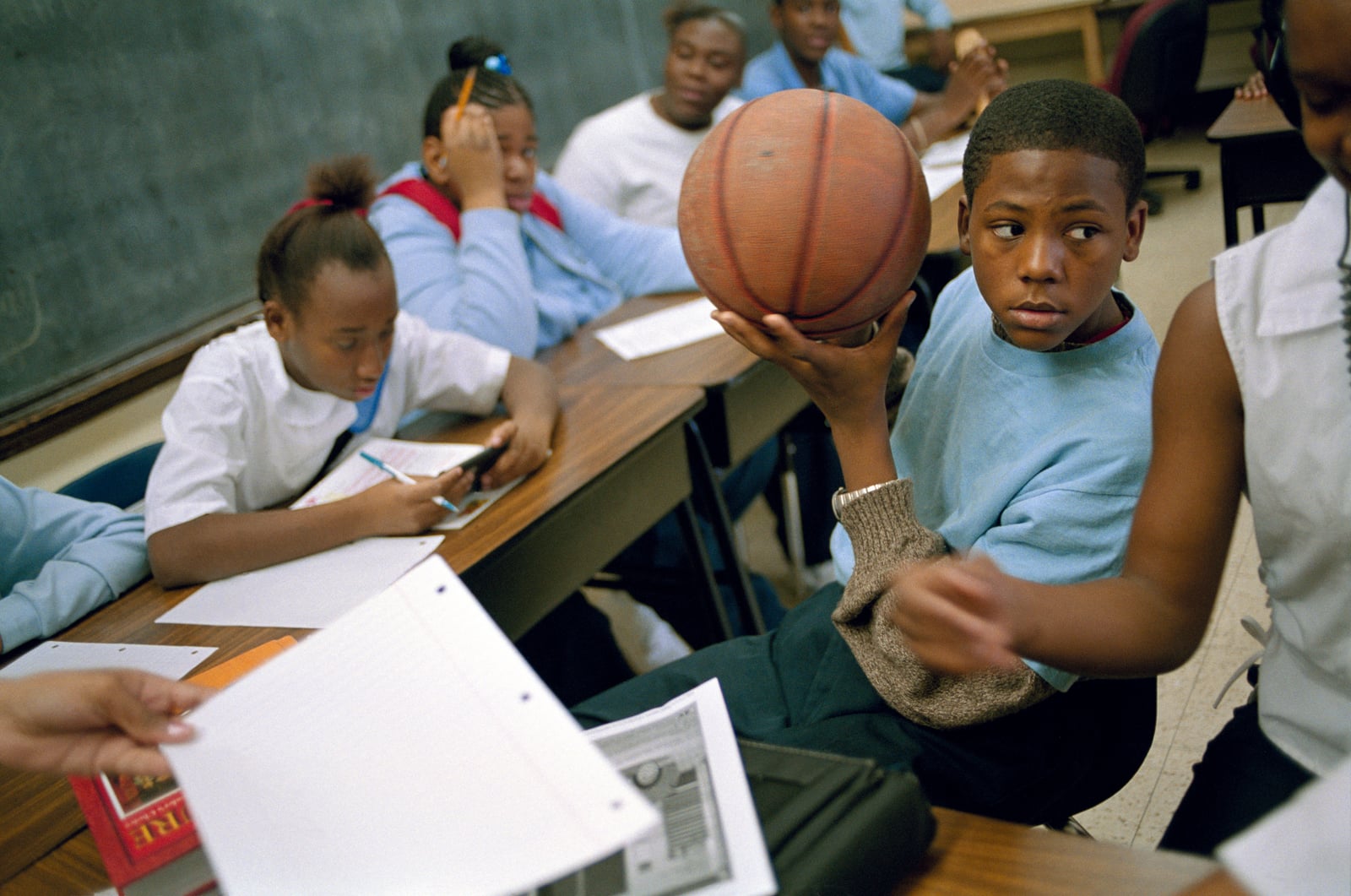
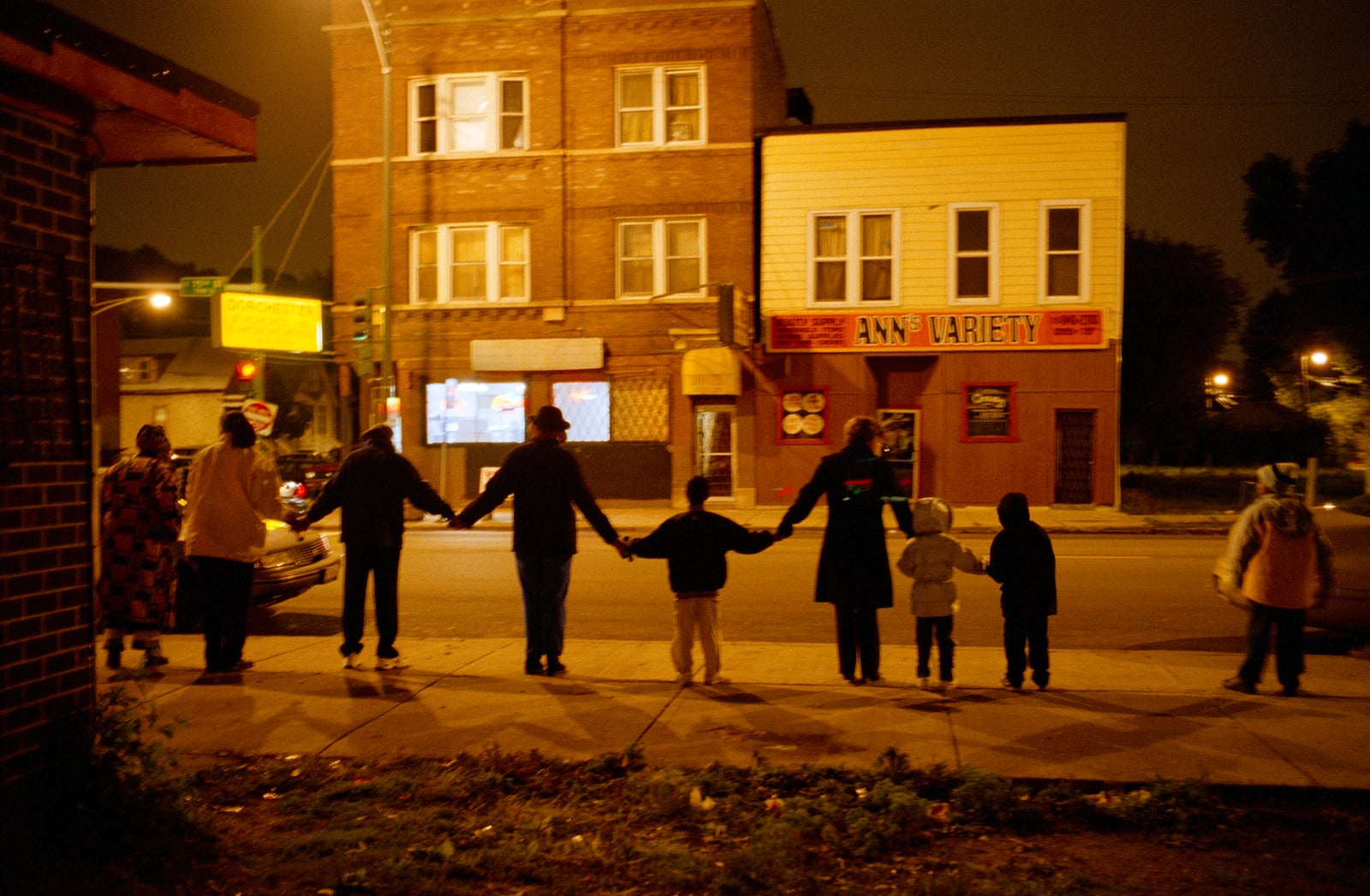
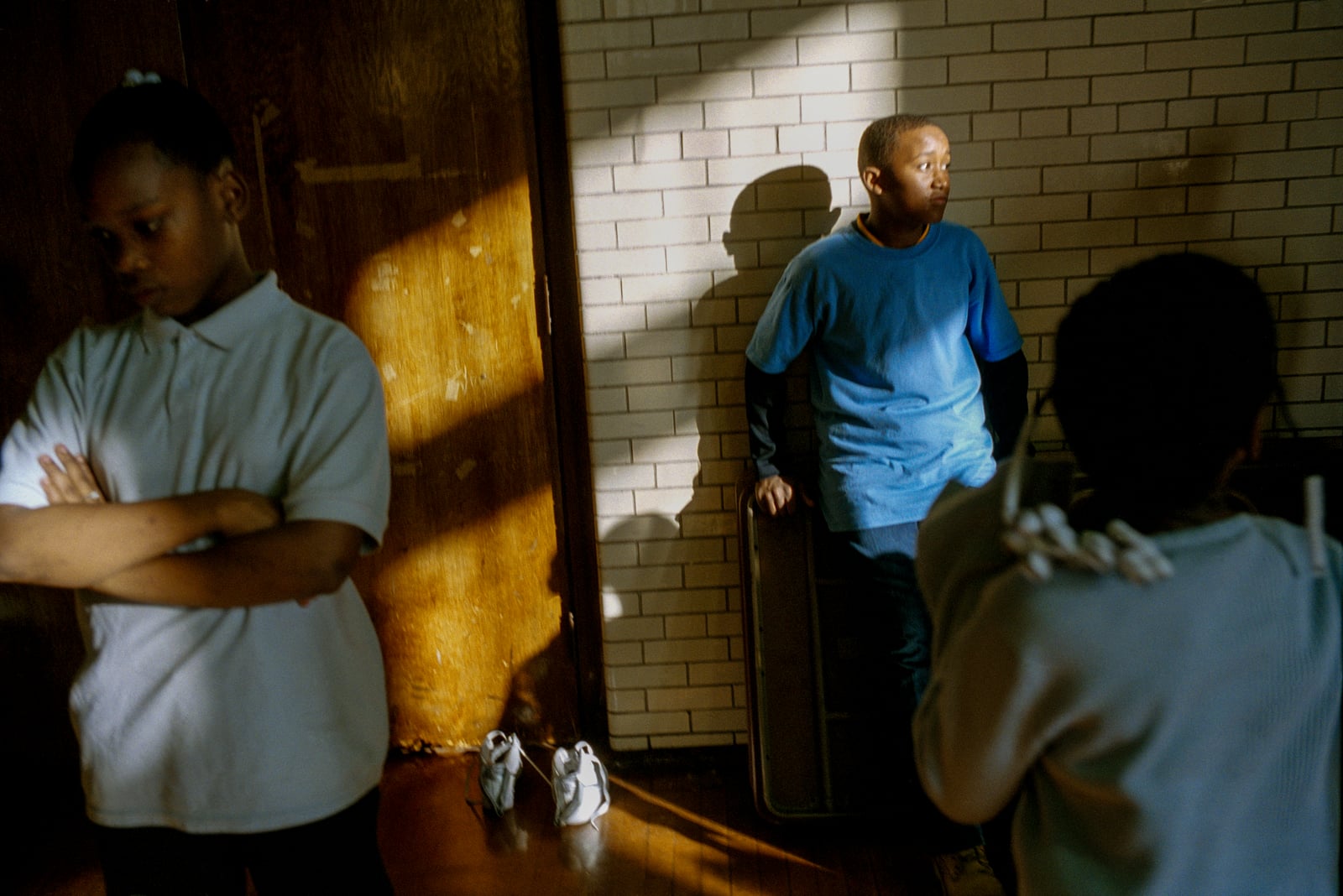
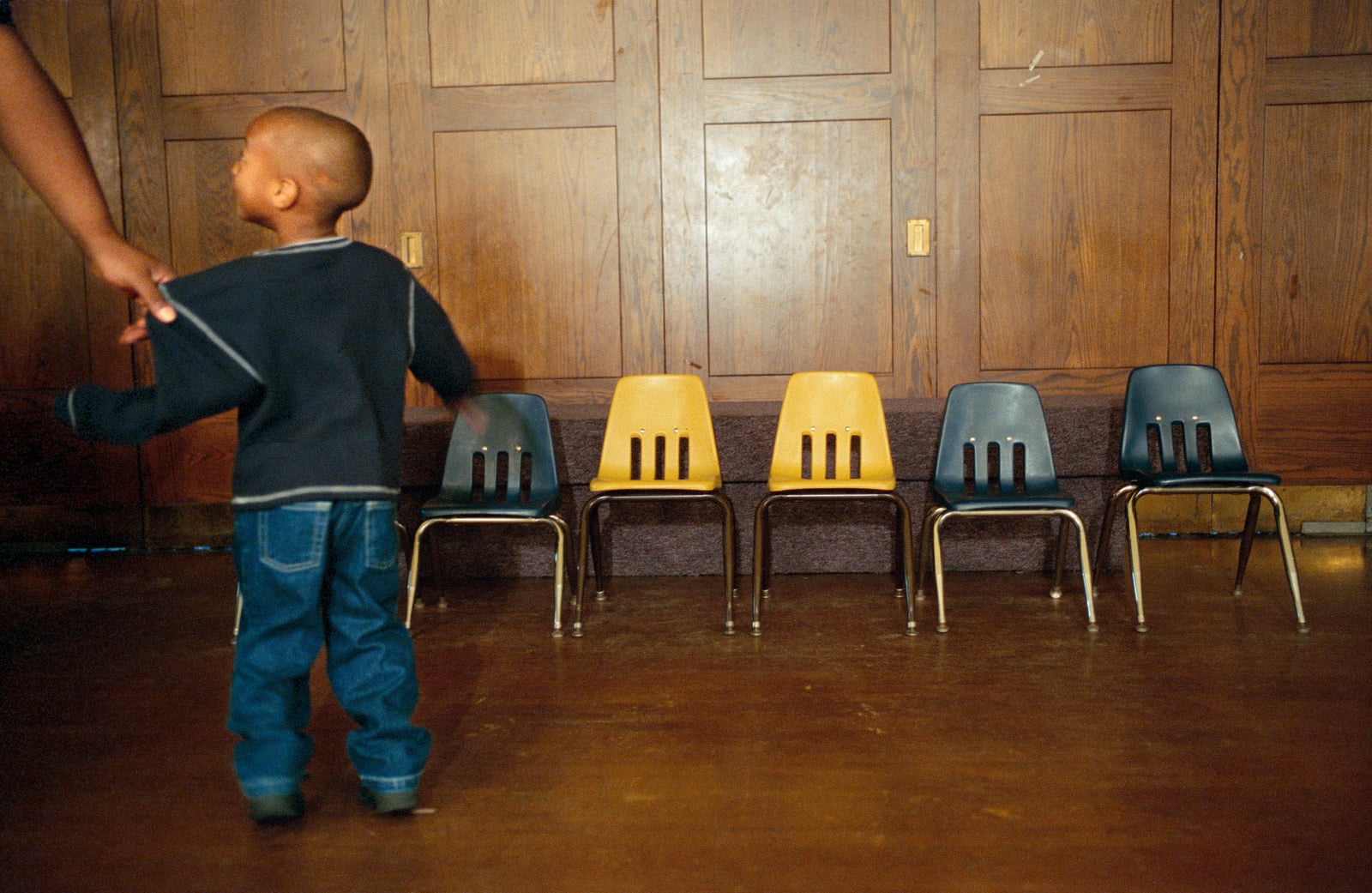
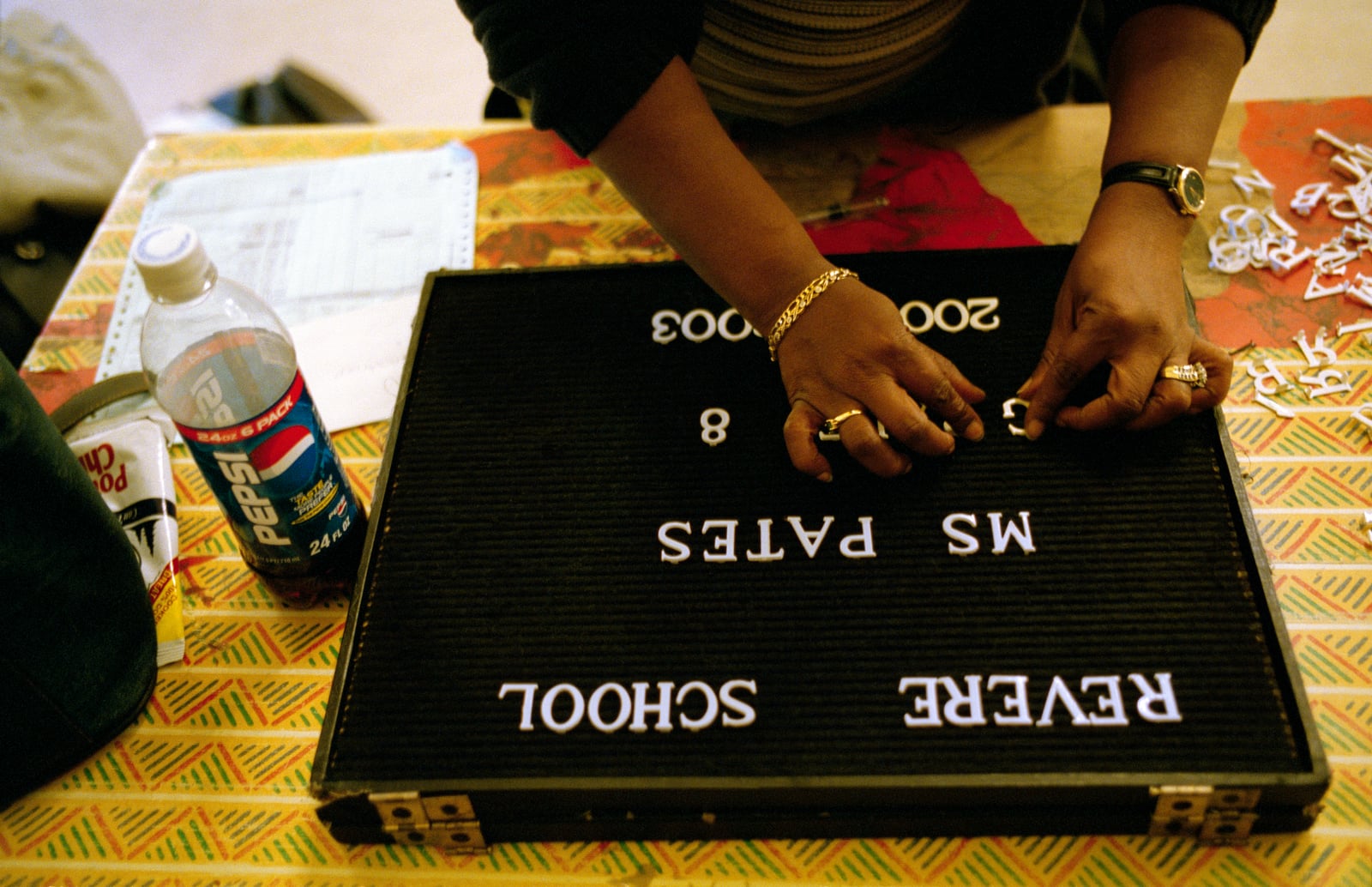
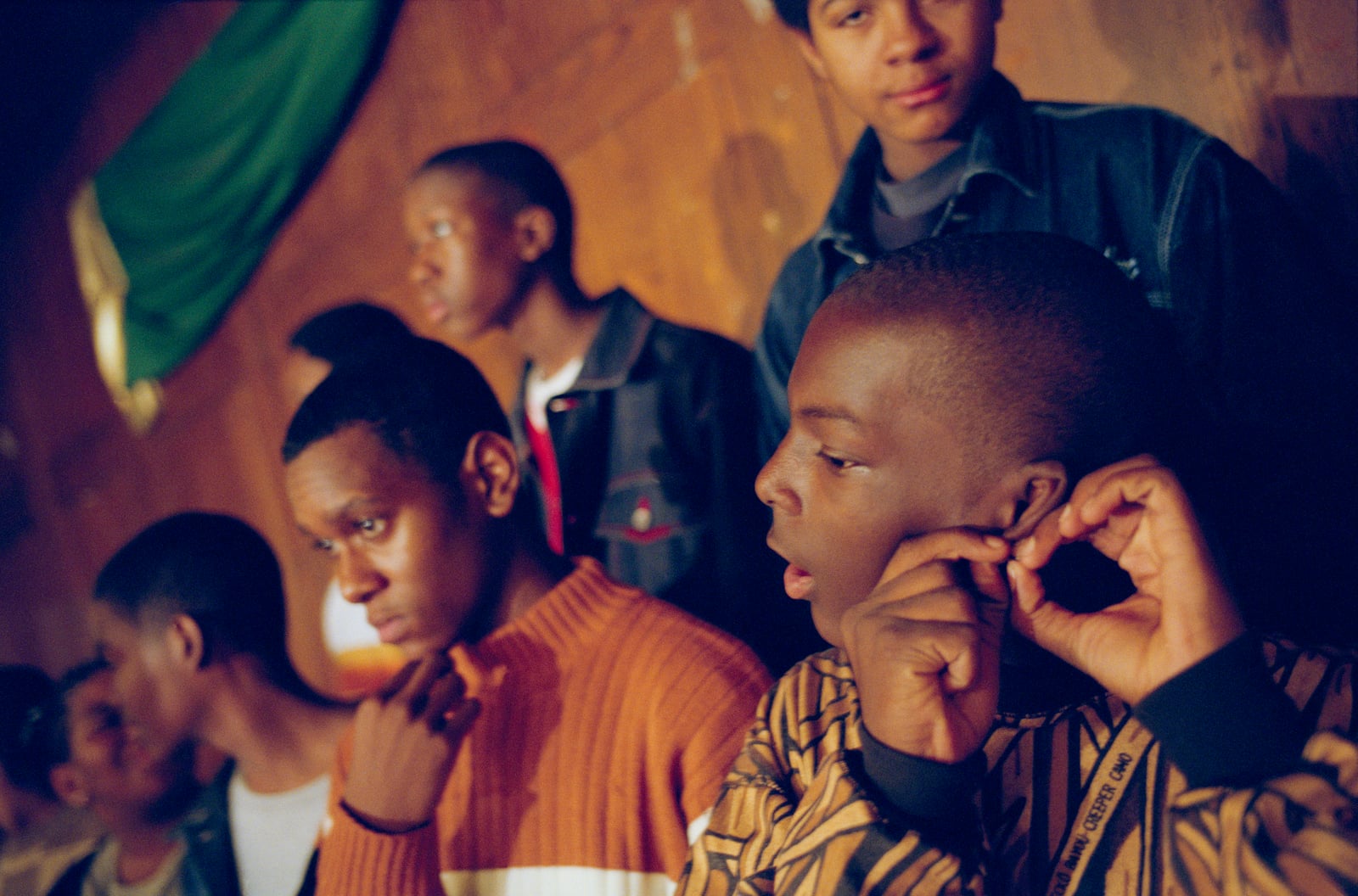
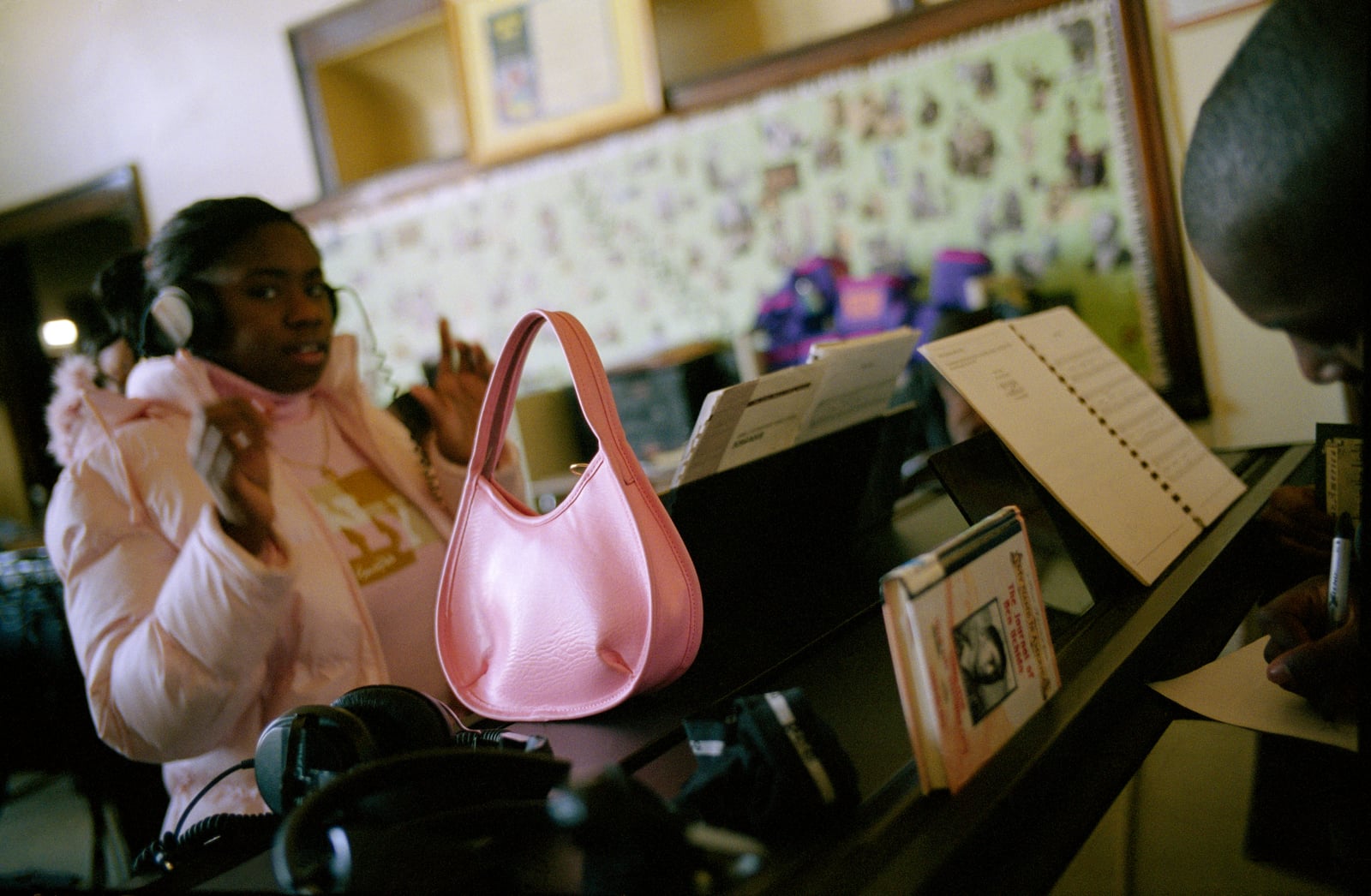
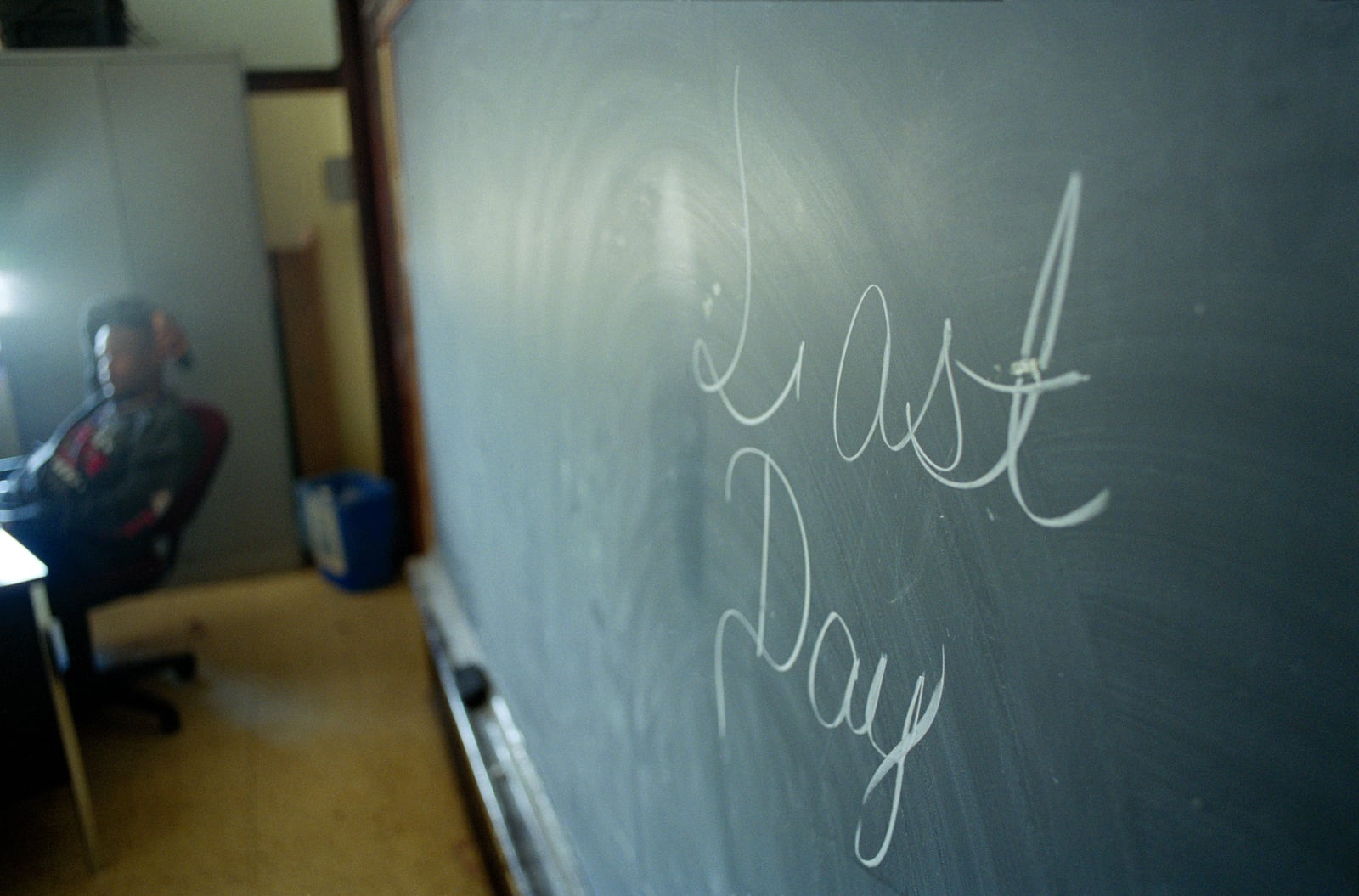
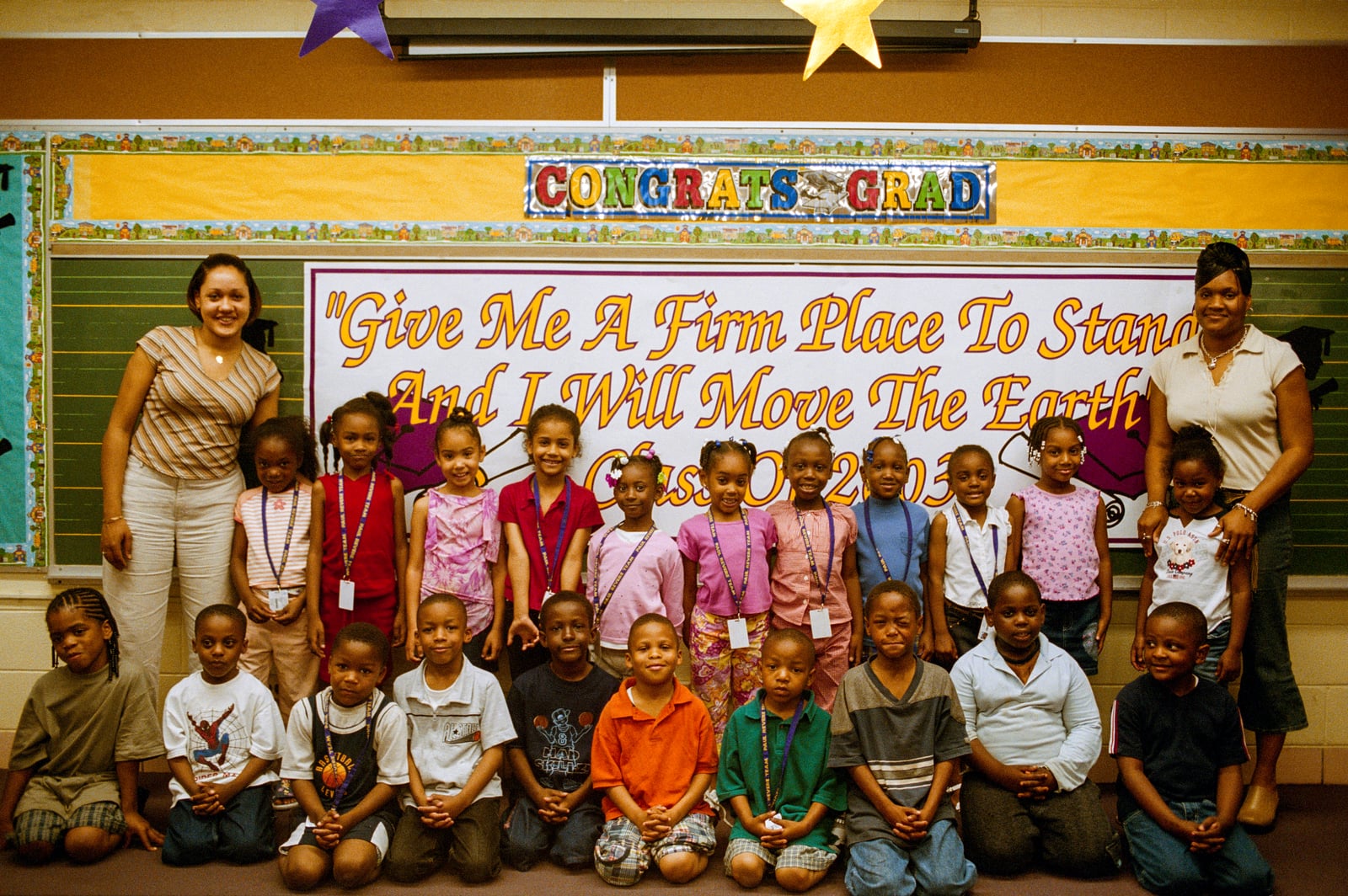
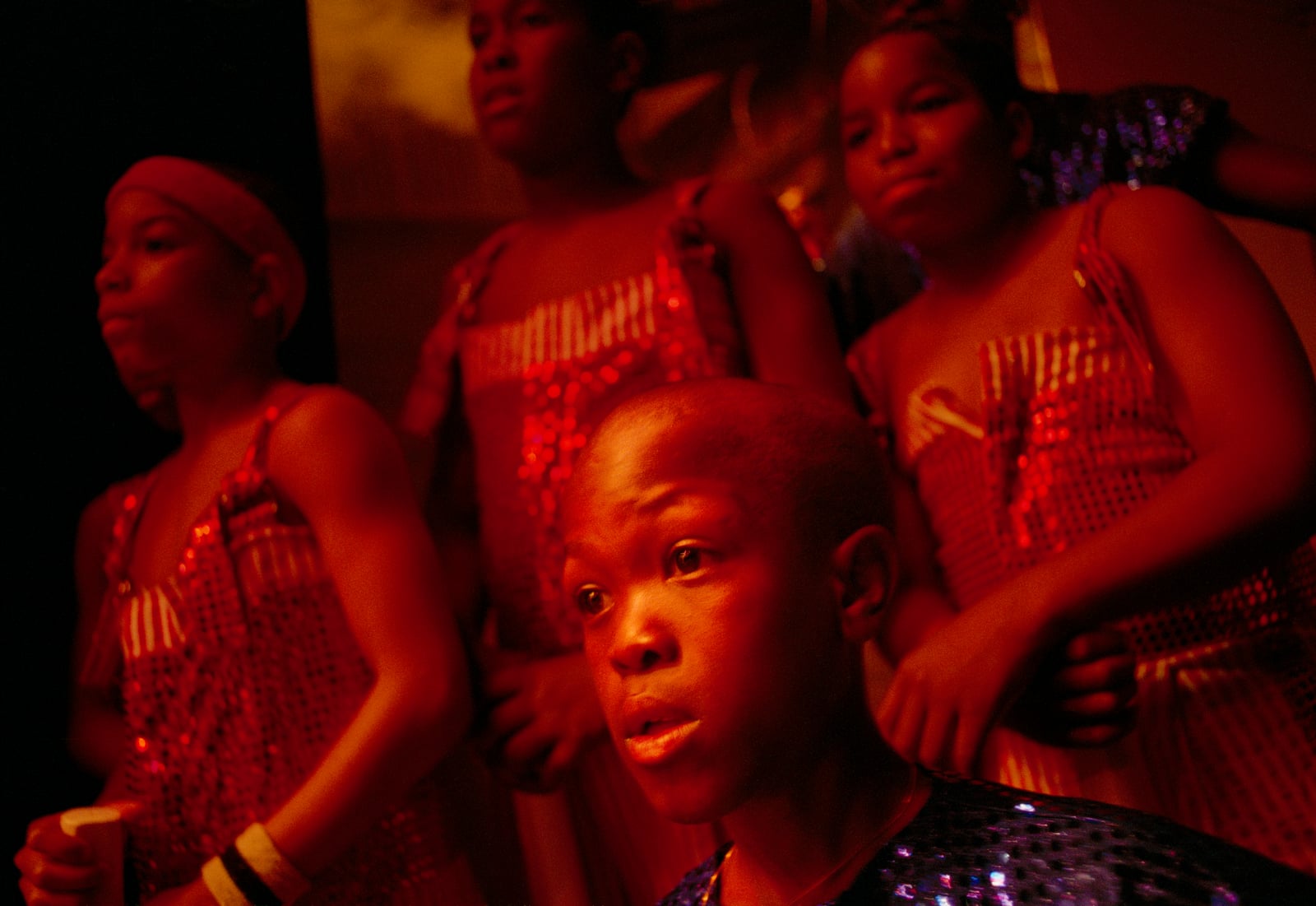
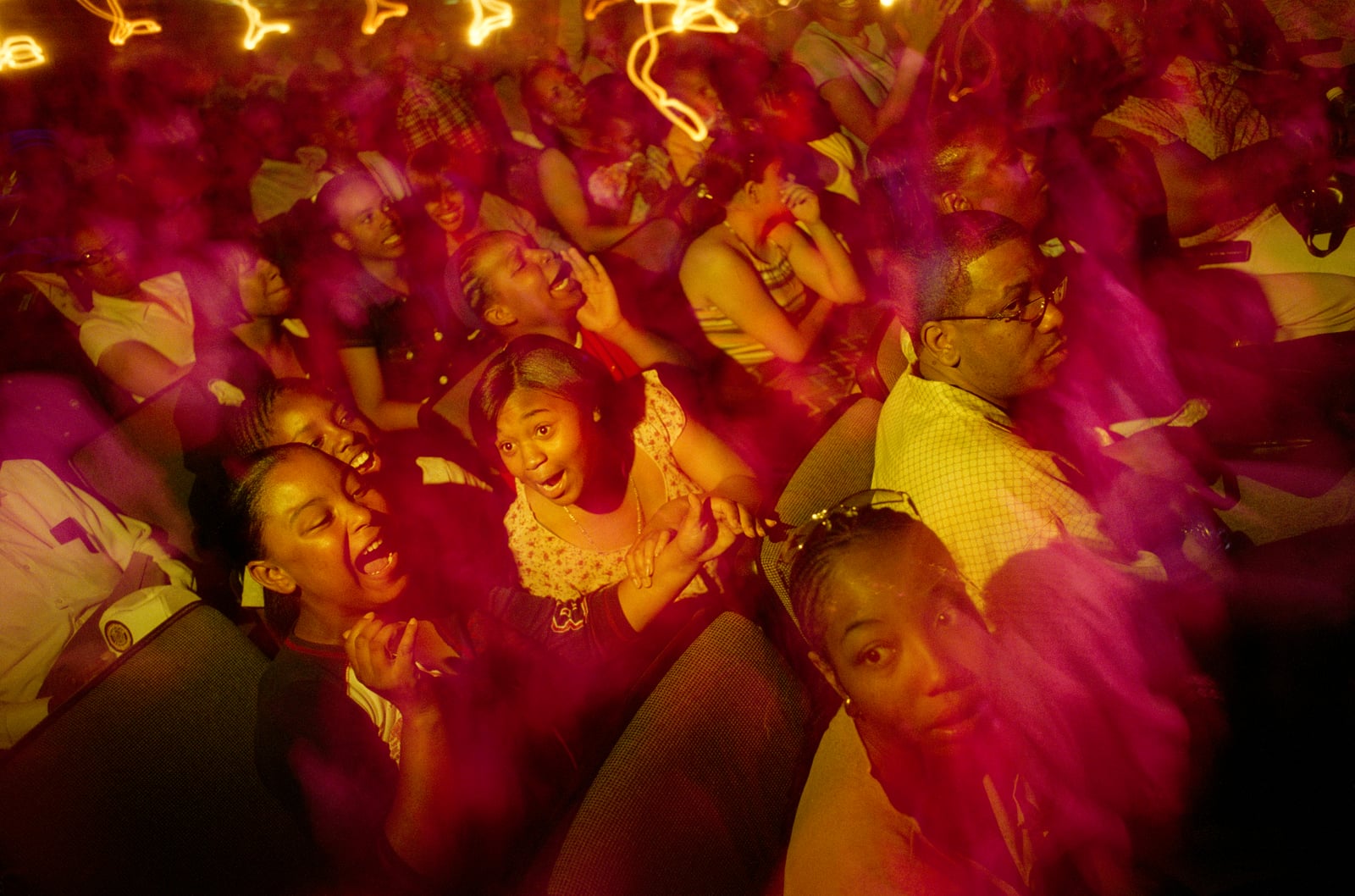
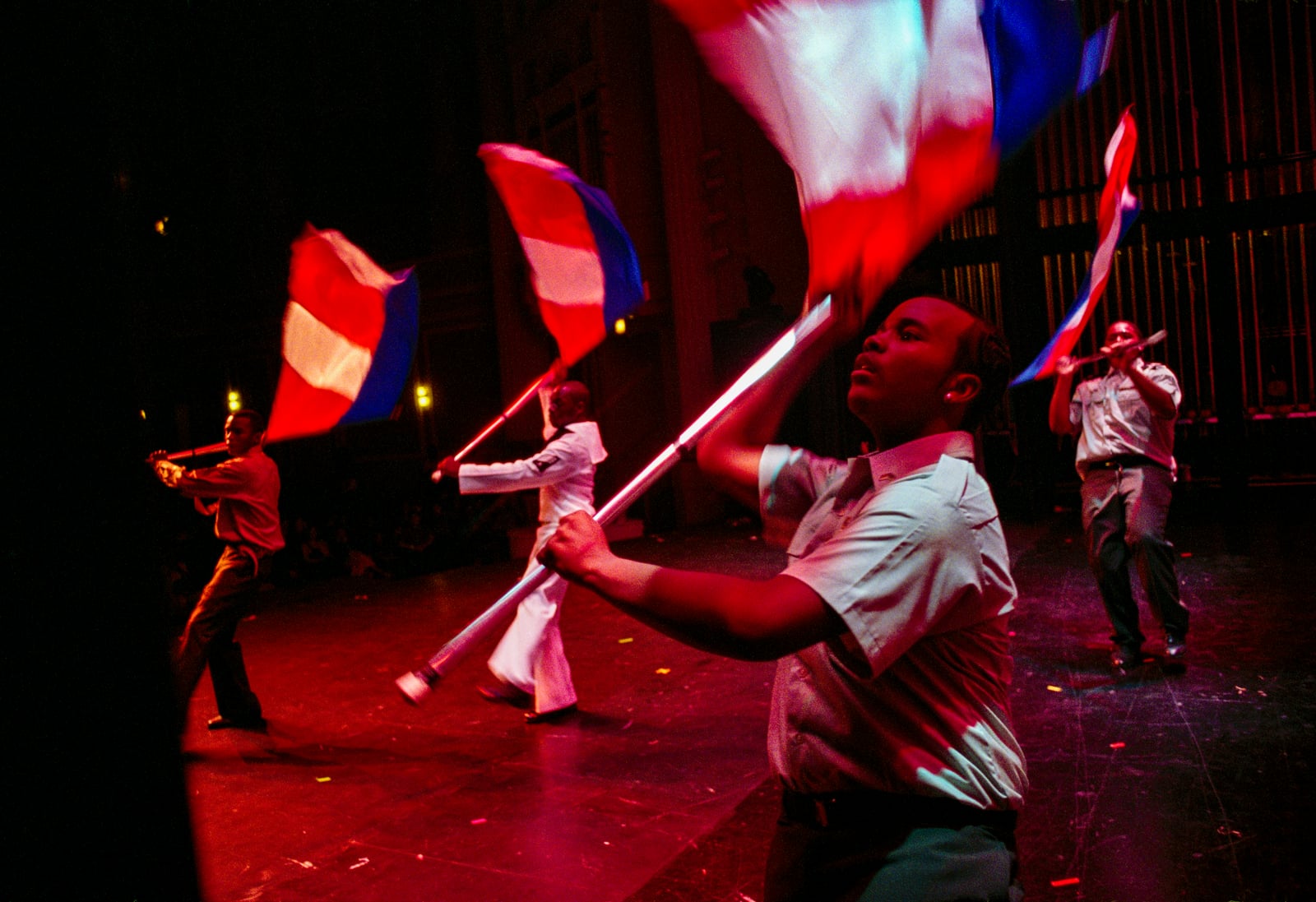
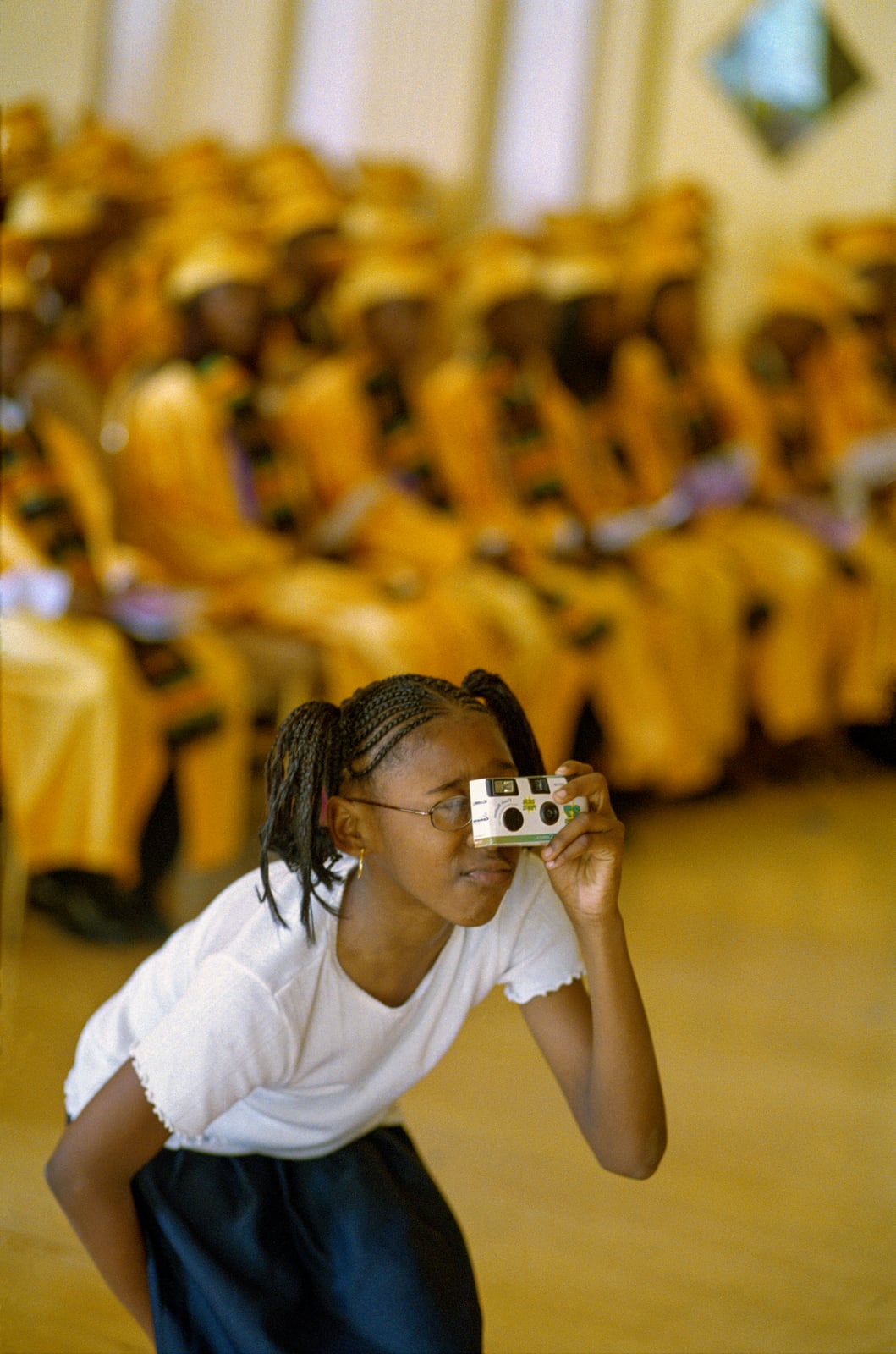
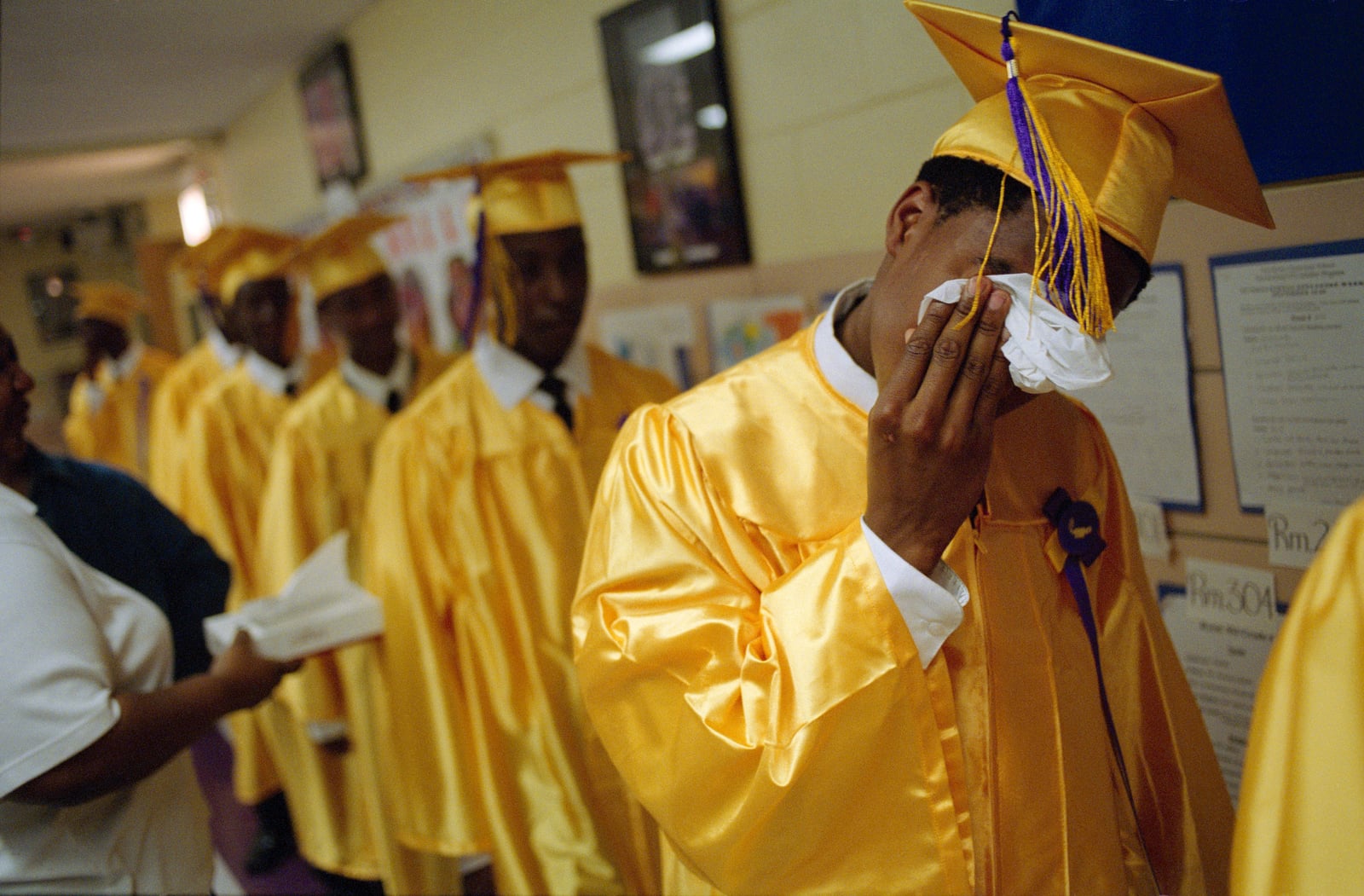
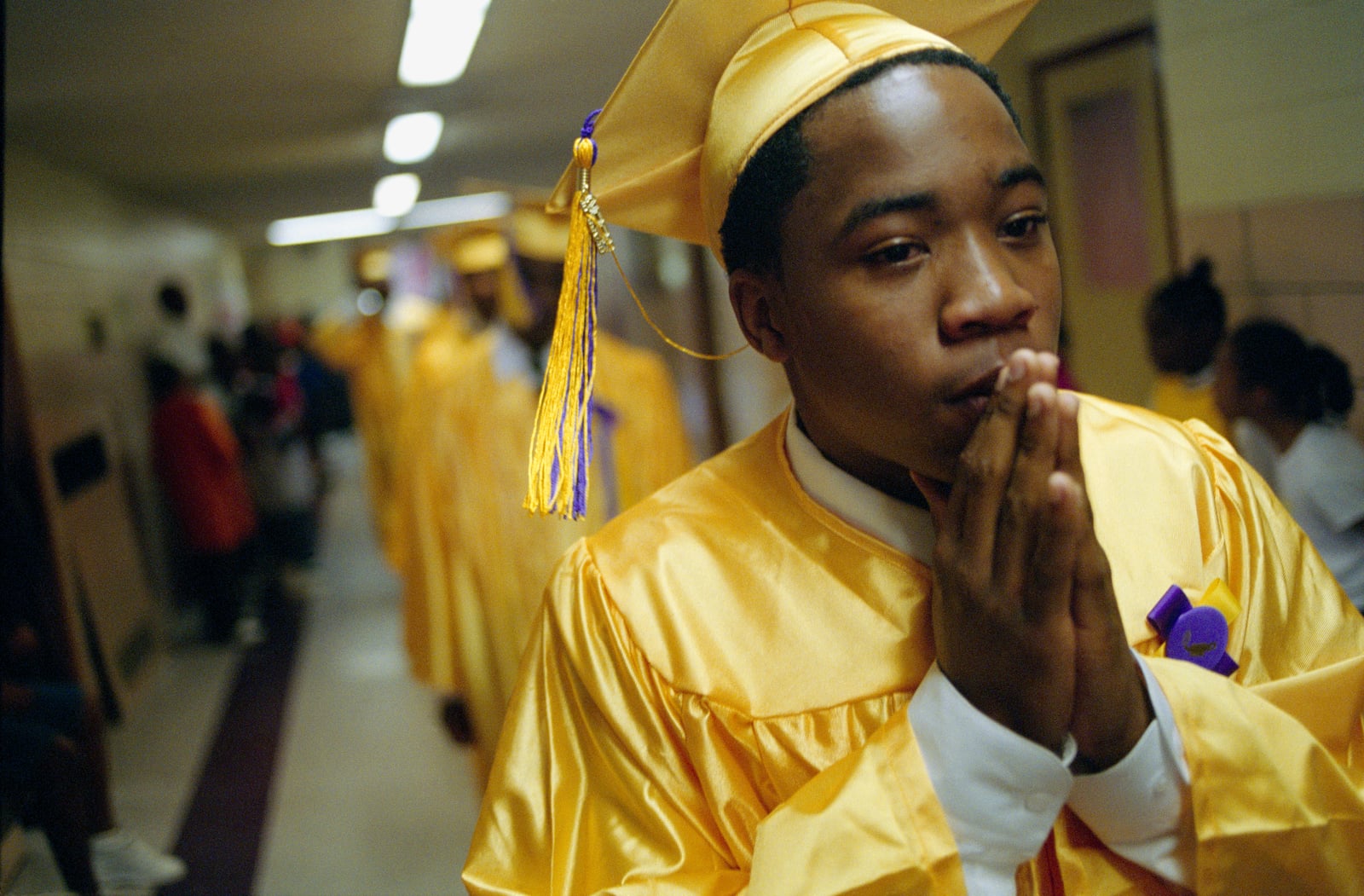
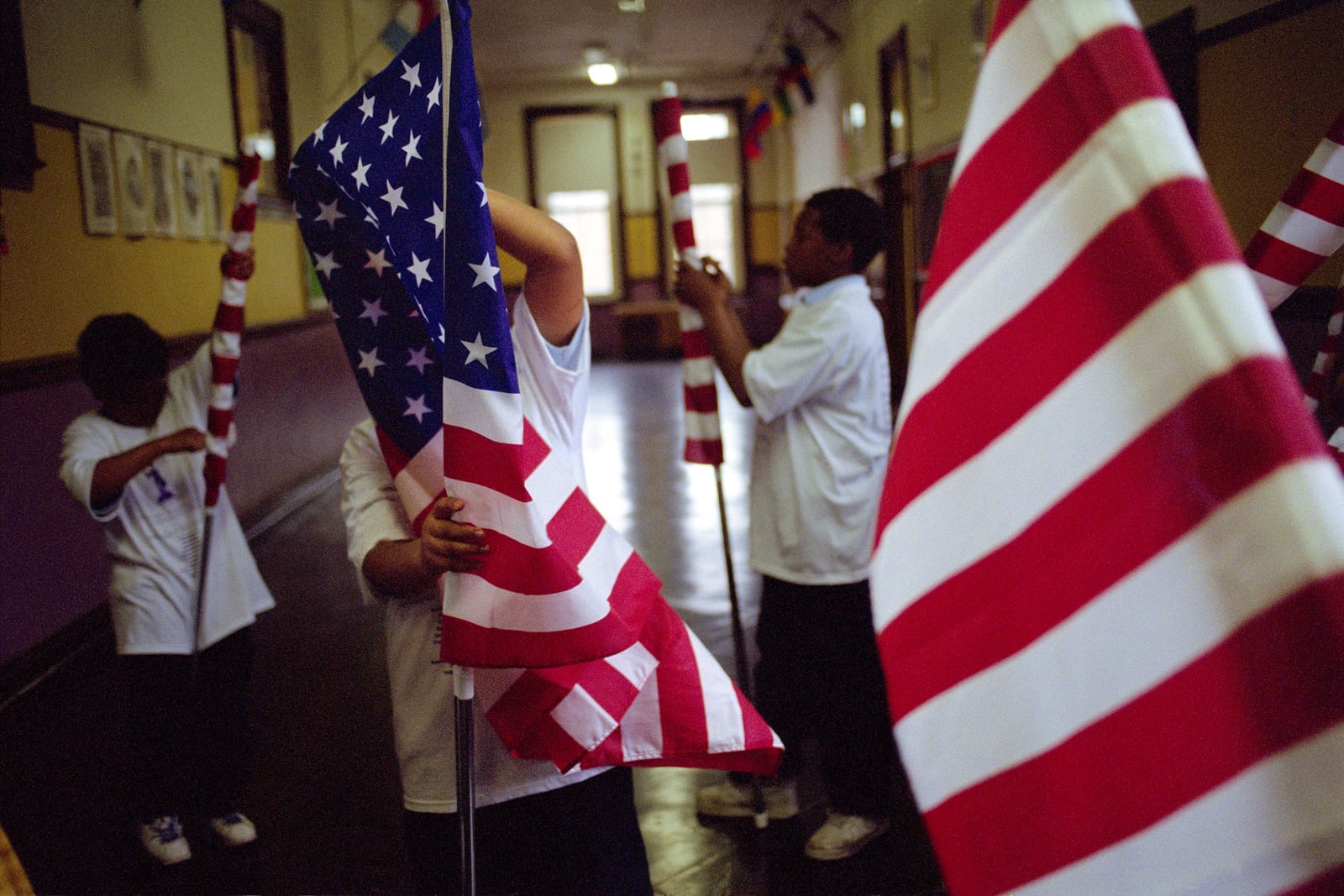
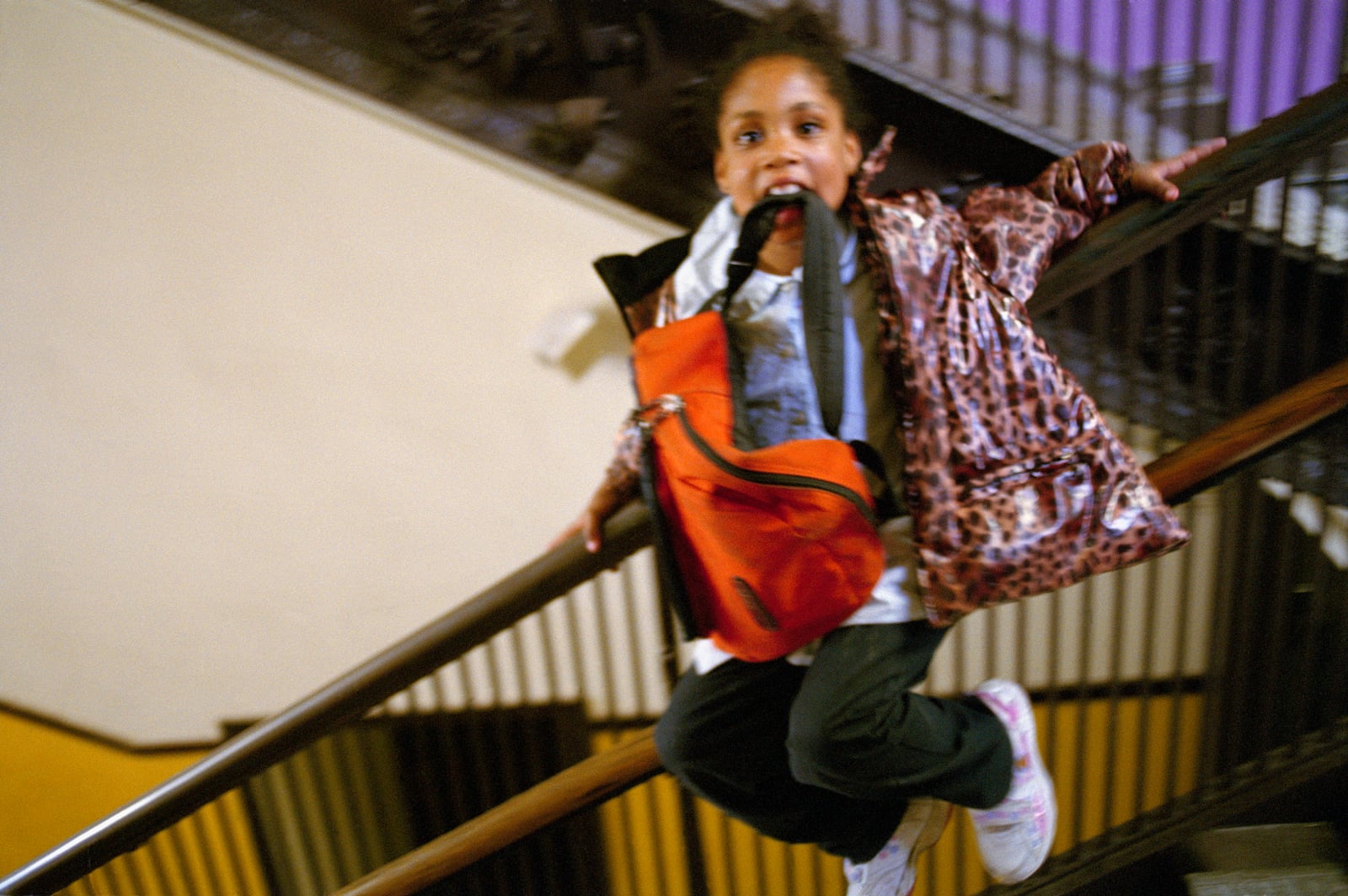
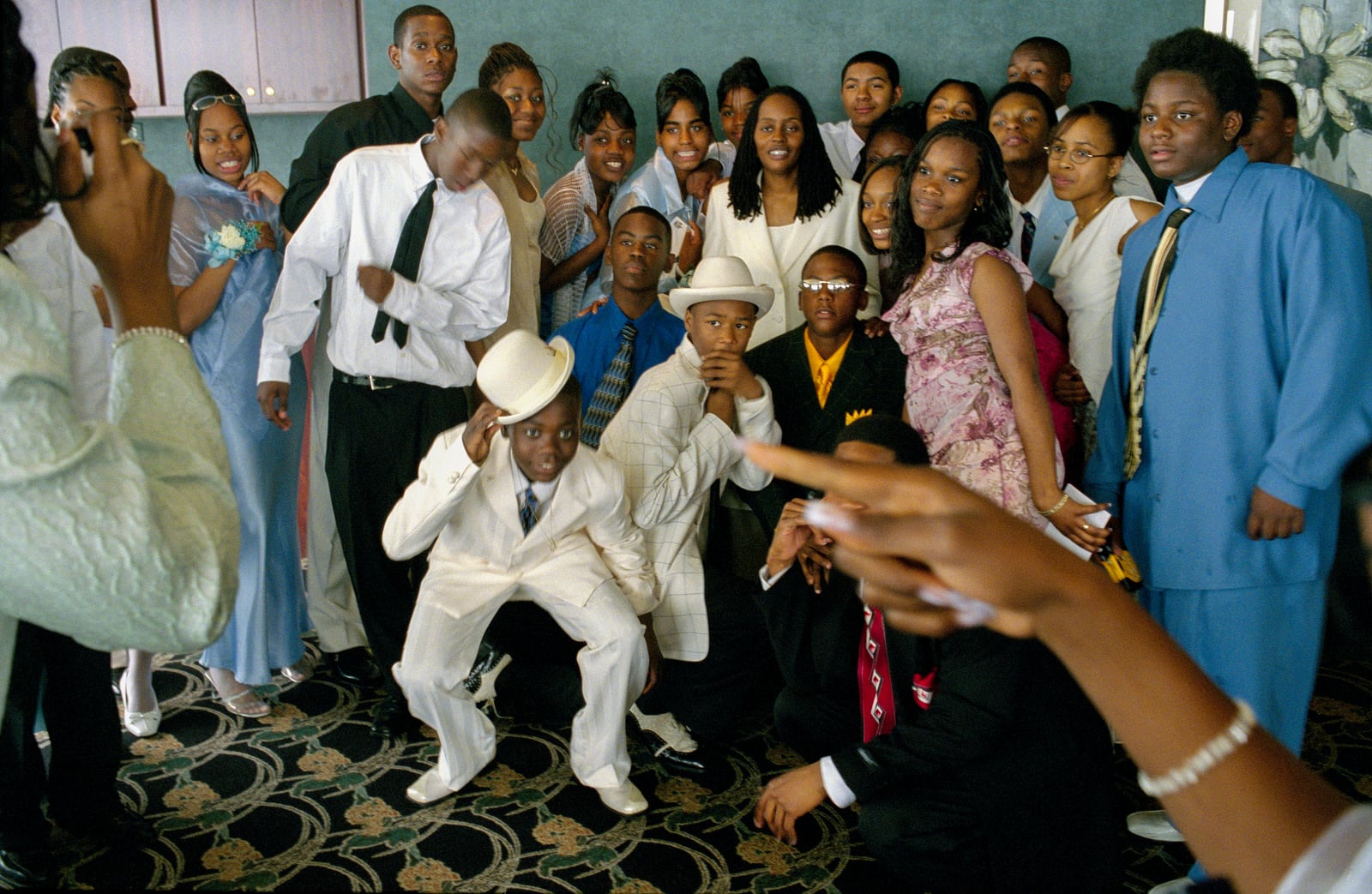
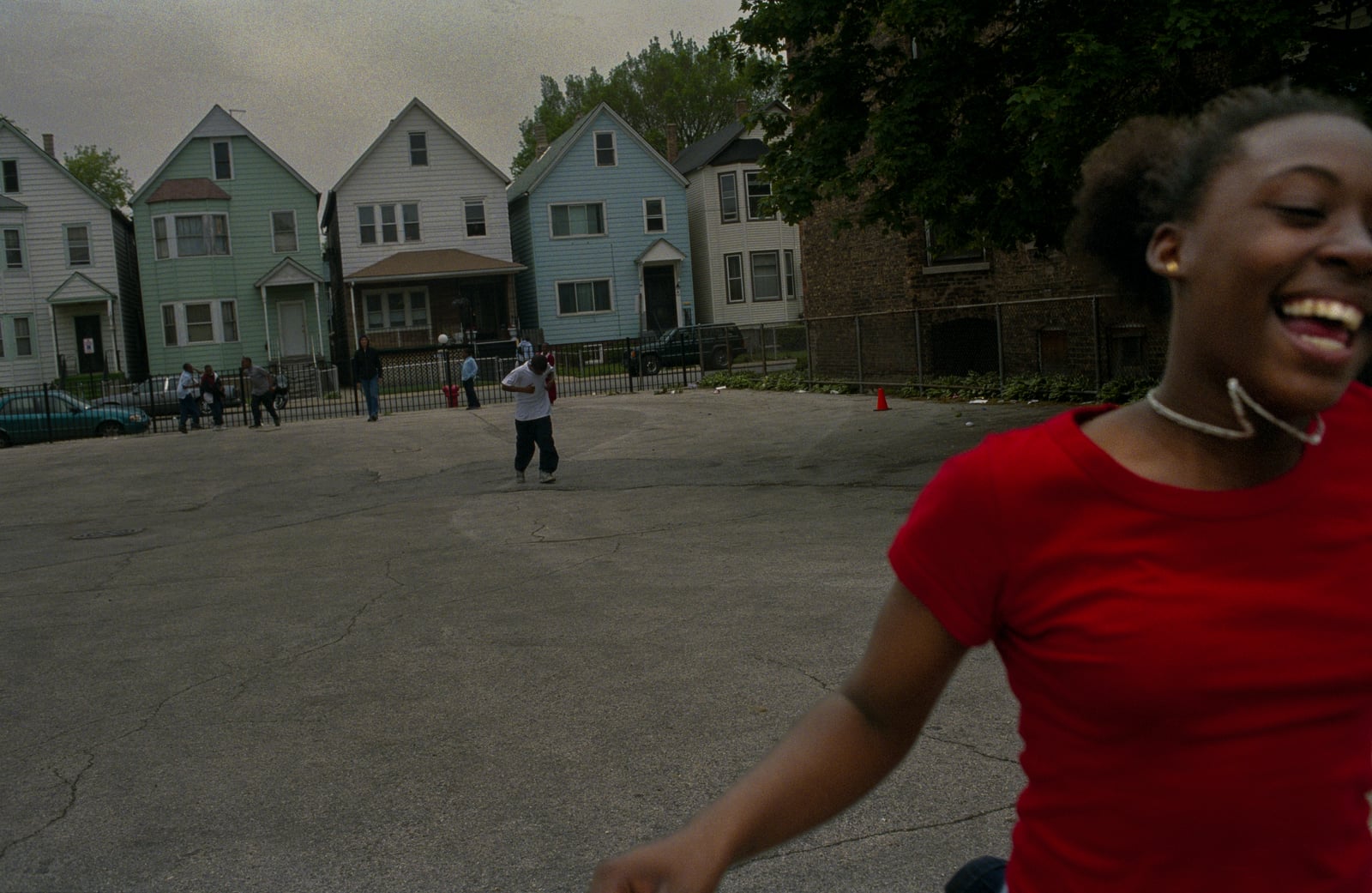
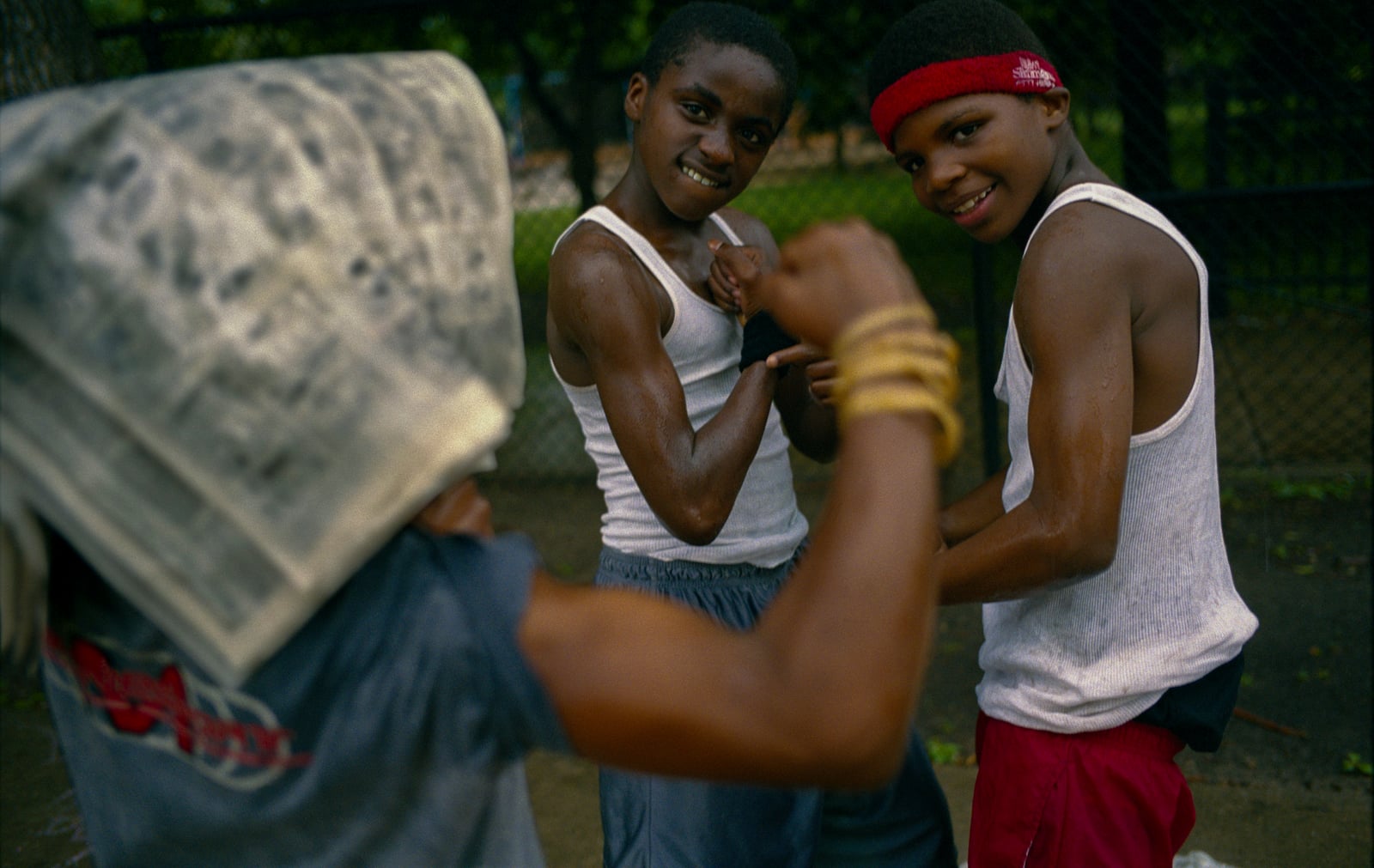
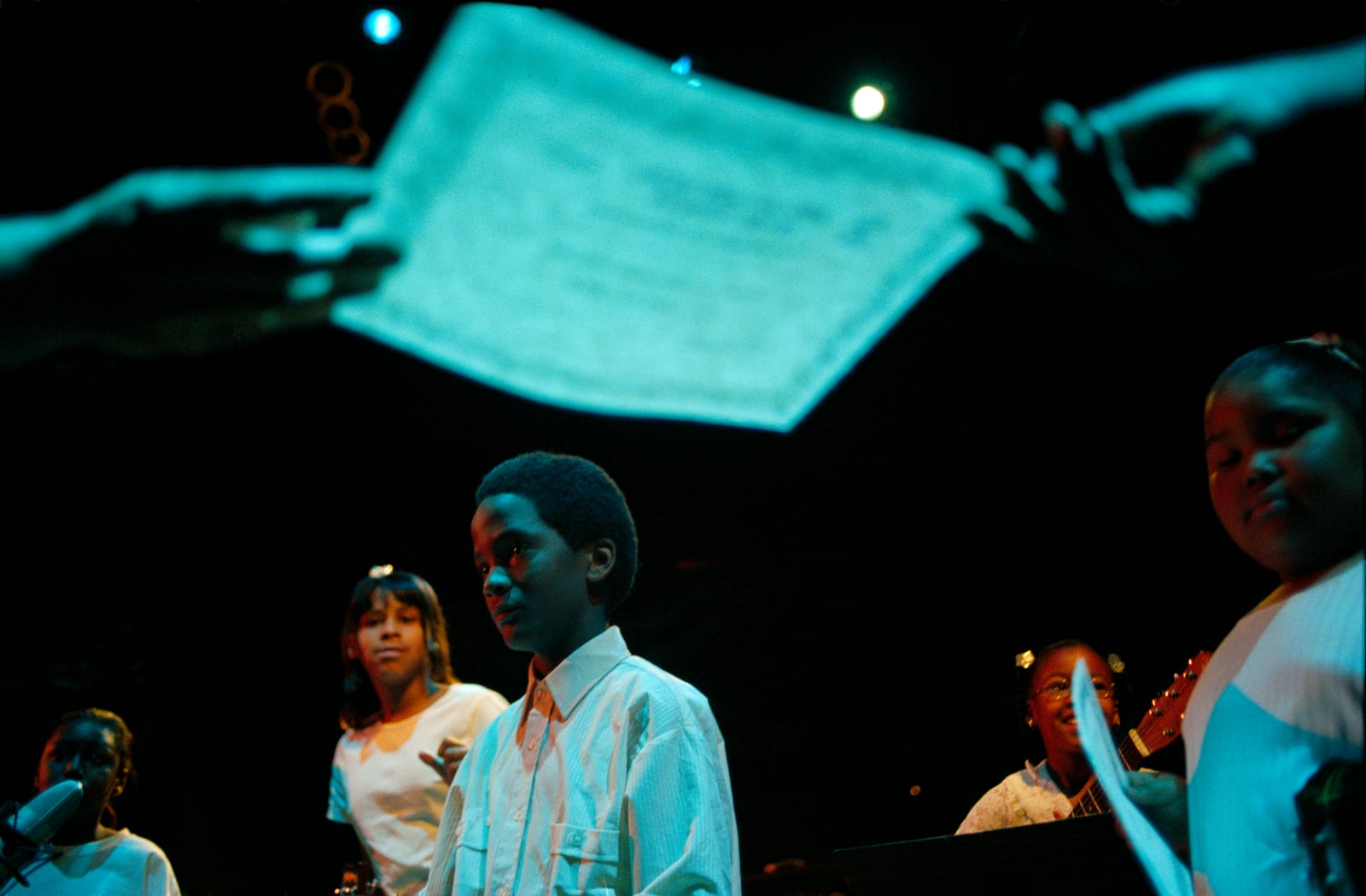
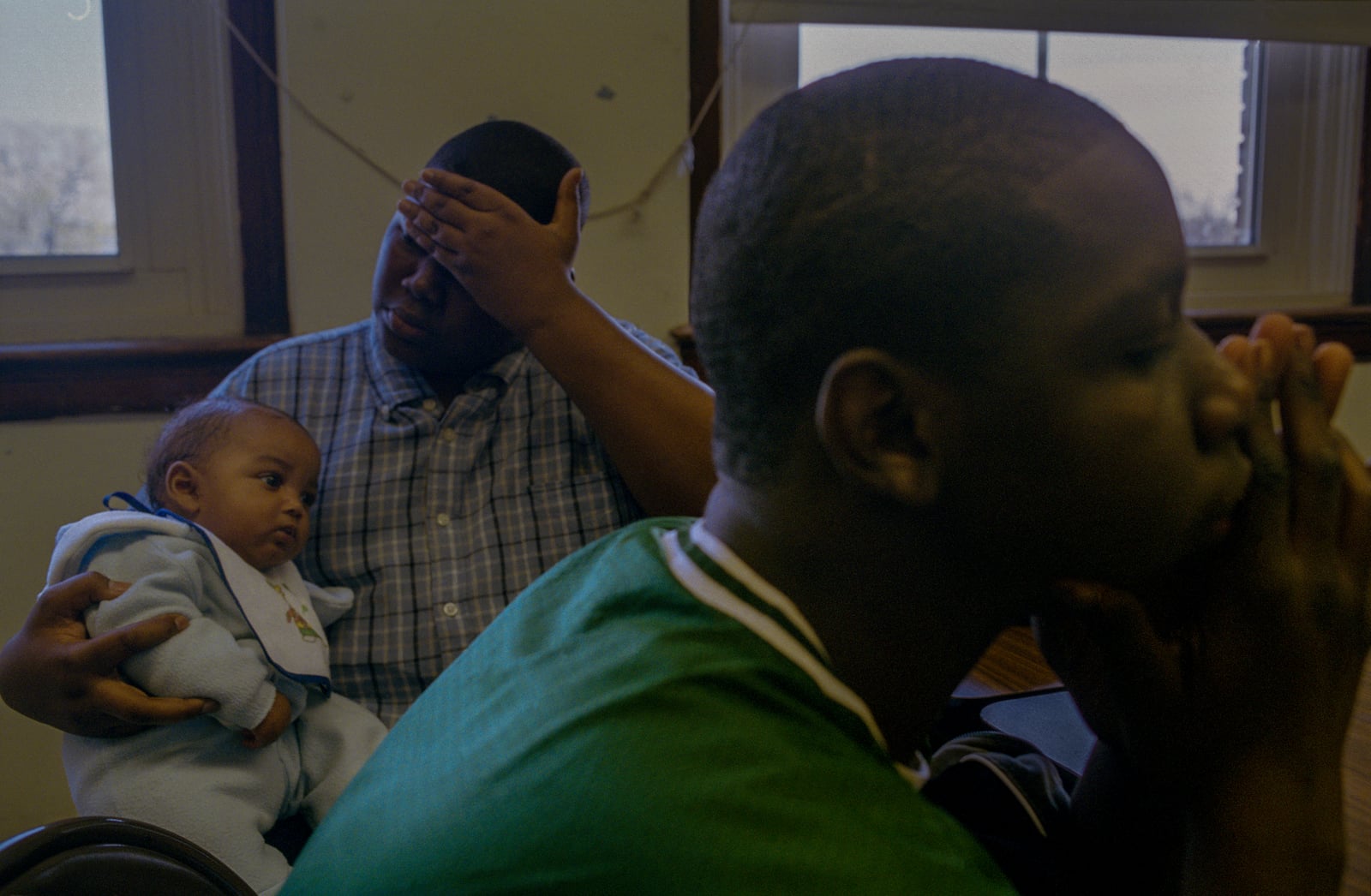
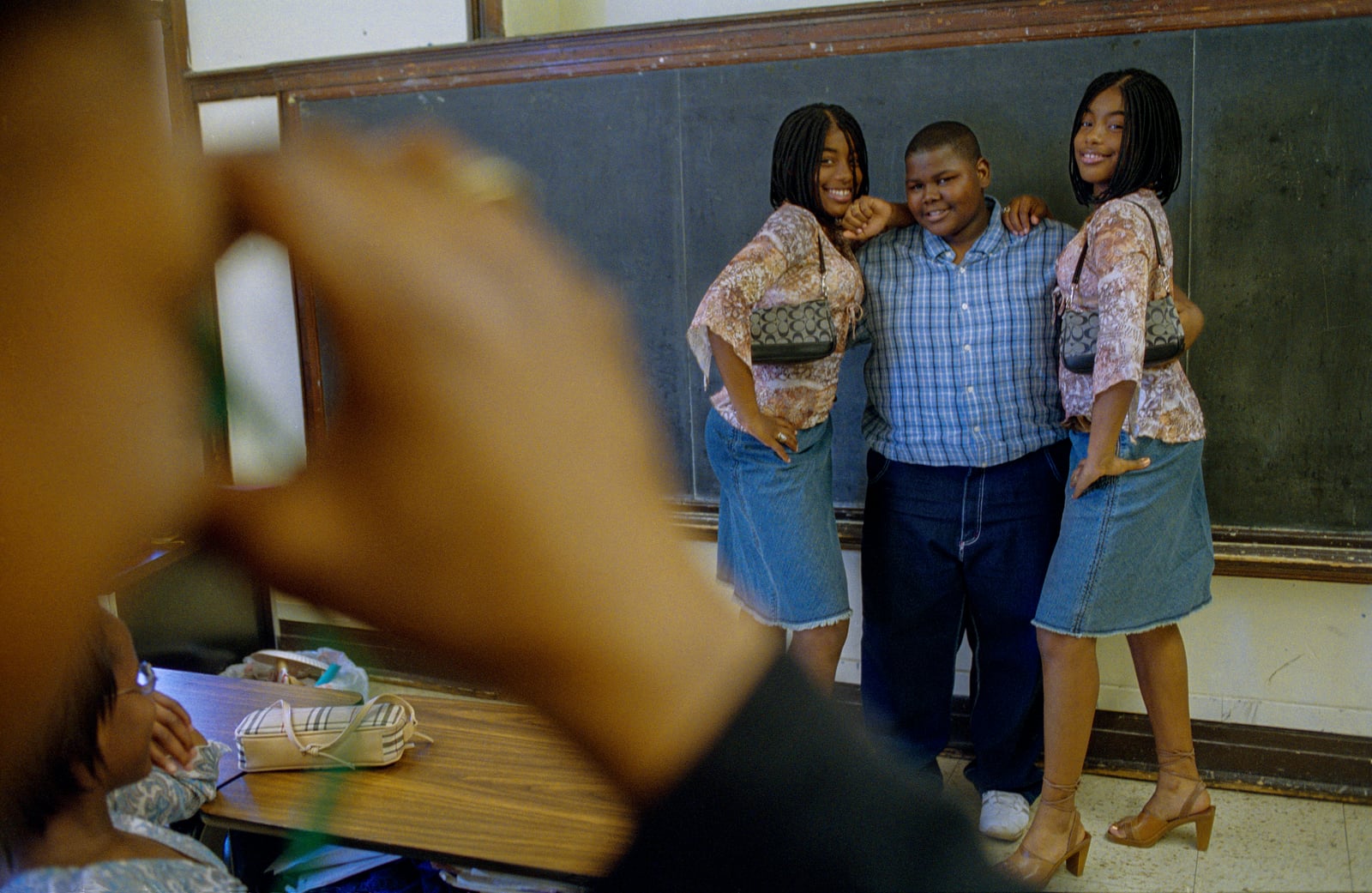
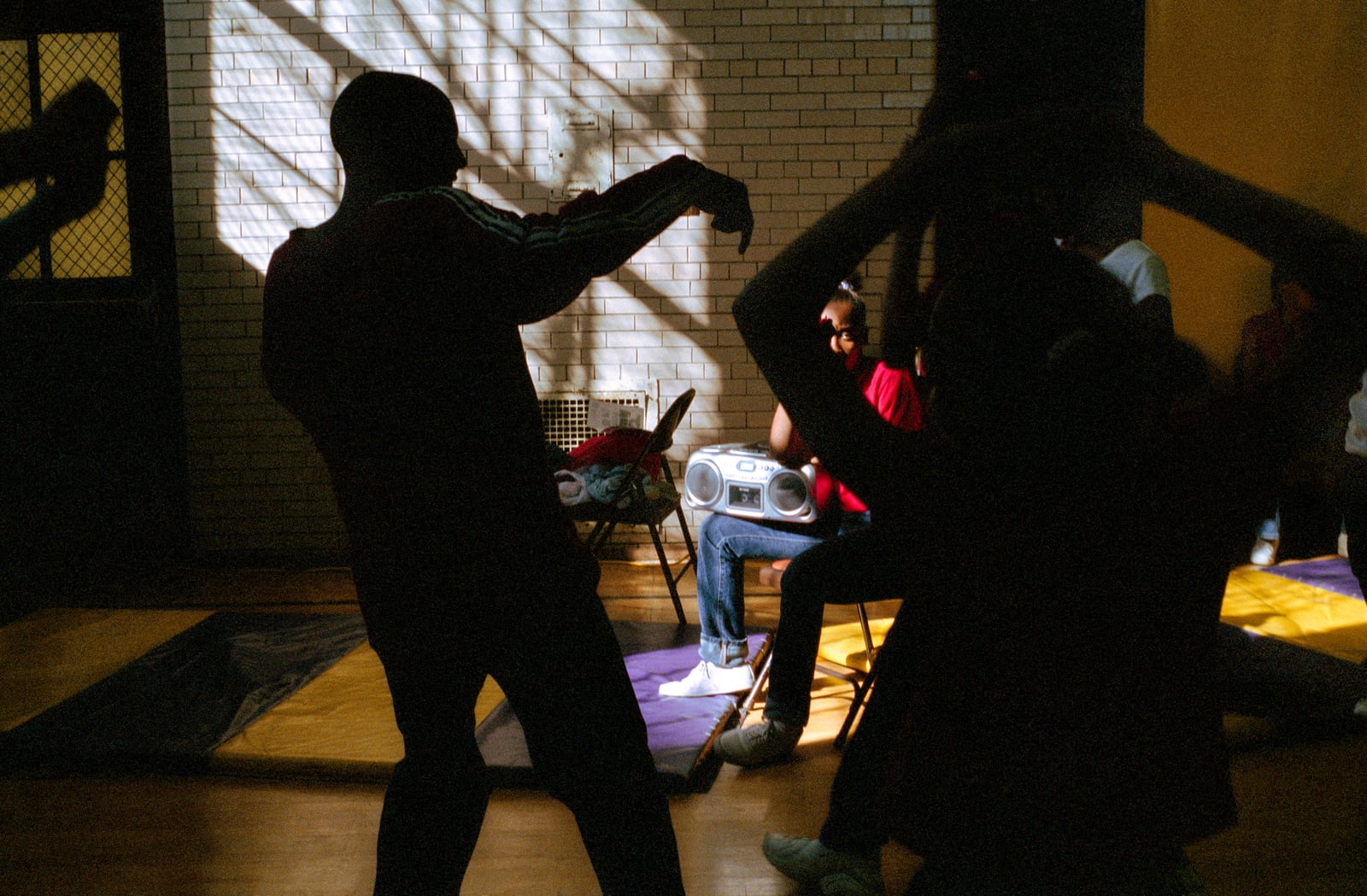
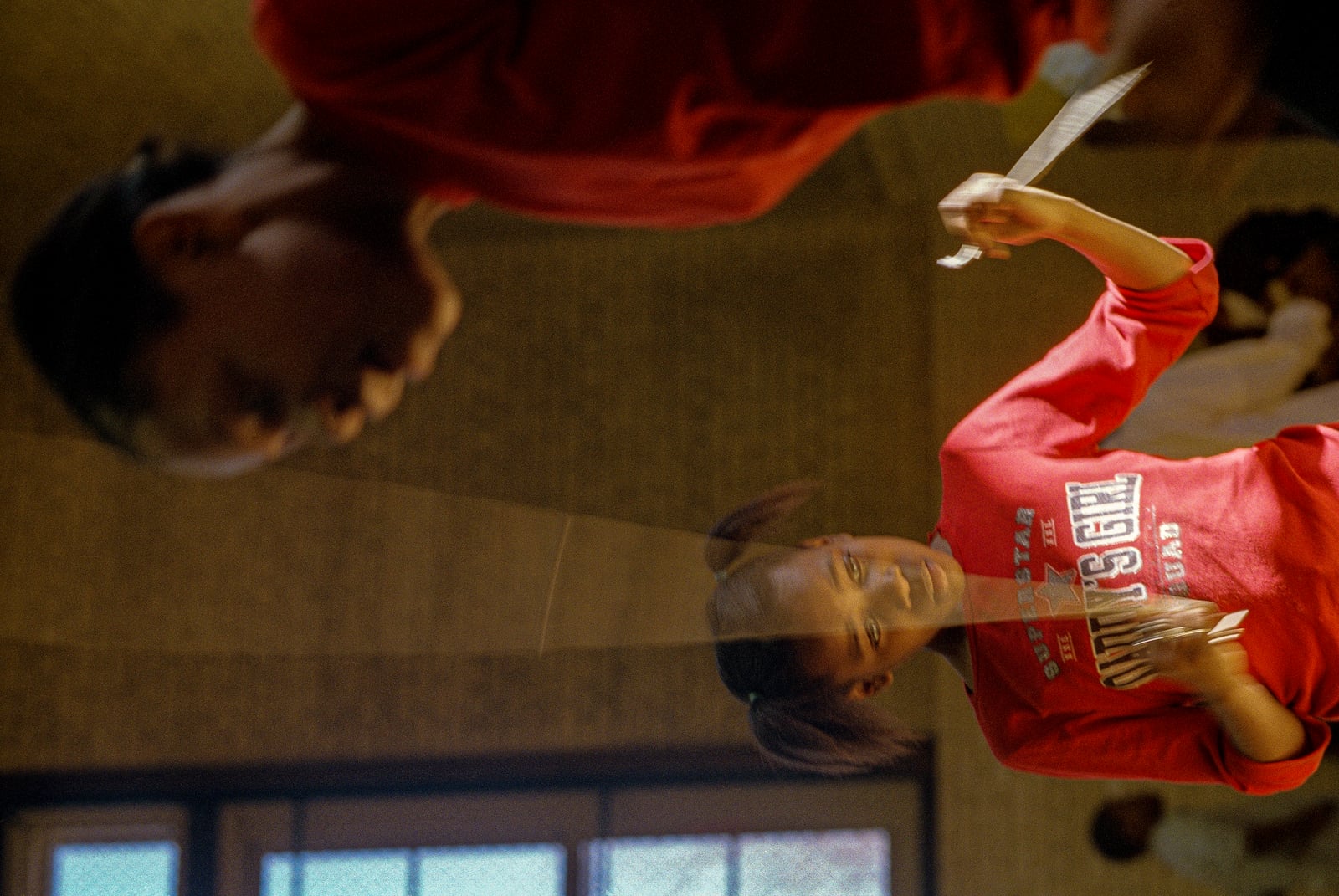
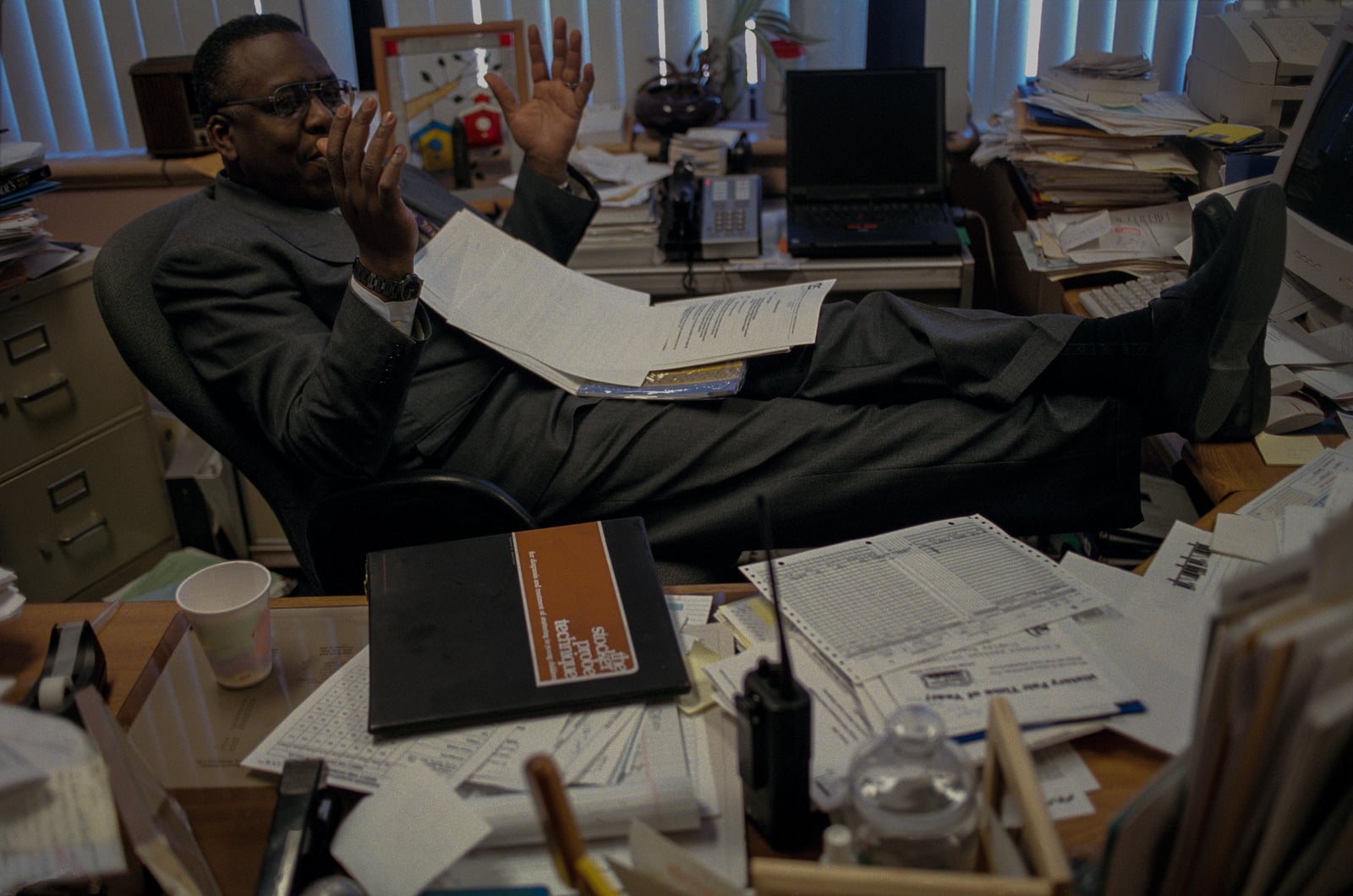
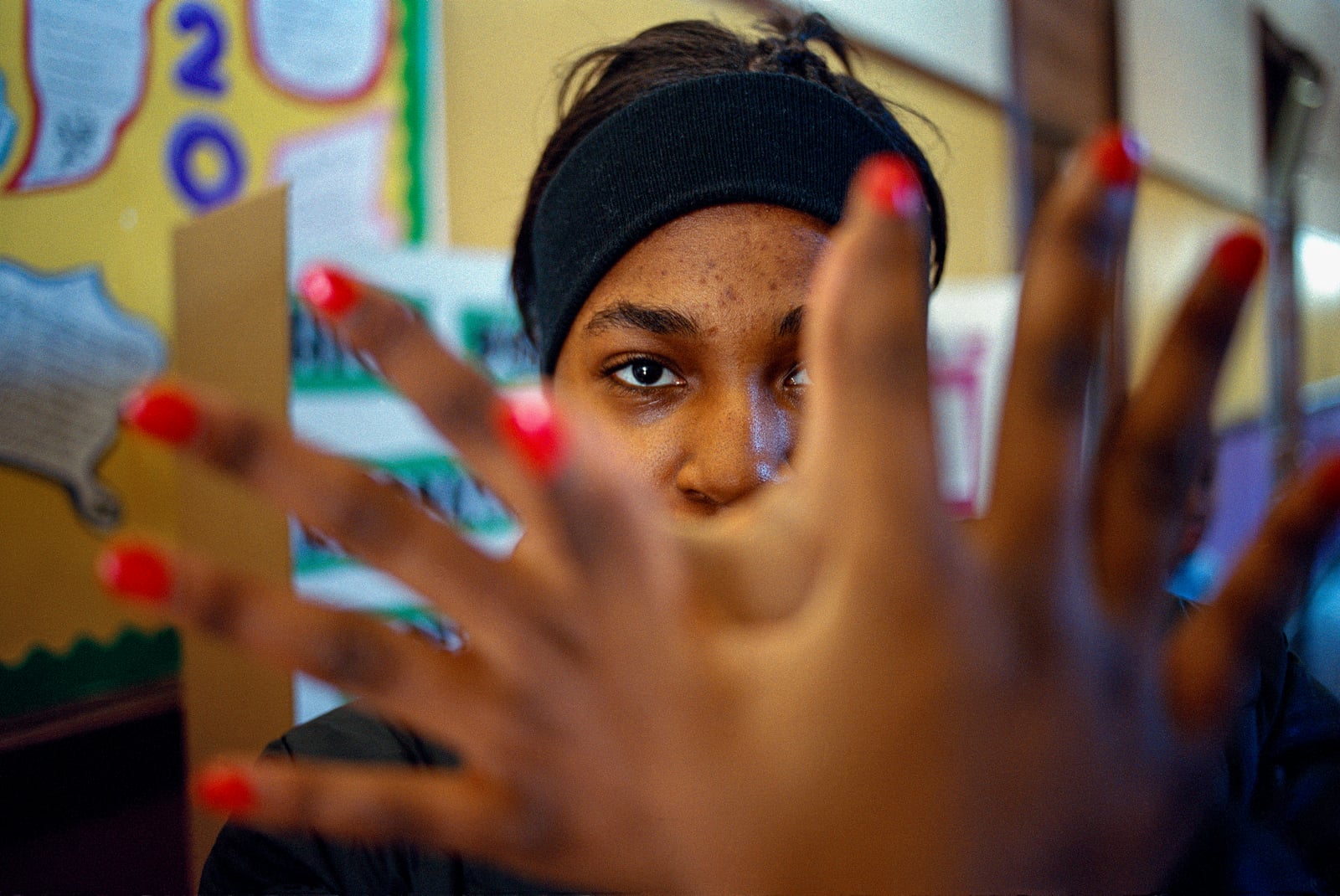
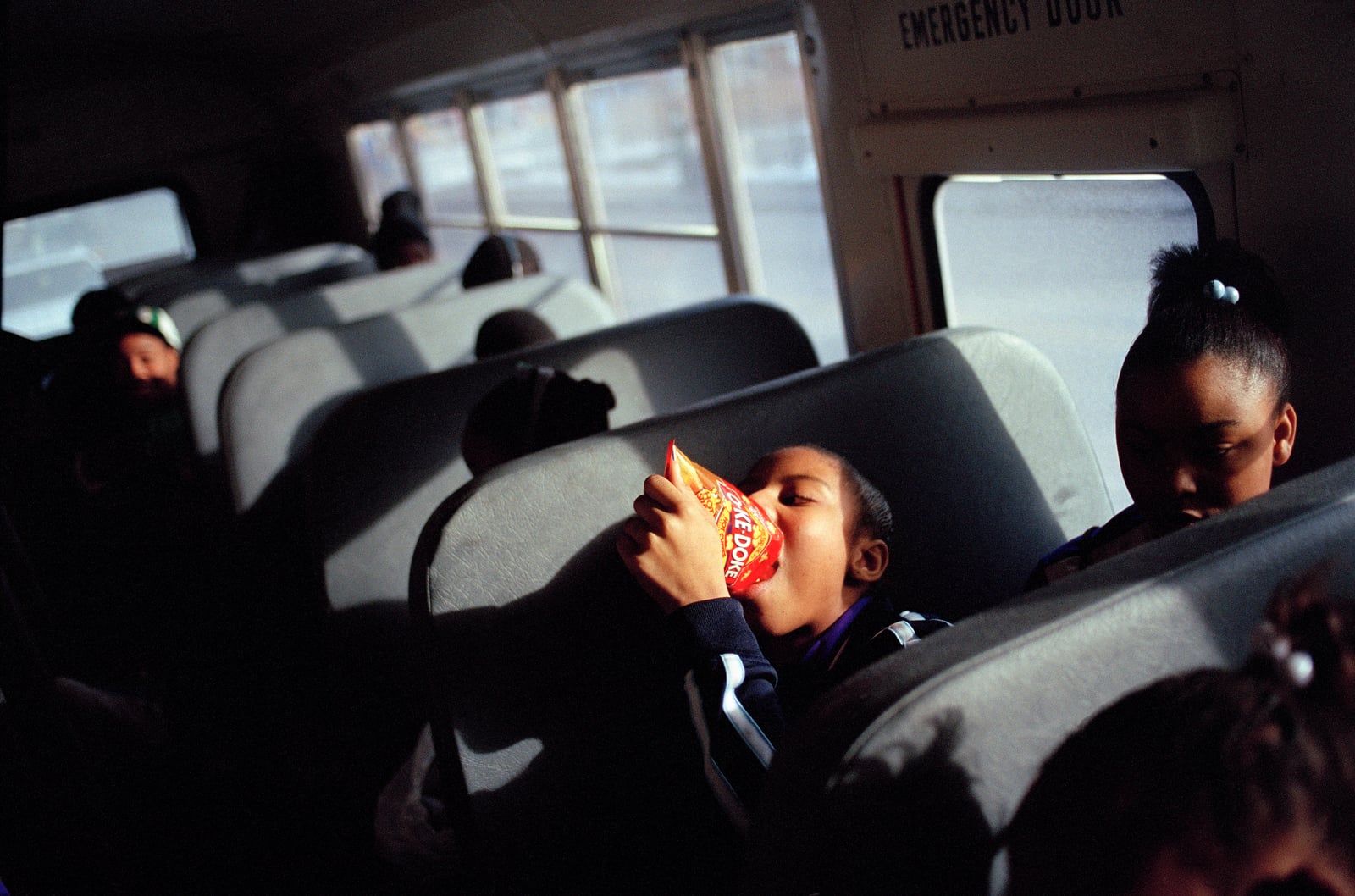
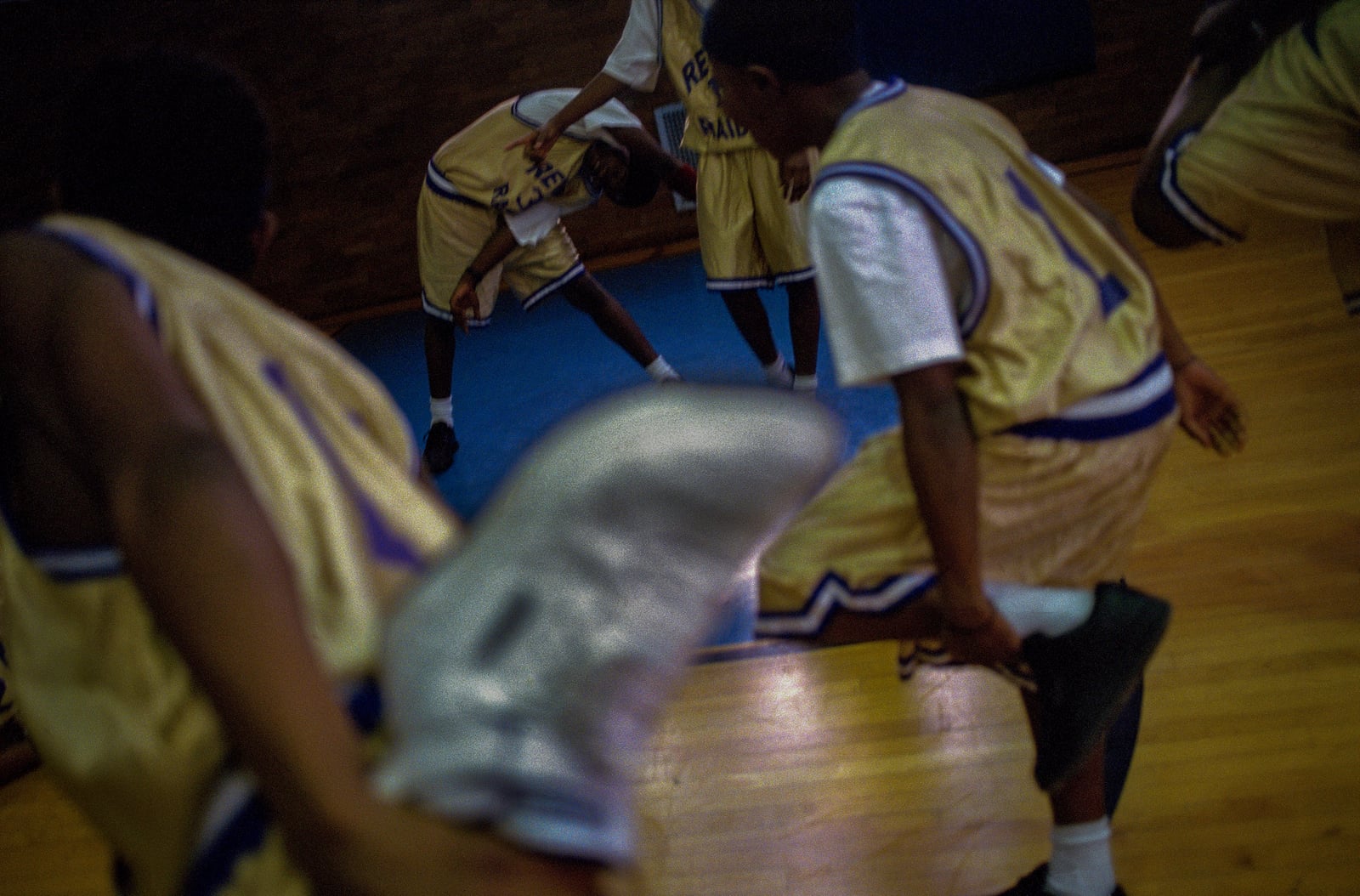
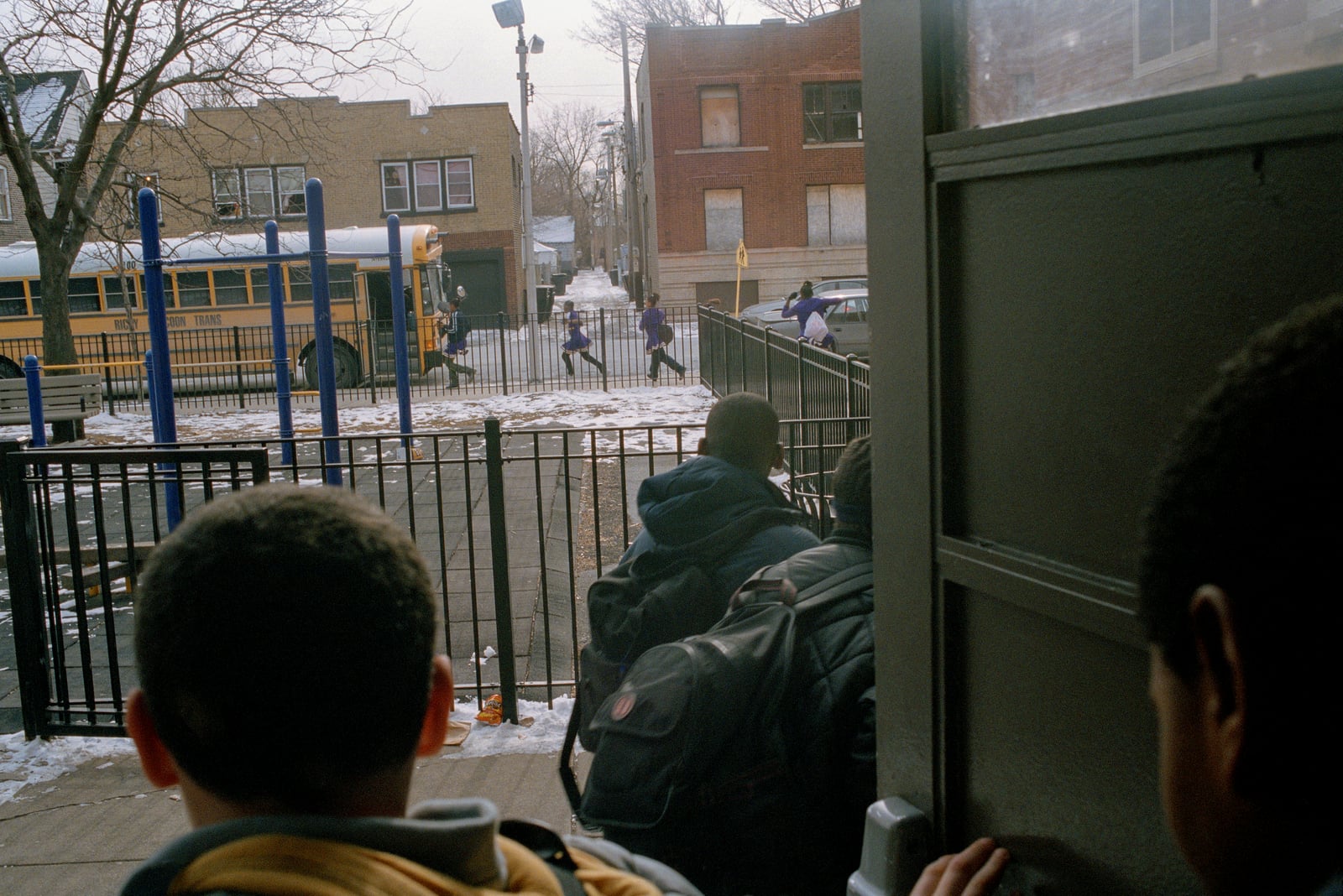
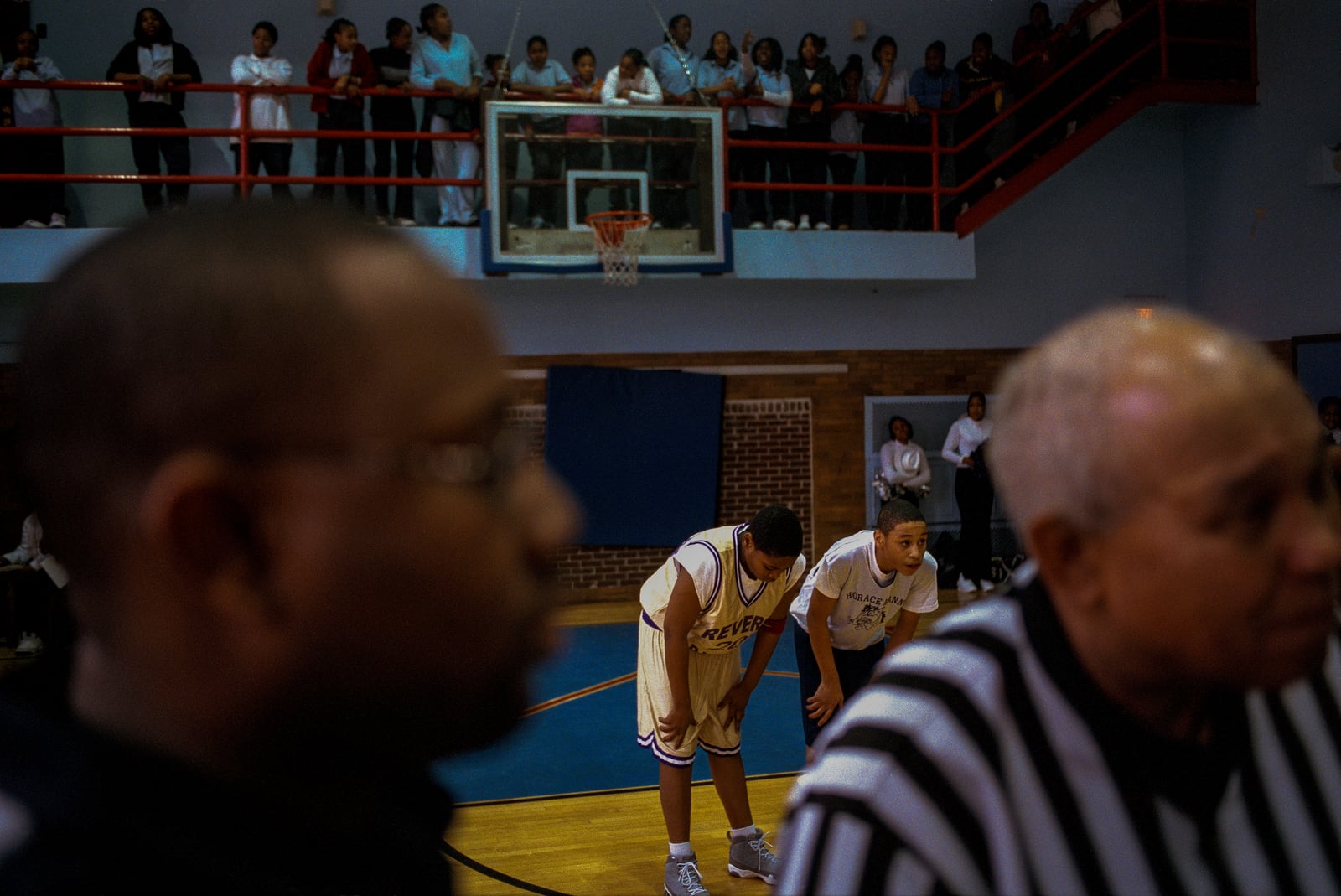
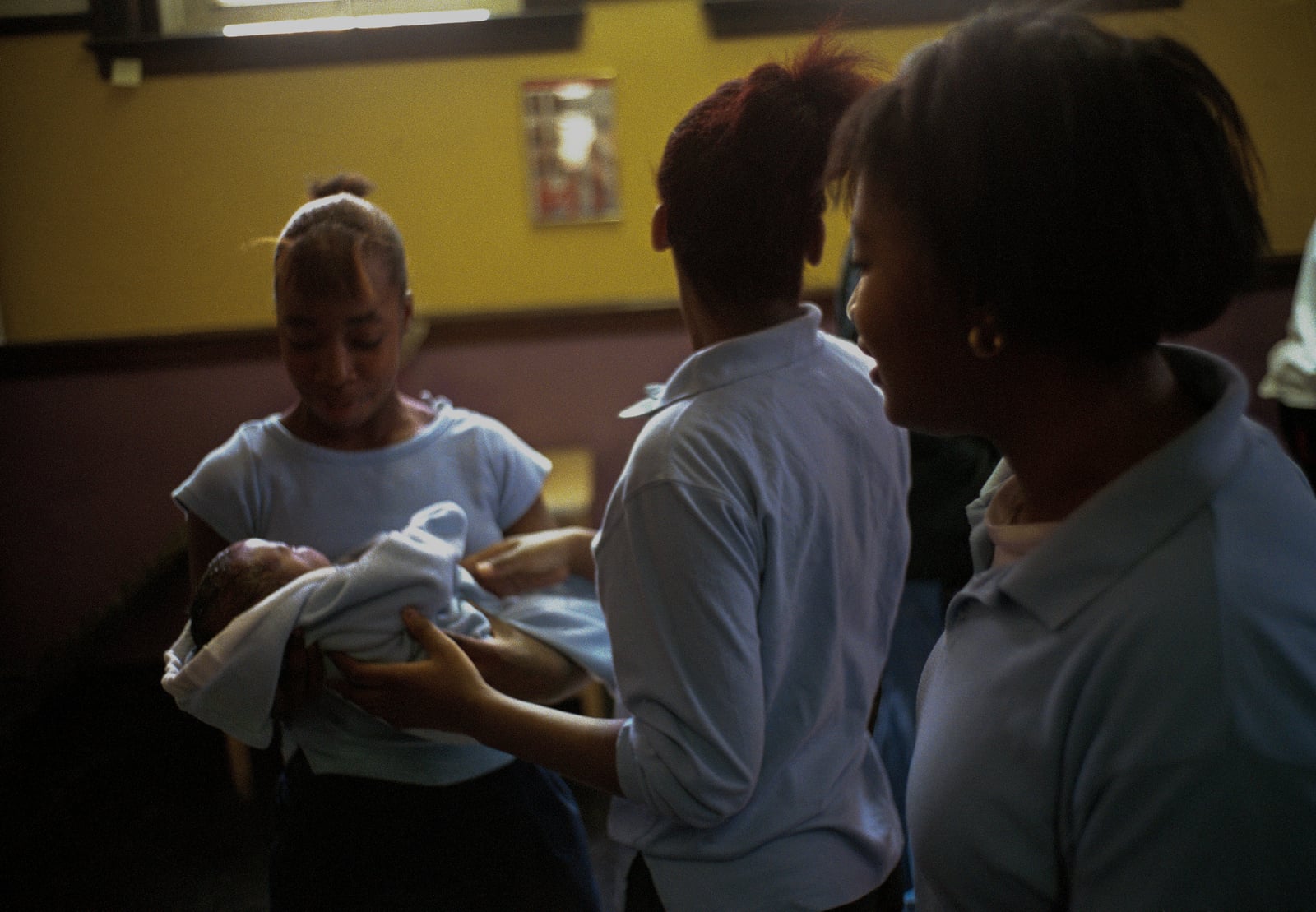
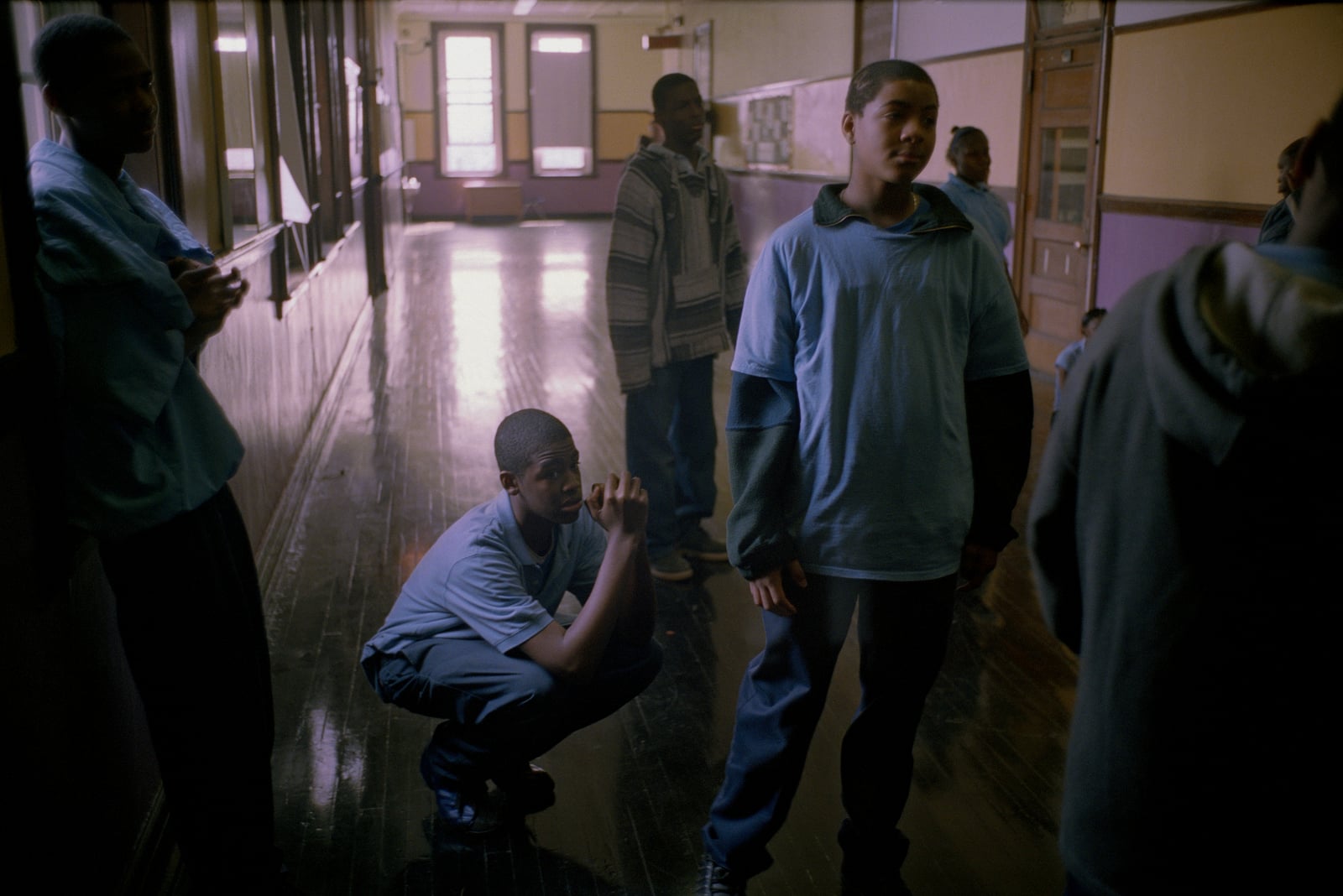
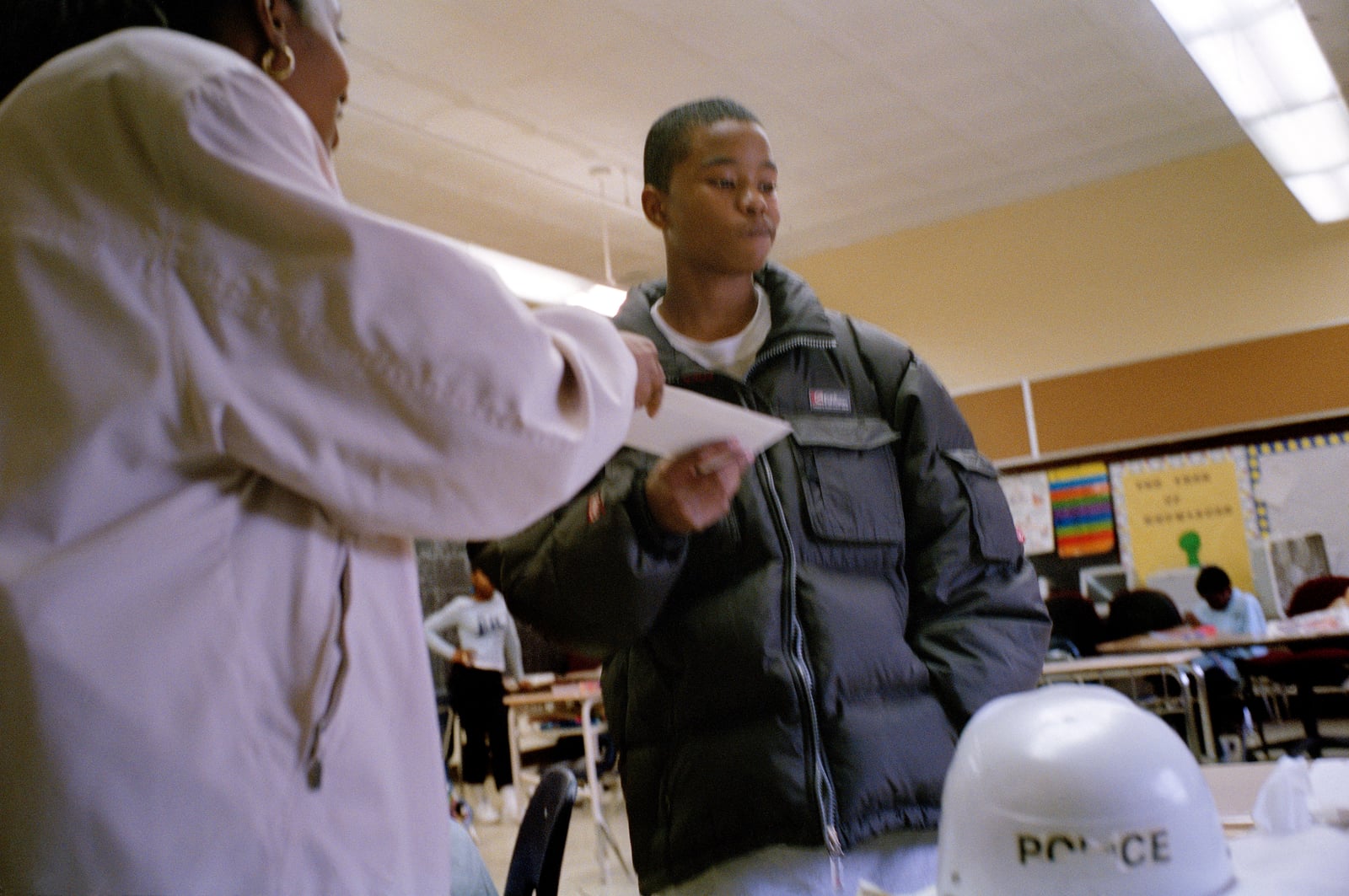
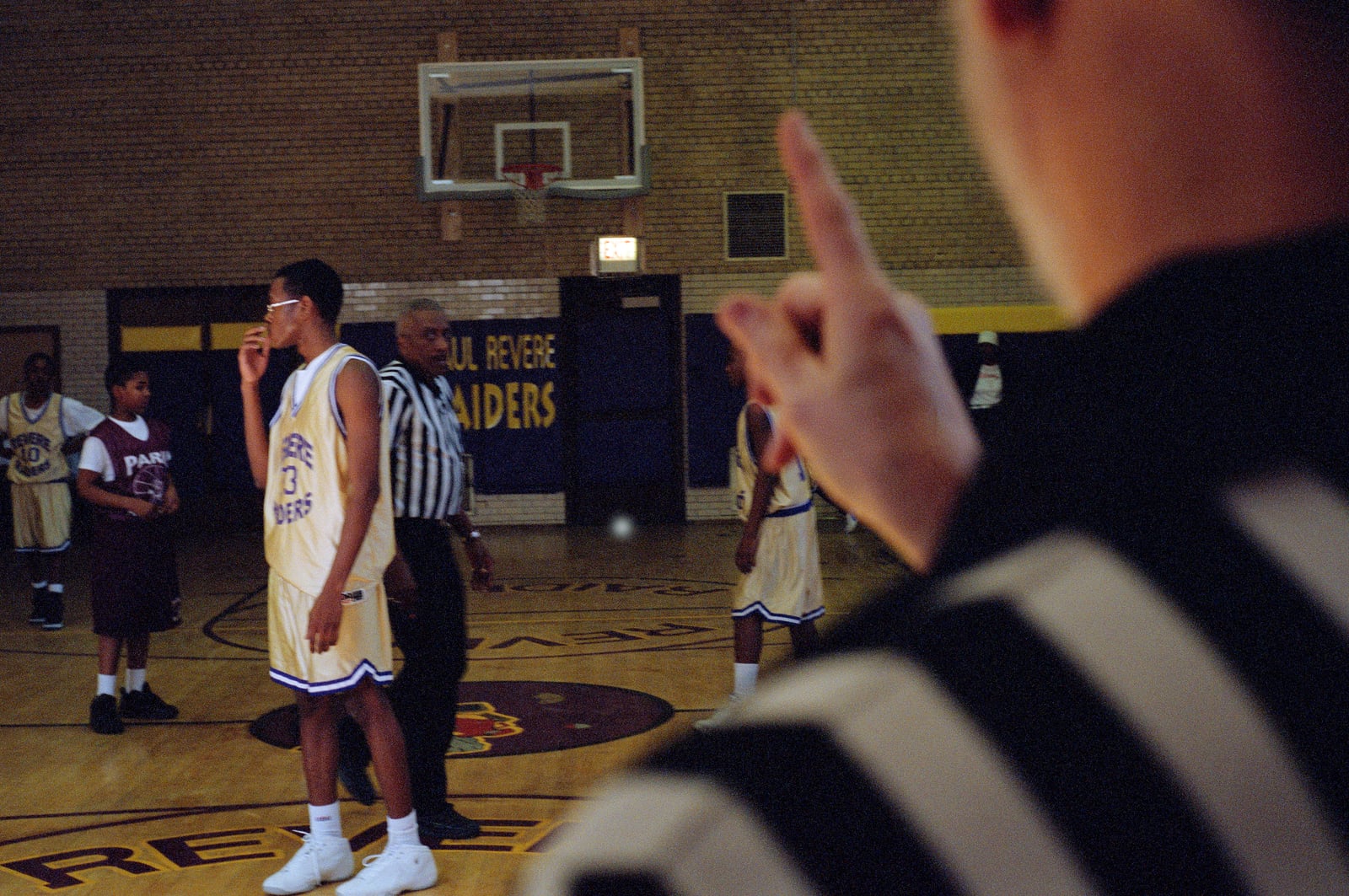
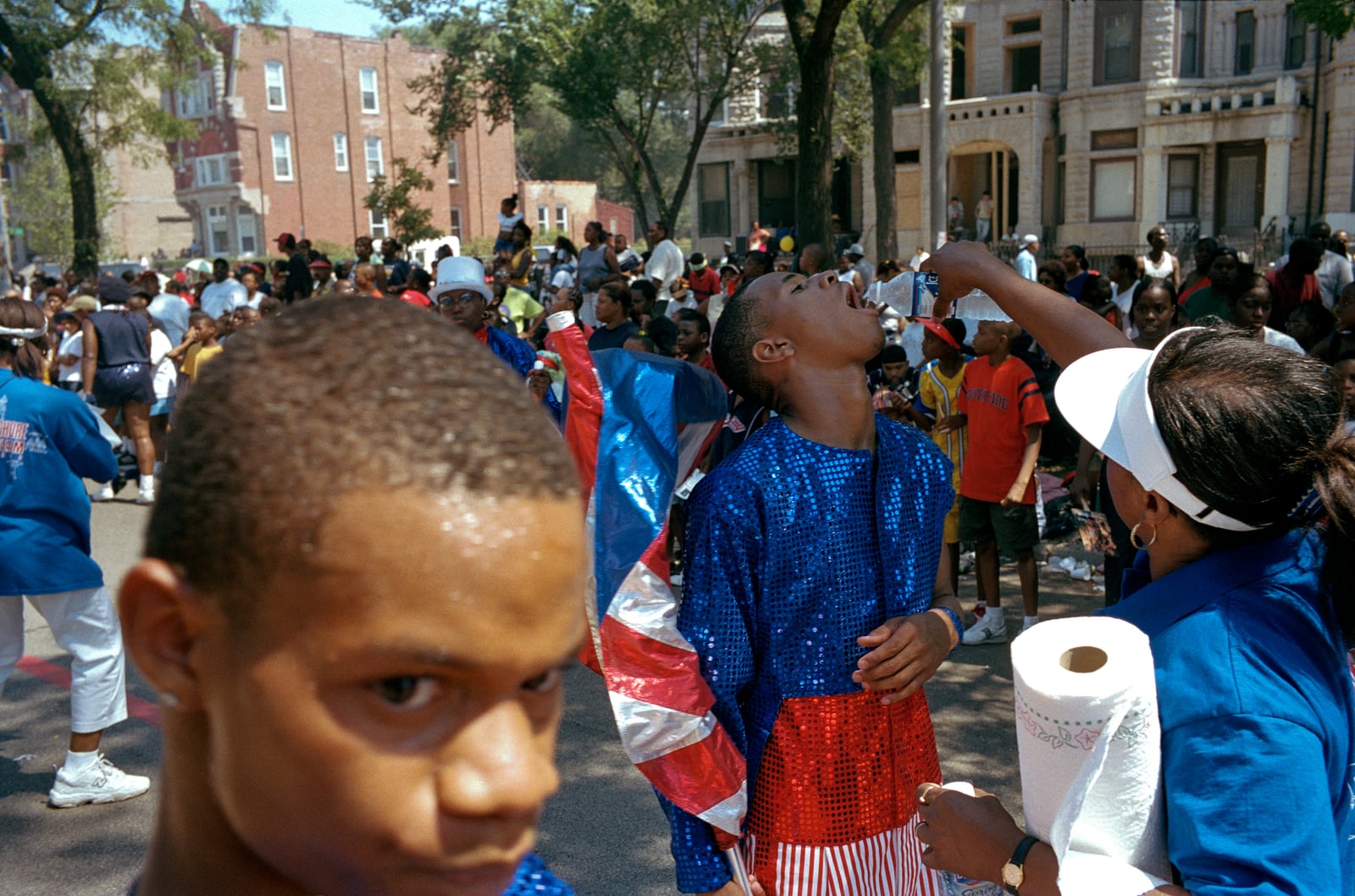
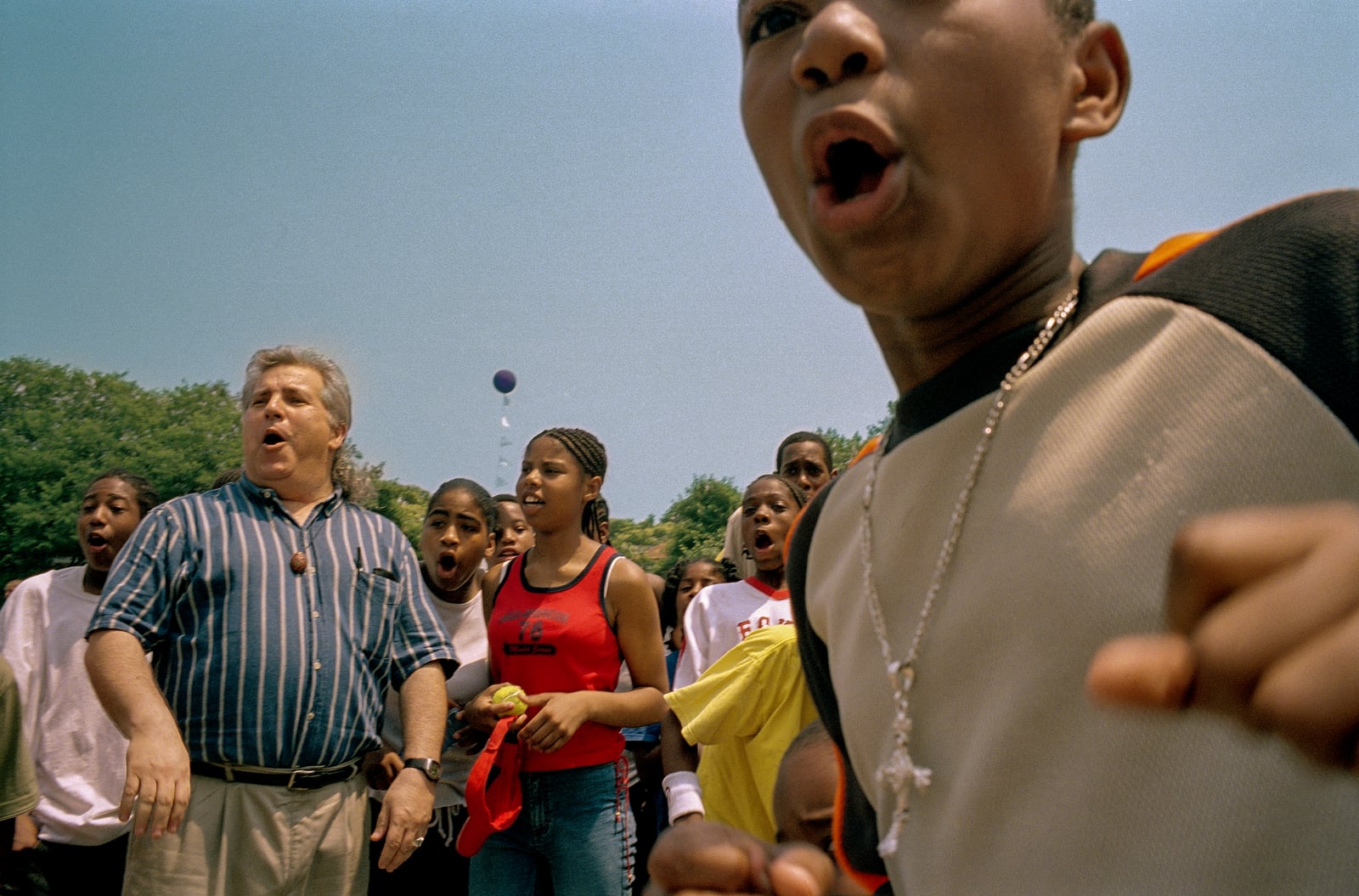
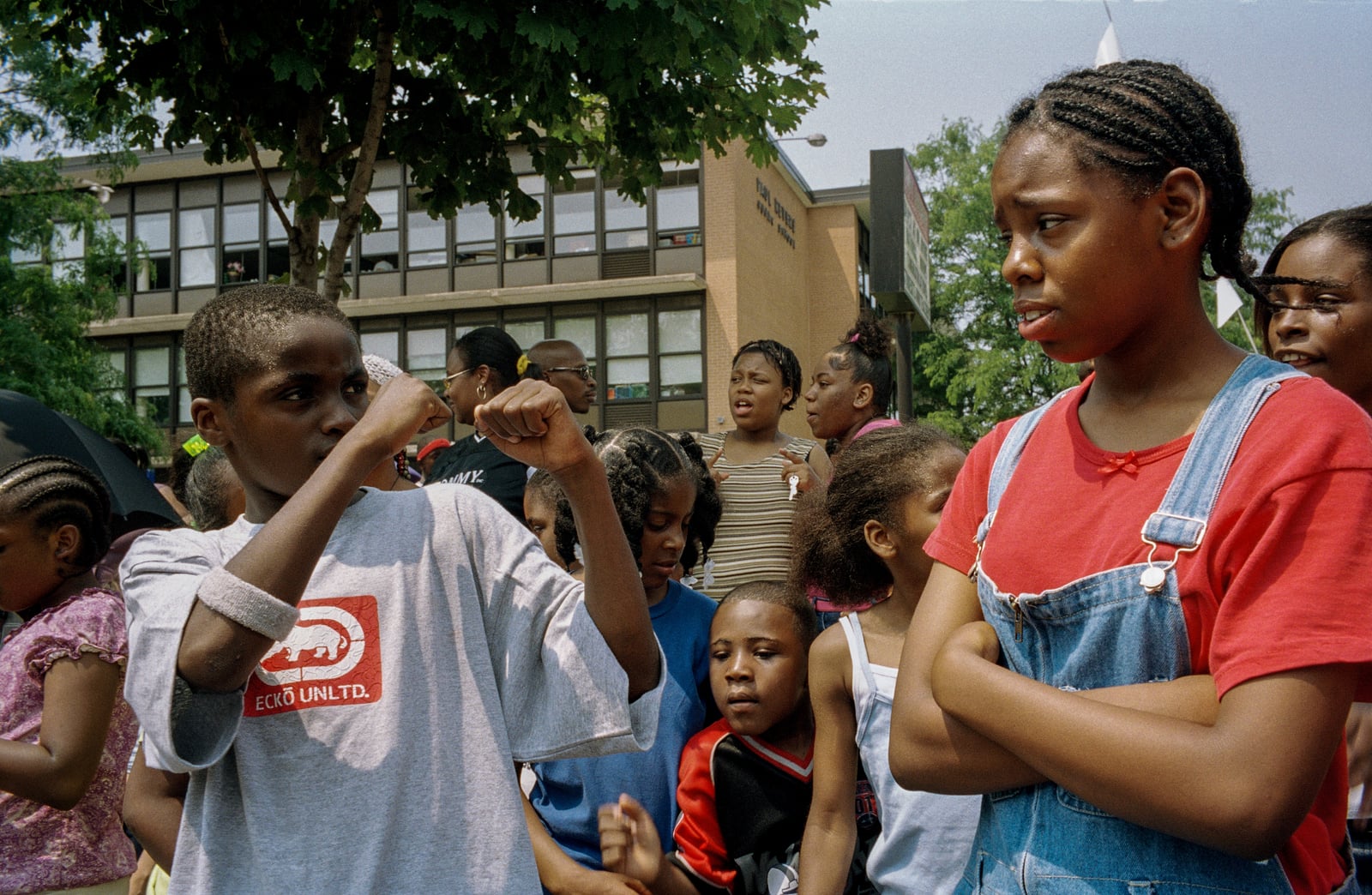
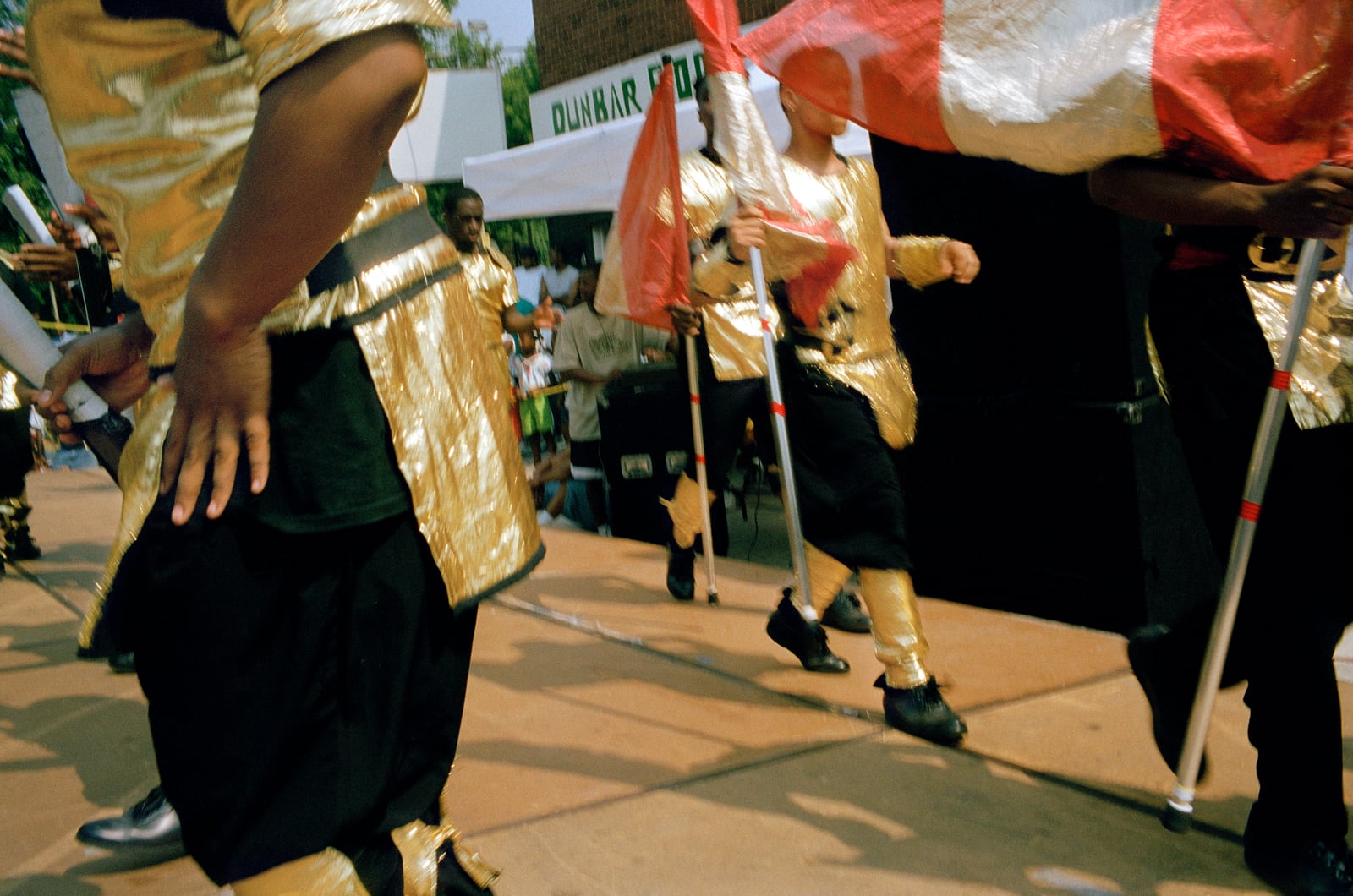
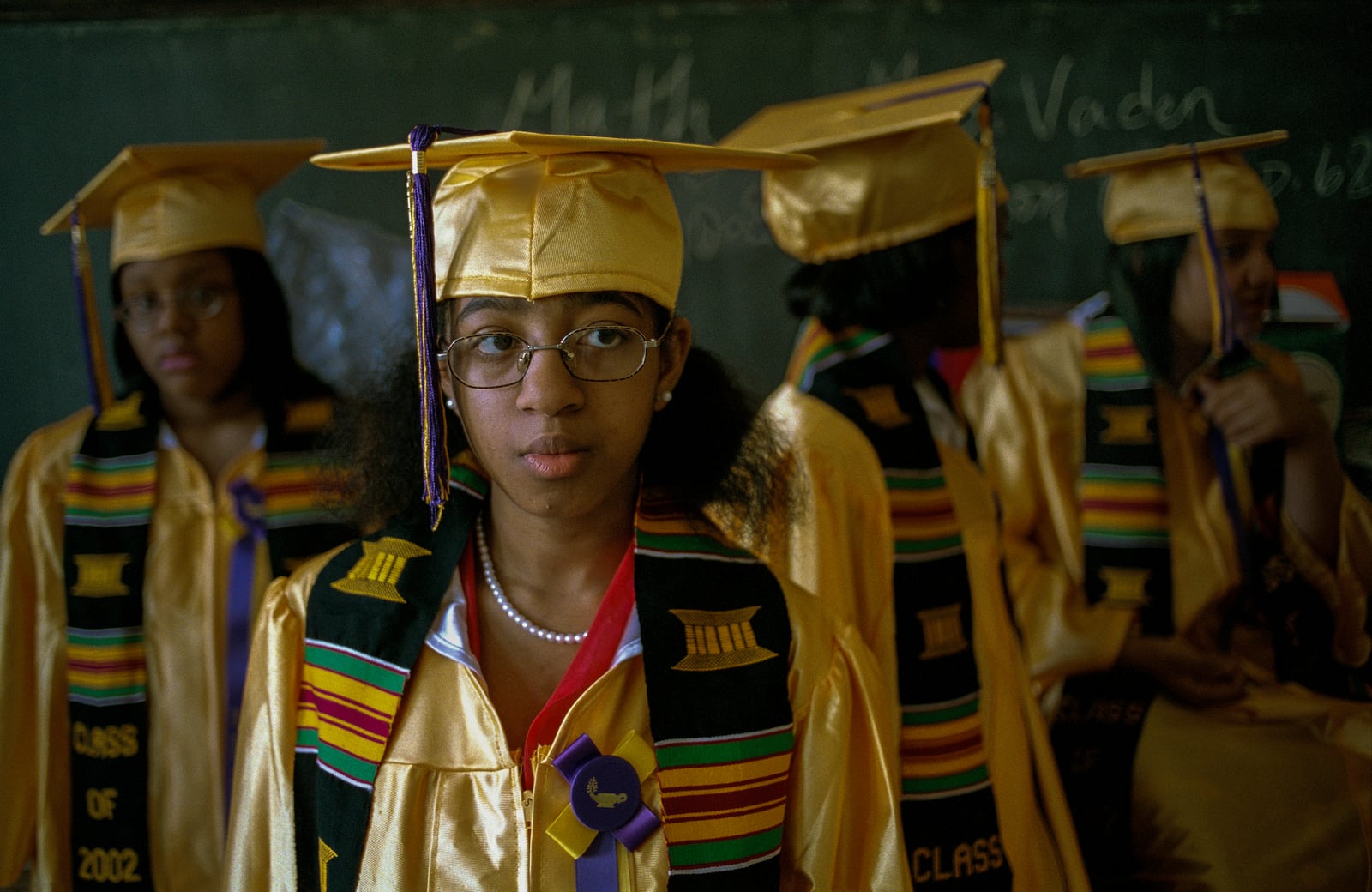
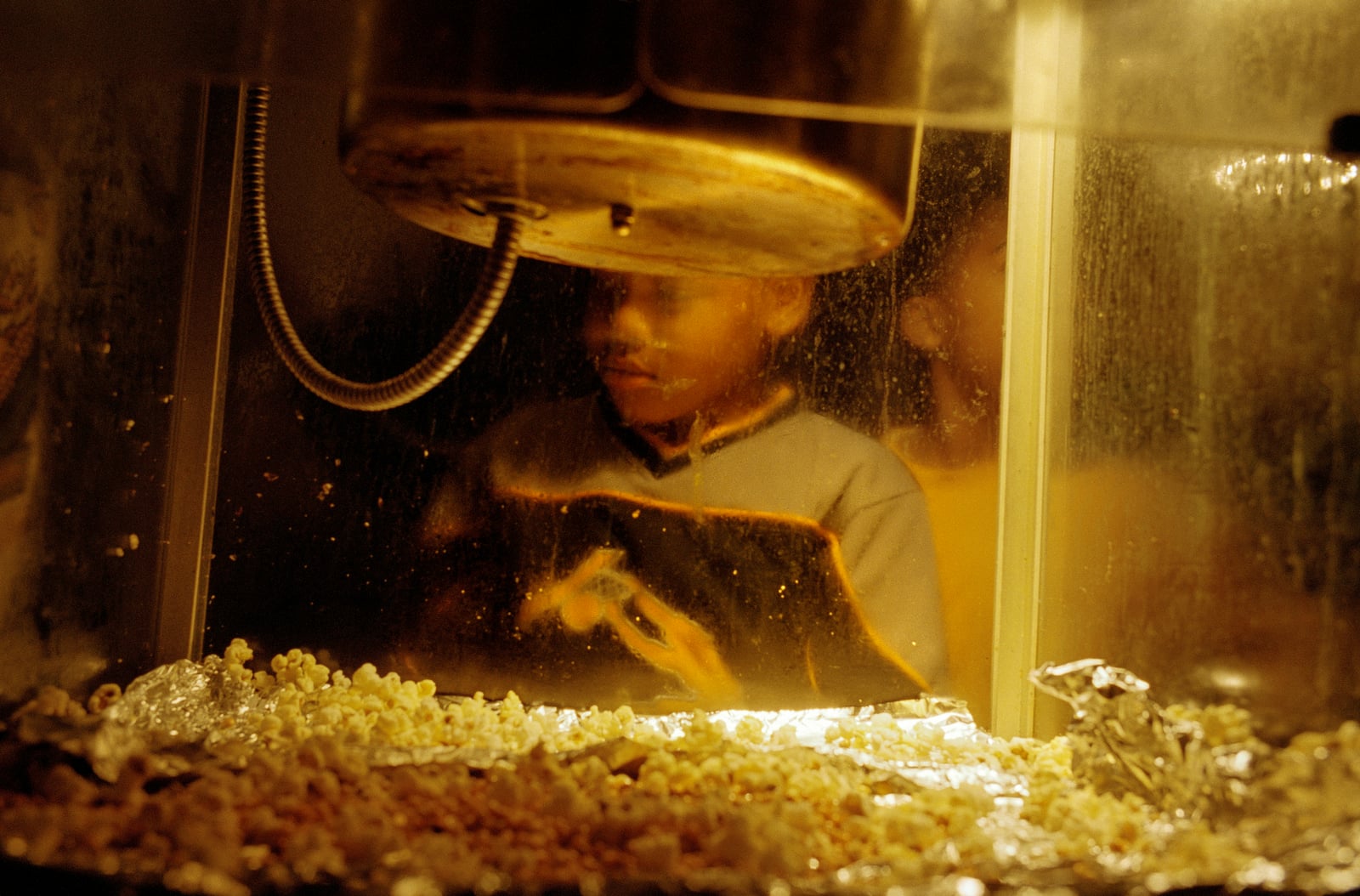
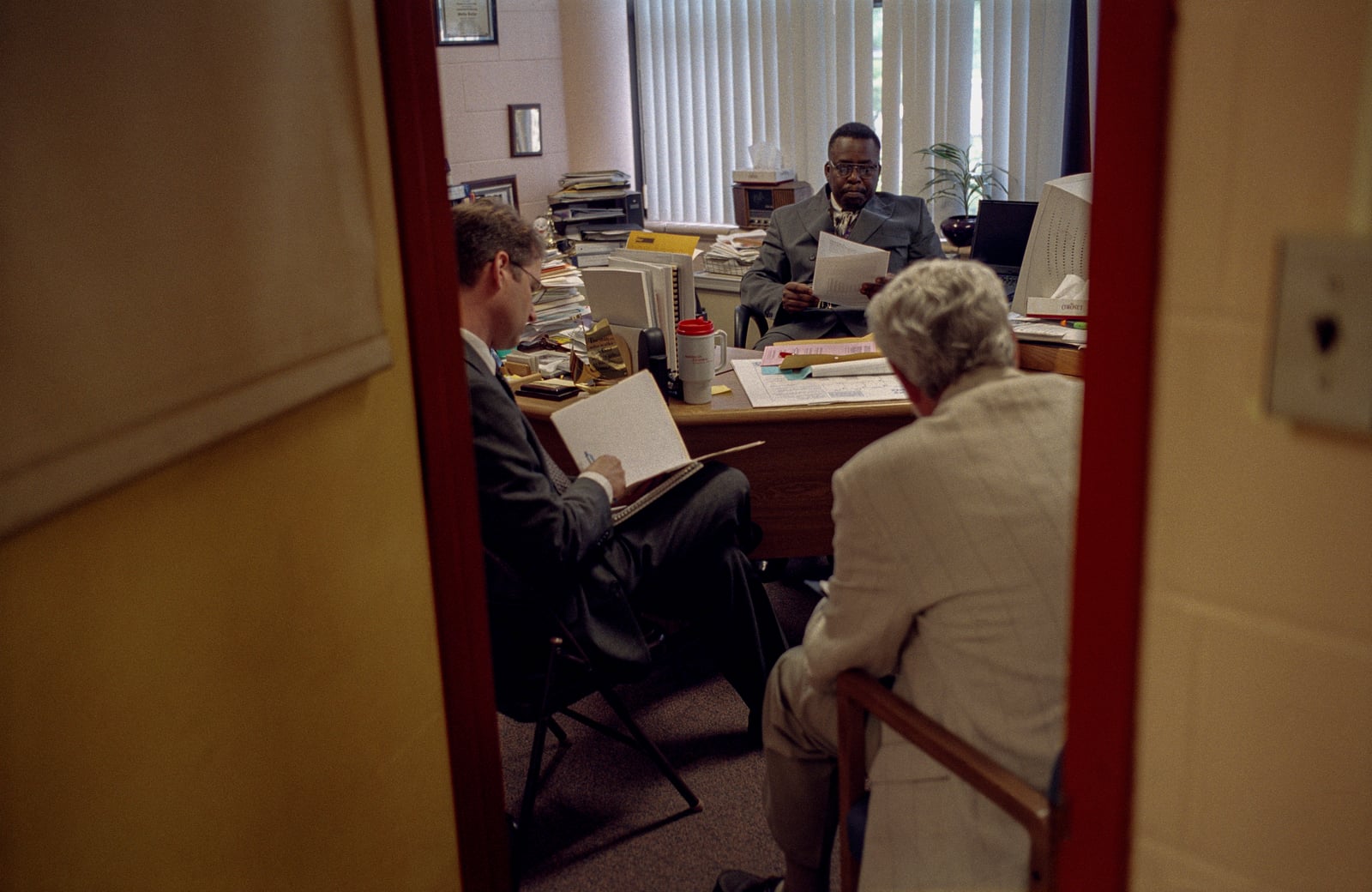
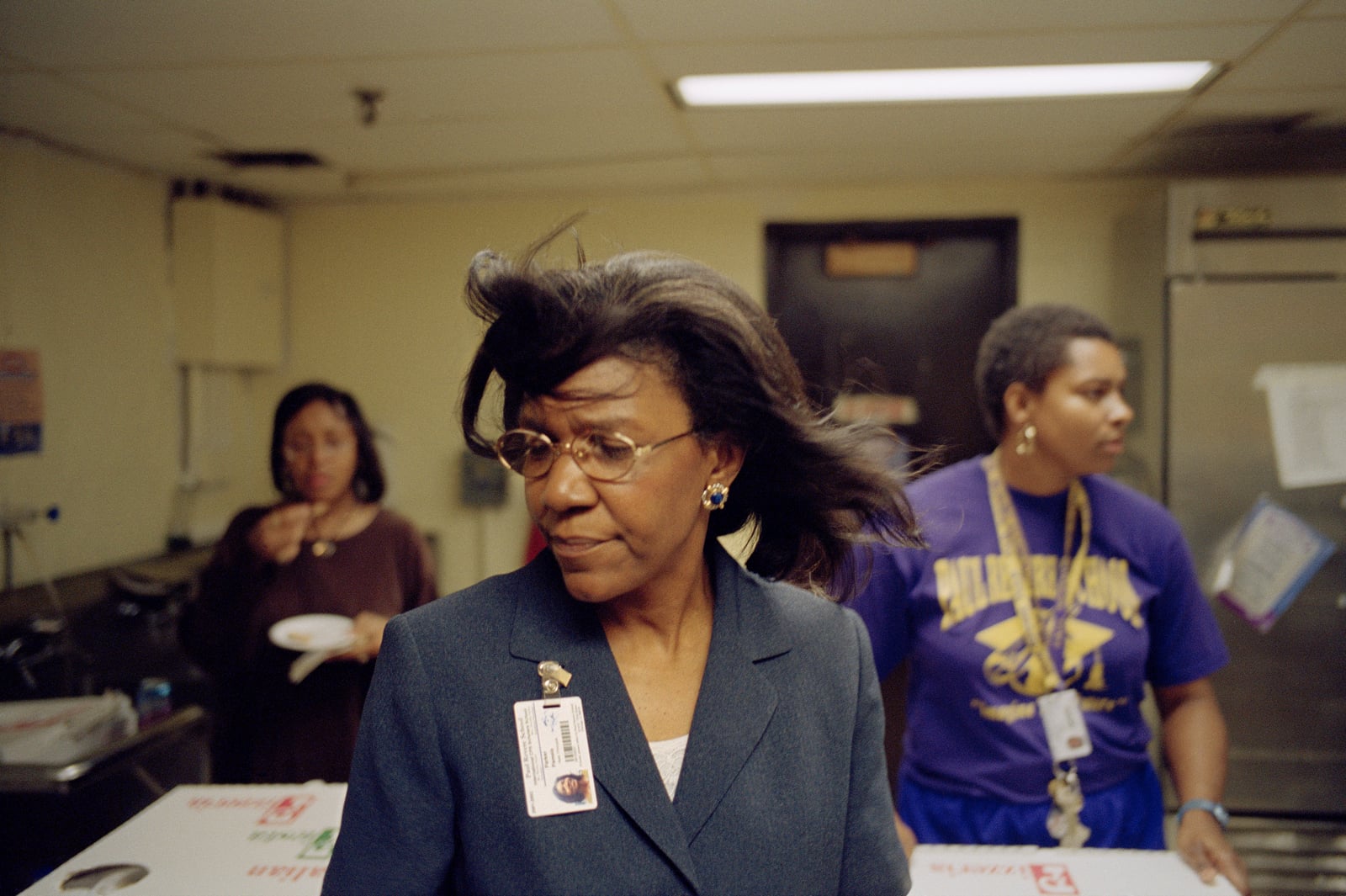
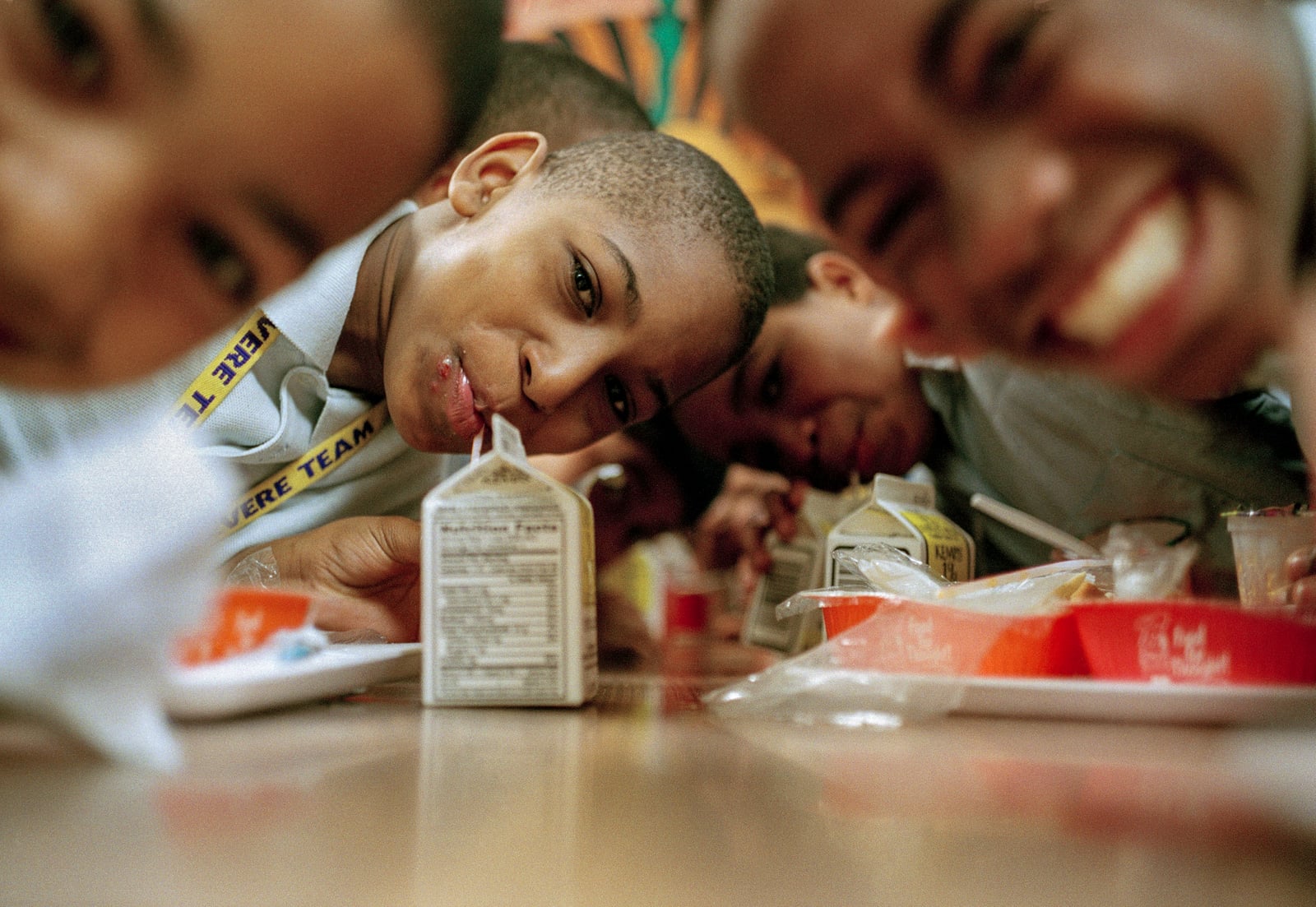
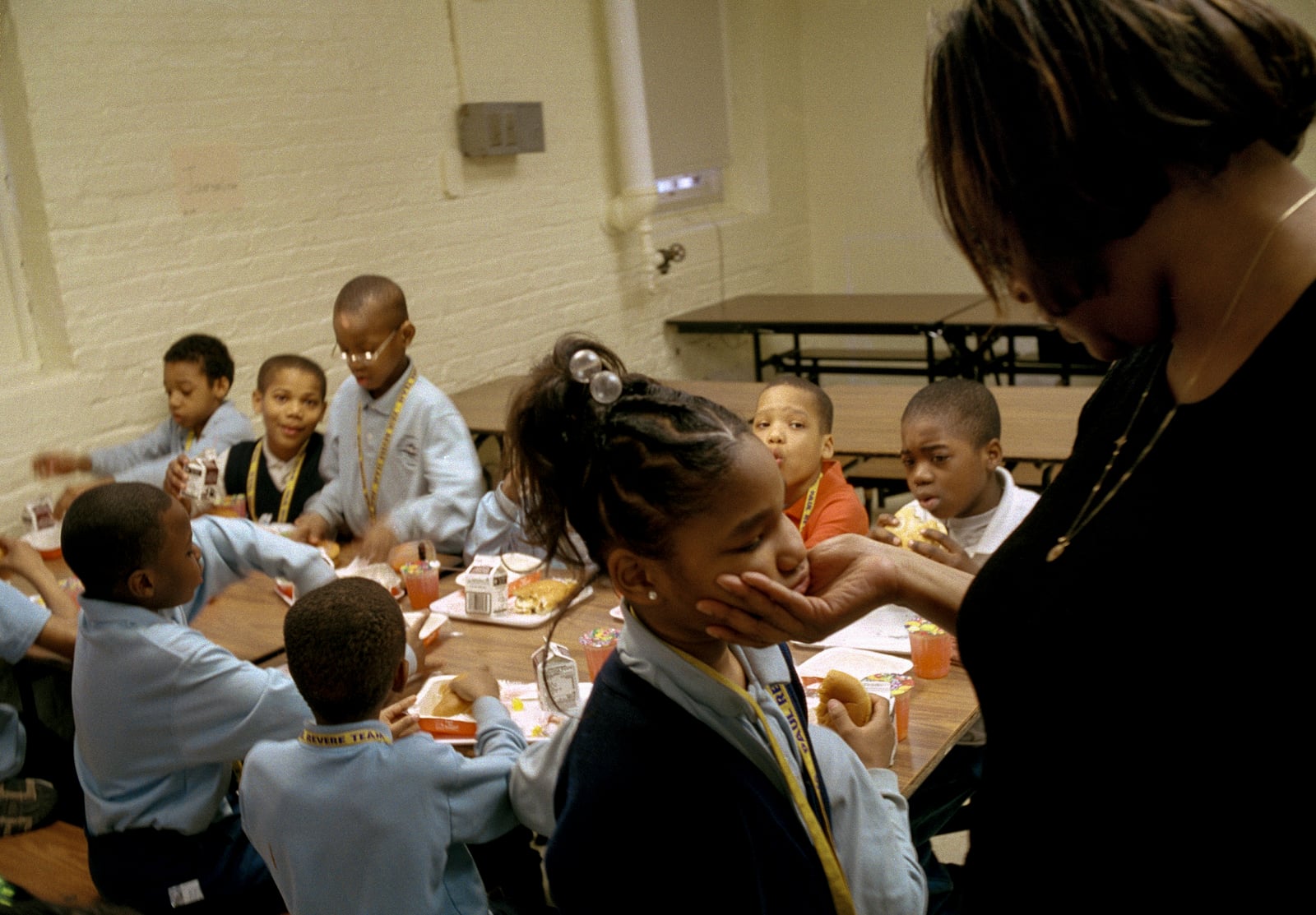
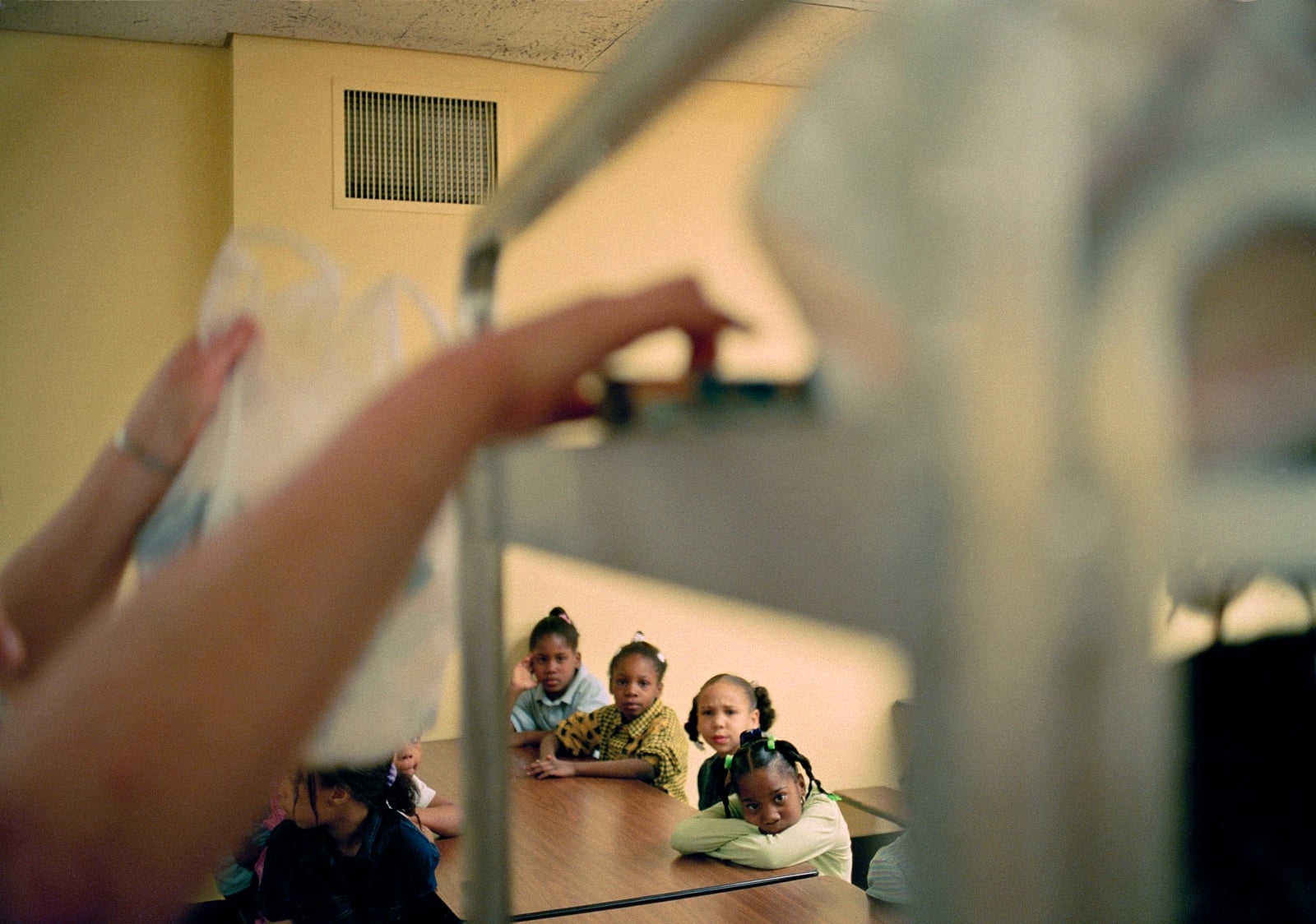
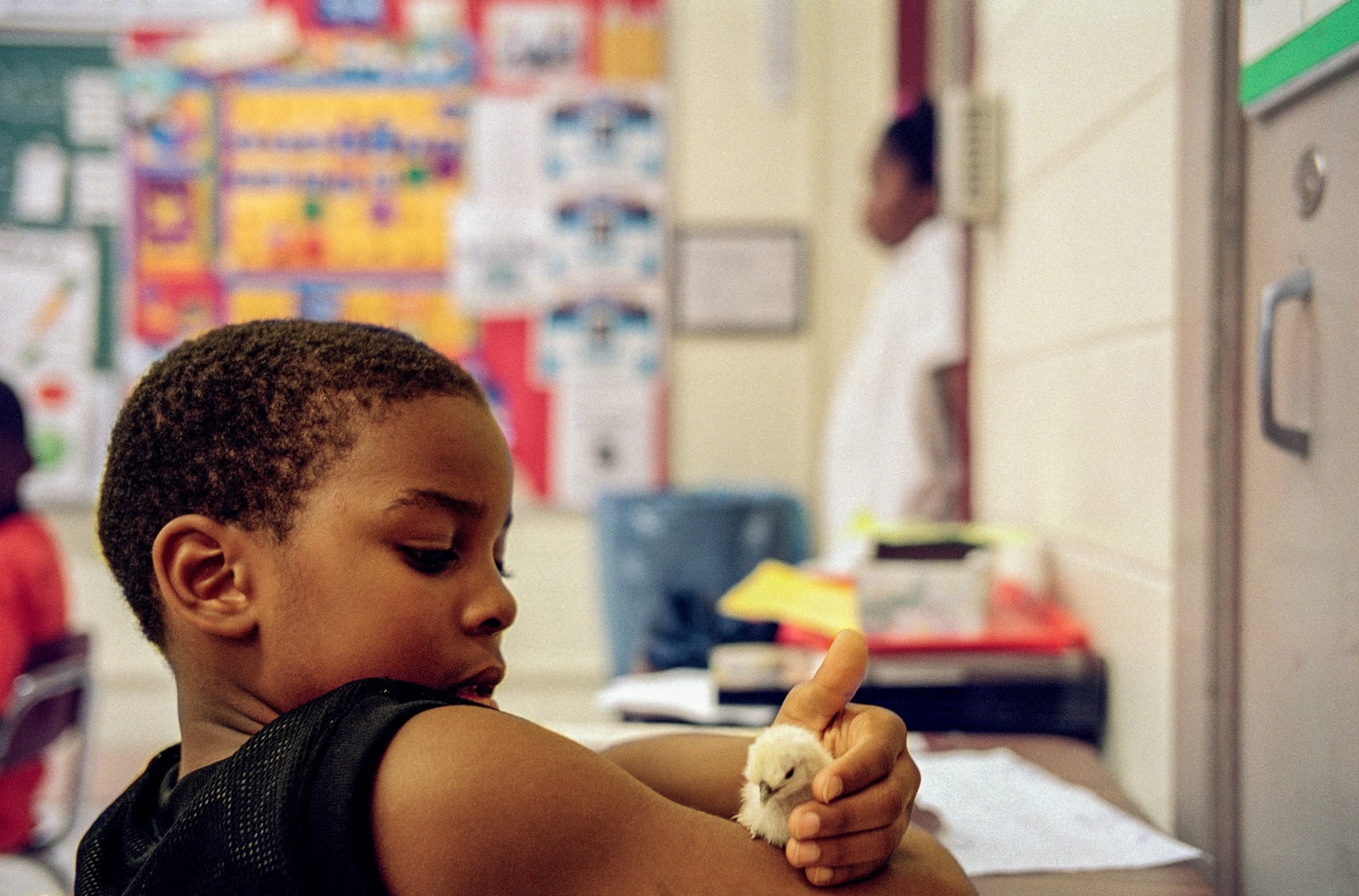
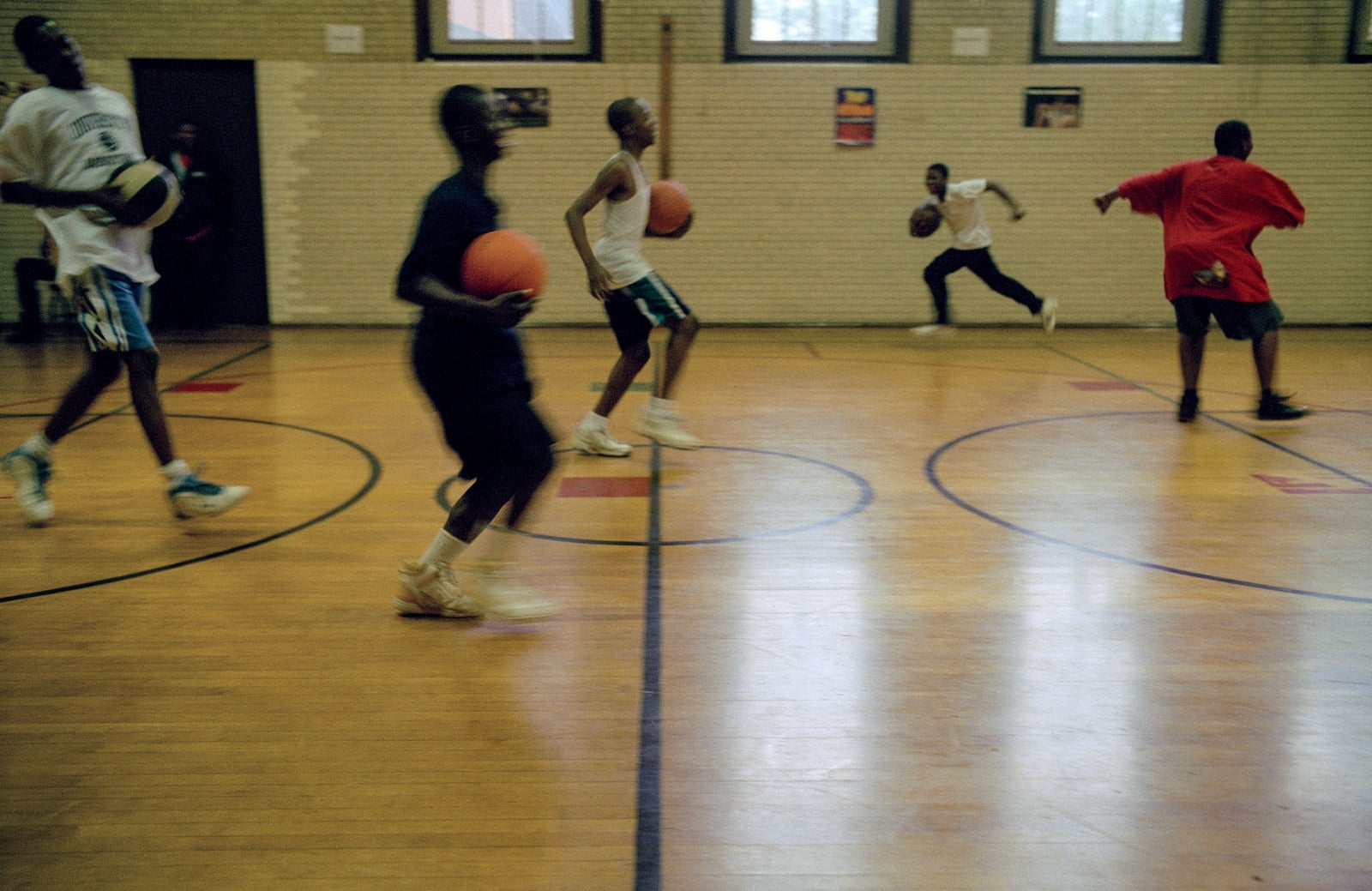
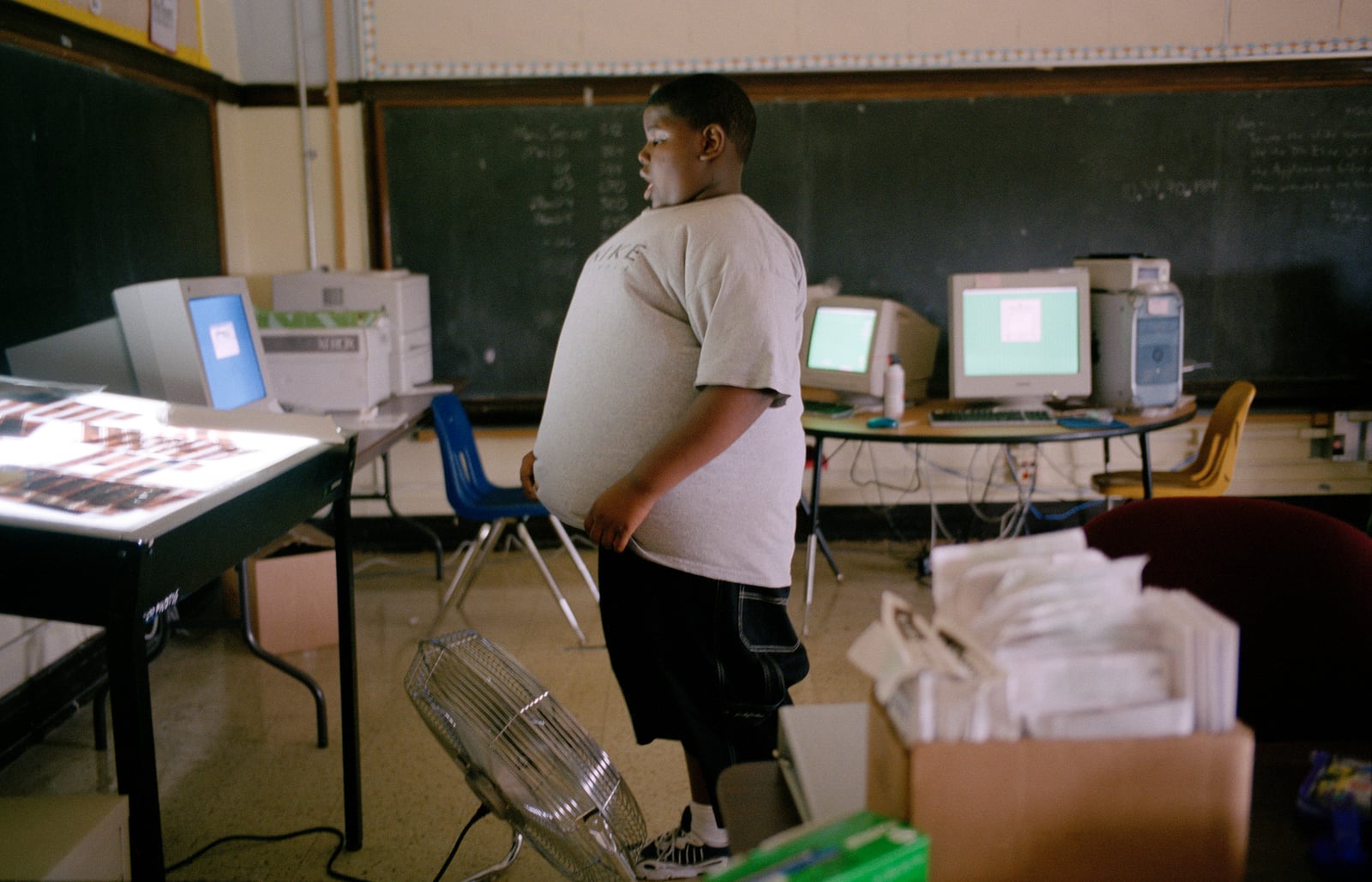
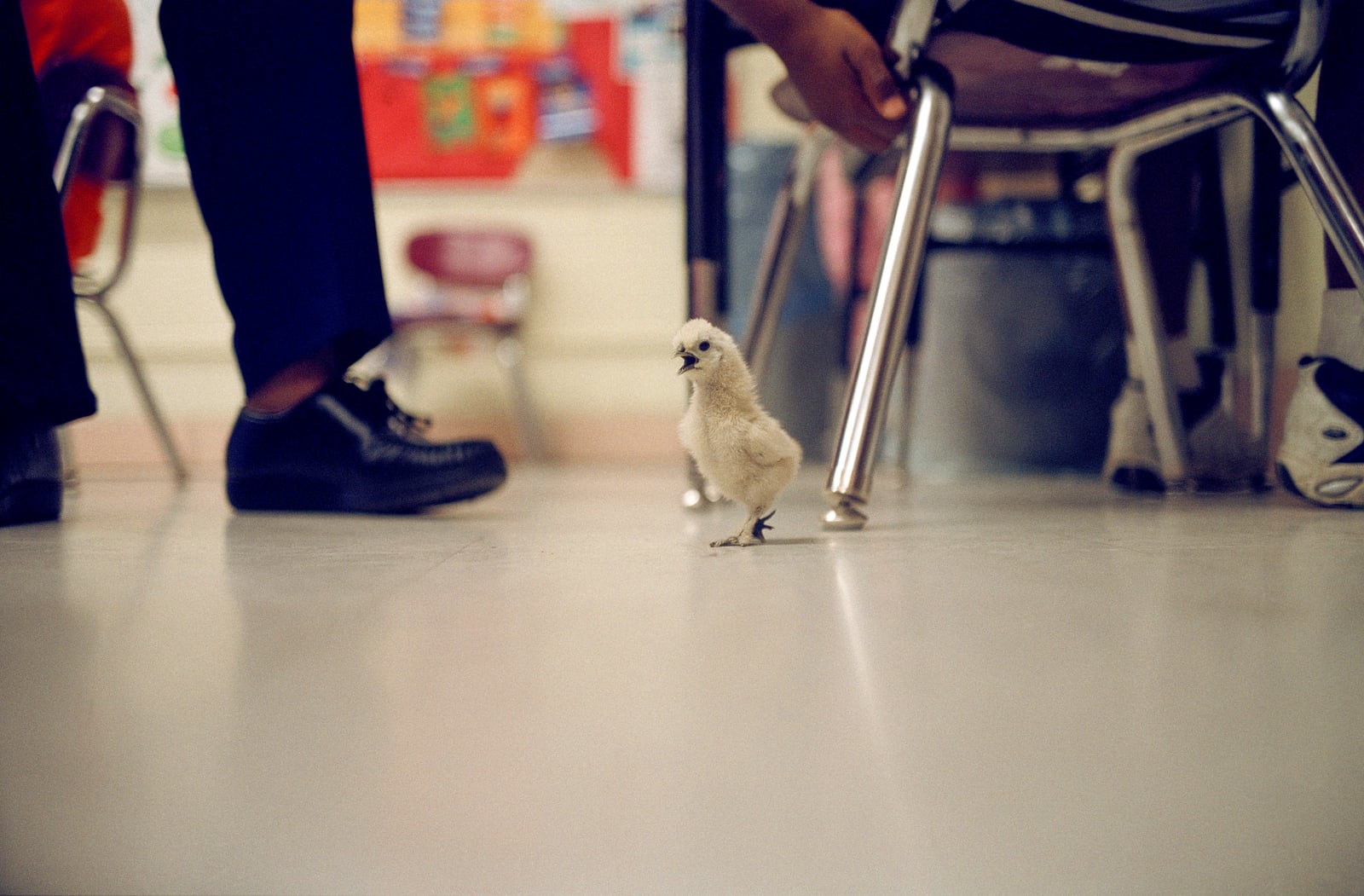
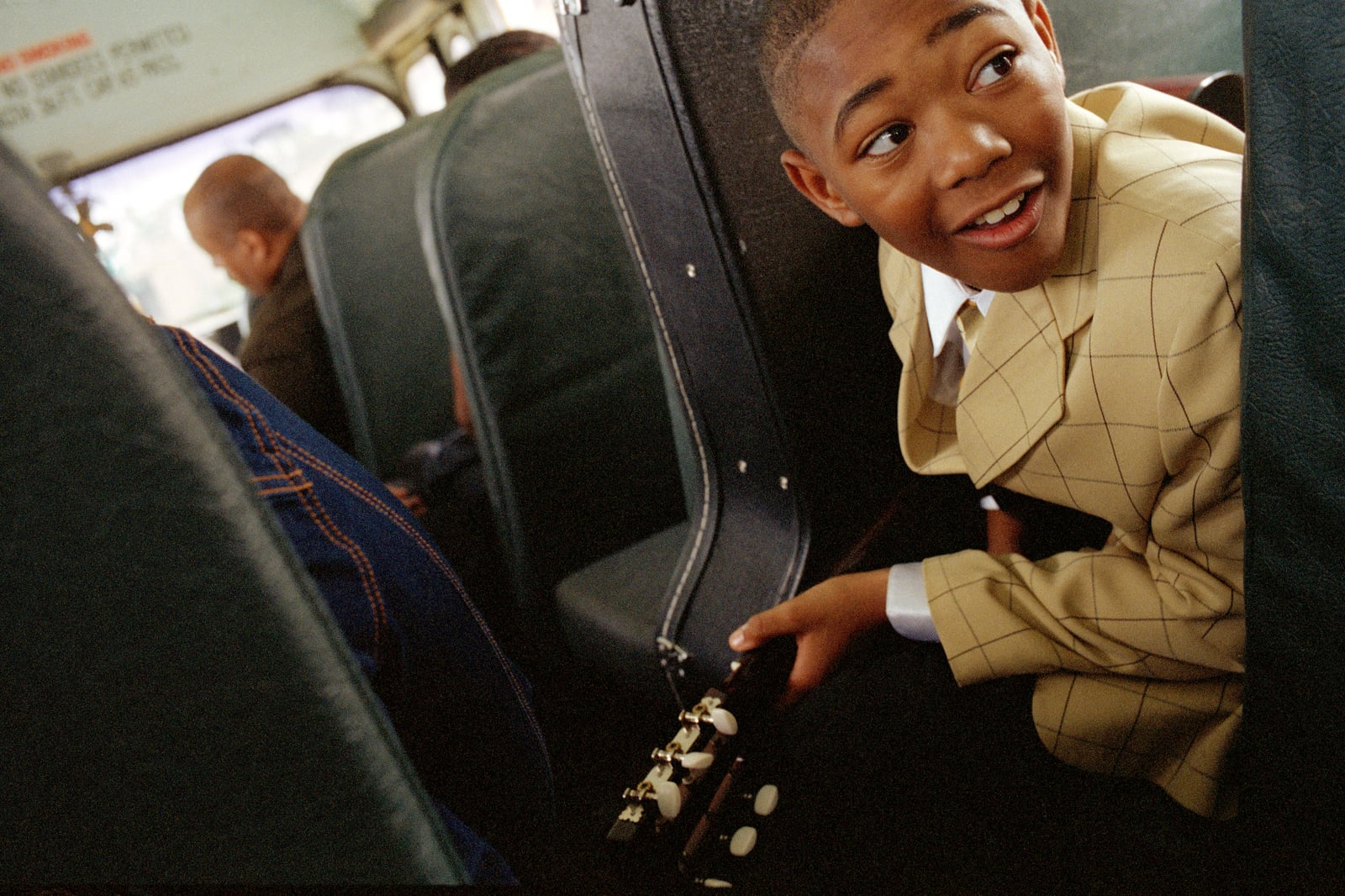
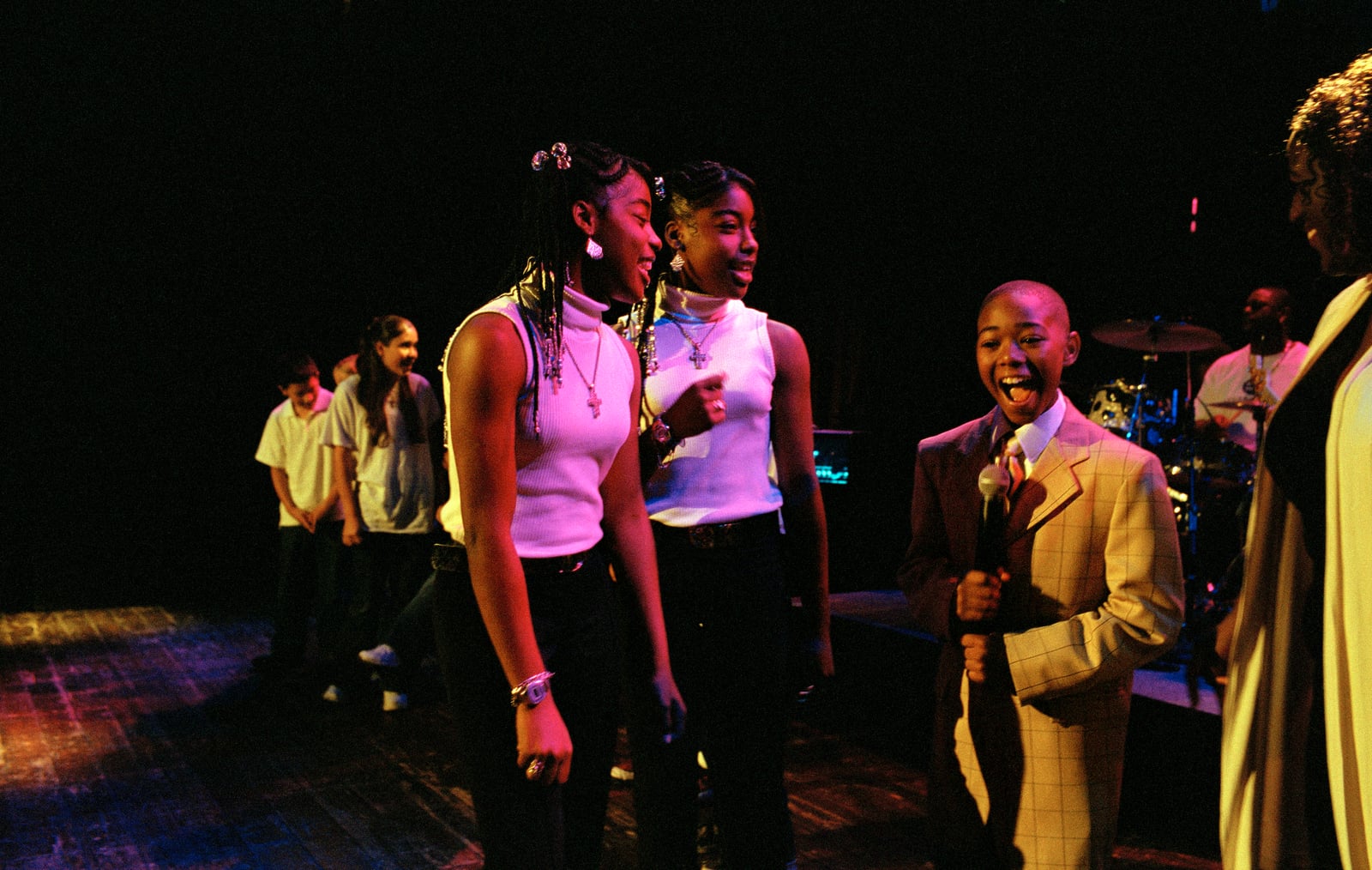
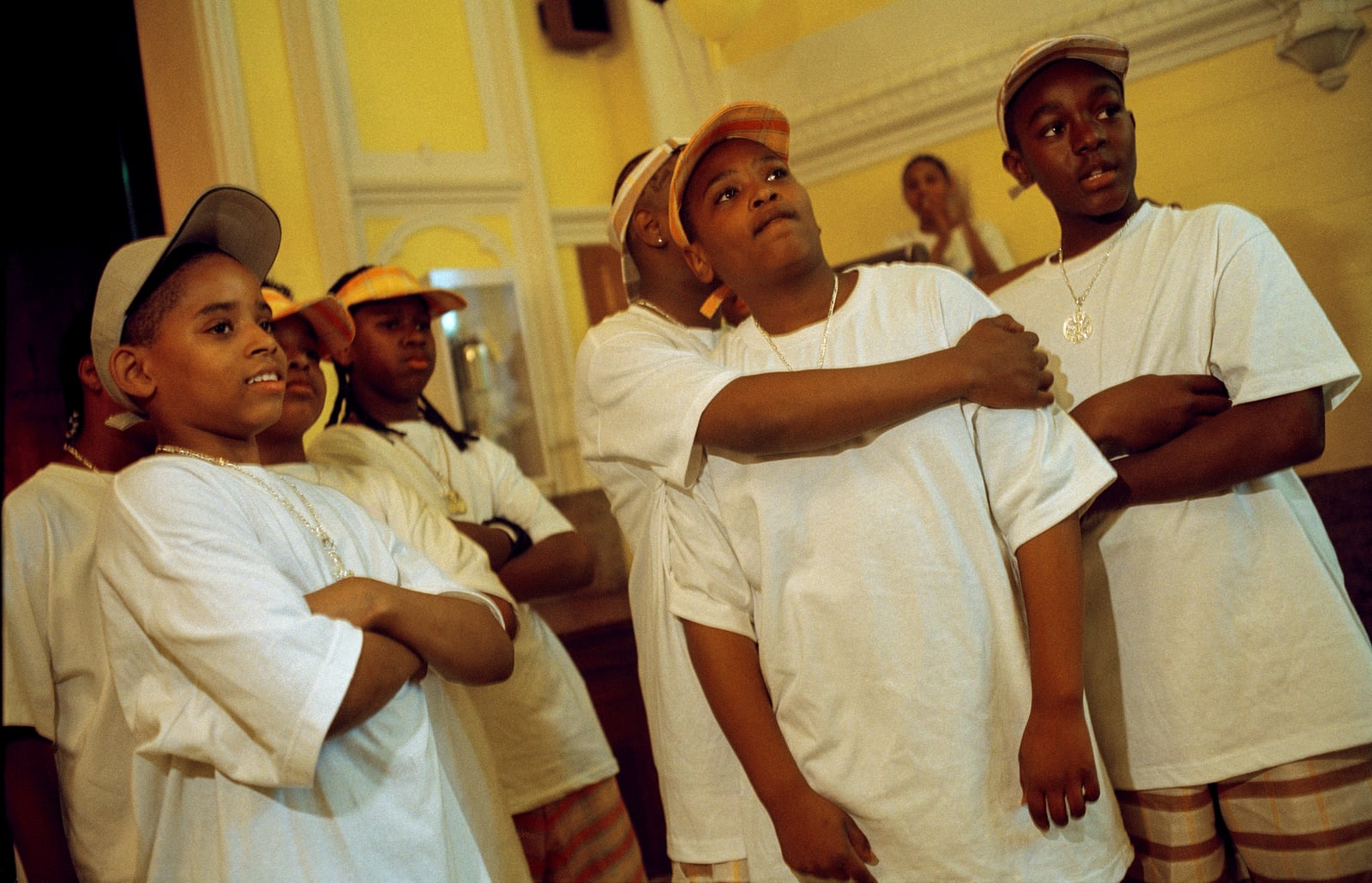
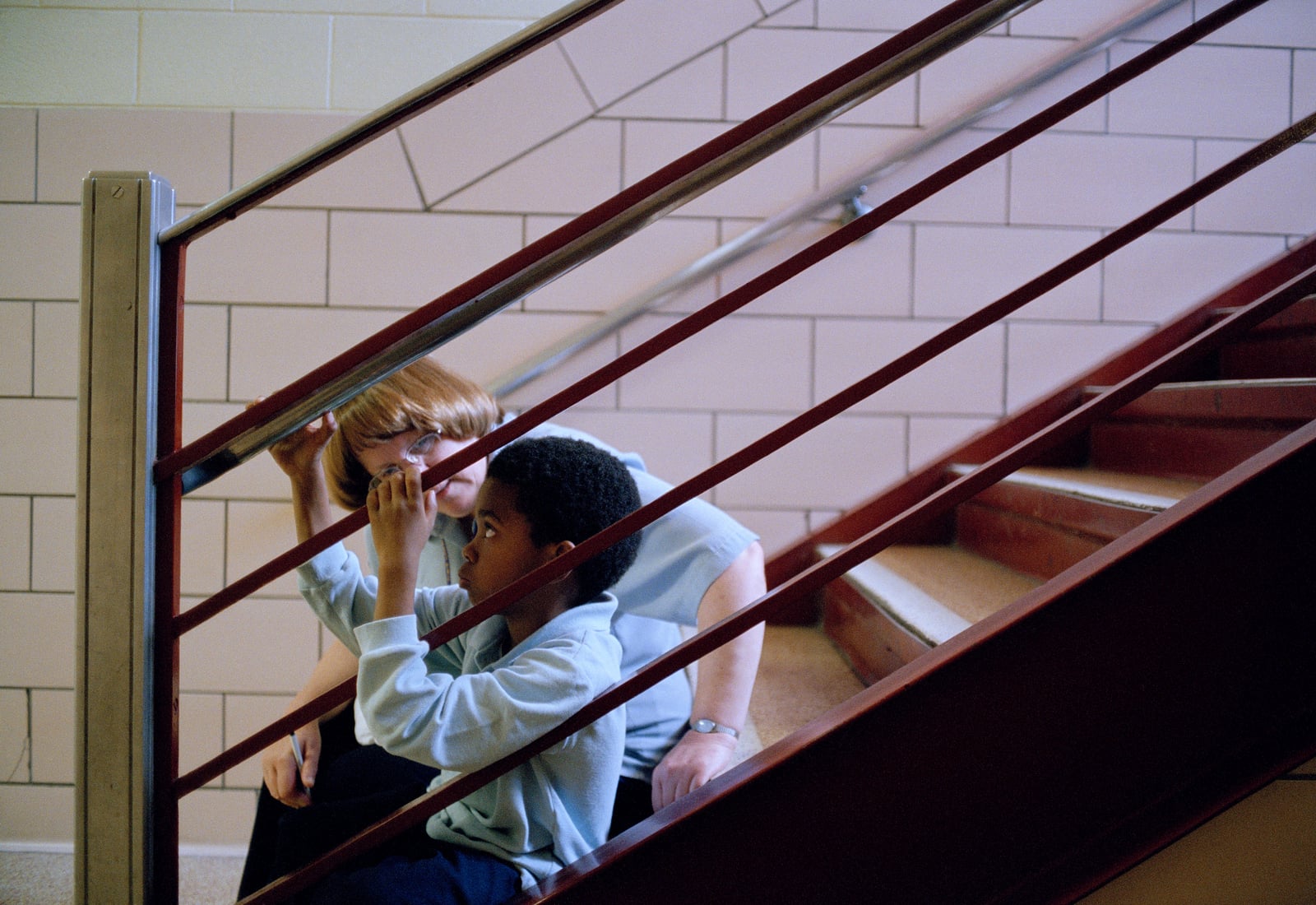
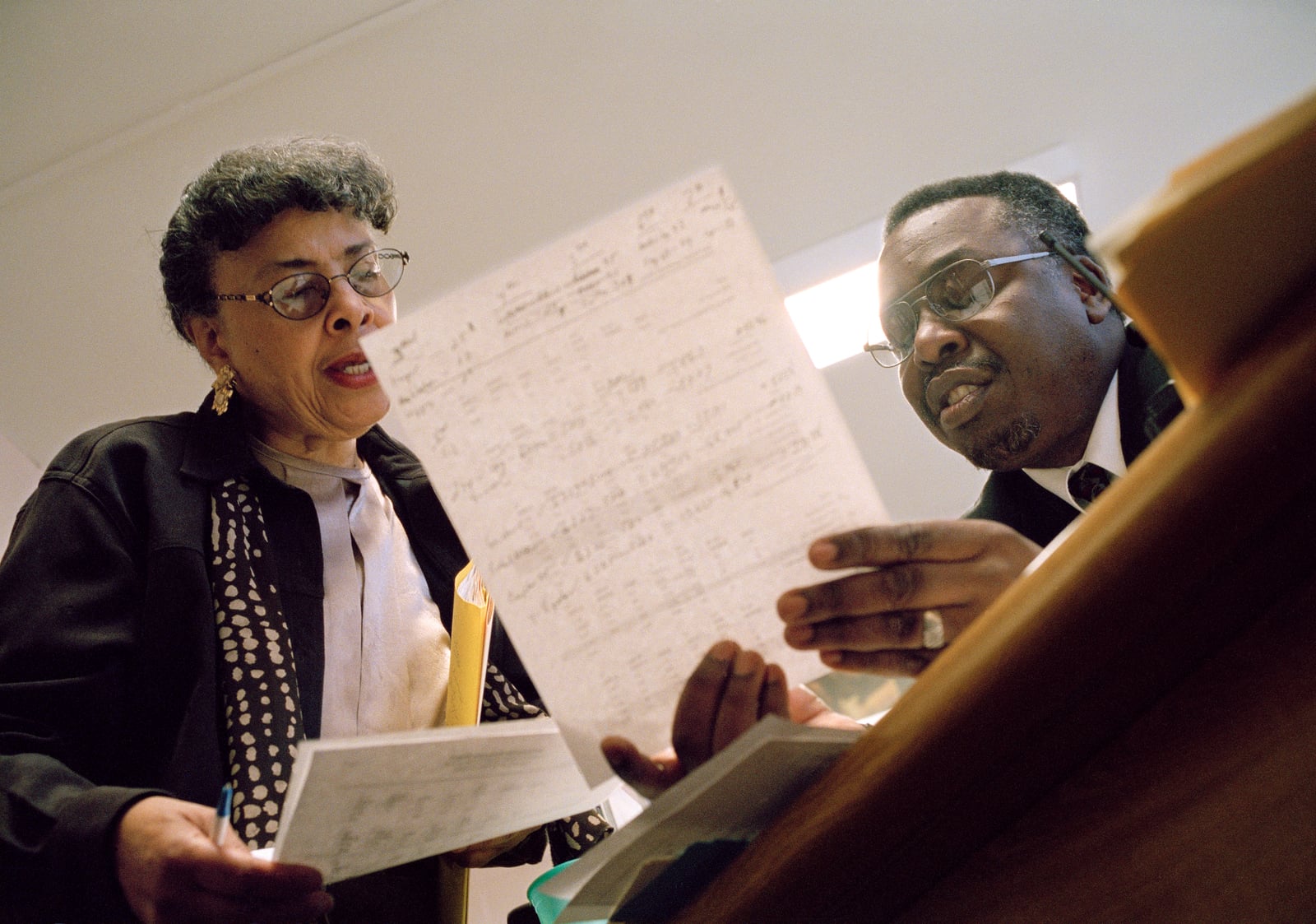
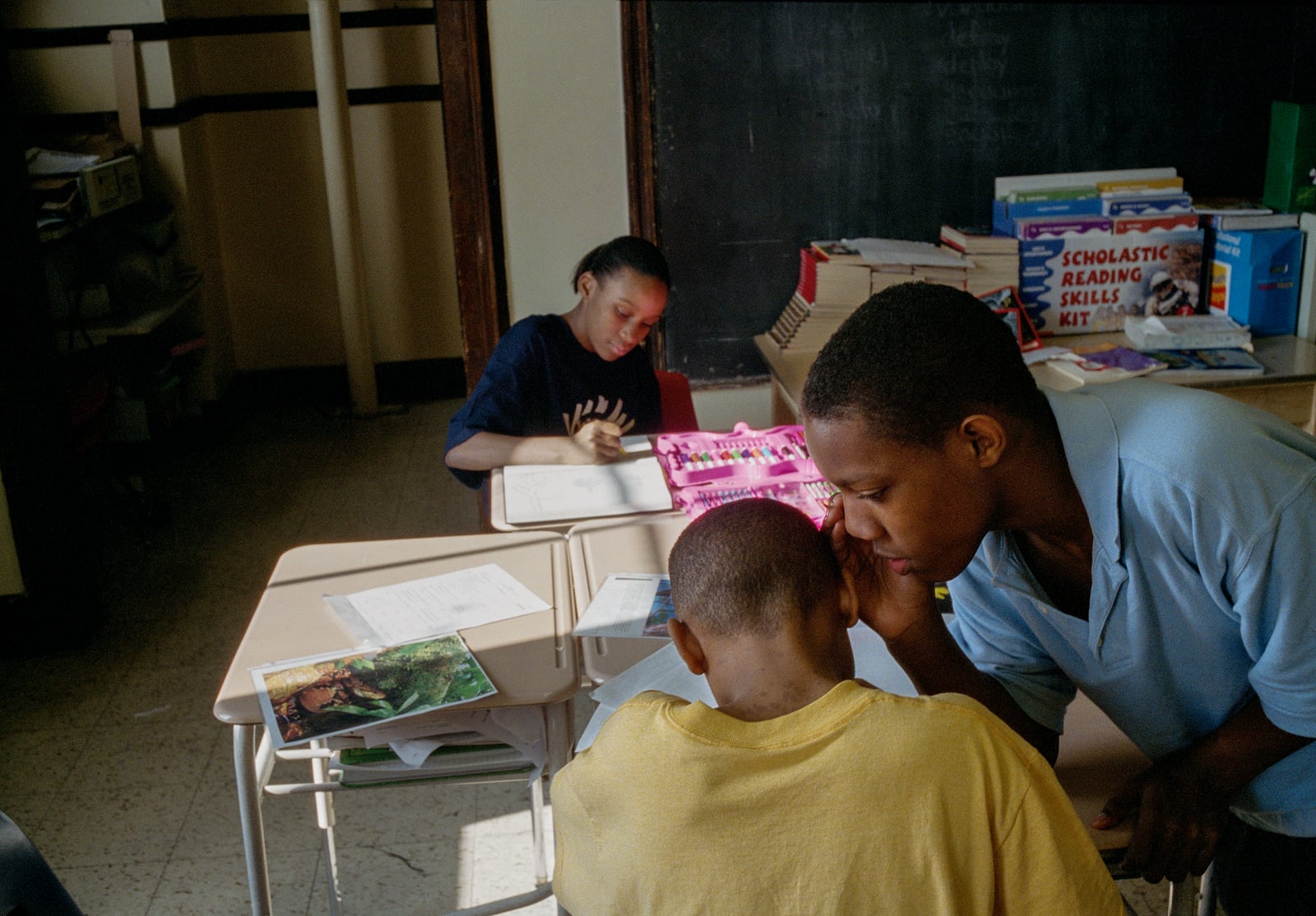
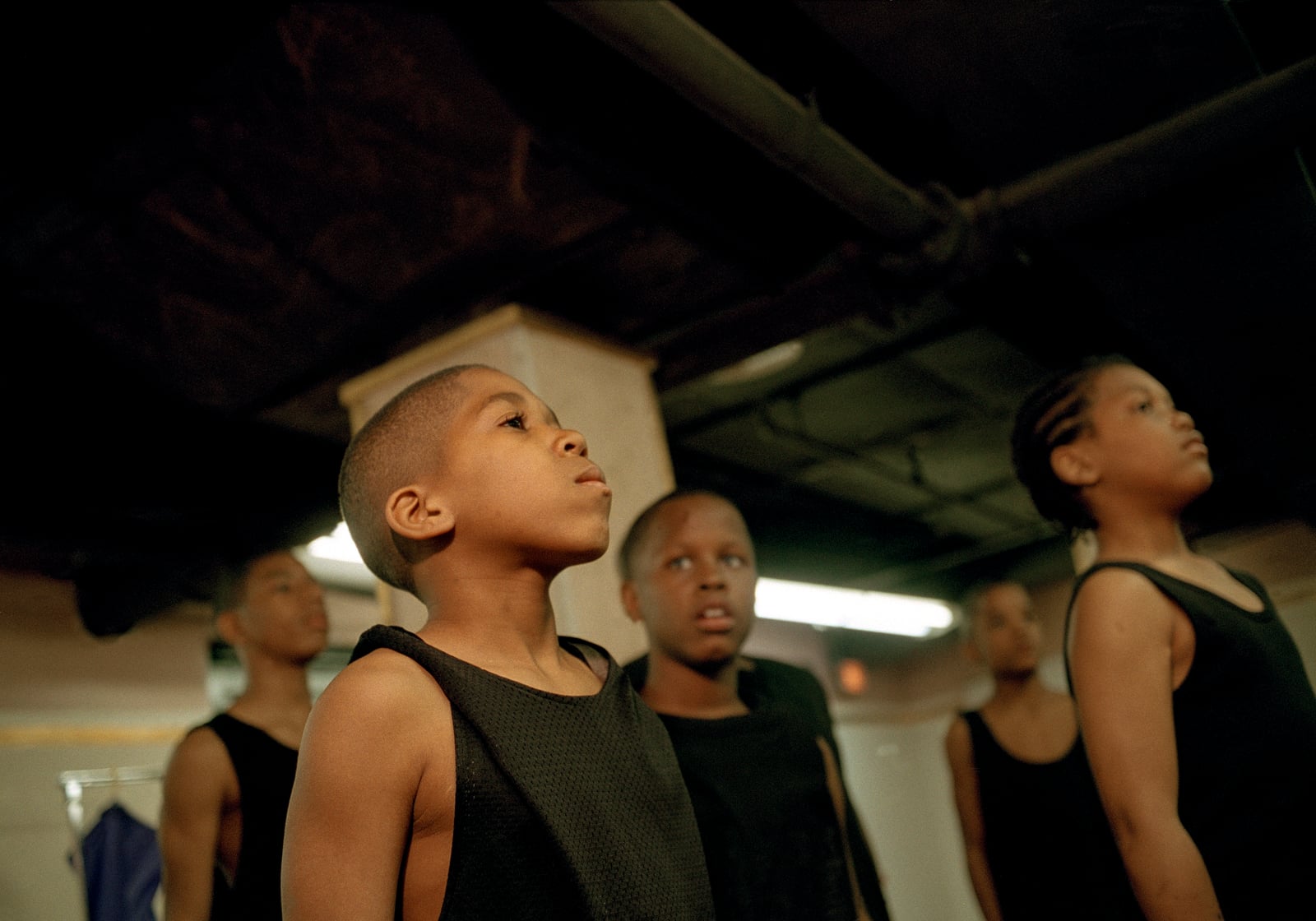
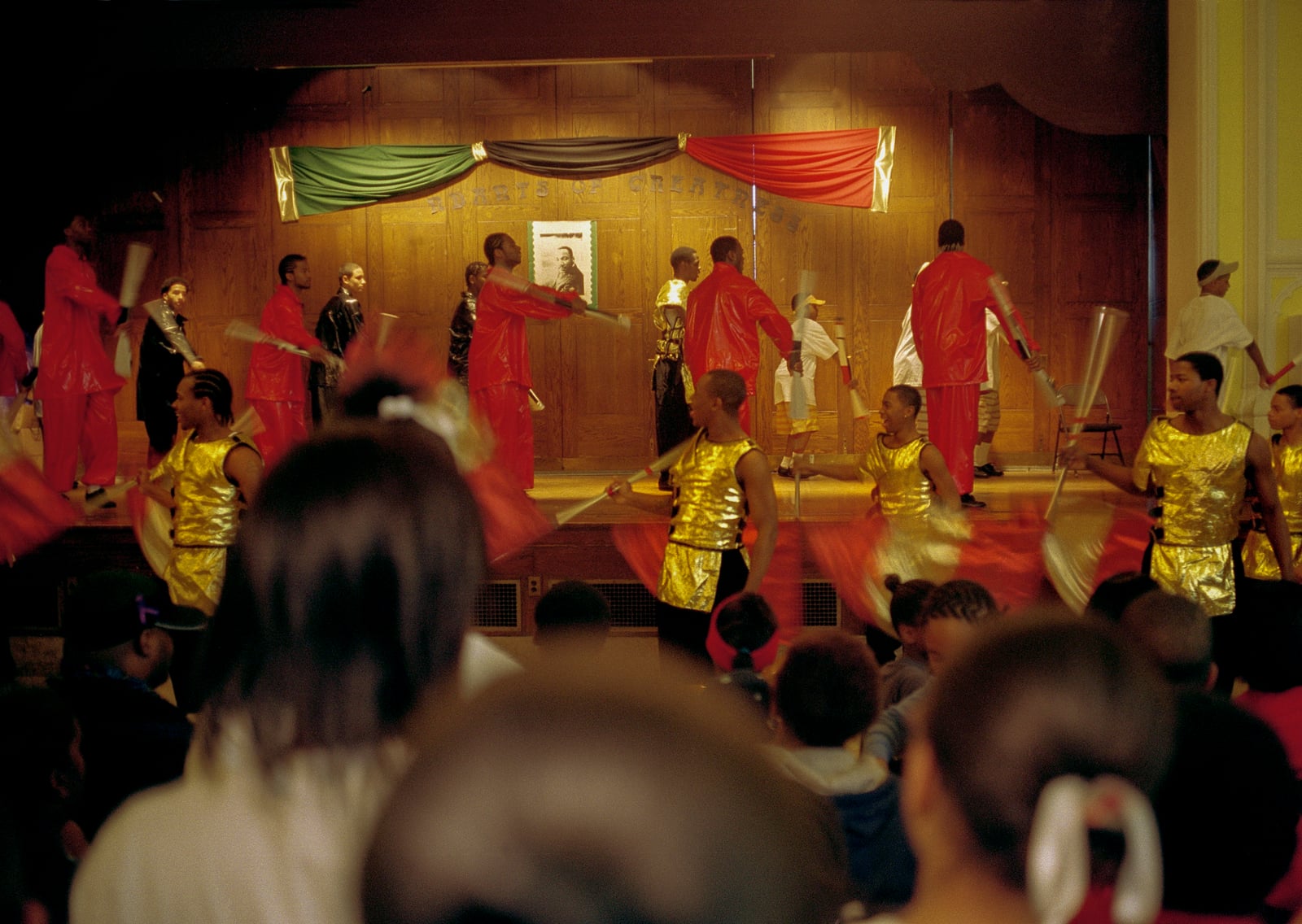
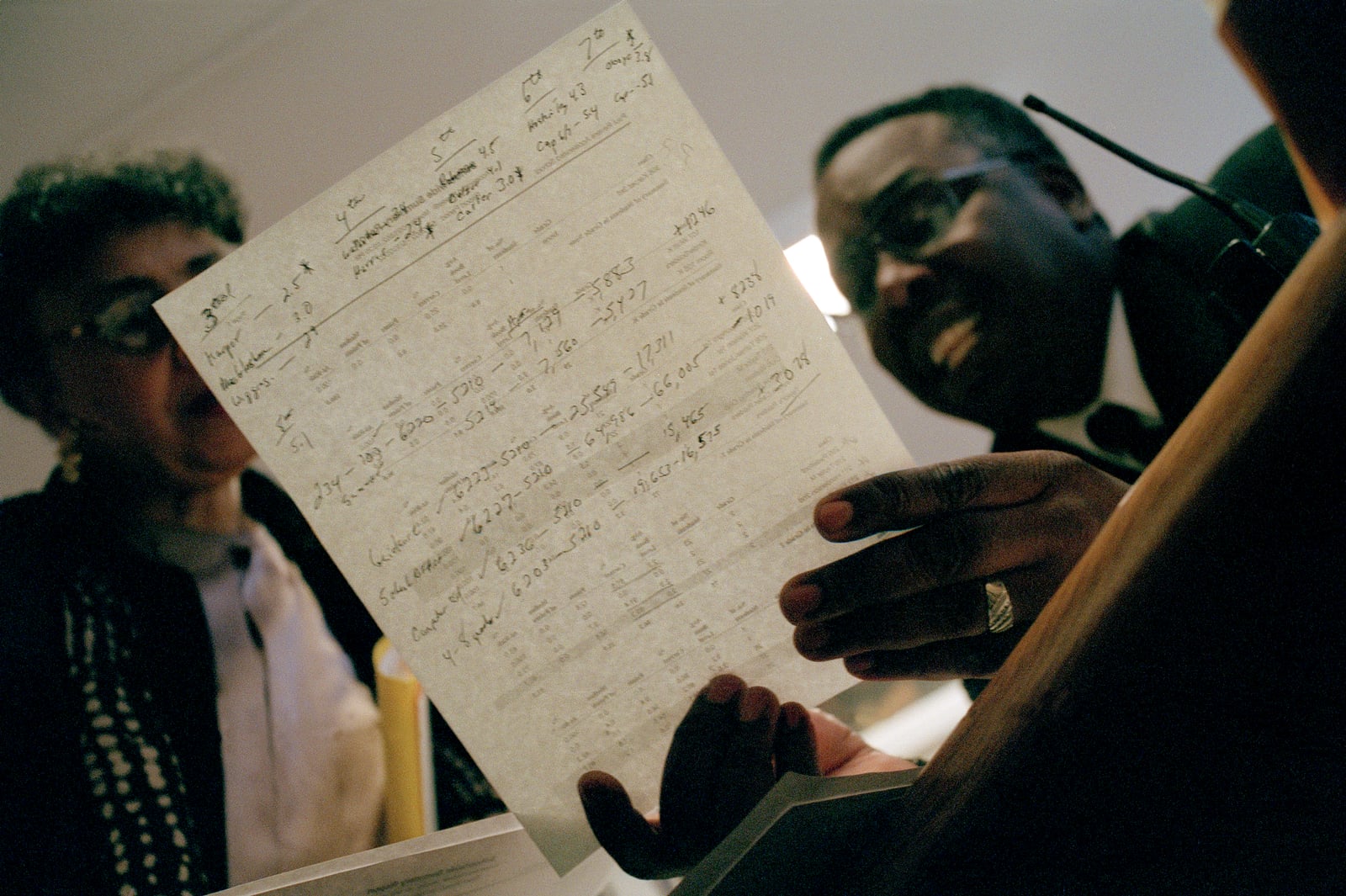
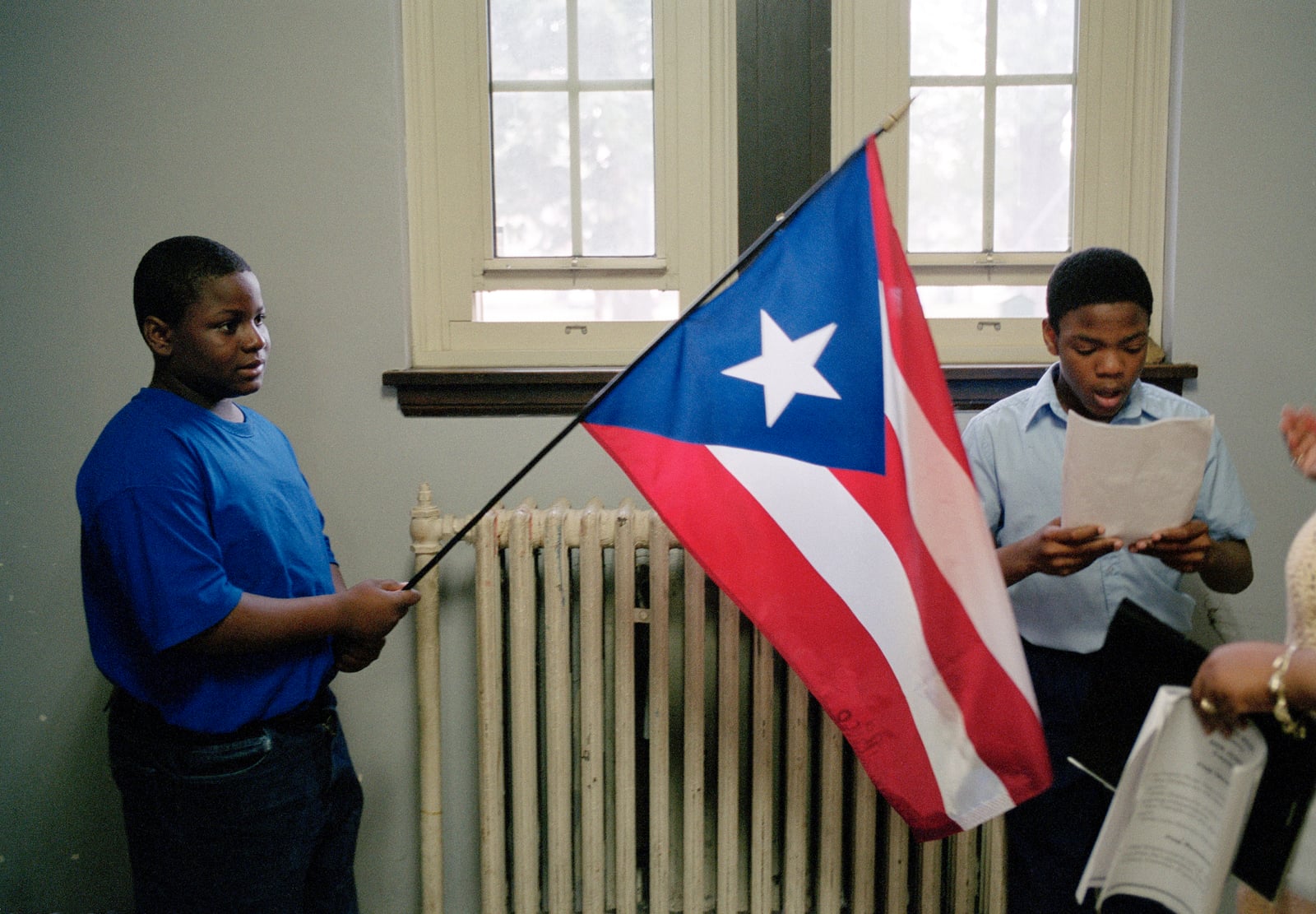
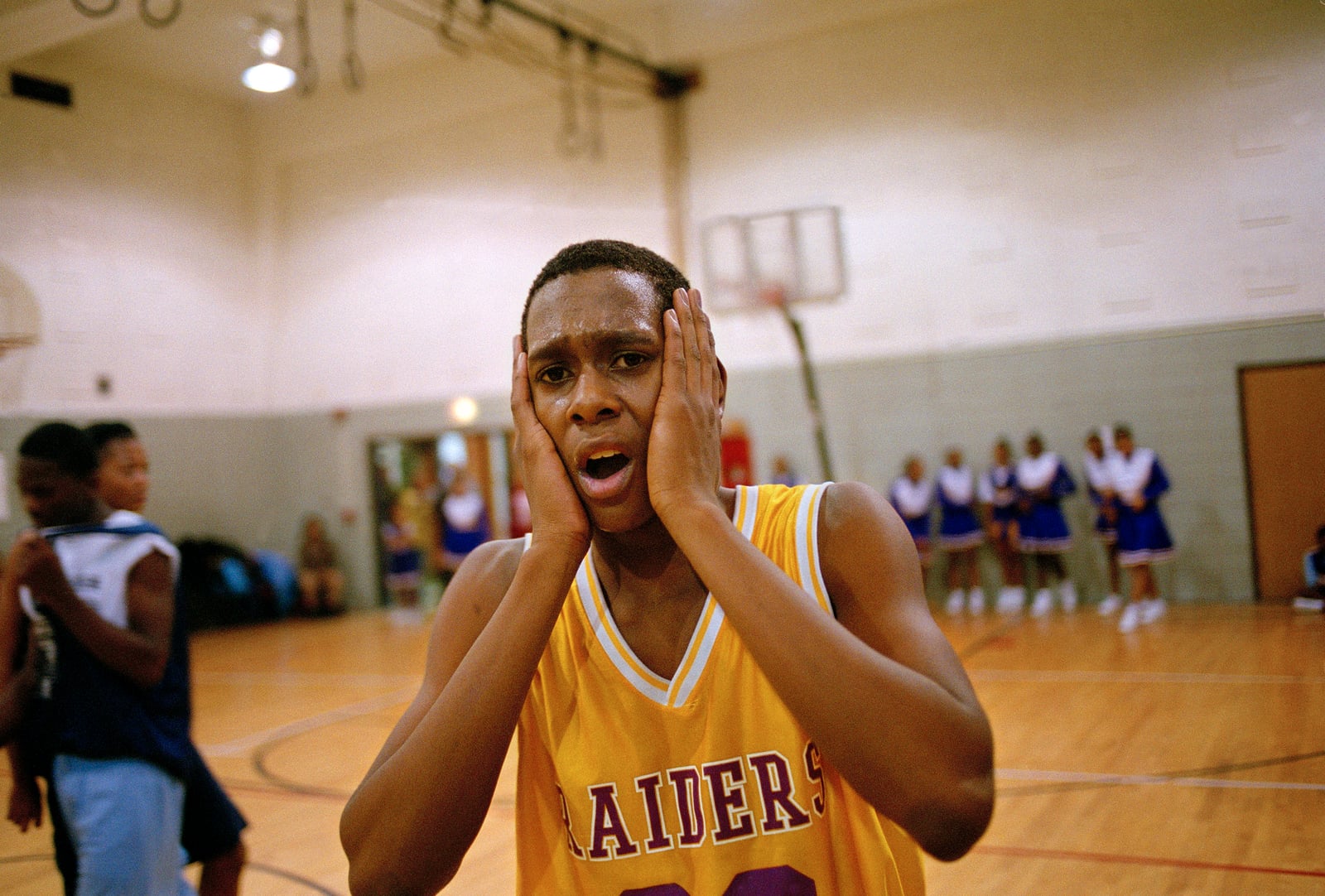
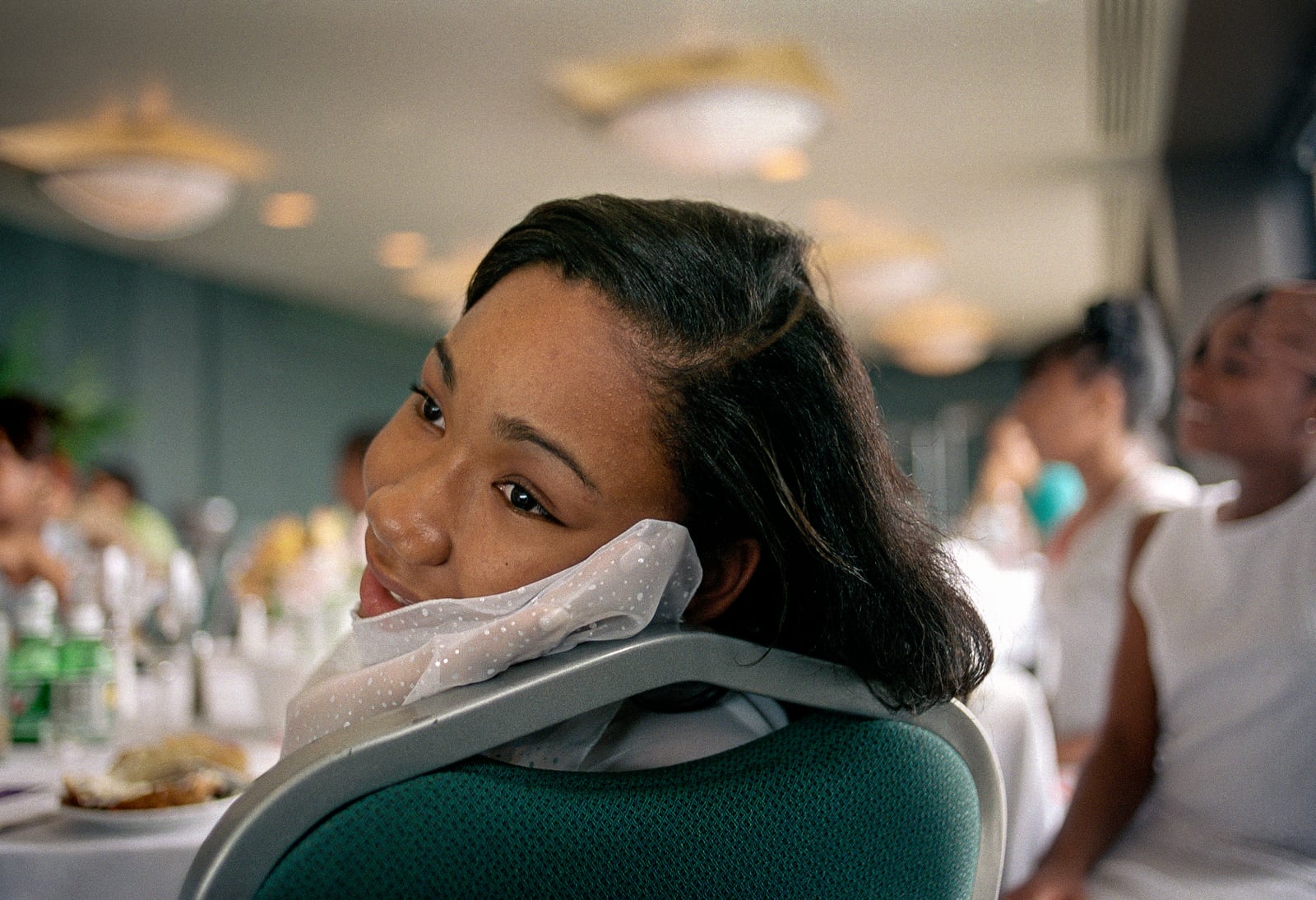
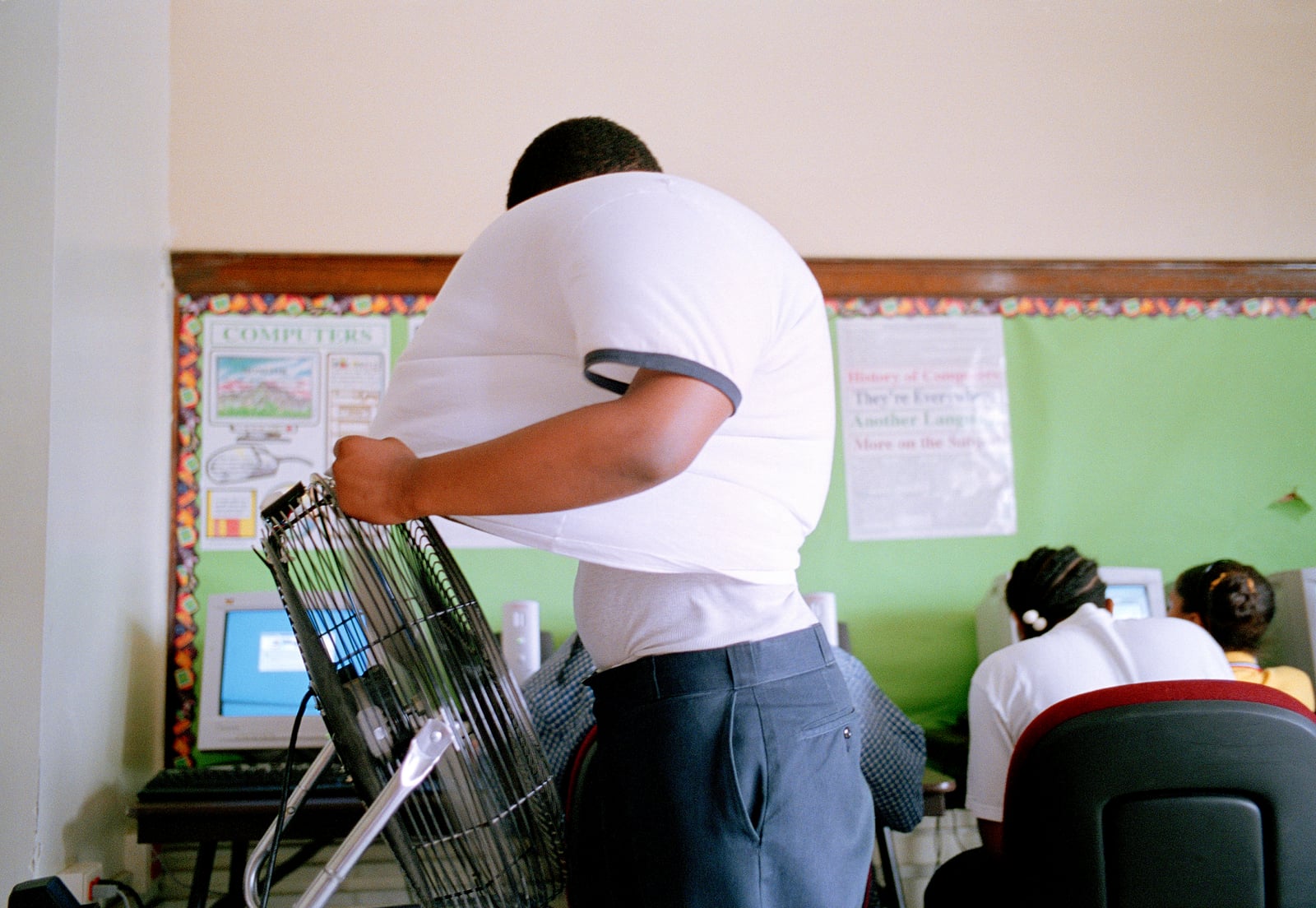
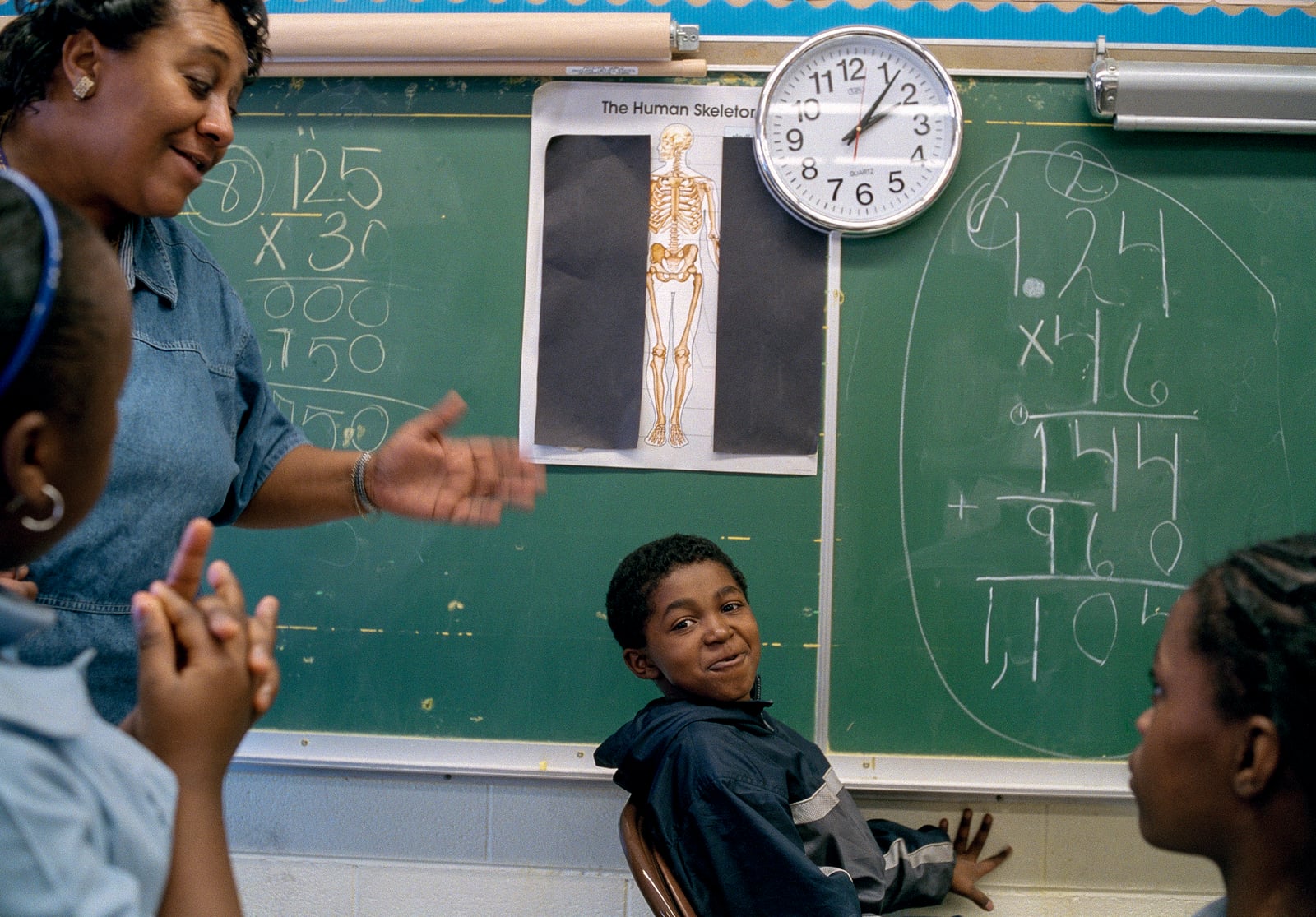
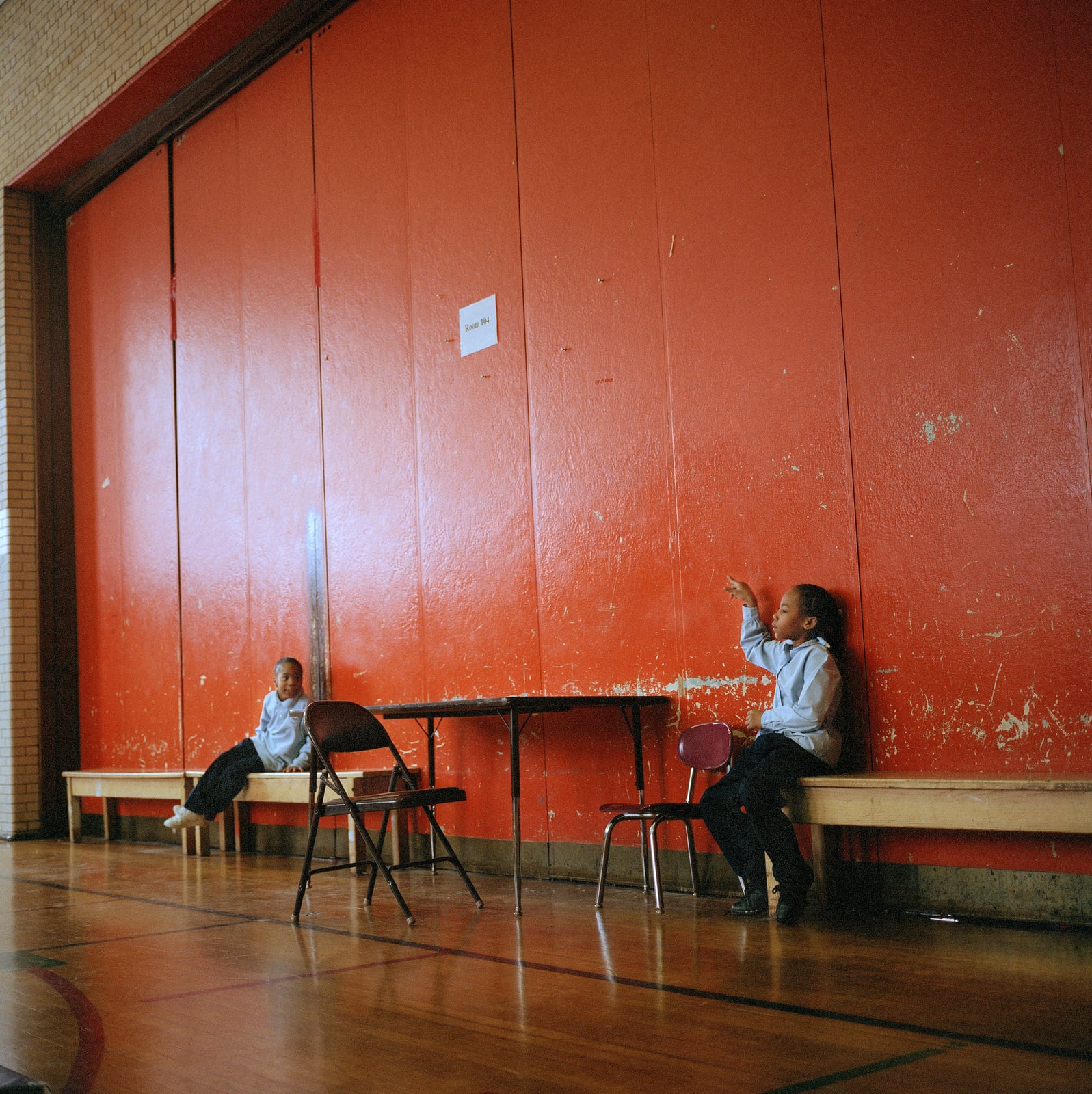
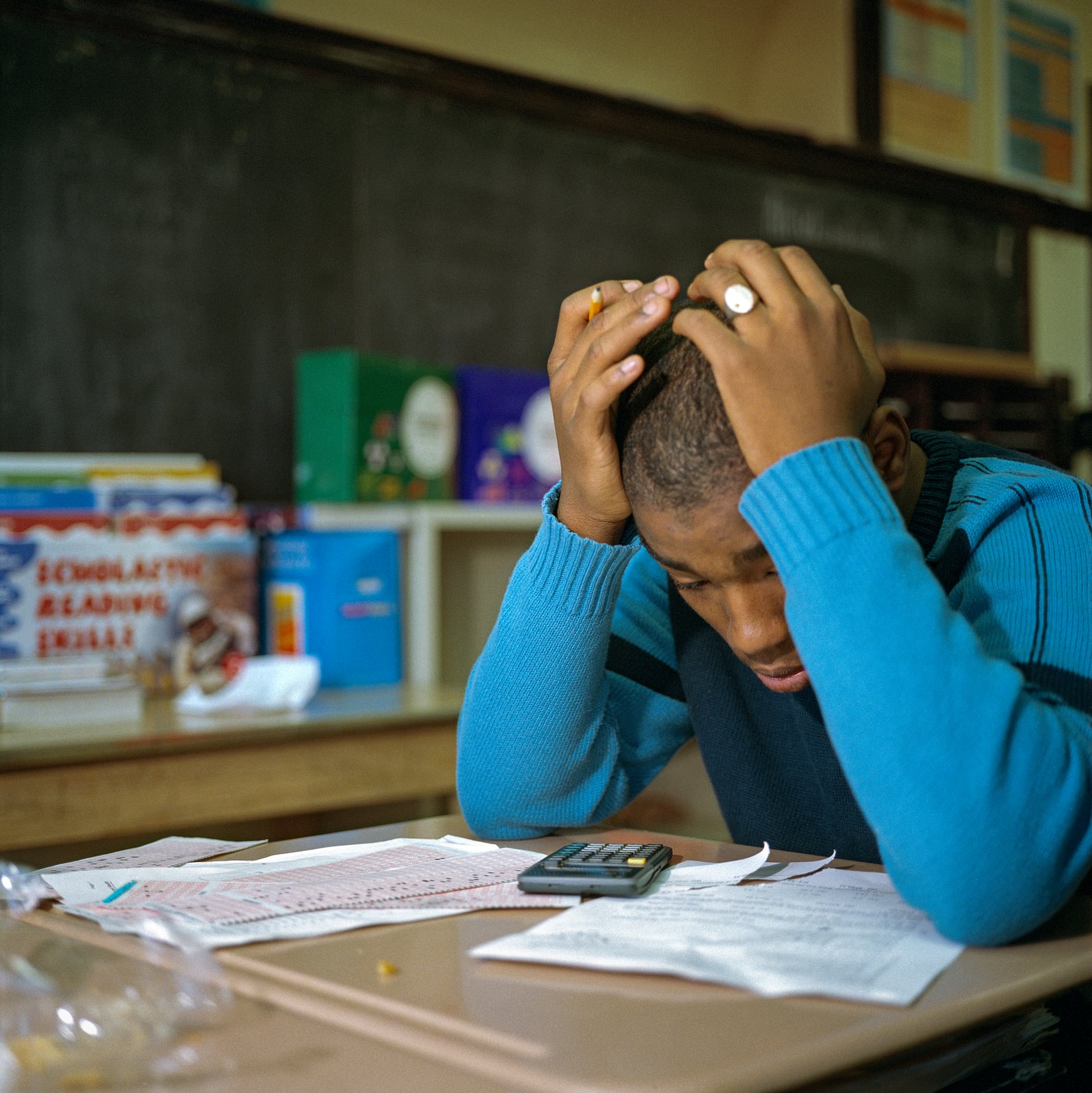
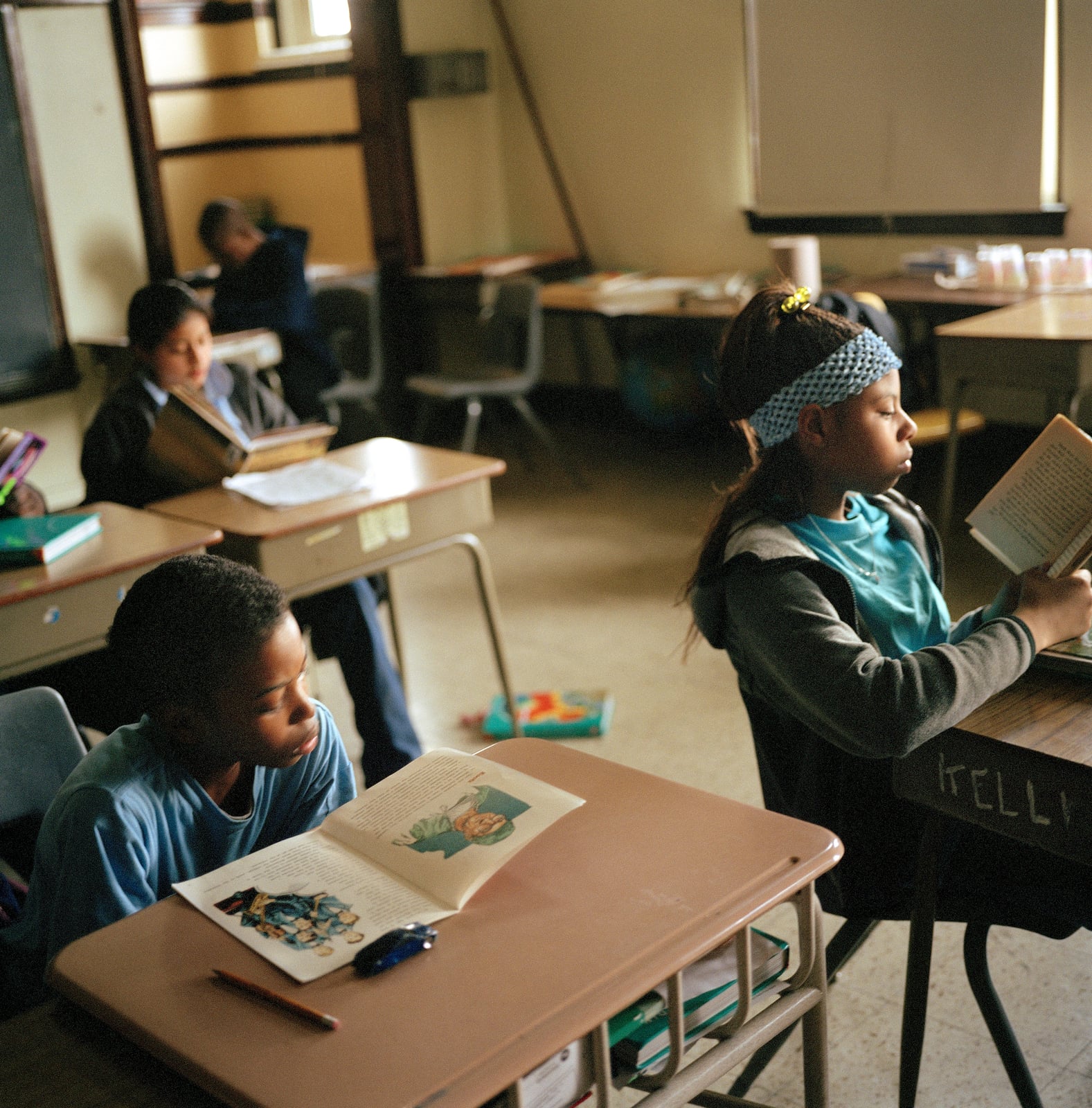
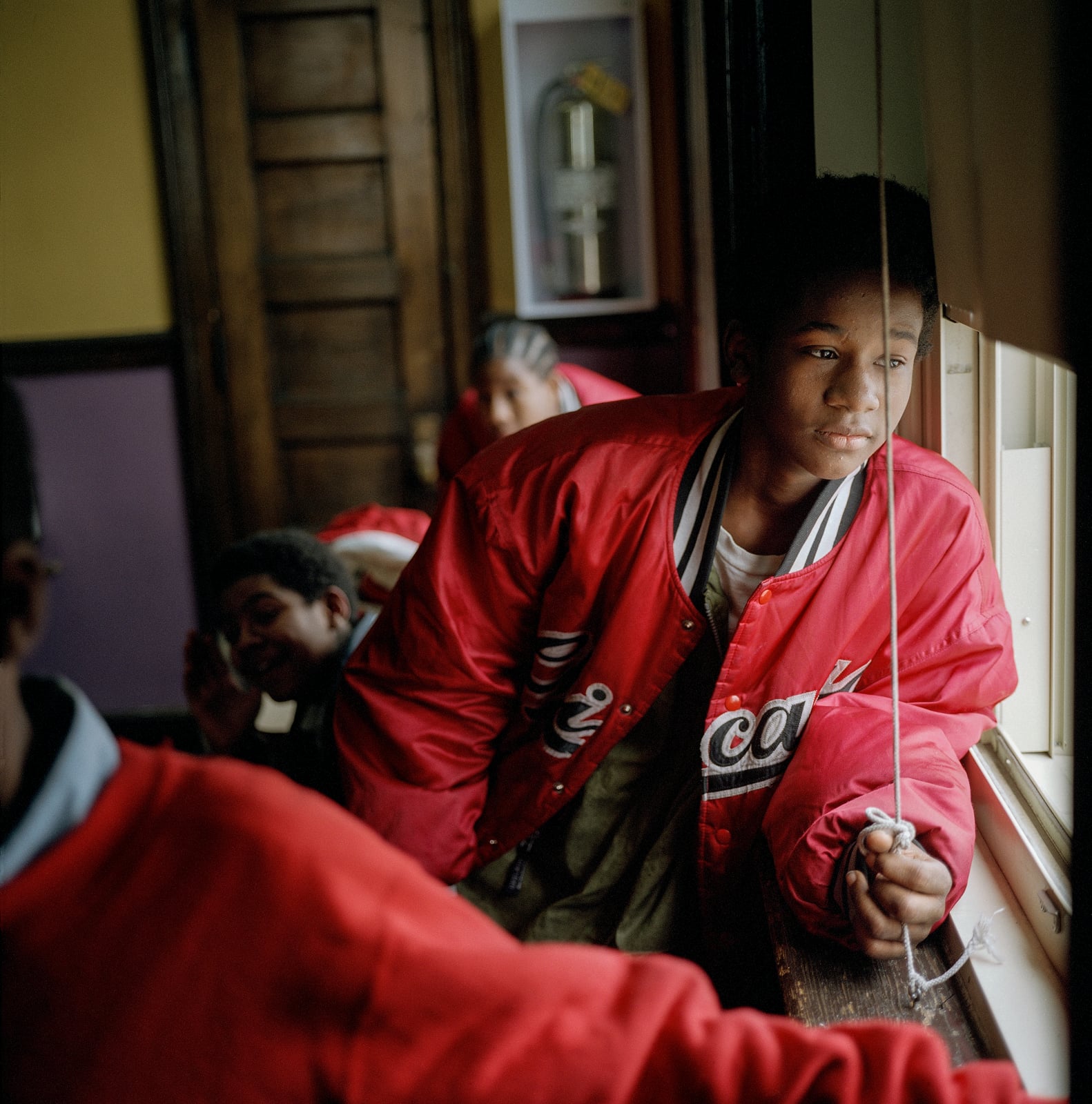
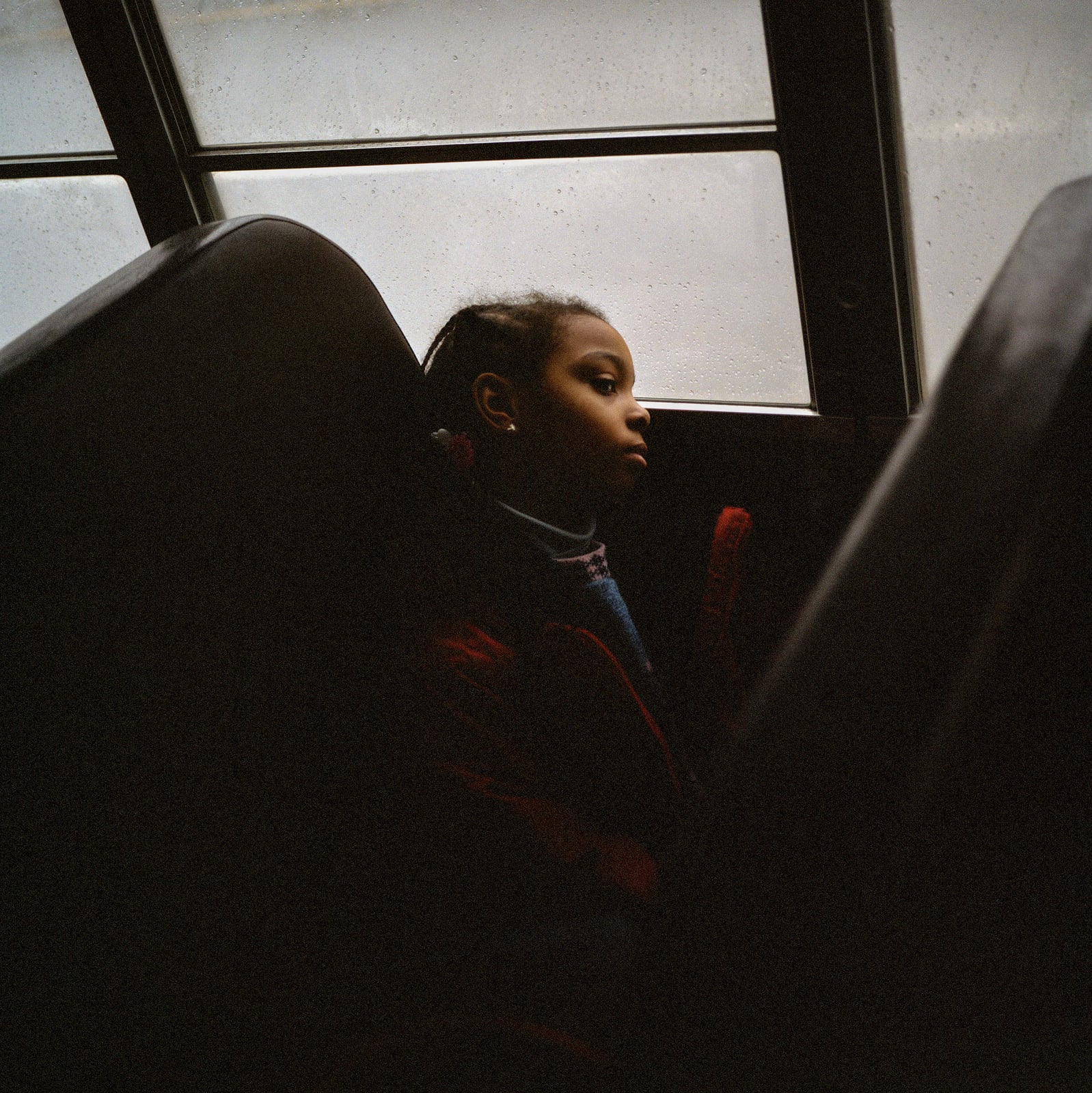
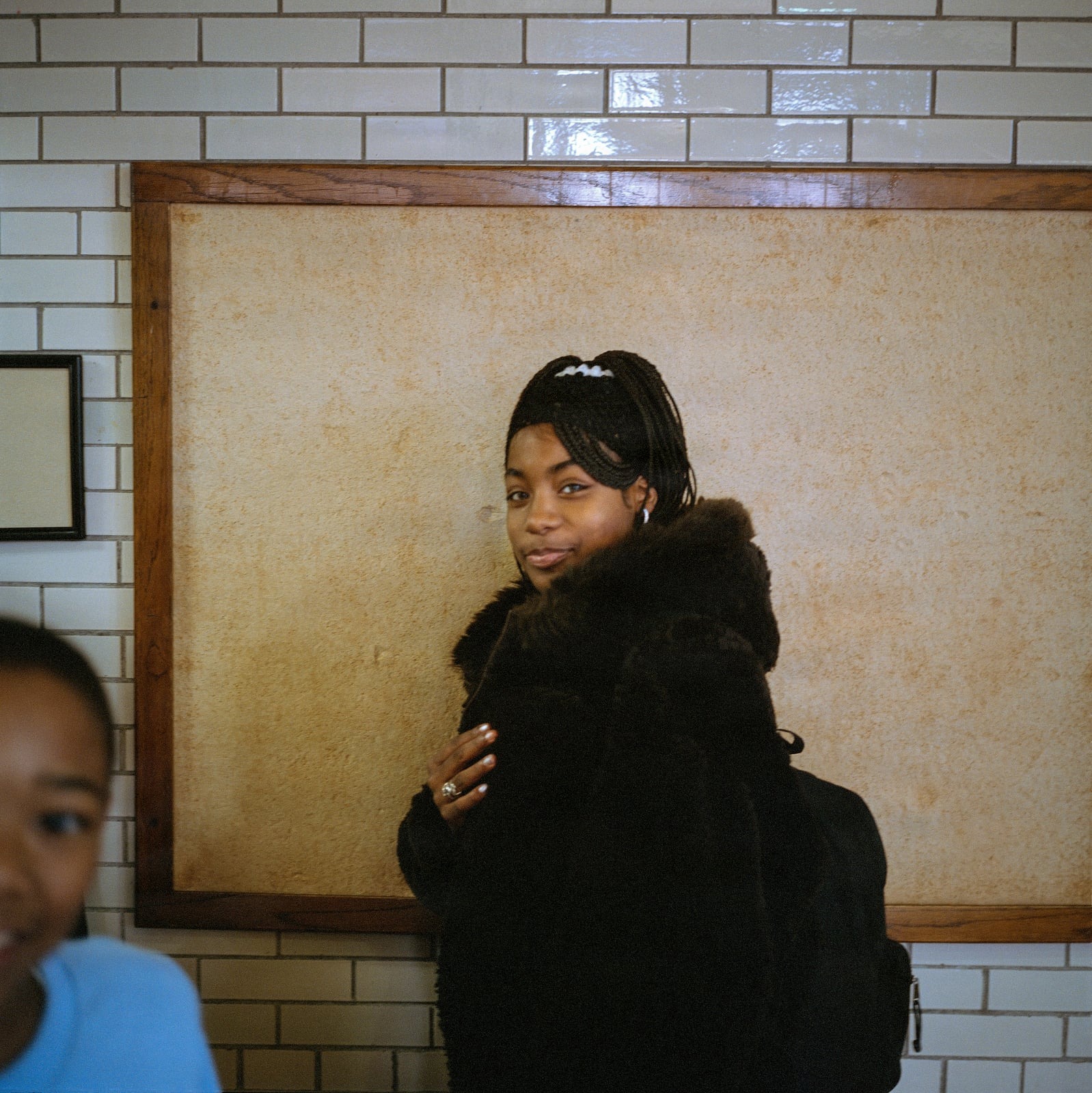
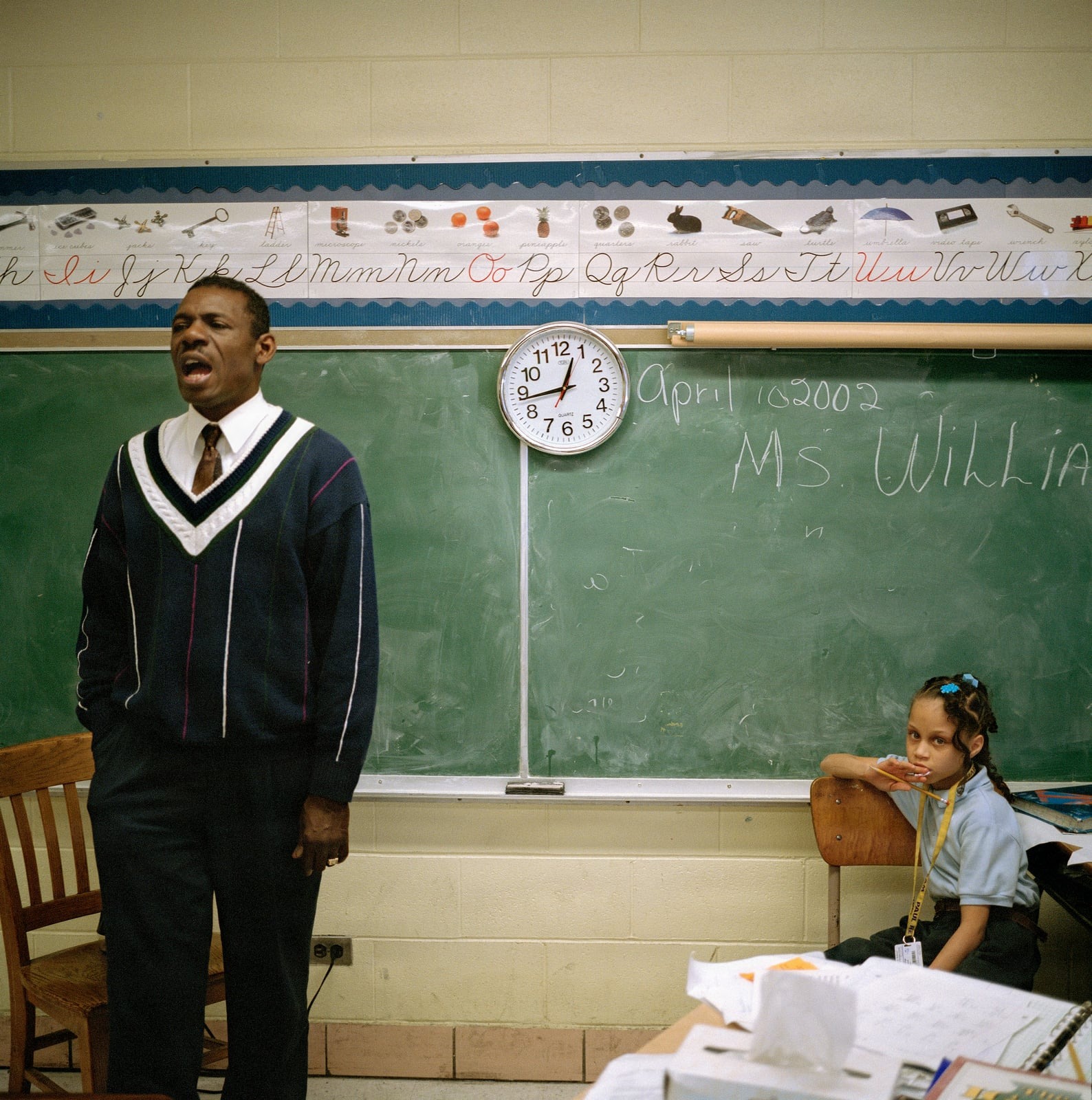
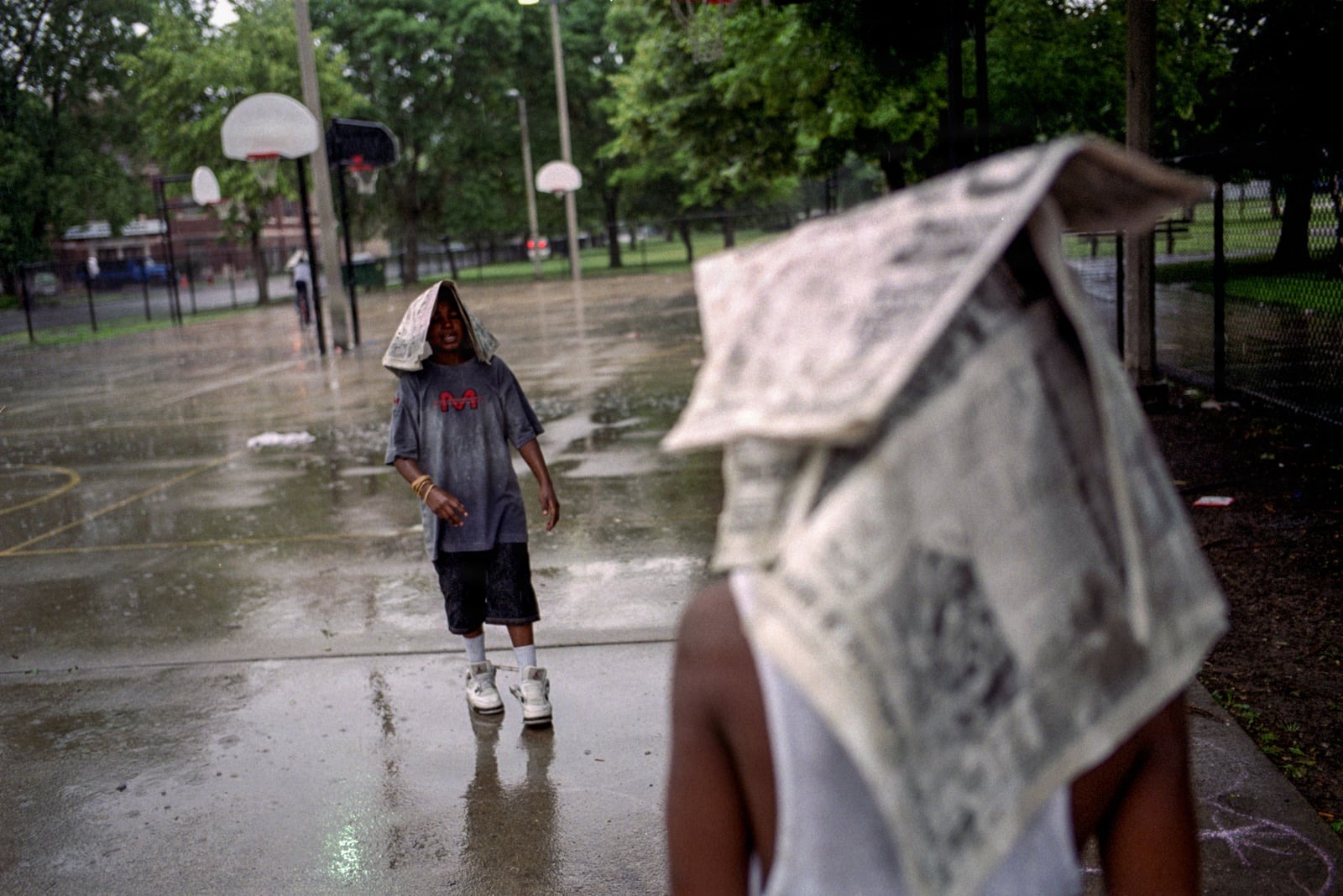
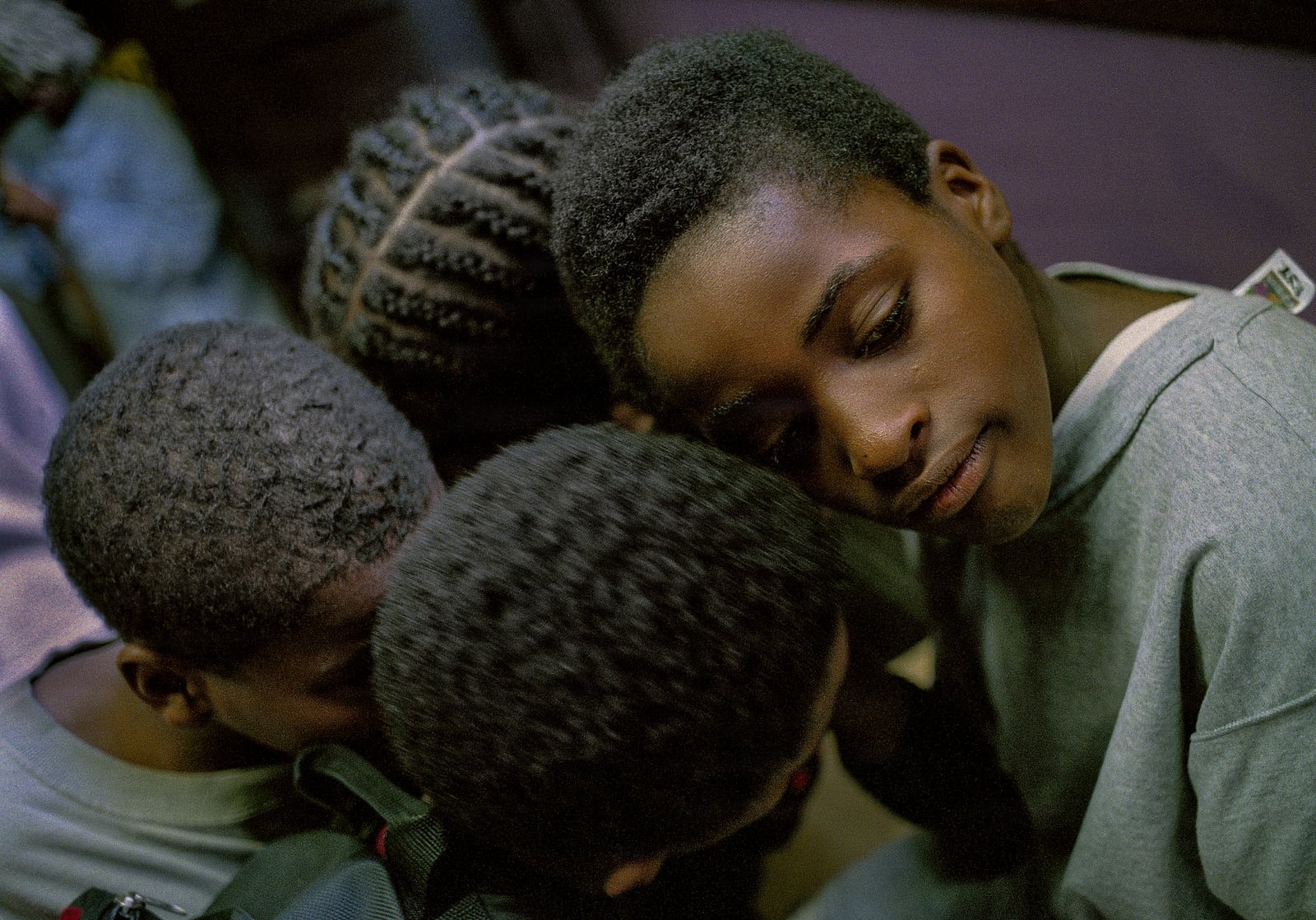
The S. Oakwood/Brookhaven or "Pocket Town" neighborhood is a small, tight knit black community on Chicago's S. Side. Roots run deep in this neighborhood. The stakes are high for the children of this community. Born into poverty, surrounded by drugs and gangs, poorly served by the city and local schools, many of the children face an uncertain future. In the past two decades this working class neighborhood has seen a steady decline as the S. Side's industry has moved away. Paul Revere Elementary School is the hub for neighborhood. Gary Comer, a Chicago philanthropist who grew up in the neighborhood has adopted the school. He has developed a community based plan for change and redevelopment starting with the school. In the past six years he has invested millions of dollars in Revere and recently completed construction on a $23 million dollar youth center. The Comer Science and Education Foundation is also developing Revere Run, a development plan that will add 90 new homes to the neighborhood. The past few years have marked the end of the Pocket's isolation. A few new homes have been completed and change is imminent, but for the most part, the neighborhood's children struggle through their daily lives with passion, hope and resilience.
Jon Lowenstein spent three years documenting life at Paul Revere Elementary School.111213 · Photographs from Chicago's Paul Revere Elementary School in the Greater Grand Crossing Neighborhood.
The S. Oakwood/Brookhaven or "Pocket Town" neighborhood is a small, tight knit black community on Chicago's S. Side. Roots run deep in this neighborhood. The stakes are high for the children of this community. Born into poverty, surrounded by drugs and gangs, poorly served by the city and local schools, many of the children face an uncertain future. In the past two decades this working class neighborhood has seen a steady decline as the S. Side's industry has moved away. Paul Revere Elementary School is the hub for neighborhood. Gary Comer, a Chicago philanthropist who grew up in the neighborhood has adopted the school. He has developed a community based plan for change and redevelopment starting with the school. In the past six years he has invested millions of dollars in Revere and recently completed construction on a $23 million dollar youth center. The Comer Science and Education Foundation is also developing Revere Run, a development plan that will add 90 new homes to the neighborhood. The past few years have marked the end of the Pocket's isolation. A few new homes have been completed and change is imminent, but for the most part, the neighborhood's children struggle through their daily lives with passion, hope and resilience.
Jon Lowenstein spent three years documenting life at Paul Revere Elementary School.14151617 · Photographs from Chicago's Paul Revere Elementary School in the Greater Grand Crossing Neighborhood.
The S. Oakwood/Brookhaven or "Pocket Town" neighborhood is a small, tight knit black community on Chicago's S. Side. Roots run deep in this neighborhood. The stakes are high for the children of this community. Born into poverty, surrounded by drugs and gangs, poorly served by the city and local schools, many of the children face an uncertain future. In the past two decades this working class neighborhood has seen a steady decline as the S. Side's industry has moved away. Paul Revere Elementary School is the hub for neighborhood. Gary Comer, a Chicago philanthropist who grew up in the neighborhood has adopted the school. He has developed a community based plan for change and redevelopment starting with the school. In the past six years he has invested millions of dollars in Revere and recently completed construction on a $23 million dollar youth center. The Comer Science and Education Foundation is also developing Revere Run, a development plan that will add 90 new homes to the neighborhood. The past few years have marked the end of the Pocket's isolation. A few new homes have been completed and change is imminent, but for the most part, the neighborhood's children struggle through their daily lives with passion, hope and resilience.
Jon Lowenstein spent three years documenting life at Paul Revere Elementary School.18 · Photographs from Chicago's Paul Revere Elementary School in the Greater Grand Crossing Neighborhood.
The S. Oakwood/Brookhaven or "Pocket Town" neighborhood is a small, tight knit black community on Chicago's S. Side. Roots run deep in this neighborhood. The stakes are high for the children of this community. Born into poverty, surrounded by drugs and gangs, poorly served by the city and local schools, many of the children face an uncertain future. In the past two decades this working class neighborhood has seen a steady decline as the S. Side's industry has moved away. Paul Revere Elementary School is the hub for neighborhood. Gary Comer, a Chicago philanthropist who grew up in the neighborhood has adopted the school. He has developed a community based plan for change and redevelopment starting with the school. In the past six years he has invested millions of dollars in Revere and recently completed construction on a $23 million dollar youth center. The Comer Science and Education Foundation is also developing Revere Run, a development plan that will add 90 new homes to the neighborhood. The past few years have marked the end of the Pocket's isolation. A few new homes have been completed and change is imminent, but for the most part, the neighborhood's children struggle through their daily lives with passion, hope and resilience.
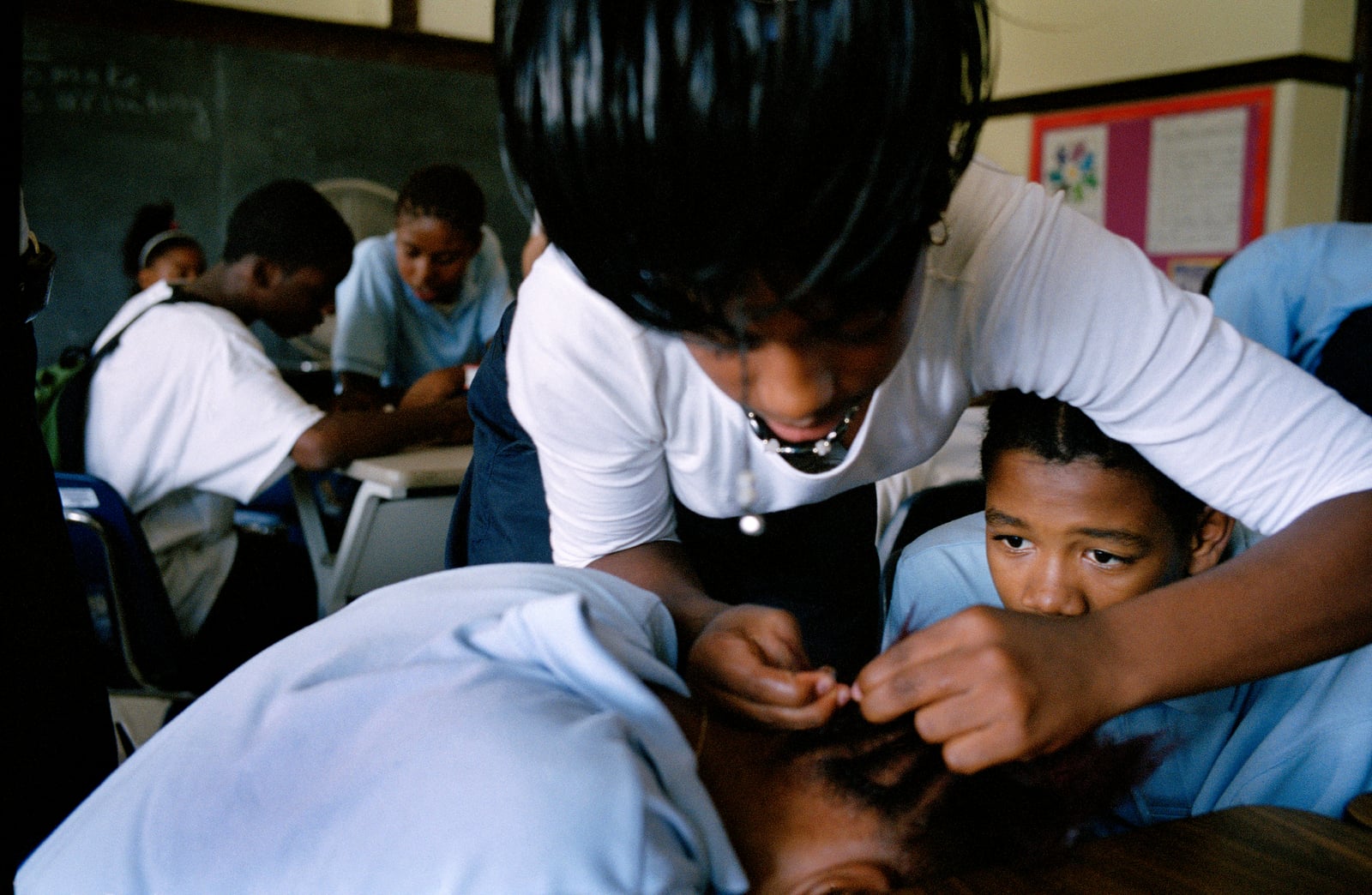
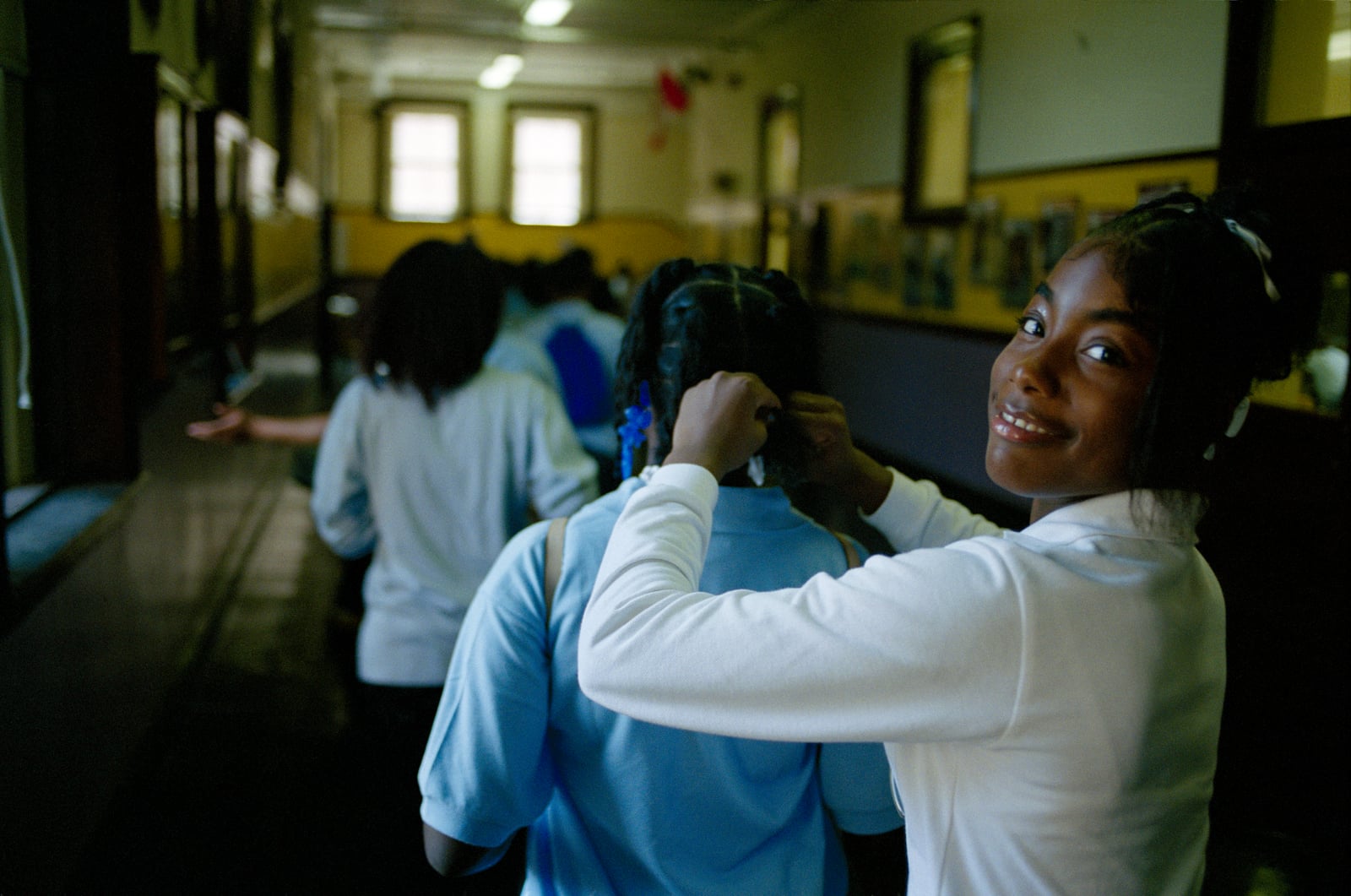
Jon Lowenstein spent three years documenting life at Paul Revere Elementary School.19 · Pocket Town Kids: Passion, Hope and Connection on Chicago's S. Side - Class Hair Salon
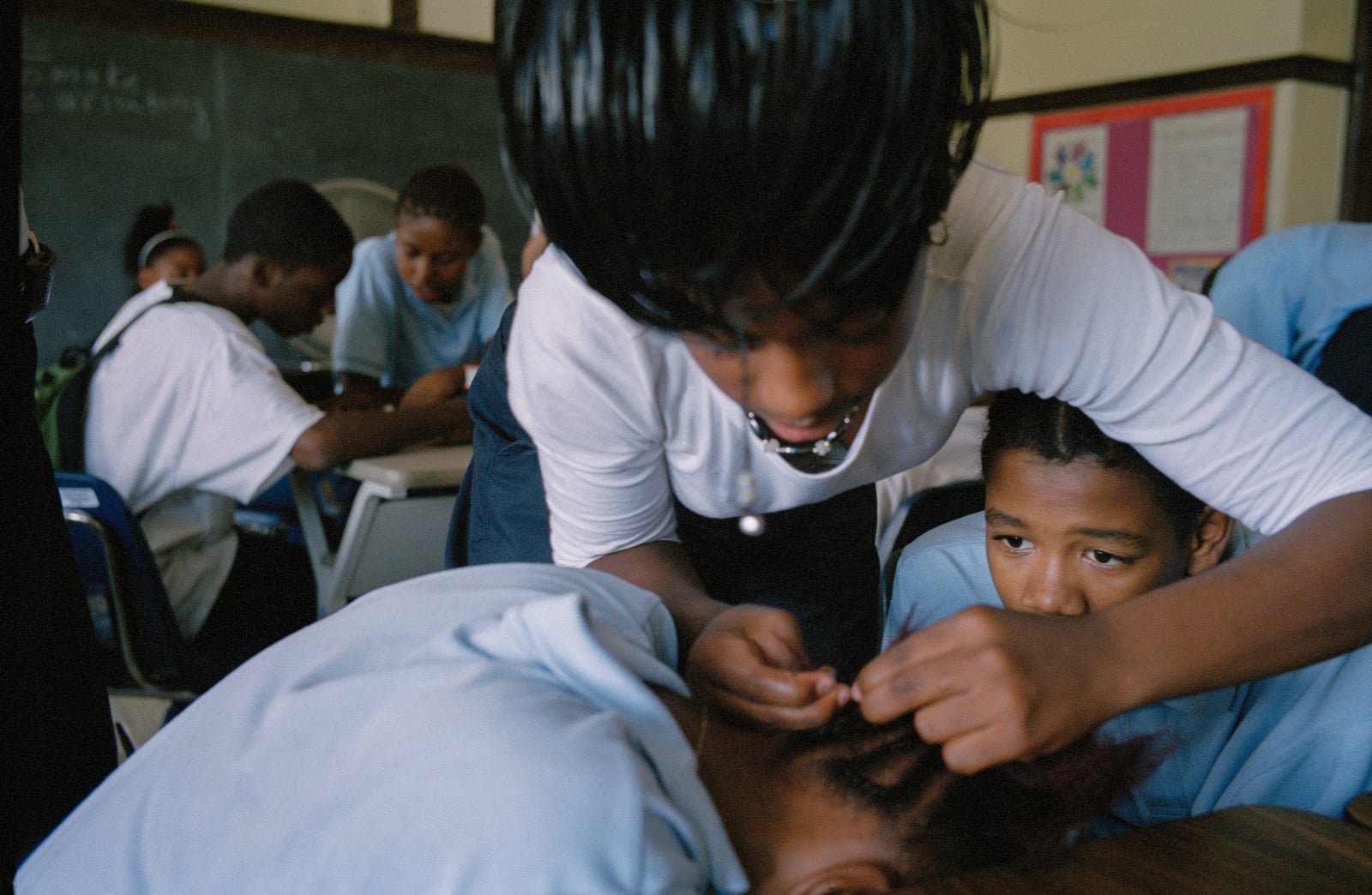
Seventh Grader, Gabrielle Newman braids a classmates hair while Timothy Johnson looks on in room 302.20 · Photographs from Chicago's Paul Revere Elementary School in the Greater Grand Crossing Neighborhood.
The S. Oakwood/Brookhaven or "Pocket Town" neighborhood is a small, tight knit black community on Chicago's S. Side. Roots run deep in this neighborhood. The stakes are high for the children of this community. Born into poverty, surrounded by drugs and gangs, poorly served by the city and local schools, many of the children face an uncertain future. In the past two decades this working class neighborhood has seen a steady decline as the S. Side's industry has moved away. Paul Revere Elementary School is the hub for neighborhood. Gary Comer, a Chicago philanthropist who grew up in the neighborhood has adopted the school. He has developed a community based plan for change and redevelopment starting with the school. In the past six years he has invested millions of dollars in Revere and recently completed construction on a $23 million dollar youth center. The Comer Science and Education Foundation is also developing Revere Run, a development plan that will add 90 new homes to the neighborhood. The past few years have marked the end of the Pocket's isolation. A few new homes have been completed and change is imminent, but for the most part, the neighborhood's children struggle through their daily lives with passion, hope and resilience.
Jon Lowenstein spent three years documenting life at Paul Revere Elementary School.21 · Photographs from Chicago's Paul Revere Elementary School in the Greater Grand Crossing Neighborhood.
The S. Oakwood/Brookhaven or "Pocket Town" neighborhood is a small, tight knit black community on Chicago's S. Side. Roots run deep in this neighborhood. The stakes are high for the children of this community. Born into poverty, surrounded by drugs and gangs, poorly served by the city and local schools, many of the children face an uncertain future. In the past two decades this working class neighborhood has seen a steady decline as the S. Side's industry has moved away. Paul Revere Elementary School is the hub for neighborhood. Gary Comer, a Chicago philanthropist who grew up in the neighborhood has adopted the school. He has developed a community based plan for change and redevelopment starting with the school. In the past six years he has invested millions of dollars in Revere and recently completed construction on a $23 million dollar youth center. The Comer Science and Education Foundation is also developing Revere Run, a development plan that will add 90 new homes to the neighborhood. The past few years have marked the end of the Pocket's isolation. A few new homes have been completed and change is imminent, but for the most part, the neighborhood's children struggle through their daily lives with passion, hope and resilience.
Jon Lowenstein spent three years documenting life at Paul Revere Elementary School.22 · Photographs from Chicago's Paul Revere Elementary School in the Greater Grand Crossing Neighborhood.
The S. Oakwood/Brookhaven or "Pocket Town" neighborhood is a small, tight knit black community on Chicago's S. Side. Roots run deep in this neighborhood. The stakes are high for the children of this community. Born into poverty, surrounded by drugs and gangs, poorly served by the city and local schools, many of the children face an uncertain future. In the past two decades this working class neighborhood has seen a steady decline as the S. Side's industry has moved away. Paul Revere Elementary School is the hub for neighborhood. Gary Comer, a Chicago philanthropist who grew up in the neighborhood has adopted the school. He has developed a community based plan for change and redevelopment starting with the school. In the past six years he has invested millions of dollars in Revere and recently completed construction on a $23 million dollar youth center. The Comer Science and Education Foundation is also developing Revere Run, a development plan that will add 90 new homes to the neighborhood. The past few years have marked the end of the Pocket's isolation. A few new homes have been completed and change is imminent, but for the most part, the neighborhood's children struggle through their daily lives with passion, hope and resilience.
Jon Lowenstein spent three years documenting life at Paul Revere Elementary School.23 · Photographs from Chicago's Paul Revere Elementary School in the Greater Grand Crossing Neighborhood.
The S. Oakwood/Brookhaven or "Pocket Town" neighborhood is a small, tight knit black community on Chicago's S. Side. Roots run deep in this neighborhood. The stakes are high for the children of this community. Born into poverty, surrounded by drugs and gangs, poorly served by the city and local schools, many of the children face an uncertain future. In the past two decades this working class neighborhood has seen a steady decline as the S. Side's industry has moved away. Paul Revere Elementary School is the hub for neighborhood. Gary Comer, a Chicago philanthropist who grew up in the neighborhood has adopted the school. He has developed a community based plan for change and redevelopment starting with the school. In the past six years he has invested millions of dollars in Revere and recently completed construction on a $23 million dollar youth center. The Comer Science and Education Foundation is also developing Revere Run, a development plan that will add 90 new homes to the neighborhood. The past few years have marked the end of the Pocket's isolation. A few new homes have been completed and change is imminent, but for the most part, the neighborhood's children struggle through their daily lives with passion, hope and resilience.
Jon Lowenstein spent three years documenting life at Paul Revere Elementary School.24 · Photographs from Chicago's Paul Revere Elementary School in the Greater Grand Crossing Neighborhood.
The S. Oakwood/Brookhaven or "Pocket Town" neighborhood is a small, tight knit black community on Chicago's S. Side. Roots run deep in this neighborhood. The stakes are high for the children of this community. Born into poverty, surrounded by drugs and gangs, poorly served by the city and local schools, many of the children face an uncertain future. In the past two decades this working class neighborhood has seen a steady decline as the S. Side's industry has moved away. Paul Revere Elementary School is the hub for neighborhood. Gary Comer, a Chicago philanthropist who grew up in the neighborhood has adopted the school. He has developed a community based plan for change and redevelopment starting with the school. In the past six years he has invested millions of dollars in Revere and recently completed construction on a $23 million dollar youth center. The Comer Science and Education Foundation is also developing Revere Run, a development plan that will add 90 new homes to the neighborhood. The past few years have marked the end of the Pocket's isolation. A few new homes have been completed and change is imminent, but for the most part, the neighborhood's children struggle through their daily lives with passion, hope and resilience.
Jon Lowenstein spent three years documenting life at Paul Revere Elementary School.25 · Photographs from Chicago's Paul Revere Elementary School in the Greater Grand Crossing Neighborhood.
The S. Oakwood/Brookhaven or "Pocket Town" neighborhood is a small, tight knit black community on Chicago's S. Side. Roots run deep in this neighborhood. The stakes are high for the children of this community. Born into poverty, surrounded by drugs and gangs, poorly served by the city and local schools, many of the children face an uncertain future. In the past two decades this working class neighborhood has seen a steady decline as the S. Side's industry has moved away. Paul Revere Elementary School is the hub for neighborhood. Gary Comer, a Chicago philanthropist who grew up in the neighborhood has adopted the school. He has developed a community based plan for change and redevelopment starting with the school. In the past six years he has invested millions of dollars in Revere and recently completed construction on a $23 million dollar youth center. The Comer Science and Education Foundation is also developing Revere Run, a development plan that will add 90 new homes to the neighborhood. The past few years have marked the end of the Pocket's isolation. A few new homes have been completed and change is imminent, but for the most part, the neighborhood's children struggle through their daily lives with passion, hope and resilience.
Jon Lowenstein spent three years documenting life at Paul Revere Elementary School.26 · Photographs from Chicago's Paul Revere Elementary School in the Greater Grand Crossing Neighborhood.
The S. Oakwood/Brookhaven or "Pocket Town" neighborhood is a small, tight knit black community on Chicago's S. Side. Roots run deep in this neighborhood. The stakes are high for the children of this community. Born into poverty, surrounded by drugs and gangs, poorly served by the city and local schools, many of the children face an uncertain future. In the past two decades this working class neighborhood has seen a steady decline as the S. Side's industry has moved away. Paul Revere Elementary School is the hub for neighborhood. Gary Comer, a Chicago philanthropist who grew up in the neighborhood has adopted the school. He has developed a community based plan for change and redevelopment starting with the school. In the past six years he has invested millions of dollars in Revere and recently completed construction on a $23 million dollar youth center. The Comer Science and Education Foundation is also developing Revere Run, a development plan that will add 90 new homes to the neighborhood. The past few years have marked the end of the Pocket's isolation. A few new homes have been completed and change is imminent, but for the most part, the neighborhood's children struggle through their daily lives with passion, hope and resilience.
Jon Lowenstein spent three years documenting life at Paul Revere Elementary School.27 · Photographs from Chicago's Paul Revere Elementary School in the Greater Grand Crossing Neighborhood.
The S. Oakwood/Brookhaven or "Pocket Town" neighborhood is a small, tight knit black community on Chicago's S. Side. Roots run deep in this neighborhood. The stakes are high for the children of this community. Born into poverty, surrounded by drugs and gangs, poorly served by the city and local schools, many of the children face an uncertain future. In the past two decades this working class neighborhood has seen a steady decline as the S. Side's industry has moved away. Paul Revere Elementary School is the hub for neighborhood. Gary Comer, a Chicago philanthropist who grew up in the neighborhood has adopted the school. He has developed a community based plan for change and redevelopment starting with the school. In the past six years he has invested millions of dollars in Revere and recently completed construction on a $23 million dollar youth center. The Comer Science and Education Foundation is also developing Revere Run, a development plan that will add 90 new homes to the neighborhood. The past few years have marked the end of the Pocket's isolation. A few new homes have been completed and change is imminent, but for the most part, the neighborhood's children struggle through their daily lives with passion, hope and resilience.
Jon Lowenstein spent three years documenting life at Paul Revere Elementary School.28 · Photographs from Chicago's Paul Revere Elementary School in the Greater Grand Crossing Neighborhood.
The S. Oakwood/Brookhaven or "Pocket Town" neighborhood is a small, tight knit black community on Chicago's S. Side. Roots run deep in this neighborhood. The stakes are high for the children of this community. Born into poverty, surrounded by drugs and gangs, poorly served by the city and local schools, many of the children face an uncertain future. In the past two decades this working class neighborhood has seen a steady decline as the S. Side's industry has moved away. Paul Revere Elementary School is the hub for neighborhood. Gary Comer, a Chicago philanthropist who grew up in the neighborhood has adopted the school. He has developed a community based plan for change and redevelopment starting with the school. In the past six years he has invested millions of dollars in Revere and recently completed construction on a $23 million dollar youth center. The Comer Science and Education Foundation is also developing Revere Run, a development plan that will add 90 new homes to the neighborhood. The past few years have marked the end of the Pocket's isolation. A few new homes have been completed and change is imminent, but for the most part, the neighborhood's children struggle through their daily lives with passion, hope and resilience.
Jon Lowenstein spent three years documenting life at Paul Revere Elementary School.29 · Photographs from Chicago's Paul Revere Elementary School in the Greater Grand Crossing Neighborhood.
The S. Oakwood/Brookhaven or "Pocket Town" neighborhood is a small, tight knit black community on Chicago's S. Side. Roots run deep in this neighborhood. The stakes are high for the children of this community. Born into poverty, surrounded by drugs and gangs, poorly served by the city and local schools, many of the children face an uncertain future. In the past two decades this working class neighborhood has seen a steady decline as the S. Side's industry has moved away. Paul Revere Elementary School is the hub for neighborhood. Gary Comer, a Chicago philanthropist who grew up in the neighborhood has adopted the school. He has developed a community based plan for change and redevelopment starting with the school. In the past six years he has invested millions of dollars in Revere and recently completed construction on a $23 million dollar youth center. The Comer Science and Education Foundation is also developing Revere Run, a development plan that will add 90 new homes to the neighborhood. The past few years have marked the end of the Pocket's isolation. A few new homes have been completed and change is imminent, but for the most part, the neighborhood's children struggle through their daily lives with passion, hope and resilience.
Jon Lowenstein spent three years documenting life at Paul Revere Elementary School.30 · Photographs from Chicago's Paul Revere Elementary School in the Greater Grand Crossing Neighborhood.
The S. Oakwood/Brookhaven or "Pocket Town" neighborhood is a small, tight knit black community on Chicago's S. Side. Roots run deep in this neighborhood. The stakes are high for the children of this community. Born into poverty, surrounded by drugs and gangs, poorly served by the city and local schools, many of the children face an uncertain future. In the past two decades this working class neighborhood has seen a steady decline as the S. Side's industry has moved away. Paul Revere Elementary School is the hub for neighborhood. Gary Comer, a Chicago philanthropist who grew up in the neighborhood has adopted the school. He has developed a community based plan for change and redevelopment starting with the school. In the past six years he has invested millions of dollars in Revere and recently completed construction on a $23 million dollar youth center. The Comer Science and Education Foundation is also developing Revere Run, a development plan that will add 90 new homes to the neighborhood. The past few years have marked the end of the Pocket's isolation. A few new homes have been completed and change is imminent, but for the most part, the neighborhood's children struggle through their daily lives with passion, hope and resilience.
Jon Lowenstein spent three years documenting life at Paul Revere Elementary School.31 · Photographs from Chicago's Paul Revere Elementary School in the Greater Grand Crossing Neighborhood.
The S. Oakwood/Brookhaven or "Pocket Town" neighborhood is a small, tight knit black community on Chicago's S. Side. Roots run deep in this neighborhood. The stakes are high for the children of this community. Born into poverty, surrounded by drugs and gangs, poorly served by the city and local schools, many of the children face an uncertain future. In the past two decades this working class neighborhood has seen a steady decline as the S. Side's industry has moved away. Paul Revere Elementary School is the hub for neighborhood. Gary Comer, a Chicago philanthropist who grew up in the neighborhood has adopted the school. He has developed a community based plan for change and redevelopment starting with the school. In the past six years he has invested millions of dollars in Revere and recently completed construction on a $23 million dollar youth center. The Comer Science and Education Foundation is also developing Revere Run, a development plan that will add 90 new homes to the neighborhood. The past few years have marked the end of the Pocket's isolation. A few new homes have been completed and change is imminent, but for the most part, the neighborhood's children struggle through their daily lives with passion, hope and resilience.
Jon Lowenstein spent three years documenting life at Paul Revere Elementary School.32 · Photographs from Chicago's Paul Revere Elementary School in the Greater Grand Crossing Neighborhood.
The S. Oakwood/Brookhaven or "Pocket Town" neighborhood is a small, tight knit black community on Chicago's S. Side. Roots run deep in this neighborhood. The stakes are high for the children of this community. Born into poverty, surrounded by drugs and gangs, poorly served by the city and local schools, many of the children face an uncertain future. In the past two decades this working class neighborhood has seen a steady decline as the S. Side's industry has moved away. Paul Revere Elementary School is the hub for neighborhood. Gary Comer, a Chicago philanthropist who grew up in the neighborhood has adopted the school. He has developed a community based plan for change and redevelopment starting with the school. In the past six years he has invested millions of dollars in Revere and recently completed construction on a $23 million dollar youth center. The Comer Science and Education Foundation is also developing Revere Run, a development plan that will add 90 new homes to the neighborhood. The past few years have marked the end of the Pocket's isolation. A few new homes have been completed and change is imminent, but for the most part, the neighborhood's children struggle through their daily lives with passion, hope and resilience.
Jon Lowenstein spent three years documenting life at Paul Revere Elementary School.33 · Photographs from Chicago's Paul Revere Elementary School in the Greater Grand Crossing Neighborhood.
The S. Oakwood/Brookhaven or "Pocket Town" neighborhood is a small, tight knit black community on Chicago's S. Side. Roots run deep in this neighborhood. The stakes are high for the children of this community. Born into poverty, surrounded by drugs and gangs, poorly served by the city and local schools, many of the children face an uncertain future. In the past two decades this working class neighborhood has seen a steady decline as the S. Side's industry has moved away. Paul Revere Elementary School is the hub for neighborhood. Gary Comer, a Chicago philanthropist who grew up in the neighborhood has adopted the school. He has developed a community based plan for change and redevelopment starting with the school. In the past six years he has invested millions of dollars in Revere and recently completed construction on a $23 million dollar youth center. The Comer Science and Education Foundation is also developing Revere Run, a development plan that will add 90 new homes to the neighborhood. The past few years have marked the end of the Pocket's isolation. A few new homes have been completed and change is imminent, but for the most part, the neighborhood's children struggle through their daily lives with passion, hope and resilience.
Jon Lowenstein spent three years documenting life at Paul Revere Elementary School.34 · Photographs from Chicago's Paul Revere Elementary School in the Greater Grand Crossing Neighborhood.
The S. Oakwood/Brookhaven or "Pocket Town" neighborhood is a small, tight knit black community on Chicago's S. Side. Roots run deep in this neighborhood. The stakes are high for the children of this community. Born into poverty, surrounded by drugs and gangs, poorly served by the city and local schools, many of the children face an uncertain future. In the past two decades this working class neighborhood has seen a steady decline as the S. Side's industry has moved away. Paul Revere Elementary School is the hub for neighborhood. Gary Comer, a Chicago philanthropist who grew up in the neighborhood has adopted the school. He has developed a community based plan for change and redevelopment starting with the school. In the past six years he has invested millions of dollars in Revere and recently completed construction on a $23 million dollar youth center. The Comer Science and Education Foundation is also developing Revere Run, a development plan that will add 90 new homes to the neighborhood. The past few years have marked the end of the Pocket's isolation. A few new homes have been completed and change is imminent, but for the most part, the neighborhood's children struggle through their daily lives with passion, hope and resilience.
Jon Lowenstein spent three years documenting life at Paul Revere Elementary School.35 · Photographs from Chicago's Paul Revere Elementary School in the Greater Grand Crossing Neighborhood.
The S. Oakwood/Brookhaven or "Pocket Town" neighborhood is a small, tight knit black community on Chicago's S. Side. Roots run deep in this neighborhood. The stakes are high for the children of this community. Born into poverty, surrounded by drugs and gangs, poorly served by the city and local schools, many of the children face an uncertain future. In the past two decades this working class neighborhood has seen a steady decline as the S. Side's industry has moved away. Paul Revere Elementary School is the hub for neighborhood. Gary Comer, a Chicago philanthropist who grew up in the neighborhood has adopted the school. He has developed a community based plan for change and redevelopment starting with the school. In the past six years he has invested millions of dollars in Revere and recently completed construction on a $23 million dollar youth center. The Comer Science and Education Foundation is also developing Revere Run, a development plan that will add 90 new homes to the neighborhood. The past few years have marked the end of the Pocket's isolation. A few new homes have been completed and change is imminent, but for the most part, the neighborhood's children struggle through their daily lives with passion, hope and resilience.
Jon Lowenstein spent three years documenting life at Paul Revere Elementary School.36 · Photographs from Chicago's Paul Revere Elementary School in the Greater Grand Crossing Neighborhood.
The S. Oakwood/Brookhaven or "Pocket Town" neighborhood is a small, tight knit black community on Chicago's S. Side. Roots run deep in this neighborhood. The stakes are high for the children of this community. Born into poverty, surrounded by drugs and gangs, poorly served by the city and local schools, many of the children face an uncertain future. In the past two decades this working class neighborhood has seen a steady decline as the S. Side's industry has moved away. Paul Revere Elementary School is the hub for neighborhood. Gary Comer, a Chicago philanthropist who grew up in the neighborhood has adopted the school. He has developed a community based plan for change and redevelopment starting with the school. In the past six years he has invested millions of dollars in Revere and recently completed construction on a $23 million dollar youth center. The Comer Science and Education Foundation is also developing Revere Run, a development plan that will add 90 new homes to the neighborhood. The past few years have marked the end of the Pocket's isolation. A few new homes have been completed and change is imminent, but for the most part, the neighborhood's children struggle through their daily lives with passion, hope and resilience.
Jon Lowenstein spent three years documenting life at Paul Revere Elementary School.37 · Photographs from Chicago's Paul Revere Elementary School in the Greater Grand Crossing Neighborhood.
The S. Oakwood/Brookhaven or "Pocket Town" neighborhood is a small, tight knit black community on Chicago's S. Side. Roots run deep in this neighborhood. The stakes are high for the children of this community. Born into poverty, surrounded by drugs and gangs, poorly served by the city and local schools, many of the children face an uncertain future. In the past two decades this working class neighborhood has seen a steady decline as the S. Side's industry has moved away. Paul Revere Elementary School is the hub for neighborhood. Gary Comer, a Chicago philanthropist who grew up in the neighborhood has adopted the school. He has developed a community based plan for change and redevelopment starting with the school. In the past six years he has invested millions of dollars in Revere and recently completed construction on a $23 million dollar youth center. The Comer Science and Education Foundation is also developing Revere Run, a development plan that will add 90 new homes to the neighborhood. The past few years have marked the end of the Pocket's isolation. A few new homes have been completed and change is imminent, but for the most part, the neighborhood's children struggle through their daily lives with passion, hope and resilience.
Jon Lowenstein spent three years documenting life at Paul Revere Elementary School.38 · Photographs from Chicago's Paul Revere Elementary School in the Greater Grand Crossing Neighborhood.
The S. Oakwood/Brookhaven or "Pocket Town" neighborhood is a small, tight knit black community on Chicago's S. Side. Roots run deep in this neighborhood. The stakes are high for the children of this community. Born into poverty, surrounded by drugs and gangs, poorly served by the city and local schools, many of the children face an uncertain future. In the past two decades this working class neighborhood has seen a steady decline as the S. Side's industry has moved away. Paul Revere Elementary School is the hub for neighborhood. Gary Comer, a Chicago philanthropist who grew up in the neighborhood has adopted the school. He has developed a community based plan for change and redevelopment starting with the school. In the past six years he has invested millions of dollars in Revere and recently completed construction on a $23 million dollar youth center. The Comer Science and Education Foundation is also developing Revere Run, a development plan that will add 90 new homes to the neighborhood. The past few years have marked the end of the Pocket's isolation. A few new homes have been completed and change is imminent, but for the most part, the neighborhood's children struggle through their daily lives with passion, hope and resilience.
Jon Lowenstein spent three years documenting life at Paul Revere Elementary School.39 · Photographs from Chicago's Paul Revere Elementary School in the Greater Grand Crossing Neighborhood.
The S. Oakwood/Brookhaven or "Pocket Town" neighborhood is a small, tight knit black community on Chicago's S. Side. Roots run deep in this neighborhood. The stakes are high for the children of this community. Born into poverty, surrounded by drugs and gangs, poorly served by the city and local schools, many of the children face an uncertain future. In the past two decades this working class neighborhood has seen a steady decline as the S. Side's industry has moved away. Paul Revere Elementary School is the hub for neighborhood. Gary Comer, a Chicago philanthropist who grew up in the neighborhood has adopted the school. He has developed a community based plan for change and redevelopment starting with the school. In the past six years he has invested millions of dollars in Revere and recently completed construction on a $23 million dollar youth center. The Comer Science and Education Foundation is also developing Revere Run, a development plan that will add 90 new homes to the neighborhood. The past few years have marked the end of the Pocket's isolation. A few new homes have been completed and change is imminent, but for the most part, the neighborhood's children struggle through their daily lives with passion, hope and resilience.
Jon Lowenstein spent three years documenting life at Paul Revere Elementary School.40 · Photographs from Chicago's Paul Revere Elementary School in the Greater Grand Crossing Neighborhood.
The S. Oakwood/Brookhaven or "Pocket Town" neighborhood is a small, tight knit black community on Chicago's S. Side. Roots run deep in this neighborhood. The stakes are high for the children of this community. Born into poverty, surrounded by drugs and gangs, poorly served by the city and local schools, many of the children face an uncertain future. In the past two decades this working class neighborhood has seen a steady decline as the S. Side's industry has moved away. Paul Revere Elementary School is the hub for neighborhood. Gary Comer, a Chicago philanthropist who grew up in the neighborhood has adopted the school. He has developed a community based plan for change and redevelopment starting with the school. In the past six years he has invested millions of dollars in Revere and recently completed construction on a $23 million dollar youth center. The Comer Science and Education Foundation is also developing Revere Run, a development plan that will add 90 new homes to the neighborhood. The past few years have marked the end of the Pocket's isolation. A few new homes have been completed and change is imminent, but for the most part, the neighborhood's children struggle through their daily lives with passion, hope and resilience.
Jon Lowenstein spent three years documenting life at Paul Revere Elementary School.41 · Photographs from Chicago's Paul Revere Elementary School in the Greater Grand Crossing Neighborhood.
The S. Oakwood/Brookhaven or "Pocket Town" neighborhood is a small, tight knit black community on Chicago's S. Side. Roots run deep in this neighborhood. The stakes are high for the children of this community. Born into poverty, surrounded by drugs and gangs, poorly served by the city and local schools, many of the children face an uncertain future. In the past two decades this working class neighborhood has seen a steady decline as the S. Side's industry has moved away. Paul Revere Elementary School is the hub for neighborhood. Gary Comer, a Chicago philanthropist who grew up in the neighborhood has adopted the school. He has developed a community based plan for change and redevelopment starting with the school. In the past six years he has invested millions of dollars in Revere and recently completed construction on a $23 million dollar youth center. The Comer Science and Education Foundation is also developing Revere Run, a development plan that will add 90 new homes to the neighborhood. The past few years have marked the end of the Pocket's isolation. A few new homes have been completed and change is imminent, but for the most part, the neighborhood's children struggle through their daily lives with passion, hope and resilience.
Jon Lowenstein spent three years documenting life at Paul Revere Elementary School.42 · Photographs from Chicago's Paul Revere Elementary School in the Greater Grand Crossing Neighborhood.
The S. Oakwood/Brookhaven or "Pocket Town" neighborhood is a small, tight knit black community on Chicago's S. Side. Roots run deep in this neighborhood. The stakes are high for the children of this community. Born into poverty, surrounded by drugs and gangs, poorly served by the city and local schools, many of the children face an uncertain future. In the past two decades this working class neighborhood has seen a steady decline as the S. Side's industry has moved away. Paul Revere Elementary School is the hub for neighborhood. Gary Comer, a Chicago philanthropist who grew up in the neighborhood has adopted the school. He has developed a community based plan for change and redevelopment starting with the school. In the past six years he has invested millions of dollars in Revere and recently completed construction on a $23 million dollar youth center. The Comer Science and Education Foundation is also developing Revere Run, a development plan that will add 90 new homes to the neighborhood. The past few years have marked the end of the Pocket's isolation. A few new homes have been completed and change is imminent, but for the most part, the neighborhood's children struggle through their daily lives with passion, hope and resilience.
Jon Lowenstein spent three years documenting life at Paul Revere Elementary School.43 · Photographs from Chicago's Paul Revere Elementary School in the Greater Grand Crossing Neighborhood.
The S. Oakwood/Brookhaven or "Pocket Town" neighborhood is a small, tight knit black community on Chicago's S. Side. Roots run deep in this neighborhood. The stakes are high for the children of this community. Born into poverty, surrounded by drugs and gangs, poorly served by the city and local schools, many of the children face an uncertain future. In the past two decades this working class neighborhood has seen a steady decline as the S. Side's industry has moved away. Paul Revere Elementary School is the hub for neighborhood. Gary Comer, a Chicago philanthropist who grew up in the neighborhood has adopted the school. He has developed a community based plan for change and redevelopment starting with the school. In the past six years he has invested millions of dollars in Revere and recently completed construction on a $23 million dollar youth center. The Comer Science and Education Foundation is also developing Revere Run, a development plan that will add 90 new homes to the neighborhood. The past few years have marked the end of the Pocket's isolation. A few new homes have been completed and change is imminent, but for the most part, the neighborhood's children struggle through their daily lives with passion, hope and resilience.
Jon Lowenstein spent three years documenting life at Paul Revere Elementary School.44 · Photographs from Chicago's Paul Revere Elementary School in the Greater Grand Crossing Neighborhood.
The S. Oakwood/Brookhaven or "Pocket Town" neighborhood is a small, tight knit black community on Chicago's S. Side. Roots run deep in this neighborhood. The stakes are high for the children of this community. Born into poverty, surrounded by drugs and gangs, poorly served by the city and local schools, many of the children face an uncertain future. In the past two decades this working class neighborhood has seen a steady decline as the S. Side's industry has moved away. Paul Revere Elementary School is the hub for neighborhood. Gary Comer, a Chicago philanthropist who grew up in the neighborhood has adopted the school. He has developed a community based plan for change and redevelopment starting with the school. In the past six years he has invested millions of dollars in Revere and recently completed construction on a $23 million dollar youth center. The Comer Science and Education Foundation is also developing Revere Run, a development plan that will add 90 new homes to the neighborhood. The past few years have marked the end of the Pocket's isolation. A few new homes have been completed and change is imminent, but for the most part, the neighborhood's children struggle through their daily lives with passion, hope and resilience.
Jon Lowenstein spent three years documenting life at Paul Revere Elementary School.45 · Photographs from Chicago's Paul Revere Elementary School in the Greater Grand Crossing Neighborhood.
The S. Oakwood/Brookhaven or "Pocket Town" neighborhood is a small, tight knit black community on Chicago's S. Side. Roots run deep in this neighborhood. The stakes are high for the children of this community. Born into poverty, surrounded by drugs and gangs, poorly served by the city and local schools, many of the children face an uncertain future. In the past two decades this working class neighborhood has seen a steady decline as the S. Side's industry has moved away. Paul Revere Elementary School is the hub for neighborhood. Gary Comer, a Chicago philanthropist who grew up in the neighborhood has adopted the school. He has developed a community based plan for change and redevelopment starting with the school. In the past six years he has invested millions of dollars in Revere and recently completed construction on a $23 million dollar youth center. The Comer Science and Education Foundation is also developing Revere Run, a development plan that will add 90 new homes to the neighborhood. The past few years have marked the end of the Pocket's isolation. A few new homes have been completed and change is imminent, but for the most part, the neighborhood's children struggle through their daily lives with passion, hope and resilience.
Jon Lowenstein spent three years documenting life at Paul Revere Elementary School.46 · Photographs from Chicago's Paul Revere Elementary School in the Greater Grand Crossing Neighborhood.
The S. Oakwood/Brookhaven or "Pocket Town" neighborhood is a small, tight knit black community on Chicago's S. Side. Roots run deep in this neighborhood. The stakes are high for the children of this community. Born into poverty, surrounded by drugs and gangs, poorly served by the city and local schools, many of the children face an uncertain future. In the past two decades this working class neighborhood has seen a steady decline as the S. Side's industry has moved away. Paul Revere Elementary School is the hub for neighborhood. Gary Comer, a Chicago philanthropist who grew up in the neighborhood has adopted the school. He has developed a community based plan for change and redevelopment starting with the school. In the past six years he has invested millions of dollars in Revere and recently completed construction on a $23 million dollar youth center. The Comer Science and Education Foundation is also developing Revere Run, a development plan that will add 90 new homes to the neighborhood. The past few years have marked the end of the Pocket's isolation. A few new homes have been completed and change is imminent, but for the most part, the neighborhood's children struggle through their daily lives with passion, hope and resilience.
Jon Lowenstein spent three years documenting life at Paul Revere Elementary School.47 · Photographs from Chicago's Paul Revere Elementary School in the Greater Grand Crossing Neighborhood.
The S. Oakwood/Brookhaven or "Pocket Town" neighborhood is a small, tight knit black community on Chicago's S. Side. Roots run deep in this neighborhood. The stakes are high for the children of this community. Born into poverty, surrounded by drugs and gangs, poorly served by the city and local schools, many of the children face an uncertain future. In the past two decades this working class neighborhood has seen a steady decline as the S. Side's industry has moved away. Paul Revere Elementary School is the hub for neighborhood. Gary Comer, a Chicago philanthropist who grew up in the neighborhood has adopted the school. He has developed a community based plan for change and redevelopment starting with the school. In the past six years he has invested millions of dollars in Revere and recently completed construction on a $23 million dollar youth center. The Comer Science and Education Foundation is also developing Revere Run, a development plan that will add 90 new homes to the neighborhood. The past few years have marked the end of the Pocket's isolation. A few new homes have been completed and change is imminent, but for the most part, the neighborhood's children struggle through their daily lives with passion, hope and resilience.
Jon Lowenstein spent three years documenting life at Paul Revere Elementary School.48 · Photographs from Chicago's Paul Revere Elementary School in the Greater Grand Crossing Neighborhood.
The S. Oakwood/Brookhaven or "Pocket Town" neighborhood is a small, tight knit black community on Chicago's S. Side. Roots run deep in this neighborhood. The stakes are high for the children of this community. Born into poverty, surrounded by drugs and gangs, poorly served by the city and local schools, many of the children face an uncertain future. In the past two decades this working class neighborhood has seen a steady decline as the S. Side's industry has moved away. Paul Revere Elementary School is the hub for neighborhood. Gary Comer, a Chicago philanthropist who grew up in the neighborhood has adopted the school. He has developed a community based plan for change and redevelopment starting with the school. In the past six years he has invested millions of dollars in Revere and recently completed construction on a $23 million dollar youth center. The Comer Science and Education Foundation is also developing Revere Run, a development plan that will add 90 new homes to the neighborhood. The past few years have marked the end of the Pocket's isolation. A few new homes have been completed and change is imminent, but for the most part, the neighborhood's children struggle through their daily lives with passion, hope and resilience.
Jon Lowenstein spent three years documenting life at Paul Revere Elementary School.49 · Photographs from Chicago's Paul Revere Elementary School in the Greater Grand Crossing Neighborhood.
The S. Oakwood/Brookhaven or "Pocket Town" neighborhood is a small, tight knit black community on Chicago's S. Side. Roots run deep in this neighborhood. The stakes are high for the children of this community. Born into poverty, surrounded by drugs and gangs, poorly served by the city and local schools, many of the children face an uncertain future. In the past two decades this working class neighborhood has seen a steady decline as the S. Side's industry has moved away. Paul Revere Elementary School is the hub for neighborhood. Gary Comer, a Chicago philanthropist who grew up in the neighborhood has adopted the school. He has developed a community based plan for change and redevelopment starting with the school. In the past six years he has invested millions of dollars in Revere and recently completed construction on a $23 million dollar youth center. The Comer Science and Education Foundation is also developing Revere Run, a development plan that will add 90 new homes to the neighborhood. The past few years have marked the end of the Pocket's isolation. A few new homes have been completed and change is imminent, but for the most part, the neighborhood's children struggle through their daily lives with passion, hope and resilience.
Jon Lowenstein spent three years documenting life at Paul Revere Elementary School.50 · Photographs from Chicago's Paul Revere Elementary School in the Greater Grand Crossing Neighborhood.
The S. Oakwood/Brookhaven or "Pocket Town" neighborhood is a small, tight knit black community on Chicago's S. Side. Roots run deep in this neighborhood. The stakes are high for the children of this community. Born into poverty, surrounded by drugs and gangs, poorly served by the city and local schools, many of the children face an uncertain future. In the past two decades this working class neighborhood has seen a steady decline as the S. Side's industry has moved away. Paul Revere Elementary School is the hub for neighborhood. Gary Comer, a Chicago philanthropist who grew up in the neighborhood has adopted the school. He has developed a community based plan for change and redevelopment starting with the school. In the past six years he has invested millions of dollars in Revere and recently completed construction on a $23 million dollar youth center. The Comer Science and Education Foundation is also developing Revere Run, a development plan that will add 90 new homes to the neighborhood. The past few years have marked the end of the Pocket's isolation. A few new homes have been completed and change is imminent, but for the most part, the neighborhood's children struggle through their daily lives with passion, hope and resilience.
Jon Lowenstein spent three years documenting life at Paul Revere Elementary School.51 · Photographs from Chicago's Paul Revere Elementary School in the Greater Grand Crossing Neighborhood.
The S. Oakwood/Brookhaven or "Pocket Town" neighborhood is a small, tight knit black community on Chicago's S. Side. Roots run deep in this neighborhood. The stakes are high for the children of this community. Born into poverty, surrounded by drugs and gangs, poorly served by the city and local schools, many of the children face an uncertain future. In the past two decades this working class neighborhood has seen a steady decline as the S. Side's industry has moved away. Paul Revere Elementary School is the hub for neighborhood. Gary Comer, a Chicago philanthropist who grew up in the neighborhood has adopted the school. He has developed a community based plan for change and redevelopment starting with the school. In the past six years he has invested millions of dollars in Revere and recently completed construction on a $23 million dollar youth center. The Comer Science and Education Foundation is also developing Revere Run, a development plan that will add 90 new homes to the neighborhood. The past few years have marked the end of the Pocket's isolation. A few new homes have been completed and change is imminent, but for the most part, the neighborhood's children struggle through their daily lives with passion, hope and resilience.
Jon Lowenstein spent three years documenting life at Paul Revere Elementary School.52 · Photographs from Chicago's Paul Revere Elementary School in the Greater Grand Crossing Neighborhood.
The S. Oakwood/Brookhaven or "Pocket Town" neighborhood is a small, tight knit black community on Chicago's S. Side. Roots run deep in this neighborhood. The stakes are high for the children of this community. Born into poverty, surrounded by drugs and gangs, poorly served by the city and local schools, many of the children face an uncertain future. In the past two decades this working class neighborhood has seen a steady decline as the S. Side's industry has moved away. Paul Revere Elementary School is the hub for neighborhood. Gary Comer, a Chicago philanthropist who grew up in the neighborhood has adopted the school. He has developed a community based plan for change and redevelopment starting with the school. In the past six years he has invested millions of dollars in Revere and recently completed construction on a $23 million dollar youth center. The Comer Science and Education Foundation is also developing Revere Run, a development plan that will add 90 new homes to the neighborhood. The past few years have marked the end of the Pocket's isolation. A few new homes have been completed and change is imminent, but for the most part, the neighborhood's children struggle through their daily lives with passion, hope and resilience.
Jon Lowenstein spent three years documenting life at Paul Revere Elementary School.53 · Photographs from Chicago's Paul Revere Elementary School in the Greater Grand Crossing Neighborhood.
The S. Oakwood/Brookhaven or "Pocket Town" neighborhood is a small, tight knit black community on Chicago's S. Side. Roots run deep in this neighborhood. The stakes are high for the children of this community. Born into poverty, surrounded by drugs and gangs, poorly served by the city and local schools, many of the children face an uncertain future. In the past two decades this working class neighborhood has seen a steady decline as the S. Side's industry has moved away. Paul Revere Elementary School is the hub for neighborhood. Gary Comer, a Chicago philanthropist who grew up in the neighborhood has adopted the school. He has developed a community based plan for change and redevelopment starting with the school. In the past six years he has invested millions of dollars in Revere and recently completed construction on a $23 million dollar youth center. The Comer Science and Education Foundation is also developing Revere Run, a development plan that will add 90 new homes to the neighborhood. The past few years have marked the end of the Pocket's isolation. A few new homes have been completed and change is imminent, but for the most part, the neighborhood's children struggle through their daily lives with passion, hope and resilience.
Jon Lowenstein spent three years documenting life at Paul Revere Elementary School.54 · Photographs from Chicago's Paul Revere Elementary School in the Greater Grand Crossing Neighborhood.
The S. Oakwood/Brookhaven or "Pocket Town" neighborhood is a small, tight knit black community on Chicago's S. Side. Roots run deep in this neighborhood. The stakes are high for the children of this community. Born into poverty, surrounded by drugs and gangs, poorly served by the city and local schools, many of the children face an uncertain future. In the past two decades this working class neighborhood has seen a steady decline as the S. Side's industry has moved away. Paul Revere Elementary School is the hub for neighborhood. Gary Comer, a Chicago philanthropist who grew up in the neighborhood has adopted the school. He has developed a community based plan for change and redevelopment starting with the school. In the past six years he has invested millions of dollars in Revere and recently completed construction on a $23 million dollar youth center. The Comer Science and Education Foundation is also developing Revere Run, a development plan that will add 90 new homes to the neighborhood. The past few years have marked the end of the Pocket's isolation. A few new homes have been completed and change is imminent, but for the most part, the neighborhood's children struggle through their daily lives with passion, hope and resilience.
Jon Lowenstein spent three years documenting life at Paul Revere Elementary School.55 · Photographs from Chicago's Paul Revere Elementary School in the Greater Grand Crossing Neighborhood.
The S. Oakwood/Brookhaven or "Pocket Town" neighborhood is a small, tight knit black community on Chicago's S. Side. Roots run deep in this neighborhood. The stakes are high for the children of this community. Born into poverty, surrounded by drugs and gangs, poorly served by the city and local schools, many of the children face an uncertain future. In the past two decades this working class neighborhood has seen a steady decline as the S. Side's industry has moved away. Paul Revere Elementary School is the hub for neighborhood. Gary Comer, a Chicago philanthropist who grew up in the neighborhood has adopted the school. He has developed a community based plan for change and redevelopment starting with the school. In the past six years he has invested millions of dollars in Revere and recently completed construction on a $23 million dollar youth center. The Comer Science and Education Foundation is also developing Revere Run, a development plan that will add 90 new homes to the neighborhood. The past few years have marked the end of the Pocket's isolation. A few new homes have been completed and change is imminent, but for the most part, the neighborhood's children struggle through their daily lives with passion, hope and resilience.
Jon Lowenstein spent three years documenting life at Paul Revere Elementary School.56 · Photographs from Chicago's Paul Revere Elementary School in the Greater Grand Crossing Neighborhood.
The S. Oakwood/Brookhaven or "Pocket Town" neighborhood is a small, tight knit black community on Chicago's S. Side. Roots run deep in this neighborhood. The stakes are high for the children of this community. Born into poverty, surrounded by drugs and gangs, poorly served by the city and local schools, many of the children face an uncertain future. In the past two decades this working class neighborhood has seen a steady decline as the S. Side's industry has moved away. Paul Revere Elementary School is the hub for neighborhood. Gary Comer, a Chicago philanthropist who grew up in the neighborhood has adopted the school. He has developed a community based plan for change and redevelopment starting with the school. In the past six years he has invested millions of dollars in Revere and recently completed construction on a $23 million dollar youth center. The Comer Science and Education Foundation is also developing Revere Run, a development plan that will add 90 new homes to the neighborhood. The past few years have marked the end of the Pocket's isolation. A few new homes have been completed and change is imminent, but for the most part, the neighborhood's children struggle through their daily lives with passion, hope and resilience.
Jon Lowenstein spent three years documenting life at Paul Revere Elementary School.57 · Photographs from Chicago's Paul Revere Elementary School in the Greater Grand Crossing Neighborhood.
The S. Oakwood/Brookhaven or "Pocket Town" neighborhood is a small, tight knit black community on Chicago's S. Side. Roots run deep in this neighborhood. The stakes are high for the children of this community. Born into poverty, surrounded by drugs and gangs, poorly served by the city and local schools, many of the children face an uncertain future. In the past two decades this working class neighborhood has seen a steady decline as the S. Side's industry has moved away. Paul Revere Elementary School is the hub for neighborhood. Gary Comer, a Chicago philanthropist who grew up in the neighborhood has adopted the school. He has developed a community based plan for change and redevelopment starting with the school. In the past six years he has invested millions of dollars in Revere and recently completed construction on a $23 million dollar youth center. The Comer Science and Education Foundation is also developing Revere Run, a development plan that will add 90 new homes to the neighborhood. The past few years have marked the end of the Pocket's isolation. A few new homes have been completed and change is imminent, but for the most part, the neighborhood's children struggle through their daily lives with passion, hope and resilience.
Jon Lowenstein spent three years documenting life at Paul Revere Elementary School.58 · Photographs from Chicago's Paul Revere Elementary School in the Greater Grand Crossing Neighborhood.
The S. Oakwood/Brookhaven or "Pocket Town" neighborhood is a small, tight knit black community on Chicago's S. Side. Roots run deep in this neighborhood. The stakes are high for the children of this community. Born into poverty, surrounded by drugs and gangs, poorly served by the city and local schools, many of the children face an uncertain future. In the past two decades this working class neighborhood has seen a steady decline as the S. Side's industry has moved away. Paul Revere Elementary School is the hub for neighborhood. Gary Comer, a Chicago philanthropist who grew up in the neighborhood has adopted the school. He has developed a community based plan for change and redevelopment starting with the school. In the past six years he has invested millions of dollars in Revere and recently completed construction on a $23 million dollar youth center. The Comer Science and Education Foundation is also developing Revere Run, a development plan that will add 90 new homes to the neighborhood. The past few years have marked the end of the Pocket's isolation. A few new homes have been completed and change is imminent, but for the most part, the neighborhood's children struggle through their daily lives with passion, hope and resilience.
Jon Lowenstein spent three years documenting life at Paul Revere Elementary School.59 · Photographs from Chicago's Paul Revere Elementary School in the Greater Grand Crossing Neighborhood.
The S. Oakwood/Brookhaven or "Pocket Town" neighborhood is a small, tight knit black community on Chicago's S. Side. Roots run deep in this neighborhood. The stakes are high for the children of this community. Born into poverty, surrounded by drugs and gangs, poorly served by the city and local schools, many of the children face an uncertain future. In the past two decades this working class neighborhood has seen a steady decline as the S. Side's industry has moved away. Paul Revere Elementary School is the hub for neighborhood. Gary Comer, a Chicago philanthropist who grew up in the neighborhood has adopted the school. He has developed a community based plan for change and redevelopment starting with the school. In the past six years he has invested millions of dollars in Revere and recently completed construction on a $23 million dollar youth center. The Comer Science and Education Foundation is also developing Revere Run, a development plan that will add 90 new homes to the neighborhood. The past few years have marked the end of the Pocket's isolation. A few new homes have been completed and change is imminent, but for the most part, the neighborhood's children struggle through their daily lives with passion, hope and resilience.
Jon Lowenstein spent three years documenting life at Paul Revere Elementary School.60 · Photographs from Chicago's Paul Revere Elementary School in the Greater Grand Crossing Neighborhood.
The S. Oakwood/Brookhaven or "Pocket Town" neighborhood is a small, tight knit black community on Chicago's S. Side. Roots run deep in this neighborhood. The stakes are high for the children of this community. Born into poverty, surrounded by drugs and gangs, poorly served by the city and local schools, many of the children face an uncertain future. In the past two decades this working class neighborhood has seen a steady decline as the S. Side's industry has moved away. Paul Revere Elementary School is the hub for neighborhood. Gary Comer, a Chicago philanthropist who grew up in the neighborhood has adopted the school. He has developed a community based plan for change and redevelopment starting with the school. In the past six years he has invested millions of dollars in Revere and recently completed construction on a $23 million dollar youth center. The Comer Science and Education Foundation is also developing Revere Run, a development plan that will add 90 new homes to the neighborhood. The past few years have marked the end of the Pocket's isolation. A few new homes have been completed and change is imminent, but for the most part, the neighborhood's children struggle through their daily lives with passion, hope and resilience.
Jon Lowenstein spent three years documenting life at Paul Revere Elementary School.61 · Photographs from Chicago's Paul Revere Elementary School in the Greater Grand Crossing Neighborhood.
The S. Oakwood/Brookhaven or "Pocket Town" neighborhood is a small, tight knit black community on Chicago's S. Side. Roots run deep in this neighborhood. The stakes are high for the children of this community. Born into poverty, surrounded by drugs and gangs, poorly served by the city and local schools, many of the children face an uncertain future. In the past two decades this working class neighborhood has seen a steady decline as the S. Side's industry has moved away. Paul Revere Elementary School is the hub for neighborhood. Gary Comer, a Chicago philanthropist who grew up in the neighborhood has adopted the school. He has developed a community based plan for change and redevelopment starting with the school. In the past six years he has invested millions of dollars in Revere and recently completed construction on a $23 million dollar youth center. The Comer Science and Education Foundation is also developing Revere Run, a development plan that will add 90 new homes to the neighborhood. The past few years have marked the end of the Pocket's isolation. A few new homes have been completed and change is imminent, but for the most part, the neighborhood's children struggle through their daily lives with passion, hope and resilience.
Jon Lowenstein spent three years documenting life at Paul Revere Elementary School.62 · Photographs from Chicago's Paul Revere Elementary School in the Greater Grand Crossing Neighborhood.
The S. Oakwood/Brookhaven or "Pocket Town" neighborhood is a small, tight knit black community on Chicago's S. Side. Roots run deep in this neighborhood. The stakes are high for the children of this community. Born into poverty, surrounded by drugs and gangs, poorly served by the city and local schools, many of the children face an uncertain future. In the past two decades this working class neighborhood has seen a steady decline as the S. Side's industry has moved away. Paul Revere Elementary School is the hub for neighborhood. Gary Comer, a Chicago philanthropist who grew up in the neighborhood has adopted the school. He has developed a community based plan for change and redevelopment starting with the school. In the past six years he has invested millions of dollars in Revere and recently completed construction on a $23 million dollar youth center. The Comer Science and Education Foundation is also developing Revere Run, a development plan that will add 90 new homes to the neighborhood. The past few years have marked the end of the Pocket's isolation. A few new homes have been completed and change is imminent, but for the most part, the neighborhood's children struggle through their daily lives with passion, hope and resilience.
Jon Lowenstein spent three years documenting life at Paul Revere Elementary School.63 · Photographs from Chicago's Paul Revere Elementary School in the Greater Grand Crossing Neighborhood.
The S. Oakwood/Brookhaven or "Pocket Town" neighborhood is a small, tight knit black community on Chicago's S. Side. Roots run deep in this neighborhood. The stakes are high for the children of this community. Born into poverty, surrounded by drugs and gangs, poorly served by the city and local schools, many of the children face an uncertain future. In the past two decades this working class neighborhood has seen a steady decline as the S. Side's industry has moved away. Paul Revere Elementary School is the hub for neighborhood. Gary Comer, a Chicago philanthropist who grew up in the neighborhood has adopted the school. He has developed a community based plan for change and redevelopment starting with the school. In the past six years he has invested millions of dollars in Revere and recently completed construction on a $23 million dollar youth center. The Comer Science and Education Foundation is also developing Revere Run, a development plan that will add 90 new homes to the neighborhood. The past few years have marked the end of the Pocket's isolation. A few new homes have been completed and change is imminent, but for the most part, the neighborhood's children struggle through their daily lives with passion, hope and resilience.
Jon Lowenstein spent three years documenting life at Paul Revere Elementary School.64 · Photographs from Chicago's Paul Revere Elementary School in the Greater Grand Crossing Neighborhood.
The S. Oakwood/Brookhaven or "Pocket Town" neighborhood is a small, tight knit black community on Chicago's S. Side. Roots run deep in this neighborhood. The stakes are high for the children of this community. Born into poverty, surrounded by drugs and gangs, poorly served by the city and local schools, many of the children face an uncertain future. In the past two decades this working class neighborhood has seen a steady decline as the S. Side's industry has moved away. Paul Revere Elementary School is the hub for neighborhood. Gary Comer, a Chicago philanthropist who grew up in the neighborhood has adopted the school. He has developed a community based plan for change and redevelopment starting with the school. In the past six years he has invested millions of dollars in Revere and recently completed construction on a $23 million dollar youth center. The Comer Science and Education Foundation is also developing Revere Run, a development plan that will add 90 new homes to the neighborhood. The past few years have marked the end of the Pocket's isolation. A few new homes have been completed and change is imminent, but for the most part, the neighborhood's children struggle through their daily lives with passion, hope and resilience.
Jon Lowenstein spent three years documenting life at Paul Revere Elementary School.65 · Photographs from Chicago's Paul Revere Elementary School in the Greater Grand Crossing Neighborhood.
The S. Oakwood/Brookhaven or "Pocket Town" neighborhood is a small, tight knit black community on Chicago's S. Side. Roots run deep in this neighborhood. The stakes are high for the children of this community. Born into poverty, surrounded by drugs and gangs, poorly served by the city and local schools, many of the children face an uncertain future. In the past two decades this working class neighborhood has seen a steady decline as the S. Side's industry has moved away. Paul Revere Elementary School is the hub for neighborhood. Gary Comer, a Chicago philanthropist who grew up in the neighborhood has adopted the school. He has developed a community based plan for change and redevelopment starting with the school. In the past six years he has invested millions of dollars in Revere and recently completed construction on a $23 million dollar youth center. The Comer Science and Education Foundation is also developing Revere Run, a development plan that will add 90 new homes to the neighborhood. The past few years have marked the end of the Pocket's isolation. A few new homes have been completed and change is imminent, but for the most part, the neighborhood's children struggle through their daily lives with passion, hope and resilience.
Jon Lowenstein spent three years documenting life at Paul Revere Elementary School.66 · Photographs from Chicago's Paul Revere Elementary School in the Greater Grand Crossing Neighborhood.
The S. Oakwood/Brookhaven or "Pocket Town" neighborhood is a small, tight knit black community on Chicago's S. Side. Roots run deep in this neighborhood. The stakes are high for the children of this community. Born into poverty, surrounded by drugs and gangs, poorly served by the city and local schools, many of the children face an uncertain future. In the past two decades this working class neighborhood has seen a steady decline as the S. Side's industry has moved away. Paul Revere Elementary School is the hub for neighborhood. Gary Comer, a Chicago philanthropist who grew up in the neighborhood has adopted the school. He has developed a community based plan for change and redevelopment starting with the school. In the past six years he has invested millions of dollars in Revere and recently completed construction on a $23 million dollar youth center. The Comer Science and Education Foundation is also developing Revere Run, a development plan that will add 90 new homes to the neighborhood. The past few years have marked the end of the Pocket's isolation. A few new homes have been completed and change is imminent, but for the most part, the neighborhood's children struggle through their daily lives with passion, hope and resilience.
Jon Lowenstein spent three years documenting life at Paul Revere Elementary School.67 · Photographs from Chicago's Paul Revere Elementary School in the Greater Grand Crossing Neighborhood.
The S. Oakwood/Brookhaven or "Pocket Town" neighborhood is a small, tight knit black community on Chicago's S. Side. Roots run deep in this neighborhood. The stakes are high for the children of this community. Born into poverty, surrounded by drugs and gangs, poorly served by the city and local schools, many of the children face an uncertain future. In the past two decades this working class neighborhood has seen a steady decline as the S. Side's industry has moved away. Paul Revere Elementary School is the hub for neighborhood. Gary Comer, a Chicago philanthropist who grew up in the neighborhood has adopted the school. He has developed a community based plan for change and redevelopment starting with the school. In the past six years he has invested millions of dollars in Revere and recently completed construction on a $23 million dollar youth center. The Comer Science and Education Foundation is also developing Revere Run, a development plan that will add 90 new homes to the neighborhood. The past few years have marked the end of the Pocket's isolation. A few new homes have been completed and change is imminent, but for the most part, the neighborhood's children struggle through their daily lives with passion, hope and resilience.
Jon Lowenstein spent three years documenting life at Paul Revere Elementary School.68 · Photographs from Chicago's Paul Revere Elementary School in the Greater Grand Crossing Neighborhood.
The S. Oakwood/Brookhaven or "Pocket Town" neighborhood is a small, tight knit black community on Chicago's S. Side. Roots run deep in this neighborhood. The stakes are high for the children of this community. Born into poverty, surrounded by drugs and gangs, poorly served by the city and local schools, many of the children face an uncertain future. In the past two decades this working class neighborhood has seen a steady decline as the S. Side's industry has moved away. Paul Revere Elementary School is the hub for neighborhood. Gary Comer, a Chicago philanthropist who grew up in the neighborhood has adopted the school. He has developed a community based plan for change and redevelopment starting with the school. In the past six years he has invested millions of dollars in Revere and recently completed construction on a $23 million dollar youth center. The Comer Science and Education Foundation is also developing Revere Run, a development plan that will add 90 new homes to the neighborhood. The past few years have marked the end of the Pocket's isolation. A few new homes have been completed and change is imminent, but for the most part, the neighborhood's children struggle through their daily lives with passion, hope and resilience.
Jon Lowenstein spent three years documenting life at Paul Revere Elementary School.69 · Photographs from Chicago's Paul Revere Elementary School in the Greater Grand Crossing Neighborhood.
The S. Oakwood/Brookhaven or "Pocket Town" neighborhood is a small, tight knit black community on Chicago's S. Side. Roots run deep in this neighborhood. The stakes are high for the children of this community. Born into poverty, surrounded by drugs and gangs, poorly served by the city and local schools, many of the children face an uncertain future. In the past two decades this working class neighborhood has seen a steady decline as the S. Side's industry has moved away. Paul Revere Elementary School is the hub for neighborhood. Gary Comer, a Chicago philanthropist who grew up in the neighborhood has adopted the school. He has developed a community based plan for change and redevelopment starting with the school. In the past six years he has invested millions of dollars in Revere and recently completed construction on a $23 million dollar youth center. The Comer Science and Education Foundation is also developing Revere Run, a development plan that will add 90 new homes to the neighborhood. The past few years have marked the end of the Pocket's isolation. A few new homes have been completed and change is imminent, but for the most part, the neighborhood's children struggle through their daily lives with passion, hope and resilience.
Jon Lowenstein spent three years documenting life at Paul Revere Elementary School.70 · Photographs from Chicago's Paul Revere Elementary School in the Greater Grand Crossing Neighborhood.
The S. Oakwood/Brookhaven or "Pocket Town" neighborhood is a small, tight knit black community on Chicago's S. Side. Roots run deep in this neighborhood. The stakes are high for the children of this community. Born into poverty, surrounded by drugs and gangs, poorly served by the city and local schools, many of the children face an uncertain future. In the past two decades this working class neighborhood has seen a steady decline as the S. Side's industry has moved away. Paul Revere Elementary School is the hub for neighborhood. Gary Comer, a Chicago philanthropist who grew up in the neighborhood has adopted the school. He has developed a community based plan for change and redevelopment starting with the school. In the past six years he has invested millions of dollars in Revere and recently completed construction on a $23 million dollar youth center. The Comer Science and Education Foundation is also developing Revere Run, a development plan that will add 90 new homes to the neighborhood. The past few years have marked the end of the Pocket's isolation. A few new homes have been completed and change is imminent, but for the most part, the neighborhood's children struggle through their daily lives with passion, hope and resilience.
Jon Lowenstein spent three years documenting life at Paul Revere Elementary School.71 · Photographs from Chicago's Paul Revere Elementary School in the Greater Grand Crossing Neighborhood.
The S. Oakwood/Brookhaven or "Pocket Town" neighborhood is a small, tight knit black community on Chicago's S. Side. Roots run deep in this neighborhood. The stakes are high for the children of this community. Born into poverty, surrounded by drugs and gangs, poorly served by the city and local schools, many of the children face an uncertain future. In the past two decades this working class neighborhood has seen a steady decline as the S. Side's industry has moved away. Paul Revere Elementary School is the hub for neighborhood. Gary Comer, a Chicago philanthropist who grew up in the neighborhood has adopted the school. He has developed a community based plan for change and redevelopment starting with the school. In the past six years he has invested millions of dollars in Revere and recently completed construction on a $23 million dollar youth center. The Comer Science and Education Foundation is also developing Revere Run, a development plan that will add 90 new homes to the neighborhood. The past few years have marked the end of the Pocket's isolation. A few new homes have been completed and change is imminent, but for the most part, the neighborhood's children struggle through their daily lives with passion, hope and resilience.
Jon Lowenstein spent three years documenting life at Paul Revere Elementary School.72 · Photographs from Chicago's Paul Revere Elementary School in the Greater Grand Crossing Neighborhood.
The S. Oakwood/Brookhaven or "Pocket Town" neighborhood is a small, tight knit black community on Chicago's S. Side. Roots run deep in this neighborhood. The stakes are high for the children of this community. Born into poverty, surrounded by drugs and gangs, poorly served by the city and local schools, many of the children face an uncertain future. In the past two decades this working class neighborhood has seen a steady decline as the S. Side's industry has moved away. Paul Revere Elementary School is the hub for neighborhood. Gary Comer, a Chicago philanthropist who grew up in the neighborhood has adopted the school. He has developed a community based plan for change and redevelopment starting with the school. In the past six years he has invested millions of dollars in Revere and recently completed construction on a $23 million dollar youth center. The Comer Science and Education Foundation is also developing Revere Run, a development plan that will add 90 new homes to the neighborhood. The past few years have marked the end of the Pocket's isolation. A few new homes have been completed and change is imminent, but for the most part, the neighborhood's children struggle through their daily lives with passion, hope and resilience.
Jon Lowenstein spent three years documenting life at Paul Revere Elementary School.73 · Photographs from Chicago's Paul Revere Elementary School in the Greater Grand Crossing Neighborhood.
The S. Oakwood/Brookhaven or "Pocket Town" neighborhood is a small, tight knit black community on Chicago's S. Side. Roots run deep in this neighborhood. The stakes are high for the children of this community. Born into poverty, surrounded by drugs and gangs, poorly served by the city and local schools, many of the children face an uncertain future. In the past two decades this working class neighborhood has seen a steady decline as the S. Side's industry has moved away. Paul Revere Elementary School is the hub for neighborhood. Gary Comer, a Chicago philanthropist who grew up in the neighborhood has adopted the school. He has developed a community based plan for change and redevelopment starting with the school. In the past six years he has invested millions of dollars in Revere and recently completed construction on a $23 million dollar youth center. The Comer Science and Education Foundation is also developing Revere Run, a development plan that will add 90 new homes to the neighborhood. The past few years have marked the end of the Pocket's isolation. A few new homes have been completed and change is imminent, but for the most part, the neighborhood's children struggle through their daily lives with passion, hope and resilience.
Jon Lowenstein spent three years documenting life at Paul Revere Elementary School.74 · Photographs from Chicago's Paul Revere Elementary School in the Greater Grand Crossing Neighborhood.
The S. Oakwood/Brookhaven or "Pocket Town" neighborhood is a small, tight knit black community on Chicago's S. Side. Roots run deep in this neighborhood. The stakes are high for the children of this community. Born into poverty, surrounded by drugs and gangs, poorly served by the city and local schools, many of the children face an uncertain future. In the past two decades this working class neighborhood has seen a steady decline as the S. Side's industry has moved away. Paul Revere Elementary School is the hub for neighborhood. Gary Comer, a Chicago philanthropist who grew up in the neighborhood has adopted the school. He has developed a community based plan for change and redevelopment starting with the school. In the past six years he has invested millions of dollars in Revere and recently completed construction on a $23 million dollar youth center. The Comer Science and Education Foundation is also developing Revere Run, a development plan that will add 90 new homes to the neighborhood. The past few years have marked the end of the Pocket's isolation. A few new homes have been completed and change is imminent, but for the most part, the neighborhood's children struggle through their daily lives with passion, hope and resilience.
Jon Lowenstein spent three years documenting life at Paul Revere Elementary School.75 · Photographs from Chicago's Paul Revere Elementary School in the Greater Grand Crossing Neighborhood.
The S. Oakwood/Brookhaven or "Pocket Town" neighborhood is a small, tight knit black community on Chicago's S. Side. Roots run deep in this neighborhood. The stakes are high for the children of this community. Born into poverty, surrounded by drugs and gangs, poorly served by the city and local schools, many of the children face an uncertain future. In the past two decades this working class neighborhood has seen a steady decline as the S. Side's industry has moved away. Paul Revere Elementary School is the hub for neighborhood. Gary Comer, a Chicago philanthropist who grew up in the neighborhood has adopted the school. He has developed a community based plan for change and redevelopment starting with the school. In the past six years he has invested millions of dollars in Revere and recently completed construction on a $23 million dollar youth center. The Comer Science and Education Foundation is also developing Revere Run, a development plan that will add 90 new homes to the neighborhood. The past few years have marked the end of the Pocket's isolation. A few new homes have been completed and change is imminent, but for the most part, the neighborhood's children struggle through their daily lives with passion, hope and resilience.
Jon Lowenstein spent three years documenting life at Paul Revere Elementary School.76 · Photographs from Chicago's Paul Revere Elementary School in the Greater Grand Crossing Neighborhood.
The S. Oakwood/Brookhaven or "Pocket Town" neighborhood is a small, tight knit black community on Chicago's S. Side. Roots run deep in this neighborhood. The stakes are high for the children of this community. Born into poverty, surrounded by drugs and gangs, poorly served by the city and local schools, many of the children face an uncertain future. In the past two decades this working class neighborhood has seen a steady decline as the S. Side's industry has moved away. Paul Revere Elementary School is the hub for neighborhood. Gary Comer, a Chicago philanthropist who grew up in the neighborhood has adopted the school. He has developed a community based plan for change and redevelopment starting with the school. In the past six years he has invested millions of dollars in Revere and recently completed construction on a $23 million dollar youth center. The Comer Science and Education Foundation is also developing Revere Run, a development plan that will add 90 new homes to the neighborhood. The past few years have marked the end of the Pocket's isolation. A few new homes have been completed and change is imminent, but for the most part, the neighborhood's children struggle through their daily lives with passion, hope and resilience.
Jon Lowenstein spent three years documenting life at Paul Revere Elementary School.77 · Photographs from Chicago's Paul Revere Elementary School in the Greater Grand Crossing Neighborhood.
The S. Oakwood/Brookhaven or "Pocket Town" neighborhood is a small, tight knit black community on Chicago's S. Side. Roots run deep in this neighborhood. The stakes are high for the children of this community. Born into poverty, surrounded by drugs and gangs, poorly served by the city and local schools, many of the children face an uncertain future. In the past two decades this working class neighborhood has seen a steady decline as the S. Side's industry has moved away. Paul Revere Elementary School is the hub for neighborhood. Gary Comer, a Chicago philanthropist who grew up in the neighborhood has adopted the school. He has developed a community based plan for change and redevelopment starting with the school. In the past six years he has invested millions of dollars in Revere and recently completed construction on a $23 million dollar youth center. The Comer Science and Education Foundation is also developing Revere Run, a development plan that will add 90 new homes to the neighborhood. The past few years have marked the end of the Pocket's isolation. A few new homes have been completed and change is imminent, but for the most part, the neighborhood's children struggle through their daily lives with passion, hope and resilience.
Jon Lowenstein spent three years documenting life at Paul Revere Elementary School.78 · Photographs from Chicago's Paul Revere Elementary School in the Greater Grand Crossing Neighborhood.
The S. Oakwood/Brookhaven or "Pocket Town" neighborhood is a small, tight knit black community on Chicago's S. Side. Roots run deep in this neighborhood. The stakes are high for the children of this community. Born into poverty, surrounded by drugs and gangs, poorly served by the city and local schools, many of the children face an uncertain future. In the past two decades this working class neighborhood has seen a steady decline as the S. Side's industry has moved away. Paul Revere Elementary School is the hub for neighborhood. Gary Comer, a Chicago philanthropist who grew up in the neighborhood has adopted the school. He has developed a community based plan for change and redevelopment starting with the school. In the past six years he has invested millions of dollars in Revere and recently completed construction on a $23 million dollar youth center. The Comer Science and Education Foundation is also developing Revere Run, a development plan that will add 90 new homes to the neighborhood. The past few years have marked the end of the Pocket's isolation. A few new homes have been completed and change is imminent, but for the most part, the neighborhood's children struggle through their daily lives with passion, hope and resilience.
Jon Lowenstein spent three years documenting life at Paul Revere Elementary School.79 · Photographs from Chicago's Paul Revere Elementary School in the Greater Grand Crossing Neighborhood.
The S. Oakwood/Brookhaven or "Pocket Town" neighborhood is a small, tight knit black community on Chicago's S. Side. Roots run deep in this neighborhood. The stakes are high for the children of this community. Born into poverty, surrounded by drugs and gangs, poorly served by the city and local schools, many of the children face an uncertain future. In the past two decades this working class neighborhood has seen a steady decline as the S. Side's industry has moved away. Paul Revere Elementary School is the hub for neighborhood. Gary Comer, a Chicago philanthropist who grew up in the neighborhood has adopted the school. He has developed a community based plan for change and redevelopment starting with the school. In the past six years he has invested millions of dollars in Revere and recently completed construction on a $23 million dollar youth center. The Comer Science and Education Foundation is also developing Revere Run, a development plan that will add 90 new homes to the neighborhood. The past few years have marked the end of the Pocket's isolation. A few new homes have been completed and change is imminent, but for the most part, the neighborhood's children struggle through their daily lives with passion, hope and resilience.
Jon Lowenstein spent three years documenting life at Paul Revere Elementary School.80 · Photographs from Chicago's Paul Revere Elementary School in the Greater Grand Crossing Neighborhood.
The S. Oakwood/Brookhaven or "Pocket Town" neighborhood is a small, tight knit black community on Chicago's S. Side. Roots run deep in this neighborhood. The stakes are high for the children of this community. Born into poverty, surrounded by drugs and gangs, poorly served by the city and local schools, many of the children face an uncertain future. In the past two decades this working class neighborhood has seen a steady decline as the S. Side's industry has moved away. Paul Revere Elementary School is the hub for neighborhood. Gary Comer, a Chicago philanthropist who grew up in the neighborhood has adopted the school. He has developed a community based plan for change and redevelopment starting with the school. In the past six years he has invested millions of dollars in Revere and recently completed construction on a $23 million dollar youth center. The Comer Science and Education Foundation is also developing Revere Run, a development plan that will add 90 new homes to the neighborhood. The past few years have marked the end of the Pocket's isolation. A few new homes have been completed and change is imminent, but for the most part, the neighborhood's children struggle through their daily lives with passion, hope and resilience.
Jon Lowenstein spent three years documenting life at Paul Revere Elementary School.81 · Photographs from Chicago's Paul Revere Elementary School in the Greater Grand Crossing Neighborhood.
The S. Oakwood/Brookhaven or "Pocket Town" neighborhood is a small, tight knit black community on Chicago's S. Side. Roots run deep in this neighborhood. The stakes are high for the children of this community. Born into poverty, surrounded by drugs and gangs, poorly served by the city and local schools, many of the children face an uncertain future. In the past two decades this working class neighborhood has seen a steady decline as the S. Side's industry has moved away. Paul Revere Elementary School is the hub for neighborhood. Gary Comer, a Chicago philanthropist who grew up in the neighborhood has adopted the school. He has developed a community based plan for change and redevelopment starting with the school. In the past six years he has invested millions of dollars in Revere and recently completed construction on a $23 million dollar youth center. The Comer Science and Education Foundation is also developing Revere Run, a development plan that will add 90 new homes to the neighborhood. The past few years have marked the end of the Pocket's isolation. A few new homes have been completed and change is imminent, but for the most part, the neighborhood's children struggle through their daily lives with passion, hope and resilience.
Jon Lowenstein spent three years documenting life at Paul Revere Elementary School.82 · Photographs from Chicago's Paul Revere Elementary School in the Greater Grand Crossing Neighborhood.
The S. Oakwood/Brookhaven or "Pocket Town" neighborhood is a small, tight knit black community on Chicago's S. Side. Roots run deep in this neighborhood. The stakes are high for the children of this community. Born into poverty, surrounded by drugs and gangs, poorly served by the city and local schools, many of the children face an uncertain future. In the past two decades this working class neighborhood has seen a steady decline as the S. Side's industry has moved away. Paul Revere Elementary School is the hub for neighborhood. Gary Comer, a Chicago philanthropist who grew up in the neighborhood has adopted the school. He has developed a community based plan for change and redevelopment starting with the school. In the past six years he has invested millions of dollars in Revere and recently completed construction on a $23 million dollar youth center. The Comer Science and Education Foundation is also developing Revere Run, a development plan that will add 90 new homes to the neighborhood. The past few years have marked the end of the Pocket's isolation. A few new homes have been completed and change is imminent, but for the most part, the neighborhood's children struggle through their daily lives with passion, hope and resilience.
Jon Lowenstein spent three years documenting life at Paul Revere Elementary School.83 · Photographs from Chicago's Paul Revere Elementary School in the Greater Grand Crossing Neighborhood.
The S. Oakwood/Brookhaven or "Pocket Town" neighborhood is a small, tight knit black community on Chicago's S. Side. Roots run deep in this neighborhood. The stakes are high for the children of this community. Born into poverty, surrounded by drugs and gangs, poorly served by the city and local schools, many of the children face an uncertain future. In the past two decades this working class neighborhood has seen a steady decline as the S. Side's industry has moved away. Paul Revere Elementary School is the hub for neighborhood. Gary Comer, a Chicago philanthropist who grew up in the neighborhood has adopted the school. He has developed a community based plan for change and redevelopment starting with the school. In the past six years he has invested millions of dollars in Revere and recently completed construction on a $23 million dollar youth center. The Comer Science and Education Foundation is also developing Revere Run, a development plan that will add 90 new homes to the neighborhood. The past few years have marked the end of the Pocket's isolation. A few new homes have been completed and change is imminent, but for the most part, the neighborhood's children struggle through their daily lives with passion, hope and resilience.
Jon Lowenstein spent three years documenting life at Paul Revere Elementary School.84 · Photographs from Chicago's Paul Revere Elementary School in the Greater Grand Crossing Neighborhood.
The S. Oakwood/Brookhaven or "Pocket Town" neighborhood is a small, tight knit black community on Chicago's S. Side. Roots run deep in this neighborhood. The stakes are high for the children of this community. Born into poverty, surrounded by drugs and gangs, poorly served by the city and local schools, many of the children face an uncertain future. In the past two decades this working class neighborhood has seen a steady decline as the S. Side's industry has moved away. Paul Revere Elementary School is the hub for neighborhood. Gary Comer, a Chicago philanthropist who grew up in the neighborhood has adopted the school. He has developed a community based plan for change and redevelopment starting with the school. In the past six years he has invested millions of dollars in Revere and recently completed construction on a $23 million dollar youth center. The Comer Science and Education Foundation is also developing Revere Run, a development plan that will add 90 new homes to the neighborhood. The past few years have marked the end of the Pocket's isolation. A few new homes have been completed and change is imminent, but for the most part, the neighborhood's children struggle through their daily lives with passion, hope and resilience.
Jon Lowenstein spent three years documenting life at Paul Revere Elementary School.85 · Photographs from Chicago's Paul Revere Elementary School in the Greater Grand Crossing Neighborhood.
The S. Oakwood/Brookhaven or "Pocket Town" neighborhood is a small, tight knit black community on Chicago's S. Side. Roots run deep in this neighborhood. The stakes are high for the children of this community. Born into poverty, surrounded by drugs and gangs, poorly served by the city and local schools, many of the children face an uncertain future. In the past two decades this working class neighborhood has seen a steady decline as the S. Side's industry has moved away. Paul Revere Elementary School is the hub for neighborhood. Gary Comer, a Chicago philanthropist who grew up in the neighborhood has adopted the school. He has developed a community based plan for change and redevelopment starting with the school. In the past six years he has invested millions of dollars in Revere and recently completed construction on a $23 million dollar youth center. The Comer Science and Education Foundation is also developing Revere Run, a development plan that will add 90 new homes to the neighborhood. The past few years have marked the end of the Pocket's isolation. A few new homes have been completed and change is imminent, but for the most part, the neighborhood's children struggle through their daily lives with passion, hope and resilience.
Jon Lowenstein spent three years documenting life at Paul Revere Elementary School.86 · Photographs from Chicago's Paul Revere Elementary School in the Greater Grand Crossing Neighborhood.
The S. Oakwood/Brookhaven or "Pocket Town" neighborhood is a small, tight knit black community on Chicago's S. Side. Roots run deep in this neighborhood. The stakes are high for the children of this community. Born into poverty, surrounded by drugs and gangs, poorly served by the city and local schools, many of the children face an uncertain future. In the past two decades this working class neighborhood has seen a steady decline as the S. Side's industry has moved away. Paul Revere Elementary School is the hub for neighborhood. Gary Comer, a Chicago philanthropist who grew up in the neighborhood has adopted the school. He has developed a community based plan for change and redevelopment starting with the school. In the past six years he has invested millions of dollars in Revere and recently completed construction on a $23 million dollar youth center. The Comer Science and Education Foundation is also developing Revere Run, a development plan that will add 90 new homes to the neighborhood. The past few years have marked the end of the Pocket's isolation. A few new homes have been completed and change is imminent, but for the most part, the neighborhood's children struggle through their daily lives with passion, hope and resilience.
Jon Lowenstein spent three years documenting life at Paul Revere Elementary School.87 · Photographs from Chicago's Paul Revere Elementary School in the Greater Grand Crossing Neighborhood.
The S. Oakwood/Brookhaven or "Pocket Town" neighborhood is a small, tight knit black community on Chicago's S. Side. Roots run deep in this neighborhood. The stakes are high for the children of this community. Born into poverty, surrounded by drugs and gangs, poorly served by the city and local schools, many of the children face an uncertain future. In the past two decades this working class neighborhood has seen a steady decline as the S. Side's industry has moved away. Paul Revere Elementary School is the hub for neighborhood. Gary Comer, a Chicago philanthropist who grew up in the neighborhood has adopted the school. He has developed a community based plan for change and redevelopment starting with the school. In the past six years he has invested millions of dollars in Revere and recently completed construction on a $23 million dollar youth center. The Comer Science and Education Foundation is also developing Revere Run, a development plan that will add 90 new homes to the neighborhood. The past few years have marked the end of the Pocket's isolation. A few new homes have been completed and change is imminent, but for the most part, the neighborhood's children struggle through their daily lives with passion, hope and resilience.
Jon Lowenstein spent three years documenting life at Paul Revere Elementary School.88 · Photographs from Chicago's Paul Revere Elementary School in the Greater Grand Crossing Neighborhood.
The S. Oakwood/Brookhaven or "Pocket Town" neighborhood is a small, tight knit black community on Chicago's S. Side. Roots run deep in this neighborhood. The stakes are high for the children of this community. Born into poverty, surrounded by drugs and gangs, poorly served by the city and local schools, many of the children face an uncertain future. In the past two decades this working class neighborhood has seen a steady decline as the S. Side's industry has moved away. Paul Revere Elementary School is the hub for neighborhood. Gary Comer, a Chicago philanthropist who grew up in the neighborhood has adopted the school. He has developed a community based plan for change and redevelopment starting with the school. In the past six years he has invested millions of dollars in Revere and recently completed construction on a $23 million dollar youth center. The Comer Science and Education Foundation is also developing Revere Run, a development plan that will add 90 new homes to the neighborhood. The past few years have marked the end of the Pocket's isolation. A few new homes have been completed and change is imminent, but for the most part, the neighborhood's children struggle through their daily lives with passion, hope and resilience.
Jon Lowenstein spent three years documenting life at Paul Revere Elementary School.89 · Photographs from Chicago's Paul Revere Elementary School in the Greater Grand Crossing Neighborhood.
The S. Oakwood/Brookhaven or "Pocket Town" neighborhood is a small, tight knit black community on Chicago's S. Side. Roots run deep in this neighborhood. The stakes are high for the children of this community. Born into poverty, surrounded by drugs and gangs, poorly served by the city and local schools, many of the children face an uncertain future. In the past two decades this working class neighborhood has seen a steady decline as the S. Side's industry has moved away. Paul Revere Elementary School is the hub for neighborhood. Gary Comer, a Chicago philanthropist who grew up in the neighborhood has adopted the school. He has developed a community based plan for change and redevelopment starting with the school. In the past six years he has invested millions of dollars in Revere and recently completed construction on a $23 million dollar youth center. The Comer Science and Education Foundation is also developing Revere Run, a development plan that will add 90 new homes to the neighborhood. The past few years have marked the end of the Pocket's isolation. A few new homes have been completed and change is imminent, but for the most part, the neighborhood's children struggle through their daily lives with passion, hope and resilience.
Jon Lowenstein spent three years documenting life at Paul Revere Elementary School.90 · Photographs from Chicago's Paul Revere Elementary School in the Greater Grand Crossing Neighborhood.
The S. Oakwood/Brookhaven or "Pocket Town" neighborhood is a small, tight knit black community on Chicago's S. Side. Roots run deep in this neighborhood. The stakes are high for the children of this community. Born into poverty, surrounded by drugs and gangs, poorly served by the city and local schools, many of the children face an uncertain future. In the past two decades this working class neighborhood has seen a steady decline as the S. Side's industry has moved away. Paul Revere Elementary School is the hub for neighborhood. Gary Comer, a Chicago philanthropist who grew up in the neighborhood has adopted the school. He has developed a community based plan for change and redevelopment starting with the school. In the past six years he has invested millions of dollars in Revere and recently completed construction on a $23 million dollar youth center. The Comer Science and Education Foundation is also developing Revere Run, a development plan that will add 90 new homes to the neighborhood. The past few years have marked the end of the Pocket's isolation. A few new homes have been completed and change is imminent, but for the most part, the neighborhood's children struggle through their daily lives with passion, hope and resilience.
Jon Lowenstein spent three years documenting life at Paul Revere Elementary School.91 · Photographs from Chicago's Paul Revere Elementary School in the Greater Grand Crossing Neighborhood.
The S. Oakwood/Brookhaven or "Pocket Town" neighborhood is a small, tight knit black community on Chicago's S. Side. Roots run deep in this neighborhood. The stakes are high for the children of this community. Born into poverty, surrounded by drugs and gangs, poorly served by the city and local schools, many of the children face an uncertain future. In the past two decades this working class neighborhood has seen a steady decline as the S. Side's industry has moved away. Paul Revere Elementary School is the hub for neighborhood. Gary Comer, a Chicago philanthropist who grew up in the neighborhood has adopted the school. He has developed a community based plan for change and redevelopment starting with the school. In the past six years he has invested millions of dollars in Revere and recently completed construction on a $23 million dollar youth center. The Comer Science and Education Foundation is also developing Revere Run, a development plan that will add 90 new homes to the neighborhood. The past few years have marked the end of the Pocket's isolation. A few new homes have been completed and change is imminent, but for the most part, the neighborhood's children struggle through their daily lives with passion, hope and resilience.
Jon Lowenstein spent three years documenting life at Paul Revere Elementary School.92 · Photographs from Chicago's Paul Revere Elementary School in the Greater Grand Crossing Neighborhood.
The S. Oakwood/Brookhaven or "Pocket Town" neighborhood is a small, tight knit black community on Chicago's S. Side. Roots run deep in this neighborhood. The stakes are high for the children of this community. Born into poverty, surrounded by drugs and gangs, poorly served by the city and local schools, many of the children face an uncertain future. In the past two decades this working class neighborhood has seen a steady decline as the S. Side's industry has moved away. Paul Revere Elementary School is the hub for neighborhood. Gary Comer, a Chicago philanthropist who grew up in the neighborhood has adopted the school. He has developed a community based plan for change and redevelopment starting with the school. In the past six years he has invested millions of dollars in Revere and recently completed construction on a $23 million dollar youth center. The Comer Science and Education Foundation is also developing Revere Run, a development plan that will add 90 new homes to the neighborhood. The past few years have marked the end of the Pocket's isolation. A few new homes have been completed and change is imminent, but for the most part, the neighborhood's children struggle through their daily lives with passion, hope and resilience.
Jon Lowenstein spent three years documenting life at Paul Revere Elementary School.93 · Photographs from Chicago's Paul Revere Elementary School in the Greater Grand Crossing Neighborhood.
The S. Oakwood/Brookhaven or "Pocket Town" neighborhood is a small, tight knit black community on Chicago's S. Side. Roots run deep in this neighborhood. The stakes are high for the children of this community. Born into poverty, surrounded by drugs and gangs, poorly served by the city and local schools, many of the children face an uncertain future. In the past two decades this working class neighborhood has seen a steady decline as the S. Side's industry has moved away. Paul Revere Elementary School is the hub for neighborhood. Gary Comer, a Chicago philanthropist who grew up in the neighborhood has adopted the school. He has developed a community based plan for change and redevelopment starting with the school. In the past six years he has invested millions of dollars in Revere and recently completed construction on a $23 million dollar youth center. The Comer Science and Education Foundation is also developing Revere Run, a development plan that will add 90 new homes to the neighborhood. The past few years have marked the end of the Pocket's isolation. A few new homes have been completed and change is imminent, but for the most part, the neighborhood's children struggle through their daily lives with passion, hope and resilience.
Jon Lowenstein spent three years documenting life at Paul Revere Elementary School.94 · Photographs from Chicago's Paul Revere Elementary School in the Greater Grand Crossing Neighborhood.
The S. Oakwood/Brookhaven or "Pocket Town" neighborhood is a small, tight knit black community on Chicago's S. Side. Roots run deep in this neighborhood. The stakes are high for the children of this community. Born into poverty, surrounded by drugs and gangs, poorly served by the city and local schools, many of the children face an uncertain future. In the past two decades this working class neighborhood has seen a steady decline as the S. Side's industry has moved away. Paul Revere Elementary School is the hub for neighborhood. Gary Comer, a Chicago philanthropist who grew up in the neighborhood has adopted the school. He has developed a community based plan for change and redevelopment starting with the school. In the past six years he has invested millions of dollars in Revere and recently completed construction on a $23 million dollar youth center. The Comer Science and Education Foundation is also developing Revere Run, a development plan that will add 90 new homes to the neighborhood. The past few years have marked the end of the Pocket's isolation. A few new homes have been completed and change is imminent, but for the most part, the neighborhood's children struggle through their daily lives with passion, hope and resilience.
Jon Lowenstein spent three years documenting life at Paul Revere Elementary School.95 · Photographs from Chicago's Paul Revere Elementary School in the Greater Grand Crossing Neighborhood.
The S. Oakwood/Brookhaven or "Pocket Town" neighborhood is a small, tight knit black community on Chicago's S. Side. Roots run deep in this neighborhood. The stakes are high for the children of this community. Born into poverty, surrounded by drugs and gangs, poorly served by the city and local schools, many of the children face an uncertain future. In the past two decades this working class neighborhood has seen a steady decline as the S. Side's industry has moved away. Paul Revere Elementary School is the hub for neighborhood. Gary Comer, a Chicago philanthropist who grew up in the neighborhood has adopted the school. He has developed a community based plan for change and redevelopment starting with the school. In the past six years he has invested millions of dollars in Revere and recently completed construction on a $23 million dollar youth center. The Comer Science and Education Foundation is also developing Revere Run, a development plan that will add 90 new homes to the neighborhood. The past few years have marked the end of the Pocket's isolation. A few new homes have been completed and change is imminent, but for the most part, the neighborhood's children struggle through their daily lives with passion, hope and resilience.
Jon Lowenstein spent three years documenting life at Paul Revere Elementary School.96 · Photographs from Chicago's Paul Revere Elementary School in the Greater Grand Crossing Neighborhood.
The S. Oakwood/Brookhaven or "Pocket Town" neighborhood is a small, tight knit black community on Chicago's S. Side. Roots run deep in this neighborhood. The stakes are high for the children of this community. Born into poverty, surrounded by drugs and gangs, poorly served by the city and local schools, many of the children face an uncertain future. In the past two decades this working class neighborhood has seen a steady decline as the S. Side's industry has moved away. Paul Revere Elementary School is the hub for neighborhood. Gary Comer, a Chicago philanthropist who grew up in the neighborhood has adopted the school. He has developed a community based plan for change and redevelopment starting with the school. In the past six years he has invested millions of dollars in Revere and recently completed construction on a $23 million dollar youth center. The Comer Science and Education Foundation is also developing Revere Run, a development plan that will add 90 new homes to the neighborhood. The past few years have marked the end of the Pocket's isolation. A few new homes have been completed and change is imminent, but for the most part, the neighborhood's children struggle through their daily lives with passion, hope and resilience.
Jon Lowenstein spent three years documenting life at Paul Revere Elementary School.97 · Photographs from Chicago's Paul Revere Elementary School in the Greater Grand Crossing Neighborhood.
The S. Oakwood/Brookhaven or "Pocket Town" neighborhood is a small, tight knit black community on Chicago's S. Side. Roots run deep in this neighborhood. The stakes are high for the children of this community. Born into poverty, surrounded by drugs and gangs, poorly served by the city and local schools, many of the children face an uncertain future. In the past two decades this working class neighborhood has seen a steady decline as the S. Side's industry has moved away. Paul Revere Elementary School is the hub for neighborhood. Gary Comer, a Chicago philanthropist who grew up in the neighborhood has adopted the school. He has developed a community based plan for change and redevelopment starting with the school. In the past six years he has invested millions of dollars in Revere and recently completed construction on a $23 million dollar youth center. The Comer Science and Education Foundation is also developing Revere Run, a development plan that will add 90 new homes to the neighborhood. The past few years have marked the end of the Pocket's isolation. A few new homes have been completed and change is imminent, but for the most part, the neighborhood's children struggle through their daily lives with passion, hope and resilience.
Jon Lowenstein spent three years documenting life at Paul Revere Elementary School.98 · Photographs from Chicago's Paul Revere Elementary School in the Greater Grand Crossing Neighborhood.
The S. Oakwood/Brookhaven or "Pocket Town" neighborhood is a small, tight knit black community on Chicago's S. Side. Roots run deep in this neighborhood. The stakes are high for the children of this community. Born into poverty, surrounded by drugs and gangs, poorly served by the city and local schools, many of the children face an uncertain future. In the past two decades this working class neighborhood has seen a steady decline as the S. Side's industry has moved away. Paul Revere Elementary School is the hub for neighborhood. Gary Comer, a Chicago philanthropist who grew up in the neighborhood has adopted the school. He has developed a community based plan for change and redevelopment starting with the school. In the past six years he has invested millions of dollars in Revere and recently completed construction on a $23 million dollar youth center. The Comer Science and Education Foundation is also developing Revere Run, a development plan that will add 90 new homes to the neighborhood. The past few years have marked the end of the Pocket's isolation. A few new homes have been completed and change is imminent, but for the most part, the neighborhood's children struggle through their daily lives with passion, hope and resilience.
Jon Lowenstein spent three years documenting life at Paul Revere Elementary School.99 · Photographs from Chicago's Paul Revere Elementary School in the Greater Grand Crossing Neighborhood.
The S. Oakwood/Brookhaven or "Pocket Town" neighborhood is a small, tight knit black community on Chicago's S. Side. Roots run deep in this neighborhood. The stakes are high for the children of this community. Born into poverty, surrounded by drugs and gangs, poorly served by the city and local schools, many of the children face an uncertain future. In the past two decades this working class neighborhood has seen a steady decline as the S. Side's industry has moved away. Paul Revere Elementary School is the hub for neighborhood. Gary Comer, a Chicago philanthropist who grew up in the neighborhood has adopted the school. He has developed a community based plan for change and redevelopment starting with the school. In the past six years he has invested millions of dollars in Revere and recently completed construction on a $23 million dollar youth center. The Comer Science and Education Foundation is also developing Revere Run, a development plan that will add 90 new homes to the neighborhood. The past few years have marked the end of the Pocket's isolation. A few new homes have been completed and change is imminent, but for the most part, the neighborhood's children struggle through their daily lives with passion, hope and resilience.
Jon Lowenstein spent three years documenting life at Paul Revere Elementary School.100 · Photographs from Chicago's Paul Revere Elementary School in the Greater Grand Crossing Neighborhood.
The S. Oakwood/Brookhaven or "Pocket Town" neighborhood is a small, tight knit black community on Chicago's S. Side. Roots run deep in this neighborhood. The stakes are high for the children of this community. Born into poverty, surrounded by drugs and gangs, poorly served by the city and local schools, many of the children face an uncertain future. In the past two decades this working class neighborhood has seen a steady decline as the S. Side's industry has moved away. Paul Revere Elementary School is the hub for neighborhood. Gary Comer, a Chicago philanthropist who grew up in the neighborhood has adopted the school. He has developed a community based plan for change and redevelopment starting with the school. In the past six years he has invested millions of dollars in Revere and recently completed construction on a $23 million dollar youth center. The Comer Science and Education Foundation is also developing Revere Run, a development plan that will add 90 new homes to the neighborhood. The past few years have marked the end of the Pocket's isolation. A few new homes have been completed and change is imminent, but for the most part, the neighborhood's children struggle through their daily lives with passion, hope and resilience.
Jon Lowenstein spent three years documenting life at Paul Revere Elementary School.101 · Photographs from Chicago's Paul Revere Elementary School in the Greater Grand Crossing Neighborhood.
The S. Oakwood/Brookhaven or "Pocket Town" neighborhood is a small, tight knit black community on Chicago's S. Side. Roots run deep in this neighborhood. The stakes are high for the children of this community. Born into poverty, surrounded by drugs and gangs, poorly served by the city and local schools, many of the children face an uncertain future. In the past two decades this working class neighborhood has seen a steady decline as the S. Side's industry has moved away. Paul Revere Elementary School is the hub for neighborhood. Gary Comer, a Chicago philanthropist who grew up in the neighborhood has adopted the school. He has developed a community based plan for change and redevelopment starting with the school. In the past six years he has invested millions of dollars in Revere and recently completed construction on a $23 million dollar youth center. The Comer Science and Education Foundation is also developing Revere Run, a development plan that will add 90 new homes to the neighborhood. The past few years have marked the end of the Pocket's isolation. A few new homes have been completed and change is imminent, but for the most part, the neighborhood's children struggle through their daily lives with passion, hope and resilience.
Jon Lowenstein spent three years documenting life at Paul Revere Elementary School.102 · Photographs from Chicago's Paul Revere Elementary School in the Greater Grand Crossing Neighborhood.
The S. Oakwood/Brookhaven or "Pocket Town" neighborhood is a small, tight knit black community on Chicago's S. Side. Roots run deep in this neighborhood. The stakes are high for the children of this community. Born into poverty, surrounded by drugs and gangs, poorly served by the city and local schools, many of the children face an uncertain future. In the past two decades this working class neighborhood has seen a steady decline as the S. Side's industry has moved away. Paul Revere Elementary School is the hub for neighborhood. Gary Comer, a Chicago philanthropist who grew up in the neighborhood has adopted the school. He has developed a community based plan for change and redevelopment starting with the school. In the past six years he has invested millions of dollars in Revere and recently completed construction on a $23 million dollar youth center. The Comer Science and Education Foundation is also developing Revere Run, a development plan that will add 90 new homes to the neighborhood. The past few years have marked the end of the Pocket's isolation. A few new homes have been completed and change is imminent, but for the most part, the neighborhood's children struggle through their daily lives with passion, hope and resilience.
Jon Lowenstein spent three years documenting life at Paul Revere Elementary School.103 · Photographs from Chicago's Paul Revere Elementary School in the Greater Grand Crossing Neighborhood.
The S. Oakwood/Brookhaven or "Pocket Town" neighborhood is a small, tight knit black community on Chicago's S. Side. Roots run deep in this neighborhood. The stakes are high for the children of this community. Born into poverty, surrounded by drugs and gangs, poorly served by the city and local schools, many of the children face an uncertain future. In the past two decades this working class neighborhood has seen a steady decline as the S. Side's industry has moved away. Paul Revere Elementary School is the hub for neighborhood. Gary Comer, a Chicago philanthropist who grew up in the neighborhood has adopted the school. He has developed a community based plan for change and redevelopment starting with the school. In the past six years he has invested millions of dollars in Revere and recently completed construction on a $23 million dollar youth center. The Comer Science and Education Foundation is also developing Revere Run, a development plan that will add 90 new homes to the neighborhood. The past few years have marked the end of the Pocket's isolation. A few new homes have been completed and change is imminent, but for the most part, the neighborhood's children struggle through their daily lives with passion, hope and resilience.
Jon Lowenstein spent three years documenting life at Paul Revere Elementary School.104 · Photographs from Chicago's Paul Revere Elementary School in the Greater Grand Crossing Neighborhood.
The S. Oakwood/Brookhaven or "Pocket Town" neighborhood is a small, tight knit black community on Chicago's S. Side. Roots run deep in this neighborhood. The stakes are high for the children of this community. Born into poverty, surrounded by drugs and gangs, poorly served by the city and local schools, many of the children face an uncertain future. In the past two decades this working class neighborhood has seen a steady decline as the S. Side's industry has moved away. Paul Revere Elementary School is the hub for neighborhood. Gary Comer, a Chicago philanthropist who grew up in the neighborhood has adopted the school. He has developed a community based plan for change and redevelopment starting with the school. In the past six years he has invested millions of dollars in Revere and recently completed construction on a $23 million dollar youth center. The Comer Science and Education Foundation is also developing Revere Run, a development plan that will add 90 new homes to the neighborhood. The past few years have marked the end of the Pocket's isolation. A few new homes have been completed and change is imminent, but for the most part, the neighborhood's children struggle through their daily lives with passion, hope and resilience.
Jon Lowenstein spent three years documenting life at Paul Revere Elementary School.105 · Photographs from Chicago's Paul Revere Elementary School in the Greater Grand Crossing Neighborhood.
The S. Oakwood/Brookhaven or "Pocket Town" neighborhood is a small, tight knit black community on Chicago's S. Side. Roots run deep in this neighborhood. The stakes are high for the children of this community. Born into poverty, surrounded by drugs and gangs, poorly served by the city and local schools, many of the children face an uncertain future. In the past two decades this working class neighborhood has seen a steady decline as the S. Side's industry has moved away. Paul Revere Elementary School is the hub for neighborhood. Gary Comer, a Chicago philanthropist who grew up in the neighborhood has adopted the school. He has developed a community based plan for change and redevelopment starting with the school. In the past six years he has invested millions of dollars in Revere and recently completed construction on a $23 million dollar youth center. The Comer Science and Education Foundation is also developing Revere Run, a development plan that will add 90 new homes to the neighborhood. The past few years have marked the end of the Pocket's isolation. A few new homes have been completed and change is imminent, but for the most part, the neighborhood's children struggle through their daily lives with passion, hope and resilience.
Jon Lowenstein spent three years documenting life at Paul Revere Elementary School.106 · Photographs from Chicago's Paul Revere Elementary School in the Greater Grand Crossing Neighborhood.
The S. Oakwood/Brookhaven or "Pocket Town" neighborhood is a small, tight knit black community on Chicago's S. Side. Roots run deep in this neighborhood. The stakes are high for the children of this community. Born into poverty, surrounded by drugs and gangs, poorly served by the city and local schools, many of the children face an uncertain future. In the past two decades this working class neighborhood has seen a steady decline as the S. Side's industry has moved away. Paul Revere Elementary School is the hub for neighborhood. Gary Comer, a Chicago philanthropist who grew up in the neighborhood has adopted the school. He has developed a community based plan for change and redevelopment starting with the school. In the past six years he has invested millions of dollars in Revere and recently completed construction on a $23 million dollar youth center. The Comer Science and Education Foundation is also developing Revere Run, a development plan that will add 90 new homes to the neighborhood. The past few years have marked the end of the Pocket's isolation. A few new homes have been completed and change is imminent, but for the most part, the neighborhood's children struggle through their daily lives with passion, hope and resilience.
Jon Lowenstein spent three years documenting life at Paul Revere Elementary School.107 · Photographs from Chicago's Paul Revere Elementary School in the Greater Grand Crossing Neighborhood.
The S. Oakwood/Brookhaven or "Pocket Town" neighborhood is a small, tight knit black community on Chicago's S. Side. Roots run deep in this neighborhood. The stakes are high for the children of this community. Born into poverty, surrounded by drugs and gangs, poorly served by the city and local schools, many of the children face an uncertain future. In the past two decades this working class neighborhood has seen a steady decline as the S. Side's industry has moved away. Paul Revere Elementary School is the hub for neighborhood. Gary Comer, a Chicago philanthropist who grew up in the neighborhood has adopted the school. He has developed a community based plan for change and redevelopment starting with the school. In the past six years he has invested millions of dollars in Revere and recently completed construction on a $23 million dollar youth center. The Comer Science and Education Foundation is also developing Revere Run, a development plan that will add 90 new homes to the neighborhood. The past few years have marked the end of the Pocket's isolation. A few new homes have been completed and change is imminent, but for the most part, the neighborhood's children struggle through their daily lives with passion, hope and resilience.
Jon Lowenstein spent three years documenting life at Paul Revere Elementary School.108 · Photographs from Chicago's Paul Revere Elementary School in the Greater Grand Crossing Neighborhood.
The S. Oakwood/Brookhaven or "Pocket Town" neighborhood is a small, tight knit black community on Chicago's S. Side. Roots run deep in this neighborhood. The stakes are high for the children of this community. Born into poverty, surrounded by drugs and gangs, poorly served by the city and local schools, many of the children face an uncertain future. In the past two decades this working class neighborhood has seen a steady decline as the S. Side's industry has moved away. Paul Revere Elementary School is the hub for neighborhood. Gary Comer, a Chicago philanthropist who grew up in the neighborhood has adopted the school. He has developed a community based plan for change and redevelopment starting with the school. In the past six years he has invested millions of dollars in Revere and recently completed construction on a $23 million dollar youth center. The Comer Science and Education Foundation is also developing Revere Run, a development plan that will add 90 new homes to the neighborhood. The past few years have marked the end of the Pocket's isolation. A few new homes have been completed and change is imminent, but for the most part, the neighborhood's children struggle through their daily lives with passion, hope and resilience.
Jon Lowenstein spent three years documenting life at Paul Revere Elementary School.109 · Photographs from Chicago's Paul Revere Elementary School in the Greater Grand Crossing Neighborhood.
The S. Oakwood/Brookhaven or "Pocket Town" neighborhood is a small, tight knit black community on Chicago's S. Side. Roots run deep in this neighborhood. The stakes are high for the children of this community. Born into poverty, surrounded by drugs and gangs, poorly served by the city and local schools, many of the children face an uncertain future. In the past two decades this working class neighborhood has seen a steady decline as the S. Side's industry has moved away. Paul Revere Elementary School is the hub for neighborhood. Gary Comer, a Chicago philanthropist who grew up in the neighborhood has adopted the school. He has developed a community based plan for change and redevelopment starting with the school. In the past six years he has invested millions of dollars in Revere and recently completed construction on a $23 million dollar youth center. The Comer Science and Education Foundation is also developing Revere Run, a development plan that will add 90 new homes to the neighborhood. The past few years have marked the end of the Pocket's isolation. A few new homes have been completed and change is imminent, but for the most part, the neighborhood's children struggle through their daily lives with passion, hope and resilience.
Jon Lowenstein spent three years documenting life at Paul Revere Elementary School.110 · Photographs from Chicago's Paul Revere Elementary School in the Greater Grand Crossing Neighborhood.
The S. Oakwood/Brookhaven or "Pocket Town" neighborhood is a small, tight knit black community on Chicago's S. Side. Roots run deep in this neighborhood. The stakes are high for the children of this community. Born into poverty, surrounded by drugs and gangs, poorly served by the city and local schools, many of the children face an uncertain future. In the past two decades this working class neighborhood has seen a steady decline as the S. Side's industry has moved away. Paul Revere Elementary School is the hub for neighborhood. Gary Comer, a Chicago philanthropist who grew up in the neighborhood has adopted the school. He has developed a community based plan for change and redevelopment starting with the school. In the past six years he has invested millions of dollars in Revere and recently completed construction on a $23 million dollar youth center. The Comer Science and Education Foundation is also developing Revere Run, a development plan that will add 90 new homes to the neighborhood. The past few years have marked the end of the Pocket's isolation. A few new homes have been completed and change is imminent, but for the most part, the neighborhood's children struggle through their daily lives with passion, hope and resilience.
Jon Lowenstein spent three years documenting life at Paul Revere Elementary School.111 · Photographs from Chicago's Paul Revere Elementary School in the Greater Grand Crossing Neighborhood.
The S. Oakwood/Brookhaven or "Pocket Town" neighborhood is a small, tight knit black community on Chicago's S. Side. Roots run deep in this neighborhood. The stakes are high for the children of this community. Born into poverty, surrounded by drugs and gangs, poorly served by the city and local schools, many of the children face an uncertain future. In the past two decades this working class neighborhood has seen a steady decline as the S. Side's industry has moved away. Paul Revere Elementary School is the hub for neighborhood. Gary Comer, a Chicago philanthropist who grew up in the neighborhood has adopted the school. He has developed a community based plan for change and redevelopment starting with the school. In the past six years he has invested millions of dollars in Revere and recently completed construction on a $23 million dollar youth center. The Comer Science and Education Foundation is also developing Revere Run, a development plan that will add 90 new homes to the neighborhood. The past few years have marked the end of the Pocket's isolation. A few new homes have been completed and change is imminent, but for the most part, the neighborhood's children struggle through their daily lives with passion, hope and resilience.
Jon Lowenstein spent three years documenting life at Paul Revere Elementary School.112 · Photographs from Chicago's Paul Revere Elementary School in the Greater Grand Crossing Neighborhood.
The S. Oakwood/Brookhaven or "Pocket Town" neighborhood is a small, tight knit black community on Chicago's S. Side. Roots run deep in this neighborhood. The stakes are high for the children of this community. Born into poverty, surrounded by drugs and gangs, poorly served by the city and local schools, many of the children face an uncertain future. In the past two decades this working class neighborhood has seen a steady decline as the S. Side's industry has moved away. Paul Revere Elementary School is the hub for neighborhood. Gary Comer, a Chicago philanthropist who grew up in the neighborhood has adopted the school. He has developed a community based plan for change and redevelopment starting with the school. In the past six years he has invested millions of dollars in Revere and recently completed construction on a $23 million dollar youth center. The Comer Science and Education Foundation is also developing Revere Run, a development plan that will add 90 new homes to the neighborhood. The past few years have marked the end of the Pocket's isolation. A few new homes have been completed and change is imminent, but for the most part, the neighborhood's children struggle through their daily lives with passion, hope and resilience.
Jon Lowenstein spent three years documenting life at Paul Revere Elementary School.113 · Photographs from Chicago's Paul Revere Elementary School in the Greater Grand Crossing Neighborhood.
The S. Oakwood/Brookhaven or "Pocket Town" neighborhood is a small, tight knit black community on Chicago's S. Side. Roots run deep in this neighborhood. The stakes are high for the children of this community. Born into poverty, surrounded by drugs and gangs, poorly served by the city and local schools, many of the children face an uncertain future. In the past two decades this working class neighborhood has seen a steady decline as the S. Side's industry has moved away. Paul Revere Elementary School is the hub for neighborhood. Gary Comer, a Chicago philanthropist who grew up in the neighborhood has adopted the school. He has developed a community based plan for change and redevelopment starting with the school. In the past six years he has invested millions of dollars in Revere and recently completed construction on a $23 million dollar youth center. The Comer Science and Education Foundation is also developing Revere Run, a development plan that will add 90 new homes to the neighborhood. The past few years have marked the end of the Pocket's isolation. A few new homes have been completed and change is imminent, but for the most part, the neighborhood's children struggle through their daily lives with passion, hope and resilience.
Jon Lowenstein spent three years documenting life at Paul Revere Elementary School.114 · Photographs from Chicago's Paul Revere Elementary School in the Greater Grand Crossing Neighborhood.
The S. Oakwood/Brookhaven or "Pocket Town" neighborhood is a small, tight knit black community on Chicago's S. Side. Roots run deep in this neighborhood. The stakes are high for the children of this community. Born into poverty, surrounded by drugs and gangs, poorly served by the city and local schools, many of the children face an uncertain future. In the past two decades this working class neighborhood has seen a steady decline as the S. Side's industry has moved away. Paul Revere Elementary School is the hub for neighborhood. Gary Comer, a Chicago philanthropist who grew up in the neighborhood has adopted the school. He has developed a community based plan for change and redevelopment starting with the school. In the past six years he has invested millions of dollars in Revere and recently completed construction on a $23 million dollar youth center. The Comer Science and Education Foundation is also developing Revere Run, a development plan that will add 90 new homes to the neighborhood. The past few years have marked the end of the Pocket's isolation. A few new homes have been completed and change is imminent, but for the most part, the neighborhood's children struggle through their daily lives with passion, hope and resilience.
Jon Lowenstein spent three years documenting life at Paul Revere Elementary School.115 · Photographs from Chicago's Paul Revere Elementary School in the Greater Grand Crossing Neighborhood.
The S. Oakwood/Brookhaven or "Pocket Town" neighborhood is a small, tight knit black community on Chicago's S. Side. Roots run deep in this neighborhood. The stakes are high for the children of this community. Born into poverty, surrounded by drugs and gangs, poorly served by the city and local schools, many of the children face an uncertain future. In the past two decades this working class neighborhood has seen a steady decline as the S. Side's industry has moved away. Paul Revere Elementary School is the hub for neighborhood. Gary Comer, a Chicago philanthropist who grew up in the neighborhood has adopted the school. He has developed a community based plan for change and redevelopment starting with the school. In the past six years he has invested millions of dollars in Revere and recently completed construction on a $23 million dollar youth center. The Comer Science and Education Foundation is also developing Revere Run, a development plan that will add 90 new homes to the neighborhood. The past few years have marked the end of the Pocket's isolation. A few new homes have been completed and change is imminent, but for the most part, the neighborhood's children struggle through their daily lives with passion, hope and resilience.
Jon Lowenstein spent three years documenting life at Paul Revere Elementary School.116 · Photographs from Chicago's Paul Revere Elementary School in the Greater Grand Crossing Neighborhood.
The S. Oakwood/Brookhaven or "Pocket Town" neighborhood is a small, tight knit black community on Chicago's S. Side. Roots run deep in this neighborhood. The stakes are high for the children of this community. Born into poverty, surrounded by drugs and gangs, poorly served by the city and local schools, many of the children face an uncertain future. In the past two decades this working class neighborhood has seen a steady decline as the S. Side's industry has moved away. Paul Revere Elementary School is the hub for neighborhood. Gary Comer, a Chicago philanthropist who grew up in the neighborhood has adopted the school. He has developed a community based plan for change and redevelopment starting with the school. In the past six years he has invested millions of dollars in Revere and recently completed construction on a $23 million dollar youth center. The Comer Science and Education Foundation is also developing Revere Run, a development plan that will add 90 new homes to the neighborhood. The past few years have marked the end of the Pocket's isolation. A few new homes have been completed and change is imminent, but for the most part, the neighborhood's children struggle through their daily lives with passion, hope and resilience.
Jon Lowenstein spent three years documenting life at Paul Revere Elementary School.117 · Photographs from Chicago's Paul Revere Elementary School in the Greater Grand Crossing Neighborhood.
The S. Oakwood/Brookhaven or "Pocket Town" neighborhood is a small, tight knit black community on Chicago's S. Side. Roots run deep in this neighborhood. The stakes are high for the children of this community. Born into poverty, surrounded by drugs and gangs, poorly served by the city and local schools, many of the children face an uncertain future. In the past two decades this working class neighborhood has seen a steady decline as the S. Side's industry has moved away. Paul Revere Elementary School is the hub for neighborhood. Gary Comer, a Chicago philanthropist who grew up in the neighborhood has adopted the school. He has developed a community based plan for change and redevelopment starting with the school. In the past six years he has invested millions of dollars in Revere and recently completed construction on a $23 million dollar youth center. The Comer Science and Education Foundation is also developing Revere Run, a development plan that will add 90 new homes to the neighborhood. The past few years have marked the end of the Pocket's isolation. A few new homes have been completed and change is imminent, but for the most part, the neighborhood's children struggle through their daily lives with passion, hope and resilience.
Jon Lowenstein spent three years documenting life at Paul Revere Elementary School.118 · Photographs from Chicago's Paul Revere Elementary School in the Greater Grand Crossing Neighborhood.
The S. Oakwood/Brookhaven or "Pocket Town" neighborhood is a small, tight knit black community on Chicago's S. Side. Roots run deep in this neighborhood. The stakes are high for the children of this community. Born into poverty, surrounded by drugs and gangs, poorly served by the city and local schools, many of the children face an uncertain future. In the past two decades this working class neighborhood has seen a steady decline as the S. Side's industry has moved away. Paul Revere Elementary School is the hub for neighborhood. Gary Comer, a Chicago philanthropist who grew up in the neighborhood has adopted the school. He has developed a community based plan for change and redevelopment starting with the school. In the past six years he has invested millions of dollars in Revere and recently completed construction on a $23 million dollar youth center. The Comer Science and Education Foundation is also developing Revere Run, a development plan that will add 90 new homes to the neighborhood. The past few years have marked the end of the Pocket's isolation. A few new homes have been completed and change is imminent, but for the most part, the neighborhood's children struggle through their daily lives with passion, hope and resilience.
Jon Lowenstein spent three years documenting life at Paul Revere Elementary School.119 · Photographs from Chicago's Paul Revere Elementary School in the Greater Grand Crossing Neighborhood.
The S. Oakwood/Brookhaven or "Pocket Town" neighborhood is a small, tight knit black community on Chicago's S. Side. Roots run deep in this neighborhood. The stakes are high for the children of this community. Born into poverty, surrounded by drugs and gangs, poorly served by the city and local schools, many of the children face an uncertain future. In the past two decades this working class neighborhood has seen a steady decline as the S. Side's industry has moved away. Paul Revere Elementary School is the hub for neighborhood. Gary Comer, a Chicago philanthropist who grew up in the neighborhood has adopted the school. He has developed a community based plan for change and redevelopment starting with the school. In the past six years he has invested millions of dollars in Revere and recently completed construction on a $23 million dollar youth center. The Comer Science and Education Foundation is also developing Revere Run, a development plan that will add 90 new homes to the neighborhood. The past few years have marked the end of the Pocket's isolation. A few new homes have been completed and change is imminent, but for the most part, the neighborhood's children struggle through their daily lives with passion, hope and resilience.
Jon Lowenstein spent three years documenting life at Paul Revere Elementary School.120 · Photographs from Chicago's Paul Revere Elementary School in the Greater Grand Crossing Neighborhood.
The S. Oakwood/Brookhaven or "Pocket Town" neighborhood is a small, tight knit black community on Chicago's S. Side. Roots run deep in this neighborhood. The stakes are high for the children of this community. Born into poverty, surrounded by drugs and gangs, poorly served by the city and local schools, many of the children face an uncertain future. In the past two decades this working class neighborhood has seen a steady decline as the S. Side's industry has moved away. Paul Revere Elementary School is the hub for neighborhood. Gary Comer, a Chicago philanthropist who grew up in the neighborhood has adopted the school. He has developed a community based plan for change and redevelopment starting with the school. In the past six years he has invested millions of dollars in Revere and recently completed construction on a $23 million dollar youth center. The Comer Science and Education Foundation is also developing Revere Run, a development plan that will add 90 new homes to the neighborhood. The past few years have marked the end of the Pocket's isolation. A few new homes have been completed and change is imminent, but for the most part, the neighborhood's children struggle through their daily lives with passion, hope and resilience.
Jon Lowenstein spent three years documenting life at Paul Revere Elementary School.121 · Photographs from Chicago's Paul Revere Elementary School in the Greater Grand Crossing Neighborhood.
The S. Oakwood/Brookhaven or "Pocket Town" neighborhood is a small, tight knit black community on Chicago's S. Side. Roots run deep in this neighborhood. The stakes are high for the children of this community. Born into poverty, surrounded by drugs and gangs, poorly served by the city and local schools, many of the children face an uncertain future. In the past two decades this working class neighborhood has seen a steady decline as the S. Side's industry has moved away. Paul Revere Elementary School is the hub for neighborhood. Gary Comer, a Chicago philanthropist who grew up in the neighborhood has adopted the school. He has developed a community based plan for change and redevelopment starting with the school. In the past six years he has invested millions of dollars in Revere and recently completed construction on a $23 million dollar youth center. The Comer Science and Education Foundation is also developing Revere Run, a development plan that will add 90 new homes to the neighborhood. The past few years have marked the end of the Pocket's isolation. A few new homes have been completed and change is imminent, but for the most part, the neighborhood's children struggle through their daily lives with passion, hope and resilience.
Jon Lowenstein spent three years documenting life at Paul Revere Elementary School.122 · Photographs from Chicago's Paul Revere Elementary School in the Greater Grand Crossing Neighborhood.
The S. Oakwood/Brookhaven or "Pocket Town" neighborhood is a small, tight knit black community on Chicago's S. Side. Roots run deep in this neighborhood. The stakes are high for the children of this community. Born into poverty, surrounded by drugs and gangs, poorly served by the city and local schools, many of the children face an uncertain future. In the past two decades this working class neighborhood has seen a steady decline as the S. Side's industry has moved away. Paul Revere Elementary School is the hub for neighborhood. Gary Comer, a Chicago philanthropist who grew up in the neighborhood has adopted the school. He has developed a community based plan for change and redevelopment starting with the school. In the past six years he has invested millions of dollars in Revere and recently completed construction on a $23 million dollar youth center. The Comer Science and Education Foundation is also developing Revere Run, a development plan that will add 90 new homes to the neighborhood. The past few years have marked the end of the Pocket's isolation. A few new homes have been completed and change is imminent, but for the most part, the neighborhood's children struggle through their daily lives with passion, hope and resilience.
Jon Lowenstein spent three years documenting life at Paul Revere Elementary School.123 · Photographs from Chicago's Paul Revere Elementary School in the Greater Grand Crossing Neighborhood.
The S. Oakwood/Brookhaven or "Pocket Town" neighborhood is a small, tight knit black community on Chicago's S. Side. Roots run deep in this neighborhood. The stakes are high for the children of this community. Born into poverty, surrounded by drugs and gangs, poorly served by the city and local schools, many of the children face an uncertain future. In the past two decades this working class neighborhood has seen a steady decline as the S. Side's industry has moved away. Paul Revere Elementary School is the hub for neighborhood. Gary Comer, a Chicago philanthropist who grew up in the neighborhood has adopted the school. He has developed a community based plan for change and redevelopment starting with the school. In the past six years he has invested millions of dollars in Revere and recently completed construction on a $23 million dollar youth center. The Comer Science and Education Foundation is also developing Revere Run, a development plan that will add 90 new homes to the neighborhood. The past few years have marked the end of the Pocket's isolation. A few new homes have been completed and change is imminent, but for the most part, the neighborhood's children struggle through their daily lives with passion, hope and resilience.
Jon Lowenstein spent three years documenting life at Paul Revere Elementary School.124 · Photographs from Chicago's Paul Revere Elementary School in the Greater Grand Crossing Neighborhood.
The S. Oakwood/Brookhaven or "Pocket Town" neighborhood is a small, tight knit black community on Chicago's S. Side. Roots run deep in this neighborhood. The stakes are high for the children of this community. Born into poverty, surrounded by drugs and gangs, poorly served by the city and local schools, many of the children face an uncertain future. In the past two decades this working class neighborhood has seen a steady decline as the S. Side's industry has moved away. Paul Revere Elementary School is the hub for neighborhood. Gary Comer, a Chicago philanthropist who grew up in the neighborhood has adopted the school. He has developed a community based plan for change and redevelopment starting with the school. In the past six years he has invested millions of dollars in Revere and recently completed construction on a $23 million dollar youth center. The Comer Science and Education Foundation is also developing Revere Run, a development plan that will add 90 new homes to the neighborhood. The past few years have marked the end of the Pocket's isolation. A few new homes have been completed and change is imminent, but for the most part, the neighborhood's children struggle through their daily lives with passion, hope and resilience.
Jon Lowenstein spent three years documenting life at Paul Revere Elementary School.125 · Photographs from Chicago's Paul Revere Elementary School in the Greater Grand Crossing Neighborhood.
The S. Oakwood/Brookhaven or "Pocket Town" neighborhood is a small, tight knit black community on Chicago's S. Side. Roots run deep in this neighborhood. The stakes are high for the children of this community. Born into poverty, surrounded by drugs and gangs, poorly served by the city and local schools, many of the children face an uncertain future. In the past two decades this working class neighborhood has seen a steady decline as the S. Side's industry has moved away. Paul Revere Elementary School is the hub for neighborhood. Gary Comer, a Chicago philanthropist who grew up in the neighborhood has adopted the school. He has developed a community based plan for change and redevelopment starting with the school. In the past six years he has invested millions of dollars in Revere and recently completed construction on a $23 million dollar youth center. The Comer Science and Education Foundation is also developing Revere Run, a development plan that will add 90 new homes to the neighborhood. The past few years have marked the end of the Pocket's isolation. A few new homes have been completed and change is imminent, but for the most part, the neighborhood's children struggle through their daily lives with passion, hope and resilience.
Jon Lowenstein spent three years documenting life at Paul Revere Elementary School.126 · Photographs from Chicago's Paul Revere Elementary School in the Greater Grand Crossing Neighborhood.
The S. Oakwood/Brookhaven or "Pocket Town" neighborhood is a small, tight knit black community on Chicago's S. Side. Roots run deep in this neighborhood. The stakes are high for the children of this community. Born into poverty, surrounded by drugs and gangs, poorly served by the city and local schools, many of the children face an uncertain future. In the past two decades this working class neighborhood has seen a steady decline as the S. Side's industry has moved away. Paul Revere Elementary School is the hub for neighborhood. Gary Comer, a Chicago philanthropist who grew up in the neighborhood has adopted the school. He has developed a community based plan for change and redevelopment starting with the school. In the past six years he has invested millions of dollars in Revere and recently completed construction on a $23 million dollar youth center. The Comer Science and Education Foundation is also developing Revere Run, a development plan that will add 90 new homes to the neighborhood. The past few years have marked the end of the Pocket's isolation. A few new homes have been completed and change is imminent, but for the most part, the neighborhood's children struggle through their daily lives with passion, hope and resilience.
Jon Lowenstein spent three years documenting life at Paul Revere Elementary School.127 · Photographs from Chicago's Paul Revere Elementary School in the Greater Grand Crossing Neighborhood.
The S. Oakwood/Brookhaven or "Pocket Town" neighborhood is a small, tight knit black community on Chicago's S. Side. Roots run deep in this neighborhood. The stakes are high for the children of this community. Born into poverty, surrounded by drugs and gangs, poorly served by the city and local schools, many of the children face an uncertain future. In the past two decades this working class neighborhood has seen a steady decline as the S. Side's industry has moved away. Paul Revere Elementary School is the hub for neighborhood. Gary Comer, a Chicago philanthropist who grew up in the neighborhood has adopted the school. He has developed a community based plan for change and redevelopment starting with the school. In the past six years he has invested millions of dollars in Revere and recently completed construction on a $23 million dollar youth center. The Comer Science and Education Foundation is also developing Revere Run, a development plan that will add 90 new homes to the neighborhood. The past few years have marked the end of the Pocket's isolation. A few new homes have been completed and change is imminent, but for the most part, the neighborhood's children struggle through their daily lives with passion, hope and resilience.
Jon Lowenstein spent three years documenting life at Paul Revere Elementary School.128 · Photographs from Chicago's Paul Revere Elementary School in the Greater Grand Crossing Neighborhood.
The S. Oakwood/Brookhaven or "Pocket Town" neighborhood is a small, tight knit black community on Chicago's S. Side. Roots run deep in this neighborhood. The stakes are high for the children of this community. Born into poverty, surrounded by drugs and gangs, poorly served by the city and local schools, many of the children face an uncertain future. In the past two decades this working class neighborhood has seen a steady decline as the S. Side's industry has moved away. Paul Revere Elementary School is the hub for neighborhood. Gary Comer, a Chicago philanthropist who grew up in the neighborhood has adopted the school. He has developed a community based plan for change and redevelopment starting with the school. In the past six years he has invested millions of dollars in Revere and recently completed construction on a $23 million dollar youth center. The Comer Science and Education Foundation is also developing Revere Run, a development plan that will add 90 new homes to the neighborhood. The past few years have marked the end of the Pocket's isolation. A few new homes have been completed and change is imminent, but for the most part, the neighborhood's children struggle through their daily lives with passion, hope and resilience.
Jon Lowenstein spent three years documenting life at Paul Revere Elementary School.129 · Photographs from Chicago's Paul Revere Elementary School in the Greater Grand Crossing Neighborhood.
The S. Oakwood/Brookhaven or "Pocket Town" neighborhood is a small, tight knit black community on Chicago's S. Side. Roots run deep in this neighborhood. The stakes are high for the children of this community. Born into poverty, surrounded by drugs and gangs, poorly served by the city and local schools, many of the children face an uncertain future. In the past two decades this working class neighborhood has seen a steady decline as the S. Side's industry has moved away. Paul Revere Elementary School is the hub for neighborhood. Gary Comer, a Chicago philanthropist who grew up in the neighborhood has adopted the school. He has developed a community based plan for change and redevelopment starting with the school. In the past six years he has invested millions of dollars in Revere and recently completed construction on a $23 million dollar youth center. The Comer Science and Education Foundation is also developing Revere Run, a development plan that will add 90 new homes to the neighborhood. The past few years have marked the end of the Pocket's isolation. A few new homes have been completed and change is imminent, but for the most part, the neighborhood's children struggle through their daily lives with passion, hope and resilience.
Jon Lowenstein spent three years documenting life at Paul Revere Elementary School.130 · Photographs from Chicago's Paul Revere Elementary School in the Greater Grand Crossing Neighborhood.
The S. Oakwood/Brookhaven or "Pocket Town" neighborhood is a small, tight knit black community on Chicago's S. Side. Roots run deep in this neighborhood. The stakes are high for the children of this community. Born into poverty, surrounded by drugs and gangs, poorly served by the city and local schools, many of the children face an uncertain future. In the past two decades this working class neighborhood has seen a steady decline as the S. Side's industry has moved away. Paul Revere Elementary School is the hub for neighborhood. Gary Comer, a Chicago philanthropist who grew up in the neighborhood has adopted the school. He has developed a community based plan for change and redevelopment starting with the school. In the past six years he has invested millions of dollars in Revere and recently completed construction on a $23 million dollar youth center. The Comer Science and Education Foundation is also developing Revere Run, a development plan that will add 90 new homes to the neighborhood. The past few years have marked the end of the Pocket's isolation. A few new homes have been completed and change is imminent, but for the most part, the neighborhood's children struggle through their daily lives with passion, hope and resilience.
Jon Lowenstein spent three years documenting life at Paul Revere Elementary School.131 · Photographs from Chicago's Paul Revere Elementary School in the Greater Grand Crossing Neighborhood.
The S. Oakwood/Brookhaven or "Pocket Town" neighborhood is a small, tight knit black community on Chicago's S. Side. Roots run deep in this neighborhood. The stakes are high for the children of this community. Born into poverty, surrounded by drugs and gangs, poorly served by the city and local schools, many of the children face an uncertain future. In the past two decades this working class neighborhood has seen a steady decline as the S. Side's industry has moved away. Paul Revere Elementary School is the hub for neighborhood. Gary Comer, a Chicago philanthropist who grew up in the neighborhood has adopted the school. He has developed a community based plan for change and redevelopment starting with the school. In the past six years he has invested millions of dollars in Revere and recently completed construction on a $23 million dollar youth center. The Comer Science and Education Foundation is also developing Revere Run, a development plan that will add 90 new homes to the neighborhood. The past few years have marked the end of the Pocket's isolation. A few new homes have been completed and change is imminent, but for the most part, the neighborhood's children struggle through their daily lives with passion, hope and resilience.
Jon Lowenstein spent three years documenting life at Paul Revere Elementary School.132 · Photographs from Chicago's Paul Revere Elementary School in the Greater Grand Crossing Neighborhood.
The S. Oakwood/Brookhaven or "Pocket Town" neighborhood is a small, tight knit black community on Chicago's S. Side. Roots run deep in this neighborhood. The stakes are high for the children of this community. Born into poverty, surrounded by drugs and gangs, poorly served by the city and local schools, many of the children face an uncertain future. In the past two decades this working class neighborhood has seen a steady decline as the S. Side's industry has moved away. Paul Revere Elementary School is the hub for neighborhood. Gary Comer, a Chicago philanthropist who grew up in the neighborhood has adopted the school. He has developed a community based plan for change and redevelopment starting with the school. In the past six years he has invested millions of dollars in Revere and recently completed construction on a $23 million dollar youth center. The Comer Science and Education Foundation is also developing Revere Run, a development plan that will add 90 new homes to the neighborhood. The past few years have marked the end of the Pocket's isolation. A few new homes have been completed and change is imminent, but for the most part, the neighborhood's children struggle through their daily lives with passion, hope and resilience.
Jon Lowenstein spent three years documenting life at Paul Revere Elementary School.133 · Photographs from Chicago's Paul Revere Elementary School in the Greater Grand Crossing Neighborhood.
The S. Oakwood/Brookhaven or "Pocket Town" neighborhood is a small, tight knit black community on Chicago's S. Side. Roots run deep in this neighborhood. The stakes are high for the children of this community. Born into poverty, surrounded by drugs and gangs, poorly served by the city and local schools, many of the children face an uncertain future. In the past two decades this working class neighborhood has seen a steady decline as the S. Side's industry has moved away. Paul Revere Elementary School is the hub for neighborhood. Gary Comer, a Chicago philanthropist who grew up in the neighborhood has adopted the school. He has developed a community based plan for change and redevelopment starting with the school. In the past six years he has invested millions of dollars in Revere and recently completed construction on a $23 million dollar youth center. The Comer Science and Education Foundation is also developing Revere Run, a development plan that will add 90 new homes to the neighborhood. The past few years have marked the end of the Pocket's isolation. A few new homes have been completed and change is imminent, but for the most part, the neighborhood's children struggle through their daily lives with passion, hope and resilience.
Jon Lowenstein spent three years documenting life at Paul Revere Elementary School.134 · Photographs from Chicago's Paul Revere Elementary School in the Greater Grand Crossing Neighborhood.
The S. Oakwood/Brookhaven or "Pocket Town" neighborhood is a small, tight knit black community on Chicago's S. Side. Roots run deep in this neighborhood. The stakes are high for the children of this community. Born into poverty, surrounded by drugs and gangs, poorly served by the city and local schools, many of the children face an uncertain future. In the past two decades this working class neighborhood has seen a steady decline as the S. Side's industry has moved away. Paul Revere Elementary School is the hub for neighborhood. Gary Comer, a Chicago philanthropist who grew up in the neighborhood has adopted the school. He has developed a community based plan for change and redevelopment starting with the school. In the past six years he has invested millions of dollars in Revere and recently completed construction on a $23 million dollar youth center. The Comer Science and Education Foundation is also developing Revere Run, a development plan that will add 90 new homes to the neighborhood. The past few years have marked the end of the Pocket's isolation. A few new homes have been completed and change is imminent, but for the most part, the neighborhood's children struggle through their daily lives with passion, hope and resilience.
Jon Lowenstein spent three years documenting life at Paul Revere Elementary School.135 · Photographs from Chicago's Paul Revere Elementary School in the Greater Grand Crossing Neighborhood.
The S. Oakwood/Brookhaven or "Pocket Town" neighborhood is a small, tight knit black community on Chicago's S. Side. Roots run deep in this neighborhood. The stakes are high for the children of this community. Born into poverty, surrounded by drugs and gangs, poorly served by the city and local schools, many of the children face an uncertain future. In the past two decades this working class neighborhood has seen a steady decline as the S. Side's industry has moved away. Paul Revere Elementary School is the hub for neighborhood. Gary Comer, a Chicago philanthropist who grew up in the neighborhood has adopted the school. He has developed a community based plan for change and redevelopment starting with the school. In the past six years he has invested millions of dollars in Revere and recently completed construction on a $23 million dollar youth center. The Comer Science and Education Foundation is also developing Revere Run, a development plan that will add 90 new homes to the neighborhood. The past few years have marked the end of the Pocket's isolation. A few new homes have been completed and change is imminent, but for the most part, the neighborhood's children struggle through their daily lives with passion, hope and resilience.
Jon Lowenstein spent three years documenting life at Paul Revere Elementary School.136 · Photographs from Chicago's Paul Revere Elementary School in the Greater Grand Crossing Neighborhood.
The S. Oakwood/Brookhaven or "Pocket Town" neighborhood is a small, tight knit black community on Chicago's S. Side. Roots run deep in this neighborhood. The stakes are high for the children of this community. Born into poverty, surrounded by drugs and gangs, poorly served by the city and local schools, many of the children face an uncertain future. In the past two decades this working class neighborhood has seen a steady decline as the S. Side's industry has moved away. Paul Revere Elementary School is the hub for neighborhood. Gary Comer, a Chicago philanthropist who grew up in the neighborhood has adopted the school. He has developed a community based plan for change and redevelopment starting with the school. In the past six years he has invested millions of dollars in Revere and recently completed construction on a $23 million dollar youth center. The Comer Science and Education Foundation is also developing Revere Run, a development plan that will add 90 new homes to the neighborhood. The past few years have marked the end of the Pocket's isolation. A few new homes have been completed and change is imminent, but for the most part, the neighborhood's children struggle through their daily lives with passion, hope and resilience.
Jon Lowenstein spent three years documenting life at Paul Revere Elementary School.137 · Photographs from Chicago's Paul Revere Elementary School in the Greater Grand Crossing Neighborhood.
The S. Oakwood/Brookhaven or "Pocket Town" neighborhood is a small, tight knit black community on Chicago's S. Side. Roots run deep in this neighborhood. The stakes are high for the children of this community. Born into poverty, surrounded by drugs and gangs, poorly served by the city and local schools, many of the children face an uncertain future. In the past two decades this working class neighborhood has seen a steady decline as the S. Side's industry has moved away. Paul Revere Elementary School is the hub for neighborhood. Gary Comer, a Chicago philanthropist who grew up in the neighborhood has adopted the school. He has developed a community based plan for change and redevelopment starting with the school. In the past six years he has invested millions of dollars in Revere and recently completed construction on a $23 million dollar youth center. The Comer Science and Education Foundation is also developing Revere Run, a development plan that will add 90 new homes to the neighborhood. The past few years have marked the end of the Pocket's isolation. A few new homes have been completed and change is imminent, but for the most part, the neighborhood's children struggle through their daily lives with passion, hope and resilience.
Jon Lowenstein spent three years documenting life at Paul Revere Elementary School.138 · Photographs from Chicago's Paul Revere Elementary School in the Greater Grand Crossing Neighborhood.
The S. Oakwood/Brookhaven or "Pocket Town" neighborhood is a small, tight knit black community on Chicago's S. Side. Roots run deep in this neighborhood. The stakes are high for the children of this community. Born into poverty, surrounded by drugs and gangs, poorly served by the city and local schools, many of the children face an uncertain future. In the past two decades this working class neighborhood has seen a steady decline as the S. Side's industry has moved away. Paul Revere Elementary School is the hub for neighborhood. Gary Comer, a Chicago philanthropist who grew up in the neighborhood has adopted the school. He has developed a community based plan for change and redevelopment starting with the school. In the past six years he has invested millions of dollars in Revere and recently completed construction on a $23 million dollar youth center. The Comer Science and Education Foundation is also developing Revere Run, a development plan that will add 90 new homes to the neighborhood. The past few years have marked the end of the Pocket's isolation. A few new homes have been completed and change is imminent, but for the most part, the neighborhood's children struggle through their daily lives with passion, hope and resilience.
Jon Lowenstein spent three years documenting life at Paul Revere Elementary School.139 · Photographs from Chicago's Paul Revere Elementary School in the Greater Grand Crossing Neighborhood.
The S. Oakwood/Brookhaven or "Pocket Town" neighborhood is a small, tight knit black community on Chicago's S. Side. Roots run deep in this neighborhood. The stakes are high for the children of this community. Born into poverty, surrounded by drugs and gangs, poorly served by the city and local schools, many of the children face an uncertain future. In the past two decades this working class neighborhood has seen a steady decline as the S. Side's industry has moved away. Paul Revere Elementary School is the hub for neighborhood. Gary Comer, a Chicago philanthropist who grew up in the neighborhood has adopted the school. He has developed a community based plan for change and redevelopment starting with the school. In the past six years he has invested millions of dollars in Revere and recently completed construction on a $23 million dollar youth center. The Comer Science and Education Foundation is also developing Revere Run, a development plan that will add 90 new homes to the neighborhood. The past few years have marked the end of the Pocket's isolation. A few new homes have been completed and change is imminent, but for the most part, the neighborhood's children struggle through their daily lives with passion, hope and resilience.
Jon Lowenstein spent three years documenting life at Paul Revere Elementary School.140 · Photographs from Chicago's Paul Revere Elementary School in the Greater Grand Crossing Neighborhood.
The S. Oakwood/Brookhaven or "Pocket Town" neighborhood is a small, tight knit black community on Chicago's S. Side. Roots run deep in this neighborhood. The stakes are high for the children of this community. Born into poverty, surrounded by drugs and gangs, poorly served by the city and local schools, many of the children face an uncertain future. In the past two decades this working class neighborhood has seen a steady decline as the S. Side's industry has moved away. Paul Revere Elementary School is the hub for neighborhood. Gary Comer, a Chicago philanthropist who grew up in the neighborhood has adopted the school. He has developed a community based plan for change and redevelopment starting with the school. In the past six years he has invested millions of dollars in Revere and recently completed construction on a $23 million dollar youth center. The Comer Science and Education Foundation is also developing Revere Run, a development plan that will add 90 new homes to the neighborhood. The past few years have marked the end of the Pocket's isolation. A few new homes have been completed and change is imminent, but for the most part, the neighborhood's children struggle through their daily lives with passion, hope and resilience.
Jon Lowenstein spent three years documenting life at Paul Revere Elementary School.141 · Photographs from Chicago's Paul Revere Elementary School in the Greater Grand Crossing Neighborhood.
The S. Oakwood/Brookhaven or "Pocket Town" neighborhood is a small, tight knit black community on Chicago's S. Side. Roots run deep in this neighborhood. The stakes are high for the children of this community. Born into poverty, surrounded by drugs and gangs, poorly served by the city and local schools, many of the children face an uncertain future. In the past two decades this working class neighborhood has seen a steady decline as the S. Side's industry has moved away. Paul Revere Elementary School is the hub for neighborhood. Gary Comer, a Chicago philanthropist who grew up in the neighborhood has adopted the school. He has developed a community based plan for change and redevelopment starting with the school. In the past six years he has invested millions of dollars in Revere and recently completed construction on a $23 million dollar youth center. The Comer Science and Education Foundation is also developing Revere Run, a development plan that will add 90 new homes to the neighborhood. The past few years have marked the end of the Pocket's isolation. A few new homes have been completed and change is imminent, but for the most part, the neighborhood's children struggle through their daily lives with passion, hope and resilience.
Jon Lowenstein spent three years documenting life at Paul Revere Elementary School.142 · Photographs from Chicago's Paul Revere Elementary School in the Greater Grand Crossing Neighborhood.
The S. Oakwood/Brookhaven or "Pocket Town" neighborhood is a small, tight knit black community on Chicago's S. Side. Roots run deep in this neighborhood. The stakes are high for the children of this community. Born into poverty, surrounded by drugs and gangs, poorly served by the city and local schools, many of the children face an uncertain future. In the past two decades this working class neighborhood has seen a steady decline as the S. Side's industry has moved away. Paul Revere Elementary School is the hub for neighborhood. Gary Comer, a Chicago philanthropist who grew up in the neighborhood has adopted the school. He has developed a community based plan for change and redevelopment starting with the school. In the past six years he has invested millions of dollars in Revere and recently completed construction on a $23 million dollar youth center. The Comer Science and Education Foundation is also developing Revere Run, a development plan that will add 90 new homes to the neighborhood. The past few years have marked the end of the Pocket's isolation. A few new homes have been completed and change is imminent, but for the most part, the neighborhood's children struggle through their daily lives with passion, hope and resilience.
Jon Lowenstein spent three years documenting life at Paul Revere Elementary School.143 · Photographs from Chicago's Paul Revere Elementary School in the Greater Grand Crossing Neighborhood.
The S. Oakwood/Brookhaven or "Pocket Town" neighborhood is a small, tight knit black community on Chicago's S. Side. Roots run deep in this neighborhood. The stakes are high for the children of this community. Born into poverty, surrounded by drugs and gangs, poorly served by the city and local schools, many of the children face an uncertain future. In the past two decades this working class neighborhood has seen a steady decline as the S. Side's industry has moved away. Paul Revere Elementary School is the hub for neighborhood. Gary Comer, a Chicago philanthropist who grew up in the neighborhood has adopted the school. He has developed a community based plan for change and redevelopment starting with the school. In the past six years he has invested millions of dollars in Revere and recently completed construction on a $23 million dollar youth center. The Comer Science and Education Foundation is also developing Revere Run, a development plan that will add 90 new homes to the neighborhood. The past few years have marked the end of the Pocket's isolation. A few new homes have been completed and change is imminent, but for the most part, the neighborhood's children struggle through their daily lives with passion, hope and resilience.
Jon Lowenstein spent three years documenting life at Paul Revere Elementary School.144 · Photographs from Chicago's Paul Revere Elementary School in the Greater Grand Crossing Neighborhood.
The S. Oakwood/Brookhaven or "Pocket Town" neighborhood is a small, tight knit black community on Chicago's S. Side. Roots run deep in this neighborhood. The stakes are high for the children of this community. Born into poverty, surrounded by drugs and gangs, poorly served by the city and local schools, many of the children face an uncertain future. In the past two decades this working class neighborhood has seen a steady decline as the S. Side's industry has moved away. Paul Revere Elementary School is the hub for neighborhood. Gary Comer, a Chicago philanthropist who grew up in the neighborhood has adopted the school. He has developed a community based plan for change and redevelopment starting with the school. In the past six years he has invested millions of dollars in Revere and recently completed construction on a $23 million dollar youth center. The Comer Science and Education Foundation is also developing Revere Run, a development plan that will add 90 new homes to the neighborhood. The past few years have marked the end of the Pocket's isolation. A few new homes have been completed and change is imminent, but for the most part, the neighborhood's children struggle through their daily lives with passion, hope and resilience.
Jon Lowenstein spent three years documenting life at Paul Revere Elementary School.145 · Photographs from Chicago's Paul Revere Elementary School in the Greater Grand Crossing Neighborhood.
The S. Oakwood/Brookhaven or "Pocket Town" neighborhood is a small, tight knit black community on Chicago's S. Side. Roots run deep in this neighborhood. The stakes are high for the children of this community. Born into poverty, surrounded by drugs and gangs, poorly served by the city and local schools, many of the children face an uncertain future. In the past two decades this working class neighborhood has seen a steady decline as the S. Side's industry has moved away. Paul Revere Elementary School is the hub for neighborhood. Gary Comer, a Chicago philanthropist who grew up in the neighborhood has adopted the school. He has developed a community based plan for change and redevelopment starting with the school. In the past six years he has invested millions of dollars in Revere and recently completed construction on a $23 million dollar youth center. The Comer Science and Education Foundation is also developing Revere Run, a development plan that will add 90 new homes to the neighborhood. The past few years have marked the end of the Pocket's isolation. A few new homes have been completed and change is imminent, but for the most part, the neighborhood's children struggle through their daily lives with passion, hope and resilience.
Jon Lowenstein spent three years documenting life at Paul Revere Elementary School.146 · Photographs from Chicago's Paul Revere Elementary School in the Greater Grand Crossing Neighborhood.
The S. Oakwood/Brookhaven or "Pocket Town" neighborhood is a small, tight knit black community on Chicago's S. Side. Roots run deep in this neighborhood. The stakes are high for the children of this community. Born into poverty, surrounded by drugs and gangs, poorly served by the city and local schools, many of the children face an uncertain future. In the past two decades this working class neighborhood has seen a steady decline as the S. Side's industry has moved away. Paul Revere Elementary School is the hub for neighborhood. Gary Comer, a Chicago philanthropist who grew up in the neighborhood has adopted the school. He has developed a community based plan for change and redevelopment starting with the school. In the past six years he has invested millions of dollars in Revere and recently completed construction on a $23 million dollar youth center. The Comer Science and Education Foundation is also developing Revere Run, a development plan that will add 90 new homes to the neighborhood. The past few years have marked the end of the Pocket's isolation. A few new homes have been completed and change is imminent, but for the most part, the neighborhood's children struggle through their daily lives with passion, hope and resilience.
Jon Lowenstein spent three years documenting life at Paul Revere Elementary School.147 · Photographs from Chicago's Paul Revere Elementary School in the Greater Grand Crossing Neighborhood.
The S. Oakwood/Brookhaven or "Pocket Town" neighborhood is a small, tight knit black community on Chicago's S. Side. Roots run deep in this neighborhood. The stakes are high for the children of this community. Born into poverty, surrounded by drugs and gangs, poorly served by the city and local schools, many of the children face an uncertain future. In the past two decades this working class neighborhood has seen a steady decline as the S. Side's industry has moved away. Paul Revere Elementary School is the hub for neighborhood. Gary Comer, a Chicago philanthropist who grew up in the neighborhood has adopted the school. He has developed a community based plan for change and redevelopment starting with the school. In the past six years he has invested millions of dollars in Revere and recently completed construction on a $23 million dollar youth center. The Comer Science and Education Foundation is also developing Revere Run, a development plan that will add 90 new homes to the neighborhood. The past few years have marked the end of the Pocket's isolation. A few new homes have been completed and change is imminent, but for the most part, the neighborhood's children struggle through their daily lives with passion, hope and resilience.
Jon Lowenstein spent three years documenting life at Paul Revere Elementary School.148 · Photographs from Chicago's Paul Revere Elementary School in the Greater Grand Crossing Neighborhood.
The S. Oakwood/Brookhaven or "Pocket Town" neighborhood is a small, tight knit black community on Chicago's S. Side. Roots run deep in this neighborhood. The stakes are high for the children of this community. Born into poverty, surrounded by drugs and gangs, poorly served by the city and local schools, many of the children face an uncertain future. In the past two decades this working class neighborhood has seen a steady decline as the S. Side's industry has moved away. Paul Revere Elementary School is the hub for neighborhood. Gary Comer, a Chicago philanthropist who grew up in the neighborhood has adopted the school. He has developed a community based plan for change and redevelopment starting with the school. In the past six years he has invested millions of dollars in Revere and recently completed construction on a $23 million dollar youth center. The Comer Science and Education Foundation is also developing Revere Run, a development plan that will add 90 new homes to the neighborhood. The past few years have marked the end of the Pocket's isolation. A few new homes have been completed and change is imminent, but for the most part, the neighborhood's children struggle through their daily lives with passion, hope and resilience.
Jon Lowenstein spent three years documenting life at Paul Revere Elementary School.149 · Photographs from Chicago's Paul Revere Elementary School in the Greater Grand Crossing Neighborhood.
The S. Oakwood/Brookhaven or "Pocket Town" neighborhood is a small, tight knit black community on Chicago's S. Side. Roots run deep in this neighborhood. The stakes are high for the children of this community. Born into poverty, surrounded by drugs and gangs, poorly served by the city and local schools, many of the children face an uncertain future. In the past two decades this working class neighborhood has seen a steady decline as the S. Side's industry has moved away. Paul Revere Elementary School is the hub for neighborhood. Gary Comer, a Chicago philanthropist who grew up in the neighborhood has adopted the school. He has developed a community based plan for change and redevelopment starting with the school. In the past six years he has invested millions of dollars in Revere and recently completed construction on a $23 million dollar youth center. The Comer Science and Education Foundation is also developing Revere Run, a development plan that will add 90 new homes to the neighborhood. The past few years have marked the end of the Pocket's isolation. A few new homes have been completed and change is imminent, but for the most part, the neighborhood's children struggle through their daily lives with passion, hope and resilience.
Jon Lowenstein spent three years documenting life at Paul Revere Elementary School.150 · Photographs from Chicago's Paul Revere Elementary School in the Greater Grand Crossing Neighborhood.
The S. Oakwood/Brookhaven or "Pocket Town" neighborhood is a small, tight knit black community on Chicago's S. Side. Roots run deep in this neighborhood. The stakes are high for the children of this community. Born into poverty, surrounded by drugs and gangs, poorly served by the city and local schools, many of the children face an uncertain future. In the past two decades this working class neighborhood has seen a steady decline as the S. Side's industry has moved away. Paul Revere Elementary School is the hub for neighborhood. Gary Comer, a Chicago philanthropist who grew up in the neighborhood has adopted the school. He has developed a community based plan for change and redevelopment starting with the school. In the past six years he has invested millions of dollars in Revere and recently completed construction on a $23 million dollar youth center. The Comer Science and Education Foundation is also developing Revere Run, a development plan that will add 90 new homes to the neighborhood. The past few years have marked the end of the Pocket's isolation. A few new homes have been completed and change is imminent, but for the most part, the neighborhood's children struggle through their daily lives with passion, hope and resilience.
Jon Lowenstein spent three years documenting life at Paul Revere Elementary School.151 · Photographs from Chicago's Paul Revere Elementary School in the Greater Grand Crossing Neighborhood.
The S. Oakwood/Brookhaven or "Pocket Town" neighborhood is a small, tight knit black community on Chicago's S. Side. Roots run deep in this neighborhood. The stakes are high for the children of this community. Born into poverty, surrounded by drugs and gangs, poorly served by the city and local schools, many of the children face an uncertain future. In the past two decades this working class neighborhood has seen a steady decline as the S. Side's industry has moved away. Paul Revere Elementary School is the hub for neighborhood. Gary Comer, a Chicago philanthropist who grew up in the neighborhood has adopted the school. He has developed a community based plan for change and redevelopment starting with the school. In the past six years he has invested millions of dollars in Revere and recently completed construction on a $23 million dollar youth center. The Comer Science and Education Foundation is also developing Revere Run, a development plan that will add 90 new homes to the neighborhood. The past few years have marked the end of the Pocket's isolation. A few new homes have been completed and change is imminent, but for the most part, the neighborhood's children struggle through their daily lives with passion, hope and resilience.
Jon Lowenstein spent three years documenting life at Paul Revere Elementary School.152 · Photographs from Chicago's Paul Revere Elementary School in the Greater Grand Crossing Neighborhood.
The S. Oakwood/Brookhaven or "Pocket Town" neighborhood is a small, tight knit black community on Chicago's S. Side. Roots run deep in this neighborhood. The stakes are high for the children of this community. Born into poverty, surrounded by drugs and gangs, poorly served by the city and local schools, many of the children face an uncertain future. In the past two decades this working class neighborhood has seen a steady decline as the S. Side's industry has moved away. Paul Revere Elementary School is the hub for neighborhood. Gary Comer, a Chicago philanthropist who grew up in the neighborhood has adopted the school. He has developed a community based plan for change and redevelopment starting with the school. In the past six years he has invested millions of dollars in Revere and recently completed construction on a $23 million dollar youth center. The Comer Science and Education Foundation is also developing Revere Run, a development plan that will add 90 new homes to the neighborhood. The past few years have marked the end of the Pocket's isolation. A few new homes have been completed and change is imminent, but for the most part, the neighborhood's children struggle through their daily lives with passion, hope and resilience.
Jon Lowenstein spent three years documenting life at Paul Revere Elementary School.153 · Photographs from Chicago's Paul Revere Elementary School in the Greater Grand Crossing Neighborhood.
The S. Oakwood/Brookhaven or "Pocket Town" neighborhood is a small, tight knit black community on Chicago's S. Side. Roots run deep in this neighborhood. The stakes are high for the children of this community. Born into poverty, surrounded by drugs and gangs, poorly served by the city and local schools, many of the children face an uncertain future. In the past two decades this working class neighborhood has seen a steady decline as the S. Side's industry has moved away. Paul Revere Elementary School is the hub for neighborhood. Gary Comer, a Chicago philanthropist who grew up in the neighborhood has adopted the school. He has developed a community based plan for change and redevelopment starting with the school. In the past six years he has invested millions of dollars in Revere and recently completed construction on a $23 million dollar youth center. The Comer Science and Education Foundation is also developing Revere Run, a development plan that will add 90 new homes to the neighborhood. The past few years have marked the end of the Pocket's isolation. A few new homes have been completed and change is imminent, but for the most part, the neighborhood's children struggle through their daily lives with passion, hope and resilience.
Jon Lowenstein spent three years documenting life at Paul Revere Elementary School.154 · Photographs from Chicago's Paul Revere Elementary School in the Greater Grand Crossing Neighborhood.
The S. Oakwood/Brookhaven or "Pocket Town" neighborhood is a small, tight knit black community on Chicago's S. Side. Roots run deep in this neighborhood. The stakes are high for the children of this community. Born into poverty, surrounded by drugs and gangs, poorly served by the city and local schools, many of the children face an uncertain future. In the past two decades this working class neighborhood has seen a steady decline as the S. Side's industry has moved away. Paul Revere Elementary School is the hub for neighborhood. Gary Comer, a Chicago philanthropist who grew up in the neighborhood has adopted the school. He has developed a community based plan for change and redevelopment starting with the school. In the past six years he has invested millions of dollars in Revere and recently completed construction on a $23 million dollar youth center. The Comer Science and Education Foundation is also developing Revere Run, a development plan that will add 90 new homes to the neighborhood. The past few years have marked the end of the Pocket's isolation. A few new homes have been completed and change is imminent, but for the most part, the neighborhood's children struggle through their daily lives with passion, hope and resilience.
Jon Lowenstein spent three years documenting life at Paul Revere Elementary School.155 · Photographs from Chicago's Paul Revere Elementary School in the Greater Grand Crossing Neighborhood.
The S. Oakwood/Brookhaven or "Pocket Town" neighborhood is a small, tight knit black community on Chicago's S. Side. Roots run deep in this neighborhood. The stakes are high for the children of this community. Born into poverty, surrounded by drugs and gangs, poorly served by the city and local schools, many of the children face an uncertain future. In the past two decades this working class neighborhood has seen a steady decline as the S. Side's industry has moved away. Paul Revere Elementary School is the hub for neighborhood. Gary Comer, a Chicago philanthropist who grew up in the neighborhood has adopted the school. He has developed a community based plan for change and redevelopment starting with the school. In the past six years he has invested millions of dollars in Revere and recently completed construction on a $23 million dollar youth center. The Comer Science and Education Foundation is also developing Revere Run, a development plan that will add 90 new homes to the neighborhood. The past few years have marked the end of the Pocket's isolation. A few new homes have been completed and change is imminent, but for the most part, the neighborhood's children struggle through their daily lives with passion, hope and resilience.
Jon Lowenstein spent three years documenting life at Paul Revere Elementary School.156 · Photographs from Chicago's Paul Revere Elementary School in the Greater Grand Crossing Neighborhood.
The S. Oakwood/Brookhaven or "Pocket Town" neighborhood is a small, tight knit black community on Chicago's S. Side. Roots run deep in this neighborhood. The stakes are high for the children of this community. Born into poverty, surrounded by drugs and gangs, poorly served by the city and local schools, many of the children face an uncertain future. In the past two decades this working class neighborhood has seen a steady decline as the S. Side's industry has moved away. Paul Revere Elementary School is the hub for neighborhood. Gary Comer, a Chicago philanthropist who grew up in the neighborhood has adopted the school. He has developed a community based plan for change and redevelopment starting with the school. In the past six years he has invested millions of dollars in Revere and recently completed construction on a $23 million dollar youth center. The Comer Science and Education Foundation is also developing Revere Run, a development plan that will add 90 new homes to the neighborhood. The past few years have marked the end of the Pocket's isolation. A few new homes have been completed and change is imminent, but for the most part, the neighborhood's children struggle through their daily lives with passion, hope and resilience.
Jon Lowenstein spent three years documenting life at Paul Revere Elementary School.157 · Photographs from Chicago's Paul Revere Elementary School in the Greater Grand Crossing Neighborhood.
The S. Oakwood/Brookhaven or "Pocket Town" neighborhood is a small, tight knit black community on Chicago's S. Side. Roots run deep in this neighborhood. The stakes are high for the children of this community. Born into poverty, surrounded by drugs and gangs, poorly served by the city and local schools, many of the children face an uncertain future. In the past two decades this working class neighborhood has seen a steady decline as the S. Side's industry has moved away. Paul Revere Elementary School is the hub for neighborhood. Gary Comer, a Chicago philanthropist who grew up in the neighborhood has adopted the school. He has developed a community based plan for change and redevelopment starting with the school. In the past six years he has invested millions of dollars in Revere and recently completed construction on a $23 million dollar youth center. The Comer Science and Education Foundation is also developing Revere Run, a development plan that will add 90 new homes to the neighborhood. The past few years have marked the end of the Pocket's isolation. A few new homes have been completed and change is imminent, but for the most part, the neighborhood's children struggle through their daily lives with passion, hope and resilience.
Jon Lowenstein spent three years documenting life at Paul Revere Elementary School.158 · Photographs from Chicago's Paul Revere Elementary School in the Greater Grand Crossing Neighborhood.
The S. Oakwood/Brookhaven or "Pocket Town" neighborhood is a small, tight knit black community on Chicago's S. Side. Roots run deep in this neighborhood. The stakes are high for the children of this community. Born into poverty, surrounded by drugs and gangs, poorly served by the city and local schools, many of the children face an uncertain future. In the past two decades this working class neighborhood has seen a steady decline as the S. Side's industry has moved away. Paul Revere Elementary School is the hub for neighborhood. Gary Comer, a Chicago philanthropist who grew up in the neighborhood has adopted the school. He has developed a community based plan for change and redevelopment starting with the school. In the past six years he has invested millions of dollars in Revere and recently completed construction on a $23 million dollar youth center. The Comer Science and Education Foundation is also developing Revere Run, a development plan that will add 90 new homes to the neighborhood. The past few years have marked the end of the Pocket's isolation. A few new homes have been completed and change is imminent, but for the most part, the neighborhood's children struggle through their daily lives with passion, hope and resilience.
Jon Lowenstein spent three years documenting life at Paul Revere Elementary School.159 · Photographs from Chicago's Paul Revere Elementary School in the Greater Grand Crossing Neighborhood.
The S. Oakwood/Brookhaven or "Pocket Town" neighborhood is a small, tight knit black community on Chicago's S. Side. Roots run deep in this neighborhood. The stakes are high for the children of this community. Born into poverty, surrounded by drugs and gangs, poorly served by the city and local schools, many of the children face an uncertain future. In the past two decades this working class neighborhood has seen a steady decline as the S. Side's industry has moved away. Paul Revere Elementary School is the hub for neighborhood. Gary Comer, a Chicago philanthropist who grew up in the neighborhood has adopted the school. He has developed a community based plan for change and redevelopment starting with the school. In the past six years he has invested millions of dollars in Revere and recently completed construction on a $23 million dollar youth center. The Comer Science and Education Foundation is also developing Revere Run, a development plan that will add 90 new homes to the neighborhood. The past few years have marked the end of the Pocket's isolation. A few new homes have been completed and change is imminent, but for the most part, the neighborhood's children struggle through their daily lives with passion, hope and resilience.
Jon Lowenstein spent three years documenting life at Paul Revere Elementary School.160 · Photographs from Chicago's Paul Revere Elementary School in the Greater Grand Crossing Neighborhood.
The S. Oakwood/Brookhaven or "Pocket Town" neighborhood is a small, tight knit black community on Chicago's S. Side. Roots run deep in this neighborhood. The stakes are high for the children of this community. Born into poverty, surrounded by drugs and gangs, poorly served by the city and local schools, many of the children face an uncertain future. In the past two decades this working class neighborhood has seen a steady decline as the S. Side's industry has moved away. Paul Revere Elementary School is the hub for neighborhood. Gary Comer, a Chicago philanthropist who grew up in the neighborhood has adopted the school. He has developed a community based plan for change and redevelopment starting with the school. In the past six years he has invested millions of dollars in Revere and recently completed construction on a $23 million dollar youth center. The Comer Science and Education Foundation is also developing Revere Run, a development plan that will add 90 new homes to the neighborhood. The past few years have marked the end of the Pocket's isolation. A few new homes have been completed and change is imminent, but for the most part, the neighborhood's children struggle through their daily lives with passion, hope and resilience.
Jon Lowenstein spent three years documenting life at Paul Revere Elementary School.161 · Photographs from Chicago's Paul Revere Elementary School in the Greater Grand Crossing Neighborhood.
The S. Oakwood/Brookhaven or "Pocket Town" neighborhood is a small, tight knit black community on Chicago's S. Side. Roots run deep in this neighborhood. The stakes are high for the children of this community. Born into poverty, surrounded by drugs and gangs, poorly served by the city and local schools, many of the children face an uncertain future. In the past two decades this working class neighborhood has seen a steady decline as the S. Side's industry has moved away. Paul Revere Elementary School is the hub for neighborhood. Gary Comer, a Chicago philanthropist who grew up in the neighborhood has adopted the school. He has developed a community based plan for change and redevelopment starting with the school. In the past six years he has invested millions of dollars in Revere and recently completed construction on a $23 million dollar youth center. The Comer Science and Education Foundation is also developing Revere Run, a development plan that will add 90 new homes to the neighborhood. The past few years have marked the end of the Pocket's isolation. A few new homes have been completed and change is imminent, but for the most part, the neighborhood's children struggle through their daily lives with passion, hope and resilience.
Jon Lowenstein spent three years documenting life at Paul Revere Elementary School.162 · Photographs from Chicago's Paul Revere Elementary School in the Greater Grand Crossing Neighborhood.
The S. Oakwood/Brookhaven or "Pocket Town" neighborhood is a small, tight knit black community on Chicago's S. Side. Roots run deep in this neighborhood. The stakes are high for the children of this community. Born into poverty, surrounded by drugs and gangs, poorly served by the city and local schools, many of the children face an uncertain future. In the past two decades this working class neighborhood has seen a steady decline as the S. Side's industry has moved away. Paul Revere Elementary School is the hub for neighborhood. Gary Comer, a Chicago philanthropist who grew up in the neighborhood has adopted the school. He has developed a community based plan for change and redevelopment starting with the school. In the past six years he has invested millions of dollars in Revere and recently completed construction on a $23 million dollar youth center. The Comer Science and Education Foundation is also developing Revere Run, a development plan that will add 90 new homes to the neighborhood. The past few years have marked the end of the Pocket's isolation. A few new homes have been completed and change is imminent, but for the most part, the neighborhood's children struggle through their daily lives with passion, hope and resilience.
Jon Lowenstein spent three years documenting life at Paul Revere Elementary School.163 · Photographs from Chicago's Paul Revere Elementary School in the Greater Grand Crossing Neighborhood.
The S. Oakwood/Brookhaven or "Pocket Town" neighborhood is a small, tight knit black community on Chicago's S. Side. Roots run deep in this neighborhood. The stakes are high for the children of this community. Born into poverty, surrounded by drugs and gangs, poorly served by the city and local schools, many of the children face an uncertain future. In the past two decades this working class neighborhood has seen a steady decline as the S. Side's industry has moved away. Paul Revere Elementary School is the hub for neighborhood. Gary Comer, a Chicago philanthropist who grew up in the neighborhood has adopted the school. He has developed a community based plan for change and redevelopment starting with the school. In the past six years he has invested millions of dollars in Revere and recently completed construction on a $23 million dollar youth center. The Comer Science and Education Foundation is also developing Revere Run, a development plan that will add 90 new homes to the neighborhood. The past few years have marked the end of the Pocket's isolation. A few new homes have been completed and change is imminent, but for the most part, the neighborhood's children struggle through their daily lives with passion, hope and resilience.
Jon Lowenstein spent three years documenting life at Paul Revere Elementary School.164 · Photographs from Chicago's Paul Revere Elementary School in the Greater Grand Crossing Neighborhood.
The S. Oakwood/Brookhaven or "Pocket Town" neighborhood is a small, tight knit black community on Chicago's S. Side. Roots run deep in this neighborhood. The stakes are high for the children of this community. Born into poverty, surrounded by drugs and gangs, poorly served by the city and local schools, many of the children face an uncertain future. In the past two decades this working class neighborhood has seen a steady decline as the S. Side's industry has moved away. Paul Revere Elementary School is the hub for neighborhood. Gary Comer, a Chicago philanthropist who grew up in the neighborhood has adopted the school. He has developed a community based plan for change and redevelopment starting with the school. In the past six years he has invested millions of dollars in Revere and recently completed construction on a $23 million dollar youth center. The Comer Science and Education Foundation is also developing Revere Run, a development plan that will add 90 new homes to the neighborhood. The past few years have marked the end of the Pocket's isolation. A few new homes have been completed and change is imminent, but for the most part, the neighborhood's children struggle through their daily lives with passion, hope and resilience.
Jon Lowenstein spent three years documenting life at Paul Revere Elementary School.165 · Photographs from Chicago's Paul Revere Elementary School in the Greater Grand Crossing Neighborhood.
The S. Oakwood/Brookhaven or "Pocket Town" neighborhood is a small, tight knit black community on Chicago's S. Side. Roots run deep in this neighborhood. The stakes are high for the children of this community. Born into poverty, surrounded by drugs and gangs, poorly served by the city and local schools, many of the children face an uncertain future. In the past two decades this working class neighborhood has seen a steady decline as the S. Side's industry has moved away. Paul Revere Elementary School is the hub for neighborhood. Gary Comer, a Chicago philanthropist who grew up in the neighborhood has adopted the school. He has developed a community based plan for change and redevelopment starting with the school. In the past six years he has invested millions of dollars in Revere and recently completed construction on a $23 million dollar youth center. The Comer Science and Education Foundation is also developing Revere Run, a development plan that will add 90 new homes to the neighborhood. The past few years have marked the end of the Pocket's isolation. A few new homes have been completed and change is imminent, but for the most part, the neighborhood's children struggle through their daily lives with passion, hope and resilience.
Jon Lowenstein spent three years documenting life at Paul Revere Elementary School.166 · Photographs from Chicago's Paul Revere Elementary School in the Greater Grand Crossing Neighborhood.
The S. Oakwood/Brookhaven or "Pocket Town" neighborhood is a small, tight knit black community on Chicago's S. Side. Roots run deep in this neighborhood. The stakes are high for the children of this community. Born into poverty, surrounded by drugs and gangs, poorly served by the city and local schools, many of the children face an uncertain future. In the past two decades this working class neighborhood has seen a steady decline as the S. Side's industry has moved away. Paul Revere Elementary School is the hub for neighborhood. Gary Comer, a Chicago philanthropist who grew up in the neighborhood has adopted the school. He has developed a community based plan for change and redevelopment starting with the school. In the past six years he has invested millions of dollars in Revere and recently completed construction on a $23 million dollar youth center. The Comer Science and Education Foundation is also developing Revere Run, a development plan that will add 90 new homes to the neighborhood. The past few years have marked the end of the Pocket's isolation. A few new homes have been completed and change is imminent, but for the most part, the neighborhood's children struggle through their daily lives with passion, hope and resilience.
Jon Lowenstein spent three years documenting life at Paul Revere Elementary School.167 · Photographs from Chicago's Paul Revere Elementary School in the Greater Grand Crossing Neighborhood.
The S. Oakwood/Brookhaven or "Pocket Town" neighborhood is a small, tight knit black community on Chicago's S. Side. Roots run deep in this neighborhood. The stakes are high for the children of this community. Born into poverty, surrounded by drugs and gangs, poorly served by the city and local schools, many of the children face an uncertain future. In the past two decades this working class neighborhood has seen a steady decline as the S. Side's industry has moved away. Paul Revere Elementary School is the hub for neighborhood. Gary Comer, a Chicago philanthropist who grew up in the neighborhood has adopted the school. He has developed a community based plan for change and redevelopment starting with the school. In the past six years he has invested millions of dollars in Revere and recently completed construction on a $23 million dollar youth center. The Comer Science and Education Foundation is also developing Revere Run, a development plan that will add 90 new homes to the neighborhood. The past few years have marked the end of the Pocket's isolation. A few new homes have been completed and change is imminent, but for the most part, the neighborhood's children struggle through their daily lives with passion, hope and resilience.
Jon Lowenstein spent three years documenting life at Paul Revere Elementary School.168 · Photographs from Chicago's Paul Revere Elementary School in the Greater Grand Crossing Neighborhood.
The S. Oakwood/Brookhaven or "Pocket Town" neighborhood is a small, tight knit black community on Chicago's S. Side. Roots run deep in this neighborhood. The stakes are high for the children of this community. Born into poverty, surrounded by drugs and gangs, poorly served by the city and local schools, many of the children face an uncertain future. In the past two decades this working class neighborhood has seen a steady decline as the S. Side's industry has moved away. Paul Revere Elementary School is the hub for neighborhood. Gary Comer, a Chicago philanthropist who grew up in the neighborhood has adopted the school. He has developed a community based plan for change and redevelopment starting with the school. In the past six years he has invested millions of dollars in Revere and recently completed construction on a $23 million dollar youth center. The Comer Science and Education Foundation is also developing Revere Run, a development plan that will add 90 new homes to the neighborhood. The past few years have marked the end of the Pocket's isolation. A few new homes have been completed and change is imminent, but for the most part, the neighborhood's children struggle through their daily lives with passion, hope and resilience.
Jon Lowenstein spent three years documenting life at Paul Revere Elementary School.169 · Photographs from Chicago's Paul Revere Elementary School in the Greater Grand Crossing Neighborhood.
The S. Oakwood/Brookhaven or "Pocket Town" neighborhood is a small, tight knit black community on Chicago's S. Side. Roots run deep in this neighborhood. The stakes are high for the children of this community. Born into poverty, surrounded by drugs and gangs, poorly served by the city and local schools, many of the children face an uncertain future. In the past two decades this working class neighborhood has seen a steady decline as the S. Side's industry has moved away. Paul Revere Elementary School is the hub for neighborhood. Gary Comer, a Chicago philanthropist who grew up in the neighborhood has adopted the school. He has developed a community based plan for change and redevelopment starting with the school. In the past six years he has invested millions of dollars in Revere and recently completed construction on a $23 million dollar youth center. The Comer Science and Education Foundation is also developing Revere Run, a development plan that will add 90 new homes to the neighborhood. The past few years have marked the end of the Pocket's isolation. A few new homes have been completed and change is imminent, but for the most part, the neighborhood's children struggle through their daily lives with passion, hope and resilience.
Jon Lowenstein spent three years documenting life at Paul Revere Elementary School.170 · Photographs from Chicago's Paul Revere Elementary School in the Greater Grand Crossing Neighborhood.
The S. Oakwood/Brookhaven or "Pocket Town" neighborhood is a small, tight knit black community on Chicago's S. Side. Roots run deep in this neighborhood. The stakes are high for the children of this community. Born into poverty, surrounded by drugs and gangs, poorly served by the city and local schools, many of the children face an uncertain future. In the past two decades this working class neighborhood has seen a steady decline as the S. Side's industry has moved away. Paul Revere Elementary School is the hub for neighborhood. Gary Comer, a Chicago philanthropist who grew up in the neighborhood has adopted the school. He has developed a community based plan for change and redevelopment starting with the school. In the past six years he has invested millions of dollars in Revere and recently completed construction on a $23 million dollar youth center. The Comer Science and Education Foundation is also developing Revere Run, a development plan that will add 90 new homes to the neighborhood. The past few years have marked the end of the Pocket's isolation. A few new homes have been completed and change is imminent, but for the most part, the neighborhood's children struggle through their daily lives with passion, hope and resilience.
Jon Lowenstein spent three years documenting life at Paul Revere Elementary School.171 · Photographs from Chicago's Paul Revere Elementary School in the Greater Grand Crossing Neighborhood.
The S. Oakwood/Brookhaven or "Pocket Town" neighborhood is a small, tight knit black community on Chicago's S. Side. Roots run deep in this neighborhood. The stakes are high for the children of this community. Born into poverty, surrounded by drugs and gangs, poorly served by the city and local schools, many of the children face an uncertain future. In the past two decades this working class neighborhood has seen a steady decline as the S. Side's industry has moved away. Paul Revere Elementary School is the hub for neighborhood. Gary Comer, a Chicago philanthropist who grew up in the neighborhood has adopted the school. He has developed a community based plan for change and redevelopment starting with the school. In the past six years he has invested millions of dollars in Revere and recently completed construction on a $23 million dollar youth center. The Comer Science and Education Foundation is also developing Revere Run, a development plan that will add 90 new homes to the neighborhood. The past few years have marked the end of the Pocket's isolation. A few new homes have been completed and change is imminent, but for the most part, the neighborhood's children struggle through their daily lives with passion, hope and resilience.
Jon Lowenstein spent three years documenting life at Paul Revere Elementary School.172 · Photographs from Chicago's Paul Revere Elementary School in the Greater Grand Crossing Neighborhood.
The S. Oakwood/Brookhaven or "Pocket Town" neighborhood is a small, tight knit black community on Chicago's S. Side. Roots run deep in this neighborhood. The stakes are high for the children of this community. Born into poverty, surrounded by drugs and gangs, poorly served by the city and local schools, many of the children face an uncertain future. In the past two decades this working class neighborhood has seen a steady decline as the S. Side's industry has moved away. Paul Revere Elementary School is the hub for neighborhood. Gary Comer, a Chicago philanthropist who grew up in the neighborhood has adopted the school. He has developed a community based plan for change and redevelopment starting with the school. In the past six years he has invested millions of dollars in Revere and recently completed construction on a $23 million dollar youth center. The Comer Science and Education Foundation is also developing Revere Run, a development plan that will add 90 new homes to the neighborhood. The past few years have marked the end of the Pocket's isolation. A few new homes have been completed and change is imminent, but for the most part, the neighborhood's children struggle through their daily lives with passion, hope and resilience.
Jon Lowenstein spent three years documenting life at Paul Revere Elementary School.173 · Photographs from Chicago's Paul Revere Elementary School in the Greater Grand Crossing Neighborhood.
The S. Oakwood/Brookhaven or "Pocket Town" neighborhood is a small, tight knit black community on Chicago's S. Side. Roots run deep in this neighborhood. The stakes are high for the children of this community. Born into poverty, surrounded by drugs and gangs, poorly served by the city and local schools, many of the children face an uncertain future. In the past two decades this working class neighborhood has seen a steady decline as the S. Side's industry has moved away. Paul Revere Elementary School is the hub for neighborhood. Gary Comer, a Chicago philanthropist who grew up in the neighborhood has adopted the school. He has developed a community based plan for change and redevelopment starting with the school. In the past six years he has invested millions of dollars in Revere and recently completed construction on a $23 million dollar youth center. The Comer Science and Education Foundation is also developing Revere Run, a development plan that will add 90 new homes to the neighborhood. The past few years have marked the end of the Pocket's isolation. A few new homes have been completed and change is imminent, but for the most part, the neighborhood's children struggle through their daily lives with passion, hope and resilience.
Jon Lowenstein spent three years documenting life at Paul Revere Elementary School.174 · Photographs from Chicago's Paul Revere Elementary School in the Greater Grand Crossing Neighborhood.
The S. Oakwood/Brookhaven or "Pocket Town" neighborhood is a small, tight knit black community on Chicago's S. Side. Roots run deep in this neighborhood. The stakes are high for the children of this community. Born into poverty, surrounded by drugs and gangs, poorly served by the city and local schools, many of the children face an uncertain future. In the past two decades this working class neighborhood has seen a steady decline as the S. Side's industry has moved away. Paul Revere Elementary School is the hub for neighborhood. Gary Comer, a Chicago philanthropist who grew up in the neighborhood has adopted the school. He has developed a community based plan for change and redevelopment starting with the school. In the past six years he has invested millions of dollars in Revere and recently completed construction on a $23 million dollar youth center. The Comer Science and Education Foundation is also developing Revere Run, a development plan that will add 90 new homes to the neighborhood. The past few years have marked the end of the Pocket's isolation. A few new homes have been completed and change is imminent, but for the most part, the neighborhood's children struggle through their daily lives with passion, hope and resilience.
Jon Lowenstein spent three years documenting life at Paul Revere Elementary School.175 · Photographs from Chicago's Paul Revere Elementary School in the Greater Grand Crossing Neighborhood.
The S. Oakwood/Brookhaven or "Pocket Town" neighborhood is a small, tight knit black community on Chicago's S. Side. Roots run deep in this neighborhood. The stakes are high for the children of this community. Born into poverty, surrounded by drugs and gangs, poorly served by the city and local schools, many of the children face an uncertain future. In the past two decades this working class neighborhood has seen a steady decline as the S. Side's industry has moved away. Paul Revere Elementary School is the hub for neighborhood. Gary Comer, a Chicago philanthropist who grew up in the neighborhood has adopted the school. He has developed a community based plan for change and redevelopment starting with the school. In the past six years he has invested millions of dollars in Revere and recently completed construction on a $23 million dollar youth center. The Comer Science and Education Foundation is also developing Revere Run, a development plan that will add 90 new homes to the neighborhood. The past few years have marked the end of the Pocket's isolation. A few new homes have been completed and change is imminent, but for the most part, the neighborhood's children struggle through their daily lives with passion, hope and resilience.
Jon Lowenstein spent three years documenting life at Paul Revere Elementary School.176 · Photographs from Chicago's Paul Revere Elementary School in the Greater Grand Crossing Neighborhood.
The S. Oakwood/Brookhaven or "Pocket Town" neighborhood is a small, tight knit black community on Chicago's S. Side. Roots run deep in this neighborhood. The stakes are high for the children of this community. Born into poverty, surrounded by drugs and gangs, poorly served by the city and local schools, many of the children face an uncertain future. In the past two decades this working class neighborhood has seen a steady decline as the S. Side's industry has moved away. Paul Revere Elementary School is the hub for neighborhood. Gary Comer, a Chicago philanthropist who grew up in the neighborhood has adopted the school. He has developed a community based plan for change and redevelopment starting with the school. In the past six years he has invested millions of dollars in Revere and recently completed construction on a $23 million dollar youth center. The Comer Science and Education Foundation is also developing Revere Run, a development plan that will add 90 new homes to the neighborhood. The past few years have marked the end of the Pocket's isolation. A few new homes have been completed and change is imminent, but for the most part, the neighborhood's children struggle through their daily lives with passion, hope and resilience.
Jon Lowenstein spent three years documenting life at Paul Revere Elementary School.177 · Photographs from Chicago's Paul Revere Elementary School in the Greater Grand Crossing Neighborhood.
The S. Oakwood/Brookhaven or "Pocket Town" neighborhood is a small, tight knit black community on Chicago's S. Side. Roots run deep in this neighborhood. The stakes are high for the children of this community. Born into poverty, surrounded by drugs and gangs, poorly served by the city and local schools, many of the children face an uncertain future. In the past two decades this working class neighborhood has seen a steady decline as the S. Side's industry has moved away. Paul Revere Elementary School is the hub for neighborhood. Gary Comer, a Chicago philanthropist who grew up in the neighborhood has adopted the school. He has developed a community based plan for change and redevelopment starting with the school. In the past six years he has invested millions of dollars in Revere and recently completed construction on a $23 million dollar youth center. The Comer Science and Education Foundation is also developing Revere Run, a development plan that will add 90 new homes to the neighborhood. The past few years have marked the end of the Pocket's isolation. A few new homes have been completed and change is imminent, but for the most part, the neighborhood's children struggle through their daily lives with passion, hope and resilience.
Jon Lowenstein spent three years documenting life at Paul Revere Elementary School.178 · Photographs from Chicago's Paul Revere Elementary School in the Greater Grand Crossing Neighborhood.
The S. Oakwood/Brookhaven or "Pocket Town" neighborhood is a small, tight knit black community on Chicago's S. Side. Roots run deep in this neighborhood. The stakes are high for the children of this community. Born into poverty, surrounded by drugs and gangs, poorly served by the city and local schools, many of the children face an uncertain future. In the past two decades this working class neighborhood has seen a steady decline as the S. Side's industry has moved away. Paul Revere Elementary School is the hub for neighborhood. Gary Comer, a Chicago philanthropist who grew up in the neighborhood has adopted the school. He has developed a community based plan for change and redevelopment starting with the school. In the past six years he has invested millions of dollars in Revere and recently completed construction on a $23 million dollar youth center. The Comer Science and Education Foundation is also developing Revere Run, a development plan that will add 90 new homes to the neighborhood. The past few years have marked the end of the Pocket's isolation. A few new homes have been completed and change is imminent, but for the most part, the neighborhood's children struggle through their daily lives with passion, hope and resilience.
Jon Lowenstein spent three years documenting life at Paul Revere Elementary School.179 · Photographs from Chicago's Paul Revere Elementary School in the Greater Grand Crossing Neighborhood.
The S. Oakwood/Brookhaven or "Pocket Town" neighborhood is a small, tight knit black community on Chicago's S. Side. Roots run deep in this neighborhood. The stakes are high for the children of this community. Born into poverty, surrounded by drugs and gangs, poorly served by the city and local schools, many of the children face an uncertain future. In the past two decades this working class neighborhood has seen a steady decline as the S. Side's industry has moved away. Paul Revere Elementary School is the hub for neighborhood. Gary Comer, a Chicago philanthropist who grew up in the neighborhood has adopted the school. He has developed a community based plan for change and redevelopment starting with the school. In the past six years he has invested millions of dollars in Revere and recently completed construction on a $23 million dollar youth center. The Comer Science and Education Foundation is also developing Revere Run, a development plan that will add 90 new homes to the neighborhood. The past few years have marked the end of the Pocket's isolation. A few new homes have been completed and change is imminent, but for the most part, the neighborhood's children struggle through their daily lives with passion, hope and resilience.
Jon Lowenstein spent three years documenting life at Paul Revere Elementary School.180 · Photographs from Chicago's Paul Revere Elementary School in the Greater Grand Crossing Neighborhood.
The S. Oakwood/Brookhaven or "Pocket Town" neighborhood is a small, tight knit black community on Chicago's S. Side. Roots run deep in this neighborhood. The stakes are high for the children of this community. Born into poverty, surrounded by drugs and gangs, poorly served by the city and local schools, many of the children face an uncertain future. In the past two decades this working class neighborhood has seen a steady decline as the S. Side's industry has moved away. Paul Revere Elementary School is the hub for neighborhood. Gary Comer, a Chicago philanthropist who grew up in the neighborhood has adopted the school. He has developed a community based plan for change and redevelopment starting with the school. In the past six years he has invested millions of dollars in Revere and recently completed construction on a $23 million dollar youth center. The Comer Science and Education Foundation is also developing Revere Run, a development plan that will add 90 new homes to the neighborhood. The past few years have marked the end of the Pocket's isolation. A few new homes have been completed and change is imminent, but for the most part, the neighborhood's children struggle through their daily lives with passion, hope and resilience.
Jon Lowenstein spent three years documenting life at Paul Revere Elementary School.181 · Photographs from Chicago's Paul Revere Elementary School in the Greater Grand Crossing Neighborhood.
The S. Oakwood/Brookhaven or "Pocket Town" neighborhood is a small, tight knit black community on Chicago's S. Side. Roots run deep in this neighborhood. The stakes are high for the children of this community. Born into poverty, surrounded by drugs and gangs, poorly served by the city and local schools, many of the children face an uncertain future. In the past two decades this working class neighborhood has seen a steady decline as the S. Side's industry has moved away. Paul Revere Elementary School is the hub for neighborhood. Gary Comer, a Chicago philanthropist who grew up in the neighborhood has adopted the school. He has developed a community based plan for change and redevelopment starting with the school. In the past six years he has invested millions of dollars in Revere and recently completed construction on a $23 million dollar youth center. The Comer Science and Education Foundation is also developing Revere Run, a development plan that will add 90 new homes to the neighborhood. The past few years have marked the end of the Pocket's isolation. A few new homes have been completed and change is imminent, but for the most part, the neighborhood's children struggle through their daily lives with passion, hope and resilience.
Jon Lowenstein spent three years documenting life at Paul Revere Elementary School.182 · Photographs from Chicago's Paul Revere Elementary School in the Greater Grand Crossing Neighborhood.
The S. Oakwood/Brookhaven or "Pocket Town" neighborhood is a small, tight knit black community on Chicago's S. Side. Roots run deep in this neighborhood. The stakes are high for the children of this community. Born into poverty, surrounded by drugs and gangs, poorly served by the city and local schools, many of the children face an uncertain future. In the past two decades this working class neighborhood has seen a steady decline as the S. Side's industry has moved away. Paul Revere Elementary School is the hub for neighborhood. Gary Comer, a Chicago philanthropist who grew up in the neighborhood has adopted the school. He has developed a community based plan for change and redevelopment starting with the school. In the past six years he has invested millions of dollars in Revere and recently completed construction on a $23 million dollar youth center. The Comer Science and Education Foundation is also developing Revere Run, a development plan that will add 90 new homes to the neighborhood. The past few years have marked the end of the Pocket's isolation. A few new homes have been completed and change is imminent, but for the most part, the neighborhood's children struggle through their daily lives with passion, hope and resilience.
Jon Lowenstein spent three years documenting life at Paul Revere Elementary School.183 · Photographs from Chicago's Paul Revere Elementary School in the Greater Grand Crossing Neighborhood.
The S. Oakwood/Brookhaven or "Pocket Town" neighborhood is a small, tight knit black community on Chicago's S. Side. Roots run deep in this neighborhood. The stakes are high for the children of this community. Born into poverty, surrounded by drugs and gangs, poorly served by the city and local schools, many of the children face an uncertain future. In the past two decades this working class neighborhood has seen a steady decline as the S. Side's industry has moved away. Paul Revere Elementary School is the hub for neighborhood. Gary Comer, a Chicago philanthropist who grew up in the neighborhood has adopted the school. He has developed a community based plan for change and redevelopment starting with the school. In the past six years he has invested millions of dollars in Revere and recently completed construction on a $23 million dollar youth center. The Comer Science and Education Foundation is also developing Revere Run, a development plan that will add 90 new homes to the neighborhood. The past few years have marked the end of the Pocket's isolation. A few new homes have been completed and change is imminent, but for the most part, the neighborhood's children struggle through their daily lives with passion, hope and resilience.
Jon Lowenstein spent three years documenting life at Paul Revere Elementary School.184 · Photographs from Chicago's Paul Revere Elementary School in the Greater Grand Crossing Neighborhood.
The S. Oakwood/Brookhaven or "Pocket Town" neighborhood is a small, tight knit black community on Chicago's S. Side. Roots run deep in this neighborhood. The stakes are high for the children of this community. Born into poverty, surrounded by drugs and gangs, poorly served by the city and local schools, many of the children face an uncertain future. In the past two decades this working class neighborhood has seen a steady decline as the S. Side's industry has moved away. Paul Revere Elementary School is the hub for neighborhood. Gary Comer, a Chicago philanthropist who grew up in the neighborhood has adopted the school. He has developed a community based plan for change and redevelopment starting with the school. In the past six years he has invested millions of dollars in Revere and recently completed construction on a $23 million dollar youth center. The Comer Science and Education Foundation is also developing Revere Run, a development plan that will add 90 new homes to the neighborhood. The past few years have marked the end of the Pocket's isolation. A few new homes have been completed and change is imminent, but for the most part, the neighborhood's children struggle through their daily lives with passion, hope and resilience.
Jon Lowenstein spent three years documenting life at Paul Revere Elementary School.185 · Photographs from Chicago's Paul Revere Elementary School in the Greater Grand Crossing Neighborhood.
The S. Oakwood/Brookhaven or "Pocket Town" neighborhood is a small, tight knit black community on Chicago's S. Side. Roots run deep in this neighborhood. The stakes are high for the children of this community. Born into poverty, surrounded by drugs and gangs, poorly served by the city and local schools, many of the children face an uncertain future. In the past two decades this working class neighborhood has seen a steady decline as the S. Side's industry has moved away. Paul Revere Elementary School is the hub for neighborhood. Gary Comer, a Chicago philanthropist who grew up in the neighborhood has adopted the school. He has developed a community based plan for change and redevelopment starting with the school. In the past six years he has invested millions of dollars in Revere and recently completed construction on a $23 million dollar youth center. The Comer Science and Education Foundation is also developing Revere Run, a development plan that will add 90 new homes to the neighborhood. The past few years have marked the end of the Pocket's isolation. A few new homes have been completed and change is imminent, but for the most part, the neighborhood's children struggle through their daily lives with passion, hope and resilience.
Jon Lowenstein spent three years documenting life at Paul Revere Elementary School.186 · Photographs from Chicago's Paul Revere Elementary School in the Greater Grand Crossing Neighborhood.
The S. Oakwood/Brookhaven or "Pocket Town" neighborhood is a small, tight knit black community on Chicago's S. Side. Roots run deep in this neighborhood. The stakes are high for the children of this community. Born into poverty, surrounded by drugs and gangs, poorly served by the city and local schools, many of the children face an uncertain future. In the past two decades this working class neighborhood has seen a steady decline as the S. Side's industry has moved away. Paul Revere Elementary School is the hub for neighborhood. Gary Comer, a Chicago philanthropist who grew up in the neighborhood has adopted the school. He has developed a community based plan for change and redevelopment starting with the school. In the past six years he has invested millions of dollars in Revere and recently completed construction on a $23 million dollar youth center. The Comer Science and Education Foundation is also developing Revere Run, a development plan that will add 90 new homes to the neighborhood. The past few years have marked the end of the Pocket's isolation. A few new homes have been completed and change is imminent, but for the most part, the neighborhood's children struggle through their daily lives with passion, hope and resilience.
Jon Lowenstein spent three years documenting life at Paul Revere Elementary School.187 · Photographs from Chicago's Paul Revere Elementary School in the Greater Grand Crossing Neighborhood.
The S. Oakwood/Brookhaven or "Pocket Town" neighborhood is a small, tight knit black community on Chicago's S. Side. Roots run deep in this neighborhood. The stakes are high for the children of this community. Born into poverty, surrounded by drugs and gangs, poorly served by the city and local schools, many of the children face an uncertain future. In the past two decades this working class neighborhood has seen a steady decline as the S. Side's industry has moved away. Paul Revere Elementary School is the hub for neighborhood. Gary Comer, a Chicago philanthropist who grew up in the neighborhood has adopted the school. He has developed a community based plan for change and redevelopment starting with the school. In the past six years he has invested millions of dollars in Revere and recently completed construction on a $23 million dollar youth center. The Comer Science and Education Foundation is also developing Revere Run, a development plan that will add 90 new homes to the neighborhood. The past few years have marked the end of the Pocket's isolation. A few new homes have been completed and change is imminent, but for the most part, the neighborhood's children struggle through their daily lives with passion, hope and resilience.
Jon Lowenstein spent three years documenting life at Paul Revere Elementary School.188 · Photographs from Chicago's Paul Revere Elementary School in the Greater Grand Crossing Neighborhood.
The S. Oakwood/Brookhaven or "Pocket Town" neighborhood is a small, tight knit black community on Chicago's S. Side. Roots run deep in this neighborhood. The stakes are high for the children of this community. Born into poverty, surrounded by drugs and gangs, poorly served by the city and local schools, many of the children face an uncertain future. In the past two decades this working class neighborhood has seen a steady decline as the S. Side's industry has moved away. Paul Revere Elementary School is the hub for neighborhood. Gary Comer, a Chicago philanthropist who grew up in the neighborhood has adopted the school. He has developed a community based plan for change and redevelopment starting with the school. In the past six years he has invested millions of dollars in Revere and recently completed construction on a $23 million dollar youth center. The Comer Science and Education Foundation is also developing Revere Run, a development plan that will add 90 new homes to the neighborhood. The past few years have marked the end of the Pocket's isolation. A few new homes have been completed and change is imminent, but for the most part, the neighborhood's children struggle through their daily lives with passion, hope and resilience.
Jon Lowenstein spent three years documenting life at Paul Revere Elementary School.189 · Photographs from Chicago's Paul Revere Elementary School in the Greater Grand Crossing Neighborhood.
The S. Oakwood/Brookhaven or "Pocket Town" neighborhood is a small, tight knit black community on Chicago's S. Side. Roots run deep in this neighborhood. The stakes are high for the children of this community. Born into poverty, surrounded by drugs and gangs, poorly served by the city and local schools, many of the children face an uncertain future. In the past two decades this working class neighborhood has seen a steady decline as the S. Side's industry has moved away. Paul Revere Elementary School is the hub for neighborhood. Gary Comer, a Chicago philanthropist who grew up in the neighborhood has adopted the school. He has developed a community based plan for change and redevelopment starting with the school. In the past six years he has invested millions of dollars in Revere and recently completed construction on a $23 million dollar youth center. The Comer Science and Education Foundation is also developing Revere Run, a development plan that will add 90 new homes to the neighborhood. The past few years have marked the end of the Pocket's isolation. A few new homes have been completed and change is imminent, but for the most part, the neighborhood's children struggle through their daily lives with passion, hope and resilience.
Jon Lowenstein spent three years documenting life at Paul Revere Elementary School.190 · Photographs from Chicago's Paul Revere Elementary School in the Greater Grand Crossing Neighborhood.
The S. Oakwood/Brookhaven or "Pocket Town" neighborhood is a small, tight knit black community on Chicago's S. Side. Roots run deep in this neighborhood. The stakes are high for the children of this community. Born into poverty, surrounded by drugs and gangs, poorly served by the city and local schools, many of the children face an uncertain future. In the past two decades this working class neighborhood has seen a steady decline as the S. Side's industry has moved away. Paul Revere Elementary School is the hub for neighborhood. Gary Comer, a Chicago philanthropist who grew up in the neighborhood has adopted the school. He has developed a community based plan for change and redevelopment starting with the school. In the past six years he has invested millions of dollars in Revere and recently completed construction on a $23 million dollar youth center. The Comer Science and Education Foundation is also developing Revere Run, a development plan that will add 90 new homes to the neighborhood. The past few years have marked the end of the Pocket's isolation. A few new homes have been completed and change is imminent, but for the most part, the neighborhood's children struggle through their daily lives with passion, hope and resilience.
Jon Lowenstein spent three years documenting life at Paul Revere Elementary School.191 · Photographs from Chicago's Paul Revere Elementary School in the Greater Grand Crossing Neighborhood.
The S. Oakwood/Brookhaven or "Pocket Town" neighborhood is a small, tight knit black community on Chicago's S. Side. Roots run deep in this neighborhood. The stakes are high for the children of this community. Born into poverty, surrounded by drugs and gangs, poorly served by the city and local schools, many of the children face an uncertain future. In the past two decades this working class neighborhood has seen a steady decline as the S. Side's industry has moved away. Paul Revere Elementary School is the hub for neighborhood. Gary Comer, a Chicago philanthropist who grew up in the neighborhood has adopted the school. He has developed a community based plan for change and redevelopment starting with the school. In the past six years he has invested millions of dollars in Revere and recently completed construction on a $23 million dollar youth center. The Comer Science and Education Foundation is also developing Revere Run, a development plan that will add 90 new homes to the neighborhood. The past few years have marked the end of the Pocket's isolation. A few new homes have been completed and change is imminent, but for the most part, the neighborhood's children struggle through their daily lives with passion, hope and resilience.
Jon Lowenstein spent three years documenting life at Paul Revere Elementary School.192 · Photographs from Chicago's Paul Revere Elementary School in the Greater Grand Crossing Neighborhood.
The S. Oakwood/Brookhaven or "Pocket Town" neighborhood is a small, tight knit black community on Chicago's S. Side. Roots run deep in this neighborhood. The stakes are high for the children of this community. Born into poverty, surrounded by drugs and gangs, poorly served by the city and local schools, many of the children face an uncertain future. In the past two decades this working class neighborhood has seen a steady decline as the S. Side's industry has moved away. Paul Revere Elementary School is the hub for neighborhood. Gary Comer, a Chicago philanthropist who grew up in the neighborhood has adopted the school. He has developed a community based plan for change and redevelopment starting with the school. In the past six years he has invested millions of dollars in Revere and recently completed construction on a $23 million dollar youth center. The Comer Science and Education Foundation is also developing Revere Run, a development plan that will add 90 new homes to the neighborhood. The past few years have marked the end of the Pocket's isolation. A few new homes have been completed and change is imminent, but for the most part, the neighborhood's children struggle through their daily lives with passion, hope and resilience.
Jon Lowenstein spent three years documenting life at Paul Revere Elementary School.193 · Photographs from Chicago's Paul Revere Elementary School in the Greater Grand Crossing Neighborhood.
The S. Oakwood/Brookhaven or "Pocket Town" neighborhood is a small, tight knit black community on Chicago's S. Side. Roots run deep in this neighborhood. The stakes are high for the children of this community. Born into poverty, surrounded by drugs and gangs, poorly served by the city and local schools, many of the children face an uncertain future. In the past two decades this working class neighborhood has seen a steady decline as the S. Side's industry has moved away. Paul Revere Elementary School is the hub for neighborhood. Gary Comer, a Chicago philanthropist who grew up in the neighborhood has adopted the school. He has developed a community based plan for change and redevelopment starting with the school. In the past six years he has invested millions of dollars in Revere and recently completed construction on a $23 million dollar youth center. The Comer Science and Education Foundation is also developing Revere Run, a development plan that will add 90 new homes to the neighborhood. The past few years have marked the end of the Pocket's isolation. A few new homes have been completed and change is imminent, but for the most part, the neighborhood's children struggle through their daily lives with passion, hope and resilience.
Jon Lowenstein spent three years documenting life at Paul Revere Elementary School.194 · Photographs from Chicago's Paul Revere Elementary School in the Greater Grand Crossing Neighborhood.
The S. Oakwood/Brookhaven or "Pocket Town" neighborhood is a small, tight knit black community on Chicago's S. Side. Roots run deep in this neighborhood. The stakes are high for the children of this community. Born into poverty, surrounded by drugs and gangs, poorly served by the city and local schools, many of the children face an uncertain future. In the past two decades this working class neighborhood has seen a steady decline as the S. Side's industry has moved away. Paul Revere Elementary School is the hub for neighborhood. Gary Comer, a Chicago philanthropist who grew up in the neighborhood has adopted the school. He has developed a community based plan for change and redevelopment starting with the school. In the past six years he has invested millions of dollars in Revere and recently completed construction on a $23 million dollar youth center. The Comer Science and Education Foundation is also developing Revere Run, a development plan that will add 90 new homes to the neighborhood. The past few years have marked the end of the Pocket's isolation. A few new homes have been completed and change is imminent, but for the most part, the neighborhood's children struggle through their daily lives with passion, hope and resilience.
Jon Lowenstein spent three years documenting life at Paul Revere Elementary School.195 · Photographs from Chicago's Paul Revere Elementary School in the Greater Grand Crossing Neighborhood.
The S. Oakwood/Brookhaven or "Pocket Town" neighborhood is a small, tight knit black community on Chicago's S. Side. Roots run deep in this neighborhood. The stakes are high for the children of this community. Born into poverty, surrounded by drugs and gangs, poorly served by the city and local schools, many of the children face an uncertain future. In the past two decades this working class neighborhood has seen a steady decline as the S. Side's industry has moved away. Paul Revere Elementary School is the hub for neighborhood. Gary Comer, a Chicago philanthropist who grew up in the neighborhood has adopted the school. He has developed a community based plan for change and redevelopment starting with the school. In the past six years he has invested millions of dollars in Revere and recently completed construction on a $23 million dollar youth center. The Comer Science and Education Foundation is also developing Revere Run, a development plan that will add 90 new homes to the neighborhood. The past few years have marked the end of the Pocket's isolation. A few new homes have been completed and change is imminent, but for the most part, the neighborhood's children struggle through their daily lives with passion, hope and resilience.
Jon Lowenstein spent three years documenting life at Paul Revere Elementary School.196 · Photographs from Chicago's Paul Revere Elementary School in the Greater Grand Crossing Neighborhood.
The S. Oakwood/Brookhaven or "Pocket Town" neighborhood is a small, tight knit black community on Chicago's S. Side. Roots run deep in this neighborhood. The stakes are high for the children of this community. Born into poverty, surrounded by drugs and gangs, poorly served by the city and local schools, many of the children face an uncertain future. In the past two decades this working class neighborhood has seen a steady decline as the S. Side's industry has moved away. Paul Revere Elementary School is the hub for neighborhood. Gary Comer, a Chicago philanthropist who grew up in the neighborhood has adopted the school. He has developed a community based plan for change and redevelopment starting with the school. In the past six years he has invested millions of dollars in Revere and recently completed construction on a $23 million dollar youth center. The Comer Science and Education Foundation is also developing Revere Run, a development plan that will add 90 new homes to the neighborhood. The past few years have marked the end of the Pocket's isolation. A few new homes have been completed and change is imminent, but for the most part, the neighborhood's children struggle through their daily lives with passion, hope and resilience.
Jon Lowenstein spent three years documenting life at Paul Revere Elementary School.197 · Photographs from Chicago's Paul Revere Elementary School in the Greater Grand Crossing Neighborhood.
The S. Oakwood/Brookhaven or "Pocket Town" neighborhood is a small, tight knit black community on Chicago's S. Side. Roots run deep in this neighborhood. The stakes are high for the children of this community. Born into poverty, surrounded by drugs and gangs, poorly served by the city and local schools, many of the children face an uncertain future. In the past two decades this working class neighborhood has seen a steady decline as the S. Side's industry has moved away. Paul Revere Elementary School is the hub for neighborhood. Gary Comer, a Chicago philanthropist who grew up in the neighborhood has adopted the school. He has developed a community based plan for change and redevelopment starting with the school. In the past six years he has invested millions of dollars in Revere and recently completed construction on a $23 million dollar youth center. The Comer Science and Education Foundation is also developing Revere Run, a development plan that will add 90 new homes to the neighborhood. The past few years have marked the end of the Pocket's isolation. A few new homes have been completed and change is imminent, but for the most part, the neighborhood's children struggle through their daily lives with passion, hope and resilience.
Jon Lowenstein spent three years documenting life at Paul Revere Elementary School.198 · Photographs from Chicago's Paul Revere Elementary School in the Greater Grand Crossing Neighborhood.
The S. Oakwood/Brookhaven or "Pocket Town" neighborhood is a small, tight knit black community on Chicago's S. Side. Roots run deep in this neighborhood. The stakes are high for the children of this community. Born into poverty, surrounded by drugs and gangs, poorly served by the city and local schools, many of the children face an uncertain future. In the past two decades this working class neighborhood has seen a steady decline as the S. Side's industry has moved away. Paul Revere Elementary School is the hub for neighborhood. Gary Comer, a Chicago philanthropist who grew up in the neighborhood has adopted the school. He has developed a community based plan for change and redevelopment starting with the school. In the past six years he has invested millions of dollars in Revere and recently completed construction on a $23 million dollar youth center. The Comer Science and Education Foundation is also developing Revere Run, a development plan that will add 90 new homes to the neighborhood. The past few years have marked the end of the Pocket's isolation. A few new homes have been completed and change is imminent, but for the most part, the neighborhood's children struggle through their daily lives with passion, hope and resilience.
Jon Lowenstein spent three years documenting life at Paul Revere Elementary School.199 · Photographs from Chicago's Paul Revere Elementary School in the Greater Grand Crossing Neighborhood.
The S. Oakwood/Brookhaven or "Pocket Town" neighborhood is a small, tight knit black community on Chicago's S. Side. Roots run deep in this neighborhood. The stakes are high for the children of this community. Born into poverty, surrounded by drugs and gangs, poorly served by the city and local schools, many of the children face an uncertain future. In the past two decades this working class neighborhood has seen a steady decline as the S. Side's industry has moved away. Paul Revere Elementary School is the hub for neighborhood. Gary Comer, a Chicago philanthropist who grew up in the neighborhood has adopted the school. He has developed a community based plan for change and redevelopment starting with the school. In the past six years he has invested millions of dollars in Revere and recently completed construction on a $23 million dollar youth center. The Comer Science and Education Foundation is also developing Revere Run, a development plan that will add 90 new homes to the neighborhood. The past few years have marked the end of the Pocket's isolation. A few new homes have been completed and change is imminent, but for the most part, the neighborhood's children struggle through their daily lives with passion, hope and resilience.
Jon Lowenstein spent three years documenting life at Paul Revere Elementary School.200 · Photographs from Chicago's Paul Revere Elementary School in the Greater Grand Crossing Neighborhood.
The S. Oakwood/Brookhaven or "Pocket Town" neighborhood is a small, tight knit black community on Chicago's S. Side. Roots run deep in this neighborhood. The stakes are high for the children of this community. Born into poverty, surrounded by drugs and gangs, poorly served by the city and local schools, many of the children face an uncertain future. In the past two decades this working class neighborhood has seen a steady decline as the S. Side's industry has moved away. Paul Revere Elementary School is the hub for neighborhood. Gary Comer, a Chicago philanthropist who grew up in the neighborhood has adopted the school. He has developed a community based plan for change and redevelopment starting with the school. In the past six years he has invested millions of dollars in Revere and recently completed construction on a $23 million dollar youth center. The Comer Science and Education Foundation is also developing Revere Run, a development plan that will add 90 new homes to the neighborhood. The past few years have marked the end of the Pocket's isolation. A few new homes have been completed and change is imminent, but for the most part, the neighborhood's children struggle through their daily lives with passion, hope and resilience.
Jon Lowenstein spent three years documenting life at Paul Revere Elementary School.201 · Photographs from Chicago's Paul Revere Elementary School in the Greater Grand Crossing Neighborhood.
The S. Oakwood/Brookhaven or "Pocket Town" neighborhood is a small, tight knit black community on Chicago's S. Side. Roots run deep in this neighborhood. The stakes are high for the children of this community. Born into poverty, surrounded by drugs and gangs, poorly served by the city and local schools, many of the children face an uncertain future. In the past two decades this working class neighborhood has seen a steady decline as the S. Side's industry has moved away. Paul Revere Elementary School is the hub for neighborhood. Gary Comer, a Chicago philanthropist who grew up in the neighborhood has adopted the school. He has developed a community based plan for change and redevelopment starting with the school. In the past six years he has invested millions of dollars in Revere and recently completed construction on a $23 million dollar youth center. The Comer Science and Education Foundation is also developing Revere Run, a development plan that will add 90 new homes to the neighborhood. The past few years have marked the end of the Pocket's isolation. A few new homes have been completed and change is imminent, but for the most part, the neighborhood's children struggle through their daily lives with passion, hope and resilience.
Jon Lowenstein spent three years documenting life at Paul Revere Elementary School.202 · Photographs from Chicago's Paul Revere Elementary School in the Greater Grand Crossing Neighborhood.
The S. Oakwood/Brookhaven or "Pocket Town" neighborhood is a small, tight knit black community on Chicago's S. Side. Roots run deep in this neighborhood. The stakes are high for the children of this community. Born into poverty, surrounded by drugs and gangs, poorly served by the city and local schools, many of the children face an uncertain future. In the past two decades this working class neighborhood has seen a steady decline as the S. Side's industry has moved away. Paul Revere Elementary School is the hub for neighborhood. Gary Comer, a Chicago philanthropist who grew up in the neighborhood has adopted the school. He has developed a community based plan for change and redevelopment starting with the school. In the past six years he has invested millions of dollars in Revere and recently completed construction on a $23 million dollar youth center. The Comer Science and Education Foundation is also developing Revere Run, a development plan that will add 90 new homes to the neighborhood. The past few years have marked the end of the Pocket's isolation. A few new homes have been completed and change is imminent, but for the most part, the neighborhood's children struggle through their daily lives with passion, hope and resilience.
Jon Lowenstein spent three years documenting life at Paul Revere Elementary School.203 · Photographs from Chicago's Paul Revere Elementary School in the Greater Grand Crossing Neighborhood.
The S. Oakwood/Brookhaven or "Pocket Town" neighborhood is a small, tight knit black community on Chicago's S. Side. Roots run deep in this neighborhood. The stakes are high for the children of this community. Born into poverty, surrounded by drugs and gangs, poorly served by the city and local schools, many of the children face an uncertain future. In the past two decades this working class neighborhood has seen a steady decline as the S. Side's industry has moved away. Paul Revere Elementary School is the hub for neighborhood. Gary Comer, a Chicago philanthropist who grew up in the neighborhood has adopted the school. He has developed a community based plan for change and redevelopment starting with the school. In the past six years he has invested millions of dollars in Revere and recently completed construction on a $23 million dollar youth center. The Comer Science and Education Foundation is also developing Revere Run, a development plan that will add 90 new homes to the neighborhood. The past few years have marked the end of the Pocket's isolation. A few new homes have been completed and change is imminent, but for the most part, the neighborhood's children struggle through their daily lives with passion, hope and resilience.
Jon Lowenstein spent three years documenting life at Paul Revere Elementary School.204 · Photographs from Chicago's Paul Revere Elementary School in the Greater Grand Crossing Neighborhood.
The S. Oakwood/Brookhaven or "Pocket Town" neighborhood is a small, tight knit black community on Chicago's S. Side. Roots run deep in this neighborhood. The stakes are high for the children of this community. Born into poverty, surrounded by drugs and gangs, poorly served by the city and local schools, many of the children face an uncertain future. In the past two decades this working class neighborhood has seen a steady decline as the S. Side's industry has moved away. Paul Revere Elementary School is the hub for neighborhood. Gary Comer, a Chicago philanthropist who grew up in the neighborhood has adopted the school. He has developed a community based plan for change and redevelopment starting with the school. In the past six years he has invested millions of dollars in Revere and recently completed construction on a $23 million dollar youth center. The Comer Science and Education Foundation is also developing Revere Run, a development plan that will add 90 new homes to the neighborhood. The past few years have marked the end of the Pocket's isolation. A few new homes have been completed and change is imminent, but for the most part, the neighborhood's children struggle through their daily lives with passion, hope and resilience.
Jon Lowenstein spent three years documenting life at Paul Revere Elementary School.205 · Photographs from Chicago's Paul Revere Elementary School in the Greater Grand Crossing Neighborhood.
The S. Oakwood/Brookhaven or "Pocket Town" neighborhood is a small, tight knit black community on Chicago's S. Side. Roots run deep in this neighborhood. The stakes are high for the children of this community. Born into poverty, surrounded by drugs and gangs, poorly served by the city and local schools, many of the children face an uncertain future. In the past two decades this working class neighborhood has seen a steady decline as the S. Side's industry has moved away. Paul Revere Elementary School is the hub for neighborhood. Gary Comer, a Chicago philanthropist who grew up in the neighborhood has adopted the school. He has developed a community based plan for change and redevelopment starting with the school. In the past six years he has invested millions of dollars in Revere and recently completed construction on a $23 million dollar youth center. The Comer Science and Education Foundation is also developing Revere Run, a development plan that will add 90 new homes to the neighborhood. The past few years have marked the end of the Pocket's isolation. A few new homes have been completed and change is imminent, but for the most part, the neighborhood's children struggle through their daily lives with passion, hope and resilience.
Jon Lowenstein spent three years documenting life at Paul Revere Elementary School.206 · Photographs from Chicago's Paul Revere Elementary School in the Greater Grand Crossing Neighborhood.
The S. Oakwood/Brookhaven or "Pocket Town" neighborhood is a small, tight knit black community on Chicago's S. Side. Roots run deep in this neighborhood. The stakes are high for the children of this community. Born into poverty, surrounded by drugs and gangs, poorly served by the city and local schools, many of the children face an uncertain future. In the past two decades this working class neighborhood has seen a steady decline as the S. Side's industry has moved away. Paul Revere Elementary School is the hub for neighborhood. Gary Comer, a Chicago philanthropist who grew up in the neighborhood has adopted the school. He has developed a community based plan for change and redevelopment starting with the school. In the past six years he has invested millions of dollars in Revere and recently completed construction on a $23 million dollar youth center. The Comer Science and Education Foundation is also developing Revere Run, a development plan that will add 90 new homes to the neighborhood. The past few years have marked the end of the Pocket's isolation. A few new homes have been completed and change is imminent, but for the most part, the neighborhood's children struggle through their daily lives with passion, hope and resilience.
Jon Lowenstein spent three years documenting life at Paul Revere Elementary School.207 · Photographs from Chicago's Paul Revere Elementary School in the Greater Grand Crossing Neighborhood.
The S. Oakwood/Brookhaven or "Pocket Town" neighborhood is a small, tight knit black community on Chicago's S. Side. Roots run deep in this neighborhood. The stakes are high for the children of this community. Born into poverty, surrounded by drugs and gangs, poorly served by the city and local schools, many of the children face an uncertain future. In the past two decades this working class neighborhood has seen a steady decline as the S. Side's industry has moved away. Paul Revere Elementary School is the hub for neighborhood. Gary Comer, a Chicago philanthropist who grew up in the neighborhood has adopted the school. He has developed a community based plan for change and redevelopment starting with the school. In the past six years he has invested millions of dollars in Revere and recently completed construction on a $23 million dollar youth center. The Comer Science and Education Foundation is also developing Revere Run, a development plan that will add 90 new homes to the neighborhood. The past few years have marked the end of the Pocket's isolation. A few new homes have been completed and change is imminent, but for the most part, the neighborhood's children struggle through their daily lives with passion, hope and resilience.
Jon Lowenstein spent three years documenting life at Paul Revere Elementary School.208 · Photographs from Chicago's Paul Revere Elementary School in the Greater Grand Crossing Neighborhood.
The S. Oakwood/Brookhaven or "Pocket Town" neighborhood is a small, tight knit black community on Chicago's S. Side. Roots run deep in this neighborhood. The stakes are high for the children of this community. Born into poverty, surrounded by drugs and gangs, poorly served by the city and local schools, many of the children face an uncertain future. In the past two decades this working class neighborhood has seen a steady decline as the S. Side's industry has moved away. Paul Revere Elementary School is the hub for neighborhood. Gary Comer, a Chicago philanthropist who grew up in the neighborhood has adopted the school. He has developed a community based plan for change and redevelopment starting with the school. In the past six years he has invested millions of dollars in Revere and recently completed construction on a $23 million dollar youth center. The Comer Science and Education Foundation is also developing Revere Run, a development plan that will add 90 new homes to the neighborhood. The past few years have marked the end of the Pocket's isolation. A few new homes have been completed and change is imminent, but for the most part, the neighborhood's children struggle through their daily lives with passion, hope and resilience.
Jon Lowenstein spent three years documenting life at Paul Revere Elementary School.209 · Photographs from Chicago's Paul Revere Elementary School in the Greater Grand Crossing Neighborhood.
The S. Oakwood/Brookhaven or "Pocket Town" neighborhood is a small, tight knit black community on Chicago's S. Side. Roots run deep in this neighborhood. The stakes are high for the children of this community. Born into poverty, surrounded by drugs and gangs, poorly served by the city and local schools, many of the children face an uncertain future. In the past two decades this working class neighborhood has seen a steady decline as the S. Side's industry has moved away. Paul Revere Elementary School is the hub for neighborhood. Gary Comer, a Chicago philanthropist who grew up in the neighborhood has adopted the school. He has developed a community based plan for change and redevelopment starting with the school. In the past six years he has invested millions of dollars in Revere and recently completed construction on a $23 million dollar youth center. The Comer Science and Education Foundation is also developing Revere Run, a development plan that will add 90 new homes to the neighborhood. The past few years have marked the end of the Pocket's isolation. A few new homes have been completed and change is imminent, but for the most part, the neighborhood's children struggle through their daily lives with passion, hope and resilience.
Jon Lowenstein spent three years documenting life at Paul Revere Elementary School.210 · Photographs from Chicago's Paul Revere Elementary School in the Greater Grand Crossing Neighborhood.
The S. Oakwood/Brookhaven or "Pocket Town" neighborhood is a small, tight knit black community on Chicago's S. Side. Roots run deep in this neighborhood. The stakes are high for the children of this community. Born into poverty, surrounded by drugs and gangs, poorly served by the city and local schools, many of the children face an uncertain future. In the past two decades this working class neighborhood has seen a steady decline as the S. Side's industry has moved away. Paul Revere Elementary School is the hub for neighborhood. Gary Comer, a Chicago philanthropist who grew up in the neighborhood has adopted the school. He has developed a community based plan for change and redevelopment starting with the school. In the past six years he has invested millions of dollars in Revere and recently completed construction on a $23 million dollar youth center. The Comer Science and Education Foundation is also developing Revere Run, a development plan that will add 90 new homes to the neighborhood. The past few years have marked the end of the Pocket's isolation. A few new homes have been completed and change is imminent, but for the most part, the neighborhood's children struggle through their daily lives with passion, hope and resilience.
Jon Lowenstein spent three years documenting life at Paul Revere Elementary School.211 · Photographs from Chicago's Paul Revere Elementary School in the Greater Grand Crossing Neighborhood.
The S. Oakwood/Brookhaven or "Pocket Town" neighborhood is a small, tight knit black community on Chicago's S. Side. Roots run deep in this neighborhood. The stakes are high for the children of this community. Born into poverty, surrounded by drugs and gangs, poorly served by the city and local schools, many of the children face an uncertain future. In the past two decades this working class neighborhood has seen a steady decline as the S. Side's industry has moved away. Paul Revere Elementary School is the hub for neighborhood. Gary Comer, a Chicago philanthropist who grew up in the neighborhood has adopted the school. He has developed a community based plan for change and redevelopment starting with the school. In the past six years he has invested millions of dollars in Revere and recently completed construction on a $23 million dollar youth center. The Comer Science and Education Foundation is also developing Revere Run, a development plan that will add 90 new homes to the neighborhood. The past few years have marked the end of the Pocket's isolation. A few new homes have been completed and change is imminent, but for the most part, the neighborhood's children struggle through their daily lives with passion, hope and resilience.
Jon Lowenstein spent three years documenting life at Paul Revere Elementary School.212 · Photographs from Chicago's Paul Revere Elementary School in the Greater Grand Crossing Neighborhood.
The S. Oakwood/Brookhaven or "Pocket Town" neighborhood is a small, tight knit black community on Chicago's S. Side. Roots run deep in this neighborhood. The stakes are high for the children of this community. Born into poverty, surrounded by drugs and gangs, poorly served by the city and local schools, many of the children face an uncertain future. In the past two decades this working class neighborhood has seen a steady decline as the S. Side's industry has moved away. Paul Revere Elementary School is the hub for neighborhood. Gary Comer, a Chicago philanthropist who grew up in the neighborhood has adopted the school. He has developed a community based plan for change and redevelopment starting with the school. In the past six years he has invested millions of dollars in Revere and recently completed construction on a $23 million dollar youth center. The Comer Science and Education Foundation is also developing Revere Run, a development plan that will add 90 new homes to the neighborhood. The past few years have marked the end of the Pocket's isolation. A few new homes have been completed and change is imminent, but for the most part, the neighborhood's children struggle through their daily lives with passion, hope and resilience.
Jon Lowenstein spent three years documenting life at Paul Revere Elementary School.213 · Photographs from Chicago's Paul Revere Elementary School in the Greater Grand Crossing Neighborhood.
The S. Oakwood/Brookhaven or "Pocket Town" neighborhood is a small, tight knit black community on Chicago's S. Side. Roots run deep in this neighborhood. The stakes are high for the children of this community. Born into poverty, surrounded by drugs and gangs, poorly served by the city and local schools, many of the children face an uncertain future. In the past two decades this working class neighborhood has seen a steady decline as the S. Side's industry has moved away. Paul Revere Elementary School is the hub for neighborhood. Gary Comer, a Chicago philanthropist who grew up in the neighborhood has adopted the school. He has developed a community based plan for change and redevelopment starting with the school. In the past six years he has invested millions of dollars in Revere and recently completed construction on a $23 million dollar youth center. The Comer Science and Education Foundation is also developing Revere Run, a development plan that will add 90 new homes to the neighborhood. The past few years have marked the end of the Pocket's isolation. A few new homes have been completed and change is imminent, but for the most part, the neighborhood's children struggle through their daily lives with passion, hope and resilience.
Jon Lowenstein spent three years documenting life at Paul Revere Elementary School.214 · Photographs from Chicago's Paul Revere Elementary School in the Greater Grand Crossing Neighborhood.
The S. Oakwood/Brookhaven or "Pocket Town" neighborhood is a small, tight knit black community on Chicago's S. Side. Roots run deep in this neighborhood. The stakes are high for the children of this community. Born into poverty, surrounded by drugs and gangs, poorly served by the city and local schools, many of the children face an uncertain future. In the past two decades this working class neighborhood has seen a steady decline as the S. Side's industry has moved away. Paul Revere Elementary School is the hub for neighborhood. Gary Comer, a Chicago philanthropist who grew up in the neighborhood has adopted the school. He has developed a community based plan for change and redevelopment starting with the school. In the past six years he has invested millions of dollars in Revere and recently completed construction on a $23 million dollar youth center. The Comer Science and Education Foundation is also developing Revere Run, a development plan that will add 90 new homes to the neighborhood. The past few years have marked the end of the Pocket's isolation. A few new homes have been completed and change is imminent, but for the most part, the neighborhood's children struggle through their daily lives with passion, hope and resilience.
Jon Lowenstein spent three years documenting life at Paul Revere Elementary School.215 · Photographs from Chicago's Paul Revere Elementary School in the Greater Grand Crossing Neighborhood.
The S. Oakwood/Brookhaven or "Pocket Town" neighborhood is a small, tight knit black community on Chicago's S. Side. Roots run deep in this neighborhood. The stakes are high for the children of this community. Born into poverty, surrounded by drugs and gangs, poorly served by the city and local schools, many of the children face an uncertain future. In the past two decades this working class neighborhood has seen a steady decline as the S. Side's industry has moved away. Paul Revere Elementary School is the hub for neighborhood. Gary Comer, a Chicago philanthropist who grew up in the neighborhood has adopted the school. He has developed a community based plan for change and redevelopment starting with the school. In the past six years he has invested millions of dollars in Revere and recently completed construction on a $23 million dollar youth center. The Comer Science and Education Foundation is also developing Revere Run, a development plan that will add 90 new homes to the neighborhood. The past few years have marked the end of the Pocket's isolation. A few new homes have been completed and change is imminent, but for the most part, the neighborhood's children struggle through their daily lives with passion, hope and resilience.
Jon Lowenstein spent three years documenting life at Paul Revere Elementary School.216 · Photographs from Chicago's Paul Revere Elementary School in the Greater Grand Crossing Neighborhood.
The S. Oakwood/Brookhaven or "Pocket Town" neighborhood is a small, tight knit black community on Chicago's S. Side. Roots run deep in this neighborhood. The stakes are high for the children of this community. Born into poverty, surrounded by drugs and gangs, poorly served by the city and local schools, many of the children face an uncertain future. In the past two decades this working class neighborhood has seen a steady decline as the S. Side's industry has moved away. Paul Revere Elementary School is the hub for neighborhood. Gary Comer, a Chicago philanthropist who grew up in the neighborhood has adopted the school. He has developed a community based plan for change and redevelopment starting with the school. In the past six years he has invested millions of dollars in Revere and recently completed construction on a $23 million dollar youth center. The Comer Science and Education Foundation is also developing Revere Run, a development plan that will add 90 new homes to the neighborhood. The past few years have marked the end of the Pocket's isolation. A few new homes have been completed and change is imminent, but for the most part, the neighborhood's children struggle through their daily lives with passion, hope and resilience.
Jon Lowenstein spent three years documenting life at Paul Revere Elementary School.217 · Photographs from Chicago's Paul Revere Elementary School in the Greater Grand Crossing Neighborhood.
The S. Oakwood/Brookhaven or "Pocket Town" neighborhood is a small, tight knit black community on Chicago's S. Side. Roots run deep in this neighborhood. The stakes are high for the children of this community. Born into poverty, surrounded by drugs and gangs, poorly served by the city and local schools, many of the children face an uncertain future. In the past two decades this working class neighborhood has seen a steady decline as the S. Side's industry has moved away. Paul Revere Elementary School is the hub for neighborhood. Gary Comer, a Chicago philanthropist who grew up in the neighborhood has adopted the school. He has developed a community based plan for change and redevelopment starting with the school. In the past six years he has invested millions of dollars in Revere and recently completed construction on a $23 million dollar youth center. The Comer Science and Education Foundation is also developing Revere Run, a development plan that will add 90 new homes to the neighborhood. The past few years have marked the end of the Pocket's isolation. A few new homes have been completed and change is imminent, but for the most part, the neighborhood's children struggle through their daily lives with passion, hope and resilience.
Jon Lowenstein spent three years documenting life at Paul Revere Elementary School.218 · Photographs from Chicago's Paul Revere Elementary School in the Greater Grand Crossing Neighborhood.
The S. Oakwood/Brookhaven or "Pocket Town" neighborhood is a small, tight knit black community on Chicago's S. Side. Roots run deep in this neighborhood. The stakes are high for the children of this community. Born into poverty, surrounded by drugs and gangs, poorly served by the city and local schools, many of the children face an uncertain future. In the past two decades this working class neighborhood has seen a steady decline as the S. Side's industry has moved away. Paul Revere Elementary School is the hub for neighborhood. Gary Comer, a Chicago philanthropist who grew up in the neighborhood has adopted the school. He has developed a community based plan for change and redevelopment starting with the school. In the past six years he has invested millions of dollars in Revere and recently completed construction on a $23 million dollar youth center. The Comer Science and Education Foundation is also developing Revere Run, a development plan that will add 90 new homes to the neighborhood. The past few years have marked the end of the Pocket's isolation. A few new homes have been completed and change is imminent, but for the most part, the neighborhood's children struggle through their daily lives with passion, hope and resilience.
Jon Lowenstein spent three years documenting life at Paul Revere Elementary School.219 · Photographs from Chicago's Paul Revere Elementary School in the Greater Grand Crossing Neighborhood.
The S. Oakwood/Brookhaven or "Pocket Town" neighborhood is a small, tight knit black community on Chicago's S. Side. Roots run deep in this neighborhood. The stakes are high for the children of this community. Born into poverty, surrounded by drugs and gangs, poorly served by the city and local schools, many of the children face an uncertain future. In the past two decades this working class neighborhood has seen a steady decline as the S. Side's industry has moved away. Paul Revere Elementary School is the hub for neighborhood. Gary Comer, a Chicago philanthropist who grew up in the neighborhood has adopted the school. He has developed a community based plan for change and redevelopment starting with the school. In the past six years he has invested millions of dollars in Revere and recently completed construction on a $23 million dollar youth center. The Comer Science and Education Foundation is also developing Revere Run, a development plan that will add 90 new homes to the neighborhood. The past few years have marked the end of the Pocket's isolation. A few new homes have been completed and change is imminent, but for the most part, the neighborhood's children struggle through their daily lives with passion, hope and resilience.
Jon Lowenstein spent three years documenting life at Paul Revere Elementary School.220 · Photographs from Chicago's Paul Revere Elementary School in the Greater Grand Crossing Neighborhood.
The S. Oakwood/Brookhaven or "Pocket Town" neighborhood is a small, tight knit black community on Chicago's S. Side. Roots run deep in this neighborhood. The stakes are high for the children of this community. Born into poverty, surrounded by drugs and gangs, poorly served by the city and local schools, many of the children face an uncertain future. In the past two decades this working class neighborhood has seen a steady decline as the S. Side's industry has moved away. Paul Revere Elementary School is the hub for neighborhood. Gary Comer, a Chicago philanthropist who grew up in the neighborhood has adopted the school. He has developed a community based plan for change and redevelopment starting with the school. In the past six years he has invested millions of dollars in Revere and recently completed construction on a $23 million dollar youth center. The Comer Science and Education Foundation is also developing Revere Run, a development plan that will add 90 new homes to the neighborhood. The past few years have marked the end of the Pocket's isolation. A few new homes have been completed and change is imminent, but for the most part, the neighborhood's children struggle through their daily lives with passion, hope and resilience.
Jon Lowenstein spent three years documenting life at Paul Revere Elementary School.221 · Photographs from Chicago's Paul Revere Elementary School in the Greater Grand Crossing Neighborhood.
The S. Oakwood/Brookhaven or "Pocket Town" neighborhood is a small, tight knit black community on Chicago's S. Side. Roots run deep in this neighborhood. The stakes are high for the children of this community. Born into poverty, surrounded by drugs and gangs, poorly served by the city and local schools, many of the children face an uncertain future. In the past two decades this working class neighborhood has seen a steady decline as the S. Side's industry has moved away. Paul Revere Elementary School is the hub for neighborhood. Gary Comer, a Chicago philanthropist who grew up in the neighborhood has adopted the school. He has developed a community based plan for change and redevelopment starting with the school. In the past six years he has invested millions of dollars in Revere and recently completed construction on a $23 million dollar youth center. The Comer Science and Education Foundation is also developing Revere Run, a development plan that will add 90 new homes to the neighborhood. The past few years have marked the end of the Pocket's isolation. A few new homes have been completed and change is imminent, but for the most part, the neighborhood's children struggle through their daily lives with passion, hope and resilience.
Jon Lowenstein spent three years documenting life at Paul Revere Elementary School.222 · Photographs from Chicago's Paul Revere Elementary School in the Greater Grand Crossing Neighborhood.
The S. Oakwood/Brookhaven or "Pocket Town" neighborhood is a small, tight knit black community on Chicago's S. Side. Roots run deep in this neighborhood. The stakes are high for the children of this community. Born into poverty, surrounded by drugs and gangs, poorly served by the city and local schools, many of the children face an uncertain future. In the past two decades this working class neighborhood has seen a steady decline as the S. Side's industry has moved away. Paul Revere Elementary School is the hub for neighborhood. Gary Comer, a Chicago philanthropist who grew up in the neighborhood has adopted the school. He has developed a community based plan for change and redevelopment starting with the school. In the past six years he has invested millions of dollars in Revere and recently completed construction on a $23 million dollar youth center. The Comer Science and Education Foundation is also developing Revere Run, a development plan that will add 90 new homes to the neighborhood. The past few years have marked the end of the Pocket's isolation. A few new homes have been completed and change is imminent, but for the most part, the neighborhood's children struggle through their daily lives with passion, hope and resilience.
Jon Lowenstein spent three years documenting life at Paul Revere Elementary School.223 · Photographs from Chicago's Paul Revere Elementary School in the Greater Grand Crossing Neighborhood.
The S. Oakwood/Brookhaven or "Pocket Town" neighborhood is a small, tight knit black community on Chicago's S. Side. Roots run deep in this neighborhood. The stakes are high for the children of this community. Born into poverty, surrounded by drugs and gangs, poorly served by the city and local schools, many of the children face an uncertain future. In the past two decades this working class neighborhood has seen a steady decline as the S. Side's industry has moved away. Paul Revere Elementary School is the hub for neighborhood. Gary Comer, a Chicago philanthropist who grew up in the neighborhood has adopted the school. He has developed a community based plan for change and redevelopment starting with the school. In the past six years he has invested millions of dollars in Revere and recently completed construction on a $23 million dollar youth center. The Comer Science and Education Foundation is also developing Revere Run, a development plan that will add 90 new homes to the neighborhood. The past few years have marked the end of the Pocket's isolation. A few new homes have been completed and change is imminent, but for the most part, the neighborhood's children struggle through their daily lives with passion, hope and resilience.
Jon Lowenstein spent three years documenting life at Paul Revere Elementary School.224 · Photographs from Chicago's Paul Revere Elementary School in the Greater Grand Crossing Neighborhood.
The S. Oakwood/Brookhaven or "Pocket Town" neighborhood is a small, tight knit black community on Chicago's S. Side. Roots run deep in this neighborhood. The stakes are high for the children of this community. Born into poverty, surrounded by drugs and gangs, poorly served by the city and local schools, many of the children face an uncertain future. In the past two decades this working class neighborhood has seen a steady decline as the S. Side's industry has moved away. Paul Revere Elementary School is the hub for neighborhood. Gary Comer, a Chicago philanthropist who grew up in the neighborhood has adopted the school. He has developed a community based plan for change and redevelopment starting with the school. In the past six years he has invested millions of dollars in Revere and recently completed construction on a $23 million dollar youth center. The Comer Science and Education Foundation is also developing Revere Run, a development plan that will add 90 new homes to the neighborhood. The past few years have marked the end of the Pocket's isolation. A few new homes have been completed and change is imminent, but for the most part, the neighborhood's children struggle through their daily lives with passion, hope and resilience.
Jon Lowenstein spent three years documenting life at Paul Revere Elementary School.225 · Photographs from Chicago's Paul Revere Elementary School in the Greater Grand Crossing Neighborhood.
The S. Oakwood/Brookhaven or "Pocket Town" neighborhood is a small, tight knit black community on Chicago's S. Side. Roots run deep in this neighborhood. The stakes are high for the children of this community. Born into poverty, surrounded by drugs and gangs, poorly served by the city and local schools, many of the children face an uncertain future. In the past two decades this working class neighborhood has seen a steady decline as the S. Side's industry has moved away. Paul Revere Elementary School is the hub for neighborhood. Gary Comer, a Chicago philanthropist who grew up in the neighborhood has adopted the school. He has developed a community based plan for change and redevelopment starting with the school. In the past six years he has invested millions of dollars in Revere and recently completed construction on a $23 million dollar youth center. The Comer Science and Education Foundation is also developing Revere Run, a development plan that will add 90 new homes to the neighborhood. The past few years have marked the end of the Pocket's isolation. A few new homes have been completed and change is imminent, but for the most part, the neighborhood's children struggle through their daily lives with passion, hope and resilience.
Jon Lowenstein spent three years documenting life at Paul Revere Elementary School.226 · Photographs from Chicago's Paul Revere Elementary School in the Greater Grand Crossing Neighborhood.
The S. Oakwood/Brookhaven or "Pocket Town" neighborhood is a small, tight knit black community on Chicago's S. Side. Roots run deep in this neighborhood. The stakes are high for the children of this community. Born into poverty, surrounded by drugs and gangs, poorly served by the city and local schools, many of the children face an uncertain future. In the past two decades this working class neighborhood has seen a steady decline as the S. Side's industry has moved away. Paul Revere Elementary School is the hub for neighborhood. Gary Comer, a Chicago philanthropist who grew up in the neighborhood has adopted the school. He has developed a community based plan for change and redevelopment starting with the school. In the past six years he has invested millions of dollars in Revere and recently completed construction on a $23 million dollar youth center. The Comer Science and Education Foundation is also developing Revere Run, a development plan that will add 90 new homes to the neighborhood. The past few years have marked the end of the Pocket's isolation. A few new homes have been completed and change is imminent, but for the most part, the neighborhood's children struggle through their daily lives with passion, hope and resilience.
Jon Lowenstein spent three years documenting life at Paul Revere Elementary School.227 · Photographs from Chicago's Paul Revere Elementary School in the Greater Grand Crossing Neighborhood.
The S. Oakwood/Brookhaven or "Pocket Town" neighborhood is a small, tight knit black community on Chicago's S. Side. Roots run deep in this neighborhood. The stakes are high for the children of this community. Born into poverty, surrounded by drugs and gangs, poorly served by the city and local schools, many of the children face an uncertain future. In the past two decades this working class neighborhood has seen a steady decline as the S. Side's industry has moved away. Paul Revere Elementary School is the hub for neighborhood. Gary Comer, a Chicago philanthropist who grew up in the neighborhood has adopted the school. He has developed a community based plan for change and redevelopment starting with the school. In the past six years he has invested millions of dollars in Revere and recently completed construction on a $23 million dollar youth center. The Comer Science and Education Foundation is also developing Revere Run, a development plan that will add 90 new homes to the neighborhood. The past few years have marked the end of the Pocket's isolation. A few new homes have been completed and change is imminent, but for the most part, the neighborhood's children struggle through their daily lives with passion, hope and resilience.
Jon Lowenstein spent three years documenting life at Paul Revere Elementary School.228 · Photographs from Chicago's Paul Revere Elementary School in the Greater Grand Crossing Neighborhood.
The S. Oakwood/Brookhaven or "Pocket Town" neighborhood is a small, tight knit black community on Chicago's S. Side. Roots run deep in this neighborhood. The stakes are high for the children of this community. Born into poverty, surrounded by drugs and gangs, poorly served by the city and local schools, many of the children face an uncertain future. In the past two decades this working class neighborhood has seen a steady decline as the S. Side's industry has moved away. Paul Revere Elementary School is the hub for neighborhood. Gary Comer, a Chicago philanthropist who grew up in the neighborhood has adopted the school. He has developed a community based plan for change and redevelopment starting with the school. In the past six years he has invested millions of dollars in Revere and recently completed construction on a $23 million dollar youth center. The Comer Science and Education Foundation is also developing Revere Run, a development plan that will add 90 new homes to the neighborhood. The past few years have marked the end of the Pocket's isolation. A few new homes have been completed and change is imminent, but for the most part, the neighborhood's children struggle through their daily lives with passion, hope and resilience.
Jon Lowenstein spent three years documenting life at Paul Revere Elementary School.229 · Photographs from Chicago's Paul Revere Elementary School in the Greater Grand Crossing Neighborhood.
The S. Oakwood/Brookhaven or "Pocket Town" neighborhood is a small, tight knit black community on Chicago's S. Side. Roots run deep in this neighborhood. The stakes are high for the children of this community. Born into poverty, surrounded by drugs and gangs, poorly served by the city and local schools, many of the children face an uncertain future. In the past two decades this working class neighborhood has seen a steady decline as the S. Side's industry has moved away. Paul Revere Elementary School is the hub for neighborhood. Gary Comer, a Chicago philanthropist who grew up in the neighborhood has adopted the school. He has developed a community based plan for change and redevelopment starting with the school. In the past six years he has invested millions of dollars in Revere and recently completed construction on a $23 million dollar youth center. The Comer Science and Education Foundation is also developing Revere Run, a development plan that will add 90 new homes to the neighborhood. The past few years have marked the end of the Pocket's isolation. A few new homes have been completed and change is imminent, but for the most part, the neighborhood's children struggle through their daily lives with passion, hope and resilience.
Jon Lowenstein spent three years documenting life at Paul Revere Elementary School.230231 · Photographs from Chicago's Paul Revere Elementary School in the Greater Grand Crossing Neighborhood.
The S. Oakwood/Brookhaven or "Pocket Town" neighborhood is a small, tight knit black community on Chicago's S. Side. Roots run deep in this neighborhood. The stakes are high for the children of this community. Born into poverty, surrounded by drugs and gangs, poorly served by the city and local schools, many of the children face an uncertain future. In the past two decades this working class neighborhood has seen a steady decline as the S. Side's industry has moved away. Paul Revere Elementary School is the hub for neighborhood. Gary Comer, a Chicago philanthropist who grew up in the neighborhood has adopted the school. He has developed a community based plan for change and redevelopment starting with the school. In the past six years he has invested millions of dollars in Revere and recently completed construction on a $23 million dollar youth center. The Comer Science and Education Foundation is also developing Revere Run, a development plan that will add 90 new homes to the neighborhood. The past few years have marked the end of the Pocket's isolation. A few new homes have been completed and change is imminent, but for the most part, the neighborhood's children struggle through their daily lives with passion, hope and resilience.
Jon Lowenstein spent three years documenting life at Paul Revere Elementary School.232 · Photographs from Chicago's Paul Revere Elementary School in the Greater Grand Crossing Neighborhood.
The S. Oakwood/Brookhaven or "Pocket Town" neighborhood is a small, tight knit black community on Chicago's S. Side. Roots run deep in this neighborhood. The stakes are high for the children of this community. Born into poverty, surrounded by drugs and gangs, poorly served by the city and local schools, many of the children face an uncertain future. In the past two decades this working class neighborhood has seen a steady decline as the S. Side's industry has moved away. Paul Revere Elementary School is the hub for neighborhood. Gary Comer, a Chicago philanthropist who grew up in the neighborhood has adopted the school. He has developed a community based plan for change and redevelopment starting with the school. In the past six years he has invested millions of dollars in Revere and recently completed construction on a $23 million dollar youth center. The Comer Science and Education Foundation is also developing Revere Run, a development plan that will add 90 new homes to the neighborhood. The past few years have marked the end of the Pocket's isolation. A few new homes have been completed and change is imminent, but for the most part, the neighborhood's children struggle through their daily lives with passion, hope and resilience.
Jon Lowenstein spent three years documenting life at Paul Revere Elementary School.233 · Photographs from Chicago's Paul Revere Elementary School in the Greater Grand Crossing Neighborhood.
The S. Oakwood/Brookhaven or "Pocket Town" neighborhood is a small, tight knit black community on Chicago's S. Side. Roots run deep in this neighborhood. The stakes are high for the children of this community. Born into poverty, surrounded by drugs and gangs, poorly served by the city and local schools, many of the children face an uncertain future. In the past two decades this working class neighborhood has seen a steady decline as the S. Side's industry has moved away. Paul Revere Elementary School is the hub for neighborhood. Gary Comer, a Chicago philanthropist who grew up in the neighborhood has adopted the school. He has developed a community based plan for change and redevelopment starting with the school. In the past six years he has invested millions of dollars in Revere and recently completed construction on a $23 million dollar youth center. The Comer Science and Education Foundation is also developing Revere Run, a development plan that will add 90 new homes to the neighborhood. The past few years have marked the end of the Pocket's isolation. A few new homes have been completed and change is imminent, but for the most part, the neighborhood's children struggle through their daily lives with passion, hope and resilience.
Jon Lowenstein spent three years documenting life at Paul Revere Elementary School.234 · Photographs from Chicago's Paul Revere Elementary School in the Greater Grand Crossing Neighborhood.
The S. Oakwood/Brookhaven or "Pocket Town" neighborhood is a small, tight knit black community on Chicago's S. Side. Roots run deep in this neighborhood. The stakes are high for the children of this community. Born into poverty, surrounded by drugs and gangs, poorly served by the city and local schools, many of the children face an uncertain future. In the past two decades this working class neighborhood has seen a steady decline as the S. Side's industry has moved away. Paul Revere Elementary School is the hub for neighborhood. Gary Comer, a Chicago philanthropist who grew up in the neighborhood has adopted the school. He has developed a community based plan for change and redevelopment starting with the school. In the past six years he has invested millions of dollars in Revere and recently completed construction on a $23 million dollar youth center. The Comer Science and Education Foundation is also developing Revere Run, a development plan that will add 90 new homes to the neighborhood. The past few years have marked the end of the Pocket's isolation. A few new homes have been completed and change is imminent, but for the most part, the neighborhood's children struggle through their daily lives with passion, hope and resilience.
Jon Lowenstein spent three years documenting life at Paul Revere Elementary School.235 · Photographs from Chicago's Paul Revere Elementary School in the Greater Grand Crossing Neighborhood.
The S. Oakwood/Brookhaven or "Pocket Town" neighborhood is a small, tight knit black community on Chicago's S. Side. Roots run deep in this neighborhood. The stakes are high for the children of this community. Born into poverty, surrounded by drugs and gangs, poorly served by the city and local schools, many of the children face an uncertain future. In the past two decades this working class neighborhood has seen a steady decline as the S. Side's industry has moved away. Paul Revere Elementary School is the hub for neighborhood. Gary Comer, a Chicago philanthropist who grew up in the neighborhood has adopted the school. He has developed a community based plan for change and redevelopment starting with the school. In the past six years he has invested millions of dollars in Revere and recently completed construction on a $23 million dollar youth center. The Comer Science and Education Foundation is also developing Revere Run, a development plan that will add 90 new homes to the neighborhood. The past few years have marked the end of the Pocket's isolation. A few new homes have been completed and change is imminent, but for the most part, the neighborhood's children struggle through their daily lives with passion, hope and resilience.
Jon Lowenstein spent three years documenting life at Paul Revere Elementary School.236 · Photographs from Chicago's Paul Revere Elementary School in the Greater Grand Crossing Neighborhood.
The S. Oakwood/Brookhaven or "Pocket Town" neighborhood is a small, tight knit black community on Chicago's S. Side. Roots run deep in this neighborhood. The stakes are high for the children of this community. Born into poverty, surrounded by drugs and gangs, poorly served by the city and local schools, many of the children face an uncertain future. In the past two decades this working class neighborhood has seen a steady decline as the S. Side's industry has moved away. Paul Revere Elementary School is the hub for neighborhood. Gary Comer, a Chicago philanthropist who grew up in the neighborhood has adopted the school. He has developed a community based plan for change and redevelopment starting with the school. In the past six years he has invested millions of dollars in Revere and recently completed construction on a $23 million dollar youth center. The Comer Science and Education Foundation is also developing Revere Run, a development plan that will add 90 new homes to the neighborhood. The past few years have marked the end of the Pocket's isolation. A few new homes have been completed and change is imminent, but for the most part, the neighborhood's children struggle through their daily lives with passion, hope and resilience.
Jon Lowenstein spent three years documenting life at Paul Revere Elementary School.237 · Photographs from Chicago's Paul Revere Elementary School in the Greater Grand Crossing Neighborhood.
The S. Oakwood/Brookhaven or "Pocket Town" neighborhood is a small, tight knit black community on Chicago's S. Side. Roots run deep in this neighborhood. The stakes are high for the children of this community. Born into poverty, surrounded by drugs and gangs, poorly served by the city and local schools, many of the children face an uncertain future. In the past two decades this working class neighborhood has seen a steady decline as the S. Side's industry has moved away. Paul Revere Elementary School is the hub for neighborhood. Gary Comer, a Chicago philanthropist who grew up in the neighborhood has adopted the school. He has developed a community based plan for change and redevelopment starting with the school. In the past six years he has invested millions of dollars in Revere and recently completed construction on a $23 million dollar youth center. The Comer Science and Education Foundation is also developing Revere Run, a development plan that will add 90 new homes to the neighborhood. The past few years have marked the end of the Pocket's isolation. A few new homes have been completed and change is imminent, but for the most part, the neighborhood's children struggle through their daily lives with passion, hope and resilience.
Jon Lowenstein spent three years documenting life at Paul Revere Elementary School.238 · Photographs from Chicago's Paul Revere Elementary School in the Greater Grand Crossing Neighborhood.
The S. Oakwood/Brookhaven or "Pocket Town" neighborhood is a small, tight knit black community on Chicago's S. Side. Roots run deep in this neighborhood. The stakes are high for the children of this community. Born into poverty, surrounded by drugs and gangs, poorly served by the city and local schools, many of the children face an uncertain future. In the past two decades this working class neighborhood has seen a steady decline as the S. Side's industry has moved away. Paul Revere Elementary School is the hub for neighborhood. Gary Comer, a Chicago philanthropist who grew up in the neighborhood has adopted the school. He has developed a community based plan for change and redevelopment starting with the school. In the past six years he has invested millions of dollars in Revere and recently completed construction on a $23 million dollar youth center. The Comer Science and Education Foundation is also developing Revere Run, a development plan that will add 90 new homes to the neighborhood. The past few years have marked the end of the Pocket's isolation. A few new homes have been completed and change is imminent, but for the most part, the neighborhood's children struggle through their daily lives with passion, hope and resilience.
Jon Lowenstein spent three years documenting life at Paul Revere Elementary School.239 · Photographs from Chicago's Paul Revere Elementary School in the Greater Grand Crossing Neighborhood.
The S. Oakwood/Brookhaven or "Pocket Town" neighborhood is a small, tight knit black community on Chicago's S. Side. Roots run deep in this neighborhood. The stakes are high for the children of this community. Born into poverty, surrounded by drugs and gangs, poorly served by the city and local schools, many of the children face an uncertain future. In the past two decades this working class neighborhood has seen a steady decline as the S. Side's industry has moved away. Paul Revere Elementary School is the hub for neighborhood. Gary Comer, a Chicago philanthropist who grew up in the neighborhood has adopted the school. He has developed a community based plan for change and redevelopment starting with the school. In the past six years he has invested millions of dollars in Revere and recently completed construction on a $23 million dollar youth center. The Comer Science and Education Foundation is also developing Revere Run, a development plan that will add 90 new homes to the neighborhood. The past few years have marked the end of the Pocket's isolation. A few new homes have been completed and change is imminent, but for the most part, the neighborhood's children struggle through their daily lives with passion, hope and resilience.
Jon Lowenstein spent three years documenting life at Paul Revere Elementary School.240 · Photographs from Chicago's Paul Revere Elementary School in the Greater Grand Crossing Neighborhood.
The S. Oakwood/Brookhaven or "Pocket Town" neighborhood is a small, tight knit black community on Chicago's S. Side. Roots run deep in this neighborhood. The stakes are high for the children of this community. Born into poverty, surrounded by drugs and gangs, poorly served by the city and local schools, many of the children face an uncertain future. In the past two decades this working class neighborhood has seen a steady decline as the S. Side's industry has moved away. Paul Revere Elementary School is the hub for neighborhood. Gary Comer, a Chicago philanthropist who grew up in the neighborhood has adopted the school. He has developed a community based plan for change and redevelopment starting with the school. In the past six years he has invested millions of dollars in Revere and recently completed construction on a $23 million dollar youth center. The Comer Science and Education Foundation is also developing Revere Run, a development plan that will add 90 new homes to the neighborhood. The past few years have marked the end of the Pocket's isolation. A few new homes have been completed and change is imminent, but for the most part, the neighborhood's children struggle through their daily lives with passion, hope and resilience.
Jon Lowenstein spent three years documenting life at Paul Revere Elementary School.241 · Photographs from Chicago's Paul Revere Elementary School in the Greater Grand Crossing Neighborhood.
The S. Oakwood/Brookhaven or "Pocket Town" neighborhood is a small, tight knit black community on Chicago's S. Side. Roots run deep in this neighborhood. The stakes are high for the children of this community. Born into poverty, surrounded by drugs and gangs, poorly served by the city and local schools, many of the children face an uncertain future. In the past two decades this working class neighborhood has seen a steady decline as the S. Side's industry has moved away. Paul Revere Elementary School is the hub for neighborhood. Gary Comer, a Chicago philanthropist who grew up in the neighborhood has adopted the school. He has developed a community based plan for change and redevelopment starting with the school. In the past six years he has invested millions of dollars in Revere and recently completed construction on a $23 million dollar youth center. The Comer Science and Education Foundation is also developing Revere Run, a development plan that will add 90 new homes to the neighborhood. The past few years have marked the end of the Pocket's isolation. A few new homes have been completed and change is imminent, but for the most part, the neighborhood's children struggle through their daily lives with passion, hope and resilience.
Jon Lowenstein spent three years documenting life at Paul Revere Elementary School.242 · Photographs from Chicago's Paul Revere Elementary School in the Greater Grand Crossing Neighborhood.
The S. Oakwood/Brookhaven or "Pocket Town" neighborhood is a small, tight knit black community on Chicago's S. Side. Roots run deep in this neighborhood. The stakes are high for the children of this community. Born into poverty, surrounded by drugs and gangs, poorly served by the city and local schools, many of the children face an uncertain future. In the past two decades this working class neighborhood has seen a steady decline as the S. Side's industry has moved away. Paul Revere Elementary School is the hub for neighborhood. Gary Comer, a Chicago philanthropist who grew up in the neighborhood has adopted the school. He has developed a community based plan for change and redevelopment starting with the school. In the past six years he has invested millions of dollars in Revere and recently completed construction on a $23 million dollar youth center. The Comer Science and Education Foundation is also developing Revere Run, a development plan that will add 90 new homes to the neighborhood. The past few years have marked the end of the Pocket's isolation. A few new homes have been completed and change is imminent, but for the most part, the neighborhood's children struggle through their daily lives with passion, hope and resilience.
Jon Lowenstein spent three years documenting life at Paul Revere Elementary School.243 · Photographs from Chicago's Paul Revere Elementary School in the Greater Grand Crossing Neighborhood.
The S. Oakwood/Brookhaven or "Pocket Town" neighborhood is a small, tight knit black community on Chicago's S. Side. Roots run deep in this neighborhood. The stakes are high for the children of this community. Born into poverty, surrounded by drugs and gangs, poorly served by the city and local schools, many of the children face an uncertain future. In the past two decades this working class neighborhood has seen a steady decline as the S. Side's industry has moved away. Paul Revere Elementary School is the hub for neighborhood. Gary Comer, a Chicago philanthropist who grew up in the neighborhood has adopted the school. He has developed a community based plan for change and redevelopment starting with the school. In the past six years he has invested millions of dollars in Revere and recently completed construction on a $23 million dollar youth center. The Comer Science and Education Foundation is also developing Revere Run, a development plan that will add 90 new homes to the neighborhood. The past few years have marked the end of the Pocket's isolation. A few new homes have been completed and change is imminent, but for the most part, the neighborhood's children struggle through their daily lives with passion, hope and resilience.
Jon Lowenstein spent three years documenting life at Paul Revere Elementary School.244 · Photographs from Chicago's Paul Revere Elementary School in the Greater Grand Crossing Neighborhood.
The S. Oakwood/Brookhaven or "Pocket Town" neighborhood is a small, tight knit black community on Chicago's S. Side. Roots run deep in this neighborhood. The stakes are high for the children of this community. Born into poverty, surrounded by drugs and gangs, poorly served by the city and local schools, many of the children face an uncertain future. In the past two decades this working class neighborhood has seen a steady decline as the S. Side's industry has moved away. Paul Revere Elementary School is the hub for neighborhood. Gary Comer, a Chicago philanthropist who grew up in the neighborhood has adopted the school. He has developed a community based plan for change and redevelopment starting with the school. In the past six years he has invested millions of dollars in Revere and recently completed construction on a $23 million dollar youth center. The Comer Science and Education Foundation is also developing Revere Run, a development plan that will add 90 new homes to the neighborhood. The past few years have marked the end of the Pocket's isolation. A few new homes have been completed and change is imminent, but for the most part, the neighborhood's children struggle through their daily lives with passion, hope and resilience.
Jon Lowenstein spent three years documenting life at Paul Revere Elementary School.245 · Photographs from Chicago's Paul Revere Elementary School in the Greater Grand Crossing Neighborhood.
The S. Oakwood/Brookhaven or "Pocket Town" neighborhood is a small, tight knit black community on Chicago's S. Side. Roots run deep in this neighborhood. The stakes are high for the children of this community. Born into poverty, surrounded by drugs and gangs, poorly served by the city and local schools, many of the children face an uncertain future. In the past two decades this working class neighborhood has seen a steady decline as the S. Side's industry has moved away. Paul Revere Elementary School is the hub for neighborhood. Gary Comer, a Chicago philanthropist who grew up in the neighborhood has adopted the school. He has developed a community based plan for change and redevelopment starting with the school. In the past six years he has invested millions of dollars in Revere and recently completed construction on a $23 million dollar youth center. The Comer Science and Education Foundation is also developing Revere Run, a development plan that will add 90 new homes to the neighborhood. The past few years have marked the end of the Pocket's isolation. A few new homes have been completed and change is imminent, but for the most part, the neighborhood's children struggle through their daily lives with passion, hope and resilience.
Jon Lowenstein spent three years documenting life at Paul Revere Elementary School.246 · Photographs from Chicago's Paul Revere Elementary School in the Greater Grand Crossing Neighborhood.
The S. Oakwood/Brookhaven or "Pocket Town" neighborhood is a small, tight knit black community on Chicago's S. Side. Roots run deep in this neighborhood. The stakes are high for the children of this community. Born into poverty, surrounded by drugs and gangs, poorly served by the city and local schools, many of the children face an uncertain future. In the past two decades this working class neighborhood has seen a steady decline as the S. Side's industry has moved away. Paul Revere Elementary School is the hub for neighborhood. Gary Comer, a Chicago philanthropist who grew up in the neighborhood has adopted the school. He has developed a community based plan for change and redevelopment starting with the school. In the past six years he has invested millions of dollars in Revere and recently completed construction on a $23 million dollar youth center. The Comer Science and Education Foundation is also developing Revere Run, a development plan that will add 90 new homes to the neighborhood. The past few years have marked the end of the Pocket's isolation. A few new homes have been completed and change is imminent, but for the most part, the neighborhood's children struggle through their daily lives with passion, hope and resilience.
Jon Lowenstein spent three years documenting life at Paul Revere Elementary School.247 · Photographs from Chicago's Paul Revere Elementary School in the Greater Grand Crossing Neighborhood.
The S. Oakwood/Brookhaven or "Pocket Town" neighborhood is a small, tight knit black community on Chicago's S. Side. Roots run deep in this neighborhood. The stakes are high for the children of this community. Born into poverty, surrounded by drugs and gangs, poorly served by the city and local schools, many of the children face an uncertain future. In the past two decades this working class neighborhood has seen a steady decline as the S. Side's industry has moved away. Paul Revere Elementary School is the hub for neighborhood. Gary Comer, a Chicago philanthropist who grew up in the neighborhood has adopted the school. He has developed a community based plan for change and redevelopment starting with the school. In the past six years he has invested millions of dollars in Revere and recently completed construction on a $23 million dollar youth center. The Comer Science and Education Foundation is also developing Revere Run, a development plan that will add 90 new homes to the neighborhood. The past few years have marked the end of the Pocket's isolation. A few new homes have been completed and change is imminent, but for the most part, the neighborhood's children struggle through their daily lives with passion, hope and resilience.
Jon Lowenstein spent three years documenting life at Paul Revere Elementary School.248 · Photographs from Chicago's Paul Revere Elementary School in the Greater Grand Crossing Neighborhood.
The S. Oakwood/Brookhaven or "Pocket Town" neighborhood is a small, tight knit black community on Chicago's S. Side. Roots run deep in this neighborhood. The stakes are high for the children of this community. Born into poverty, surrounded by drugs and gangs, poorly served by the city and local schools, many of the children face an uncertain future. In the past two decades this working class neighborhood has seen a steady decline as the S. Side's industry has moved away. Paul Revere Elementary School is the hub for neighborhood. Gary Comer, a Chicago philanthropist who grew up in the neighborhood has adopted the school. He has developed a community based plan for change and redevelopment starting with the school. In the past six years he has invested millions of dollars in Revere and recently completed construction on a $23 million dollar youth center. The Comer Science and Education Foundation is also developing Revere Run, a development plan that will add 90 new homes to the neighborhood. The past few years have marked the end of the Pocket's isolation. A few new homes have been completed and change is imminent, but for the most part, the neighborhood's children struggle through their daily lives with passion, hope and resilience.
Jon Lowenstein spent three years documenting life at Paul Revere Elementary School.